Commercial composting truck financing gives waste hauling businesses a way to acquire organics collection vehicles, front loaders, rear loaders, or roll-off trucks without draining working capital. As curbside and commercial composting mandates expand across the country, haulers who can move fast on fleet purchases are capturing new municipal and commercial contracts before competitors even submit a bid.
In This Article
What Is Commercial Composting Truck Financing?
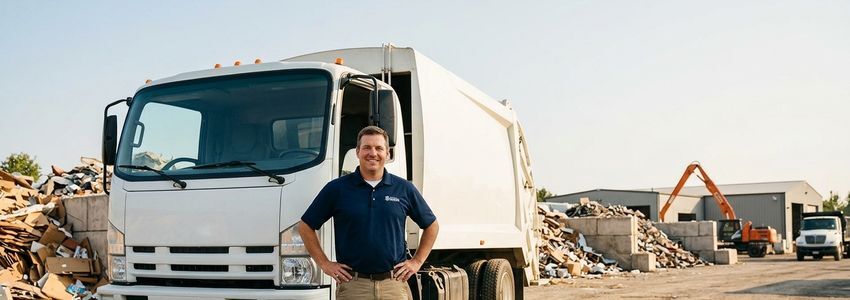
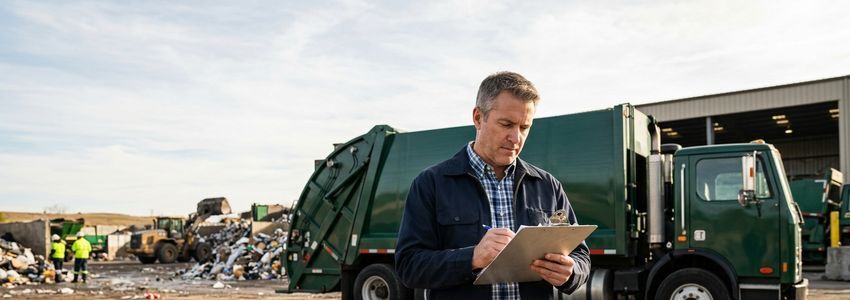
Commercial composting truck financing is a form of equipment financing that helps waste hauling businesses purchase or lease the specialized vehicles needed to collect organic waste, food scraps, and yard trimmings for composting facilities. This includes rear loaders, front loaders, automated side loaders, and roll-off trucks configured for organics collection routes.
Unlike a traditional bank loan that requires extensive collateral and a lengthy approval process, equipment financing uses the truck itself as collateral. That structure allows lenders to approve applications faster and work with businesses that may not qualify for conventional commercial lending.
Composting programs are no longer a niche municipal pilot. California's SB 1383 mandates organic waste diversion statewide, New York City expanded curbside composting citywide with compliance requirements starting April 2025, and dozens of other municipalities have followed with their own organics collection ordinances. Each new mandate creates new collection contracts, and contracts require trucks.
For waste hauling business owners, this shift represents one of the clearest growth opportunities the industry has seen in years. Traditional refuse collection is a mature, slow-growing market with thin margins and heavy competition. Organics and composting collection, by contrast, is a newer vertical where early movers can lock in multi-year municipal or commercial contracts before the market becomes saturated. The bottleneck for most haulers is not demand, it is equipment. A business can have the labor, the routes mapped, and a signed contract in hand, but without a properly configured collection vehicle, none of that matters.
This is precisely where financing changes the equation. Instead of waiting 6 to 12 months to save enough cash for a $200,000 truck, a hauling business can secure financing in days and have a vehicle on the road before the ink is even dry on a new contract. In an industry where contract start dates are fixed and penalties for missed service are common, that speed advantage is not a convenience, it is often the difference between winning the bid and losing it to a better-capitalized competitor.
Key Stat: The U.S. composting market produced an estimated 6.5 million tons of material in 2025 and is projected to reach 16.2 million tons by 2033, a compound annual growth rate of roughly 11.7% driven almost entirely by new organics collection infrastructure.
Key Benefits of Composting Truck Financing
Financing a composting truck instead of paying cash preserves the working capital a hauling business needs to cover fuel, labor, tipping fees, and insurance while new routes ramp up to profitability.
- Lower upfront cost: Acquire a $150,000 to $350,000 vehicle with a fraction of that amount down, sometimes with no down payment at all.
- Preserve cash flow: Keep operating capital available for payroll, fuel, and container deployment during contract ramp-up.
- Fast approval timelines: Many applications are approved in 24 to 48 hours, far faster than a bank term loan.
- Flexible terms: Terms typically run 36 to 72 months and can be structured around seasonal or contract-based revenue.
- Credit-friendly structures: Because the truck secures the financing, approval is often possible even with limited time in business or a less-than-perfect credit profile.
- Tax considerations: Equipment financing structures can offer depreciation and expensing advantages; consult your CPA for guidance specific to your situation.
- Scale with demand: Add trucks as new composting contracts are won without waiting to accumulate cash reserves.
There is also a competitive dimension worth emphasizing. Municipal composting RFPs increasingly require bidders to demonstrate they already have, or can quickly acquire, the vehicles needed to service the contract. A hauler who can show a pre-approved financing line or a letter of intent from a lender has a meaningfully stronger bid than one who would need to scramble for capital after winning. Financing isn't just a funding mechanism in this industry, it's a competitive differentiator at the proposal stage.
Equipment financing also smooths out the seasonality that many organics haulers experience. Yard waste volume spikes in spring and fall in many regions, while food scrap volume from restaurants and grocery stores tends to stay more consistent year-round. A financing structure with seasonal or step-up payments can be matched to a hauler's actual cash flow pattern rather than forcing a flat payment that strains the business during slower months.
How Composting Truck Financing Works
The process of financing a composting or organics collection truck follows a straightforward path from application to delivery.
Quick Guide
How Commercial Composting Truck Financing Works
Provide basic business information, the truck specification or quote, and recent bank statements.
Most applications receive a decision within one to two business days.
Compare term length, payment schedule, and down payment requirements before signing.
Funds are released to the seller and your truck is ready for pickup or delivery.
Lenders typically evaluate time in business, personal and business credit history, and projected or existing collection contract revenue. A signed municipal or commercial composting contract can meaningfully strengthen an application, since it demonstrates predictable future cash flow to service the payment.
The underwriting process for a composting truck is generally more straightforward than financing for general-purpose commercial real estate or working capital, because the asset itself is well understood. Lenders who specialize in commercial vehicle financing know the resale value of a three-year-old rear loader or a five-year-old roll-off truck, which reduces their risk and, in turn, speeds up the decision. This is very different from financing a highly specialized or custom piece of equipment where resale value is harder to pin down.
Documentation requirements are intentionally kept light compared to a bank term loan. Most lenders will ask for a completed application, the truck quote or purchase order from the dealer, three to six months of recent business bank statements, and a driver's license or other identification for the business owner or guarantor. Businesses with an existing or newly signed composting or organics collection contract should include a copy, since it often allows for better terms or a lower down payment than the application would otherwise qualify for.
Ready to Add a Composting Truck to Your Fleet?
Get fast, flexible financing from the #1 business lender in the U.S. No obligation - apply in minutes.
Apply Now →Types of Composting Truck Financing Available
Waste hauling businesses have several financing structures to choose from depending on cash position, credit profile, and how long the business plans to keep the vehicle.
- Equipment loans: You own the truck from day one and build equity with every payment. Best for businesses planning long-term fleet ownership.
- Equipment leasing: Lower monthly payments with the option to purchase, renew, or return the truck at the end of the term. Useful for businesses testing a new composting route before committing to permanent ownership.
- Used truck financing: Many haulers start with a used rear loader or roll-off truck to control costs while a new composting contract proves out.
- Commercial fleet financing: For haulers adding multiple vehicles at once to service a larger municipal contract, fleet-level financing can streamline multiple purchases under one structure.
- Bad credit equipment financing: Haulers with credit challenges or limited time in business still have options, often with a larger down payment or shorter term.
Choosing between these structures usually comes down to two questions: how long do you plan to keep the truck, and how important is preserving cash flow right now? A hauler planning to operate the same organics route for a decade or more typically benefits most from an equipment loan, since every payment builds equity in an asset they will own outright at the end of the term. A hauler testing a new composting contract that could be renewed, modified, or discontinued after the initial term often prefers leasing, since it limits long-term commitment to a vehicle that may no longer fit the business's needs in a few years.
Some lenders also offer step-up or seasonal payment structures specifically designed for waste and recycling businesses whose revenue fluctuates with weather, holidays, or contract cycles. These structures lower payments during slower months and increase them during peak collection periods, aligning the financing obligation with the actual cash flow pattern of the business rather than forcing a flat payment year-round.
Who Commercial Composting Truck Financing Is Best For
This type of financing fits a range of waste and recycling businesses, including:
- Independent waste haulers adding organics collection to an existing residential or commercial route
- Composting facility operators expanding their own collection fleet instead of relying on third-party haulers
- Businesses that have won or are bidding on a new municipal organics collection contract
- Landscaping and yard waste companies diversifying into food scrap and organics pickup
- Established refuse companies replacing aging trucks with vehicles configured for organics streams
- New entrants to the waste hauling industry who need equipment financing structured around limited operating history
Comparing Composting Truck Financing to Other Options
Business owners evaluating how to fund a new composting truck typically weigh financing against paying cash, a conventional bank loan, or an SBA loan.
| Option | Typical Timeline | Down Payment | Best For |
|---|---|---|---|
| Equipment Financing | 24-48 hours | 0-20% | Fast fleet additions, limited collateral elsewhere |
| Paying Cash | Immediate | 100% | Businesses with substantial reserves and no urgency to preserve cash |
| Conventional Bank Loan | Weeks to months | 10-30% | Established businesses with strong banking relationships |
| SBA Loan | Weeks to months | 10-20% | Larger purchases where speed is not the priority |
For most haulers chasing a new composting contract with a fixed start date, speed of approval often outweighs a slightly lower rate from a bank or SBA loan, since missing a contract deadline can mean losing the bid entirely.
Paying cash outright might seem like the simplest option, but it carries real opportunity cost for a growing waste hauling business. Every dollar tied up in a truck purchase is a dollar unavailable for hiring drivers, purchasing containers and bins, covering fuel costs during route expansion, or responding to an unexpected repair on an existing vehicle. Most experienced operators in this industry preserve cash for operations and use financing for capital equipment, precisely because growth opportunities in waste hauling tend to arrive suddenly, in the form of a new contract with a short turnaround window.
Bank loans and SBA loans can offer competitive rates for well-qualified, established businesses, but the application and underwriting timeline rarely matches the pace of municipal procurement. A city or county composting RFP might require proof of equipment readiness within 30 to 60 days of contract award. A conventional bank loan process, which often takes 60 to 90 days from application to funding, simply cannot move fast enough to meet that window in many cases. Equipment-specific financing exists largely to solve this exact mismatch between how fast business opportunities move and how slowly traditional lending moves.
How Crestmont Capital Helps Waste Hauling Businesses
Crestmont Capital works with waste hauling and composting businesses to structure equipment financing around the realities of the industry, including seasonal fluctuations, municipal contract cycles, and the heavy upfront cost of specialized vehicles.
Our team has financed everything from a single replacement garbage truck for an owner-operator to multi-vehicle orders for haulers scaling up after winning a new organics collection contract. We also work with composting operators who need financing for the facility side of the business, not just the truck, through our broader composting business loans programs.
- Commercial Truck Financing: Dedicated programs for refuse and organics collection vehicles.
- Commercial Fleet Financing: Structure multi-vehicle purchases for larger contract wins under a single application.
- Heavy Truck Financing: For front loaders, rear loaders, and other heavy-duty collection vehicles.
- Bad Credit Equipment Financing: Options for businesses with credit challenges or limited operating history.
Every application is reviewed by a dedicated funding specialist who understands the waste hauling industry, not a generic loan officer working from a one-size-fits-all checklist.
We also understand that composting and organics collection businesses often operate alongside a broader portfolio of equipment needs, from construction equipment financing for site work at a composting facility to general commercial financing for facility upgrades or working capital during a seasonal slowdown. Rather than treating a truck purchase as an isolated transaction, our team looks at the full picture of where your business is headed over the next three to five years and structures financing that supports that trajectory.
Won a New Composting Contract? Get the Trucks to Match.
Crestmont Capital can help you move quickly on fleet financing so you never miss a contract start date.
Apply Now →By the Numbers
Composting Truck Financing - Key Statistics
11.7%
Projected CAGR for the U.S. composting market through 2033
$130K-$400K
Typical price range for new organics collection and roll-off trucks
24-48 Hrs
Typical approval timeline for equipment financing applications
Only 5%
Of U.S. food waste currently gets composted, leaving enormous growth room
Real-World Scenarios
Scenario 1: Winning a Municipal Organics Contract
A mid-size residential hauler bids on and wins a new city composting collection contract requiring three automated side loaders within 60 days. Equipment financing allows the company to order all three trucks immediately, with payments beginning once the contract revenue starts flowing, rather than waiting months to accumulate cash reserves.
Scenario 2: Owner-Operator Adding an Organics Route
An independent hauler running a single rear loader on residential trash routes identifies demand for food scrap pickup from local restaurants. Used truck financing lets them acquire a second, smaller vehicle dedicated to the organics route without disrupting their existing operation's cash flow.
Scenario 3: Composting Facility Vertical Integration
A composting facility that previously relied entirely on third-party haulers decides to bring collection in-house to capture more margin. Fleet financing covers the purchase of two front loaders, letting the facility control its own feedstock supply chain.
Scenario 4: Replacing an Aging Fleet Vehicle
A 12-year-old rear loader used for yard waste collection breaks down repeatedly, costing the business thousands in repairs and missed routes. Equipment financing replaces the truck with a newer model, improving reliability without a large cash outlay.
Scenario 5: Credit-Challenged New Entrant
A new waste hauling business, only eight months in operation, needs its first dedicated organics truck to fulfill a signed commercial contract with a regional grocery chain. Bad credit equipment financing structures the deal around the signed contract revenue rather than a thin credit file.
Frequently Asked Questions
Keep Your Composting Fleet Growing
Apply today and find out how fast Crestmont Capital can get your next truck on the road.
Apply Now →Next Steps
Determine whether you need a new or used vehicle, and how many trucks your contract or route requires.
Obtain pricing from a dealer or seller so your application reflects an accurate purchase amount.
Submit your application with basic business details and recent bank statements.
Compare the offered terms, sign, and take delivery of your truck.
Conclusion
Commercial composting truck financing gives waste hauling businesses the speed and flexibility to seize new organics collection opportunities without draining cash reserves. As composting mandates expand across states and cities, haulers who can finance fleet growth quickly will be best positioned to win new contracts ahead of slower-moving competitors. Whether you need a single replacement vehicle or a multi-truck order to fulfill a new municipal contract, structured equipment financing can get your composting trucks on the road fast.
The waste hauling and composting industry is in the middle of a structural shift, moving from a landfill-first model toward one where organics diversion is a standard part of doing business. That shift is not slowing down. More states are expected to follow California's and New York's lead with their own organics diversion requirements over the next several years, and each new mandate will translate into new collection contracts, new route expansions, and new equipment needs across the country.
Businesses that treat equipment financing as a strategic tool, not just a funding mechanism of last resort, will be the ones positioned to capture that growth. Being ready to move within days of winning a contract, rather than months, is becoming a genuine competitive advantage in this space. If your business is evaluating a new composting truck, whether to fulfill a signed contract, replace an aging vehicle, or get ahead of an upcoming municipal mandate in your area, now is the time to explore your financing options rather than waiting until the opportunity is already on the table.
Commercial composting truck financing is ultimately about matching the pace of your capital to the pace of your opportunities. Talk to a funding specialist today to see what terms your business qualifies for.
Disclaimer: The information provided in this article is for general educational purposes only and is not financial, legal, or tax advice. Funding terms, qualifications, and product availability may vary and are subject to change without notice. Crestmont Capital does not guarantee approval, rates, or specific outcomes. For personalized information about your business funding options, contact our team directly.