Businesses that generate large volumes of cardboard waste, from grocery stores and distribution centers to manufacturers and recycling operations, lose money every month paying for extra waste hauls and wasted floor space. Cardboard baler financing gives business owners a practical way to acquire this equipment without draining cash reserves, turning a recurring waste expense into a long-term cost saver. Whether you need a compact vertical baler for a retail backroom or a high-output horizontal baler for a recycling center, the right financing structure makes the purchase manageable from day one.
In This Article
- What Is Cardboard Baler Financing?
- Key Benefits of Financing a Cardboard Baler
- Types of Cardboard Balers You Can Finance
- How Cardboard Baler Financing Works
- Cardboard Baler Costs and Financing Amounts
- Who Needs a Cardboard Baler?
- Comparing Financing Options
- How Crestmont Capital Helps
- Real-World Scenarios
- Balers vs. Other Waste Equipment
- FAQ
- How to Get Started
What Is Cardboard Baler Financing?
Cardboard baler financing is a type of commercial equipment financing that allows businesses to acquire a cardboard baler, the machine that compresses loose cardboard and corrugated boxes into dense, strapped bales, through a loan or lease rather than a single upfront cash purchase. As with most equipment financing arrangements, the baler itself typically serves as collateral, which allows lenders to offer competitive terms even to business owners who do not have perfect credit.
Cardboard balers range from small footprint vertical units designed for retail stockrooms to massive automatic horizontal balers that run continuously at distribution centers and recycling facilities. Financing can cover the baler itself along with related equipment such as conveyor feed systems, wire tying attachments, and bale handling equipment.
Corrugated cardboard remains one of the most recycled materials handled by American businesses, and recycling programs continue to expand across retail, logistics, and manufacturing sectors as companies look to cut disposal costs and meet sustainability goals. A well-sized baler is often the single piece of equipment that makes an in-house recycling program financially worthwhile instead of a net cost.
Key Insight: According to the U.S. Small Business Administration, equipment purchases are among the most common uses of small business financing, and equipment that directly reduces a recurring operating cost, like waste hauling fees, typically pays for itself faster than equipment used for expansion alone.
Key Benefits of Financing a Cardboard Baler
Paying cash for a baler that costs anywhere from $5,000 to well over $100,000 can tie up capital that a growing business needs elsewhere. Financing spreads that cost into predictable monthly payments while letting the equipment start generating savings immediately. Here is why most business owners choose to finance rather than pay cash outright:
- Preserve working capital: Keep cash on hand for payroll, inventory, and day-to-day operating expenses instead of locking it into a single machine.
- Start saving immediately: A financed baler begins reducing hauling costs and freeing floor space the same month it is installed, often offsetting the monthly payment.
- Match payments to savings: Structure loan terms so the monthly payment is comparable to, or lower than, the waste hauling costs the baler eliminates.
- Access higher-capacity equipment sooner: Finance the right-sized baler for your actual volume instead of settling for an undersized used unit.
- Build business credit: Consistent on-time payments on an equipment loan help establish a stronger credit profile for future financing needs.
- Fixed, predictable costs: A fixed-rate equipment loan means no surprises in your monthly budget, unlike variable hauling and disposal fees.
For businesses generating significant cardboard volume, a baler can also create a new revenue stream. Baled cardboard (often called OCC, or old corrugated containers) has real resale value to recycling processors, meaning the equipment can shift a cost center into a modest profit center over time.
Ready to Cut Your Waste Hauling Costs?
Get fast, flexible financing from the #1 business lender in the U.S. No obligation, apply in minutes.
Apply Now →Types of Cardboard Balers You Can Finance
Choosing the right baler type is the first step toward sizing your financing correctly. The three main categories handle vastly different volumes and come with correspondingly different price points.
Vertical Balers
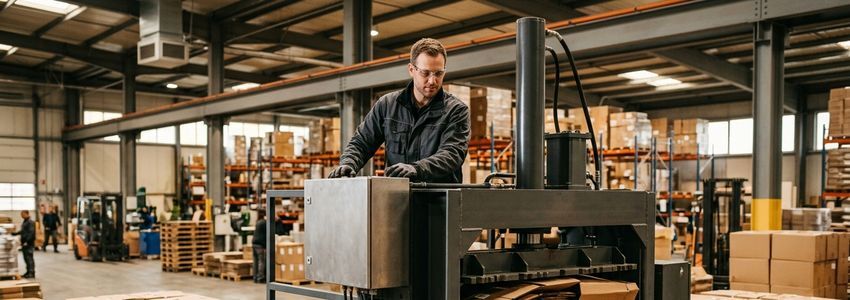
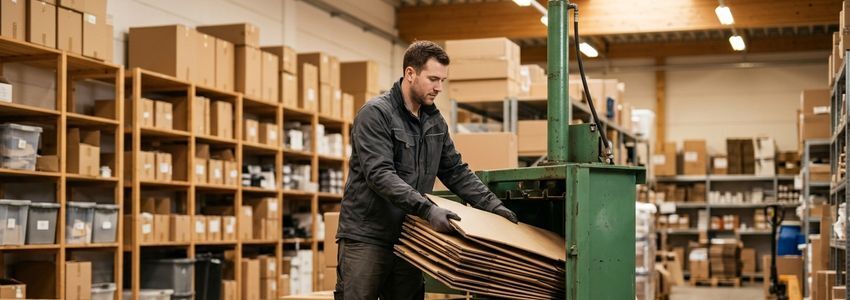
Vertical balers are the most common choice for retail stores, small warehouses, grocery locations, and light manufacturing. They are compact, often fitting in a space as small as 4 feet by 5 feet, and are loaded manually or with a small conveyor. New vertical balers typically cost $5,000 to $25,000 depending on bale size and downstroke force, making them one of the most financeable pieces of equipment for small businesses.
Horizontal Balers
Horizontal balers are built for continuous, high-volume operations such as distribution centers, large grocery chains, and recycling facilities. They are often automatically fed by conveyor and can process cardboard around the clock with minimal labor. New horizontal balers range from $40,000 to over $150,000 depending on throughput capacity and automation level, and are almost always financed rather than purchased outright.
Two-Ram Balers
Two-ram balers combine a horizontal compression chamber with a second ram that ejects finished bales automatically, allowing continuous operation without manual bale removal. These units are common in high-volume recycling and processing facilities and typically cost $100,000 to $300,000, with financing terms extending up to 84 months to keep payments manageable.
Mini and Compact Balers
Mini balers are designed for very small operations, such as single-location restaurants or boutique retail stores, that generate modest but steady cardboard volume. These units typically cost $3,000 to $8,000 and can sometimes be financed through smaller working capital arrangements rather than a dedicated equipment loan.
Used and Refurbished Balers
Many equipment lenders, including Crestmont Capital, will finance used and refurbished balers. A reconditioned horizontal baler can often be found for 40 to 60 percent of new equipment cost, making it an attractive entry point for businesses that want to start an in-house recycling program without the full capital outlay of new equipment.
How Cardboard Baler Financing Works
The financing process for a cardboard baler closely mirrors other types of commercial equipment financing, and alternative lenders have streamlined it considerably compared to traditional bank underwriting.
Quick Guide
How Cardboard Baler Financing Works, At a Glance
Estimate your weekly cardboard volume and available floor space to identify whether a vertical, horizontal, or two-ram baler fits your operation.
Complete a short online application with basic business details. Most lenders request 3 to 6 months of recent bank statements.
Receive a financing offer outlining loan amount, rate, term, and estimated monthly payment. Compare it against your current hauling costs.
Once approved, funds are disbursed to the equipment vendor or your account. Most balers can be delivered and installed within one to three weeks.
Traditional banks can take two to six weeks to approve equipment financing, which often means weeks of continued overflow hauling fees while you wait. Alternative lenders and equipment financing specialists like Crestmont Capital can frequently approve and fund cardboard baler financing within 24 to 48 hours, getting the equipment working sooner.
Cardboard Baler Costs and Financing Amounts
Understanding realistic price ranges helps you size a financing request correctly and avoid either over-borrowing or under-financing the project.
| Baler Type | Price Range (New) | Typical Loan Term | Est. Monthly Payment |
|---|---|---|---|
| Mini/Compact Baler | $3,000 - $8,000 | 12-36 months | $100 - $280/mo |
| Vertical Baler | $5,000 - $25,000 | 24-60 months | $120 - $550/mo |
| Horizontal Baler | $40,000 - $150,000 | 48-72 months | $800 - $3,200/mo |
| Two-Ram Baler | $100,000 - $300,000 | 60-84 months | $1,900 - $5,600/mo |
These figures assume a down payment of 0 to 15 percent and interest rates of 6 to 14 percent depending on creditworthiness, loan term, and whether the equipment is new or used. Businesses with strong financials and established operating history typically qualify for the most favorable rates and terms.
Beyond the baler itself, many lenders will bundle additional costs into a single financing package, including:
- Conveyor feed systems and infeed chutes
- Wire tying systems and baling wire supply contracts
- Bale handling equipment such as forklifts, clamps, or tipping carts
- Installation, electrical hookup, and operator training
- Extended warranty and preventive maintenance plans
Who Needs a Cardboard Baler?
Cardboard baler financing serves a wide range of industries that generate consistent cardboard and corrugated waste. If your business regularly fills a dumpster with flattened boxes, a baler financing arrangement is worth evaluating.
- Grocery and retail stores: Constant inbound shipments create a steady stream of boxes that a vertical baler can compress daily.
- Distribution centers and warehouses: High-volume fulfillment operations generate enough cardboard to justify a horizontal or two-ram baler running continuously.
- Manufacturing facilities: Packaging waste from incoming raw materials and outgoing finished goods adds up quickly on a production floor.
- Recycling centers and material recovery facilities: High-throughput balers are core production equipment, not just a cost-saving convenience.
- Print shops and packaging companies: Scrap paperboard and corrugated offcuts from production runs are prime candidates for baling.
- Restaurants and hospitality operations: Produce and supply deliveries generate steady cardboard volume, particularly for multi-location operators.
- Waste hauling and transfer station operators: Balers increase payload density, reducing the number of trips needed to move the same volume of material.
Comparing Cardboard Baler Financing Options
Several financing structures are available, and the right one depends on how long you intend to keep the equipment, your tax strategy, and your cash flow preferences.
Equipment Loans
An equipment loan provides a lump sum to purchase the baler outright. You make fixed monthly payments over an agreed term, typically 24 to 84 months, and own the baler once the loan is paid in full. This structure works best for businesses planning to run the same baler for 7 or more years.
Equipment Leasing
An equipment lease lets you use the baler for a defined term with lower monthly payments than a loan, often with an option to purchase at fair market value, return the equipment, or upgrade to newer capacity at the end of the term. This is a good fit for growing operations that expect their cardboard volume, and equipment needs, to increase over the next few years.
SBA Equipment Loans
The SBA 7(a) loan program can be used to finance industrial equipment such as cardboard balers, typically offering longer repayment terms and competitive rates backed by a federal guarantee. The tradeoff is a longer application and approval timeline, making it better suited to planned purchases than urgent replacements.
Working Capital Loans
A working capital loan provides a lump sum that can be applied toward a baler purchase, installation costs, or any other business need. These are typically unsecured and can close in as little as 24 to 48 hours, which matters if your current waste hauling costs are climbing quickly.
Business Lines of Credit
A business line of credit gives you a revolving credit facility you can draw on as needed, useful for businesses that plan to upgrade baling capacity in stages as volume grows, without reapplying for a new loan each time.
| Financing Type | Speed to Funding | Credit Needed | Best For |
|---|---|---|---|
| Equipment Loan | 24-72 hours | 550+ (flexible) | Long-term ownership |
| Equipment Lease | 24-72 hours | 600+ preferred | Scaling volume, upgrades |
| SBA Loan | 2-6 weeks | 680+ | Best rates, planned purchase |
| Working Capital Loan | 24-48 hours | 550+ (flexible) | Urgent replacement |
| Line of Credit | 24-72 hours | 600+ preferred | Staged capacity upgrades |
Compare Your Baler Financing Options
See your rate and term options in minutes, with no obligation and no impact to your credit.
Get My Options →How Crestmont Capital Helps Business Owners
Crestmont Capital works with businesses across retail, logistics, manufacturing, and recycling to finance cardboard balers and related material handling equipment. As the #1 rated business lender in the country, Crestmont Capital combines speed with flexible underwriting that traditional banks typically cannot match.
- Fast decisions: Most cardboard baler financing applications are decided within 24 to 48 hours, not weeks.
- Flexible credit standards: Strong business revenue and cash flow can offset a less-than-perfect credit history.
- New and used equipment: Finance brand-new balers from a dealer or quality used equipment from auctions and private sellers.
- Bundled financing: Roll the baler, conveyor systems, and installation costs into a single monthly payment.
- No prepayment penalties: Pay off your balance early without additional fees once your baler starts generating savings.
Businesses evaluating a cardboard baler often also look at related equipment categories. Crestmont Capital's recycling equipment financing guide and scrap metal baler financing guide cover adjacent equipment that many of the same operations end up financing as their recycling programs expand.
Pro Tip: If your waste hauler bills by pickup frequency or container size, ask for your last 12 months of invoices before applying. Lenders and your own cash flow analysis will benefit from a clear, documented baseline of the exact cost a baler is expected to reduce.
Real-World Cardboard Baler Financing Scenarios
Abstract financing terms become clearer when applied to real business situations. Here are six common scenarios illustrating how cardboard baler financing plays out in practice.
Scenario 1: Regional Grocery Chain Reducing Hauling Costs
A five-location regional grocery chain was paying for twice-weekly cardboard pickups at each store, totaling nearly $4,200 per month across all locations. The company financed five vertical balers for $18,000 each through a 48-month equipment loan at a combined monthly payment of roughly $2,100. Reduced pickup frequency to once weekly cut hauling costs to about $1,100 per month, meaning the equipment more than paid for itself from day one.
Scenario 2: E-Commerce Fulfillment Center Scaling Up
A growing e-commerce fulfillment operation in Ohio was manually flattening and storing boxes in an increasingly cramped warehouse corner. They financed a $65,000 horizontal baler over 60 months, freeing roughly 400 square feet of floor space previously used for loose cardboard storage and reducing labor hours spent manually breaking down boxes.
Scenario 3: Small Manufacturer Starting a Recycling Program
A small plastics manufacturer in North Carolina wanted to start selling baled cardboard to a local recycling processor rather than paying for disposal. With only two years in business and a 600 credit score, they qualified for a $14,000 vertical baler loan through an alternative lender at a slightly higher rate, structured over 36 months. The resale revenue from baled OCC now partially offsets the monthly loan payment.
Scenario 4: Distribution Center Replacing an Aging Baler
A logistics company's 12-year-old horizontal baler failed and was no longer economical to repair. The company applied for fast equipment financing on a Monday, received approval the next day, and had a replacement baler installed within two weeks, avoiding a costly backlog of unprocessed cardboard that would have overwhelmed their dock area.
Scenario 5: Multi-Location Restaurant Group
A restaurant group operating eight locations financed three vertical balers for their highest-volume locations, bundling the equipment, installation, and a year of baling wire supply into a single $42,000 equipment loan over 48 months. The group used the reduced hauling costs at those three sites to help fund future equipment purchases at remaining locations.
Scenario 6: Recycling Center Expanding Processing Capacity
An established material recovery facility needed to add a second two-ram baler to keep pace with growing inbound material volume. They financed a $220,000 unit over 72 months through Crestmont Capital, structuring payments to align with contracted recycling revenue that scales with throughput, keeping the new equipment cash-flow positive from the first month of operation.
Cardboard Balers vs. Other Waste Reduction Equipment
Businesses sometimes consider alternatives to a dedicated cardboard baler before committing to financing. Understanding how these options compare helps confirm a baler is the right investment.
Cardboard Balers vs. Compactors
Trash compactors handle mixed waste and are not designed specifically for cardboard, producing loose compacted material rather than dense, sellable bales. A dedicated cardboard baler produces a cleaner, more valuable end product and is typically the better investment for any business generating primarily cardboard waste rather than mixed trash.
Cardboard Balers vs. Manual Flattening and Storage
Manually breaking down and storing boxes requires significant labor time and floor space, and loose cardboard is a fire hazard in many commercial settings. A baler reduces labor hours, reclaims usable space, and produces a bale that most haulers and recyclers will pick up less frequently or even purchase outright.
Cardboard Balers vs. Shredders
Industrial shredders reduce cardboard volume but produce loose shredded material that is harder to transport and typically has less resale value than a clean bale. Shredders make more sense for businesses that need the shredded material on-site, such as for packaging void fill, while balers are the better choice for businesses focused purely on waste volume reduction and resale value.
Frequently Asked Questions
Stop Paying to Haul Away Cardboard
See what financing a baler could save your business. Apply in minutes with no obligation.
Apply Now →How to Get Started
Complete our quick application at offers.crestmontcapital.com/apply-now, it takes just a few minutes with no obligation to accept any offer.
A Crestmont Capital advisor will review your cardboard volume, space constraints, and budget to match you with the right baler financing structure.
Receive funds, often within 24 to 48 hours of approval, and get your new baler delivered and running, typically within one to three weeks.
Conclusion
Cardboard baler financing turns a recurring operating expense, waste hauling, into a one-time equipment investment that pays dividends in reduced costs, reclaimed floor space, and in some cases new revenue from baled material resale. Whether you run a single retail location filling a dumpster with flattened boxes or a distribution center generating pallets of cardboard daily, the right financing structure makes acquiring a baler manageable without disrupting your cash flow.
From compact vertical balers under $10,000 to industrial two-ram systems exceeding $200,000, financing options exist to fit nearly any business size and budget. Crestmont Capital has helped businesses across retail, logistics, manufacturing, and recycling secure cardboard baler financing with fast approvals and flexible underwriting that traditional banks often cannot match. If rising hauling costs or overflowing cardboard are weighing down your operation, applying takes just minutes and decisions are typically made within 24 to 48 hours.
Disclaimer: The information provided in this article is for general educational purposes only and is not financial, legal, or tax advice. Funding terms, qualifications, and product availability may vary and are subject to change without notice. Crestmont Capital does not guarantee approval, rates, or specific outcomes. For personalized information about your business funding options, contact our team directly.