Geothermal drilling equipment financing gives drilling contractors, water well companies, and HVAC installers a way to acquire drill rigs, loop installation tooling, and support equipment without paying the full purchase price in cash. As next-generation geothermal technology moves from pilot projects to mainstream adoption, contractors who can mobilize a capable rig quickly are positioned to capture a growing share of residential, commercial, and utility-scale work. This guide covers how geothermal drilling equipment financing works, what it costs, and how contractors qualify.
In This Article
- What Is Geothermal Drilling Equipment Financing?
- Key Benefits for Drilling Contractors
- How Geothermal Drilling Equipment Financing Works
- Types of Equipment You Can Finance
- Who This Financing Is Best For
- Comparing Your Financing Options
- How Crestmont Capital Helps
- Real-World Scenarios
- Frequently Asked Questions
- How to Get Started
What Is Geothermal Drilling Equipment Financing?
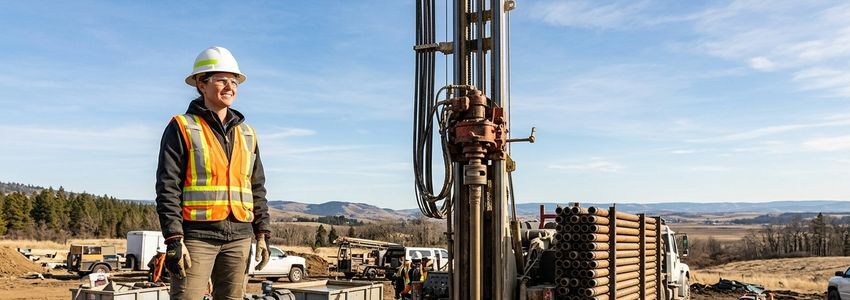
Geothermal drilling equipment financing is a structured loan or lease that allows drilling contractors, water well companies, and geothermal installation businesses to purchase drill rigs, loop field tooling, mud pumps, and related support equipment through fixed monthly payments rather than a single large cash outlay. The equipment itself typically secures the financing, which speeds up underwriting compared to a general-purpose business loan.
Geothermal drilling equipment is a serious capital investment. A new high-capacity drill rig suited for vertical closed-loop installations commonly runs between $150,000 and $500,000, while used rigs with strong torque and depth specifications often trade between $190,000 and $575,000 depending on age and condition. Compact and light-duty rigs built for smaller residential loop jobs can be financed for as little as $15,000 to $80,000. Few contractors can self-fund a purchase in that range without disrupting the working capital needed for crews, fuel, and ongoing jobs.
Crestmont Capital structures geothermal drilling equipment financing for both new and used machinery, covering everything from a single compact rig for a residential loop installer to a full drill rig package for a contractor entering commercial and utility-scale geothermal work.
Key Benefits for Drilling Contractors
Financing geothermal drilling equipment instead of paying cash offers several advantages that matter to a contractor managing tight margins in a fast-growing but still-maturing market:
- Preserve working capital. Keep cash on hand for payroll, fuel, drill bits, and the next job's mobilization costs instead of locking it into a single rig.
- Move fast on growing demand. Industry analysts expect the global geothermal drilling market to grow from roughly $9.9 billion in 2024 to $13.5 billion by 2030. Contractors who can finance a rig quickly are better positioned to capture that growth instead of turning down work.
- Fast approval and funding. Equipment-backed financing often closes in days rather than weeks, which matters when a residential or commercial contract has a tight installation deadline.
- Access to newer, more capable rigs. Financing makes it realistic to acquire a rig with greater depth capacity and torque, opening up larger commercial loop field and utility-scale bids.
- Predictable budgeting. Fixed monthly payments make it easier to bid future jobs accurately, since equipment cost is a known, scheduled expense rather than a cash flow shock.
- Potential to finance soft costs. Many lenders, including Crestmont Capital, can roll in drill bits, mud systems, grouting equipment, and other accessories alongside the core rig cost.
Ready to Add a Geothermal Drill Rig to Your Fleet?
Get fast, flexible financing from the #1 business lender in the U.S. No obligation, apply in minutes.
Apply Now →How Geothermal Drilling Equipment Financing Works
The process for financing geothermal drilling equipment follows a fairly consistent path across most equipment lenders, though timelines and documentation requirements vary:
- Identify the equipment. Whether you are buying a new rig from a manufacturer or a used rig from a dealer or private seller, get a quote, invoice, or purchase agreement in hand.
- Submit an application. Most equipment financing applications require basic business information, the equipment details and price, and either financial statements or, for smaller amounts, a simplified application.
- Underwriting review. The lender evaluates the business's time in operation, credit profile, cash flow, and the rig's value and expected useful life. Since the rig secures the loan, underwriting can move faster than unsecured financing.
- Approval and terms. Once approved, you receive specific terms: rate, term length, down payment requirement (if any), and monthly payment amount.
- Funding and purchase. The lender pays the seller directly or funds the contractor to complete the purchase, and the equipment is typically titled or UCC-filed in the lender's favor as collateral.
- Ongoing payments. The contractor makes fixed monthly payments over the agreed term while using the equipment on active jobs.
Lenders evaluating geothermal drilling equipment pay close attention to a few specifics that general equipment underwriters may not fully understand. Hour meters, torque and depth rating, mast type, and resale demand in the used drilling equipment market all factor into how aggressively a lender will price the deal. Working with a lender experienced in drilling and heavy equipment financing matters more than it does with a commodity asset.
Types of Equipment You Can Finance
Geothermal drilling equipment financing is not limited to a single machine type. Crestmont Capital structures financing for the full range of equipment a geothermal drilling, water well, or loop installation contractor needs:
- Vertical loop drill rigs used to bore the deep boreholes required for closed-loop vertical geothermal systems.
- Horizontal directional drilling (HDD) rigs used for horizontal loop installations where trenching is impractical.
- Mud pumps and mud systems that circulate drilling fluid to cool the bit and remove cuttings during the bore.
- Grouting equipment and grout pumps used to fill boreholes around loop piping for thermal conductivity and code compliance.
- Drill bits, augers, and downhole tooling matched to local soil and rock conditions.
- Support vehicles and trailers used to transport rigs, pipe, and tooling between job sites.
- Pipe fusion equipment used to join high-density polyethylene loop piping before it goes into the ground.
By the Numbers
Geothermal Drilling Equipment Financing — Key Statistics
$13.5B
Projected global geothermal drilling market value by 2030, up from roughly $9.9B in 2024
$171.5M
Federal grants committed to field tests and exploratory geothermal drilling
$15K-$500K+
Typical price range for compact to new high-capacity geothermal drill rigs
2-7 Yrs
Typical financing term length for geothermal drilling equipment
Key Stat: Energy industry analysts covered by Forbes describe 2026 as an inflection point for next-generation geothermal, with the technology expected to move from pilot projects to mainstream adoption much like wind and solar did roughly 15 years ago.
Who This Financing Is Best For
Geothermal drilling equipment financing fits a specific set of contractors who need drilling capability but do not want to self-fund a six-figure rig purchase:
- Water well drilling companies expanding into geothermal loop installation to diversify beyond traditional well work.
- HVAC and geothermal installation contractors who want to bring drilling in-house instead of subcontracting loop field work to a third party.
- Directional drilling and utility contractors adding geothermal capability to an existing HDD fleet.
- New construction geothermal installers bidding on residential subdivisions or commercial buildings with ground-source HVAC systems.
- Commercial and institutional geothermal contractors pursuing larger loop field projects for schools, hospitals, and municipal buildings.
- Established drilling contractors replacing aging equipment whose current rig has high hours and rising maintenance costs.
Business owners who are new to geothermal drilling specifically, with limited time running this type of equipment, may still qualify, but should expect a lender to look more closely at related drilling or construction industry experience and the strength of the contract that justifies the purchase.
Comparing Your Financing Options
Contractors generally choose between three structures when acquiring geothermal drilling equipment. Each has tradeoffs worth understanding before signing.
| Option | Best For | Ownership | Typical Down Payment |
|---|---|---|---|
| Equipment Loan | Contractors who want to build equity and keep the rig long-term | You own the equipment from day one | 0-20% |
| Equipment Lease | Contractors who want lower monthly payments or plan to upgrade rigs frequently | Buyout option at lease end (often $1 or fair market value) | 0-10% |
| Working Capital + Cash Purchase | Contractors with strong cash reserves who want to negotiate a cash discount | Full ownership, no lien | 100% |
Most contractors land on an equipment loan or lease rather than a full cash purchase, since preserving liquidity for payroll, fuel, and the next job typically outweighs the benefit of a cash discount on the rig itself. According to the U.S. Small Business Administration, structured equipment financing through the 7(a) loan program remains one of the most common ways small and mid-size contractors fund major machinery purchases without disrupting operating cash flow.
How Crestmont Capital Helps
Crestmont Capital works with drilling, water well, and geothermal installation contractors across the country to structure financing for both new and used drilling equipment. Our construction equipment financing programs are built around the realities of this industry: a fast-growing but still-maturing market, large contract-driven purchases, and equipment that needs to go to work immediately after funding.
For contractors who also need excavation support for loop field trenching or site prep, our excavating equipment financing programs can cover excavators and trenchers on the same job site. Larger drilling operations running a broader equipment fleet can also explore our heavy machinery financing options for cranes, loaders, and other supporting equipment.
Contractors researching adjacent drilling equipment often also review our guide to directional boring machine financing if horizontal loop work is part of the plan, or our core drilling equipment financing guide for related concrete and foundation drilling needs. Installation companies focused more on the HVAC and system design side of the business, rather than owning drilling equipment directly, can also review our geothermal installation business loans guide for broader working capital options.
Crestmont Capital works with contractors across a wide range of credit profiles and time-in-business, structuring terms around the specific contract or project that justifies the purchase rather than applying a one-size-fits-all underwriting model.
Bidding a Geothermal Loop Field Project?
Secure the drilling equipment you need before the installation deadline hits. Apply in minutes.
Apply Now →Real-World Scenarios
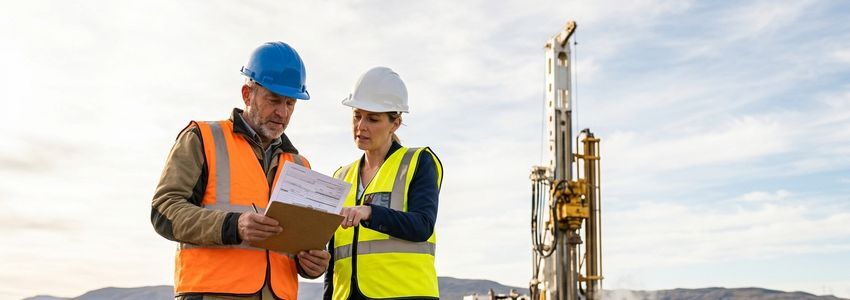
The following scenarios illustrate how contractors commonly use geothermal drilling equipment financing in practice.
Scenario 1: Water well driller expanding into geothermal. A regional water well drilling company had been turning away geothermal loop installation requests because its existing rigs were not suited for the depth and casing requirements of vertical loop work. The owner financed a used high-capacity rig, funded in eight business days, and began bidding residential and light commercial geothermal jobs within the month.
Scenario 2: HVAC contractor bringing drilling in-house. A geothermal HVAC installer had been subcontracting all loop field drilling to a third party, cutting into margins on every job. After landing a subdivision contract requiring dozens of vertical loops, the company financed a new compact drill rig and recovered the monthly payment within the first phase of the project.
Scenario 3: Replacing an aging rig. A geothermal drilling contractor's older rig was requiring increasingly expensive repairs between jobs and could no longer reach the depths newer commercial projects required. The owner financed a newer rig with greater torque and depth capacity, improving both uptime and bid competitiveness on larger projects.
Scenario 4: New contractor entering a growing market. A contractor with strong directional drilling experience but no prior geothermal-specific rig ownership financed a complete starter rig package, including mud pump and grouting equipment, after landing a commercial loop field contract. Strong personal credit and a signed contract offset the lack of direct geothermal equipment history.
Scenario 5: Seasonal capacity gap. A contractor in a region with a short drilling season needed a second rig to run two crews simultaneously during the busy months tied to new construction demand. Financing allowed the purchase to happen ahead of the busy season, without depleting the cash reserve set aside for slower winter months.
Frequently Asked Questions
Don't Let Equipment Availability Hold Back Your Next Bid
See what financing you qualify for before your next geothermal drilling project deadline.
Apply Now →How to Get Started
Complete our quick application at offers.crestmontcapital.com/apply-now, it takes just a few minutes.
A Crestmont Capital advisor will review your equipment needs, project timeline, and match you with the right financing structure.
Receive your funds and mobilize your geothermal drill rig, often within days of approval.
Conclusion
Geothermal drilling equipment financing lets water well drillers, HVAC installers, and dedicated drilling contractors acquire the rigs, mud pumps, and tooling they need without draining the working capital required to run active projects. With the global geothermal drilling market projected to grow from roughly $9.9 billion in 2024 to $13.5 billion by 2030 and federal support accelerating next-generation geothermal adoption, contractors who can move quickly on equipment are better positioned to win the next bid. Whether you need a single compact rig or a complete high-capacity package to enter commercial and utility-scale work, structuring the right financing is often the difference between bidding confidently and passing on the opportunity.
Crestmont Capital works with drilling and geothermal contractors nationwide to structure geothermal drilling equipment financing around the realities of this fast-growing industry, not a generic lending template. Reach out today to see what you qualify for.
Disclaimer: The information provided in this article is for general educational purposes only and is not financial, legal, or tax advice. Funding terms, qualifications, and product availability may vary and are subject to change without notice. Crestmont Capital does not guarantee approval, rates, or specific outcomes. For personalized information about your business funding options, contact our team directly.