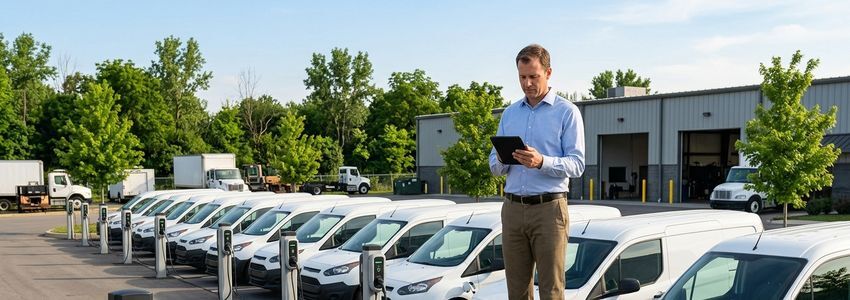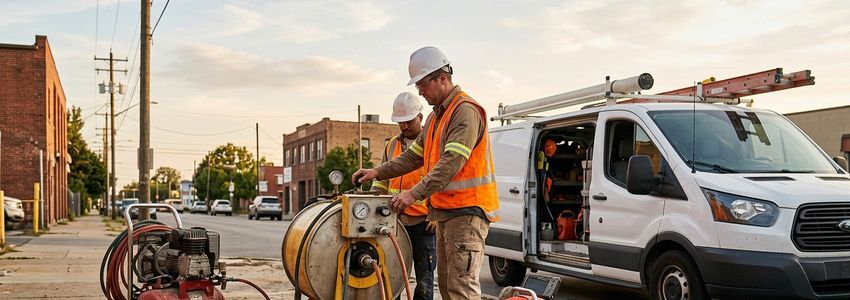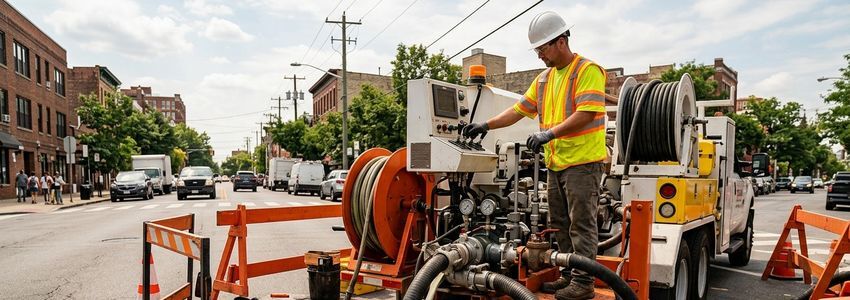
Trenchless pipe repair equipment financing gives underground utility contractors a fast way to acquire CIPP lining rigs, pipe bursting machines, and inspection cameras without draining working capital.
Water mains break in the United States roughly once every two minutes, and much of the country's underground pipe network is now more than 50 years old. That steady stream of failing infrastructure has turned trenchless pipe repair into one of the fastest-growing niches in the contracting world, and contractors who can show up with the right equipment are winning the work. The problem for most shops is that the equipment is not cheap. A single CIPP (cured-in-place pipe) rig, pipe bursting system, or pipe inspection camera crawler can cost anywhere from $40,000 to well over $300,000 depending on pipe diameter capacity and automation level.
In This Article
- What Is Trenchless Pipe Repair Equipment Financing?
- Key Benefits of Financing This Equipment
- How Trenchless Equipment Financing Works
- Types of Trenchless Equipment You Can Finance
- Who This Financing Is Best For
- Loan vs. Lease vs. Line of Credit
- How Crestmont Capital Helps
- Real-World Scenarios
- Frequently Asked Questions
- Next Steps
What Is Trenchless Pipe Repair Equipment Financing?
Trenchless pipe repair equipment financing is a type of commercial equipment loan or lease specifically structured to help contractors purchase the specialized machinery used to rehabilitate underground pipes without digging up streets, driveways, or foundations. This includes CIPP lining systems, pipe bursting equipment, pull-in-place liners, pipe coating rigs, and the inspection cameras that diagnose problems before repair work begins.
Trenchless technology has become the preferred method for municipalities, utility districts, and private property owners because it avoids the massive cost and disruption of open-cut excavation. A single lane-mile of trenched road replacement can cost a city hundreds of thousands of dollars in restoration alone, on top of the pipe repair itself. Trenchless methods cut that cost dramatically and finish jobs in days instead of weeks, which is why demand for trenchless contractors keeps climbing even as the underlying water and sewer infrastructure keeps aging.
Financing structures for this equipment generally fall into two buckets: equipment loans, where you own the asset from day one and build equity with every payment, and equipment leases, where you make lower monthly payments and have the option to buy, upgrade, or return the equipment at the end of the term. Both structures let contractors spread a six-figure equipment purchase into predictable monthly payments instead of writing one enormous check.
Key Stat: Drinking water systems across the U.S. and Canada experience an estimated 260,000 water main breaks every year, and the EPA projects over $625 billion is needed in the next two decades just to maintain and improve water and wastewater infrastructure.
Key Benefits of Financing Trenchless Repair Equipment
Buying a CIPP rig or pipe bursting machine outright can tie up cash a growing contracting business needs for payroll, materials, and bidding on new jobs. Financing solves that problem while still putting the equipment to work generating revenue immediately.
- Preserve working capital. Keep cash on hand for crew payroll, liner resin and felt tube inventory, fuel, and unexpected repairs instead of locking it into one large equipment purchase.
- Match payments to revenue. Monthly payments can be structured to align with the cash flow you generate from new trenchless contracts, so the equipment effectively pays for itself.
- Access newer technology. Trenchless equipment evolves quickly, especially camera resolution, UV-cure systems, and remote-controlled cutters. Financing (particularly leasing) makes it easier to upgrade every few years instead of being stuck with outdated gear.
- Potential tax advantages. Many financing structures allow equipment costs to be treated as a deductible business expense, though you should always confirm specifics with your accountant.
- Win larger bids faster. Municipal and utility contracts often require contractors to demonstrate they already own or have reliable access to specific trenchless equipment. Financing lets you acquire that equipment before the bid deadline instead of after you win the work.
- Build business credit. Consistent, on-time payments on an equipment loan help establish a payment history that can make future financing (for trucks, additional rigs, or real estate) easier to secure.
Ready to Add Trenchless Capability to Your Fleet?
Get fast, flexible financing from the #1 business lender in the U.S. No obligation, apply in minutes.
Apply Now →How Trenchless Equipment Financing Works
The financing process for trenchless pipe repair equipment follows a fairly predictable path, whether you are financing your first CIPP rig or adding a third pipe bursting unit to an established fleet.
Step 1: Identify the Equipment and Get a Vendor Quote
Lenders typically want a written quote from the equipment manufacturer or dealer before underwriting a deal. This quote establishes the exact make, model, and total cost, which helps the lender size the loan or lease correctly.
Step 2: Submit a Financing Application
Most equipment financing applications ask for basic business information: time in business, annual revenue, recent bank statements, and sometimes tax returns. Many lenders, including Crestmont Capital, can approve smaller equipment requests with minimal documentation for established contractors.
Step 3: Underwriting and Approval
The lender reviews your business's cash flow, credit profile, and the collateral value of the equipment itself. Because trenchless equipment retains strong resale value and is used as collateral, approvals can move faster than unsecured financing.
Step 4: Funding and Equipment Delivery
Once approved, funds are typically disbursed directly to the equipment vendor, and the contractor takes delivery. Many deals close and fund within a few business days once documentation is complete.
Step 5: Monthly Payments Begin
Payments are scheduled monthly over a term that usually ranges from 24 to 72 months depending on the equipment type and loan size, with the equipment itself serving as collateral throughout the term.
Quick Guide
How Trenchless Equipment Financing Works, At a Glance
Pick your CIPP, bursting, or camera system and get a written price from the dealer.
Submit business details and recent bank statements; most applications take minutes.
Underwriting reviews cash flow and collateral value, often within 24-48 hours.
Funds go to the vendor and your new rig is delivered and ready for the next job.
Types of Trenchless Equipment You Can Finance
Trenchless pipe repair covers a wide range of specialized machinery, and financing is available across nearly all of it. Here are the main categories contractors typically finance:
- CIPP (Cured-In-Place Pipe) Systems - resin impregnation units, inversion drums, and UV or steam cure equipment used to install a new pipe liner inside an existing damaged pipe.
- Pipe Bursting Equipment - hydraulic or pneumatic bursting heads and pulling rigs that fracture an old pipe outward while simultaneously pulling a new pipe into place.
- Pull-In-Place and Point Repair Systems - smaller, localized liner systems used to fix a single section or crack without relining an entire pipe run.
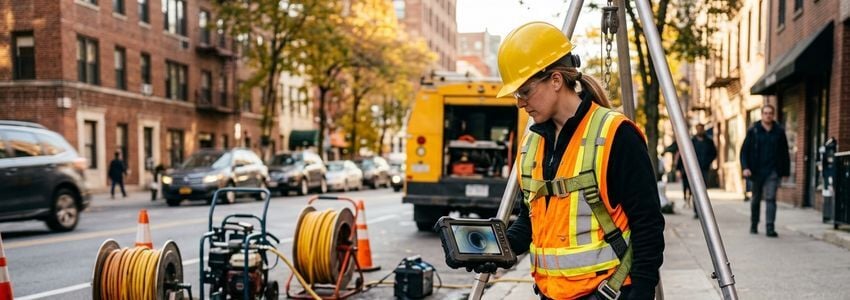
- Pipe Inspection Camera Crawlers - self-propelled or push-rod camera systems used to diagnose pipe condition before any repair method is chosen.
- Sectional Point Repair Tools - compact patch systems for spot repairs on localized cracks, root intrusion, or joint separations.
- Pipe Coating and Spray Lining Rigs - equipment that applies epoxy or polymer coatings to the interior of pipes for corrosion and leak prevention.
- Support Vehicles and Trailers - the trucks, trailers, and generators that haul and power trenchless rigs on job sites, which can often be bundled into the same financing package.
Many contractors finance a complete trenchless package in a single transaction, bundling a camera inspection unit, a CIPP or bursting rig, and a support vehicle together so the whole fleet is operational on day one.
Who This Financing Is Best For
Trenchless pipe repair equipment financing makes the most sense for a specific range of businesses, though the exact fit varies by situation.
- Plumbing contractors expanding into trenchless services who want to add a higher-margin service line without competing purely on dig-and-replace pricing.
- Utility and excavation contractors bidding on municipal sewer and water rehabilitation contracts that specifically call for trenchless methods.
- Specialty trenchless companies that are scaling from one crew to multiple crews and need a second or third rig to take on concurrent jobs.
- Property management and facilities companies that handle their own underground pipe maintenance across a large portfolio and want to bring trenchless work in-house instead of subcontracting it.
- Established contractors with seasonal cash flow who want equipment payments structured around busier months rather than a lump-sum purchase that strains a slow season.
Loan vs. Lease vs. Line of Credit
| Option | Best For | Ownership | Typical Term |
|---|---|---|---|
| Equipment Loan | Contractors who want to own the rig outright and build equity | You own it from day one | 24-72 months |
| Equipment Lease | Contractors who want lower payments or plan to upgrade equipment regularly | Option to buy, renew, or return at term end | 36-60 months |
| Business Line of Credit | Covering parts, resin, liner tubes, or smaller point-repair tools as needed | You own what you draw funds to purchase | Revolving, draw as needed |
A loan tends to make the most sense for contractors who plan to keep a rig in service for five-plus years and want to eventually own it free and clear. A lease is a better fit if you expect to upgrade cameras or cure systems every few years to stay current with the latest technology, or if you want to keep monthly payments as low as possible while the business is still growing. A business line of credit works well alongside either option, giving you access to funds for consumables like liner felt, resin, and replacement cutter heads without applying for new financing every time.
How Crestmont Capital Helps
Crestmont Capital works with trenchless and underground utility contractors across the country to structure financing that fits the realities of the business: seasonal revenue swings, large upfront equipment costs, and the need to move fast when a bid deadline is approaching.
Through our equipment financing and commercial equipment financing programs, contractors can finance new or used equipment, including CIPP rigs, pipe bursting systems, and inspection camera crawlers, with approval decisions often delivered within a day. For contractors who prefer to preserve ownership flexibility, our equipment leasing programs offer lower monthly payments with end-of-term purchase options.
We also support the broader excavation and utility contracting side of the business. If your trenchless work is paired with open-cut excavation on larger projects, our excavating equipment financing program and our plumbing business loans resources cover the rest of the fleet. Contractors who already run hydro excavation trucks as part of their utility work can also review our hydrovac truck financing guide for financing structures on that side of the business. And for shops just getting into pipe rehabilitation, our deep-dive on pipe lining equipment financing covers CIPP-specific considerations in more detail.
Whatever stage your trenchless business is at, from winning your first municipal contract to scaling a multi-crew operation, Crestmont Capital can help structure a financing package around your cash flow instead of forcing your cash flow to adapt to a rigid loan structure.
Win More Municipal and Utility Contracts
Get the trenchless equipment you need to bid with confidence. Fast approvals, flexible terms.
Apply Now →Trenchless Pipe Repair, By the Numbers
By the Numbers
Trenchless Pipe Repair Market, Key Statistics
260K
Water main breaks per year in the U.S. and Canada
$625B
Estimated U.S. water infrastructure investment need over 20 years (EPA)
33%
Water mains in the U.S. and Canada over 50 years old
6B Gal
Treated water lost daily in the U.S. from aging pipe leaks
Real-World Scenarios
Scenario 1: The Plumbing Contractor Branching Out
A mid-sized plumbing company with six crews was consistently losing bids on sewer line repairs to specialty trenchless firms. They financed a mid-range CIPP system and a push-camera crawler, bundled into one monthly payment that was less than the revenue from a single trenchless job per month. Within a year, trenchless repairs had become one of their highest-margin service lines.
Scenario 2: The Municipal Bid Deadline
A utility contracting firm identified a county sewer rehabilitation contract requiring trenchless point repair capability they did not yet own. With financing approved in under 48 hours, they purchased the required equipment, submitted a compliant bid, and secured a multi-year contract that otherwise would have gone to a competitor.
Scenario 3: The Scaling Operation
A trenchless specialty company running one bursting rig turned down work during peak season because the single crew was booked solid for months. Financing a second complete rig, including bursting heads, hydraulic power unit, and a support trailer, let them run two crews simultaneously, roughly doubling revenue capacity without doubling fixed overhead.
Scenario 4: The Equipment Upgrade
An established trenchless contractor was still running an older inversion-based CIPP system that required steam cure and longer job-site time. Leasing a newer UV-cure system cut cure time dramatically, letting crews complete more jobs per week and improving their bid competitiveness on time-sensitive municipal projects.
Frequently Asked Questions
Don't Let Equipment Costs Slow Down Your Growth
Get pre-qualified for trenchless equipment financing today. Fast, simple, and built around your business.
Apply Now →Next Steps
Conclusion
Trenchless pipe repair equipment financing lets contractors add high-demand, high-margin service capability without draining cash reserves on a single large equipment purchase. With water and sewer infrastructure continuing to age across the country, demand for trenchless repair is not slowing down, and contractors equipped with the right CIPP, bursting, and inspection technology are best positioned to win that work. Whether you are buying your first rig or scaling to a second or third crew, structuring the right financing can make the difference between watching opportunities pass by and being ready to say yes.
Disclaimer: The information provided in this article is for general educational purposes only and is not financial, legal, or tax advice. Funding terms, qualifications, and product availability may vary and are subject to change without notice. Crestmont Capital does not guarantee approval, rates, or specific outcomes. For personalized information about your business funding options, contact our team directly.