Battery energy storage system financing has become one of the fastest-growing requests we see from commercial property owners, manufacturers, and facility managers across the country. Rising electricity costs, volatile demand charges, and more frequent grid disruptions are pushing businesses of every size to look seriously at installing a battery energy storage system (BESS) on-site.
The challenge is rarely whether a battery storage system makes financial sense. The challenge is finding the right financing structure to cover a project that can run from the low six figures for a small commercial installation to seven figures for an industrial-scale deployment. This guide walks through exactly how battery energy storage system financing works, what it costs, how the math pays off, and how to qualify.
In This Article
- What Is a Battery Energy Storage System?
- Key Benefits of On-Site Battery Storage
- How Battery Energy Storage System Financing Works
- Types of Financing Available
- Who Battery Storage Financing Is Best For
- Battery Storage vs. Other Financing Options
- How Crestmont Capital Helps
- Real-World Scenarios
- FAQ
- Next Steps
What Is a Battery Energy Storage System?
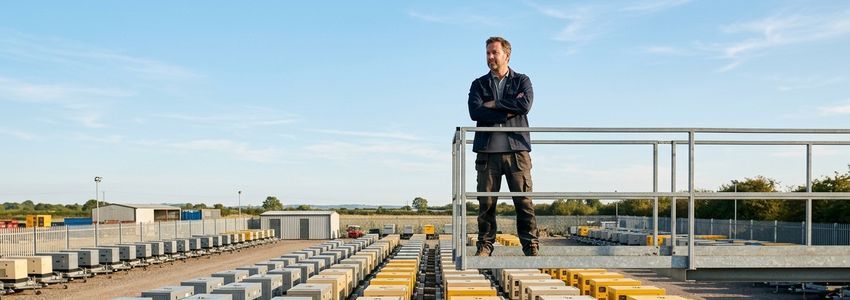
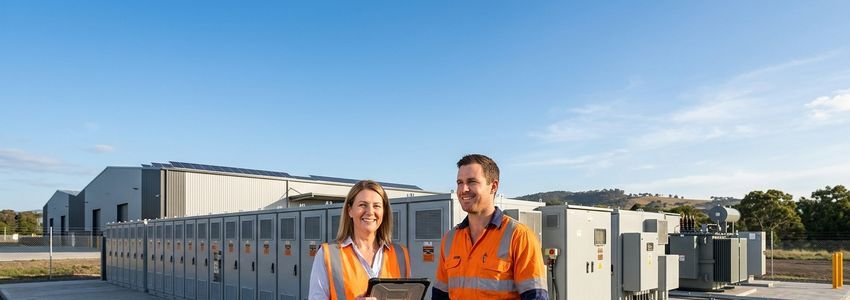
A battery energy storage system is a commercial-scale battery installation, typically lithium-ion, that stores electricity so a business can use it later instead of pulling everything directly from the utility grid in real time. Systems range from compact units the size of a utility cabinet to containerized installations occupying a dedicated pad outside a facility.
Unlike a backup generator, a battery energy storage system is built to be used constantly, not just during outages. It charges during off-peak hours or from an on-site solar array, then discharges during the hours when electricity is most expensive or when the facility's demand spikes. For a business paying commercial utility rates, that distinction is where most of the return on investment comes from.
Battery energy storage system financing covers the full project cost: the battery cells and enclosure, the inverter and power conversion equipment, switchgear and electrical integration, engineering and permitting, and installation labor. Most commercial systems range from $300,000 for a modest facility to several million dollars for a large industrial site, which is why financing rather than a cash purchase is the norm.
The core components of a typical commercial system include the battery modules themselves (usually lithium iron phosphate chemistry for commercial applications, prized for safety and cycle life over other lithium chemistries), a bidirectional inverter that converts stored DC power to usable AC power, a battery management system that monitors cell health and controls charge and discharge cycles, and an energy management software layer that decides when to charge, when to discharge, and how to respond to utility price signals in real time. Understanding these components matters when evaluating vendor quotes, since cheaper proposals sometimes cut corners on the software layer that actually drives the savings.
Sizing a system correctly is one of the most important steps before financing is even discussed. A system that is too small will not meaningfully reduce demand charges during the facility's worst spikes, while an oversized system adds unnecessary cost without a proportional increase in savings. A qualified energy consultant or installer will typically pull 12 months of interval utility data to model your facility's actual demand profile before recommending a system size, and lenders increasingly expect to see that modeling as part of the financing package.
Key Benefits of On-Site Battery Storage
Businesses are not installing battery storage out of curiosity. The financial and operational case has become compelling enough that financing it, rather than waiting to save up cash, now makes economic sense for a wide range of commercial and industrial operators.
- Demand charge reduction: Many commercial utility bills include a demand charge based on the single highest spike in power draw during the billing period. A battery system can discharge during that spike, flattening it and cutting a charge that often represents 30 to 70 percent of the total bill.
- Time-of-use arbitrage: The system charges when electricity is cheap and discharges when rates are highest, shifting consumption away from peak pricing windows.
- Backup resilience: A properly sized system keeps critical operations running during a grid outage without the fuel logistics, emissions, and noise of a diesel generator.
- Federal tax credit eligibility: Standalone battery storage now qualifies for the federal Investment Tax Credit, which can offset a meaningful share of project cost for qualifying businesses.
- Revenue from grid services: In many utility territories, businesses can enroll their battery system in demand response or grid services programs and earn additional income for making stored capacity available to the grid during peak events.
- Protection against rate volatility: As commercial electricity rates continue to climb, a battery system locks in a hedge against future price increases.
Key Stat: The U.S. energy storage industry installed a record 57.6 gigawatt-hours of new capacity in 2025, a 30 percent increase over the prior year and roughly four times the capacity installed just three years earlier, according to industry tracking cited by Forbes.
Beyond the direct bill savings, there is a less obvious benefit many business owners do not consider until they are already deep into a project: avoided infrastructure costs. When a facility's planned expansion would push demand past what the existing utility service can handle, the utility may require an expensive service upgrade, new transformers, or additional substation capacity, often at the business's expense and on a timeline measured in months or years. A properly sized battery system can manage that incremental demand internally, letting a business expand operations without waiting on, or paying for, a utility infrastructure project.
Ready to Reduce Your Energy Costs?
Get fast, flexible financing from the #1 business lender in the U.S. No obligation, apply in minutes.
Apply Now →How Battery Energy Storage System Financing Works
Battery energy storage system financing works similarly to other large commercial equipment financing, with a few wrinkles specific to the energy sector. Here is the typical process from application to a system that is live and generating savings.
- Project scoping and sizing: Your installer or energy consultant sizes the system based on your facility's load profile, utility rate structure, and whether the battery will pair with existing solar. This determines total project cost.
- Lender application: You submit basic business financials, the installer's quote or proposal, and details on the equipment being financed. Most lenders can issue a preliminary approval within a few business days.
- Underwriting review: The lender reviews business credit, time in business, revenue, and the equipment vendor's quote. Because the battery system itself typically serves as collateral, underwriting focuses heavily on cash flow and the vendor's track record.
- Terms and structure: You choose between an equipment finance agreement, a lease, or a structured loan, with terms typically running 5 to 10 years depending on the expected useful life of the system.
- Funding and installation: Once approved, funds are disbursed to the equipment vendor or installer, often in milestone-based draws tied to delivery, installation, and commissioning.
- Interconnection and commissioning: The system is installed, inspected, and interconnected with the utility. Most installers also handle the paperwork for any applicable utility incentive programs.
- Ongoing operation: The battery begins operating automatically, typically managed by software that optimizes charge and discharge cycles against your actual utility rate schedule.
Types of Financing Available for Battery Storage Projects
Several financing structures work for battery energy storage projects, and the right one depends on your balance sheet, tax position, and how you want the asset to show up on your books.
Equipment Finance Agreements
An equipment finance agreement functions like a loan secured by the battery system itself. You make fixed monthly payments over a set term and own the equipment outright at the end. This is the most common structure for businesses that want to build equity in the asset and claim available tax credits and depreciation.
Equipment Leasing
A lease structure can lower the upfront qualification bar and may offer lower monthly payments, with the option to purchase the system at the end of the term, renew, or return the equipment. This can work well for businesses prioritizing cash flow preservation over asset ownership.
Working Capital Loans Paired with Equipment Financing
Some businesses use a working capital loan or business line of credit alongside equipment financing to cover soft costs like engineering, permitting, and interconnection fees that are not always bundled into the core equipment quote.
SBA Loans
For businesses that qualify, SBA 7(a) and 504 loans can be used to finance fixed equipment like a battery energy storage system, often with longer repayment terms and lower down payment requirements than conventional financing, according to the U.S. Small Business Administration.
The SBA 504 program in particular was built for exactly this kind of fixed-asset project. It typically pairs a conventional lender covering up to half of the project cost with a Certified Development Company backing the remainder through an SBA-guaranteed debenture, and the borrower contributing a smaller down payment than would be required on a conventional commercial loan. The tradeoff is a longer, more document-intensive approval process, which is why many businesses pursue SBA financing alongside a faster equipment finance agreement to cover any gap in timing.
Power Purchase Agreements and Energy-as-a-Service
Some vendors offer a power purchase agreement or energy-as-a-service structure where a third party owns and maintains the battery system, and your business simply pays for the energy savings it generates, with no upfront cost and no equipment on your balance sheet. This removes financing risk entirely but typically means giving up the tax credit and depreciation benefits that come with ownership, along with a longer-term financial commitment to the energy provider.
By the Numbers
Battery Energy Storage Financing: Key Statistics
57.6 GWh
New U.S. energy storage capacity installed in 2025
30-70%
Share of a commercial bill that can come from demand charges
5-10 Yrs
Typical equipment financing term for a BESS project
63%
Year-over-year growth in total U.S. installed battery capacity
Who Battery Storage Financing Is Best For
Battery energy storage system financing tends to make the most sense for businesses with a specific combination of electricity usage patterns and operational priorities.
- Manufacturers and industrial facilities with heavy equipment that creates sharp demand spikes, where peak shaving delivers an immediate, measurable bill reduction.
- Warehouses and distribution centers running forklift charging stations, refrigeration, and conveyor systems that drive demand charges higher than their total energy usage would suggest.
- Commercial real estate owners looking to add resilience and a competitive amenity for tenants while reducing operating expenses passed through in a lease.
- Agricultural operations with irrigation pumps, cold storage, or processing equipment that creates seasonal demand peaks.
- Businesses already running solar that want to store excess generation rather than selling it back to the grid at a lower rate than retail.
- Facilities in utility territories with high demand charges or time-of-use rate structures, where the arbitrage opportunity between cheap and expensive electricity hours is largest.
Battery Storage Financing vs. Other Financing Options
Business owners evaluating battery storage financing often wonder how it compares to simply financing a backup generator, or whether a cash reserve makes more sense than taking on monthly payments. The honest answer depends heavily on what you are trying to solve. A generator is purely a resilience play, it sits idle until the power goes out, and its financing is usually simpler and cheaper upfront. A battery system is working every single day to reduce your bill, which means the financed payment is largely self-funding through savings, but the equipment itself and the controls software represent a bigger upfront investment.
| Option | Best For | Typical Term | Key Tradeoff |
|---|---|---|---|
| Equipment Finance Agreement | Businesses wanting ownership and depreciation benefits | 5-10 years | Higher qualification bar than a lease |
| Equipment Lease | Businesses preserving cash flow | 3-7 years | May not retain full tax credit benefit |
| SBA 504 Loan | Established businesses, longer horizon | 10-20 years | Longer approval timeline, more documentation |
| Working Capital Loan | Soft costs and gap funding | 1-3 years | Higher rate, not matched to asset life |
How Crestmont Capital Helps
Crestmont Capital works with business owners across every industry to structure financing for large commercial equipment, including capital equipment financing for projects like battery energy storage systems. Our team understands that a BESS installation is not a standard off-the-shelf equipment purchase, and we structure terms around your facility's actual electricity savings rather than forcing the deal into a generic equipment loan template.
If your business is also exploring solar alongside storage, our solar business financing guide covers how paired solar-plus-storage projects are typically structured. For facilities that need backup power without a full battery system, our generator financing guide walks through that alternative path.
We also offer equipment leasing for businesses that want to preserve capital, a business line of credit to cover soft costs like permitting and interconnection fees, and SBA loan options for businesses that qualify for government-backed terms. Our commercial financing team can walk you through which structure fits your facility's cash flow and tax position.
Let's Structure the Right Financing for Your Facility
Whether you need a full equipment finance agreement or a lease, our team can move quickly. No obligation, apply in minutes.
Apply Now →Real-World Scenarios
Scenario 1: Food Processing Plant Cutting Demand Charges
A mid-size food processing facility in California was facing demand charges that made up more than half of its monthly electricity bill due to refrigeration compressors cycling on simultaneously. The owner financed a 500 kWh battery system through an equipment finance agreement with a 7-year term. The system now shaves the facility's peak demand automatically, and the monthly savings on the utility bill cover most of the loan payment.
Scenario 2: Distribution Center Pairing Storage with an Existing Solar Array
A regional distribution center had installed rooftop solar two years earlier but was still exporting excess generation back to the grid at a low buyback rate. The company financed a battery addition to store that excess solar power and use it during the evening demand peak instead, improving the return on their original solar investment.
Scenario 3: Manufacturing Facility Avoiding a Costly Utility Upgrade
A metal fabrication shop was told by its utility that a planned equipment expansion would require an expensive service upgrade to support new peak demand. Instead, the business financed a battery storage system sized to manage the new equipment's demand spikes internally, avoiding the utility infrastructure charge entirely and paying for the system through the resulting bill savings.
Scenario 4: Commercial Real Estate Owner Adding Resilience
A commercial property owner with several tenants in a region prone to grid instability financed a battery storage system to guarantee uninterrupted power for critical tenant operations. The system pays for itself through both demand charge reduction and the ability to market the property as having guaranteed backup power.
Frequently Asked Questions
Stop Overpaying for Electricity
See what financing options are available for your facility's battery energy storage project. No obligation, apply in minutes.
Apply Now →Next Steps
Have an installer size your system and provide a formal proposal.
Recent bank statements and utility bills showing demand charges.
Submit your application and get a financing structure tailored to your project.
Once commissioned, the system begins reducing demand charges automatically.
Conclusion
Battery energy storage system financing has moved from a niche request to a mainstream commercial equipment financing category, and the math behind it keeps getting stronger as demand charges rise and utility rate volatility increases. Whether you are looking to shave peak demand at a manufacturing plant, add resilience to a commercial property, or make better use of an existing solar array, the right financing structure can turn a six or seven-figure project into a manageable monthly payment that often pays for itself through the savings it generates.
The businesses that get the most value out of battery energy storage system financing are usually the ones that treat it as an operating decision, not just a capital expense. Pulling your utility interval data, getting a real vendor quote, and comparing financing structures side by side before committing will put you in a far stronger position than financing the first proposal that lands on your desk.
Crestmont Capital works with business owners to structure battery energy storage system financing around the real-world economics of the project, not a generic equipment template. If you are ready to explore financing for your facility, our team can help you find the right structure and move quickly.
Disclaimer: The information provided in this article is for general educational purposes only and is not financial, legal, or tax advice. Funding terms, qualifications, and product availability may vary and are subject to change without notice. Crestmont Capital does not guarantee approval, rates, or specific outcomes. For personalized information about your business funding options, contact our team directly.