Ground support equipment financing gives airport service companies, fixed-base operators, cargo handlers, and ground handling contractors a way to acquire belt loaders, baggage tugs, pushback tractors, deicing trucks, and other tarmac equipment without draining working capital. Whether you are replacing an aging fleet or expanding into a new airport contract, understanding how ground support equipment financing works can mean the difference between winning a bid and watching it go to a better-capitalized competitor.
This guide breaks down everything a business owner needs to know about financing ground support equipment (GSE): how it works, what types of equipment qualify, who typically uses this financing, how it compares to other funding options, and how to apply with confidence.
In This Article
What Is Ground Support Equipment Financing?
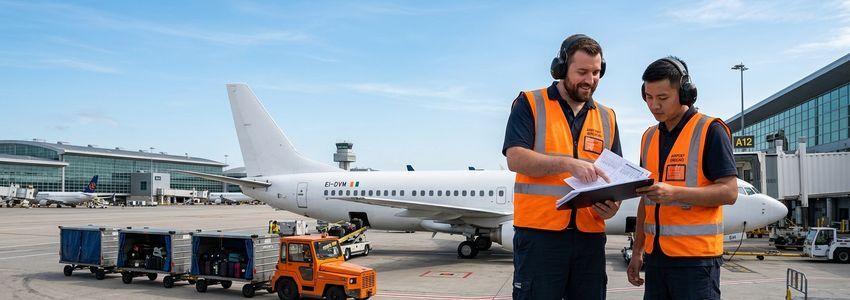
Ground support equipment financing is a type of commercial equipment financing specifically structured for the machinery that keeps aircraft moving on the ground. This includes belt loaders, baggage tugs and tow tractors, pushback tractors, deicing trucks, lavatory service trucks, ground power units (GPUs), air start units, and container/pallet loaders used by airlines, fixed-base operators (FBOs), cargo handlers, and third-party ground handling companies.
Because ground support equipment is specialized, expensive, and often custom-built to FAA and airport authority specifications, most operators cannot pay cash for a full fleet. Financing allows a business to spread the cost of equipment over a term that matches the useful life of the asset, typically three to seven years, while putting the equipment to work generating revenue immediately.
Unlike a general business loan, ground support equipment financing is secured primarily by the equipment itself. This usually means faster approvals, more flexible credit requirements, and financing structures tailored to the realities of airport operations, including seasonal demand swings tied to holiday travel and weather-driven deicing needs.
Key Stat: The U.S. Census Bureau counted 1,803 active companies classified under NAICS code 488190 (Other Support Activities for Air Transportation) in 2022, employing nearly 94,000 workers nationwide, an entire industry built around keeping aircraft serviced, fueled, and moving on the ground.
Key Benefits of Ground Support Equipment Financing
- Preserve working capital. Keep cash available for payroll, insurance, fuel, and unexpected repairs instead of tying it up in a single equipment purchase.
- Match payments to revenue. Structure monthly payments around the contract or route schedule the equipment supports.
- Access newer, more reliable equipment. Reduce unplanned downtime and costly tarmac delays that can trigger contract penalties with airlines or airport authorities.
- Potential tax advantages. Equipment financing structures, including leases, can offer favorable treatment depending on your business's financial situation (consult your accountant for specifics relevant to your business).
- Fast approval timelines. Because the equipment secures the financing, approvals often move faster than unsecured credit products.
- Flexible terms for seasonal operations. Deicing trucks and winter-weather GSE can be financed with payment structures that account for seasonal usage patterns.
- Scale with contract growth. Add equipment quickly when you win a new airport contract or add a new airline client, without a long capital-raising process.
Ready to Upgrade Your Ground Support Fleet?
Get fast, flexible financing from the #1 business lender in the U.S. No obligation, apply in minutes.
Apply Now →How Ground Support Equipment Financing Works
The process for financing ground support equipment generally follows a straightforward path, though the exact steps can vary depending on the lender and the size of the equipment package.
- Identify the equipment. Get a quote from an OEM or dealer for the belt loader, tug, pushback tractor, deicing truck, or other GSE you need, new or used.
- Submit an application. Most lenders ask for basic business information, time in business, and the equipment quote. Many equipment financing applications under a certain dollar threshold require minimal documentation.
- Underwriting review. The lender evaluates your business's financial health, time in business, and the specific equipment being financed. Airport operators with existing contracts or ramp agreements often strengthen an application.
- Approval and terms. Once approved, you receive a term sheet outlining the rate, term length, monthly payment, and any down payment or first-and-last-payment requirement.
- Funding. The lender pays the equipment vendor directly (or reimburses you for equipment already purchased in some sale-leaseback structures), and you take delivery of the equipment.
- Repayment. You make fixed monthly payments over the agreed term, typically 36 to 84 months depending on the equipment type and expected useful life.
Many equipment financing companies offer both loan structures (where you own the equipment from day one and build equity) and lease structures (where you may have lower monthly payments with an option to purchase, renew, or return the equipment at the end of the term). The right structure depends on your business's cash flow, tax situation, and whether long-term ownership or flexibility matters more to your operation.
Documentation Lenders Typically Request
The documentation required for ground support equipment financing is generally lighter than what a bank might require for a traditional term loan. Most lenders will ask for some combination of the following:
- Basic business information, including legal entity name, time in business, and industry classification
- Recent bank statements, typically the last three to six months
- A copy of the equipment quote or invoice from the vendor
- Business tax returns for larger financing requests
- Proof of an existing or pending airport, airline, or ground handling contract, which can strengthen an application considerably
- A personal guarantee from a business owner, which is standard for most small and mid-size equipment financing arrangements
For financing requests under a certain threshold, often in the range of $100,000 to $250,000, many lenders offer streamlined "app-only" underwriting that skips the full tax return and financial statement review, relying instead on a short application and a bank statement review. This can shorten the time from application to funding considerably, which matters when you're racing to meet a contract start date.
Rates and Terms: What Affects Your Pricing
Pricing on ground support equipment financing depends on several factors working together rather than any single variable. Lenders generally weigh:
- Time in business. Established operators with several years of contract history typically see better pricing than newer entrants.
- Equipment age and type. New equipment from established OEMs often qualifies for longer terms and better rates than older used equipment, which depreciates faster and carries more maintenance risk.
- Business cash flow and revenue. Consistent, verifiable cash flow from airline or airport contracts gives lenders confidence in repayment ability.
- Down payment. A larger down payment can sometimes improve pricing or approval odds, particularly for newer businesses.
- Overall credit profile. While equipment financing is more flexible than unsecured lending, credit history still plays a role in the final rate offered.
Because ground support equipment financing is a relatively specialized niche within commercial equipment finance, working with a lender who understands the aviation ground handling business, including seasonal demand and the realities of airport contract cycles, can make a meaningful difference in both approval odds and the terms you're offered.
Types of Ground Support Equipment You Can Finance
Ground support equipment financing covers a wide range of specialized machinery. Common categories include:
- Belt loaders, conveyor systems that move baggage and cargo from the ramp to the aircraft cargo hold
- Baggage tugs and tow tractors, which pull trains of baggage carts across the ramp
- Pushback tractors, used to move aircraft away from the gate before taxi
- Deicing trucks, specialized vehicles with boom-mounted spray systems for winter operations
- Ground power units (GPUs), which supply electrical power to parked aircraft
- Air start units, which provide compressed air to start aircraft engines
- Lavatory and water service trucks
- Container and pallet loaders (K-loaders) for cargo operations
- Passenger stairs and boarding equipment
- De-icing fluid trucks and glycol recovery vehicles
Both new and used equipment typically qualify for financing, and many lenders will also finance refurbished GSE from certified remanufacturers, which can be a cost-effective way to add fleet capacity.
By the Numbers
Ground Support Equipment Financing — Key Statistics
$1.3T
Annual economic activity generated by the U.S. equipment finance industry
5.9%
Projected year-over-year growth in equipment financing originations
1,803
Active U.S. companies in ground and air transportation support services (NAICS 488190)
73%
Full approval rate reported for equipment and auto-type loans industry-wide
Who This Financing Is Best For
Ground support equipment financing is used across a range of aviation-adjacent businesses, including:
- Independent ground handling companies contracted by airlines to manage ramp operations at one or more airports
- Fixed-base operators (FBOs) servicing general aviation and corporate aircraft
- Air cargo and freight handlers that need belt loaders and container loaders for cargo turnaround
- Deicing service contractors who need to scale equipment ahead of winter weather season
- Regional airports and municipal authorities that operate their own ground support fleet
- Charter and private aviation operators who need GSE to service their own aircraft without relying on third-party vendors
Businesses that have won a new ramp handling contract, are expanding service to an additional airport, or are replacing aging equipment that no longer meets airline safety and reliability standards are strong candidates for this type of financing.
Financing vs. Leasing vs. Buying Used
Business owners evaluating how to acquire ground support equipment generally choose between three paths: financing (a loan that builds equity), leasing (lower payments with flexible end-of-term options), or purchasing used equipment outright. Each has tradeoffs.
| Option | Best For | Key Tradeoff |
|---|---|---|
| Equipment Financing (Loan) | Operators who want to own equipment and build long-term asset value | Higher monthly payment than a lease, but you own the asset |
| Equipment Leasing | Operators who want lower payments and flexibility to upgrade equipment every few years | You may not build equity; end-of-term buyout required for ownership |
| Buying Used Outright | Operators with available capital who want zero ongoing payment obligation | Ties up working capital; higher maintenance risk on older equipment |
For most ground handling and ramp operations businesses, financing or leasing is preferable to an outright cash purchase because it keeps capital available for payroll, fuel, insurance, and the day-to-day costs of running an airport operation. A used equipment financing option can also be a strong middle ground, letting you acquire reliable, lower-cost GSE from certified dealers without the full price tag of new equipment.
Need to Replace Aging Ramp Equipment Fast?
Crestmont Capital structures financing around your contract schedule, not the other way around.
Apply Now →How Crestmont Capital Helps
Crestmont Capital works with ground handling companies, FBOs, cargo operators, and aviation service businesses to structure equipment financing and equipment leasing solutions built around the realities of airport operations. Our team understands that ramp equipment needs to be funded quickly, often ahead of a new contract start date or a winter weather season, and we structure terms accordingly.
For businesses pursuing larger aircraft-related assets alongside ground equipment, we also offer commercial aircraft financing. If your business is still building credit history or working through a recent change in ownership, our SBA loan programs may offer additional flexibility for larger equipment packages. We also work with operators who need a complementary financing product; see our guide on aviation maintenance equipment financing for related tooling and shop equipment, and our dedicated breakdown of belt loader financing and leasing for a closer look at one of the most commonly financed ramp assets.
Our underwriting process looks beyond a basic credit score. We take time in business, contract pipeline, and the specific equipment being financed into account, which allows us to approve applications that a traditional bank might decline outright.
Real-World Scenarios
Scenario 1: Winning a new ramp handling contract. A regional ground handling company lands a contract to service a new airline client at a mid-size airport. The contract requires two belt loaders and a pushback tractor within 60 days. Rather than drawing down cash reserves, the company finances the full equipment package, matching monthly payments to the new contract's revenue stream.
Scenario 2: Preparing for winter operations. A deicing service contractor needs to add a second deicing truck ahead of an early winter storm season. Financing allows the business to acquire the truck in time for the season without waiting to accumulate enough cash reserves, which could mean missing critical revenue during peak deicing demand.
Scenario 3: Replacing aging equipment before it fails inspection. An FBO's 12-year-old baggage tug begins failing routine maintenance checks. Rather than risk an unplanned breakdown mid-season, the owner finances a replacement tug, keeping ramp operations running smoothly and avoiding potential service penalties from client airlines.
Scenario 4: Expanding to a second airport. A cargo ground handler wins a bid to service a second regional airport. The company needs a full equipment package, including a container loader, ground power unit, and tow tractor, to stand up operations at the new location. Equipment financing lets the business scale without diluting ownership or taking on an unsecured business loan at a higher rate.
Scenario 5: Upgrading from leased to owned equipment. After several years of leasing ground support equipment, an operator decides that owning the fleet outright makes more sense for long-term cost control. The business refinances into equipment loans, building equity in assets it will use for years to come.
Scenario 6: Responding to an unplanned equipment failure mid-season. A ground power unit fails during peak summer travel season, right as flight volume and gate turnarounds hit their yearly high. Rather than scrambling for a short-term rental at premium rates, the operator secures fast equipment financing, gets a replacement GPU on the ramp within days, and avoids the recurring cost of emergency rental equipment for the rest of the season.
Key Stat: The U.S. equipment finance industry accounts for roughly $1.3 trillion in annual economic activity, with originations projected to grow nearly 6% year-over-year as businesses replace deferred equipment purchases and invest in newer, more reliable assets.
Don't Let Equipment Delays Cost You a Contract
Apply today and get a decision fast, before your next ramp deadline arrives.
Apply Now →Industry Outlook: Why Demand for Ground Support Equipment Is Growing
Several converging trends are increasing demand for reliable, well-maintained ground support equipment across the U.S. airport ecosystem. Understanding these trends can help business owners make a stronger case for investment, whether to a lender or to their own leadership team.
First, airline capacity continues to grow even as the broader passenger traffic growth rate moderates. More flights and gate turnarounds mean more wear on ramp equipment and a greater need for redundancy so a single equipment failure doesn't cascade into flight delays.
Second, the aviation industry has faced well-documented ground handling staffing pressure in recent years, which has pushed more airlines to outsource ramp operations to third-party ground handling companies. That shift creates opportunity for independent operators willing to invest in modern, reliable equipment that can win and retain airline contracts.
Third, many airports and ground handling fleets are aging. Equipment purchased a decade or more ago is reaching the end of its reliable service life at the same time airlines are tightening on-time performance and reliability standards for their ground handling partners. That combination is pushing more operators to replace equipment proactively rather than run it until failure.
Key Stat: Global airport passenger traffic reached a record 9.8 billion passengers in 2025 and is forecast to climb further in 2026, keeping pressure on ramp operations and the ground support equipment that keeps them running on schedule.
For business owners operating in this space, the practical takeaway is straightforward: equipment reliability is becoming a bigger competitive differentiator, and financing is often the fastest path to acquiring that reliability without disrupting cash flow.
Frequently Asked Questions
Next Steps
Identify the specific GSE you need, new, used, or refurbished, and get pricing from your vendor.
Have time-in-business details, recent financials, and any relevant airport or airline contracts ready.
Apply online and compare term options once you receive an approval.
Once funded, your equipment is delivered and ready to support your airport operation.
Conclusion
Ground support equipment financing gives airport service businesses a practical way to acquire the belt loaders, tugs, pushback tractors, and deicing equipment that keep ramp operations running, without tying up the working capital needed to run the rest of the business. Whether you're scaling into a new airport contract, preparing for winter weather season, or replacing equipment that's reaching the end of its useful life, the right financing structure can get equipment on the ramp faster and on terms that fit your cash flow.
If you're ready to explore ground support equipment financing for your business, Crestmont Capital can help you find a structure that fits your contract schedule and growth plans.
Get Your Ground Support Equipment Financed Today
Apply in minutes and get a decision fast, no obligation.
Apply Now →Sources: U.S. Small Business Administration, U.S. Census Bureau, Forbes.
Disclaimer: The information provided in this article is for general educational purposes only and is not financial, legal, or tax advice. Funding terms, qualifications, and product availability may vary and are subject to change without notice. Crestmont Capital does not guarantee approval, rates, or specific outcomes. For personalized information about your business funding options, contact our team directly.