
 (800) 949-0401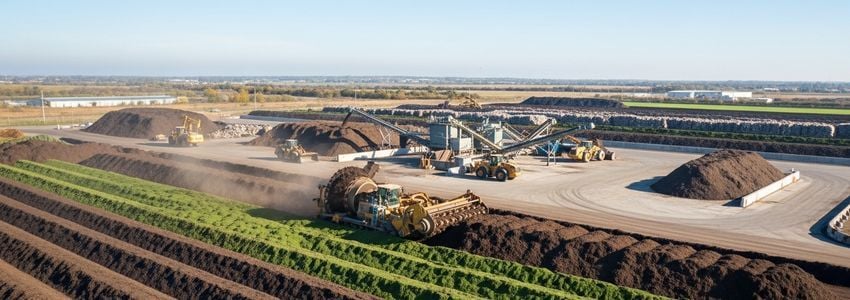
Composting Business Loans: The Complete Financing Guide for Composting Business Owners
Composting business loans give entrepreneurs in the organic waste and soil amendment industry the capital they need to launch, expand, or upgrade their operations. Whether you run a food waste collection route, operate a large-scale windrow composting facility, or sell finished compost products to landscapers and retailers, access to business financing can be the difference between staying small and scaling up. This guide covers everything composting business owners need to know about finding and securing the right funding.
In This Article
What Are Composting Business Loans?
Composting business loans are commercial financing products designed to help composting companies fund the operations, equipment, and growth investments they need to succeed. Just like loans for any other industry, these products can come from banks, credit unions, online lenders, and specialized business finance companies like Crestmont Capital. The key difference is that composting businesses often have capital needs that are very specific to organic waste processing, including large-scale equipment, land, permits, and fleet vehicles.
A composting loan can be used for a wide variety of purposes: purchasing a trommel screen or windrow turner, acquiring land for a new composting pad, hiring and training workers, covering operating costs between contracts, or marketing your finished compost products. Unlike a line of credit, term loans provide a lump sum upfront with fixed monthly payments, making them ideal for planned expansions. Lines of credit are better suited for fluctuating day-to-day expenses.
The composting industry sits at the intersection of environmental services, agriculture, and waste management, which means business owners often qualify for financing through multiple channels. Understanding all your options puts you in the best position to negotiate favorable terms and grow your operation sustainably.
Why Composting Businesses Need Financing
Starting or scaling a composting business requires significant upfront capital that most owners cannot fund out of pocket. Industrial composting equipment alone can range from $50,000 for a basic setup to well over $500,000 for a full-scale facility with multiple processing lines. Add site preparation, regulatory permitting, collection vehicles, and working capital, and the total investment can easily reach seven figures for a mid-sized commercial operation.
Even established composting businesses regularly need financing to stay competitive. Equipment wears out faster than in many industries due to constant exposure to moisture, organic acids, and heavy use. A single broken windrow turner or trommel screen can halt your entire processing operation and cost you contracts. Having access to fast business capital means you can repair or replace critical equipment before a small problem becomes a revenue-destroying crisis.
Seasonal cash flow is another major challenge in composting. Municipal contracts often pay on net-30 or net-60 terms, while your labor and input costs hit every two weeks. A business line of credit can bridge that gap and keep payroll covered even when invoices are still outstanding. Growth opportunities, like winning a new municipal contract or expanding to a second site, also require capital that must be deployed quickly before the window closes.
Types of Financing for Composting Operations
There is no single "composting loan" product. Instead, composting business owners can choose from several types of financing depending on the purpose, amount, and timeline of their needs. Understanding the differences helps you select the most cost-effective option for each situation.
Term Loans: A fixed lump sum repaid over a set period, typically 1 to 10 years. Term loans are ideal for major purchases like equipment, land, or facility construction. They offer predictable monthly payments and can be structured with competitive rates for qualified borrowers. Small business loans in this category are the most common financing tool for composting operators expanding their capacity.
Equipment Financing: Loans or leases specifically tied to the equipment being purchased. The equipment serves as collateral, which often means lower rates and easier approval. This is a natural fit for composting businesses that need trommel screens, windrow turners, shredders, or collection trucks. Learn more about equipment financing options for composting operations in the dedicated section below.
SBA Loans: The U.S. Small Business Administration backs loans through approved lenders, reducing the lender's risk and allowing borrowers to access larger amounts at longer terms and lower rates. SBA loans through programs like the SBA 7(a) or SBA 504 are especially useful for composting businesses making major real estate or equipment investments. Visit SBA.gov for current program details and approved lender lists.
Business Lines of Credit: A revolving credit facility you draw from as needed, up to a set limit. Lines of credit work like a credit card for your business and are perfect for managing payroll, fuel, feedstock costs, and other operating expenses between contract payments. They are also useful for taking on new projects before your existing receivables clear.
Short-Term Loans: Designed for quick capital needs with repayment periods of 3 to 18 months. Short-term business loans are faster to approve than traditional bank loans and are good for bridging a cash flow gap or seizing a time-sensitive growth opportunity.
Invoice Financing: If you have outstanding invoices from municipal clients or commercial customers, you can borrow against those receivables for immediate cash. This is common among composting businesses with long payment cycles from government contracts.
Ready to Finance Your Composting Business?
Get fast, flexible financing from the #1 business lender in the U.S. No obligation - apply in minutes.
Apply Now ->How Much Can You Borrow?
Loan amounts for composting businesses vary widely based on the type of financing, your business profile, and the lender you work with. At Crestmont Capital, composting business owners can typically access anywhere from $10,000 to $5 million or more, depending on annual revenue and creditworthiness. Most small to mid-sized composting operations find that loans in the $50,000 to $500,000 range cover the majority of their financing needs.
For equipment-specific financing, the loan amount is generally tied to the purchase price of the equipment. Many lenders will finance up to 100% of the equipment cost, with the machine serving as collateral. This means a $200,000 windrow turner could be financed with no money down if your business qualifies. Term loans and SBA loans can reach into the millions for larger composting operations with strong financials.
Working capital loans and lines of credit are typically sized at 10% to 15% of your annual revenue. If your composting business generates $1 million per year in revenue, you might qualify for a line of credit in the $100,000 to $150,000 range. The most important factor is always the health of your business financials, your time in business, and your ability to demonstrate consistent revenue from contracts or product sales.
Who Qualifies for Composting Business Loans?
Lender requirements vary, but most business lenders look at a standard set of qualifications when evaluating composting business loan applications. The three most important factors are time in business, annual revenue, and personal credit score. Meeting basic thresholds in these areas opens the door to a wide range of financing products.
Time in Business: Most traditional lenders prefer businesses that have been operating for at least 2 years. Online lenders and alternative finance companies like Crestmont Capital often work with businesses that have been operating for just 6 to 12 months, making financing accessible to newer composting startups as well.
Annual Revenue: Lenders want to see enough cash flow to service the debt. A general rule is that your annual revenue should be at least 1.5x to 2x the annual loan payments. Most lenders require a minimum of $100,000 in annual revenue, though some programs start lower for startups or for very small equipment loans.
Credit Score: A personal credit score above 650 opens up the most options. Scores above 700 typically qualify for the best rates. Crestmont Capital also offers bad credit business loans for composting operators with lower scores who have strong revenue and business history. The credit score requirement is often less rigid for equipment financing, since the equipment itself provides security for the lender.
Industry-Specific Considerations: Composting businesses may also need to show proof of required environmental permits, operating licenses, and any municipal or commercial contracts in place. Lenders appreciate composting businesses with recurring revenue contracts because they demonstrate predictable cash flow. If you have long-term agreements with cities, counties, or commercial clients, those can significantly strengthen your loan application.
How to Apply: Step-by-Step Process
Applying for composting business financing does not need to be complicated. Here is a straightforward overview of what to expect when you work with Crestmont Capital or another business lender.
Step 1 - Gather Your Documents: Most lenders will ask for 3-6 months of business bank statements, your most recent tax returns (personal and business), a valid government-issued ID, and basic business information such as your EIN and operating license. Equipment loan applications may also need a vendor quote or invoice for the specific equipment you are purchasing.
Step 2 - Submit Your Application: With Crestmont Capital, you can complete the entire application online in minutes. The form covers your business basics, the loan amount you need, and the purpose of the funds. There is no obligation and no impact on your credit for submitting an initial inquiry.
Step 3 - Review Your Offers: Once your application is reviewed, you will receive one or more financing offers with clear terms including loan amount, rate, repayment period, and any fees. At Crestmont Capital, we walk you through each offer so you fully understand what you are agreeing to before signing anything.
Step 4 - Sign and Receive Funds: After selecting an offer and completing final verification, funds can be deposited into your business bank account as quickly as 24 to 48 hours for many products. Equipment financing may take a few additional days if the lender needs to pay the vendor directly.
The key to a smooth application process is having clean books and clear documentation. Composting businesses that maintain accurate financial records and can clearly explain how they will use the funds get approved faster and at better rates. For related insights on financing green businesses, check out our guide on organic farm business loans.
Composting Equipment Financing
Equipment is the backbone of every composting operation, and it represents one of the largest capital expenditures composting business owners face. The right equipment allows you to process more material faster, meet quality standards, and serve more clients. The wrong or outdated equipment creates bottlenecks, compliance risks, and equipment downtime that directly harms your bottom line.
Common Equipment Composting Businesses Finance:
- Windrow turners ($50,000 to $300,000+)
- Trommel screens and screeners ($30,000 to $150,000)
- Wood chippers and grinders ($20,000 to $100,000)
- Front-end loaders and skid steers ($40,000 to $150,000)
- Collection trucks and trailers ($80,000 to $250,000)
- Aerated static pile systems ($50,000 to $500,000)
- Enclosed in-vessel composting systems ($100,000 to $2,000,000+)
- Bagging and packaging equipment for compost product sales
Equipment financing through Crestmont Capital typically covers up to 100% of the equipment purchase price with terms from 24 to 84 months. Since the equipment itself secures the loan, approval is often faster and more accessible than unsecured term loans. The depreciation and interest on financed equipment may also be tax-deductible under Section 179 of the IRS tax code, so consult your accountant to maximize those benefits.
Leasing is another option for composting equipment, particularly for technology-heavy systems that may need to be upgraded in 5 to 7 years. With a lease, you pay for the use of the equipment rather than ownership, which preserves cash flow and gives you flexibility to upgrade as the industry evolves. The right choice between financing and leasing depends on your cash position, tax situation, and how long you expect to use the equipment. For a deeper dive on financing options for equipment-heavy businesses, see our resource on recycling business loans, which covers similar capital needs.
By the Numbers
Composting Business Industry - Key Statistics
4,700+
Composting facilities operating in the U.S.
30%+
Of all municipal solid waste is organic material that can be composted, per the EPA
$10B+
Projected U.S. composting market size by 2030, signaling strong growth ahead
$500K+
Typical cost to equip a full-scale commercial composting facility
How Crestmont Capital Helps Composting Businesses
Crestmont Capital is the #1 rated business lender in the United States, and we specialize in helping businesses in industries like composting that require significant equipment and working capital investment. Our team understands the unique financial challenges of composting operations: the seasonality, the contract-based revenue, the high equipment costs, and the need for fast access to capital when opportunities arise. We are not a one-size-fits-all lender.
We offer a wide portfolio of financing products including term loans, equipment financing, lines of credit, fast business loans, and SBA loan programs. This means that whatever your composting business needs, whether it is a $30,000 equipment loan for a trommel screen upgrade or a $1 million SBA loan for a new composting facility, we have the product to match. Our application process is fully online, decisions are fast, and our loan officers will work with you directly to find the best terms.
Unlike traditional banks that may not understand the composting industry or that require extensive collateral documentation, Crestmont Capital evaluates your business holistically. We look at your revenue trends, your client contracts, and your growth trajectory. Composting businesses with strong municipal contracts, growing product sales, or expanding service territories often qualify for better terms than their credit score alone might suggest.
Get Your Composting Business Funded Today
Flexible terms, fast approvals, and real support from the #1 U.S. business lender. Apply with no obligation.
Apply Now ->Real-World Scenarios
Understanding how other composting business owners have used financing can help you identify the right product for your own situation. Here are six real-world scenarios that illustrate how composting business loans work in practice.
Scenario 1 - Startup Composting Company Needs a Collection Fleet: Maria launched a food scrap collection business serving restaurants and schools in a mid-sized city. She needed two collection trucks and airtight containers totaling $180,000 to launch operations. She secured an equipment loan through Crestmont Capital with a 60-month term, using the trucks as collateral. Within eight months, she had signed contracts with 45 commercial clients and was cash-flow positive.
Scenario 2 - Municipal Compost Facility Expands Processing Capacity: A county-contracted composting operation in the Midwest was processing 20,000 tons per year but had signed a new contract requiring 35,000 tons of capacity. The operator needed a $400,000 windrow turner and site expansion. An SBA 7(a) loan provided 10-year financing at a competitive rate, with monthly payments that were easily covered by the expanded contract revenue.
Scenario 3 - Compost Product Retailer Needs Working Capital: An operator selling bagged compost and soil amendments to garden centers faced a seasonal cash crunch every spring. Sales spiked in March through June, but inventory had to be produced and stockpiled starting in January. A $75,000 business line of credit covered the gap between production costs and receivables, allowing the owner to stock shelves at the right moment without burning through reserves.
Scenario 4 - Vermicomposting Operation Buys Second Site: James ran a successful worm composting (vermicomposting) business supplying castings to organic farms and nurseries. He found a second property with existing greenhouse structures that would let him triple production. A $250,000 term loan from Crestmont Capital covered the property acquisition and initial buildout, with a 7-year repayment term that fit his revenue projections.
Scenario 5 - Equipment Breakdown Creates Emergency: A composting company's primary trommel screen broke down in the middle of peak season, halting all finished product shipments. The owner needed $60,000 to replace it immediately. Through Crestmont Capital's fast business lending program, she received approval within hours and funds within 24 hours, minimizing disruption and protecting her largest client relationships.
Scenario 6 - Compost Tea and Liquid Fertilizer Startup: An entrepreneur wanted to launch a liquid fertilizer business using composting byproducts to serve the cannabis cultivation and specialty agriculture markets. With limited business history but a strong business plan and $200,000 in pre-signed purchase orders, he qualified for a $120,000 startup loan to purchase processing equipment and cover initial operating expenses for six months.
Comparing Loan Options
| Loan Type | Best For | Loan Amount | Term | Speed |
|---|---|---|---|---|
| Term Loan | Expansions, land, major capex | $25K - $5M+ | 1 - 10 years | 1 - 5 days |
| Equipment Financing | Turners, screens, trucks, grinders | $10K - $2M+ | 2 - 7 years | 1 - 3 days |
| SBA 7(a) Loan | Large investments, best rates | Up to $5M | Up to 25 years | 2 - 8 weeks |
| Line of Credit | Working capital, seasonal gaps | $10K - $500K | Revolving | 1 - 3 days |
| Short-Term Loan | Emergency repairs, quick opps | $5K - $250K | 3 - 18 months | Same day - 48 hrs |
| Invoice Financing | Municipal or B2B receivables | Up to 90% of AR | Until invoice paid | 1 - 2 days |
Frequently Asked Questions
Find the Right Loan for Your Composting Operation
Crestmont Capital offers fast, flexible financing solutions built for businesses like yours. No obligation to apply.
Apply Now ->Next Steps
Your Action Plan to Secure Composting Business Financing
- Assess your capital needs: Calculate exactly how much you need and what you will use it for. Be specific - a windrow turner quote, a lease deposit, payroll for 3 months. Lenders respond better to specific, documented needs than to general requests for capital.
- Pull your credit reports: Check your personal credit score and resolve any errors before applying. Your score directly affects the rates you will be offered, so cleaning up your credit beforehand can save you thousands in interest.
- Gather your financial documents: Prepare your last 6 months of bank statements and your most recent tax returns. If you have existing contracts or purchase orders, have those ready as well. Document preparation is usually the biggest delay in the loan process.
- Identify the right loan type: Use the comparison table above to narrow down whether you need an equipment loan, term loan, line of credit, or SBA product. Matching the product to the purpose helps you get better terms and avoids over-borrowing.
- Apply with Crestmont Capital: Submit your online application at offers.crestmontcapital.com/apply-now and get a decision as fast as the same business day. There is no obligation and no impact on your credit for an initial inquiry.
- Compare offers and choose wisely: Review all terms carefully before signing. Look at the total cost of capital over the life of the loan, not just the monthly payment. Ask about prepayment penalties, origination fees, and whether you can refinance if your business grows faster than expected.
Conclusion
Composting business loans are a practical, accessible tool for organic waste operators who want to grow their impact and their revenue. From startup equipment loans to multi-million dollar SBA facilities, the financing options available to composting business owners have never been more varied or more accessible. The composting industry is on a strong growth trajectory, with thousands of facilities nationwide, expanding regulatory mandates, and rising consumer and commercial demand for sustainable waste solutions as reported by industry analysts at Bloomberg and others tracking the green economy.
The key to getting the right composting business loan is knowing your numbers, matching the loan type to the specific need, and working with a lender that understands your industry. Whether you are buying a new windrow turner, bridging a seasonal cash flow gap, or acquiring a second composting site, the right financing partner can help you move forward with confidence.
Crestmont Capital has helped thousands of business owners across the U.S. access the capital they need to grow. As the #1 rated business lender in the country, we are ready to help composting business owners at every stage get funded fast and on the right terms. Start your application today and take the next step in building a stronger, more sustainable composting operation.
Disclaimer: The information provided in this article is for general educational purposes only and is not financial, legal, or tax advice. Funding terms, qualifications, and product availability may vary and are subject to change without notice. Crestmont Capital does not guarantee approval, rates, or specific outcomes. For personalized information about your business funding options, contact our team directly.








