Parts washer financing gives manufacturers, machine shops, auto repair facilities, and industrial service companies a way to acquire aqueous parts washers, vapor degreasers, and solvent-based cleaning systems without draining working capital. Whether you run a precision machine shop that needs a new industrial parts washer to keep production moving, or an auto repair facility replacing an aging vapor degreaser that no longer meets EPA emissions standards, financing turns a six-figure equipment decision into a predictable monthly payment that fits inside your operating budget.
Degreasing and parts cleaning equipment is not optional overhead. It is a production bottleneck when it fails, a compliance requirement in regulated industries, and a direct driver of throughput in any shop that machines, fabricates, rebuilds, or refurbishes metal components. This guide walks through exactly how parts washer financing works, what equipment qualifies, how to compare financing against leasing and outright purchase, and how to get approved quickly so a broken or outdated washer never becomes the reason your shop falls behind schedule.
In This Article
- What Is Parts Washer and Degreasing Equipment Financing?
- Key Benefits of Financing This Equipment
- How Parts Washer Financing Works
- Types of Equipment You Can Finance
- Who This Financing Is Best For
- Financing vs. Leasing vs. Buying Outright
- How Crestmont Capital Helps
- Real-World Scenarios
- FAQ
- Next Steps
What Is Parts Washer and Degreasing Equipment Financing?
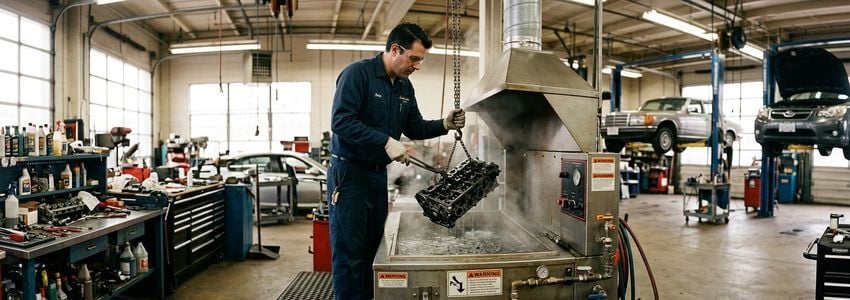
Parts washer financing is a form of equipment financing specifically structured to fund the purchase of industrial cleaning equipment used to remove oil, grease, coolant residue, metal chips, carbon buildup, and other contaminants from machined and fabricated parts. It covers everything from small benchtop aqueous washers used in a dental lab to large multi-stage conveyorized washing systems used on an automotive production line.
Instead of paying the full purchase price up front, an approved borrower repays the cost of the equipment over a set term, typically 24 to 84 months, through fixed monthly payments. The equipment itself usually serves as collateral, which is one reason approval can move faster and credit requirements can be more flexible than a general-purpose business loan.
This category of financing applies broadly across industries that clean, degrease, or prep metal, plastic, or composite components before the next stage of production, assembly, inspection, or sale. A machine shop financing a new industrial parts washer and an auto repair facility financing a vapor degreaser are both using the same underlying financing structure, even though the equipment and the end use look different.
Key Benefits of Financing Parts Washer and Degreasing Equipment
Parts washers and degreasers are not cheap. A quality industrial parts washer can run anywhere from $8,000 for a compact aqueous unit to well over $150,000 for a multi-stage conveyor system with closed-loop filtration. Financing spreads that cost over time rather than forcing a single large cash outlay. Forbes has reported that access to affordable equipment financing remains one of the most commonly cited obstacles for small manufacturers looking to modernize production capacity.
- Preserve working capital. Keep cash available for payroll, inventory, raw materials, and day-to-day operating expenses instead of tying it up in a single piece of equipment.
- Match payments to equipment life. A well-built industrial parts washer can run for 10-15 years with proper maintenance. Financing terms can be structured to align with that useful life.
- Predictable monthly budgeting. Fixed payments make it easier to forecast cash flow instead of absorbing a large unplanned capital expense.
- Faster equipment upgrades. Newer vapor degreasers and aqueous washers are often significantly more energy efficient and compliant with updated EPA and OSHA solvent-handling rules, which can reduce long-term operating costs.
- Potential tax advantages. Many businesses structure equipment purchases to take advantage of depreciation rules. Speak with a qualified tax professional about how a specific financing structure may apply to your situation.
- Approval often tied to the equipment, not just the balance sheet. Because the washer or degreaser secures the financing, lenders can sometimes approve newer or growing businesses that might not qualify for an unsecured loan of the same size.
Ready to Upgrade Your Parts Washer or Degreasing System?
Get fast, flexible equipment financing from the #1 business lender in the U.S. No obligation, apply in minutes.
Apply Now →How Parts Washer and Degreasing Equipment Financing Works
The process is similar to other types of equipment financing, with a few industry-specific wrinkles worth knowing up front.
Step 1: Identify the equipment and get a quote. Before applying, get a formal quote from the equipment dealer or manufacturer for the specific parts washer or degreaser model, including any installation, ventilation, or solvent recovery system costs that should be rolled into the financed amount.
Step 2: Submit a financing application. Most lenders ask for basic business information, time in business, and either a soft credit pull or recent bank statements. Equipment financing applications are typically simpler than applications for unsecured working capital because the equipment itself is the primary collateral.
Step 3: Underwriting and approval. A lender reviews the business's credit profile, cash flow, and the type of equipment being financed. Standard, resalable equipment like a well-known brand of aqueous parts washer is often easier to finance than highly customized or niche solvent-recovery systems because it holds resale value if something goes wrong.
Step 4: Terms and documentation. Once approved, the lender issues financing terms covering the amount financed, term length, payment schedule, interest rate or factor rate, and any end-of-term options (own the equipment outright, a $1 buyout, or a fair-market-value option depending on the structure).
Step 5: Funding and equipment delivery. Once documents are signed, the lender typically pays the equipment vendor directly, and the washer or degreaser is delivered and installed. Monthly payments begin per the agreed schedule, usually 30 to 60 days after funding.
By the Numbers
Industrial Cleaning Equipment Financing - Key Statistics
350K+
U.S. metalworking and machine shop establishments relying on parts cleaning equipment, per Census Bureau manufacturing data
24-84
Typical financing term range, in months, for industrial parts washers and degreasers
1-3 Days
Typical time to funding decision for standard equipment financing applications
33M+
Small businesses in the U.S., per the SBA, most of which cite capital access as a top growth barrier
Types of Parts Washers and Degreasing Equipment You Can Finance
Lenders who understand industrial equipment can typically finance any standard parts cleaning or degreasing system, including:
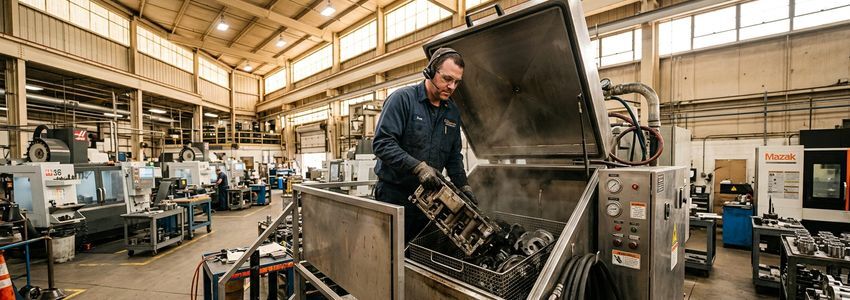
- Aqueous parts washers - water-and-detergent-based cabinet, cabinet-turntable, or immersion washers common in machine shops and small fabrication operations.
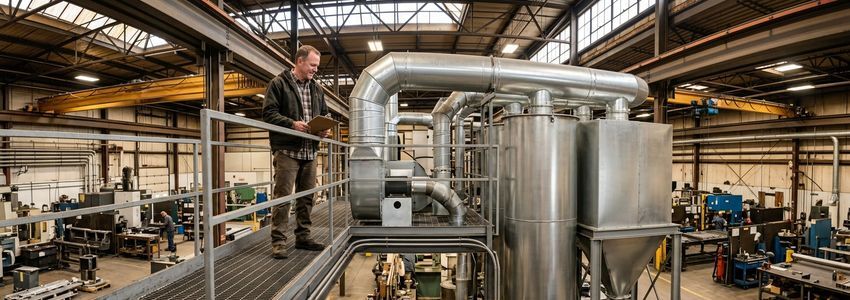
- Vapor degreasers - solvent-based systems that use heated solvent vapor to strip oils and residues, common in aerospace, precision machining, and electronics assembly.
- Conveyorized/inline washing systems - multi-stage systems used on higher-volume production lines, often including wash, rinse, and dry stages.
- Ultrasonic cleaning systems - used for intricate parts, medical devices, and small precision components where surface detail matters.
- Solvent recovery and distillation units - equipment that reclaims and purifies solvent for reuse, reducing disposal costs and improving compliance.
- Industrial dryers and blow-off stations - frequently financed alongside a washer as part of a complete cleaning line.
- Mobile and portable degreasing units - used by field service companies, fleet maintenance operations, and mobile repair businesses.
Key Stat: According to the U.S. Census Bureau, the United States has well over 350,000 metalworking, machine shop, and metal fabrication establishments, the vast majority of which rely on some form of parts cleaning or degreasing equipment as a core part of daily production.
Who This Financing Is Best For
Parts washer and degreasing equipment financing is a strong fit for several categories of businesses:
- Machine shops and precision manufacturers that need to remove cutting fluid, coolant, and metal chips before inspection, plating, or assembly.
- Auto repair, collision, and fleet maintenance shops replacing older solvent-based degreasers with compliant, lower-emission aqueous systems.
- Metal fabrication and welding shops prepping parts for powder coating, painting, or plating.
- Aerospace and defense component manufacturers with strict cleanliness specifications requiring vapor degreasing or ultrasonic systems.
- Electronics and precision assembly companies cleaning circuit boards and small components with ultrasonic or specialty washers.
- Contract manufacturers and job shops that need flexible, scalable cleaning capacity as order volume grows.
Financing vs. Leasing vs. Buying Outright
Business owners weighing how to acquire a parts washer or degreaser generally choose between three paths. Each has tradeoffs worth understanding before committing.
| Option | Upfront Cost | Ownership | Best For |
|---|---|---|---|
| Equipment Financing | Little to none (10-20% down common) | You own the washer at the end of the term | Shops planning to use the equipment 5+ years |
| Equipment Leasing | Often $0 down | Return, buy out, or upgrade at term end | Shops wanting flexibility to upgrade technology regularly |
| Cash Purchase | 100% upfront | Immediate, full ownership | Businesses with substantial excess cash reserves |
Financing tends to make the most sense for shops that plan to use the equipment for its full useful life and want to build equity in the asset. Leasing can be the better fit for operations in industries where cleaning technology changes quickly, such as solvent recovery systems tied to evolving environmental regulations, since it is easier to upgrade at the end of a lease term. Paying cash outright preserves no leverage and ties up capital that could otherwise support payroll, inventory, or growth.
Pro Tip: If your shop handles regulated solvents, ask the equipment vendor whether the specific model you are financing is compliant with current National Emission Standards for Hazardous Air Pollutants (NESHAP) solvent degreasing rules before you sign. Financing a unit that is already out of compliance can create expensive problems down the road.
How Crestmont Capital Helps Businesses Finance Parts Washers and Degreasing Equipment
Crestmont Capital works with manufacturers, machine shops, auto repair facilities, and industrial service businesses across the country to structure equipment financing that fits the realities of running a shop floor. Rather than a one-size-fits-all loan product, Crestmont evaluates the equipment, the business's cash flow, and the intended use case to build a payment structure that actually makes sense.
For businesses financing a parts washer as part of a broader production line upgrade, Crestmont's manufacturing equipment financing programs are built specifically around the needs of shops that run coolant, cutting fluid, and finishing equipment every day. Businesses that need financing for a new or newly installed system alongside existing machinery can also explore Crestmont's broader commercial equipment financing options, which cover a wide range of industrial and shop equipment categories beyond cleaning systems alone.
Shops that are also weighing a CNC machine purchase or upgrade alongside a new parts washer may find it useful to review Crestmont's guide on machine shop business loans, which covers financing strategy for precision machining operations more broadly. Businesses considering a refurbished or secondhand washer instead of new equipment can also review Crestmont's used equipment financing guide to understand how financing terms differ for pre-owned machinery.
Keep Your Production Line Running
Crestmont Capital has helped thousands of shops finance the equipment they rely on every day. See your options in minutes, no obligation.
Apply Now →Real-World Scenarios
Scenario 1: The machine shop with a failing aqueous washer. A 12-person precision machine shop in Ohio had a 15-year-old aqueous parts washer that was leaking and no longer heating water properly, slowing down the inspection process on every finished part. Rather than pulling $22,000 from cash reserves earmarked for new CNC tooling, the shop financed a new cabinet-style washer over 48 months, keeping both projects moving at once.
Scenario 2: The auto repair facility upgrading for compliance. A multi-bay auto repair facility was still using an older solvent-based cold cleaner that no longer met updated state air-quality rules. The owner financed a new aqueous parts washer and a small solvent recovery unit together as a single equipment package, spreading roughly $18,500 in combined cost over 36 months instead of paying it in one lump sum.
Scenario 3: The contract manufacturer scaling for a new order. A contract manufacturer won a new production contract that required significantly higher part-cleaning throughput than its existing single-stage washer could handle. Financing a conveyorized, multi-stage washing system over 60 months let the company take on the new contract without waiting to save up the full $95,000 purchase price.
Scenario 4: The aerospace supplier needing vapor degreasing capacity. A small aerospace parts supplier needed a vapor degreaser capable of meeting tight cleanliness specifications for a new defense contract. Because the specialized equipment was expensive and highly specific, the company used equipment financing secured by the degreaser itself, preserving its existing credit line for payroll and raw materials during the contract ramp-up.
Frequently Asked Questions
Don't Let Outdated Equipment Slow Down Production
Apply today and find out how quickly Crestmont Capital can get your new parts washer or degreasing system funded.
Apply Now →Next Steps
Confirm the exact model, capacity, and total cost including installation and ventilation.
Provide basic business details, time in business, and recent bank statements.
Compare term length, monthly payment, and end-of-term ownership structure before signing.
Once signed, funding is released, your equipment is delivered, and monthly payments begin on schedule.
Conclusion
Parts washer financing exists because industrial cleaning equipment is essential, expensive, and often needed on a timeline that does not wait for cash reserves to build back up. Whether you are replacing a failing aqueous washer, adding vapor degreasing capacity for a new contract, or upgrading to meet tighter environmental compliance standards, financing turns a large capital expense into a manageable monthly payment while keeping your production line running. With the right lender, approval can happen quickly, terms can be structured around the real useful life of the equipment, and your business can keep moving instead of waiting on a broken washer to get fixed or replaced.
Disclaimer: The information provided in this article is for general educational purposes only and is not financial, legal, or tax advice. Funding terms, qualifications, and product availability may vary and are subject to change without notice. Crestmont Capital does not guarantee approval, rates, or specific outcomes. For personalized information about your business funding options, contact our team directly.