Growing your business often comes down to one critical decision: how do you get the equipment you need without crippling your cash flow? Equipment financing and leasing are the two primary tools available to business owners, and understanding how to use them together strategically can unlock major advantages. Whether you run a construction company, medical practice, restaurant, or manufacturing operation, the right combination of financing and leasing can keep your operations running smoothly while preserving capital for what matters most.
In This Article
- What Are Equipment Financing and Leasing?
- Key Differences: Financing vs. Leasing
- How to Combine Equipment Financing and Leasing
- Benefits of a Blended Equipment Strategy
- How Equipment Financing and Leasing Work
- Equipment Financing and Leasing: By the Numbers
- Types of Equipment Financing and Leasing Structures
- Who Qualifies for Equipment Financing and Leasing?
- How Crestmont Capital Can Help
- Real-World Scenarios
- Financing vs. Leasing: Side-by-Side Comparison
- Frequently Asked Questions
- How to Get Started
What Are Equipment Financing and Leasing?
Equipment financing and leasing are two distinct but complementary funding strategies that allow businesses to acquire machinery, vehicles, technology, and other productive assets without paying the full purchase price upfront.
With equipment financing, a lender provides a loan specifically for the purchase of business equipment. The equipment itself typically serves as collateral, and the borrower repays the loan over a defined term with interest. At the end of the loan, the business owns the equipment outright. This path suits businesses that plan to use equipment for many years or want to build equity in a high-value asset.
Equipment leasing, on the other hand, works more like a long-term rental. The lender (lessor) purchases the equipment and leases it to your business for a fixed monthly payment. At the end of the lease term, you may have the option to purchase the equipment, return it, or upgrade to a newer model. This structure is ideal for rapidly evolving technology or equipment that tends to become obsolete quickly.
Many businesses find the most value in using both approaches simultaneously, financing long-lived core assets while leasing technology and specialty equipment that needs frequent updating. The U.S. equipment finance industry reached over $1.16 trillion in new business volume in 2023, according to the Small Business Administration, illustrating just how central equipment capital is to American commerce.
Industry Insight: According to the Equipment Leasing and Finance Association (ELFA), approximately 8 out of 10 U.S. companies use some form of equipment financing or leasing to acquire business assets. It is one of the most widely used forms of business credit in the country.
Ready to Equip Your Business for Growth?
Explore financing and leasing options with the #1 business lender in the U.S. Get a decision in minutes, not weeks.
Apply Now →Key Differences: Equipment Financing vs. Leasing
Understanding the distinctions between financing and leasing helps you match each strategy to the right situation. While both preserve working capital by spreading out equipment costs, they differ significantly in ownership, flexibility, and long-term financial impact.
Equipment financing means you are taking out a loan to purchase an asset. Your business builds equity with every payment, and the equipment shows up as an asset on your balance sheet. This makes financing attractive for assets that hold their value or that you plan to use for more than five years. Think delivery trucks, industrial machinery, or specialized manufacturing equipment that forms the backbone of your operation.
Equipment leasing means you are paying for access to the equipment, not for ownership. Monthly lease payments are typically lower than loan payments for the same equipment, which can free up cash for other priorities. Many leases include maintenance packages, and at the end of the term, you can simply swap out aging equipment for newer models. This is particularly valuable for medical imaging systems, computers, software hardware, and other technology that evolves rapidly.
The choice is not binary. A well-structured equipment strategy often blends both: financing the assets you want to own long-term and leasing the assets you expect to replace or upgrade within a few years. Forbes has noted that businesses that use a mixed approach to equipment capital often maintain better liquidity ratios than those that rely solely on outright purchases or loans.
How to Combine Equipment Financing and Leasing
Combining equipment financing and leasing into a single capital strategy requires thinking about your equipment in two categories: core assets and evolving assets.
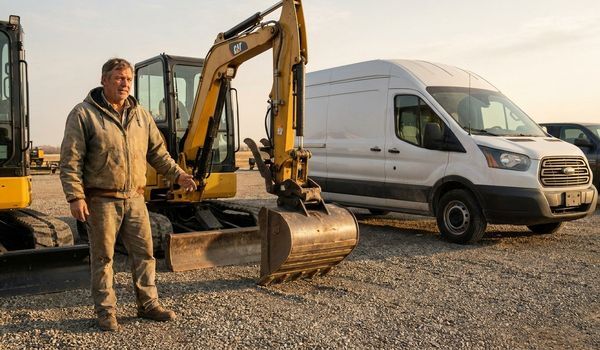
Core assets are the workhorses of your business, items that are unlikely to become obsolete and that you will use day after day for many years. For these, equipment financing makes strong sense. You pay a loan over time, build equity, and eventually own the asset outright. A construction company might finance its excavators and dump trucks this way, knowing these machines will provide value for a decade or more.
Evolving assets are the items that improve rapidly with technology or that you may need to scale up or down based on business cycles. For these, leasing provides flexibility. A medical clinic might lease its diagnostic imaging equipment so it can upgrade to better technology every three to five years without the burden of selling depreciated machinery. A legal firm might lease its document management systems and server infrastructure for the same reason.
When you map your equipment inventory into these two categories and align each item with the right funding vehicle, you create a capital structure that is simultaneously asset-rich (through owned equipment) and operationally agile (through leased equipment). This balance is what separates businesses that consistently grow from those that struggle with cash flow crunches every time they need new equipment.
Strategic Tip: When planning a combined financing and leasing strategy, calculate the total cost of ownership for each piece of equipment, including maintenance, insurance, and residual value. Assets with high residual value are usually better candidates for financing; assets that depreciate quickly or become technically outdated are better candidates for leasing.
Benefits of a Blended Equipment Strategy
Business owners who use both equipment financing and leasing in tandem often report several key advantages over those who rely on a single approach.
Improved cash flow management. Spreading costs over time through monthly payments, whether loan or lease payments, removes the large cash outlay associated with equipment purchases. This keeps working capital available for payroll, inventory, marketing, and growth initiatives.
Access to better equipment sooner. Rather than waiting years to save enough cash for a major equipment purchase, financing and leasing allow you to acquire production-quality assets immediately. This means your business can operate at full capacity right now, not three years from now.
Flexibility to upgrade technology. Leasing structures, particularly operating leases, let you return or swap out equipment at the end of a term. This is invaluable in sectors like healthcare, technology, and food service, where equipment capabilities improve rapidly.
Balance sheet optimization. Depending on the lease structure, operating leases may not appear as debt on your balance sheet, which can improve key financial ratios that lenders and investors review. Your accountant can advise on the specific treatment under current accounting standards.
Potential for 100 percent financing. Both equipment loans and leases can, in many cases, cover the full cost of the equipment with no down payment required. This is a significant advantage over real estate or business acquisition loans, which typically require substantial down payments.
Streamlined approval for equipment-secured financing. Because the equipment itself serves as collateral, lenders often approve equipment financing more readily and with less documentation than unsecured business loans. Many approvals come within 24 to 48 hours of application.
How Equipment Financing and Leasing Work
The process for both equipment financing and leasing follows a straightforward path, though the specifics differ based on the structure you choose.
For equipment financing, the business identifies the equipment it needs, obtains a quote from the vendor, and applies for a loan with a lender. The lender evaluates the business's creditworthiness, the value of the equipment, and the business's revenue and operational history. Once approved, the lender funds the purchase directly to the vendor, and the business begins making fixed monthly payments. Terms typically range from two to seven years, with interest rates that vary based on credit profile and equipment type.
For equipment leasing, the process is similar, but the lender actually purchases the equipment and becomes the owner. The business then enters into a lease agreement to use the equipment for a defined period, paying monthly rent. At the end of the term, options typically include purchasing the equipment at fair market value or a predetermined buyout price, renewing the lease, or returning the equipment.
When combining both, a business might work with a single lender like Crestmont Capital who can structure a portfolio of both financing and leasing agreements simultaneously. This simplifies administration, often results in better overall terms, and gives you a single relationship for your entire equipment capital strategy.
Equipment Financing and Leasing: By the Numbers
By the Numbers
Equipment Financing and Leasing in America
$1.16T
Equipment finance volume in the U.S. (2023)
80%
U.S. businesses that use equipment financing or leasing
24-48h
Typical approval timeline for equipment financing
100%
Financing available in many cases, no down payment required
Types of Equipment Financing and Leasing Structures
Not all equipment financing and leasing agreements are structured the same way. Understanding the available options ensures you choose the structure that best fits your business's financial profile and long-term goals.
Equipment loans. The traditional financing route. You borrow the full amount (or close to it), make fixed monthly payments over two to seven years, and own the equipment when the loan is paid off. Interest rates vary based on your credit score, time in business, and the type of equipment. This is often the most cost-effective option when you plan to use the equipment for a long time and when the equipment holds its value well.
Capital leases (finance leases). Structured to function more like a loan, a capital lease gives the lessee most of the rights and risks of ownership. The equipment typically appears on your balance sheet, and you have a purchase option at the end of the term, often for a nominal amount like $1. Capital leases are a good fit when you know you want to own the equipment but want the monthly payment structure of a lease.
Operating leases. A true lease arrangement where the lessor retains ownership and the lessee pays for use. Payments are generally lower than capital lease or loan payments, and the equipment may be kept off your balance sheet. At the end of the term, you can return the equipment, renew, or purchase at fair market value. This structure is popular for technology, medical equipment, and office systems.
Sale-leaseback arrangements. If you already own equipment outright, a sale-leaseback allows you to sell the equipment to a financing company and then lease it back. This frees up the equity locked in the asset, providing a capital injection while letting you continue using the equipment. It is a powerful tool for businesses that need immediate liquidity.
Equipment lines of credit. An equipment line of credit works like a revolving credit facility specifically for equipment purchases. You draw funds as needed, up to a preset limit, making it ideal for businesses that need to acquire equipment on an unpredictable schedule. This is a particularly powerful structure for growing companies that regularly need to add or upgrade equipment.
Understanding these structures also helps when working with your accountant or CFO. The accounting treatment, interest deductibility, and impact on financial ratios differ based on which structure you choose. A qualified financial advisor can help you determine the optimal mix for your specific situation.
Who Qualifies for Equipment Financing and Leasing?
One of the significant advantages of equipment financing and leasing is that qualification requirements are often more accessible than those for traditional unsecured business loans. Because the equipment itself serves as collateral, lenders can extend credit to a broader range of businesses.
Typical qualification criteria for equipment financing include a minimum credit score of around 600 for conventional financing (some lenders go lower, particularly for high-value equipment), at least one to two years in business for traditional loans, and verifiable business revenue to support the monthly payments. Newer businesses or those with challenged credit may still qualify through specialty lenders or with a larger down payment.
For equipment leasing, requirements are often similarly lenient, particularly for operating leases. Some lessors are more focused on the creditworthiness of the equipment itself, its resale value, than on the borrower's credit profile. This means businesses with imperfect credit histories can often still access quality equipment through leasing structures.
Businesses that have had previous credit challenges should explore bad credit equipment financing options, which exist specifically to serve companies that may not qualify for conventional financing. The key is working with a lender who has experience across the full spectrum of business credit profiles.
Industries that most commonly use equipment financing and leasing include construction and contracting, transportation and logistics, healthcare and medical practices, manufacturing and industrial operations, food service and hospitality, technology and telecommunications, and agricultural businesses. The reality is that nearly any industry that relies on specialized tools, machines, or vehicles can benefit from a structured equipment capital approach.
Not Sure Which Structure Fits Your Business?
Our equipment financing specialists will walk you through your options and build a custom plan based on your equipment needs and financial profile.
Talk to a Specialist →How Crestmont Capital Can Help
Crestmont Capital is ranked the #1 business lender in the United States, and equipment financing and leasing represent two of the most important services we offer to growing businesses. Our team works with companies across every industry and credit profile to build equipment capital strategies that align with their long-term operational goals.
We offer both equipment financing loans and leasing structures under one roof, which means you do not need to work with multiple lenders, sign with multiple vendors, or navigate complex multi-party agreements. When you work with Crestmont, a single advisor can structure a complete equipment capital plan that combines owned and leased assets in the optimal ratio for your specific situation.
Our equipment financing solutions cover the full range of equipment types, from heavy construction machinery and commercial vehicles to medical imaging systems, restaurant equipment, and technology infrastructure. We work with established businesses and newer companies, businesses with strong credit and those with challenged histories. If your business needs equipment to grow, we have a solution.
For businesses already using our services, we also provide capital equipment financing as part of a broader commercial financing relationship. This can include integrating equipment capital with working capital lines, commercial real estate financing, and other business credit products to create a comprehensive funding strategy.
Our process is straightforward. You apply online, provide basic documentation about your business and the equipment you need, and we typically provide a decision within 24 to 48 hours. Once approved, funds move quickly, often within days, so you can acquire equipment and put it to work before your competition does.
Read more about our approach in our comprehensive guide to Equipment Financing 101: How It Works and Who Should Use It and our detailed breakdown of Equipment Leasing vs. Equipment Financing: Which Is Better for Your Business?
Real-World Scenarios: Combining Financing and Leasing in Practice
Understanding the theory is one thing. Seeing how businesses actually combine equipment financing and leasing in the real world makes the strategy tangible.
Scenario 1: The expanding construction company. A mid-size general contractor wins a major commercial project that requires two additional excavators and a new fleet management software system. The excavators, high-value assets with long useful lives, are financed through a five-year equipment loan. The software and server hardware are leased on a three-year operating lease with an upgrade option. The contractor maintains ownership of its core production assets while preserving the flexibility to upgrade its technology infrastructure without carrying obsolete hardware on the books.
Scenario 2: The growing medical practice. A multi-physician internal medicine practice needs to upgrade its diagnostic equipment and add a new patient intake system. The practice finances its ultrasound machines, which have a useful life of 8 to 10 years and strong resale value, through a seven-year loan. The electronic health records hardware and diagnostic kiosks are leased on a four-year operating lease. This approach gives the practice the predictable monthly payments its budget requires while ensuring it can upgrade its patient-facing technology as standards evolve.
Scenario 3: The regional restaurant group. A restaurant group opening its third location needs commercial kitchen equipment, point-of-sale technology, and a new delivery vehicle. The commercial kitchen equipment, which will last decades with proper maintenance, is financed. The POS systems and associated technology are leased. The delivery van is financed through Crestmont's commercial vehicle financing program. Each asset is matched to the structure that best serves the business, resulting in optimal monthly cash flow and long-term cost efficiency.
Scenario 4: The manufacturing startup. A new precision manufacturing company needs a CNC machine and supporting equipment to begin operations. With limited credit history, the business works with Crestmont's startup equipment financing program for the CNC machine, providing a down payment to offset the lender's risk. Ancillary tools and quality control instruments are acquired through operating leases with low monthly payments. The startup gets operational quickly without exhausting its limited working capital.
Scenario 5: The transportation company. A regional freight hauler needs five new semi-trucks and an updated dispatch software platform. The trucks, core revenue-generating assets, are financed through a structured vehicle loan. The dispatch software, which the company expects to upgrade within three years as autonomous logistics technology advances, is leased. According to a CNBC analysis of fleet management trends, companies that lease technology-dependent operational software can reduce total cost of ownership by 15 to 25 percent compared to outright purchase when accounting for upgrade cycles.
Scenario 6: The healthcare equipment company using sale-leaseback. An established home health equipment supplier has significant equity tied up in its delivery and inventory management systems, both owned outright for years. The business executes a sale-leaseback on this equipment, freeing up several hundred thousand dollars in capital that it reinvests in expanding its service territory. The equipment continues in service, the company retains operational continuity, and the liberated capital funds growth.
Equipment Financing vs. Leasing: Side-by-Side Comparison
| Feature | Equipment Financing (Loan) | Equipment Leasing |
|---|---|---|
| Ownership | You own the equipment at loan payoff | Lender owns; you may purchase at end of term |
| Monthly Payments | Typically higher (building equity) | Often lower (paying for use only) |
| Balance Sheet | Asset and liability recorded | May be off-balance-sheet (operating lease) |
| Upgrade Flexibility | Limited (must sell or dispose old equipment) | Easy to upgrade at end of lease term |
| Best For | Long-lived assets; high residual value | Technology; frequently updated equipment |
| Down Payment | 0-20%, often none required | Security deposit or first/last payment typical |
| Maintenance | Borrower's responsibility | May be included in lease agreement |
| End-of-Term Options | Full ownership, no further obligation | Return, renew, or purchase at fair market value |
Frequently Asked Questions
What is the difference between equipment financing and equipment leasing?
Equipment financing involves taking out a loan to purchase equipment, which you own outright once the loan is repaid. Equipment leasing involves paying for the right to use equipment owned by the lender for a set period, with options to purchase, return, or renew at the end of the term. Financing builds equity; leasing provides flexibility and typically lower monthly payments.
Can I use both equipment financing and leasing at the same time?
Yes, and this is often the most strategic approach. Many businesses finance their core long-lived assets while leasing technology or equipment that becomes outdated quickly. Using both simultaneously allows you to build equity in permanent assets while maintaining operational flexibility for evolving equipment needs.
What types of equipment can be financed or leased?
Nearly any business equipment qualifies, including construction machinery, commercial vehicles, medical and dental equipment, restaurant and kitchen equipment, manufacturing machinery, agricultural equipment, computers, servers, office systems, and more. If it is used for business purposes and has productive value, it can likely be financed or leased.
How long does it take to get approved for equipment financing or leasing?
Most equipment financing and leasing applications receive a decision within 24 to 48 hours when all required documentation is submitted. Once approved, funding typically occurs within a few business days. This is significantly faster than traditional bank loans, which can take weeks or months to process.
What credit score do I need for equipment financing?
Most conventional equipment financing lenders look for a minimum credit score of around 600. However, many specialty lenders, including Crestmont Capital, work with businesses that have lower credit scores, particularly when the equipment itself has strong collateral value. A larger down payment or additional documentation can sometimes offset a lower credit score.
Is a down payment required for equipment financing or leasing?
Down payment requirements vary by lender, credit profile, and equipment type. Many equipment financing lenders offer 100 percent financing with no down payment, particularly for well-qualified borrowers and high-value equipment with strong collateral characteristics. Leasing typically requires a security deposit and first payment upfront rather than a traditional down payment.
What is a capital lease versus an operating lease?
A capital lease (also called a finance lease) is structured to transfer most risks and rewards of ownership to the lessee. The equipment appears on your balance sheet, and you typically have a $1 or nominal buyout option at the end. An operating lease is a true rental arrangement where the lessor retains ownership, payments are generally lower, and the equipment may stay off your balance sheet. At the end, you return, renew, or purchase at fair market value.
Can a startup get equipment financing or leasing?
Yes. While traditional lenders often require 2 or more years in business, specialty lenders offer startup equipment financing and leasing programs designed for newer companies. A strong personal credit score, business plan, and sometimes a down payment can help startups qualify. Startup-focused programs are available through Crestmont Capital and can get new businesses operational quickly.
What are typical interest rates for equipment financing?
Equipment financing rates typically range from approximately 4 percent to 30 percent annually, depending on the borrower's credit profile, time in business, revenue, and the type and age of equipment. Well-qualified borrowers with strong credit and established businesses qualify for rates on the lower end of this range. Rates for used equipment financing are generally higher than for new equipment due to collateral risk.
How do I choose between financing and leasing for a specific piece of equipment?
Ask yourself three questions: How long will you use this equipment? Does it hold its value over time? Does it become technologically obsolete quickly? If you will use the equipment for more than five years and it retains significant value, financing usually makes more sense. If you expect to need newer models in a few years or the equipment depreciates rapidly due to technology advances, leasing is typically the better choice.
What is a sale-leaseback and when should I use it?
A sale-leaseback involves selling equipment you already own to a financing company and then leasing it back for continued use. This strategy converts equity tied up in owned assets into liquid capital, which you can then deploy for growth, payroll, or other business needs. It is most useful when a business needs immediate capital but does not want to disrupt ongoing operations by losing access to critical equipment.
Does equipment leasing affect my business credit?
Equipment leases that are reported to business credit bureaus can positively impact your business credit profile when you make payments on time and in full. Consistent, on-time payments on lease agreements demonstrate creditworthiness and can strengthen your ability to access additional financing in the future. Some lessors report to business credit bureaus; others do not, so it is worth asking before signing.
What documentation is needed to apply for equipment financing?
Typical documentation includes a completed application form, business bank statements for the past three to six months, basic financial statements or tax returns, information about the equipment to be purchased (invoice or quote from the vendor), and identification for the business owner(s). The specific requirements vary by lender and loan size, with smaller transactions sometimes requiring less documentation.
Can I finance used equipment?
Yes, used equipment financing is widely available and can be a cost-effective way to acquire high-quality assets at a fraction of new equipment prices. Lenders will typically assess the age, condition, and resale value of used equipment when determining loan terms. Rates for used equipment financing are generally slightly higher than for new equipment, but the overall cost can still be substantially lower than financing new equipment.
How does equipment financing compare to a business line of credit for purchasing equipment?
Equipment financing is purpose-built for equipment acquisition, with the equipment serving as collateral and terms specifically designed for asset acquisition. A business line of credit is a flexible revolving credit facility that can be used for any business purpose, including equipment purchases, but typically carries higher interest rates and is not optimized for large, single-asset acquisitions. For significant equipment purchases, dedicated equipment financing usually provides better rates and terms than drawing from a general line of credit.
How to Get Started
List the equipment your business needs to acquire or upgrade over the next 12 to 24 months, categorizing each item as a long-term core asset or a technology-driven evolving asset.
Complete our quick application at offers.crestmontcapital.com/apply-now. The application takes just a few minutes and covers both financing and leasing options in a single submission.
A Crestmont Capital advisor will review your needs, equipment list, and financial profile to build a customized equipment capital strategy that combines financing and leasing in the optimal mix for your business.
Once approved, receive your equipment financing within days. Put your new assets to work immediately and start generating the revenue that repays the investment.
Conclusion
Equipment financing and leasing are not competing strategies, they are complementary tools in a well-designed business capital plan. Financing builds ownership and equity in long-lived assets, while leasing preserves flexibility and cash flow for equipment that evolves rapidly. When used together intelligently, they give your business access to everything it needs to operate at full capacity today, with the financial agility to adapt and grow tomorrow.
The businesses that grow fastest are rarely the ones that try to pay cash for everything or that avoid all debt. They are the ones that deploy capital strategically, using the right funding structure for each asset and keeping their working capital available for the opportunities that drive real growth. Equipment financing and leasing, used in combination, are among the most powerful tools available to achieve that balance.
Crestmont Capital specializes in helping businesses build exactly this kind of intelligent equipment capital strategy. With a single application, our team can structure both financing and leasing solutions tailored to your equipment needs, your industry, and your financial profile. Apply today and discover how much further your business can go when it is properly equipped.
Start Your Equipment Financing Application Today
Join the thousands of businesses that trust Crestmont Capital, America's #1 business lender. Apply in minutes and get a decision within 24-48 hours.
Apply Now →Disclaimer: The information provided in this article is for general educational purposes only and is not financial, legal, or tax advice. Funding terms, qualifications, and product availability may vary and are subject to change without notice. Crestmont Capital does not guarantee approval, rates, or specific outcomes. For personalized information about your business funding options, contact our team directly.