
 (800) 949-0401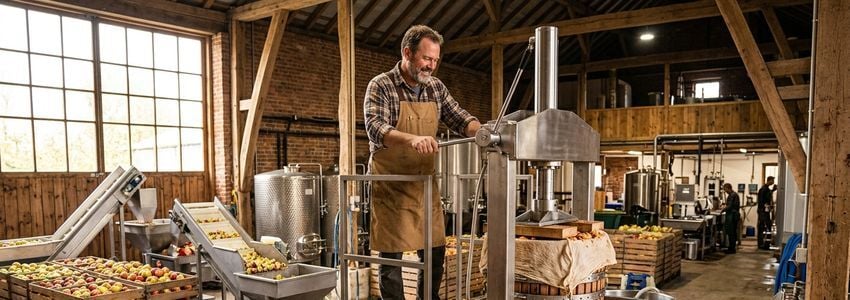
Cider Mill Equipment Financing: The Complete Guide for Business Owners
Cider mill equipment financing gives orchard operators, cidery owners, and juice producers a way to acquire presses, pasteurizers, fermentation tanks, and bottling lines without draining working capital. Whether you are opening a new cidery, expanding a seasonal apple mill, or replacing aging press equipment before harvest, understanding how equipment financing works can mean the difference between a smooth production season and a costly bottleneck.
The U.S. cider market has grown into a genuine commercial category, not a niche hobby. Regional and independent cideries pulled in more than $806 million in measured retail sales over a recent 12-month stretch, and cider was one of the only beverage-alcohol segments posting consistent week-over-week growth through late 2025. That growth is good news for producers, but it also means demand for reliable, high-throughput equipment is climbing fast, and used or outdated presses simply cannot keep up.
In This Article
What Is Cider Mill Equipment Financing?
Cider mill equipment financing is a funding structure that allows a cidery, orchard, or beverage producer to purchase or lease production equipment while paying for it over time instead of in a single lump sum. Instead of tapping into cash reserves or maxing out a personal credit line, an operator finances the equipment itself, with the equipment often serving as collateral for the loan or lease.
This category of financing typically covers everything from apple grinders (scratters) and hydraulic or rack-and-cloth presses to stainless steel fermentation tanks, pasteurizers, filtration systems, kegging and canning lines, and bottling and labeling equipment. Because cider production is highly seasonal, with the bulk of pressing happening in a compressed window during harvest, having reliable and adequately sized equipment in place before the season starts is critical.
Many cider producers also process apples or other fruit for juice sales, applesauce, or vinegar production alongside their fermented product line. Financing structured around the mill and press equipment itself gives these multi-product operations flexibility to scale output without a large upfront capital outlay.
Key Stat: The U.S. cider market was valued at roughly $615 million in 2024 and is projected to keep climbing at a double-digit annual growth rate, driven by demand for craft, regional, and low-alcohol beverage options.
Key Benefits of Financing Cider Mill Equipment
Financing rather than paying cash for cider production equipment offers several advantages for growing operations:
- Preserve working capital. Keep cash on hand for apple purchases, seasonal labor, packaging, and marketing instead of tying it up in a single equipment purchase.
- Match payments to revenue. Structure payments around your harvest and sales cycle so you are not straining cash flow during the off-season.
- Access newer, higher-capacity equipment. Financing makes it possible to buy a properly sized commercial press or pasteurizer instead of settling for undersized used equipment.
- Potential tax advantages. Equipment financing structures may offer favorable treatment under certain depreciation rules, though you should always confirm specifics with a qualified accountant.
- Build business credit. Consistent, on-time payments on an equipment loan help establish a credit history for your business, which can support future financing needs.
- Speed to production. Financing can move faster than saving up cash reserves, letting you get new equipment installed and running before the next harvest window closes.
How Cider Mill Equipment Financing Works
The process for financing cider production equipment generally follows a straightforward path, though timelines and requirements vary by lender.
Quick Guide
How Cider Mill Equipment Financing Works — At a Glance
Get a quote for the press, pasteurizer, tanks, or bottling line you need, new or used.
Provide basic business details, the equipment quote, and financial information.
Many equipment financing decisions come back within 24 to 48 hours.
The lender pays the vendor directly, and you start production on your new equipment.
Lenders typically evaluate your time in business, revenue, and credit profile, but equipment financing is generally more accessible than an unsecured loan because the equipment itself secures a large portion of the risk. This is one reason seasonal producers, including cider mills, often find equipment financing easier to qualify for than a traditional bank term loan.
Ready to Upgrade Your Cider Mill?
Get fast, flexible equipment financing from the #1 business lender in the U.S. No obligation, apply in minutes.
Apply Now →Types of Cider Mill Equipment You Can Finance
Cider mill equipment financing is not limited to a single machine. Most lenders, including Crestmont Capital, will finance a full production line or individual pieces of equipment as your business needs evolve.
- Apple grinders and scratters - break down whole apples into pomace before pressing.
- Hydraulic and rack-and-cloth presses - extract juice from pomace at commercial volume.
- Bladder and belt presses - higher-throughput options for larger operations.
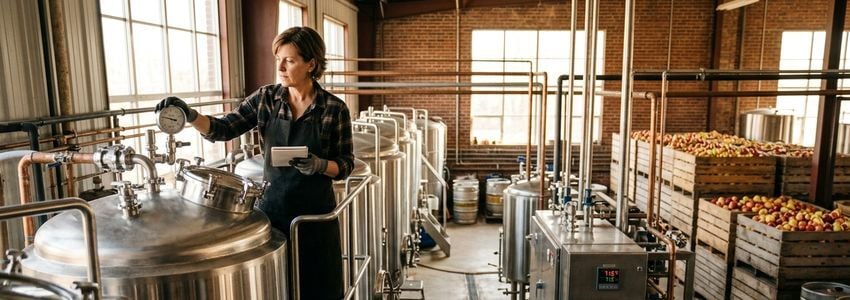
- Stainless steel fermentation tanks - control temperature and volume during fermentation for cider.
- Pasteurizers - flash or batch pasteurization equipment for shelf-stable juice and cider products.
- Filtration and clarification systems - remove sediment for a clear finished product.
- Kegging, canning, and bottling lines - package finished product for wholesale and retail distribution.
- Labeling and packaging equipment - finish products for shelf-ready sale.
- Refrigeration and cold storage - store raw fruit and finished product at proper temperatures.
- Forklifts and material handling equipment - move fruit bins and finished cases around the facility.
Equipment financing can apply to new equipment purchased from a manufacturer, used equipment bought from another producer, or a combination of both as you build out a complete production line.
Who This Financing Is Best For
Cider mill equipment financing tends to be the right fit for a specific set of business owners:
- New cidery owners launching a production facility and needing a full equipment package before their first harvest.
- Orchard operators adding a value-added cider or juice line to diversify beyond raw fruit sales.
- Growing cideries that have outgrown their original press capacity and need to scale up for wholesale or distribution accounts.
- Seasonal producers who need equipment ready before harvest but do not want to deplete cash reserves needed for fruit purchasing and seasonal labor.
- Multi-product operations making cider, juice, applesauce, and vinegar from the same core pressing and processing equipment.
If your business has at least a few months of operating history, a clear equipment quote, and a plan for how the new equipment will support revenue growth, you are generally a strong candidate for this type of financing.
What Cider Mill Equipment Typically Costs
Pricing for cider production equipment varies widely based on capacity, automation level, and whether you buy new or used. Understanding the general cost range helps you plan a realistic financing request and avoid under-buying equipment you will need to replace within a year or two.
- Small rack-and-cloth presses (under 1 ton per hour) typically range from $5,000 to $20,000 new.
- Mid-size hydraulic or belt presses for growing operations often run $25,000 to $75,000.
- Stainless steel fermentation tanks range from a few thousand dollars for small vessels to $15,000 or more per tank at larger commercial volumes.
- Pasteurizers for shelf-stable juice or cider can range from $15,000 for entry-level batch units to well over $100,000 for high-throughput flash pasteurization systems.
- Bottling and canning lines vary enormously based on speed and automation, from $20,000 for semi-manual setups to several hundred thousand dollars for fully automated lines.
- Used equipment can often be acquired for 40 to 60 percent of the cost of new equipment, though financing terms and available loan-to-value ratios may differ from new-equipment financing.
Because a complete production line often combines several of these categories, total project costs for a new cidery buildout commonly range from $75,000 for a modest small-batch operation to well over $500,000 for a high-volume commercial facility. Financing lets you spread that investment across the equipment's useful life instead of funding it entirely out of pocket before you have generated revenue from it.
Loan vs. Lease vs. Line of Credit: Which Fits Your Cider Mill?
There are a few different ways to structure financing for cider production equipment, and the right choice depends on your goals, budget, and how long you plan to use the equipment.
| Option | Best For | Ownership | Typical Term |
|---|---|---|---|
| Equipment Loan | Buying equipment you plan to keep for its full useful life | You own it immediately | 2 to 7 years |
| Equipment Lease | Lower upfront cost or equipment that may need upgrading | Lender owns it; option to buy at term end | 2 to 5 years |
| Business Line of Credit | Smaller equipment purchases or bridging seasonal cash gaps | You own outright | Revolving, ongoing |
An equipment loan tends to make the most sense for large, long-life assets like a hydraulic press or fermentation tanks that you expect to run for a decade or longer. Leasing can be a better fit for equipment that may need to be replaced or upgraded more frequently, such as bottling or canning technology. A business line of credit can complement either option by covering smaller purchases or bridging cash flow gaps between harvest seasons.
How Crestmont Capital Helps Cider Mill Owners
Crestmont Capital works with agricultural processors and beverage producers across the country to structure equipment financing that fits the realities of seasonal production. Rather than a one-size-fits-all approach, Crestmont looks at your harvest calendar, revenue patterns, and growth plans before recommending a structure.
Crestmont offers equipment financing and equipment leasing for new and used cider mill and beverage processing equipment, along with dedicated food equipment financing and manufacturing equipment financing programs that cover presses, pasteurizers, tanks, and packaging lines. For operators with less-than-perfect credit, bad credit equipment financing options are also available, and businesses looking to supplement equipment financing with additional working capital can explore unsecured working capital loans.
If your cidery is exploring a wider range of funding options, our guide to food processing equipment financing covers strategies that apply broadly across beverage and food manufacturing, and our breakdown of winery equipment financing walks through similar considerations for fermentation-based beverage producers. If you are still validating your overall business plan before purchasing equipment, our cidery business loans guide is a useful starting point.
Applications typically take just a few minutes, and Crestmont works to get decisions back quickly so equipment can be ordered, delivered, and installed well ahead of your next harvest window.
Real-World Scenarios
Scenario 1: The New Orchard-to-Bottle Cidery
A family-owned apple orchard decides to launch a cidery to sell value-added product directly to consumers instead of only selling raw fruit wholesale. They need a complete package: a scratter, a rack-and-cloth press, three fermentation tanks, and a small bottling line. Equipment financing lets them acquire the full package in one structured loan, spreading payments across several years while they build their customer base.
Scenario 2: Scaling Past a Bottleneck
An established craft cidery has been running at capacity on a small hydraulic press for three seasons. Wholesale demand from regional grocery accounts now exceeds what the current press can produce during the harvest window. They finance a higher-capacity belt press and an additional fermentation tank, allowing them to meet new distribution contracts without waiting a full year to save up cash.
Scenario 3: Adding a Pasteurizer for Shelf-Stable Juice
A cider producer wants to expand into shelf-stable, non-alcoholic apple juice sold in grocery stores, which requires pasteurization equipment they do not currently own. Rather than delay the product launch, they finance a flash pasteurizer and filtration system, timing payments to align with the new product's rollout and expected revenue ramp.
Scenario 4: Replacing Aging Equipment Before Harvest
A mid-sized cider mill's press motor fails in the off-season. Rather than risk a breakdown during the compressed harvest window, the owner uses equipment financing to replace the press with a modern, higher-throughput model, avoiding a potential production shutdown at the worst possible time of year.
Frequently Asked Questions
Don't Let Your Press Capacity Hold You Back
Get the equipment financing you need before your next harvest season. Apply in minutes with no obligation.
Apply Now →Next Steps
Get pricing from your equipment vendor for the press, tanks, or line you need.
Have recent bank statements and business details ready for a faster review.
Submit a short application and get a financing decision, often within 24 to 48 hours.
Once approved, your equipment is ordered and installed so you can get back to production.
Conclusion
Cider mill equipment financing gives orchard operators, cidery owners, and juice producers a practical path to acquiring the presses, tanks, pasteurizers, and packaging lines they need without draining cash reserves ahead of a critical harvest window. With the cider category continuing to post strong growth, having the right production capacity in place is no longer optional for operators who want to keep up with wholesale and retail demand. Whether you are launching your first cidery or scaling an established operation, structured equipment financing can help you move forward on your timeline rather than waiting to save up cash.
Contact Crestmont Capital today to discuss your cider mill equipment needs, or start your application now to get the funding process moving before your next production season.
Disclaimer: The information provided in this article is for general educational purposes only and is not financial, legal, or tax advice. Funding terms, qualifications, and product availability may vary and are subject to change without notice. Crestmont Capital does not guarantee approval, rates, or specific outcomes. For personalized information about your business funding options, contact our team directly.








