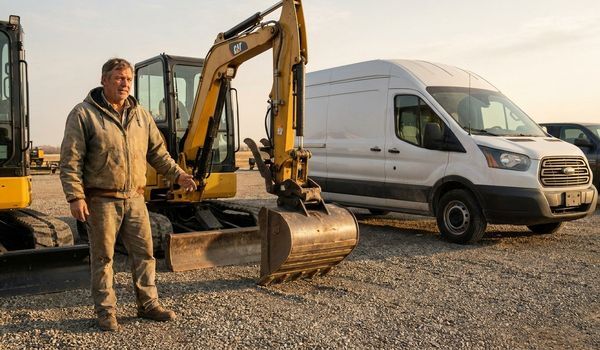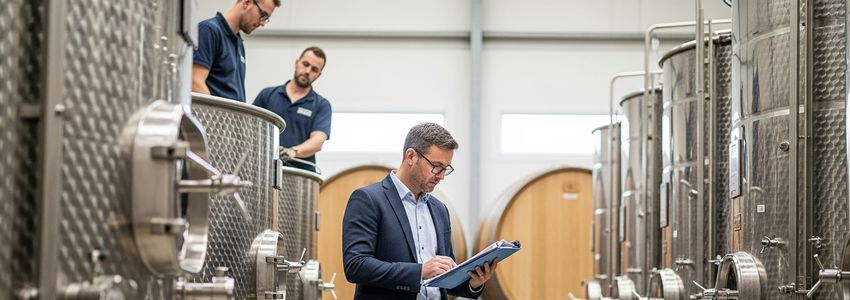
From the sun-drenched vineyards to the temperature-controlled cellars, crafting exceptional wine is a capital-intensive art form. Equipping your winery with the latest technology is not just an advantage; it's essential for quality, efficiency, and growth. This is where winery equipment financing provides a strategic solution, allowing you to acquire critical assets without depleting your working capital, ensuring your business can flourish vintage after vintage.
In This Article
- What Is Winery Equipment Financing?
- What Winery Equipment Can Be Financed?
- How Winery Equipment Financing Works
- Types of Winery Equipment Financing
- Benefits of Winery Equipment Financing
- Who Qualifies for Winery Equipment Financing?
- How Crestmont Capital Helps Winery Owners
- Real-World Scenarios: Financing in Action
- How to Apply for Winery Equipment Financing
- Frequently Asked Questions
- How to Get Started
What Is Winery Equipment Financing?
Winery equipment financing is a specialized category of business funding designed specifically for acquiring the tools and machinery essential to wine production. Unlike a general business loan that provides a lump sum of cash for various purposes, this type of financing is directly tied to a specific piece of equipment. The equipment itself, whether a new fermentation tank, a bottling line, or a vineyard tractor, serves as the collateral for the loan or lease. This structure often makes it easier to qualify for and can result in more favorable terms compared to unsecured loans.
The primary advantage of this approach is that it isolates the debt to the asset it funds. This protects your other business and personal assets and allows you to manage your cash flow more effectively. Instead of a massive upfront capital expenditure that could drain your operational accounts, you make predictable monthly payments over a set term. This frees up capital for other critical needs like marketing, payroll, inventory, or unexpected vineyard maintenance. For an industry with long production cycles and seasonal revenue streams, preserving liquidity is paramount to long-term success.
Furthermore, lenders who specialize in this area, like Crestmont Capital, understand the unique value and lifecycle of winemaking machinery. They recognize that a stainless steel fermenter or a grape press is a durable, valuable asset, not just a line item on a balance sheet. This industry-specific knowledge translates into a more streamlined application process, faster funding, and financing structures that align with the realities of running a winery. It’s a strategic financial tool that empowers winery owners to invest in quality and efficiency without compromising their financial stability.
Ready to Finance Your Winery Equipment?
Get the capital you need to grow your vintage. Fast, simple, and transparent financing from the #1 rated business lender.
Apply Now →What Winery Equipment Can Be Financed?
Virtually every piece of equipment involved in the journey from grape to glass can be financed. The goal of winery equipment financing is to make these essential- but often expensive- assets accessible. Whether you are a startup winery building your facility from scratch or an established vineyard upgrading your technology, a tailored financing solution can cover your needs. The flexibility of these programs means you can finance a single piece of machinery or bundle multiple items into one convenient financing agreement.
Here is a detailed look at the common types of winery equipment that can be financed, along with their crucial roles in production:
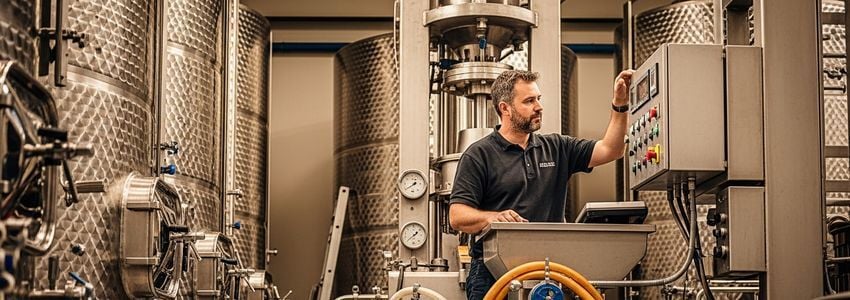
- Fermenters and Tanks: These are the heart of the winery. Stainless steel tanks, concrete eggs, or oak vats are where the magic of fermentation happens. Financing allows you to acquire tanks of the right size and material to match your production goals and stylistic vision without compromise.
- Grape Crushers and Presses: The first step after harvest, destemmers, crushers, and presses are critical for extracting juice gently and efficiently. Modern presses offer precise control over pressure, which directly impacts wine quality. Financing makes this advanced technology attainable.
- Bottling Lines and Equipment: An efficient bottling line- including fillers, corkers, cappers, and labelers- is vital for getting your finished product to market. Financing can cover everything from a small, semi-automatic line for a boutique winery to a fully automated system for a large-scale operation.
- Barrels and Aging Equipment: Oak barrels are a significant and recurring investment. Financing can be structured to help you manage the cost of your barrel program, allowing you to acquire new French or American oak barrels to age your wines to perfection. This also includes barrel racks, washers, and other cellar tools.
- Temperature Control Systems: Glycol chillers and heating systems are non-negotiable for modern winemaking. They provide the precise temperature control needed during fermentation and cellaring, ensuring wine stability and quality. These complex systems represent a major capital outlay perfect for financing.
- Tractors and Vineyard Equipment: The work starts in the vineyard. Financing covers essential agricultural equipment like tractors, sprayers, harvesters, and cultivation tools needed to manage your grapevines effectively throughout the growing season.
- Laboratory Equipment: Quality control is key. Financing can help you equip an in-house lab with spectrophotometers, pH meters, and other analytical tools to monitor your wine's chemistry at every stage.
- Point of Sale (POS) and Tasting Room Equipment: The customer-facing side of your business is just as important. Financing can cover modern POS systems, commercial glasswashers, refrigeration units, and tasting room furniture to create a seamless and professional guest experience.
To provide a clearer picture, here’s a breakdown of typical costs and financing options for key pieces of winery equipment:
| Equipment Type | Typical Cost Range | Common Financing Option |
|---|---|---|
| Stainless Steel Fermentation Tank | $5,000 - $50,000+ | Equipment Loan or $1 Buyout Lease |
| Grape Press (Membrane) | $20,000 - $150,000 | Equipment Loan |
| Semi-Automatic Bottling Line | $25,000 - $100,000 | Equipment Lease (FMV or $1 Buyout) |
| New Oak Barrels (per barrel) | $900 - $2,000 | Working Capital Loan or Line of Credit |
| Glycol Chiller System | $15,000 - $80,000 | Equipment Loan |
| Vineyard Tractor | $30,000 - $120,000 | Equipment Loan or Lease |
| Laboratory Spectrophotometer | $8,000 - $25,000 | Equipment Loan |
| Tasting Room POS System | $3,000 - $15,000 | Working Capital or Equipment Loan |
How Winery Equipment Financing Works
Securing winery equipment financing is a straightforward process, especially when working with an experienced lender like Crestmont Capital. We have refined our system to be as efficient as possible, allowing you to get the equipment you need and get back to making wine. The journey from identifying a need to having new equipment operational in your winery follows a clear, four-step path.
Application
The process begins with a simple application. You'll provide basic information about your winery (name, time in business, annual revenue) and details about the equipment you wish to finance, including a quote or invoice from the vendor. At Crestmont Capital, our online application takes just a few minutes to complete, minimizing paperwork and saving you valuable time.
Review and Approval
Once your application is submitted, our underwriting team reviews your business's financial health and the value of the equipment. Because the equipment itself serves as collateral, the approval criteria can be more flexible than for traditional bank loans. We focus on your overall business strength and ability to make payments. Decisions are typically made very quickly, often within a few hours.
Funding
Upon approval, you will receive the financing documents for your review and signature. Once signed, we handle the rest. Crestmont Capital pays the equipment vendor directly on your behalf. This is a crucial step- you don't have to manage the payment yourself. The vendor is paid, and they release the equipment for shipment directly to your winery.
Repayment
With your new equipment installed and operational, you begin making your scheduled monthly payments. The loan or lease term, payment amount, and interest rate are all clearly defined in your agreement, so there are no surprises. You get to put your new asset to work generating revenue immediately while spreading the cost over a manageable period.
The U.S. Wine Industry: By the Numbers
10,000+
Wineries in the United States
(Source: Statista)
$45B+
Annual U.S. Wine Industry Revenue
(Source: Industry Data)
$50k+
Potential Cost of a Single Fermenter Tank
24-72
Hours to Funding with Crestmont Capital
Types of Winery Equipment Financing
Winery owners have several financing avenues to explore, each with distinct features and benefits. The best choice depends on your specific financial situation, your long-term plans for the equipment, and your business goals. Understanding these options is the first step toward making a strategic decision for your winery's future.
Equipment Loans
An equipment loan is a traditional financing product where a lender provides the funds to purchase a piece of equipment outright. You take ownership of the asset from day one, and the equipment serves as collateral for the loan. You repay the loan, plus interest, in fixed monthly installments over a predetermined term, typically ranging from 2 to 7 years. This is an excellent option for long-lasting, core equipment like fermentation tanks, presses, and tractors that you intend to use for many years.
Equipment Leasing
Equipment leasing is similar to renting. You pay a monthly fee to use the equipment for a specific period. At the end of the lease term, you typically have several options: purchase the equipment, renew the lease, or return it and upgrade to newer technology. Leases often have lower monthly payments than loans and may not require a significant down payment. This is ideal for equipment that becomes outdated quickly, like bottling lines or laboratory technology, or for wineries that want to conserve capital. Common lease types include:
- $1 Buyout Lease (Capital Lease): This functions much like a loan. Payments are slightly higher, but at the end of the term, you can purchase the equipment for a nominal amount, usually $1. You get the benefits of leasing with the certainty of ownership.
- Fair Market Value (FMV) Lease (Operating Lease): This is a true lease. Payments are lower because you are only paying for the depreciation of the equipment during the lease term. At the end, you can buy it for its fair market value, return it, or start a new lease on a new model.
Working Capital Loans
While not strictly for equipment, a working capital loan can be used to purchase smaller assets or cover the costs associated with an equipment upgrade, such as installation and training. These are typically shorter-term loans that provide a quick infusion of cash to cover immediate business needs. This can be a good option for purchasing a new set of barrels or upgrading your tasting room POS system.
Business Lines of Credit
A business line of credit provides access to a revolving pool of funds up to a certain limit. You can draw from it as needed and only pay interest on the amount you use. This is an excellent tool for ongoing needs and unexpected opportunities. For a winery, it could be used to purchase a small piece of lab equipment on short notice or to finance a new set of barrels when a good deal arises.
SBA Loans
Loans backed by the U.S. Small Business Administration (SBA), such as the 7(a) and 504 loan programs, can be used for equipment purchases. These loans often feature long repayment terms and competitive interest rates. However, the application process is typically more intensive and time-consuming than with direct lenders like Crestmont Capital. They are best suited for large, well-established wineries planning significant capital expenditures.
| Financing Type | Ownership | Best For | Key Benefit |
|---|---|---|---|
| Equipment Loan | Immediate | Long-life assets (tanks, presses, tractors) | Builds equity in the asset |
| Equipment Lease | End of term option | Tech that becomes obsolete (bottling lines) | Lower monthly payments, easy upgrades |
| Working Capital Loan | Immediate | Smaller equipment or related costs (barrels) | Fast access to cash for various needs |
| Business Line of Credit | Immediate | Unexpected needs, ongoing purchases | Flexible access to funds, pay interest only on use |
| SBA Loan | Immediate | Large, long-term capital investments | Long terms and very competitive rates |
Benefits of Winery Equipment Financing
Choosing to finance your winery equipment is more than just a way to afford necessary machinery; it’s a strategic financial decision that offers numerous advantages for your business's health and growth. By leveraging financing, you can position your winery for greater success in a competitive market.
- Preserve Cash Flow and Working Capital: This is arguably the most significant benefit. The winemaking industry has long production cycles and seasonal revenue. Tying up a large sum of cash in an equipment purchase can leave you vulnerable. Financing converts a massive one-time cost into a predictable, manageable monthly payment, keeping your cash available for payroll, marketing, grape purchasing, and other operational expenses.
- Acquire Better Equipment Immediately: You don't have to wait to save up for the best equipment. Financing allows you to acquire the state-of-the-art press, the ideal-sized tanks, or the efficient bottling line you need right now. Better equipment often leads to higher quality wine, increased production efficiency, and lower labor costs, allowing the asset to start paying for itself from day one.
- Potential Tax Advantages: Financing your equipment can offer significant tax benefits. Section 179 of the IRS tax code allows businesses to deduct the full purchase price of qualifying equipment financed or purchased during the tax year. This can substantially lower your tax liability. Both equipment loans and certain types of leases (like a $1 Buyout lease) often qualify. Always consult with a tax professional to understand the specific benefits for your winery.
- Flexible and Customizable Payment Terms: Lenders like Crestmont Capital understand the cyclical nature of the wine business. We can often structure financing with flexible terms that align with your cash flow. This might include options for seasonal or deferred payments, where you pay less during the slower months and more during your peak season after harvest and holiday sales.
- Build Business Credit: Making regular, on-time payments on an equipment loan or lease is a great way to build a strong credit profile for your winery. A solid credit history makes it easier and more affordable to secure other types of financing you may need in the future, such as a mortgage for a new facility or a larger line of credit for expansion.
- 100% Financing: Many equipment financing agreements can cover 100% of the equipment cost, and sometimes even "soft costs" like delivery, installation, and training. This means you can get your new equipment up and running with little to no money out of pocket, a huge advantage for conserving capital.
Tax Insight: Under Section 179, businesses may be able to deduct up to $1,160,000 for the 2023 tax year on qualifying equipment purchases. This powerful incentive is designed to encourage businesses to invest in themselves.
Who Qualifies for Winery Equipment Financing?
One of the most appealing aspects of winery equipment financing is its accessibility. Because the equipment itself secures the deal, lenders can be more flexible than traditional banks. While specific requirements vary by lender and financing product, most established wineries will find they are strong candidates. Lenders typically look at a combination of factors to assess risk and determine your eligibility, rates, and terms.
Here are the key criteria that lenders like Crestmont Capital consider:
- Time in Business: Most lenders prefer to work with businesses that have an established track record. A minimum of one to two years in operation is standard for the best rates and terms. However, specialized programs are often available for newer businesses, even those with as little as six months of history. Start-up wineries may also qualify, though they may require a stronger personal credit score or a larger down payment.
- Annual Revenue: Lenders want to see that your winery has a consistent revenue stream to support the new monthly payment. A typical minimum annual revenue requirement is around $100,000 to $250,000. Higher revenues can lead to higher approval amounts and more favorable terms.
- Credit Score: Both your personal (FICO) and business credit scores will be reviewed. A personal credit score of 650 or higher is generally preferred for the most competitive options. However, financing is still widely available for business owners with scores in the lower 600s or even high 500s, though the rates may be higher to compensate for the increased risk.
- Required Documentation: The application process is typically much simpler than a bank loan. Be prepared to provide:
- A completed one-page application.
- An invoice or quote for the equipment you want to finance.
- Your last 3-6 months of business bank statements.
- For larger financing amounts (e.g., over $250,000), you may be asked for additional financial documents like tax returns or a balance sheet.
Quick Qualification Checklist
- Time in Business: 6+ months
- Personal Credit Score: 600+ preferred
- Annual Revenue: $100,000+
- Documentation: Application, equipment invoice, recent bank statements
Even if you don't meet all these criteria perfectly, we encourage you to apply. Crestmont Capital has programs designed for a wide range of business profiles.
Check Your Winery Equipment Financing Options
Find out what your winery qualifies for in minutes with our simple, no-obligation application. Your credit score will not be affected.
Get Pre-Approved →How Crestmont Capital Helps Winery Owners
Navigating the world of business financing can be complex, but at Crestmont Capital, we make it simple, transparent, and effective. As the #1 rated business lender in the U.S., we have a proven track record of helping businesses in specialized industries, like winemaking, secure the capital they need to thrive. We understand that financing a new grape press is not the same as financing a delivery truck. Our expertise in the beverage industry, including both wineries and breweries, allows us to provide tailored solutions that truly fit your operational needs. For more on this, you can compare our approach to our brewery equipment financing guide.
Our core strength lies in our diverse portfolio of financing products and our commitment to speed. We offer a full suite of options, from comprehensive equipment financing loans to flexible equipment leasing agreements. This allows us to structure the perfect deal for your specific situation, whether you prioritize ownership, low monthly payments, or the ability to upgrade technology frequently. Our streamlined online application and rapid underwriting process mean you can go from application to funding in as little as 24 hours, ensuring you don't miss out on a critical equipment purchase or a seasonal opportunity.
Beyond just equipment, we understand that wineries have multifaceted financial needs. That's why we also offer products like a business line of credit for managing seasonal cash flow or a working capital loan for marketing a new vintage. Our dedicated financing specialists act as your partners, taking the time to understand your vision and challenges. We provide clear, honest guidance to help you make the best financial decision for your winery's long-term health. Our goal is not just to be a lender, but a strategic resource for your growth, as detailed in our guide to general winery business loans.
Real-World Scenarios: Winery Equipment Financing in Action
To better understand how these financing tools work in practice, let's explore a few common scenarios that winery owners face. These examples illustrate how different financing products can be applied to solve specific challenges and achieve strategic goals.
Scenario 1: The Boutique Winery's First Bottling Line
The Challenge: A small, family-owned winery has been successful for three years, but they rely on a mobile bottling service, which is expensive and offers limited scheduling flexibility. To grow their direct-to-consumer sales, they need their own semi-automatic bottling line, which costs $45,000. Paying cash would wipe out their operational reserves for the year.
The Solution: The owners work with Crestmont Capital to secure an equipment lease with a $1 buyout option over a 5-year term. This structure keeps their monthly payments low and predictable. Because the bottling line will be a core part of their operation for years, the $1 buyout ensures they will own it outright at the end of the term for a negligible cost. The financing is approved in one day, and the vendor is paid directly. The winery now has full control over its bottling schedule, can fulfill orders faster, and is saving money compared to the mobile service. The monthly payment is easily covered by the increased sales and cost savings.
Scenario 2: The Mid-Size Winery Upgrading Fermentation Tanks
The Challenge: An established winery with a 10-year history needs to increase its production capacity to meet growing demand from distributors. They need to purchase four new 2,000-gallon stainless steel fermentation tanks at a total cost of $90,000. They have good cash flow but want to preserve it for an upcoming marketing push for a new premium vintage.
The Solution: The winery applies for a traditional equipment loan. Given their strong financial history and time in business, they are quickly approved for 100% financing over a 7-year term with a very competitive interest rate. They take immediate ownership of the tanks, which are long-lasting assets that add significant value to their balance sheet. They also plan to use the Section 179 deduction to write off the full purchase price on their taxes for the year. The financing allows them to expand production immediately while dedicating their cash reserves to the marketing campaign, leading to a record-breaking year for both production and sales.
Scenario 3: The Vineyard Owner Needing a New Tractor
The Challenge: A grape grower who supplies several local wineries has an aging tractor that is becoming unreliable and costly to maintain. A breakdown during the critical harvest season would be disastrous. A new, more efficient vineyard tractor costs $75,000, an amount they had not budgeted for.
The Solution: The owner decides on an equipment financing agreement (EFA), which is a straightforward loan structure. They finance the full $75,000 over five years. The new tractor is more fuel-efficient and requires less maintenance, immediately lowering their operating costs. The reliability gives them peace of mind, and the predictable monthly payment is easily factored into their budget. They secure the asset they need to protect their harvest and their business without a sudden, crippling cash outlay.
Scenario 4: The Expanding Winery's Barrel Program
The Challenge: A fast-growing winery wants to expand its reserve wine program, which requires a significant investment in new French oak barrels. They need 50 new barrels at a cost of $1,500 each, for a total of $75,000. Barrels are considered a consumable supply more than permanent equipment, so a traditional equipment loan might not be the best fit.
The Solution: The winery secures a short-term working capital loan. This provides them with the lump sum of cash needed to purchase the barrels from their cooperage immediately. The loan term is set for 24 months. This allows them to get the wine into the new barrels for aging while they begin selling their current vintage. The revenue from existing sales covers the loan payments, and by the time the loan is paid off, the wine from the newly purchased barrels will be ready for bottling and sale, generating a significant return on the investment.
How to Apply for Winery Equipment Financing
We've designed our application process to be as fast and painless as possible. Follow these simple steps to get the funding you need for your winery.
Complete the Online Application
Fill out our secure, one-page online application. It takes about five minutes and asks for basic information about you, your winery, and the equipment you need.
Submit Your Documents
Upload a copy of the equipment invoice or quote and your last few business bank statements. This helps us verify your revenue and expedite the approval process.
Review and Sign
You'll receive a decision and your financing options, often within hours. Once you choose the best option for you, simply review and electronically sign the documents to finalize the deal.
Frequently Asked Questions
1. What exactly is winery equipment financing?
It is a type of business loan or lease created specifically for the purchase of equipment used in wine production. The key feature is that the equipment being financed also serves as the collateral for the loan, which can make it easier to obtain than other forms of business credit.
2. How much does winery equipment financing cost?
The cost depends on several factors: the total price of the equipment, the type of financing (loan vs. lease), the repayment term length, and your business's financial profile (credit score, time in business, revenue). Interest rates can be fixed or variable, but most equipment loans have fixed rates, providing predictable monthly payments. At Crestmont Capital, we provide a clear breakdown of all costs with no hidden fees.
3. What are typical interest rates and terms?
Interest rates for qualified borrowers can be very competitive, often starting in the single digits. Terms typically range from 24 to 84 months (2 to 7 years). A stronger financial profile will generally result in lower rates and more flexible term options. The goal is to find a term that creates a comfortable monthly payment while minimizing the total interest paid over the life of the loan.
4. What are the minimum qualifications to get approved?
While specifics vary, a general baseline is at least 6-12 months in business, a personal credit score of 600 or higher, and annual revenues of at least $100,000. However, we have programs for a wide variety of business situations, including startups and those with less-than-perfect credit, so it's always best to apply and see what you qualify for.
5. Can I get financing for my winery equipment with bad credit?
Yes, it is often possible. Because the equipment acts as collateral, lenders have more security. This allows them to offer financing solutions to business owners with credit scores in the high 500s or low 600s. The interest rates may be higher, but financing remains a viable path to acquiring essential equipment.
6. Is a down payment required?
Many winery equipment financing programs offer up to 100% financing, meaning no down payment is required. This is a major benefit for preserving your cash flow. In some cases, such as for startups or businesses with challenged credit, a lender might ask for a down payment of 10-20% to reduce their risk.
7. What types of equipment can I finance?
You can finance almost any piece of new or used equipment for your winery. This includes production machinery like fermenters, presses, and bottling lines; vineyard equipment like tractors and harvesters; cellar equipment like barrels and temperature control systems; and even tasting room technology like POS systems.
8. Should I lease or buy my winery equipment?
The decision depends on your goals. Buy (with a loan) if the equipment has a long useful life (like a tank or tractor) and you want to build equity. Lease if the equipment becomes obsolete quickly (like some lab or computer tech), if you want lower monthly payments, or if you prefer to have the option to upgrade every few years.
9. What is the application process like?
With a modern lender like Crestmont Capital, the process is fast and digital. It typically involves a simple online application (5 minutes), submission of an equipment invoice and recent bank statements, followed by a quick credit review. It's designed to be much faster and require less paperwork than a traditional bank loan application.
10. How quickly can I get the funding?
Extremely quickly. After submitting your application and documents, you can receive an approval within a few hours. Once you sign the financing agreement, the funds are typically sent directly to the equipment vendor within 24 to 72 hours. This speed ensures you can acquire your equipment without delay.
11. Are SBA loans a good option for winery equipment?
SBA loans can be a great option, offering long terms and low rates. They are particularly well-suited for large, expensive equipment purchases. However, the application and approval process is significantly longer and more document-intensive than with a direct lender. For speed and convenience, direct financing is often preferred. You can learn more at the official SBA.gov website.
12. What is the maximum amount I can finance?
Financing amounts can range from as little as $5,000 for a small piece of equipment to several million dollars for a full-scale winery expansion. The amount you qualify for will depend on your winery's revenue, credit history, and the value of the equipment being purchased.
13. Can a startup winery get equipment financing?
Yes, but it can be more challenging. Lenders will look for a strong business plan, industry experience from the owners, a solid personal credit score, and often a significant down payment or additional collateral. There are specific financing programs designed to help new businesses get off the ground.
14. Can I finance used winery equipment?
Absolutely. Financing is available for both new and used equipment. This can be a great way to save money, especially on durable items like stainless steel tanks or tractors. The lender will assess the value and expected lifespan of the used equipment as part of the approval process.
15. What happens at the end of an equipment lease?
This depends on your lease agreement. With a $1 Buyout Lease, you pay $1 and own the equipment. With a Fair Market Value (FMV) lease, you have three choices: 1) Purchase the equipment for its current fair market value, 2) Return the equipment to the lender, or 3) Renew the lease or start a new lease on upgraded equipment.
Start Your Winery Equipment Financing Journey Today
Equip your winery for success. Partner with the nation's #1 business lender to get the machinery you need with a plan that works for you.
Apply in Minutes →How to Get Started
Ready to take the next step? Getting the equipment you need is easier than you think. Here’s a simple, three-step plan to get started with Crestmont Capital today.
Gather Your Information
Identify the specific equipment you need and get a formal quote or invoice from your preferred vendor. Have your last three months of business bank statements ready.
Apply Online
Click our "Apply Now" link to access our simple, secure online application. The entire process takes only a few minutes to complete from any device.
Speak with a Specialist
A dedicated financing specialist will contact you shortly after you apply to discuss your options and finalize the best plan for your winery.
In the competitive and capital-intensive world of winemaking, strategic financial management is just as crucial as skillful viticulture and enology. The quality of your equipment- from the vineyard tractor to the bottling line- directly impacts the quality of your wine, your production efficiency, and your brand's reputation. Waiting to accumulate enough cash to purchase these essential assets can mean falling behind competitors, missing growth opportunities, and compromising on the quality of your vintage. This is why winery equipment financing is not merely a loan; it is an essential growth strategy for the modern winery owner. It transforms prohibitive upfront costs into manageable operational expenses, empowering you to invest in excellence without sacrificing financial stability. By preserving your precious working capital, you ensure that your business has the liquidity to navigate the seasonal ebbs and flows of the industry, invest in marketing, hire top talent, and manage unforeseen challenges. The right financing partner understands that a new press isn't just a machine; it's a tool for crafting a legacy. At Crestmont Capital, we provide more than just capital; we provide a partnership built on speed, flexibility, and a deep understanding of your industry's unique demands. We help you acquire the tools you need today so you can focus on what you do best: creating exceptional wine that delights customers and builds a lasting brand. Making the decision to finance your equipment is an investment in your winery's future, enabling you to scale production, improve quality, and achieve your long-term vision faster and more efficiently than you ever thought possible. Don't let a capital barrier stand between you and your winery's full potential. Explore your winery equipment financing options and take the next step toward a more productive and profitable future.
Disclaimer: The information provided in this article is for general educational purposes only and is not financial, legal, or tax advice. Funding terms, qualifications, and product availability may vary and are subject to change without notice. Crestmont Capital does not guarantee approval, rates, or specific outcomes. For personalized information about your business funding options, contact our team directly.