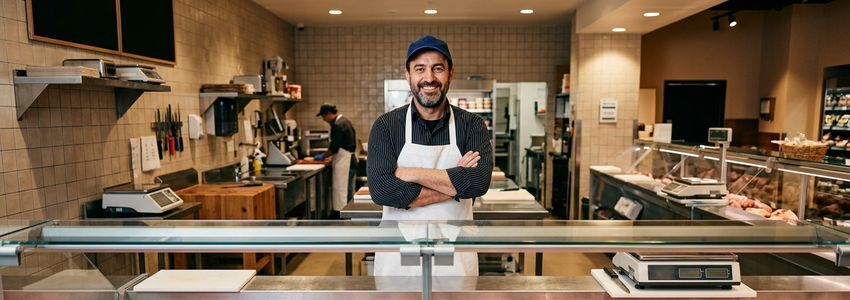
Securing reliable butcher shop equipment financing is often the difference between a meat market that struggles to keep up with demand and one that runs efficiently, safely, and profitably. From commercial meat slicers and grinders to walk-in coolers, band saws, and vacuum packaging systems, the right equipment is the backbone of every successful butcher shop. This guide walks through exactly how butcher shop equipment financing works, what it costs, who qualifies, and how to choose the right funding option for your business.
In This Article
- What Is Butcher Shop Equipment Financing?
- Key Benefits of Financing Your Equipment
- How It Works
- Types of Equipment You Can Finance
- Who Qualifies for This Financing?
- Comparing Your Financing Options
- How Crestmont Capital Helps Butcher Shops
- Real-World Scenarios
- How to Get Started
- Frequently Asked Questions
- Conclusion
What Is Butcher Shop Equipment Financing?
Butcher shop equipment financing is a category of business funding specifically structured to help meat market owners purchase, upgrade, or replace the specialized machinery their operation depends on. Rather than draining cash reserves to buy a new commercial meat slicer, band saw, or walk-in cooler outright, owners borrow against the value of the equipment itself and repay the loan over time as the equipment generates revenue.
Unlike a general-purpose business loan, equipment financing is secured by the asset being purchased. That collateral reduces risk for the lender, which typically translates into faster approvals, more competitive terms, and fewer hurdles for the borrower compared to unsecured lending products. It is one of the most accessible forms of financing available to independent butcher shops, meat markets, delis, and small-scale meat processors.
This type of financing applies to a wide range of businesses in the meat and food retail space, including:
- Independent neighborhood butcher shops and meat markets
- Specialty meat processors and custom cutting operations
- Full-service delis with in-house meat cutting and curing
- Grocery stores with dedicated butcher counters
- Wholesale meat distributors expanding retail operations
- Sausage makers, charcuterie producers, and artisan meat businesses
Whether you are outfitting a brand-new shop from the ground up or replacing a single aging piece of equipment, this financing model gives you a practical path to modern, efficient, and compliant machinery without a large upfront cash outlay.
Key Benefits of Financing Your Equipment
Equipment financing offers several advantages over paying cash or relying on a general business loan. For an industry where equipment failure can mean lost inventory and lost revenue overnight, these benefits carry real weight.
Preserve Working Capital
Meat is a perishable, capital-intensive product. Tying up tens of thousands of dollars in equipment purchases leaves less cash available for inventory, payroll, rent, and unexpected expenses. Financing spreads the cost over the useful life of the equipment, keeping your working capital free for day-to-day operations.
Upgrade to Safer, More Efficient Machinery
Modern meat slicers, grinders, and refrigeration units are faster, more energy efficient, and easier to keep sanitary than older models. Financing makes it realistic to upgrade proactively rather than waiting until aging equipment breaks down during a busy week.
Fast Access to Replacement Equipment
A failed compressor on a walk-in cooler or a broken band saw can shut down operations within hours. Financing programs built for equipment purchases are designed to move quickly, often funding within a few business days, so you are not left improvising with rented or borrowed equipment.
Predictable Monthly Payments
Fixed-rate equipment loans give you a consistent monthly payment for budgeting purposes, which is especially valuable in a business where margins on individual cuts of meat can be thin and revenue can fluctuate seasonally.
The Equipment Serves as Its Own Collateral
Because the equipment itself typically secures the loan, you generally are not required to pledge your building, home, or other business assets as additional collateral. This makes qualifying more straightforward, particularly for smaller or newer butcher shops.
Ready to Upgrade Your Butcher Shop?
Get fast, flexible equipment financing from the #1 business lender in the U.S. No obligation, apply in minutes.
Apply Now →How Butcher Shop Equipment Financing Works
The process for financing meat market equipment is designed to be far simpler and faster than a traditional bank loan. Here is the general path from application to a fully equipped shop.
- Identify the equipment you need. Get a quote from your equipment vendor or supplier for the meat slicer, grinder, cooler, or full buildout package you want to purchase.
- Submit a simple application. Provide basic details about your business, including time in operation, annual revenue, and the equipment cost. Most applications take just minutes to complete online.
- Speak with a financing specialist. A specialist reviews your goals and matches you with the financing structure, either a term loan, a lease, or a line of credit, that best fits your situation.
- Underwriting and approval. The lender evaluates your business's cash flow, credit profile, and the value of the equipment being financed. Decisions are often made within hours to a few business days.
- Sign and fund. Once approved, you review and sign the agreement electronically. Funds are typically sent directly to your equipment vendor, or deposited into your business account if you are purchasing directly.
- Install and get to work. Your new or upgraded equipment is installed, and you begin making fixed monthly payments while the equipment generates revenue for your business.
Types of Equipment You Can Finance
Butcher shop equipment financing is not limited to a single machine. Most lenders, including Crestmont Capital, will finance any equipment essential to your meat market operation. Common categories include:
Cutting and Processing Equipment
- Commercial meat slicers (automatic, semi-automatic, and manual gravity-feed models)
- Meat grinders and mixer-grinders
- Band saws and meat cutting saws
- Tenderizers and cubers
- Bone saws and specialty cutting tools
Refrigeration and Cold Storage
- Walk-in coolers and walk-in freezers
- Refrigerated display cases and deli cases
- Blast chillers for rapid cooling of fresh product
- Reach-in refrigeration units
Packaging and Preparation
- Vacuum sealers and vacuum packaging machines
- Shrink wrap and overwrap machines
- Commercial scales and labeling systems
- Sausage stuffers and smokehouses
Facility and Support Equipment
- Stainless steel prep tables and workstations
- Sanitation and washdown equipment
- POS systems and inventory management technology
- Delivery and transport vehicles for wholesale accounts
Because financing is available for both new and used equipment, many butcher shop owners choose to combine new critical-path machinery, like a primary slicer or walk-in cooler, with cost-effective used equipment for secondary needs. This blended approach allows a shop to prioritize its budget toward the equipment that touches food safety and customer-facing product quality most directly, while stretching dollars further on lower-risk items like prep tables or storage racks.
It is also worth noting that many of these categories overlap with equipment used in adjacent food businesses. A shop that also prepares sausages, cured meats, or ready-to-eat deli items may need to finance smokehouses, curing chambers, or additional refrigerated display space alongside its core butchering equipment, and most lenders are comfortable bundling all of these into a single financing package rather than requiring separate applications for each category.
By the Numbers
The Butcher Shop and Meat Market Industry
10,200+
Meat market businesses operating in the U.S. today
$13.9B
Annual U.S. meat market industry revenue
$25K-$75K
Typical equipment cost for a mid-size butcher shop buildout
24-48 Hrs
Typical funding turnaround for approved equipment financing
Who Qualifies for Butcher Shop Equipment Financing?
Equipment financing is generally more accessible than other forms of business lending because the equipment itself provides security for the loan. Still, lenders evaluate several factors before extending an offer.
Time in Business
Established butcher shops with 6-12 months or more of operating history will find the widest range of financing options and the most competitive rates. Newer or startup meat markets can still qualify, particularly for smaller equipment purchases or when the owner has strong personal credit.
Revenue and Cash Flow
Lenders want to see consistent monthly revenue that supports the proposed payment. Business bank statements showing steady deposits from retail sales, wholesale accounts, or catering work are typically the most important underwriting document.
Credit Profile
Both personal and business credit are considered. A personal credit score in the 600s or higher generally opens up better rates, though options exist for owners with less-than-perfect credit, especially when the equipment being financed has strong resale value.
The Equipment Itself
Because equipment financing is secured by the asset, lenders also consider the type, age, and resale value of the equipment. New equipment from established manufacturers is typically the easiest to finance, while highly specialized or custom-built equipment may require additional documentation.
Key Insight: The U.S. meat market industry generates an estimated $13.9 billion in annual revenue, with over 10,200 independent meat market businesses currently operating nationwide. Well-equipped shops with reliable cold storage and modern cutting equipment are consistently better positioned to compete on both product quality and turnaround speed.
Comparing Your Financing Options
Equipment financing is not the only path to funding a butcher shop's machinery needs. Understanding how it stacks up against other common options helps you choose the right tool for your specific goal.
Equipment Financing vs. Equipment Leasing
With equipment financing, you own the equipment outright once the loan is paid off, and the equipment builds equity for your business over time. With equipment leasing, you make payments to use the equipment for a set term, often with the option to purchase it at the end for a reduced price. Leasing can mean lower monthly payments, while financing is generally the better choice for equipment you plan to use for many years, such as a walk-in cooler.
Equipment Financing vs. a Business Line of Credit
A line of credit provides flexible, revolving access to capital that can be used for a variety of purposes, including equipment, inventory, or payroll. Equipment financing is specifically tied to a single purchase and is secured by that asset, which often results in a lower rate than an unsecured line of credit. Many butcher shop owners use equipment financing for major purchases and keep a line of credit available for day-to-day flexibility.
Equipment Financing vs. an SBA Loan
SBA loans can offer very competitive rates and long repayment terms, and they can be used for equipment among other purposes. However, the SBA application process is more document-intensive and can take weeks to close. Equipment financing is built for speed, making it the more practical choice when a piece of essential equipment needs to be replaced quickly.
| Financing Type | Best Use Case | Funding Speed | Typical Term |
|---|---|---|---|
| Equipment Financing | Slicers, grinders, coolers, saws | 1-3 days | 2-7 years |
| Equipment Leasing | Lower monthly payments, flexible upgrades | 1-3 days | 2-5 years |
| Business Line of Credit | Flexible, ongoing cash flow needs | 1-2 days | Revolving |
| SBA Loan | Large buildouts, long-term investment | 30-90 days | 7-25 years |
How Crestmont Capital Helps Butcher Shops and Meat Markets
Crestmont Capital works directly with independent butcher shops, meat markets, and specialty meat processors to fund the equipment their businesses depend on. Instead of the slow, paperwork-heavy process associated with traditional banks, Crestmont Capital focuses on speed, flexibility, and a practical understanding of the meat retail industry.
Our equipment financing programs are built to cover everything from a single replacement meat slicer to a full walk-in cooler and processing room buildout. For shops that also serve deli or prepared food, our restaurant equipment financing solutions and commercial ice machine financing options can round out a complete equipment package under one financing relationship.
Here is what sets Crestmont Capital apart for meat market owners:
- Speed: Applications take minutes, and approvals are often issued within hours, with funding available in as little as 24 to 48 hours once approved.
- Flexibility: Whether you need financing for one machine or an entire shop buildout, our specialists structure the loan or lease to match your cash flow and seasonal sales patterns.
- Practical underwriting: We look at your business's overall health and cash flow rather than relying solely on a credit score, which helps more independent meat market owners get approved.
- Options for less-than-perfect credit: Our bad credit equipment financing programs give owners with credit challenges a realistic path to modern equipment.
- Working capital when you need it: Beyond equipment, our working capital loans can cover inventory, staffing, or seasonal cash flow gaps alongside your equipment purchase.
Butcher shops share many of the same operational and financing considerations as other food retail businesses. For a broader look at funding options across the meat retail sector, see our guide on butcher shop business loans, which covers general working capital and expansion financing alongside equipment-specific needs.
Keep Your Cutting Room Running at Full Speed
Apply for equipment financing today and get a decision fast, with no obligation to accept.
Apply Now →Real-World Scenarios
To see how butcher shop equipment financing plays out in practice, consider these examples of how different meat market owners might put it to use.
Scenario 1: The Cooler Compressor Failure
The Business: "Hartwell Meats," a family-owned butcher shop operating for eight years.
The Challenge: The compressor on their primary walk-in cooler fails on a Friday afternoon, putting thousands of dollars of fresh inventory at risk over the weekend.
The Solution: The owner applies for $18,000 in equipment financing and is approved within hours, with a replacement cooler system installed by Monday morning.
The Outcome: Inventory loss is avoided entirely, and the new, more energy-efficient cooler lowers the shop's monthly utility costs going forward.
Scenario 2: The New Shop Buildout
The Business: "Cedar & Sage Meat Co.," a newly opened specialty meat market in its first year of operation.
The Challenge: The owner needs a full equipment package, including two commercial slicers, a walk-in cooler, a display case, and a vacuum packaging system, but does not want to deplete startup cash reserves.
The Solution: The owner secures $65,000 in equipment financing, spreading the cost across a five-year term matched to the equipment's useful life.
The Outcome: The shop opens fully equipped from day one, while preserving cash for initial inventory, marketing, and payroll during the critical early months.
Scenario 3: The Wholesale Expansion
The Business: "Northgate Butcher Supply," an established meat market adding a wholesale delivery line to local restaurants.
The Challenge: Meeting new wholesale demand requires a higher-capacity band saw, a second walk-in freezer, and a refrigerated delivery van.
The Solution: The owner finances the equipment and vehicle together through a $95,000 equipment loan, keeping payments aligned with the new wholesale revenue stream.
The Outcome: The shop successfully onboards six new restaurant accounts within three months, with the new equipment paying for itself well within the loan term.
How to Get Started
Getting the equipment your butcher shop needs does not have to mean weeks of paperwork or draining your cash reserves. Follow these steps to move from application to a fully equipped shop.
Get an Equipment Quote
Gather pricing from your equipment vendor for the slicer, cooler, or full package you need to finance.
Apply Online in Minutes
Complete a short application with basic business details. It will not affect your credit score.
Review Your Offer
A financing specialist walks you through your approved terms and answers any questions before you commit.
Get Your Equipment Installed
Funds are released, your equipment is delivered and installed, and you get back to running your shop.
Frequently Asked Questions
What is butcher shop equipment financing?
Butcher shop equipment financing is a funding product that lets meat market owners purchase equipment like slicers, grinders, and walk-in coolers by spreading the cost over fixed monthly payments instead of paying the full price upfront. The equipment itself typically serves as collateral for the loan.
What equipment can I finance for a butcher shop or meat market?
Most lenders will finance any equipment essential to your operation, including meat slicers, grinders, band saws, walk-in coolers and freezers, display cases, vacuum sealers, sausage stuffers, prep tables, and even POS systems or delivery vehicles.
How much does it cost to fully equip a butcher shop?
A basic setup can start around $10,000 to $25,000 for entry-level equipment, while a mid-size shop with multiple display cases, higher-capacity slicers, and walk-in refrigeration often runs $25,000 to $75,000. Larger or specialized operations with industrial-grade machinery can exceed $100,000.
What credit score do I need to qualify?
Many lenders will consider applicants with a personal credit score as low as 550 to 600, though a score above 650 typically unlocks better rates and terms. Because the equipment secures the loan, credit requirements are often more flexible than unsecured lending products.
How much can I borrow for butcher shop equipment?
Loan amounts can range from a few thousand dollars for a single slicer up to $250,000 or more for a full shop buildout with multiple pieces of equipment. The amount you qualify for depends on your revenue, credit profile, time in business, and the value of the equipment being financed.
How fast can I get funded?
Many equipment financing applications are approved within hours, with funds available in as little as 24 to 48 hours after approval. This speed is especially valuable when critical equipment like a cooler or freezer fails unexpectedly.
Do I need a down payment?
Not always. Many equipment financing programs offer 100% financing with no down payment required, particularly for borrowers with strong credit and revenue. Some programs may require a small down payment, typically 10% to 20%, for larger purchases or applicants with weaker credit profiles.
What is the difference between equipment financing and equipment leasing?
With financing, you own the equipment once the loan is repaid, building long-term equity. With leasing, you make payments to use the equipment for a set term and may have the option to buy it at the end for a reduced price. Leasing often has lower monthly payments but financing is usually more cost-effective over the long run for equipment you plan to keep for many years.
Can I finance a walk-in cooler or freezer?
Yes. Walk-in coolers and freezers are among the most commonly financed pieces of equipment for butcher shops, since they represent a significant upfront cost and are essential for safely storing perishable meat inventory. Financing can cover the unit, installation, and related refrigeration components.
Can a new or startup butcher shop qualify for equipment financing?
It can be more challenging, since most lenders prefer at least six to twelve months of business history. However, startups with strong personal credit, a solid business plan, and a clear vendor quote may still qualify, sometimes with a modest down payment or a personal guarantee.
Do I need to provide collateral?
The equipment being financed generally serves as the primary collateral, so you typically do not need to pledge additional business or personal assets. Some lenders may require a personal guarantee, which is a promise to repay the loan personally if the business is unable to.
What documents do I need to apply?
Most applications require basic business information, an equipment quote or invoice, and your last three to six months of business bank statements. Larger financing requests may also require tax returns or financial statements.
Can I finance used or refurbished equipment?
Yes. Many lenders finance used and refurbished equipment, which can be a cost-effective way to outfit a shop, particularly for secondary equipment. Lenders will typically evaluate the age, condition, and resale value of used equipment as part of underwriting.
Can I refinance equipment I already own?
In many cases, yes. Some lenders offer sale-leaseback or equipment refinance programs that let you unlock the equity in equipment you already own outright, converting it into working capital while you continue using the equipment.
How do seasonal sales spikes affect my financing options?
Many butcher shops see significant demand spikes around holidays such as Thanksgiving, Christmas, and Easter. Financing equipment ahead of these periods, rather than during them, ensures your shop is fully equipped to handle peak volume, and some lenders offer flexible or seasonal repayment structures for businesses with predictable sales cycles.
Don't Let Outdated Equipment Slow You Down
Apply now for fast, flexible equipment financing built for butcher shops and meat markets.
Apply Now →Conclusion
For independent butcher shops and meat markets, the right equipment is not a luxury, it is the foundation of food safety, product quality, and daily operations. Butcher shop equipment financing gives owners a practical way to access modern slicers, reliable cold storage, and efficient processing tools without draining the cash reserves the business needs to survive slow seasons and seize new opportunities.
Whether you are replacing a single failed compressor, outfitting a brand-new shop, or expanding into wholesale, understanding how equipment financing works, and partnering with a lender who understands the meat retail industry, puts you in a stronger position to grow. Take the time to compare your options, gather a clear equipment quote, and apply with a lender built for speed. The right financing decision today can keep your shop running at full capacity for years to come.
Disclaimer: The information provided in this article is for general educational purposes only and is not financial, legal, or tax advice. Funding terms, qualifications, and product availability may vary and are subject to change without notice. Crestmont Capital does not guarantee approval, rates, or specific outcomes. For personalized information about your business funding options, contact our team directly.