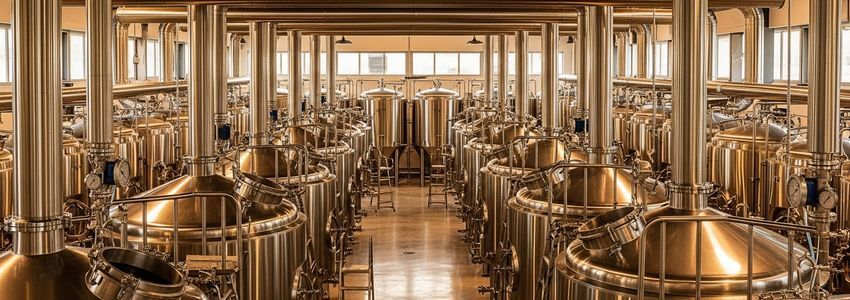
Brewery equipment financing gives craft beer entrepreneurs and distillery owners a practical path to acquiring the high-cost equipment needed to brew, ferment, and package their products without depleting working capital. Whether you're opening a taproom from scratch, scaling from a 5-barrel to a 30-barrel system, or upgrading aging fermenters, the right financing structure can mean the difference between sustainable growth and financial strain. This guide covers everything you need to know about brewery equipment financing — how it works, what it costs, who qualifies, and how Crestmont Capital can help you move forward.
In This Article
- What Is Brewery Equipment Financing?
- Types of Equipment You Can Finance
- How Brewery Equipment Financing Works
- Financing Options for Craft Breweries
- Rates, Terms, and What to Expect
- Who Qualifies for Brewery Equipment Financing?
- How Crestmont Capital Helps Breweries
- Financing vs. Leasing vs. Paying Cash
- Real-World Brewery Financing Scenarios
- Frequently Asked Questions
- How to Get Started
What Is Brewery Equipment Financing?
Brewery equipment financing is a type of equipment financing specifically designed for breweries, craft beer producers, taprooms, distilleries, and cideries. It allows you to spread the cost of major equipment purchases over monthly payments rather than paying the full amount upfront. The equipment itself typically serves as collateral, which makes approval more accessible than traditional unsecured business loans.
Craft brewing equipment is capital-intensive. A 15-barrel brewhouse system can run $150,000 to $500,000. Fermenters, bright beer tanks, canning lines, kegging systems, glycol chillers, and temperature control systems add hundreds of thousands more to the bill. For most brewery owners, financing isn't just a convenience — it's a necessity for growth.
Brewery equipment financing differs from general business loans in one key respect: the loan is secured by the value of the physical assets you're acquiring. This reduces lender risk and typically results in better rates and terms than unsecured financing options like merchant cash advances or working capital loans.
Industry Snapshot: According to the Brewers Association, the U.S. craft brewing industry generates over $28 billion in annual revenue, with more than 9,000 craft breweries operating nationwide. The capital equipment required to compete in this industry typically ranges from $500,000 to $2 million for a mid-size regional brewery.
Types of Brewery and Distillery Equipment You Can Finance
One of the most frequently asked questions from brewing entrepreneurs is: "What exactly can I finance?" The answer is: nearly everything essential to your production process. Equipment lenders recognize that brewery assets hold their value well and have a strong secondary market, which makes them attractive collateral.
Brewing Systems and Tanks
- Brewhouses — complete 3-vessel, 4-vessel, or direct-fire systems
- Fermentation tanks — conical fermenters, uni-tanks, open fermenters
- Brite/bright beer tanks — conditioning and carbonation vessels
- Serving tanks — for taproom draft service
- Hot liquor tanks (HLT) and cold liquor tanks (CLT)
- Mash tuns and lauter tuns
- Boil kettles
Cooling and Temperature Control
- Glycol chilling systems
- Walk-in coolers and cold rooms
- Refrigeration units for serving areas
- Temperature control jacketing systems
Packaging and Distribution Equipment
- Canning lines — complete automated or semi-automated systems
- Bottling lines — from manual fillers to high-speed rotary systems
- Keg washers and fillers
- Labeling machines
- Packaging conveyors and palletizers
Taproom and Tasting Room Equipment
- Draft beer systems and tap towers
- Commercial dishwashers
- Kitchen equipment (for brewpubs)
- POS systems and technology
- Furniture and fixtures
Distillery-Specific Equipment
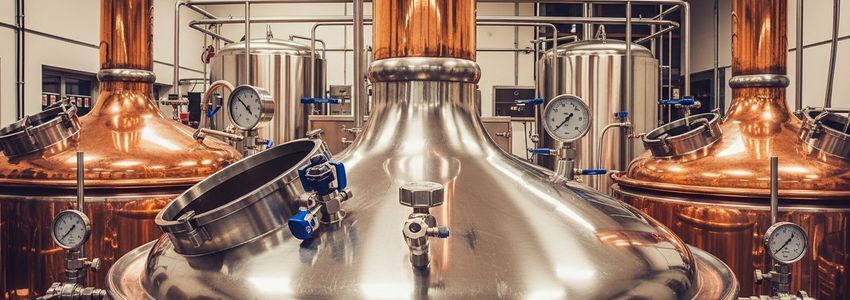
- Pot stills, column stills, and hybrid still systems
- Mashing and fermentation tanks
- Barrel aging racks and barrels
- Bottling and labeling equipment
- Filtration and blending systems
Used or refurbished equipment can also be financed through many lenders, including Crestmont Capital's used equipment financing program — a particularly useful option for startup breweries looking to control initial costs.
By the Numbers
Brewery Equipment Financing — Key Statistics
9,000+
Craft breweries operating in the U.S. (Brewers Association)
$28B+
Annual revenue generated by the U.S. craft brewing industry
$150K
Typical starting equipment cost for a 7-barrel craft brewery system
24-84
Typical repayment terms (months) for brewery equipment loans
How Brewery Equipment Financing Works
Brewery equipment financing follows the same fundamental structure as other forms of equipment lending. You identify the equipment you want, apply to a lender like Crestmont Capital, and if approved, the lender either pays the vendor directly or reimburses you after purchase. You then make fixed monthly payments over an agreed term — typically 24 to 84 months — until the loan is paid off and you own the equipment free and clear.
The process is straightforward, but there are a few nuances specific to the brewing industry that are worth understanding before you apply:
Step 1: Identify Your Equipment Needs and Total Cost
Get vendor quotes for everything you need. This doesn't have to be a single vendor — you can bundle multiple equipment purchases from different suppliers into a single financing package. Create a comprehensive list with model numbers and prices so your lender can accurately assess the collateral value.
Step 2: Determine Your Financing Structure
Decide whether you want a loan (which means you own the equipment from day one and can claim depreciation) or a lease (which keeps equipment off your balance sheet but has different tax implications). For most brewery owners looking to build long-term equity, a loan makes more sense. For cutting-edge canning technology that may become obsolete, a lease can offer more flexibility.
Step 3: Apply and Get Approved
Submit your application with basic financial documentation. For brewery equipment financing, lenders typically look at your credit profile, time in business, and annual revenue. Equipment-secured loans are more accessible than unsecured working capital loans, especially for breweries with solid sales history.
Step 4: Vendor Payment and Equipment Delivery
Once approved, Crestmont Capital can fund directly to your equipment vendor or reimburse you for recent purchases. Your equipment is delivered, installed, and you begin production — while making fixed monthly payments that fit your cash flow.
Step 5: Build Equity and Scale
As you pay down your equipment loan, you build equity in your production assets. Once a piece of equipment is paid off, you have the option to refinance it as collateral for additional expansion financing — a strategy many successful breweries use to fund their next phase of growth.
Ready to Finance Your Brewery Equipment?
Get fast, flexible brewery equipment financing from Crestmont Capital. Competitive rates, quick approvals, and terms built for brewing businesses.
Apply Now →Financing Options for Craft Breweries
Not all brewery financing is created equal. There are several distinct products available to brewery owners, each with different structures, rates, and use cases.
Equipment Financing Loans
This is the most common choice for established breweries acquiring major production assets. The equipment serves as collateral, which typically results in lower interest rates than unsecured options. You own the equipment from day one, can claim depreciation, and build equity over time. Terms usually range from 24 to 84 months.
Equipment Leasing
Leasing is worth considering for rapidly evolving technology — particularly automated canning lines and smart monitoring systems that may have shorter useful lives. With a lease, you make lower monthly payments, but you don't own the equipment at the end of the term unless you exercise a purchase option. Crestmont Capital's equipment leasing program offers both operating and capital lease structures.
SBA Loans for Breweries
SBA loans — particularly the SBA 7(a) and SBA 504 programs — can be excellent options for breweries acquiring equipment as part of a larger project, such as building out a new production facility or taproom. SBA 504 loans are particularly well-suited for real estate and equipment purchases over $500,000, offering long amortization periods of up to 25 years and below-market interest rates. The tradeoff is a longer approval timeline — typically 60 to 90 days.
Business Lines of Credit
A business line of credit can supplement equipment financing by covering ancillary costs like installation, shipping, training, initial ingredient inventory, and working capital shortfalls during your startup or expansion phase. Unlike a term loan, a line of credit is revolving — you draw what you need and repay, then draw again.
Working Capital Loans
If your primary need is cash flow rather than equipment acquisition — for example, to fund ingredient purchases during peak production or to cover payroll during seasonal slow periods — a working capital loan may be a better fit than an equipment loan. Crestmont Capital offers both secured and unsecured working capital products for established breweries.
Brewery Acquisition Financing
If you're purchasing an existing brewery — including its equipment, recipes, brand, and customer relationships — acquisition financing structures this transaction more comprehensively than simple equipment loans. This is often a combination of equipment financing, business acquisition loans, and sometimes real estate financing.
Brewery Equipment Financing Rates and Terms
Interest rates on brewery equipment financing depend on several factors: your credit profile, the age and value of the equipment, your time in business, and the overall strength of your brewery's financials. Here's a general framework to help you set expectations.
| Borrower Profile | Typical Rate Range | Term Range | Notes |
|---|---|---|---|
| Strong credit (680+), 2+ years in business | 5% - 12% APR | 36 - 84 months | Best terms, lowest down payment |
| Average credit (620-679), 1-2 years in business | 12% - 20% APR | 24 - 60 months | May require 10-20% down |
| Limited credit history, startup brewery | 18% - 35% APR | 24 - 48 months | Startup equipment financing available |
| SBA 504 / SBA 7(a) | Prime + 2-3% (fixed) | 10 - 25 years | Longer approval, most favorable long-term terms |
Down payments for brewery equipment loans typically range from 0% to 20%, depending on lender requirements and the borrower's credit profile. New equipment from reputable manufacturers often qualifies for 0% down financing, while used or older equipment may require 10-20% down to offset depreciation risk.
Pro Tip: Breweries that have been in operation for at least two years with annual revenue above $250,000 typically qualify for the most competitive equipment financing rates. If you're a newer brewery, consider starting with a smaller equipment package to establish a payment history before scaling up to larger financing requests.
Who Qualifies for Brewery Equipment Financing?
Brewery equipment financing is more accessible than many owners expect — particularly because the equipment itself serves as collateral. Crestmont Capital works with breweries across the risk spectrum, from well-established regional producers to startup taprooms seeking their first fermenter system.
Minimum Requirements (Standard Programs)
- Time in business: 6+ months preferred; startup programs available for newer operations
- Annual revenue: $100,000+ in most cases; lower thresholds for smaller equipment packages
- Credit score: 600+ personal credit score (owner); some programs down to 550 with strong revenue
- Industry: Licensed brewery, taproom, distillery, cidery, or winery
What Strengthens Your Application
- A detailed business plan or expansion plan showing projected revenue growth
- At least 3-6 months of bank statements showing consistent revenue
- Existing equipment with value that can serve as additional collateral
- Strong taproom sales or wholesale distribution agreements
- A personal credit score above 680
- Previous successful repayment of business loans or equipment financing
Startup Breweries
If your brewery isn't open yet or has been operating for less than a year, standard equipment financing may be more challenging — but not impossible. Crestmont Capital's startup equipment financing program considers personal credit, relevant industry experience, and the quality of your business plan. Many brewery founders with strong personal credit profiles (680+) and relevant professional backgrounds successfully obtain startup equipment financing.
See If You Qualify in Minutes
Submit a quick application and get a decision fast. No obligation — just real numbers for your brewery equipment purchase.
Get My Quote →How Crestmont Capital Helps Breweries Get Funded
Crestmont Capital specializes in equipment financing and small business lending for established and growing businesses across all industries — including craft brewing. Our team understands that breweries operate on thin margins during startup phases and need financing structures that support cash flow rather than strain it.
Here's what makes Crestmont Capital a preferred partner for brewery equipment financing:
- Fast approvals: Most brewery equipment applications receive a decision within 1-2 business days, versus 60-90 days for SBA loans
- Flexible terms: 24 to 84-month repayment schedules to match your production ramp-up timeline
- New and used equipment: Both qualify, including refurbished European brewing systems
- Multiple equipment in one loan: Bundle fermenters, a canning line, and a glycol system into a single financing package
- No prepayment penalties on select programs: Pay off early without penalty as your brewery grows
- No equity dilution: Debt financing means you keep 100% ownership of your brewery
We also offer brewery owners the ability to pair equipment financing with a business line of credit for operational needs — a powerful combination that gives you both the physical production capacity and the working capital liquidity to operate smoothly through seasonal demand swings and distribution expansion.
Financing vs. Leasing vs. Paying Cash: Which Is Best for Your Brewery?
Every brewery's financial situation is different. Here's a clear breakdown of the three primary ways to acquire equipment, so you can make the decision that best fits your business model.
Equipment Financing (Loan)
Best for: Breweries that want to own their equipment long-term, maximize depreciation benefits, and build equity in production assets.
Pros: Full ownership from day one, fixed monthly payments, ability to claim depreciation, no restriction on equipment modifications, builds business credit history.
Cons: Higher monthly payments than leasing, equipment is collateral, may require a down payment.
Equipment Leasing
Best for: Technology-heavy equipment with short obsolescence cycles (canning machines, automated controls), or breweries that want lower monthly payments during early stages.
Pros: Lower monthly payments, potential off-balance-sheet treatment, easy to upgrade equipment at end of term.
Cons: You don't own the equipment, possible mileage/usage restrictions, total cost over term often exceeds purchase price.
Paying Cash
Best for: Breweries with substantial cash reserves that want to avoid interest costs entirely.
Pros: No interest expense, no debt on balance sheet, no approval process.
Cons: Ties up working capital, reduces financial flexibility for day-to-day operations and emergencies, opportunity cost of not deploying capital elsewhere. Many financial advisors recommend against paying cash for equipment when financing rates are reasonable — preserving liquidity is typically worth the interest cost.
Bottom Line: For most growing craft breweries, equipment financing strikes the optimal balance between cash flow preservation and asset ownership. Leasing makes sense for high-depreciation technology, and paying cash should be reserved for small purchases under $20,000 where financing costs outweigh the liquidity benefit.
Real-World Brewery Equipment Financing Scenarios
Understanding how brewery equipment financing works in practice can help you evaluate whether it's the right move for your business. Here are several realistic scenarios that illustrate how different brewing businesses have used financing to fuel their growth.
Scenario 1: The Startup Taproom
A homebrewer with 15 years of experience and a 680 personal credit score is opening a 5-barrel taproom in a converted industrial space. Total equipment budget: $120,000 for a brewhouse, two fermenters, a brite tank, and draft system. Through Crestmont Capital's startup equipment financing program, they secure 100% financing with a 60-month term at 14% APR, resulting in monthly payments of approximately $2,790. Revenue from taproom sales begins covering payments within the first quarter of operation.
Scenario 2: The Scaling Production Brewery
A two-year-old production brewery with $800,000 in annual revenue needs to upgrade from a 10-barrel to a 30-barrel system to meet growing wholesale demand. Equipment cost: $380,000. With a 720 credit score and two years of profitable operation, they qualify for a 72-month loan at 8.5% APR, resulting in monthly payments of $6,700. The additional capacity allows them to take on three new distribution contracts, generating $180,000 in additional annual revenue — easily supporting the debt service.
Scenario 3: The Canning Line Addition
An established taproom brewery wants to add canned retail sales to their revenue mix. A semi-automated 4-head canning line costs $75,000. Rather than depleting working capital, they use equipment financing with a 48-month term at 10% APR — monthly payment of $1,901. Within six months of launching canned sales at local grocery and liquor stores, the incremental revenue exceeds the monthly payment by 3x.
Scenario 4: The Distillery Expansion
A three-year-old craft distillery producing vodka and whiskey wants to add a 500-gallon hybrid still and barrel aging room. Equipment and build-out: $220,000. Using a combination of an SBA 7(a) loan for the real estate component and equipment financing for the still, they structure the project at a blended rate that keeps monthly obligations under $4,000, with a 10-year amortization on the real estate piece.
Scenario 5: The Brewery Acquisition
An experienced brewery operations director wants to purchase an existing 10-barrel brewery that's being sold by a retiring owner. Total acquisition price: $650,000 — including equipment valued at $280,000, inventory, brand, and recipes. Using an SBA 7(a) acquisition loan with equipment financing for the identified assets, they structure a deal with 10% down, preserving cash for working capital during the ownership transition.
Scenario 6: The Seasonal Production Boost
A regional craft brewery needs additional fermentation capacity to meet holiday season demand but doesn't want to commit to permanent tanks they won't need year-round. Rather than long-term financing, they use a short-term equipment line of credit to rent-to-own two temporary fermenters for the six-month peak period — spreading cost without long-term obligations.
Find the Right Financing Structure for Your Brewery
Our team works with craft breweries at every stage of growth. Tell us about your equipment needs and we'll match you with the best financing option.
Start Your Application →Frequently Asked Questions About Brewery Equipment Financing
Can I finance used brewery equipment?
Yes. Many lenders, including Crestmont Capital, offer used equipment financing for brewery assets. Used fermenters, kettles, and packaging lines can qualify as long as the equipment is in functional condition and has remaining useful life. Expect slightly higher rates than new equipment, and you may need a formal appraisal for higher-value purchases.
What credit score do I need for brewery equipment financing?
Most standard brewery equipment financing programs require a personal credit score of 600 or higher. The best rates and terms go to borrowers with 680+. If your score is below 600, you may still qualify through alternative programs that weight revenue history and equipment value more heavily than credit score alone.
How long does brewery equipment financing approval take?
With Crestmont Capital, most brewery equipment applications receive a preliminary decision within 1-2 business days. Full funding — where the vendor receives payment — typically happens within 5-7 business days. This is significantly faster than SBA loan programs, which can take 60-90 days to close.
Can I finance multiple pieces of equipment in one loan?
Yes. Crestmont Capital can bundle multiple equipment purchases into a single loan — including equipment from different vendors. This simplifies your paperwork, gives you one monthly payment, and may allow you to qualify for a better overall rate than multiple smaller loans. Common bundles include brewhouse + fermenters + glycol chiller, or canning line + labeler + conveyor system.
Do I need a down payment for brewery equipment financing?
Down payment requirements vary by lender, equipment type, and borrower profile. Many programs offer 0% down for new equipment with strong credit. Used equipment or weaker credit profiles may require 10-20% down. Startup breweries often need to demonstrate more skin in the game with a down payment. Crestmont Capital will structure the best possible terms for your situation.
Can I get brewery equipment financing as a startup?
Startup brewery financing is available, though it comes with additional requirements. Lenders will want to see a strong business plan, proof of relevant brewing experience, your licensing status, and a good personal credit score (typically 650+). Some startup programs will finance based primarily on the collateral value of the equipment itself. It's worth exploring startup-focused equipment financing lenders early in your planning process.
What documents do I need to apply for brewery equipment financing?
For most brewery equipment loans under $250,000, you'll need: a completed application, 3-6 months of business bank statements, equipment invoice or quote, and a voided check for ACH setup. Larger amounts may require business tax returns (2 years), profit and loss statements, and a balance sheet. The exact documentation varies by lender and loan size.
Is brewery equipment financing better than an SBA loan?
It depends on your priorities. Equipment financing is much faster (days vs. months) and more flexible, making it the better choice when you need to move quickly or acquire specific assets. SBA loans offer longer terms and lower rates but require extensive documentation and time. Many breweries use both: equipment financing for specific asset acquisitions and SBA loans for larger real estate and infrastructure projects.
Can I refinance existing brewery equipment?
Yes. If you own brewery equipment outright or have significant equity in financed equipment, you can use a sale-leaseback or equipment refinancing arrangement to extract working capital while retaining use of the equipment. This can be a powerful tool for generating liquidity without selling assets or taking on unsecured debt.
What happens if I default on a brewery equipment loan?
If you default on an equipment loan, the lender has the right to repossess and sell the equipment to recover the outstanding balance. Because the equipment serves as collateral, this is considered a secured loan — meaning your exposure is generally limited to the equipment itself rather than your full business assets. However, if you signed a personal guarantee, your personal assets may also be at risk. Always understand the guaranty terms before signing any loan agreement.
How do I choose between financing and leasing for a canning line?
For canning lines specifically, consider the rate of technological change. Canning technology has evolved rapidly — if you believe you'll want to upgrade within 5-7 years, a lease may give you that flexibility. If you expect the equipment to serve you for 10+ years with minimal upgrades, financing and owning makes more financial sense. Also factor in your cash flow — leases have lower monthly payments but higher total cost over time.
Can I finance taproom furniture and renovations along with brewing equipment?
Taproom furniture and "soft" assets are generally harder to finance through equipment-specific loans because they hold less collateral value. However, you can often include them in a broader working capital loan, a business line of credit, or an SBA 7(a) loan that covers both equipment and build-out costs. Brewing equipment itself — tanks, kettles, canning lines — is the strongest collateral and should drive the primary financing structure.
Does Crestmont Capital work with craft distilleries and cideries as well as breweries?
Yes. Crestmont Capital works with the full spectrum of craft beverage producers — craft breweries, microbreweries, nanobreweries, brew pubs, craft distilleries, cider producers, meaderies, and kombucha manufacturers. The equipment financing principles are the same across these industries, and our team understands the capital equipment requirements unique to each production process.
What is the minimum loan amount for brewery equipment financing at Crestmont Capital?
Crestmont Capital can structure brewery equipment financing starting as low as $5,000 for smaller single-unit purchases such as kegerators, draft systems, or secondary fermentation vessels, up to $5 million or more for full brewhouse buildouts and production facility expansions. Most brewery equipment projects fall in the $25,000 to $500,000 range, and our financing programs are designed specifically for these mid-range needs.
How to Get Started with Brewery Equipment Financing
Request formal quotes or invoices from your equipment vendors. The more specific your equipment list, the faster we can structure your financing package.
Complete our quick application at offers.crestmontcapital.com/apply-now — takes just a few minutes. Upload your bank statements and equipment quote to get a faster decision.
A Crestmont Capital advisor will reach out within 1-2 business days with your financing options — including rate, term, monthly payment, and any down payment requirements.
Once you accept, funding goes directly to your equipment vendor. Your equipment is ordered, delivered, and installed — you start brewing on your new system while making manageable monthly payments.
Conclusion
Brewery equipment financing is one of the most powerful tools available to craft beer entrepreneurs and distillery owners who want to scale production without sacrificing financial stability. Whether you're opening your first taproom, adding a canning line, upgrading your brewhouse, or acquiring an established operation, the right financing structure preserves your cash flow, protects your working capital, and accelerates the growth that matters most.
Crestmont Capital has worked with hundreds of businesses in the food and beverage sector to structure equipment financing that fits their operational realities — fast approvals, flexible terms, and advisors who understand the industry. If you're ready to take the next step with your brewery, distillery, or taproom, we're ready to help you get there.
Apply online today or contact our team to discuss your brewery equipment financing needs.
Disclaimer: The information provided in this article is for general educational purposes only and is not financial, legal, or tax advice. Funding terms, qualifications, and product availability may vary and are subject to change without notice. Crestmont Capital does not guarantee approval, rates, or specific outcomes. For personalized information about your business funding options, contact our team directly.