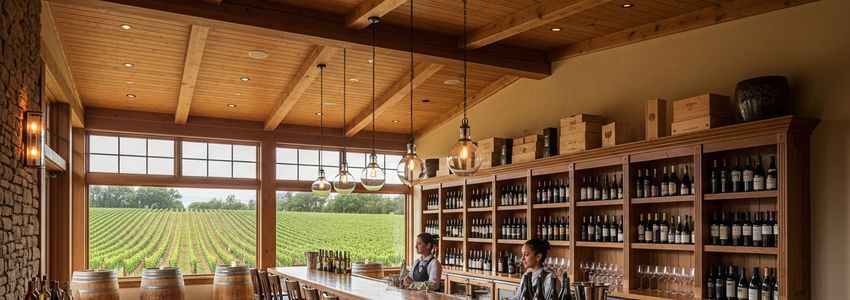
Expanding your wine tasting room is one of the highest-return investments a winery or vineyard owner can make. A beautifully renovated or enlarged tasting space attracts more visitors, drives direct-to-consumer wine sales, and builds the kind of brand loyalty that no digital ad campaign can replicate. But tasting room expansions rarely come cheap - construction, custom fixtures, HVAC upgrades, furniture, point-of-sale systems, and licensing can push costs well into the six-figure range. That is where wine tasting room expansion financing becomes essential.
This guide breaks down every financing option available to winery and vineyard owners, including SBA loans, equipment financing, working capital lines of credit, and alternative lending. You will learn how to qualify, what lenders look for, how to choose the right structure, and how Crestmont Capital can help you move faster than the traditional bank timeline allows.
In This Article
- What Does a Wine Tasting Room Expansion Actually Cost?
- Wine Tasting Room Expansion Financing Options
- SBA Loans for Winery Expansion
- Equipment Financing for Tasting Room Upgrades
- Business Line of Credit for Flexible Expansion Spending
- How the Financing Process Works
- Comparing Your Financing Options
- Who Qualifies for Winery Expansion Financing?
- How Crestmont Capital Helps Winery Owners
- Real-World Expansion Scenarios
- Frequently Asked Questions
- How to Get Started
What Does a Wine Tasting Room Expansion Actually Cost?
Before you apply for financing, it helps to understand what your budget will need to cover. Wine tasting room expansion costs vary significantly based on scope, location, and the level of finish you want to achieve. A basic renovation - new paint, lighting, and furniture - might run $30,000 to $75,000. A full structural expansion that adds square footage, a new bar installation, outdoor patio, and upgraded tasting room technology can push $200,000 to $500,000 or more.
Here are the most common cost categories you will need to plan for:
- Construction and structural work: Adding square footage, reinforcing floors, widening doorways, and installing climate control typically represents the largest portion of any expansion budget.
- Interior design and fixtures: Custom bars, wine barrel displays, tasting tables, and branded millwork can be significant expenditures that directly influence visitor perception.
- Point-of-sale and technology: Modern tasting rooms need reservation management software, POS systems, wine club sign-up tablets, and sometimes digital wine menus.
- Outdoor spaces: Patios, pergolas, outdoor fireplaces, and vineyard view seating areas have become major drivers of tasting room revenue and often require permits and landscaping investment.
- Licensing and compliance: Expanding your facility may require updated ABC licenses, health permits, and compliance with local zoning requirements.
- Inventory and packaging upgrades: A larger tasting room often demands more inventory on hand, along with premium retail packaging that commands higher per-bottle prices.
Industry Insight: According to the Wine Institute, California alone has over 4,000 wineries, and direct-to-consumer sales now account for more than 60% of total winery revenue at small and mid-size operations. A well-designed tasting room is no longer a luxury - it is a primary revenue channel.
Wine Tasting Room Expansion Financing Options
Winery and vineyard owners have more financing options available than most realize. The right choice depends on your business's age, revenue, credit profile, collateral, and how quickly you need funds. Here is a breakdown of the most common paths used for wine tasting room expansion financing.
Term Loans
A term loan provides a lump sum upfront that you repay over a fixed period - typically two to ten years. Term loans are ideal for large, well-defined projects where you know the total cost upfront. They offer predictable monthly payments and competitive rates for businesses with solid credit histories and at least two years of operating history. Traditional banks offer term loans, but the process can take 60 to 90 days or longer. Alternative lenders like Crestmont Capital can fund term loans in days, not months.
SBA 7(a) Loans
The U.S. Small Business Administration guarantees a portion of SBA 7(a) loans, which allows lenders to offer more favorable terms - lower down payments, longer repayment periods, and competitive interest rates. For a wine tasting room expansion, an SBA 7(a) loan can provide up to $5 million with repayment terms up to 10 years for working capital and up to 25 years for real estate-related components. The tradeoff is that SBA loans require extensive documentation and can take 30 to 90 days to fund.
SBA 504 Loans
If your tasting room expansion involves significant real estate acquisition or major commercial construction, an SBA 504 loan may be the right structure. SBA 504 loans are specifically designed for fixed assets and long-term capital investments. They offer below-market fixed interest rates and terms up to 25 years. Eligible expenses include land, building construction, and major equipment purchases.
Equipment Financing
If a significant portion of your expansion budget is going toward equipment - commercial refrigeration units, wine dispensing systems, POS hardware, audiovisual equipment for event spaces - equipment financing lets you fund those purchases while preserving working capital. The equipment itself serves as collateral, which often means easier approval even for younger businesses or those with less-than-perfect credit.
Business Line of Credit
A business line of credit works like a corporate credit card - you draw funds as needed up to your credit limit and only pay interest on what you use. This structure is ideal for phased expansions where costs arise over several months, or for covering unexpected cost overruns. Lines of credit offer flexibility that term loans cannot match.
Revenue-Based Financing
If your winery generates consistent revenue from wine club memberships, tasting room admission, or retail sales, revenue-based financing lets you access capital in exchange for a small percentage of future revenue. There are no fixed monthly payments - repayment scales with your income, which can be beneficial for seasonal businesses.
Ready to Expand Your Tasting Room?
Get fast, flexible financing from the #1 business lender in the U.S. No obligation - apply in minutes and get a decision the same day.
Apply Now →SBA Loans for Winery Expansion
SBA loans are among the most powerful financing tools available to winery owners, but they are not the right fit for every situation. Understanding when to use an SBA loan - and when to choose a faster alternative - is key to making the right financing decision.
The primary advantages of SBA loans for wine tasting room expansion financing include:
- Lower down payments: Most SBA loans require only 10% to 20% down, compared to 20% to 40% for conventional commercial loans.
- Longer repayment terms: Extended terms reduce monthly payments and preserve cash flow during the expansion period and ramp-up afterward.
- Government guarantee: The SBA's partial guarantee reduces lender risk, which can mean approval for borrowers who might not qualify for conventional financing.
- Competitive rates: SBA loan rates are tied to the prime rate and are generally among the most competitive available for small businesses.
The main disadvantages include the time required - SBA applications involve extensive paperwork, business plans, tax returns, financial statements, and personal financial disclosures. If your expansion needs to start within 30 to 60 days, an SBA loan may not be the right choice. In those cases, working with a lender who can provide bridge financing or a fast-approval term loan makes more sense.
Tip: If you are planning a major expansion six to twelve months out, start your SBA application now. The lead time is worth it for large projects. For expansions you need to start sooner, consider a term loan or line of credit to begin work while your SBA application is processed.
Equipment Financing for Tasting Room Upgrades
Many wine tasting room expansions involve substantial equipment purchases. Whether you are installing a new commercial bar system, upgrading your HVAC to handle increased foot traffic, adding commercial refrigeration for wine storage, or equipping a new event space with audiovisual technology, equipment financing can be one of the most efficient ways to fund those investments.
Equipment financing works by using the purchased equipment as collateral for the loan. This structure benefits winery owners in several important ways:
- Approval is often easier than unsecured loans because the lender has tangible collateral.
- You preserve your working capital for inventory, marketing, and payroll rather than tying it up in equipment purchases.
- Equipment loans are typically available in 24 to 84 month terms with fixed monthly payments that make budgeting straightforward.
- Many equipment financing programs allow 100% financing with no down payment required.
For tasting room expansions, common equipment financing uses include commercial refrigeration and wine preservation systems, point-of-sale hardware and software, outdoor event equipment, commercial kitchen appliances for food pairing programs, and custom bar installations.
Crestmont Capital specializes in equipment leasing and financing and can structure deals quickly for winery owners who need to move on equipment purchases without waiting for traditional bank approvals.
Business Line of Credit for Flexible Expansion Spending
Wine tasting room expansions rarely unfold exactly as planned. Unexpected structural issues, longer lead times on custom furniture, permit delays - these realities make flexibility essential. A business line of credit is uniquely suited to the unpredictable rhythm of a major renovation project.
Unlike a term loan where you receive the full amount upfront and begin paying interest immediately, a line of credit lets you draw funds only as needed. If your expansion is happening in phases - demolition this month, construction next quarter, equipment installation after that - a line of credit means you pay interest only on what you have drawn, not on the total approved amount.
Lines of credit also serve as a financial safety net during the expansion period. When your tasting room is closed or partially operational during renovation, revenue typically drops. A line of credit can bridge the gap between current revenue and operating expenses while construction is underway.
By the Numbers
Wine Tasting Room Expansion - Key Statistics
60%+
Winery revenue from direct-to-consumer tasting room sales
$11B+
U.S. wine tourism annual economic impact (NAPA & beyond)
10 Days
Typical Crestmont Capital funding timeline for approved applications
4,000+
Licensed wineries in California alone competing for visitors
How the Financing Process Works
Understanding the typical financing process helps you prepare the right documentation and set realistic expectations for your timeline. Here is how the process generally unfolds when you apply for wine tasting room expansion financing through Crestmont Capital or a similar lender.
Step 1: Define Your Project and Budget
Before approaching any lender, build a detailed expansion plan with contractor bids, equipment quotes, permit cost estimates, and a realistic timeline. Lenders want to see that you have done your homework and understand what the money will be used for. A well-documented expansion plan signals professionalism and reduces underwriting uncertainty.
Step 2: Gather Your Financial Documents
Most lenders will ask for two to three years of business tax returns, recent bank statements (typically the last three to six months), a current profit and loss statement, a balance sheet, and sometimes a personal financial statement. If you are applying for an SBA loan, expect additional requirements including a formal business plan and detailed cash flow projections.
Step 3: Submit Your Application
With Crestmont Capital, the application process is straightforward - you can apply online in minutes. Alternative lenders generally have faster, more streamlined application processes than traditional banks, with less paperwork and more emphasis on current cash flow than historical financial ratios.
Step 4: Underwriting and Approval
Underwriters will review your revenue, debt service coverage ratio (DSCR), credit score, years in business, and the nature of your expansion project. At Crestmont Capital, many applications receive a decision within 24 to 48 hours. Traditional banks may take weeks or months.
Step 5: Receive Funds and Execute Your Expansion
Once approved, funds are disbursed - often within days for term loans and lines of credit. You can then begin your expansion, pay contractors, and purchase equipment. With a line of credit, you draw funds as needed rather than receiving everything upfront.
Need Financing for Your Winery Expansion?
Crestmont Capital offers fast approvals and flexible terms tailored for winery and vineyard owners. No long waits, no unnecessary hurdles.
Get Funded Fast →Comparing Your Financing Options
Different financing structures serve different expansion needs. Use this comparison to identify the best fit for your tasting room project.
| Loan Type | Best For | Typical Amount | Speed | Key Advantage |
|---|---|---|---|---|
| SBA 7(a) Loan | Large renovations with long payback horizon | Up to $5M | 30-90 days | Low down payment, long terms |
| SBA 504 Loan | Real estate and major construction | Up to $5.5M | 45-90 days | Below-market fixed rate, 25-yr terms |
| Term Loan | Defined project with known total cost | $25K-$2M | 2-10 days | Fast funding, predictable payments |
| Equipment Financing | Bar systems, refrigeration, POS, AV | $10K-$500K+ | 2-5 days | Equipment as collateral, no down payment |
| Business Line of Credit | Phased expansions, cost overruns | $25K-$500K | 3-7 days | Draw as needed, interest only on what used |
| Revenue-Based Financing | Wineries with strong recurring revenue | $10K-$500K | 2-5 days | Repayment scales with revenue |
Who Qualifies for Winery Expansion Financing?
Lender requirements vary by loan type and institution, but most wine tasting room expansion financing programs have these general qualifying criteria:
Time in Business
Most lenders prefer businesses with at least one to two years of operating history. This demonstrates that your winery has moved past the highest-risk startup phase and has established revenue patterns. SBA loans typically require two or more years in business. Some alternative lenders will work with wineries as young as one year old if revenue is strong and trends are positive.
Annual Revenue
Term loans and lines of credit typically require a minimum annual revenue threshold - often $100,000 to $250,000 or more depending on the loan size. Equipment financing may have lower revenue requirements because the equipment itself serves as collateral. Lenders want to see that your business generates enough revenue to service the new debt without straining operations.
Credit Profile
Business and personal credit scores both factor into approval decisions. For SBA loans, most lenders want to see a personal credit score of at least 680. Alternative lenders are often more flexible, with approvals possible for credit scores in the 600 to 640 range. Strong revenue and cash flow can sometimes offset a lower credit score.
Debt Service Coverage Ratio (DSCR)
Lenders calculate your DSCR to determine whether your business generates enough net operating income to cover your existing debt obligations plus the new loan payment. Most lenders require a DSCR of at least 1.25, meaning your operating income is 25% greater than your total debt service. Seasonal wineries may need to demonstrate this on an annualized basis.
Good to Know: Many wineries have seasonal revenue patterns, with peaks during harvest season and slower months in winter. When presenting your financials to a lender, include an explanation of your seasonality patterns and show how your annual revenue covers debt service on a full-year basis - not just during peak periods.
How Crestmont Capital Helps Winery Owners
Crestmont Capital is a leading U.S. business lender specializing in fast, flexible financing for small and mid-size businesses, including wineries, vineyards, and hospitality operations. Unlike traditional banks that require months-long application processes and extensive documentation, Crestmont Capital streamlines the funding experience so you can focus on your expansion rather than paperwork.
Here is what sets Crestmont Capital apart for winery owners seeking tasting room expansion financing:
- Fast approvals: Many applications receive a decision within 24 to 48 hours. Funding can occur in as few as three to ten business days.
- Flexible loan structures: Whether you need a term loan for a major renovation, equipment financing for new installations, or a line of credit for phased spending, Crestmont Capital has solutions that match your specific expansion profile.
- Competitive rates: Crestmont Capital works with a broad network of lending partners to find the most competitive rates available for your business profile.
- Dedicated advisors: A Crestmont Capital specialist will review your needs, explain your options, and help you choose the financing structure that best fits your expansion timeline and cash flow requirements.
- Support for unique business models: Wineries often have seasonal revenue, complex inventory considerations, and a mix of direct-to-consumer and wholesale revenue streams. Crestmont Capital's advisors understand these nuances and work with lenders who appreciate the winery business model.
If you are considering wine tasting room expansion financing, explore Crestmont Capital's small business financing programs and get pre-qualified without affecting your credit score.
For wineries with significant equipment needs as part of their expansion, Crestmont Capital also offers dedicated equipment leasing programs that allow you to preserve working capital while modernizing your tasting room infrastructure.
Real-World Expansion Scenarios
Understanding how other winery owners have structured their expansion financing can help you identify the best path for your situation. Here are six real-world scenarios illustrating different financing approaches.
Scenario 1: Small Vineyard Adding Outdoor Seating
A family-owned winery in Virginia with $350,000 in annual revenue wanted to add a 1,000-square-foot outdoor patio and pergola to increase capacity during peak season. They estimated the project at $85,000 including landscaping, furniture, and an outdoor heating system. They financed the project through a 36-month term loan at a competitive rate, with monthly payments that fit comfortably within their operating budget. The patio increased their tasting room revenue by 40% in the first season after completion.
Scenario 2: Napa Valley Winery Expanding Event Space
A mid-size California winery generating $1.2 million annually wanted to convert an underutilized barrel room into a premium event and private tasting space capable of hosting weddings and corporate events. The project cost was $280,000. They used a combination of equipment financing for the audiovisual and commercial kitchen equipment ($120,000) and a business line of credit for construction costs and soft expenses ($160,000). The phased approach allowed them to manage cash flow during the six-month renovation period.
Scenario 3: Oregon Vineyard Building a New Tasting Room from the Ground Up
A rapidly growing Oregon winery outgrew its existing tasting space and needed to construct a 3,500-square-foot standalone tasting building. The project required $550,000 in total financing. They secured an SBA 504 loan, which provided favorable terms given the real estate and construction nature of the project. The application took approximately 75 days, but the below-market fixed rate and 20-year repayment term significantly reduced monthly obligations and preserved cash flow for marketing and staffing.
Scenario 4: Texas Hill Country Winery Upgrading Technology
A Texas winery wanted to modernize its tasting experience with new POS systems, wine club management software, tablet menus, and a reservation system across multiple tasting stations. The total technology investment was $42,000. They financed the full amount through equipment financing with a 48-month term and no down payment. The improved systems increased wine club sign-ups by 35% in the first year.
Scenario 5: Washington State Winery Covering Revenue Gap During Renovation
A well-established Washington state winery needed to close its tasting room for three months during a major renovation. Knowing that revenue would drop significantly during that period, they established a $150,000 business line of credit before the renovation began. They drew approximately $80,000 over the closure period to cover payroll, utilities, and loan obligations on their existing winery equipment. The line of credit was repaid within eight months after the renovated tasting room reopened.
Scenario 6: Colorado Mountain Winery Adding a Premium Tier Experience
A Colorado winery wanted to add a premium "reserve room" offering private, high-end tastings at significantly higher price points. The project included custom wine cellar construction, luxury furniture, and a private outdoor terrace with mountain views. Total project cost was $175,000. They used a combination of personal savings for the down payment and a commercial term loan for the remainder. The reserve room now generates $8,000 per month in additional revenue on weekends alone.
Frequently Asked Questions
What types of financing are available for wine tasting room expansions?
Wine tasting room expansion financing options include SBA 7(a) loans, SBA 504 loans, conventional term loans, equipment financing, business lines of credit, and revenue-based financing. The right choice depends on your project scope, business financials, timeline, and whether your expansion involves significant equipment purchases or primarily construction and renovation.
How much can I borrow for a tasting room expansion?
Loan amounts vary widely based on the financing type and your business qualifications. Term loans for tasting room expansions typically range from $25,000 to $2 million. SBA loans can provide up to $5 million or more. Equipment financing is generally available from $10,000 to $500,000 or higher. Business lines of credit typically range from $25,000 to $500,000. Your maximum loan amount will be determined by your revenue, debt service coverage ratio, credit profile, and the nature of your expansion project.
What credit score do I need to qualify for winery expansion financing?
Credit score requirements vary by loan type and lender. SBA loans typically require a personal credit score of at least 650 to 680. Conventional term loans and lines of credit generally prefer scores above 650. Equipment financing programs may approve applicants with scores in the 600 to 640 range because the equipment serves as collateral. Strong revenue and cash flow can sometimes offset a lower credit score, particularly with alternative lenders like Crestmont Capital.
How long does it take to get financing for a tasting room expansion?
Funding timelines vary significantly depending on the loan type. Alternative lenders like Crestmont Capital can often approve and fund term loans and lines of credit within 3 to 10 business days. SBA loans typically take 30 to 90 days due to extensive underwriting and government processing requirements. Equipment financing can sometimes be approved and funded in as little as 24 to 48 hours for straightforward transactions.
Can a startup winery qualify for tasting room expansion financing?
Startup wineries - those with less than two years of operating history - face more limited financing options but are not without options. Equipment financing programs often have looser time-in-business requirements because the equipment itself provides collateral. Some alternative lenders work with businesses as young as six months to one year old. SBA loans are generally not available for startups without significant owner equity and collateral. The best path for a newer winery is to start with equipment financing for specific purchases and build a banking relationship over time.
Is collateral required for wine tasting room expansion loans?
Collateral requirements vary by loan type. SBA loans typically require collateral whenever it is available, including real estate, equipment, and business assets. Equipment financing loans use the purchased equipment as collateral. Some term loans and lines of credit are available on an unsecured basis for businesses with strong revenue and credit profiles, while others may require a blanket lien on business assets or a personal guarantee from the owner. Working with a knowledgeable lender like Crestmont Capital can help you identify the financing structure that minimizes collateral requirements while still meeting your funding needs.
What documents do I need to apply for winery expansion financing?
Most lenders will require two to three years of business tax returns, three to six months of recent bank statements, a current profit and loss statement, a balance sheet, and a personal financial statement from the owner. For construction or renovation projects, lenders may also want contractor bids and a project description. SBA loans require additional documentation including a formal business plan, detailed financial projections, and information about any existing business debt. Alternative lenders typically have streamlined documentation requirements focused on recent bank statements and basic financial documents.
Can I finance both construction and equipment under one loan?
Yes, depending on the loan structure. SBA 7(a) loans can be used for a wide range of expansion costs including construction, renovation, furniture, equipment, and soft costs like permits and architectural fees. Conventional term loans can also cover mixed-use projects. Alternatively, many winery owners use a blended approach - for example, a separate equipment financing agreement for specific equipment purchases alongside a term loan or line of credit for construction and renovation costs. A Crestmont Capital advisor can help you design the most efficient financing structure for your specific project.
How does seasonal revenue affect my loan application?
Seasonal revenue patterns are common in the wine industry, with peak activity during harvest season and summer weekends. Lenders who understand the wine business will evaluate your revenue on an annualized basis rather than penalizing slow months. It is helpful to prepare a clear explanation of your seasonal patterns when applying, along with documentation showing that your annual revenue consistently covers your operating expenses and debt obligations. Some lenders offer seasonal repayment structures that align payments with your revenue peaks.
What is the typical interest rate for tasting room expansion loans?
Interest rates vary based on the loan type, lender, your credit profile, and current market conditions. SBA 7(a) loans carry rates tied to the prime rate plus a lender spread, generally ranging from 8% to 13% in current market conditions. Conventional term loans from alternative lenders typically range from 8% to 25% depending on the borrower's risk profile. Equipment financing rates often fall in the 6% to 18% range. Lines of credit may have variable rates that adjust with market conditions. Crestmont Capital works with a network of lenders to find competitive rates for each borrower's unique situation.
Can I use financing to hire staff for my expanded tasting room?
Working capital loans, lines of credit, and SBA 7(a) loans can all be used for staffing and operational expenses associated with your expansion. If you need to hire additional tasting room staff, wine educators, or event coordinators before your expanded space is generating full revenue, working capital financing can bridge the gap. However, many lenders prefer to see that financing is used primarily for capital investments like construction and equipment rather than solely for payroll, so it is best to have a clear plan for how the funds will be deployed.
Are grants available for winery and vineyard expansion projects?
Some state agricultural development agencies, rural development programs, and tourism boards offer grants to wineries for capital improvements that support tourism and economic development. USDA Rural Development programs sometimes offer grant or loan guarantee programs for rural agricultural businesses. The availability of grants varies significantly by state and region. While grants can be excellent supplemental funding, they typically involve competitive applications and lengthy approval processes. Most winery expansion projects rely primarily on debt financing with grants as a supplemental source if available.
How does wine tasting room expansion financing affect my existing business debt?
Lenders will factor your existing debt obligations into their underwriting analysis when you apply for expansion financing. They will calculate your total debt service coverage ratio - the ratio of your net operating income to your total debt payments - to determine whether you can comfortably service both existing and new debt. Having a high existing debt load may limit how much additional financing you qualify for. Before applying, it can be helpful to pay down or eliminate any short-term or high-cost debt to improve your DSCR and strengthen your loan application.
Can a winery use financing to add a gift shop or retail area?
Yes. Adding a gift shop or expanded retail area to your tasting room is a legitimate use of business financing. Retail expansions that increase direct-to-consumer revenue are viewed favorably by lenders because they improve the overall revenue profile of the business. If the retail expansion involves significant shelving, display fixtures, or inventory investments, those costs can be financed through equipment financing or a general term loan. Inventory purchases may also qualify for inventory financing depending on the size and nature of the retail program.
How do I choose between an SBA loan and a conventional term loan for my expansion?
The choice between an SBA loan and a conventional term loan depends primarily on your timeline and project size. SBA loans offer better rates and longer repayment terms but require 30 to 90 days to fund. If your expansion cannot wait that long, or if the project cost is below $200,000, a conventional term loan from an alternative lender may be the better choice. For large projects with long lead times - particularly those involving real estate or major construction - SBA loans deliver significant long-term cost savings that justify the slower process. A Crestmont Capital advisor can help you compare both paths and determine which offers the better overall value for your specific expansion project.
How to Get Started
Complete our quick application at offers.crestmontcapital.com/apply-now - takes just a few minutes and does not affect your credit score.
A Crestmont Capital advisor will review your expansion project, understand your winery's financial profile, and match you with the best financing structure for your specific needs.
Receive your funds - often within days of approval - and start your tasting room expansion. Crestmont Capital supports you through the funding process and beyond.
Conclusion
Wine tasting room expansion financing gives winery and vineyard owners the capital they need to build the premium visitor experiences that drive direct-to-consumer revenue, brand loyalty, and long-term profitability. Whether you are adding a patio, constructing a standalone tasting facility, installing new equipment, or creating a private reserve experience, the right financing structure can make the project happen on your timeline - not the bank's.
The key is matching your expansion project with the financing structure that fits your timeline, cash flow, and growth objectives. SBA loans deliver exceptional long-term value for large projects with lead time to spare. Equipment financing moves fast and preserves working capital for equipment-heavy upgrades. Business lines of credit provide the flexibility that phased renovations demand. And term loans from lenders like Crestmont Capital offer a fast, streamlined middle ground for projects of all sizes.
Crestmont Capital has helped hundreds of small and mid-size businesses across the U.S. secure the capital they need to grow. If you are ready to expand your wine tasting room and create the visitor experience your winery deserves, contact Crestmont Capital today or apply online to get started.
Start Your Tasting Room Expansion Today
Join hundreds of business owners who trust Crestmont Capital for fast, flexible financing. Apply now and receive a decision within 24 hours.
Apply Now →Disclaimer: The information provided in this article is for general educational purposes only and is not financial, legal, or tax advice. Funding terms, qualifications, and product availability may vary and are subject to change without notice. Crestmont Capital does not guarantee approval, rates, or specific outcomes. For personalized information about your business funding options, contact our team directly.