
 (800) 949-0401
Biodiesel Production Equipment Financing: The Complete Guide for Business Owners
Building or expanding a biodiesel production operation requires machinery that costs anywhere from tens of thousands of dollars for a small feedstock pretreatment unit to tens of millions for a full-scale refinery line. Biodiesel production equipment financing gives fuel producers a practical way to acquire reactors, transesterification systems, distillation columns, and storage infrastructure without draining the working capital needed to run daily operations.
This guide walks through everything a biodiesel producer needs to know about financing production equipment: what qualifies, how the process works, what it costs, and how to position your business for approval in a volatile fuel market. Whether you are launching a small-batch operation, upgrading an aging reactor system, or scaling up to meet Renewable Fuel Standard obligations, the right financing structure can make the difference between a stalled project and a running plant.
In This Article
- What Is Biodiesel Production Equipment Financing?
- Key Benefits
- Types of Equipment You Can Finance
- How It Works
- Financing vs. Leasing
- Rates, Terms, and Loan Amounts
- Who Qualifies
- How Crestmont Capital Helps
- Real-World Scenarios
- Financing Options Compared
- The Application Process
- Frequently Asked Questions
- How to Get Started
What Is Biodiesel Production Equipment Financing?
Biodiesel production equipment financing is a form of asset-based commercial lending where the machinery used to convert feedstock (vegetable oils, animal fats, or used cooking oil) into biodiesel serves as collateral for the loan. A lender provides capital to purchase or lease the equipment, and the business repays the balance over a fixed term with interest. Because the equipment secures the debt, approval standards tend to be more flexible than unsecured business loans, and interest rates are typically lower.
For biodiesel producers, this structure matters because the core machinery, feedstock pretreatment systems, transesterification reactors, methanol recovery units, distillation columns, and glycerin refining equipment, represents the largest single capital outlay most operators will ever make. Financing lets a producer bring a plant online, add a processing line, or replace aging equipment while preserving cash for feedstock purchases, payroll, and the working capital swings that come with volatile commodity and regulatory conditions.
Equipment financing and equipment leasing are the two primary structures available, and both are accessible to biodiesel operations ranging from small-batch cooperatives producing under a million gallons a year to industrial-scale refineries with multi-million-gallon annual capacity. We cover the differences between these structures in detail later in this guide.
Industry Insight: According to the U.S. Small Business Administration, small manufacturers make up roughly 98% of all manufacturing firms nationwide and employ approximately 4.8 million workers. In fiscal year 2025, the SBA backed $3.65 billion in 7(a) and 504 loans to manufacturing businesses, underscoring how much small and mid-size producers rely on financing to acquire the equipment that keeps production lines running.
Key Benefits of Biodiesel Equipment Financing
Financing production equipment offers several advantages over paying cash or delaying a purchase until reserves build up:
- Preserves working capital. Feedstock costs alone can represent 80% or more of a biodiesel plant's operating expenses. Financing equipment keeps cash available for raw materials, labor, and unplanned expenses rather than tying it up in a single capital purchase.
- Faster path to production. Instead of saving for years to purchase a reactor system outright, financing lets you install equipment and start generating fuel revenue immediately, using that revenue to cover the payments.
- Flexible terms matched to equipment life. Reactors, distillation columns, and storage tanks often have useful lives of 15-20 years or longer, which allows for longer repayment terms and lower monthly payments than shorter-lived assets.
- Accessible even with limited operating history. Because the equipment itself provides collateral, newer producers and those without extensive credit history may still qualify, particularly with a solid business plan and feedstock supply agreements in place.
- Potential tax advantages. Interest paid on equipment loans is generally deductible as a business expense, and the equipment itself may qualify for depreciation deductions. Always confirm specifics with your accountant.
- Ability to scale with demand. Renewable Fuel Standard obligations and state-level low-carbon fuel programs create fluctuating demand. Financing allows producers to add capacity in response to market opportunity rather than waiting on internal cash accumulation.
Ready to Expand Your Biodiesel Operation?
Get fast, flexible equipment financing from the #1 business lender in the U.S. No obligation, apply in minutes.
Apply Now →Types of Biodiesel Production Equipment You Can Finance
Nearly every major piece of machinery used in biodiesel production and refining can be financed. Lenders that understand industrial and renewable energy equipment recognize the resale value and useful life of these assets, which supports financing across a wide range of categories.
Feedstock Pretreatment Systems
Before oils and fats can be converted into fuel, they typically pass through filtration, degumming, and acid pretreatment systems that remove water, free fatty acids, and particulate matter. Pretreatment equipment is especially important for producers using lower-grade feedstock such as used cooking oil or animal fat, since impurities directly affect yield and fuel quality. Systems range from roughly $15,000 for small batch units to several hundred thousand dollars for continuous-flow industrial pretreatment lines.
Transesterification Reactors
The reactor is the core of any biodiesel plant, where pretreated oil reacts with methanol and a catalyst to produce biodiesel and glycerin byproduct. Batch reactors suit smaller operations, while continuous-flow reactor systems handle higher volumes with less labor per gallon produced. Reactor systems range from $20,000 for small batch units to well over $1 million for high-capacity continuous systems.
Methanol Recovery and Distillation Equipment
Excess methanol used in the reaction is typically recovered and recycled through distillation columns, which reduces raw material costs and improves plant economics significantly. Methanol recovery systems and distillation columns range from $30,000 to $500,000 depending on throughput capacity and automation level.
Glycerin Refining Equipment
Crude glycerin, a byproduct of the transesterification process, can be refined into a marketable product that generates additional revenue. Glycerin refining equipment, including neutralization tanks and vacuum distillation units, typically costs $50,000 to $400,000 and can meaningfully improve a plant's overall margin.
Washing, Drying, and Quality Testing Systems
Finished biodiesel must be washed to remove residual soap and catalyst, dried to remove moisture, and tested to confirm it meets ASTM D6751 fuel quality specifications before it can be sold or blended. These systems range from $20,000 to $250,000 and are essential for producers selling into commercial fuel markets.
Storage Tanks and Blending Infrastructure
Bulk storage tanks for feedstock, finished biodiesel, and glycerin byproduct, along with blending equipment for producing biodiesel blends like B5, B20, or B99, round out most plant installations. Storage and blending infrastructure typically costs $25,000 to $2 million depending on tank capacity and site complexity.
Used and Refurbished Processing Equipment
Given the recent volatility in the biodiesel sector, including facility idling and closures tied to shifting federal tax credit policy, used and refurbished processing equipment has become more widely available at a fraction of new-build cost. Financing is available for used equipment as well, typically at a modest rate premium compared to new machinery. Used equipment financing can be an efficient way to acquire proven, functional processing lines without the lead time of new equipment orders.
By the Numbers
Biodiesel Industry and Equipment Financing - Key Facts
3.35B Gal
2025 EPA biomass-based diesel volume requirement under the Renewable Fuel Standard
80-85%
Share of a biodiesel plant's operating costs typically tied to feedstock
$1-10M
Typical machinery cost range for a small to mid-size production line
24-48h
Typical approval time with alternative equipment lenders
How Biodiesel Equipment Financing Works
The financing process for biodiesel production equipment follows a similar path to other industrial equipment loans, with a few nuances specific to fuel manufacturing. Here is what to expect from application to funding.
Step 1: Identify the Equipment and Get a Quote
Whether you are sourcing a new reactor package from an equipment manufacturer or a used processing line from a facility that has idled operations, you will need a formal quote or invoice detailing the equipment, its condition, and its price before a lender can structure financing.
Step 2: Submit Your Application
Applications typically require basic business information, time in operation, annual revenue, feedstock supply arrangements, and details about the equipment being financed. Most applications can be completed in 10-15 minutes.
Step 3: Underwriting and Approval
Lenders evaluate the equipment's value and useful life alongside your business's revenue and credit profile. Alternative lenders like Crestmont Capital can often return decisions within 24-48 hours, while traditional banks and SBA-backed loans may take several weeks.
Step 4: Sign and Fund
Once approved, you review and sign loan or lease documents. Funds are typically disbursed directly to the equipment seller, often within days of approval.
Step 5: Installation and Repayment
After installation, you begin making fixed monthly payments according to your agreed schedule while the equipment generates production revenue for your business.
A key advantage of equipment-secured financing in the biodiesel sector is that lenders weigh the value and marketability of the equipment alongside your overall business picture, rather than relying solely on unsecured credit criteria. This makes financing more accessible to producers who might not qualify for a large unsecured working capital loan on credit profile alone.
Financing vs. Leasing: Which Is Right for Your Plant?
Biodiesel producers generally choose between purchasing equipment through a loan or acquiring it through a lease. Each structure has distinct implications for ownership, cash flow, and tax treatment.
Equipment Financing (Loans)
With an equipment loan, you borrow funds to purchase the machinery outright. You own the reactor, distillation system, or storage tanks from day one, build equity in the asset, and retain full flexibility to modify, upgrade, or sell the equipment. At the end of the loan term, the equipment is yours free and clear, and you can claim depreciation on your taxes throughout the loan.
Equipment loans for biodiesel machinery typically require a down payment of 10-20%, though some lenders offer higher advance rates for strong-credit borrowers. Interest rates generally range from 7% to 22% depending on credit profile, loan size, equipment type, and term length.
Equipment Leasing
With leasing, you make monthly payments to use the equipment while the leasing company retains ownership. At lease end, most agreements offer the option to purchase at fair market value, renew the lease, or return the equipment. Leasing typically requires lower monthly payments and preserves other credit lines, which can matter for producers managing volatile feedstock costs.
Leasing can be particularly attractive for equipment tied to evolving regulatory requirements, such as emissions testing systems, where technology or compliance standards may shift before the equipment reaches the end of its useful economic life.
Pro Tip: For long-life core assets like reactors, distillation columns, and storage tanks, which often run for 15-20 years with proper maintenance, purchasing via an equipment loan usually makes more financial sense than leasing since you build equity in a durable, revenue-generating asset. Leasing tends to fit shorter-lived or fast-changing equipment better.
Rates, Terms, and Loan Amounts
Understanding the cost structure of biodiesel equipment financing helps you evaluate offers and negotiate more effectively.
Interest Rates
Interest rates for biodiesel production equipment loans typically range from 7% to 22% annually. Your rate depends on personal and business credit history, time in operation, annual revenue, the age and type of equipment, and the loan-to-value ratio. Producers with strong credit (680 or higher) and at least two years in business often qualify for rates in the 7-13% range, while newer operations or lower credit profiles may see rates from 13-22%.
Loan Terms
Repayment terms typically run from 36 to 120 months, with longer terms available for major installations like reactors and storage infrastructure that have long useful lives. Most lenders align the term with the expected life of the equipment. Shorter terms reduce total interest paid but increase monthly payments; longer terms do the opposite.
Loan Amounts
Financing is available from roughly $15,000 for a single pretreatment or testing unit up to several million dollars for a complete production line, including reactors, distillation, and storage. Most lenders finance 80-100% of the invoice or appraised equipment value.
Down Payments
Down payment requirements typically range from 0-20% depending on credit strength and equipment type. Larger installations and specialized equipment with less resale liquidity may require a higher down payment or additional collateral.
Who Qualifies for Biodiesel Equipment Financing
Equipment financing is one of the more accessible forms of business lending for biodiesel producers because the machinery itself secures the loan. That said, lenders still weigh several factors before approving an application.
Time in Business
Most conventional lenders prefer at least two years of operating history, but alternative lenders like Crestmont Capital have more flexible standards and will consider businesses with as little as six months of operating history, especially with strong personal credit or signed feedstock and offtake agreements.
Credit Score
A personal credit score of 650 or higher generally opens access to most financing programs. Scores of 700 or above typically unlock better rates and higher loan-to-value ratios. Lower scores can still qualify depending on equipment collateral, revenue, and the lender's risk appetite.
Business Revenue and Cash Flow
Lenders want to see monthly revenue that comfortably covers the proposed payment, generally at least 1.5-2 times the monthly obligation. Given how directly feedstock costs and fuel-market swings affect biodiesel producers, lenders may also review feedstock supply agreements and fuel offtake contracts as evidence of stable cash flow.
Equipment Age, Condition, and Marketability
New equipment is easiest to finance at the best rates. Used equipment can be financed but often carries a modest rate premium and may require an independent appraisal, particularly given the number of idled biodiesel facilities that have brought used equipment onto the market in recent years. Highly specialized or custom-built equipment with limited resale demand may see more conservative loan-to-value terms.
Industry and Regulatory Awareness
Because the biodiesel sector's economics are closely tied to federal tax credit policy and Renewable Fuel Standard obligations, lenders often look favorably on applicants who demonstrate a clear understanding of current feedstock costs, blending mandates, and how policy shifts could affect their margins and repayment capacity.
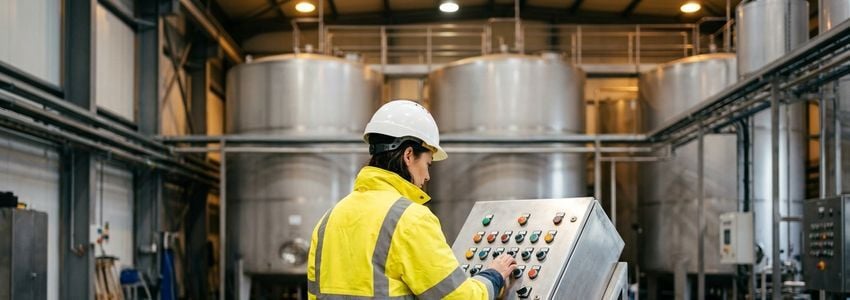
Key Stat: Federal biofuel tax credit uncertainty led more than 20 U.S. biodiesel and renewable diesel facilities, representing close to 15% of national capacity, to idle or shut down operations in 2025. Producers who can access financing quickly are often better positioned to restart or upgrade equipment once market conditions stabilize.
How Crestmont Capital Helps Biodiesel Producers
Crestmont Capital is the #1-rated business lender in the United States, with experience financing industrial and manufacturing equipment across renewable energy, agricultural processing, and fuel production sectors. We understand that biodiesel producers operate in a market shaped by feedstock costs, blending mandates, and shifting federal tax policy, and we structure financing solutions built around those realities rather than a one-size-fits-all approach.
Our equipment financing programs for biodiesel and renewable fuel producers include:
- Financing from $15,000 to several million dollars for new and used production equipment
- Fast approvals, often within 24-48 hours of a complete application
- Flexible terms from 24 to 120 months
- Financing for reactors, distillation systems, storage tanks, and full production lines
- Consideration for newer producers and businesses with less-than-perfect credit
- Support for both new-build and used or refurbished equipment purchases
Beyond equipment financing, we also offer equipment leasing, SBA loans, and unsecured working capital loans that can help cover feedstock purchases, payroll, and operating expenses during periods of regulatory transition or seasonal demand shifts. For producers exploring adjacent renewable energy investments, our guide on funding renewable energy and clean-tech manufacturing covers financing strategies that apply broadly across the clean fuel and energy sector.
Our advisors work specifically with industrial and manufacturing businesses, which means you are talking to a team that understands production economics, not a generalist loan officer unfamiliar with transesterification or ASTM fuel specifications. That expertise translates into faster, better-informed financing decisions.
Get Financing Built for Your Production Line
Crestmont Capital offers fast, flexible equipment financing for biodiesel and renewable fuel producers. No obligation, apply in minutes.
Apply Now →Real-World Financing Scenarios
Seeing how equipment financing applies in practice helps producers evaluate whether it fits their situation. Here are five representative scenarios based on common financing needs in the biodiesel sector.
Scenario 1: Launching a Small-Batch Biodiesel Cooperative
A group of farmers wants to launch a small-batch biodiesel operation using surplus soybean oil, targeting under 500,000 gallons per year. They identify a $180,000 batch reactor and pretreatment package. With a combined 690 credit profile and a signed feedstock supply agreement, they qualify for 80% financing at 12% over 60 months, resulting in a monthly payment of roughly $3,200, which their projected fuel sales comfortably cover.
Scenario 2: Upgrading Methanol Recovery at an Existing Plant
An established biodiesel producer operating for six years wants to add a methanol recovery and distillation system to reduce raw material costs. The system costs $220,000. With strong cash flow and a 730 credit score, the business secures $220,000 at 9% over 84 months for a monthly payment near $3,600. The reduction in methanol purchase costs offsets the payment within the first year.
Scenario 3: Acquiring Idled Equipment at a Discount
A producer identifies a continuous-flow reactor and distillation line from a facility that idled operations amid 2025 tax credit uncertainty, priced well below new-equipment cost at $650,000. Because the equipment is used, the lender applies a modest rate premium and requires an independent appraisal, ultimately approving $520,000 (80% loan-to-value) at 11% over 72 months.
Scenario 4: Adding Glycerin Refining Capacity
A mid-size plant producing 3 million gallons annually wants to add glycerin refining equipment to convert its byproduct into a marketable, higher-margin product rather than selling crude glycerin at a discount. The $310,000 system is financed at 8.5% over 60 months, with the added glycerin revenue exceeding the monthly payment within the first several months of operation.
Scenario 5: Startup Producer with Strong Personal Credit and Offtake Agreement
A renewable fuels engineer with no direct plant-ownership history wants to launch a new production facility. The business is less than a year old, but the founder has a 750 personal credit score, $150,000 in available down payment, and a signed offtake agreement with a regional fuel distributor. The lender extends $900,000 in equipment financing secured by the machinery and supported by the founder's credit and the offtake contract.
Financing Options Compared
| Option | Ownership | Monthly Payment | Best For | Down Payment |
|---|---|---|---|---|
| Equipment Loan | You own from day 1 | Higher (includes principal) | Reactors, tanks, and long-life core assets | 0-20% |
| Operating Lease | Lessor retains ownership | Lower | Testing and compliance equipment | None typically |
| Capital/Finance Lease | Option to purchase at end | Moderate | When ownership at term-end is desired | None to low |
| SBA Equipment Loan | You own | Lower (longer terms available) | Established producers, large installations | 10-20% |
| Line of Credit | You own | Flexible (interest-only option) | Smaller equipment purchases and feedstock timing gaps | None |
The Application Process: What to Expect and Prepare
Being prepared before you apply speeds up approval and can help you secure better terms. Here is what lenders typically request for biodiesel production equipment financing.
Documents You Will Need
Most lenders request: a completed application with business and personal details; 3-6 months of business bank statements; an equipment invoice or detailed quote; business tax returns for the past 1-2 years for larger loan amounts; and, where applicable, feedstock supply or fuel offtake agreements that demonstrate revenue stability.
What Lenders Evaluate
Lenders review personal and business credit, time in operation, monthly and annual revenue, existing debt relative to revenue, the loan-to-value ratio of the request, and the condition and marketability of the equipment being financed.
How to Maximize Your Approval Chances
Check your personal credit report for errors before applying, have bank statements and tax returns organized, provide a specific equipment quote rather than a vague funding request, and be ready to explain any revenue anomalies tied to feedstock cost swings or regulatory shifts. Working with a lender experienced in industrial and renewable energy equipment, rather than a generalist bank, generally improves both speed and approval likelihood. For more on how lenders assess your overall profile, see our guide on used equipment financing, which covers many of the same underwriting factors that apply to new equipment as well.
Frequently Asked Questions
How to Get Started
Complete our quick application at offers.crestmontcapital.com/apply-now, it takes just a few minutes. Have your equipment quote ready.
A Crestmont Capital equipment financing advisor will review your application and match you with a loan structure suited to your production line.
Receive an approval decision often within 24-48 hours. Funds go directly to your equipment seller, and your new machinery goes to work.
Take the Next Step Toward a Fully Equipped Plant
Crestmont Capital funds biodiesel and renewable fuel equipment fast. No obligation to apply.
Apply Now →Conclusion
Biodiesel production equipment financing gives fuel producers a practical way to build, expand, or modernize a processing operation without exhausting the working capital needed to manage feedstock costs and day-to-day operations. From pretreatment systems and transesterification reactors to distillation columns and storage infrastructure, financing structures exist for nearly every stage of the production process, and for both new and used equipment.
Given the volatility the biodiesel sector has experienced around federal tax credit policy, having fast access to flexible equipment financing can matter more than ever, whether you are entering the market for the first time, restarting idled capacity, or upgrading equipment to improve margins. Crestmont Capital has helped business owners across manufacturing and renewable energy sectors secure the equipment financing they need to compete and grow. Apply today to take the next step toward a fully equipped, revenue-ready production line.
Disclaimer: The information provided in this article is for general educational purposes only and is not financial, legal, or tax advice. Funding terms, qualifications, and product availability may vary and are subject to change without notice. Crestmont Capital does not guarantee approval, rates, or specific outcomes. For personalized information about your business funding options, contact our team directly.








