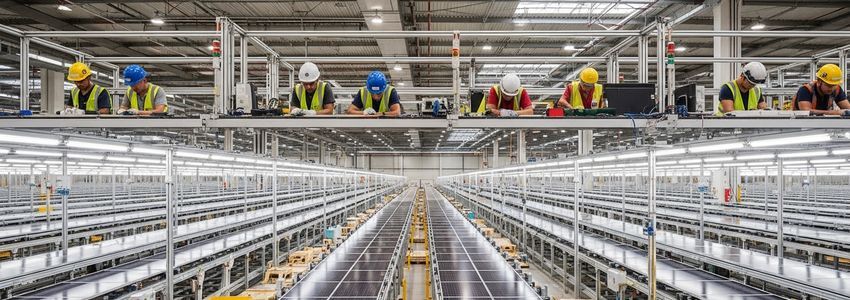
The clean energy revolution is accelerating at a pace that is reshaping the entire manufacturing landscape. Solar panel producers, battery storage developers, wind turbine fabricators, EV charging infrastructure companies, and hydrogen fuel cell startups are all competing for capital to scale operations, acquire equipment, hire talent, and bring new technologies to market. Renewable energy business financing has become one of the most sought-after funding categories for U.S. manufacturers in 2026 and beyond.
Whether you operate a solar panel assembly line in Texas, a battery recycling facility in Ohio, or a wind turbine component shop in California, access to the right financing can mean the difference between capturing market share and watching competitors grow past you. This guide walks through every major financing option available to clean energy and clean-tech manufacturers, who qualifies, how to apply, and how Crestmont Capital can help you move faster.
In This Article
- What Is Renewable Energy Business Financing?
- Why Financing Matters for Clean-Tech Growth
- Top Financing Options for Clean-Tech Businesses
- How the Financing Process Works
- Clean Energy Financing by the Numbers
- Who Qualifies for Clean-Tech Financing?
- Financing Options Comparison
- How Crestmont Capital Helps
- Real-World Scenarios
- How to Get Started
- Frequently Asked Questions
What Is Renewable Energy Business Financing?
Renewable energy business financing refers to the full range of capital products available to companies that manufacture, install, distribute, or service clean energy technologies. This includes solar equipment producers, wind energy component manufacturers, EV battery assemblers, hydrogen fuel cell developers, geothermal drilling companies, and businesses that supply materials and software to the broader clean-tech supply chain.
Unlike traditional business financing, clean-tech manufacturing often involves longer production cycles, significant upfront capital for specialized equipment, and irregular revenue tied to project completions or government contracts. These unique dynamics mean that renewable energy companies often need financing structures that reflect their actual cash flow realities rather than generic term loans.
The financing landscape for clean-tech businesses spans equipment financing, working capital loans, business lines of credit, SBA loans, and revenue-based financing. Each serves a different purpose in the growth lifecycle of a clean energy manufacturer.
Industry Snapshot: According to the U.S. Department of Energy, the clean energy sector added more than 142,000 jobs in 2023 alone, with manufacturing roles growing fastest in solar, wind, and battery storage. Capital access remains the top challenge cited by clean-tech manufacturers seeking to scale.
Why Financing Matters for Clean-Tech Growth
Clean-tech manufacturing is capital-intensive by nature. Production lines for solar modules require precision CNC equipment, lamination machines, and testing chambers that can cost hundreds of thousands to millions of dollars. Battery production facilities need specialized dry rooms, electrode coating machines, and assembly automation that few companies can fund entirely from operating cash flow.
Beyond equipment, renewable energy businesses face working capital challenges that are unique to the sector. Project-based revenue models mean cash can pile up after a government contract closes but dry out in the months before. Supply chain complexity - particularly for rare earth minerals, semiconductor components, and specialized polymers - requires bulk purchasing that strains liquidity.
Financing solves these challenges by allowing businesses to acquire equipment without tying up operating capital, fund growth ahead of revenue, and weather the irregular payment cycles common in clean energy contracting. Companies that use financing strategically grow faster, win bigger contracts, and hire more skilled workers than those that rely solely on internal cash generation.
The clean energy sector also benefits from specific government programs and favorable loan terms that make financing more accessible than in many other industries. Understanding these options is the first step toward building a financing strategy that supports long-term growth.
Ready to Finance Your Clean Energy Business?
Get fast, flexible financing built for renewable energy and clean-tech manufacturers. Apply in minutes - no obligation.
Apply Now →Top Financing Options for Clean-Tech Businesses
The financing landscape for renewable energy and clean-tech manufacturing businesses is broader than most owners realize. Here is a breakdown of the major options available and how each fits into different growth scenarios.
Equipment Financing
Equipment financing is the most widely used capital solution for clean-tech manufacturers. It allows businesses to acquire the physical machinery, production systems, testing equipment, and specialized tools they need without depleting cash reserves. The equipment itself serves as collateral, which means lenders can often offer competitive rates even for businesses that are still growing their revenue base.
For renewable energy manufacturers, equipment financing covers everything from solar lamination presses and CNC laser cutters to battery formation cycling chambers and wind turbine blade mold systems. Loan amounts range from $10,000 to several million dollars, and terms typically span 24 to 84 months depending on equipment type and useful life.
Crestmont Capital's equipment financing program allows clean-tech businesses to finance both new and used equipment with fast approvals and no prepayment penalties. This means you can upgrade production capacity, win larger contracts, and pay off the loan early if cash flow allows.
SBA Loans
The Small Business Administration offers several loan programs that are well-suited to clean energy and clean-tech manufacturing. The SBA 7(a) loan provides up to $5 million for working capital, equipment, real estate, and business expansion. The SBA 504 loan specifically targets fixed assets such as commercial real estate and major equipment purchases, making it ideal for manufacturers building or expanding production facilities.
SBA loans offer some of the lowest interest rates available to small and mid-sized businesses, and their longer repayment terms (up to 25 years for real estate) minimize monthly payment burden. The trade-off is a more documentation-intensive application process and longer approval timelines compared to alternative lenders.
Many clean energy manufacturers qualify for SBA lending under standard criteria, and some benefit from additional programs tied to energy efficiency or environmental impact. Working with a lender experienced in clean-tech SBA applications - like Crestmont Capital - can significantly speed up the process.
Business Lines of Credit
A business line of credit provides revolving access to capital up to a set limit. Unlike a term loan, you only draw what you need and only pay interest on what you use. This flexibility makes credit lines particularly valuable for renewable energy manufacturers that face irregular cash flow tied to project completions, government contract payments, or seasonal demand.
Clean-tech businesses use credit lines to cover payroll between contract payments, purchase raw materials in bulk to lock in prices, fund short-term working capital gaps during rapid growth, and manage supplier deposits on large equipment orders. Credit lines typically range from $25,000 to $500,000 for small and mid-sized manufacturers, with revolving terms that allow ongoing use as you pay down the balance.
Working Capital Loans
Working capital loans provide a lump sum of cash to fund day-to-day operations, growth initiatives, or bridge financing between revenue events. Unlike equipment loans, working capital financing is not tied to a specific asset purchase. This makes it ideal for clean-tech businesses that need capital for hiring, marketing, inventory buildup, or covering expenses during a scale-up period.
Unsecured working capital loans from Crestmont Capital can fund in as little as 24-48 hours, making them a fast option when time-sensitive opportunities arise. Terms range from 3 to 24 months, and repayments are structured to align with your business's cash flow cycle.
Revenue-Based Financing
Revenue-based financing is a newer model that aligns repayment with actual monthly revenue rather than fixed installments. For clean-tech manufacturers with variable revenue - particularly those serving multiple project-based contracts - this structure reduces the pressure of meeting fixed payment obligations during slower months. Repayment rates typically range from 6-20% of monthly revenue until the agreed total repayment amount is reached.
Commercial Real Estate Loans
As clean-tech manufacturers grow, many seek to purchase or build their own production facilities rather than leasing. Commercial real estate financing allows businesses to acquire manufacturing plants, warehouses, research and development facilities, and office space. This builds long-term equity while stabilizing occupancy costs and enabling facility customization that leased space rarely allows.
Pro Tip: Many clean-tech manufacturers benefit from combining multiple financing products - for example, using equipment financing for production line assets and a working capital loan to fund raw material inventory - rather than relying on a single loan type. This layered approach matches capital to the specific need and optimizes total cost of financing.
How the Financing Process Works
The application process for renewable energy business financing varies by loan type, but the general framework is consistent across most lenders. Understanding the steps in advance helps you prepare the right documentation and set realistic expectations for timing.
Step 1 - Determine your financing need: Before applying, identify exactly what you need capital for. Equipment purchases require different loan structures than working capital gaps. Knowing the amount, purpose, and preferred repayment term helps you target the right product and lender from the start.
Step 2 - Gather documentation: Most lenders require 3-6 months of business bank statements, recent tax returns, a business overview, and basic financial statements. Equipment financing applications also require a quote or invoice for the equipment being financed. SBA applications require more extensive documentation including business plans and personal financial statements.
Step 3 - Submit the application: Online applications with alternative lenders like Crestmont Capital take as little as 5-10 minutes to complete. Bank and SBA applications are more involved, often requiring in-person meetings and extended review periods.
Step 4 - Receive an offer: After reviewing your application, the lender presents a financing offer including loan amount, interest rate, term, and repayment structure. Review all terms carefully, including any prepayment penalties, origination fees, or covenants.
Step 5 - Accept and fund: Once you accept the offer and complete any required closing documentation, funds are disbursed. Equipment financing may involve direct payment to the equipment vendor. Working capital and credit lines are typically deposited directly to your business bank account.
Clean Energy Financing by the Numbers
By the Numbers
Renewable Energy Business Financing - Key Statistics
$369B
U.S. clean energy investment in 2023 (BloombergNEF)
3.4M+
Clean energy jobs in the U.S. as of 2024 (DOE)
68%
Of clean-tech SMBs cite capital access as top growth barrier
24-48h
Typical funding time with alternative lenders like Crestmont
Who Qualifies for Clean-Tech Financing?
Eligibility for renewable energy business financing depends on the specific product and lender, but there are general criteria that most financing programs share. Understanding these requirements helps you assess your readiness and take steps to strengthen your application if needed.
Time in business: Most lenders prefer businesses that have been operating for at least 6-12 months, though some equipment financing programs accommodate startups with strong personal credit and viable business plans. SBA loans typically require at least two years of operating history.
Revenue: Working capital loans and credit lines generally require minimum monthly revenue of $10,000-$25,000. Equipment financing is more flexible since the equipment itself provides collateral, making revenue requirements secondary to the asset's value and the borrower's creditworthiness.
Credit score: Personal credit scores above 620 open the door to most alternative lending programs. Scores above 700 qualify for better rates and higher amounts. SBA loans generally require scores of 650 or higher, with more favorable rates for 700+.
Industry classification: Renewable energy and clean-tech manufacturing businesses are generally viewed favorably by lenders given the growth trajectory of the sector and the strong government backing for clean energy investment. NAICS codes covering solar panel manufacturing, wind turbine production, battery manufacturing, and related industries are well-recognized by most commercial lenders.
Collateral: Equipment financing is self-collateralized by the financed assets. Working capital loans and credit lines may be unsecured for established businesses with strong revenue and credit profiles, or may require a general lien on business assets for newer companies.
Clean-tech startups that do not yet meet standard lending criteria often benefit from SBA microloan programs, CDFI lending through nonprofit development organizations, or government grant programs tied to energy innovation. These paths require more preparation but can provide the initial capital needed to reach the revenue thresholds required for conventional business financing.
Financing Options Comparison
| Financing Type | Best For | Loan Amount | Speed to Fund | Credit Req. |
|---|---|---|---|---|
| Equipment Financing | Machinery, production lines | $10K - $5M+ | 1-5 days | 600+ |
| Working Capital Loan | Payroll, inventory, operations | $25K - $500K | 24-48 hours | 580+ |
| Business Line of Credit | Ongoing cash flow flexibility | $25K - $500K | 2-7 days | 620+ |
| SBA 7(a) Loan | Expansion, real estate, equipment | Up to $5M | 30-90 days | 650+ |
| SBA 504 Loan | Real estate and major equipment | Up to $5.5M | 45-90 days | 680+ |
| Revenue-Based Financing | Variable-revenue businesses | $25K - $2M | 1-3 days | 550+ |
Not Sure Which Option Fits Your Business?
Our financing specialists work with clean-tech manufacturers every day. Let us match you with the right product for your exact situation.
Talk to a Specialist →How Crestmont Capital Helps Renewable Energy Businesses
Crestmont Capital has established itself as one of the leading business lenders for manufacturers and technology companies across the United States. With financing programs covering equipment, working capital, lines of credit, and SBA loans, Crestmont provides the full spectrum of capital products that renewable energy and clean-tech businesses need at every stage of growth.
What sets Crestmont apart for clean-tech manufacturers is speed and flexibility. While traditional banks can take weeks or months to approve financing, Crestmont's streamlined application process delivers decisions within hours and funding within days. This allows manufacturers to act on time-sensitive equipment acquisitions, respond to rapid contract growth, and prevent cash flow gaps from slowing production.
Crestmont's lending team understands the unique financial dynamics of clean-tech manufacturing - including project-based revenue cycles, the capital intensity of production line buildouts, and the supply chain complexity that characterizes the renewable energy sector. This industry knowledge translates into more accurate underwriting, more appropriate loan structures, and a better overall experience for borrowers.
The Crestmont Capital small business financing hub provides access to all major financing products through a single application. Whether you need $50,000 to upgrade a solar cell testing station or $2 million to build out a new battery packaging line, Crestmont has the capacity and the expertise to get the deal done.
For businesses that need an immediate capital boost while pursuing longer-term SBA financing, Crestmont can often bridge the gap with a working capital loan or line of credit that keeps operations moving without interruption. This parallel financing strategy is particularly valuable for fast-growing clean-tech companies that cannot afford to wait 60-90 days for SBA approval while production ramps up.
Why Crestmont Capital? Rated #1 business lender in the U.S., Crestmont Capital has funded thousands of businesses across manufacturing, technology, healthcare, and retail. Our clean-tech financing programs are specifically designed for the capital intensity and growth speed of the renewable energy sector.
Real-World Scenarios: Financing in Action
Understanding how other clean-tech businesses have used financing can help you identify the best approach for your own situation. Here are several realistic scenarios that reflect common financing needs in the renewable energy and clean-tech manufacturing space.
Scenario 1 - Solar Panel Assembly Expansion: A solar panel assembly company in Arizona had secured a contract to supply modules to a 50-megawatt utility project but lacked the production capacity to fulfill the order on time. Using equipment financing, they acquired two additional lamination presses and an automated stringing machine for $380,000, with repayment spread over 60 months. The contract revenue covered the payments many times over, and the company retained its cash reserves for raw material purchases.
Scenario 2 - Wind Turbine Component Manufacturer: A wind turbine blade component manufacturer in Iowa was growing rapidly but struggling with cash flow gaps between project completion and customer payment. A $150,000 business line of credit gave them the flexibility to cover payroll and supplier invoices during the 45-60 day gap between delivery and payment receipt. The line was drawn only when needed and paid down as payments arrived, minimizing interest costs.
Scenario 3 - Battery Recycling Startup: A battery recycling startup in Michigan had 18 months of operating history and $800,000 in annual revenue but needed $600,000 to purchase a hydrometallurgical processing system. The company obtained equipment financing through Crestmont Capital, using the equipment as collateral and qualifying based on their revenue trajectory and contract backlog rather than just historical financials.
Scenario 4 - EV Charging Infrastructure Company: An EV charging station installation company in California was awarded a large municipal contract but needed working capital to hire 12 additional technicians and purchase hardware inventory before the contract revenue began flowing. A $200,000 working capital loan funded the hiring wave and inventory buildup, with repayment structured over 12 months aligned with expected contract payments.
Scenario 5 - Geothermal Drilling Firm: A geothermal drilling company in Nevada sought to purchase their own drilling rig rather than continuing to rent one at $15,000 per month. Equipment financing for a $900,000 used drilling rig reduced their monthly cost significantly while building equity in a major productive asset. The savings on equipment rental paid for most of the monthly loan payment.
Scenario 6 - Hydrogen Fuel Cell Developer: A hydrogen fuel cell developer in Colorado needed to build out a clean room manufacturing environment for fuel cell stack assembly. A combination of SBA 504 financing for the facility build-out and equipment financing for the stack assembly line gave them the capital structure they needed without over-leveraging any single financing product. Crestmont coordinated both programs simultaneously, reducing the total time from application to funding.
How to Get Started
Complete our quick application at offers.crestmontcapital.com/apply-now - takes just a few minutes and requires no commitment.
A Crestmont Capital advisor with manufacturing and clean energy experience will review your needs and identify the right financing structure for your business.
We present clear financing terms with no hidden fees. You review the offer and ask any questions before committing to anything.
Accept your offer and receive funds often within 24-48 hours. Put your capital to work immediately and start capturing the market opportunities in front of you.
Start Your Renewable Energy Financing Today
Don't let capital constraints slow your clean energy business. Crestmont Capital has funded clean-tech manufacturers across the U.S. - and we can fund yours.
Apply Now →Frequently Asked Questions
What types of renewable energy businesses qualify for financing?
Most renewable energy and clean-tech manufacturing businesses qualify for some form of financing. This includes solar panel manufacturers, wind turbine component producers, battery manufacturers and recyclers, EV charging station installers, geothermal drilling companies, hydrogen fuel cell developers, and businesses that supply materials or software to the clean energy supply chain. Lender requirements vary by product type, with equipment financing being most accessible and SBA loans requiring more established operating history.
How much can I borrow for clean-tech equipment financing?
Equipment financing amounts for clean-tech businesses typically range from $10,000 to $5 million or more depending on the equipment being financed, the lender's capacity, and the borrower's creditworthiness and revenue. Large production line buildouts, specialized testing systems, and industrial processing equipment can qualify for amounts well above $1 million when the asset value and business financials support it. Crestmont Capital can finance both small equipment upgrades and large-scale production system acquisitions.
Do I need collateral to get financing for my clean energy business?
Equipment financing is self-collateralized by the financed equipment, meaning you do not need to pledge additional assets. Working capital loans and business lines of credit may be unsecured for established businesses with strong revenue and credit profiles. SBA loans typically require a general lien on business assets and sometimes personal guarantees. The collateral requirements depend heavily on the specific product, loan amount, and the borrower's overall financial profile.
How fast can a clean-tech manufacturer get funded?
With alternative lenders like Crestmont Capital, working capital loans and business lines of credit can fund within 24-48 hours of approval. Equipment financing typically funds within 1-5 business days depending on documentation requirements and the equipment vendor's process. SBA loans have the longest timelines, typically 30-90 days from application to funding due to their more rigorous underwriting and documentation requirements. If speed is critical, alternative lending products are the fastest path to capital.
Can a renewable energy startup get business financing?
Startups face more limited options than established businesses, but financing is available. Equipment financing is the most accessible option for startups since the equipment itself provides collateral, reducing the lender's reliance on operating history. SBA microloans and CDFI programs are also available to early-stage businesses. Startups with strong personal credit (700+) and a compelling business plan are often able to secure equipment financing even in their first year of operations. As revenue grows, working capital products become available as well.
What credit score do I need for clean-tech business financing?
Credit score requirements vary by lender and product. Equipment financing is often available with personal credit scores of 600 or above. Working capital loans and business lines of credit typically require 580-620 minimum. SBA loans generally require 650 or higher for 7(a) products. Higher credit scores qualify for better rates and higher loan amounts across all product categories. If your credit score is below the threshold for a preferred product, working with a lender like Crestmont Capital that takes a holistic view of creditworthiness - including revenue trends and contract backlog - can open additional options.
Are there government programs specifically for renewable energy financing?
Yes. The U.S. Department of Energy's Loan Programs Office (LPO) provides financing specifically for clean energy and clean-tech manufacturing projects, including loan guarantees for large-scale projects. The SBA has several programs friendly to clean energy businesses, including 7(a) and 504 loans that can be used for equipment and facility investments. Additionally, the Inflation Reduction Act created new tax credits and incentives for domestic clean energy manufacturing that, while not direct loans, improve the financial attractiveness of these businesses to commercial lenders.
How does project-based revenue affect my financing options?
Project-based revenue creates irregular cash flow patterns that can complicate fixed-payment loan structures. Lenders experienced in clean-tech manufacturing understand this dynamic and may offer flexible repayment options such as seasonal payment schedules, interest-only periods during ramp-up phases, or revenue-based repayment structures that scale with actual monthly income. Business lines of credit are particularly well-suited to project-based businesses since you draw capital when needed and pay it down as project payments arrive, minimizing total interest cost while maintaining liquidity at all times.
Can I finance used or refurbished clean-tech equipment?
Yes. Most equipment financing lenders including Crestmont Capital finance both new and used equipment. Used equipment financing is common in manufacturing because refurbished production systems often cost 30-60% less than new equivalents while providing comparable output. Lenders typically require an appraisal or equipment value verification for used equipment to confirm that the asset value supports the loan amount. Equipment age, condition, and remaining useful life are factored into the approval and terms.
What documents do I need for a clean-tech business loan application?
Standard documentation for most clean-tech business loan applications includes 3-6 months of business bank statements, two years of business tax returns (or YTD financials for newer businesses), a brief description of your business and the purpose of the loan, and basic personal financial information. Equipment financing applications also require a vendor quote or invoice for the specific equipment. SBA loan applications require more extensive documentation including a business plan, financial projections, and personal tax returns for all principal owners.
How does the Inflation Reduction Act affect clean-tech business financing?
The Inflation Reduction Act (IRA) of 2022 allocated over $369 billion in clean energy investments and created substantial tax incentives for domestic clean energy manufacturing, including the Advanced Manufacturing Production Credit (45X) for components like solar cells, wind turbine parts, and battery components. These credits improve the profitability and bankability of clean-tech manufacturers, making it easier to qualify for commercial financing by strengthening cash flow projections and reducing effective tax burdens. Lenders increasingly factor IRA credits into underwriting for clean-tech businesses.
Can I use financing to hire workers for my clean energy business?
Yes. Working capital loans and business lines of credit can be used to fund payroll for new hires, cover salary costs during onboarding periods, and support the working capital needs associated with adding headcount. Many growing clean-tech manufacturers use working capital financing to hire ahead of revenue, particularly when they have contracts in hand that require additional skilled labor to fulfill. This allows businesses to win larger contracts and scale teams without waiting for cash flow to fully support the expansion.
What is the difference between equipment financing and equipment leasing for clean-tech?
Equipment financing results in ownership of the equipment at the end of the loan term. Equipment leasing allows use of equipment for a set period with an option to purchase, return, or upgrade at the end of the lease. For clean-tech businesses, financing is often preferred for core production equipment that has long useful lives and will remain integral to operations for many years. Leasing may be appropriate for technology-intensive equipment that will be superseded by newer versions within a few years, such as testing systems or software-dependent automation platforms. Crestmont Capital offers both options depending on what best fits your situation.
How can I improve my chances of getting approved for clean-tech financing?
Several steps can strengthen your financing application. Maintaining organized financial records and clean business bank statements with consistent deposits improves lender confidence in your revenue and cash management. A strong contract backlog or signed purchase orders from creditworthy customers demonstrates forward-looking revenue that lenders can underwrite against. Paying down existing debt to improve your debt service coverage ratio helps as well. If your credit score is below 650, taking 3-6 months to pay bills on time and reduce utilization on existing credit lines can meaningfully improve your approval odds and terms.
What happens if my clean-tech business can't repay its loan?
If your business encounters difficulty repaying a loan, the first step is to contact your lender immediately. Most lenders including Crestmont Capital prefer to work with borrowers to find solutions such as payment deferrals, restructured payment schedules, or temporary interest-only periods rather than pursue default remedies. For equipment financing, default can result in repossession of the financed equipment. For working capital loans, lenders may pursue collection on any general business liens or personal guarantees. Proactive communication is always the best approach - lenders are generally far more flexible when borrowers engage early rather than waiting until payments are missed.
Conclusion
Renewable energy business financing is not a single product - it is a strategic toolkit that fast-growing clean-tech manufacturers use to acquire equipment, fund operations, bridge cash flow gaps, and capture market opportunities at the speed the clean energy transition demands. Whether you are a solar panel manufacturer expanding your production line, a battery startup building your first processing facility, or an EV infrastructure company scaling to meet surging demand, the right financing partner can be the difference between capturing the moment and watching it pass.
Crestmont Capital combines the speed and flexibility of alternative lending with the product depth to handle everything from small equipment purchases to multi-million dollar manufacturing buildouts. Our financing specialists understand the unique dynamics of clean-tech manufacturing and are ready to help you identify the right structure for your exact situation.
The clean energy market will only continue to grow. The businesses that move fastest - backed by smart financing - are the ones that will define the industry for the next decade. Apply today and find out how much your business qualifies for.
Disclaimer: The information provided in this article is for general educational purposes only and is not financial, legal, or tax advice. Funding terms, qualifications, and product availability may vary and are subject to change without notice. Crestmont Capital does not guarantee approval, rates, or specific outcomes. For personalized information about your business funding options, contact our team directly.