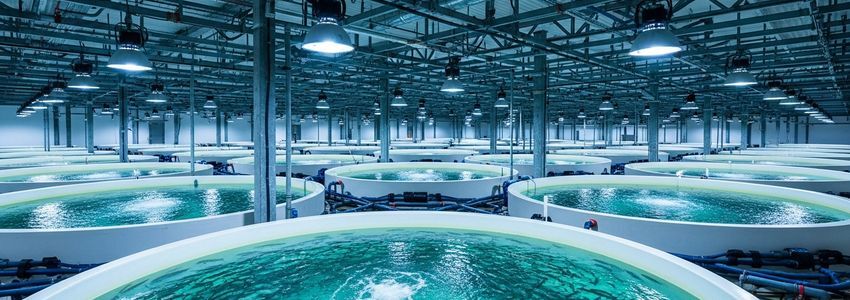
Aquaculture, or fish farming, is a cornerstone of global food security and a vital component of the American agricultural landscape. As the demand for sustainable seafood continues to rise, aquaculture businesses face the constant need for capital to expand, innovate, and maintain operations. From building state-of-the-art recirculating aquaculture systems (RAS) to managing the cash flow of a long-cycle oyster farm, securing the right financing is critical for success. This guide provides a comprehensive overview of aquaculture business loans, exploring the types of funding available, qualification requirements, and how to navigate the application process to fuel your business's growth.
In This Article
What Are Aquaculture Business Loans?
Aquaculture business loans are specialized financial products designed to meet the unique capital requirements of fish farmers, shellfish cultivators, and other aquatic farming operations. Unlike standard business loans, this type of financing is structured to accommodate the specific challenges and opportunities within the aquaculture sector. These challenges include long production cycles, high upfront investment in infrastructure, seasonal revenue streams, and the need for specialized, often expensive, equipment.
These loans are not a one-size-fits-all solution. They encompass a range of financing types, from term loans for major construction projects to lines of credit for managing day-to-day operational costs like feed and labor. The core purpose of aquaculture financing is to provide operators with the necessary capital to start, sustain, and scale their businesses in a capital-intensive industry.
A lender specializing in this area, like Crestmont Capital, understands the nuances of the industry. They recognize that the value of an aquaculture business is not just in its physical assets but also in its livestock, water rights, and operational expertise. This understanding allows for more flexible and realistic underwriting criteria compared to a traditional bank that may not be familiar with valuing inventory that is still growing in a tank or estuary. For example, a lender must appreciate the time it takes for salmon to reach market weight or for oysters to mature, and structure repayment terms that align with these biological and market realities. This tailored approach makes aquaculture business loans an essential tool for any serious operator in the field.
The Aquaculture Industry: Scale, Growth, and Capital Needs
The aquaculture industry is no longer a niche segment of agriculture; it is a global powerhouse critical to feeding the world's population. Understanding the scale and trajectory of this industry is key to appreciating the immense need for dedicated financing solutions.
Global and Domestic Scale
Globally, the impact of aquaculture is staggering. According to the Food and Agriculture Organization of the United Nations (FAO), aquaculture now produces more than 50 percent of all seafood consumed by humans. This marks a historic shift, as farmed seafood has overtaken wild-caught fish in supplying global markets. This trend is driven by increasing global population, rising incomes, and a growing awareness of the health benefits of seafood, coupled with the stagnation or decline of many wild fish stocks.
Key Statistic: In the United States, the aquaculture industry generates approximately $1.5 billion in annual revenue, according to the National Oceanic and Atmospheric Administration (NOAA). This includes freshwater and marine operations producing everything from catfish and trout to oysters and salmon.
While the U.S. is a significant producer, it is also a major importer of seafood, creating a substantial trade deficit. This gap represents a significant opportunity for domestic aquaculture businesses to expand and capture a larger share of the market. Federal and state governments are increasingly supportive of domestic aquaculture expansion as a means of improving food security, creating jobs, and reducing the environmental footprint of food transportation.
Types of Aquaculture and Their Capital Needs
The term "aquaculture" covers a wide array of farming systems, each with its own set of capital requirements:
- Fish Farming (Finfish): This includes species like salmon, tilapia, catfish, and trout. Operations can range from traditional ponds and raceways to high-tech recirculating aquaculture systems (RAS). Capital needs are high, especially for RAS, which require significant investment in tanks, advanced filtration, oxygenation, and monitoring systems.
- Shellfish Cultivation: This involves farming oysters, clams, mussels, and shrimp. While some methods like bottom-planting are less capital-intensive, modern off-bottom and hatchery operations require investment in cages, longlines, rafts, upwellers, and processing equipment.
- Seaweed Cultivation (Algaculture): A rapidly growing sector, seaweed farming requires investment in lines, buoys, boats, and specialized harvesting and processing equipment for food, feed, and biofuel applications.
- Recirculating Aquaculture Systems (RAS): This is a technology-driven approach that can be used for many species. RAS are land-based, closed-loop systems that recycle water. They offer high levels of environmental control and biosecurity but have the highest upfront capital cost of any aquaculture method, often running into millions of dollars for commercial-scale facilities.
Why Capital is the Lifeblood of Aquaculture
Aquaculture is fundamentally a capital-intensive business. The need for funding stems from several key factors:
- Long Production Cycles: It can take 18-24 months to raise salmon to market size, and 2-3 years for an oyster. During this time, the business must cover all costs for feed, labor, and energy without generating revenue from that specific cohort of animals. Working capital is essential to bridge this gap.
- High Infrastructure Costs: Land acquisition, pond construction, building facilities, and installing complex systems like RAS represent enormous upfront expenses.
- Technological Advancement: The industry is constantly evolving. To remain competitive, businesses must invest in automated feeding systems, sophisticated water quality monitoring, and efficient processing equipment.
- Volatility and Risk: Market price fluctuations, disease outbreaks, and environmental events can impact revenue. Having access to a line of credit or cash reserves is crucial for navigating these uncertainties.
This combination of long growth cycles and high upfront investment makes traditional bank lending challenging. Lenders who understand the industry's unique financial rhythm are better equipped to provide the flexible, tailored aquaculture business loans that operators need to thrive.
Is Your Aquaculture Business Ready to Grow?
Don't let capital constraints hold you back. Crestmont Capital provides fast, flexible financing solutions tailored to the unique needs of fish farmers and aquaculture producers. See how much you qualify for today.
Apply Now →Types of Financing Available for Aquaculture Businesses
Aquaculture operators have several financing avenues to explore, each suited for different needs and business stages. Choosing the right type of loan is crucial for optimizing cash flow and achieving long-term growth. Here is a detailed breakdown of the most common financing options.
1. SBA Loans (Small Business Administration)
SBA loans are not direct loans from the government. Instead, the SBA guarantees a portion of the loan, which reduces the risk for lenders like Crestmont Capital and often results in more favorable terms for the borrower. For established aquaculture businesses, SBA loans are an excellent option.
- SBA 7(a) Loan: This is the most popular SBA loan program. It is highly versatile and can be used for a wide range of purposes, including purchasing land or buildings, buying equipment, acquiring another business, or for long-term working capital. Loan amounts can go up to $5 million with repayment terms of up to 10 years for working capital and equipment, and up to 25 years for real estate.
- SBA 504 Loan: This program is specifically designed for purchasing major fixed assets, such as real estate or large-scale equipment. It involves two lenders: a bank or private lender covering up to 50% of the project cost, and a Certified Development Company (CDC) covering up to 40%. The business owner typically contributes at least 10%. These loans offer long terms and fixed interest rates.
- Why it's good for aquaculture: The long repayment terms and competitive rates of SBA loans are well-suited for the long-term investments required in aquaculture, such as facility construction or the purchase of a turnkey fish farm.
2. Equipment Financing
Aquaculture is an equipment-heavy industry. From pumps and filters to automated feeders and processing lines, the right equipment is essential for efficiency and profitability. Equipment financing is a specialized loan where the equipment being purchased serves as its own collateral.
- How it works: The lender provides up to 100% of the cost of the new or used equipment. The loan term is typically aligned with the expected useful life of the asset, usually 3-7 years. Because the loan is secured by the equipment itself, it can be easier to obtain than an unsecured loan and may not require additional collateral.
- What it covers: This can finance nearly any piece of equipment an aquaculture business needs, including:
- Recirculating Aquaculture System (RAS) components (tanks, drum filters, biofilters)
- Pumps, aerators, and oxygenation systems
- Automated feeding systems
- Harvesting equipment (fish pumps, cranes, nets)
- Processing and packaging machinery
- Refrigeration units and ice machines
- Boats and vehicles
- Why it's good for aquaculture: It allows businesses to acquire critical, revenue-generating assets without a large upfront cash outlay, preserving working capital for operational needs. You can learn more about how equipment financing works in our detailed guide.
3. Working Capital Loans
Cash flow is a constant challenge in aquaculture due to the long gap between initial investment (purchasing fingerlings or spat) and final sale. Working capital loans are designed to bridge this gap.
- How it works: These are typically short-term loans (6-24 months) that provide a lump sum of cash to cover day-to-day operational expenses. They can be secured or unsecured, and funding is often much faster than traditional bank loans.
- Common uses:
- Purchasing feed, the single largest operating cost for most fish farms.
- Covering payroll for farm hands and technicians.
- Buying juvenile fish stock (fingerlings, smolts) or shellfish seed (spat).
- Paying for energy costs to run pumps and life support systems.
- Managing unexpected repairs or maintenance.
- Why it's good for aquaculture: It provides the liquidity needed to manage the long production cycle and ensures that operations can continue smoothly without interruption, even when revenue is months away.
4. Business Line of Credit
A business line of credit offers more flexibility than a standard term loan. It provides access to a set amount of capital that a business can draw from as needed and pay back over time.
- How it works: A lender approves a credit limit (e.g., $100,000). The business can draw any amount up to that limit at any time. You only pay interest on the funds you have drawn. As you repay the principal, the available credit is replenished, making it a revolving source of funds.
- Best uses:
- Managing seasonal cash flow fluctuations (e.g., higher feed costs in summer, pre-holiday harvest expenses).
- Seizing opportunities, like purchasing a discounted bulk order of feed or buying stock from another farm.
- Having a safety net for unexpected expenses, such as an emergency equipment failure or a sudden drop in market price.
- Why it's good for aquaculture: The unpredictable nature of farming makes a line of credit invaluable. It's the perfect tool for managing fluctuating costs and ensuring you always have capital on hand without having to apply for a new loan each time a need arises.
What Aquaculture Operators Can Finance
The capital needs of an aquaculture business are diverse, spanning from initial construction to daily operations and long-term expansion. A comprehensive financing strategy often involves using different loan products for different purposes. Here are the key areas where aquaculture business loans are most commonly applied.
Infrastructure and Real Estate
This category covers the foundational assets of the farm. These are large, long-term investments typically financed with SBA loans or commercial real estate loans.
- Land Acquisition: Purchasing suitable land with access to clean water is the first step for any new land-based operation.
- Construction of Facilities: Building hatcheries, grow-out buildings for RAS, processing plants, and administrative offices.
- Pond and Raceway Construction: Excavating and constructing ponds for catfish or raceways for trout.
- Leasehold Improvements: For operations on leased land or water, financing can cover improvements to docks, buildings, and other infrastructure.
Specialized Equipment
This is where equipment financing shines. These assets are directly tied to production and efficiency.
- Life Support Systems: The heart of any modern farm. This includes tanks, biofilters, drum filters, protein skimmers, UV sterilizers, pumps, and oxygen generators for RAS.
- Feeding Systems: Automated feeders that dispense precise amounts of feed, reducing waste and improving feed conversion ratios.
- Monitoring and Control Systems: Sensors and software to monitor water quality parameters like dissolved oxygen, pH, temperature, and ammonia in real-time.
- Harvesting and Grading Equipment: Fish pumps, automated graders, nets, and cranes to handle stock efficiently and with minimal stress.
- Processing and Packaging: Filleting machines, de-scalers, vacuum packers, and labeling systems to prepare products for market.
- Transportation and Cold Storage: Refrigerated trucks, walk-in freezers, and ice machines to maintain the cold chain and ensure product quality.
Operational and Working Capital
These are the ongoing expenses that keep the farm running. Working capital loans and lines of credit are the ideal tools for these needs.
- Livestock Purchase: Acquiring fingerlings, smolts, or shellfish seed to begin a new production cycle.
- Feed Inventory: As the largest variable cost, financing feed purchases is a primary use of working capital. Buying in bulk can often lead to significant savings. * Payroll and Labor: Covering salaries for farm managers, biologists, technicians, and processing staff.
- Energy and Utilities: Electricity costs for running pumps 24/7 can be substantial.
- Marketing and Distribution: Funds for branding, packaging, attending trade shows, and establishing distribution channels.
Business Expansion and Acquisition
For established businesses looking to grow, financing can facilitate strategic moves.
- Facility Expansion: Adding more tanks, ponds, or processing capacity to meet growing demand.
- Acquiring a Competitor: Purchasing another aquaculture operation to gain market share, new species, or valuable permits and water rights.
- Vertical Integration: Investing in a hatchery to control your own seed supply or a processing plant to capture more value from your product.
Understanding these specific uses helps operators match the right financing product to the right business need, ensuring that capital is used effectively to drive profitability and sustainable growth. Aquaculture is a dynamic field, and having a financing partner who understands these diverse needs is a significant competitive advantage. This is a core focus for lenders specializing in agricultural business loans and their sub-sectors.
How Aquaculture Business Financing Works - At a Glance
Initial Consultation
Discuss your farm's specific needs, goals, and financial situation with a Crestmont Capital funding specialist.
Application
Complete a simple online application and provide basic documentation like bank statements and financial records.
Underwriting
Our team reviews your application, analyzing your business's health and cash flow to find the best loan options.
Approval & Offer
Receive clear, transparent loan offers with specific rates and terms. Your specialist will walk you through the details.
Funding
Once you accept an offer and complete the final paperwork, funds are deposited directly into your account, often in as little as 24 hours.
Who Qualifies for Aquaculture Business Loans?
Lenders evaluate several factors to determine the creditworthiness and risk profile of an aquaculture business. While specific requirements vary between loan products and lenders, here are the general criteria that most successful applicants meet.
Key Qualification Factors
- Time in Business: Most lenders, including those offering SBA-backed loans, prefer to see a business that has been operational for at least two years. This history provides a track record of revenue, expense management, and operational stability. Startup farms are higher risk and may need to seek specialized grants, venture capital, or USDA programs, though some equipment financing options may be available.
- Annual Revenue: A strong and consistent revenue stream is a primary indicator of a healthy business. Lenders typically look for a minimum annual revenue, often starting around $100,000 to $250,000, to ensure the business can support debt payments. For larger loans, this requirement will be significantly higher.
- Credit Score: Both personal and business credit scores are important. For most loan products, a personal credit score of 620 or higher is a good starting point. Higher scores (700+) will unlock more favorable terms and interest rates. Lenders look at credit history to gauge an owner's reliability in repaying debts.
- Cash Flow: This is perhaps the most critical factor. Lenders will analyze your business bank statements and financial records to verify that your business generates enough consistent cash flow to comfortably cover existing expenses plus the new loan payment. A healthy debt-to-income ratio is essential.
- Collateral: The need for collateral depends on the loan type. Equipment loans use the financed equipment as collateral. Unsecured working capital loans may not require specific collateral but could involve a general lien on business assets. SBA loans and larger term loans will almost always require collateral, which could include real estate, equipment, or inventory.
- Industry Experience and Business Plan: Especially for expansion projects or significant loans, lenders want to see that the management team has deep experience in aquaculture. A well-researched business plan that outlines the use of funds, market analysis, and realistic financial projections is crucial. It demonstrates that you have a clear path to generating a return on the borrowed capital.
General Qualification Snapshot:
- Time in Business: 2+ years preferred
- Annual Revenue: $100,000+
- Credit Score: 620+
- Financials: Demonstrable positive cash flow
Meeting these criteria positions your aquaculture business as a strong candidate for financing. If you fall short in one area, strength in others (like high revenue or valuable collateral) can often compensate. Working with a lender like Crestmont Capital, which takes a holistic view of your business, can improve your chances of approval even if you don't perfectly fit the traditional mold.
How to Apply for Aquaculture Financing
Navigating the loan application process can seem daunting, but breaking it down into clear steps makes it manageable. A streamlined process, like the one offered by Crestmont Capital, focuses on efficiency and transparency.
Step 1: Define Your Funding Needs
Before you apply, have a clear understanding of exactly what you need the money for and how much you need. Are you buying a $150,000 filtration system for a new RAS module? Do you need $50,000 in working capital to cover feed costs for the next six months? Having a specific use and amount makes your application stronger and helps the lender match you with the right product.
Step 2: Gather Necessary Documentation
Preparation is key to a fast and smooth process. While requirements vary, most applications will require the following:
- Basic Business Information: Business name, address, tax ID (EIN), and ownership structure.
- Bank Statements: Typically the last 3-6 months of business bank statements to verify revenue and cash flow.
- Financial Statements: For larger loans, this may include profit and loss statements, balance sheets, and business tax returns for the past 2-3 years.
- Personal Financial Information: A personal financial statement and personal tax returns from all owners with 20% or more stake in the business.
- Loan Purpose Documentation: If for equipment, provide a quote or invoice from the vendor. If for a project, provide a detailed business plan with cost breakdowns and projections.
- List of Existing Debts: A schedule of any current business loans or leases.
Step 3: Complete the Application
With a lender like Crestmont Capital, this is often a simple online form that takes only a few minutes to complete. This initial application provides the lender with the core information needed to begin the underwriting process. Be accurate and thorough to avoid delays.
Step 4: Underwriting and Review
Once you submit your application and documents, the lender's underwriting team will review your file. They analyze your business's financial health, credit history, and the viability of your request. During this stage, a funding specialist may reach out to you to ask clarifying questions or request additional information. This is a collaborative process aimed at fully understanding your business and finding the best possible financing solution.
Step 5: Receive and Accept Your Offer
If approved, you will receive one or more loan offers. Each offer will clearly detail the loan amount, interest rate, repayment term, and any fees. A dedicated specialist will walk you through the options, ensuring you understand the terms completely. Once you select the best offer for your business, you will sign the loan agreement electronically.
Step 6: Funding
After the final paperwork is signed, the funds are disbursed. For working capital and equipment loans, this can happen in as little as 24-48 hours. The capital is deposited directly into your business bank account, ready for you to put to work growing your aquaculture operation.
Ready to Start Your Application?
The path to funding your aquaculture business is just a few clicks away. Our streamlined application process is fast, secure, and requires no upfront commitment. Find out your financing options today.
Apply Now →Real-World Scenarios: How Aquaculture Businesses Use Financing
To better illustrate the practical application of these loans, let's explore a few real-world scenarios showing how different types of aquaculture businesses leverage financing for growth and stability.
Scenario 1: The Expanding Land-Based Salmon Farm
- The Business: "Atlantic Blue Farms," an established Recirculating Aquaculture System (RAS) farm in the Midwest, has a proven track record of producing high-quality salmon for regional restaurants and grocers. Demand is outstripping their current capacity.
- The Need: They plan a $2 million expansion to add a new grow-out module, which includes constructing a new building and purchasing a complete RAS equipment package (tanks, filters, pumps, etc.).
- The Solution: The farm secures an SBA 504 Loan. This loan is perfect for major fixed-asset purchases. The structure allows them to finance the building and the high-cost equipment with a long repayment term (20-25 years) and a low down payment (as little as 10%). This preserves their operational cash for the increased feed and labor costs the expansion will bring.
Scenario 2: The Seasonal Oyster Farm
- The Business: "Chesapeake Gold Oysters" is a successful oyster farm with highly seasonal revenue. Their peak sales are in the summer and during the winter holidays, but their major expenses for seed, new gear, and labor occur in the spring.
- The Need: They face a recurring cash flow crunch every March and April. They need about $75,000 to purchase oyster seed from a hatchery and invest in new floating cages to improve growth rates, well before their peak revenue season begins.
- The Solution: The owner obtains a $100,000 Business Line of Credit. This provides the ultimate flexibility. They draw $75,000 in the spring to cover their upfront costs. As sales ramp up in the summer, they begin paying down the balance. They can then draw on the line again in the fall to cover labor for their holiday harvest. They only pay interest on what they use, making it a cost-effective way to manage their seasonal business cycle.
Scenario 3: The Tilapia Farm Needing an Efficiency Upgrade
- The Business: "Sunbelt Aquafarms" has been raising tilapia in ponds for over a decade. Their old diesel-powered aerators are inefficient and costly to run. They've identified a new, energy-efficient electric aeration system and an automated feeder that will cut their energy and feed costs by 30%.
- The Need: The total cost for the new equipment package is $120,000. They don't want to tie up their cash reserves in a single purchase.
- The Solution: They use Equipment Financing. The lender finances 100% of the equipment cost, and the equipment itself serves as the collateral. They secure a 5-year term, and the monthly payment is less than what they were spending on excess fuel and wasted feed. The new equipment pays for itself through operational savings, and the farm becomes more profitable and environmentally friendly without any upfront cash outlay.
How Crestmont Capital Helps Aquaculture Businesses
Crestmont Capital stands as the #1 rated business lender in the United States because we understand that your business is unique. This is especially true in a specialized field like aquaculture. We are not just a source of capital; we are a financing partner dedicated to the growth and success of your fish farm or shellfish operation.
Our approach is built on three pillars:
- Industry Expertise: Our funding specialists have experience working with businesses across the agricultural sector, including aquaculture. We understand the terminology, the equipment, the operational cycles, and the specific financial challenges you face. We know the difference between a biofilter and a drum filter, and we understand why a long-term loan is needed for infrastructure while a line of credit is perfect for feed. This expertise allows us to provide truly tailored advice and solutions.
- A Broad Portfolio of Products: We are not limited to a single type of loan. By offering a full suite of financing options-including SBA loans, equipment financing, working capital loans, and business lines of credit-we can create a customized funding strategy for your business. We match the right product to your specific need, ensuring you get the most efficient and cost-effective capital available.
- Speed and Simplicity: We know that in business, opportunities are time-sensitive. A traditional bank loan process can take months, causing you to miss a deal on equipment or a window for expansion. Our technology-driven platform streamlines the application and underwriting process. We provide fast decisions and can often get funds into your account in as little as 24 hours, giving you the agility to act when it matters most.
At Crestmont Capital, we look beyond just the numbers on a page. We see the potential in your operation and are committed to providing the fuel for your growth.
Comparing Aquaculture Financing Options
Choosing the right loan is a critical decision. This table provides a side-by-side comparison of the most common financing solutions for aquaculture businesses to help you determine which option best fits your specific situation.
| Financing Type | Typical Loan Amount | Repayment Term | Best For | Key Advantage |
|---|---|---|---|---|
| SBA 7(a) Loan | $50,000 - $5 Million | 7-25 years | Real estate purchase, business acquisition, major expansion projects, debt refinancing. | Long terms and competitive interest rates, government-guaranteed. |
| Equipment Financing | $10,000 - $2 Million+ | 2-7 years | Purchasing new or used equipment like RAS components, pumps, feeders, processing machinery. | The equipment is the collateral; often 100% financing with minimal down payment. |
| Working Capital Loan | $10,000 - $500,000 | 6-24 months | Covering operational costs during long production cycles: feed, payroll, seed/fingerlings. | Very fast funding to solve immediate cash flow gaps. |
| Business Line of Credit | $10,000 - $250,000 | Revolving | Managing seasonal cash flow, unexpected expenses, and seizing short-term opportunities. | Ultimate flexibility; draw funds as needed and only pay interest on the amount used. |
Frequently Asked Questions
1. What are aquaculture business loans?
Aquaculture business loans are financial products specifically designed for businesses involved in fish farming, shellfish cultivation, and other forms of aquatic agriculture. They provide capital for a wide range of needs, including purchasing equipment, constructing facilities, managing operational cash flow, and expanding operations. These loans are often structured to accommodate the industry's unique characteristics, such as long production cycles and high upfront investment.
2. What types of aquaculture operations qualify?
A wide variety of aquaculture operations can qualify for financing. This includes, but is not limited to: finfish farms (salmon, trout, catfish, tilapia), shellfish farms (oysters, clams, mussels), shrimp farms, hatcheries that produce fingerlings or spat, seaweed cultivators, and operators of high-tech systems like Recirculating Aquaculture Systems (RAS).
3. What can aquaculture loans be used for?
The funds can be used for nearly any legitimate business purpose. Common uses include buying specialized equipment (pumps, tanks, feeders), purchasing land or constructing buildings, financing working capital needs like feed and payroll, purchasing juvenile stock, expanding an existing facility, or acquiring another aquaculture business.
4. What credit score do I need?
While requirements vary, a personal credit score of 620 is generally a good starting point for many loan products. A score of 700 or higher will typically qualify you for more options with better rates and terms. Lenders consider credit score alongside other factors like revenue, time in business, and cash flow.
5. How much can I borrow?
Loan amounts can range widely based on your business's needs and financial health. Working capital loans might range from $10,000 to $500,000, while equipment financing and SBA loans can extend into the millions of dollars for large-scale projects and acquisitions.
6. How long does approval take?
The timeline depends on the loan type. Alternative lenders like Crestmont Capital can often approve and fund working capital and equipment loans in as little as 24-48 hours. SBA loans have a more extensive documentation and review process and typically take several weeks to a few months to close.
7. Do I need collateral?
It depends on the loan. For equipment financing, the equipment being purchased serves as the collateral. SBA loans and large term loans usually require collateral, which can be business assets like real estate or equipment. Some working capital loans are unsecured, meaning they do not require specific collateral but may involve a general lien on business assets.
8. Can a startup fish farm get a loan?
Financing a startup is challenging as most lenders prefer to see at least two years of operational history. Startups often have better success with USDA programs, grants, or by presenting an exceptionally strong business plan with significant owner equity investment. Some equipment financing may be available for startups if the owner has a strong personal credit profile and industry experience.
9. What's the difference between equipment financing and a working capital loan for aquaculture?
Equipment financing is used exclusively to purchase specific physical assets (e.g., a pump, a tank, a processing machine), and that asset secures the loan. A working capital loan provides a lump sum of cash to be used for operational expenses (e.g., feed, payroll, utilities) and is meant to manage day-to-day cash flow.
10. Can I use a business line of credit for feed and supplies?
Yes, absolutely. A business line of credit is an ideal tool for purchasing recurring supplies like feed. It allows you to draw funds when you need to make a purchase and then pay it back as you generate revenue, providing a flexible, revolving source of capital for ongoing operational needs.
11. What documents do I need to apply?
Typically, you will need 3-6 months of recent business bank statements, your business tax ID (EIN), a driver's license, and a voided business check. For larger or more complex loans like SBA loans, you will also need financial statements (P&L, balance sheet), business and personal tax returns, and a detailed business plan.
12. Are SBA loans available for aquaculture businesses?
Yes, aquaculture businesses are eligible for SBA loan programs, including the popular 7(a) and 504 loans. These can be excellent options for established farms seeking long-term, low-rate financing for major investments like real estate, construction, or large equipment purchases.
13. How does a recirculating aquaculture system (RAS) get financed?
Financing a RAS is often a multi-faceted process due to the high cost. The building or facility itself might be financed with an SBA loan or commercial mortgage. The complex equipment package (tanks, filters, pumps) is perfectly suited for equipment financing. Working capital loans or a line of credit would then be used to cover the initial stock of fish and the high energy and feed costs during the first grow-out cycle.
14. What if my aquaculture business has seasonal revenue?
Lenders familiar with agriculture understand seasonality. A business line of credit is often the best solution for managing seasonal cash flow. It allows you to borrow during your high-expense, low-revenue periods and pay back the funds during your peak sales season. Some term loans may also offer flexible or seasonal payment structures.
15. How does Crestmont Capital differ from other lenders for aquaculture businesses?
Crestmont Capital combines industry understanding with a wide range of loan products and a streamlined, tech-enabled process. Unlike a traditional bank that may not grasp the specifics of aquaculture, we see the value and potential in your operation. We provide fast decisions, flexible terms, and a dedicated funding specialist to guide you, making us a true financing partner for your growth.
How to Get Started
Taking the next step toward securing the capital your aquaculture business needs is straightforward. Follow this simple path to explore your options with Crestmont Capital.
Your Partner in Aquaculture Growth
From the hatchery to the harvest, Crestmont Capital is here to support your journey. Let us provide the financial solutions you need to scale your production, improve efficiency, and feed the future. Get started with a no-obligation application today.
Apply Now →Conclusion
The aquaculture industry is essential, innovative, and poised for significant growth. However, this growth is dependent on access to timely and appropriate capital. Whether you are building a state-of-the-art RAS facility, expanding your oyster leases, or simply managing the cash flow of a long production cycle, the right aquaculture business loan is a critical tool for success. By understanding the different types of financing available and partnering with a lender that has expertise in your field, you can secure the funding needed to navigate challenges and seize opportunities. Crestmont Capital is committed to being that partner, providing the fast, flexible, and reliable financing that helps America's fish farmers and aquaculture producers thrive.
Disclaimer: The information provided in this article is for general educational purposes only and is not financial, legal, or tax advice. Funding terms, qualifications, and product availability may vary and are subject to change without notice. Crestmont Capital does not guarantee approval, rates, or specific outcomes. For personalized information about your business funding options, contact our team directly.