Opening or upgrading a booth inside an antique mall takes more capital than most dealers expect. Display cases, lighting, shelving, flooring, and signage all add up fast, and most antique malls expect a dealer's space to look sharp before the first item ever goes up for sale. Antique mall booth buildout financing gives dealers and collectors-turned-entrepreneurs the capital to build out a professional, sales-ready booth without draining the cash they need for inventory.
Whether you are securing your first booth at a multi-dealer antique mall, expanding into a second or third space, or renovating a tired-looking setup that is not converting browsers into buyers, financing can bridge the gap between your vision and your bank account. This guide walks through everything a dealer needs to know about financing an antique mall booth buildout, from the types of loans available to real-world scenarios and a complete FAQ.
In This Article
- What Is Antique Mall Booth Buildout Financing?
- Key Benefits of Financing Your Booth Buildout
- How Booth Buildout Financing Works
- Types of Financing for Antique Mall Booths
- Who This Financing Is Best For
- Comparing Financing Options
- How Crestmont Capital Helps Antique Dealers
- Real-World Scenarios
- Frequently Asked Questions
- How to Get Started
- Conclusion
What Is Antique Mall Booth Buildout Financing?
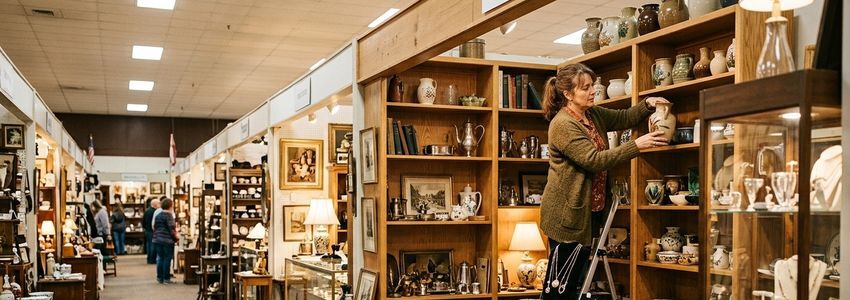
Antique mall booth buildout financing is a form of small business funding used specifically to cover the costs of designing, constructing, and outfitting a dealer booth inside a multi-vendor antique mall. Unlike a general business loan, this capital is earmarked for the physical and visual elements that turn an empty 10x10 or 10x20 space into a professional, inviting sales environment.
A typical buildout can include glass display cases, locking showcases for higher-value items, adjustable shelving units, pegboard and slatwall systems, task lighting and accent lighting, flooring upgrades, paint and wall treatments, signage, and even small furniture pieces like a dealer's desk or stool. For dealers managing multiple booths across several malls, buildout costs can also include modular or portable fixtures that can be broken down and reassembled in a new location.
Financing this buildout separately from your inventory purchases lets you keep working capital available for the antiques, collectibles, and vintage goods that actually generate revenue, rather than tying it up in cases and shelving.
Key Benefits of Financing Your Booth Buildout
Financing a booth buildout rather than paying cash upfront offers several advantages for antique dealers, especially those managing tight margins between booth rent, commission fees, and inventory costs.
- Preserve cash for inventory: Estate sales, auctions, and private buys often require fast cash. Financing your fixtures frees up your savings to seize inventory opportunities as they appear.
- Build a professional space from day one: A well-lit, well-organized booth with secure display cases converts browsers into buyers far more often than a cluttered table setup. Financing lets you build it right the first time.
- Spread costs over time: Rather than paying $3,000 to $15,000 upfront for a full buildout, financing breaks the cost into manageable monthly payments that align with your booth's sales growth.
- Protect your merchandise: Locking display cases and proper lighting reduce theft and damage, which directly protects your bottom line. Financing makes these protective upgrades accessible immediately rather than "someday."
- Scale into new locations faster: Dealers who want to expand into a second or third antique mall can use financing to replicate a proven booth design without waiting years to save up the capital.
Ready to Build Out Your Booth?
Get fast, flexible financing from the #1 business lender in the U.S. No obligation - apply in minutes.
Apply Now →How Booth Buildout Financing Works
The process for securing antique mall booth buildout financing is similar to other forms of small business equipment and working capital financing, and it is designed to move quickly so dealers are not left waiting to claim a booth or missing a mall's move-in deadline.
- Application: You submit a simple application detailing your business, time operating as a dealer, monthly revenue (if applicable), and the amount needed for your buildout.
- Document review: The lender reviews recent bank statements and, for newer dealers, may consider personal credit history and a basic business plan or booth design estimate.
- Approval and offer: Once approved, you receive a funding offer outlining the loan amount, term, and payment structure. Review the terms carefully before accepting.
- Funding: Funds are typically deposited into your account within 24 to 72 hours of approval, allowing you to order fixtures, hire a contractor, or purchase display cases right away.
- Repayment: Repayment follows a fixed schedule, daily, weekly, or monthly depending on the product, making it easy to budget against your booth's sales.
Buildout costs vary widely depending on booth size and the quality of fixtures chosen. A basic 10x10 booth with simple shelving might run $1,500 to $3,000, while a premium showcase-heavy booth with locking glass cases, accent lighting, and custom shelving can run $8,000 to $20,000 or more, especially for dealers specializing in jewelry, coins, or other high-value small items that require secure display.
Key Stat: Antique mall booth rental rates in the U.S. typically run $1.00 to $4.50 per square foot per month, meaning a well-built 100-square-foot booth needs to perform well above rent cost just to break even before a dealer sees profit.
Quick Guide
How Antique Mall Booth Buildout Financing Works - At a Glance
Share your buildout plan and business details in a quick application.
Equipment financing, a line of credit, or a working capital loan, matched to your buildout size.
Purchase display cases, lighting, shelving, and signage once funds arrive.
Launch with a professional, sales-ready display and start repaying on a schedule that fits your revenue.
Types of Financing for Antique Mall Booths
Several financing products can fund a booth buildout, and the right choice depends on your buildout size, time in business, and whether you need a one-time lump sum or ongoing flexible access to capital.
Equipment Financing
Equipment financing is often the best fit for booth buildouts because display cases, shelving units, and lighting fixtures qualify as business equipment. The fixtures themselves typically secure the loan, which can make approval easier and terms more favorable than unsecured options.
Working Capital Loans
A working capital loan provides a lump sum that can cover both fixtures and soft costs like paint, flooring, or a contractor's labor. This is a strong option for dealers who need flexibility in how funds are allocated across a buildout project.
Business Line of Credit
For dealers managing multiple booths or who anticipate ongoing buildout and refresh costs across several locations, a revolving line of credit offers the flexibility to draw funds as needed and only pay interest on what is used.
SBA Loans
Established antique dealers planning a larger buildout, perhaps alongside opening their own standalone shop in addition to mall booths, may qualify for an SBA loan. These offer longer terms and lower rates but require more documentation and a longer approval timeline.
Used Equipment Financing
Many antique mall dealers furnish their booths with secondhand display cases and shelving purchased from closing retailers, estate sales, or other dealers. Used equipment financing allows you to finance these purchases just like new fixtures, which can significantly lower your total buildout cost.
Who This Financing Is Best For
Antique mall booth buildout financing serves a wide range of dealers, from first-time vendors to seasoned operators managing several booths across different malls.
- New dealers entering an antique mall for the first time and needing a complete buildout from scratch.
- Existing dealers whose booths look dated or disorganized and are ready to invest in a refresh to boost sales.
- Multi-booth operators expanding into a second, third, or fourth antique mall location and needing to replicate a proven booth design efficiently.
- Specialty dealers in jewelry, coins, watches, or other high-value small items who need secure, locking display cases that cost significantly more than basic open shelving.
- Dealers transitioning from flea markets or online selling into a permanent antique mall booth and needing fixtures for the first time.
Comparing Financing Options
Each financing path comes with its own tradeoffs. The table below compares the most common options antique dealers consider when funding a booth buildout.
| Financing Type | Best For | Funding Speed | Typical Term |
|---|---|---|---|
| Equipment Financing | Display cases, shelving, lighting | 1-3 days | 12-60 months |
| Working Capital Loan | Mixed fixture and labor costs | 24-72 hours | 6-24 months |
| Business Line of Credit | Multi-booth or ongoing refreshes | 1-3 days to open | Revolving |
| SBA Loan | Larger buildouts, established dealers | 30-90 days | Up to 10+ years |
| Used Equipment Financing | Secondhand cases and shelving | 1-3 days | 12-48 months |
How Crestmont Capital Helps Antique Dealers
Crestmont Capital works with retail and collectible dealers across the country to fund the fixtures, equipment, and working capital that keep a booth looking professional and performing well. We understand that antique mall dealers often operate on thinner margins than traditional retailers, with booth rent, commission splits, and inventory sourcing all competing for the same dollars.
Our equipment financing solutions are well suited to display cases, shelving, and lighting, while our unsecured working capital loans give dealers flexibility to cover labor, paint, and other soft buildout costs. For dealers furnishing a booth with secondhand fixtures, our used equipment financing option can finance those purchases just as easily as new ones.
Dealers managing multiple booths or anticipating ongoing refresh costs often pair a buildout loan with our business line of credit, giving them revolving access to capital as new opportunities arise. For larger buildout projects tied to opening a standalone shop, our team can also guide dealers through SBA loan options.
We have also helped dealers in closely related resale and collectible niches, including those covered in our guides on antique store business loans and consignment shop business loans. This cross-category experience means our underwriting team understands the unique rhythms of the secondhand and collectibles market, from seasonal buying patterns to the realities of commission-based booth agreements.
Turn Your Booth Into a Top Seller
Crestmont Capital specializes in fast, flexible funding for retail and collectible dealers. Get a decision quickly.
Get My Quote →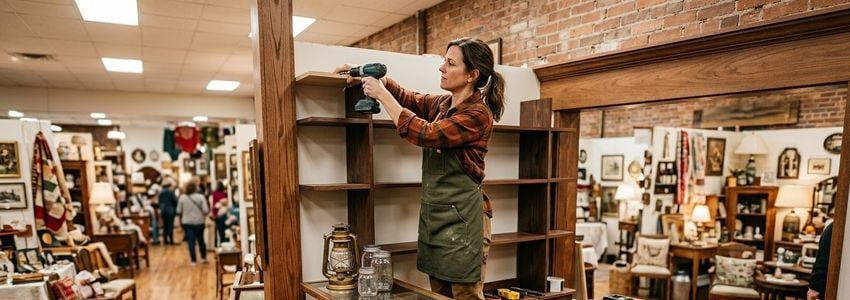
Real-World Scenarios
Scenario 1: First-Time Dealer Launching a Booth
Carla had collected vintage glassware and costume jewelry for over a decade and finally decided to rent a 10x10 booth at a local antique mall. She needed roughly $4,000 for locking display cases, wall shelving, and accent lighting to make her pieces stand out. She secured an equipment financing loan, had her fixtures delivered within a week, and opened her booth fully built out rather than starting with folding tables.
Scenario 2: Booth Refresh After Years of Flat Sales
Dennis had operated the same booth for six years, but sales had plateaued and the space looked tired compared to newer dealers nearby. He used a $6,500 working capital loan to repaint his booth, add LED accent lighting, and replace worn shelving with a modern slatwall system. Within two months, his monthly sales increased by nearly 30 percent.
Scenario 3: Expanding to a Second Antique Mall
Monica's booth at her original antique mall had become one of the top performers, and a second mall across town offered her a larger space. She financed a $9,000 buildout, replicating the display case layout and lighting setup that had worked so well in her first location, using a business line of credit so she could also draw additional funds later for inventory restocking.
Scenario 4: Specialty Jewelry Dealer Upgrading Security
After a theft incident, Robert needed to upgrade his open shelving to fully locking glass showcases for his vintage watch and jewelry collection. He financed $7,200 in secure display cases through equipment financing, which not only protected his inventory but also elevated the perceived value of his merchandise in the eyes of buyers.
Tips for Getting Approved
- Get a detailed fixture quote first. Lenders move faster when you can specify exactly what you are financing and provide a vendor quote or estimate.
- Keep your antique mall agreement handy. Having your booth lease or dealer agreement ready shows the lender you have a confirmed space and commission structure.
- Separate buildout costs from inventory costs. Lenders evaluate equipment financing differently than inventory purchases; keeping these separate on your application speeds up review.
- Show consistent personal or business banking history. Even new dealers can improve approval odds with clean, consistent bank statements showing responsible cash management.
- Consider used fixtures to lower your ask. A smaller financing request for gently used display cases and shelving can be easier to qualify for than an all-new buildout.
Frequently Asked Questions
How to Get Started
Price out your display cases, shelving, and lighting so you know exactly how much to request.
Complete our quick application at offers.crestmontcapital.com/apply-now.
Order fixtures, complete your buildout, and open a booth that is ready to sell from day one.
Conclusion
A professional, well-organized booth is one of the most effective ways to stand out inside a crowded antique mall, and antique mall booth buildout financing makes that investment possible without draining the cash you need for inventory. Whether you are launching your first booth, refreshing a tired display, or expanding into a new location, the right financing product can get your space built out and generating sales faster.
From equipment financing for display cases to working capital loans for paint and labor, Crestmont Capital offers flexible options tailored to the realities of running an antique mall business. As with any major purchase decision, it helps to compare options carefully. According to the U.S. Small Business Administration, understanding your financing terms upfront is one of the most important steps a small business owner can take before borrowing.
Ready to turn your empty antique mall space into a booth that sells? Explore your antique mall booth buildout financing options today and build the display your merchandise deserves.
Disclaimer: The information provided in this article is for general educational purposes only and is not financial, legal, or tax advice. Funding terms, qualifications, and product availability may vary and are subject to change without notice. Crestmont Capital does not guarantee approval, rates, or specific outcomes. For personalized information about your business funding options, contact our team directly.