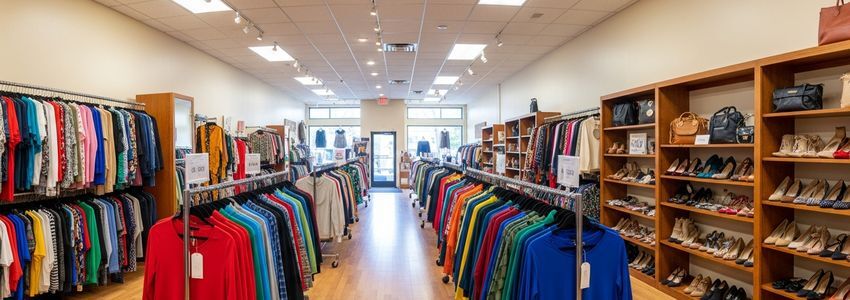
The resale market is booming, and consignment shops are at the heart of this sustainable and profitable retail revolution. As an owner, you're not just running a store; you're curating a collection, managing relationships with consignors, and building a community. To capitalize on this growth and overcome the unique financial hurdles of the consignment model, securing the right funding is essential. This comprehensive guide explores the world of consignment shop business loans, providing you with the detailed information you need to make informed financial decisions, fuel your shop's growth, and achieve long-term success.
In This Article
- What Are Consignment Shop Business Loans?
- Why Consignment Shop Owners Need Business Financing
- Types of Financing for Consignment Shops
- How Consignment Shop Business Loans Work
- How to Qualify for Consignment Shop Business Loans
- How to Use Business Loans to Grow Your Consignment Shop
- How Crestmont Capital Helps Consignment Shop Owners
- Real-World Scenarios: Consignment Shop Owners and Business Financing
- Comparing Your Financing Options
- Step-by-Step: Applying for a Consignment Shop Business Loan
- Frequently Asked Questions
- How to Get Started
- Conclusion
What Are Consignment Shop Business Loans?
Consignment shop business loans are specialized financial products designed to meet the unique capital requirements of resale and consignment store owners. Unlike traditional retail where inventory is purchased upfront, the consignment model involves selling goods on behalf of individuals (consignors) and taking a percentage of the sale price. This creates a distinct cash flow cycle and operational structure that requires flexible and accessible funding solutions. These loans are not a single type of product but rather an umbrella term for various financing options, including working capital loans, lines of credit, equipment financing, and SBA loans, all tailored to address the specific challenges and opportunities within the consignment industry.
The core purpose of these loans is to provide the necessary capital to manage and grow the business. This could mean covering operational expenses during a slow season, investing in a sophisticated point-of-sale (POS) system to manage consignor accounts, renovating a storefront to attract more foot traffic, or launching a targeted marketing campaign. For example, a consignment shop specializing in luxury handbags might use a loan to purchase a highly sought-after designer bag outright from a seller, knowing it will attract high-end clientele and sell quickly for a significant profit. This strategic purchase wouldn't be possible without immediate access to capital, as waiting for regular sales revenue to accumulate could mean missing the opportunity.
What differentiates these loans from generic business funding is the lender's understanding of the consignment business model. Lenders like Crestmont Capital recognize that a consignment shop's balance sheet looks different. Inventory isn't a simple asset owned by the store, and revenue can be highly seasonal. Therefore, the underwriting process for consignment shop business loans often considers factors beyond traditional metrics, looking at sales velocity, consignor payout schedules, and seasonal revenue patterns. This nuanced approach allows lenders to provide capital solutions that align with the real-world financial rhythm of a consignment business, ensuring that the funding serves as a tool for growth rather than a financial burden.
Why Consignment Shop Owners Need Business Financing
Running a successful consignment shop involves navigating a unique set of financial challenges that differ significantly from traditional retail. While the consignment model reduces the initial cost of inventory, it introduces complexities in cash flow management, growth, and operations. Business financing is often the critical element that allows owners to overcome these hurdles and scale their operations effectively.
The Resale Market at a Glance
- Explosive Growth: The U.S. secondhand market is projected to more than double, reaching $350 billion by 2027, according to a ThredUP report. This presents a massive opportunity for consignment shops that are well-capitalized to meet demand.
- Consumer Shift: Over 52% of consumers made a secondhand apparel purchase in 2022, highlighting a major shift in shopping habits toward value and sustainability.
- Small Business Engine: Used merchandise stores represent a significant portion of the retail landscape, with over 20,000 establishments in the U.S. according to the U.S. Census Bureau, most of which are small, independent businesses.
Unique Inventory Acquisition Models
While the classic consignment model involves no upfront cost for inventory, it's not the only way successful shops operate. Many stores use a hybrid approach to secure high-demand items. This often involves a "buy-outright" option, where the store pays cash on the spot for premium goods like designer handbags, luxury watches, or rare vintage pieces. This strategy is crucial for competing with online marketplaces and attracting discerning customers. A business loan provides the liquid cash needed to make these strategic purchases without draining daily operational funds. It allows a shop to say "yes" to a fantastic collection from an estate sale or a highly desirable handbag, securing inventory that will generate high-profit margins and buzz for the store.
Managing Seasonal Cash Flow Gaps
The retail industry is notoriously seasonal, and consignment is no exception. A children's consignment shop sees huge spikes during back-to-school season and lulls in mid-winter. A high-fashion consignment boutique might thrive during holiday and event seasons but face slower months in the summer. During these downturns, revenue can dip significantly, but fixed costs like rent, utilities, and payroll remain constant. This is where a business line of credit or a working capital loan becomes invaluable. It acts as a financial buffer, allowing owners to cover expenses, pay consignors on time (maintaining good relationships), and even invest in marketing for the upcoming busy season, all without stress. This financial stability ensures the business can weather any seasonal storm and emerge stronger.
Storefront Improvements and Expansion
The physical environment of a consignment shop is critical to its success. It needs to feel like a boutique, not a cluttered second-hand store. Financing can be used for crucial renovations and improvements that enhance the customer experience. This could include new lighting, modern flooring, custom-built display cases for valuable items, comfortable fitting rooms, and a fresh coat of paint. These upgrades not only attract more customers but also justify higher price points. Furthermore, for a successful shop, expansion is the next logical step. A business loan can fund the security deposit and first month's rent on a larger location, or even finance the opening of a second store in a new neighborhood, allowing the owner to scale their brand and capture a larger market share.
Investing in Technology and POS Systems
Modern consignment is tech-driven. A robust Point of Sale (POS) system is non-negotiable. These systems do more than just process transactions; they manage complex inventory, track consignor accounts, automate payouts, generate sales reports, and even integrate with an e-commerce website. Implementing a top-tier consignment-specific software like ConsignPro or SimpleConsign can be a significant upfront investment. Equipment financing is the perfect tool for this, allowing the store to acquire the necessary hardware (computers, barcode scanners, tag printers) and software without a large cash outlay. This technology streamlines operations, reduces manual errors, improves the consignor experience with online account access, and provides valuable data for making smarter business decisions.
Hiring and Training Staff
As a consignment shop grows, the owner cannot do everything alone. Hiring skilled staff is essential for providing excellent customer service, processing incoming inventory, managing the sales floor, and handling online sales. A business loan can provide the necessary funds to cover payroll for new employees during their training period before they become fully productive. This investment in human capital is crucial for scaling the business. It frees up the owner to focus on high-level strategy, such as sourcing new consignors, marketing, and long-term growth planning, rather than being tied to the day-to-day tasks of running the store.
Ready to Fund Your Consignment Shop?
Get fast, flexible financing from the #1 business lender in the U.S. No obligation - apply in minutes.
Apply NowTypes of Financing for Consignment Shops
Consignment shop owners have several financing avenues available, each suited for different needs and business stages. Understanding the nuances of each option is key to selecting the right financial tool to achieve your goals. From managing daily cash flow to funding a major expansion, there's a loan product designed to help.
Working Capital Loans
A working capital loan is designed to cover short-term operational expenses. For a consignment shop, this is the lifeblood of the business. It's not typically used for large, long-term investments like real estate, but rather for the day-to-day costs of running the store. This includes making payroll, paying rent and utilities, purchasing supplies like tags and bags, and funding marketing campaigns. The primary benefit of working capital loans is their flexibility. The funds are deposited into your business bank account as a lump sum, and you can use them as you see fit to navigate cash flow gaps, especially during seasonal lulls. For a consignment store, this could mean having the cash on hand to pay out a large number of consignors at the end of the month even if sales were slower than anticipated, thus maintaining crucial relationships.
Business Line of Credit
A business line of credit is one of the most versatile financing tools for any retail business. Instead of receiving a single lump sum, you are approved for a maximum credit limit. You can draw funds from this limit as needed, and you only pay interest on the amount you've drawn. Once you repay the drawn amount, your credit limit is replenished. This "revolving" nature makes it perfect for managing the unpredictable cash flow of a consignment shop. You could use it to make a strategic buy-outright purchase of a high-value item, then repay the funds as soon as the item sells. A business line of credit is also ideal for unexpected expenses, like a broken HVAC unit or a sudden opportunity to buy out a competitor's inventory. It provides a safety net and the agility to act fast.
Equipment Financing
Every consignment shop relies on specific equipment to operate efficiently. This goes beyond the cash register. Think of high-quality clothing racks, elegant glass display cases for jewelry, professional-grade steamers, security systems with cameras, and the entire POS hardware suite (computers, receipt printers, barcode scanners, tagging guns). Equipment financing is a loan specifically designed to fund these purchases. The equipment itself typically serves as the collateral for the loan, which can make it easier to qualify for than other types of financing. This allows you to acquire the best tools to run your business without depleting your cash reserves, spreading the cost over the useful life of the equipment.
SBA Loans
SBA loans are partially guaranteed by the U.S. Small Business Administration, which reduces the risk for lenders. This often results in longer repayment terms, larger loan amounts, and very competitive interest rates. While they are highly sought after, the application process is typically more intensive and time-consuming than for other loans. An SBA 7(a) loan is highly versatile and can be used for working capital, expansion, or even purchasing the commercial real estate your shop occupies. For a well-established consignment store with strong financials and a solid business plan, an SBA loan can be an excellent option for funding significant growth initiatives. The SBA also offers smaller loan programs like the Microloan program, which can be a good fit for newer or smaller consignment businesses.
Short-Term Business Loans
Short-term business loans provide a quick infusion of capital that is repaid over a shorter period, typically 3 to 18 months. These loans are ideal for time-sensitive opportunities or immediate needs. The application and funding process is often much faster than for traditional bank or SBA loans, with funds sometimes available in as little as 24 hours. For a consignment shop owner, this could mean securing funds to quickly purchase the entire inventory of a closing boutique or launching an aggressive marketing campaign for the holiday season. While the interest rates may be higher than long-term loans, their speed and accessibility make them a powerful tool for seizing opportunities that could otherwise be missed.
| Financing Type | Best For | Funding Speed | Key Feature |
|---|---|---|---|
| Working Capital Loan | Covering operational costs, managing seasonal cash flow, marketing. | Fast (1-3 days) | Flexible use of funds for day-to-day business needs. |
| Business Line of Credit | Ongoing cash flow management, unexpected expenses, strategic inventory purchases. | Fast (1-5 days) | Revolving credit; draw and repay as needed. Only pay interest on what you use. |
| Equipment Financing | Purchasing POS systems, racks, display cases, security systems, steamers. | Moderate (2-7 days) | The equipment itself acts as collateral, potentially making it easier to qualify. |
| SBA Loan | Major expansions, real estate purchase, long-term growth initiatives. | Slow (30-90+ days) | Long repayment terms and low interest rates, but a rigorous application process. |
| Short-Term Loan | Time-sensitive opportunities, bridging immediate revenue gaps. | Very Fast (24-48 hours) | Rapid access to capital for urgent business needs. |
How Consignment Shop Business Loans Work
Navigating the financing process can seem daunting, but modern lenders like Crestmont Capital have streamlined the steps to be as simple and transparent as possible. The journey from identifying a need for capital to having funds in your account is designed for speed and efficiency, allowing you to focus on what you do best: running your consignment shop. Here’s a breakdown of how the process typically works.
Quick Guide
How Consignment Shop Financing Works - At a Glance
Step 1
Apply Online in Minutes
Fill out a simple, secure online application with basic information about your business. It takes less than 5 minutes and has no impact on your credit score.
Step 2
Review Your Offers
A dedicated funding specialist will contact you to discuss your specific needs and present you with clear, tailored financing options. No jargon, just straight answers.
Step 3
Get Approved
Once you select the best offer for your shop, our underwriting team works quickly to finalize the approval, often within a few hours.
Step 4
Receive Your Funds
After approval, the funds are wired directly to your business bank account, often available for use in as little as 24 hours.
How to Qualify for Consignment Shop Business Loans
Qualifying for a business loan for your consignment shop is more accessible than many owners think. While traditional banks often have rigid requirements that can be difficult for small retail businesses to meet, alternative lenders like Crestmont Capital take a more holistic view of your business's health. We look beyond just a single credit score to understand the full picture of your operation's potential.
The primary factors lenders evaluate are your business's revenue, time in business, and credit history. These three pillars give a strong indication of your business's stability and its ability to manage and repay financing. Preparing your documentation and understanding these requirements beforehand can significantly smooth the application process.
Typical Lender Requirements
- Time in Business: Most lenders require a minimum of 6 months in operation. This shows that your business concept is viable and you have a track record of generating sales.
- Annual Revenue: Lenders typically look for a minimum annual revenue, often starting around $100,000 to $200,000. This demonstrates that your shop has consistent cash flow to support repayment.
- Credit Score: While a high credit score is beneficial, many modern lenders can work with business owners with personal credit scores as low as 550. They place a greater emphasis on the business's overall financial health.
What Lenders Look At: A Deeper Dive
Beyond the basic numbers, lenders analyze several aspects of your business to assess risk and determine your loan eligibility. Understanding these will help you present your business in the best possible light.
- Bank Statements: Your last 3-6 months of business bank statements are arguably the most important documents. Lenders review them to verify your revenue, understand your cash flow patterns, and check for a healthy average daily balance. They want to see consistent deposits and ensure you are not frequently overdrawing your account. For a consignment shop, this also helps them understand the rhythm of your consignor payouts.
- Profitability and Margins: While revenue is important, profitability is key. Lenders will look at your profit and loss statements to see if your business is making money. For a consignment shop, your gross margin (the percentage split you take on sales) is a critical metric. A strong, consistent margin shows you have a profitable business model.
- Online Presence and Reviews: In today's market, a strong online presence is a sign of a healthy business. Lenders may look at your website, social media profiles, and customer reviews on platforms like Google and Yelp. Positive reviews and an active online community can be seen as indicators of a loyal customer base and a well-run operation.
- Industry Trends: Lenders specializing in retail financing understand the consignment market. They know the industry is growing and that your business is part of a thriving sector. This industry knowledge works in your favor, as they are more likely to understand the unique opportunities and challenges you face compared to a generalist lender.
To improve your chances of qualification, focus on maintaining clean and organized financial records. Use business accounting software, keep your business and personal finances separate, and regularly monitor your cash flow. If your credit score is on the lower end, be prepared to highlight the strengths of your business, such as strong monthly sales, a growing base of loyal consignors, or a prime retail location.
How to Use Business Loans to Grow Your Consignment Shop
Securing a business loan is not just about covering expenses; it's about making strategic investments that generate a significant return and propel your consignment shop to the next level. Smart use of capital can transform your business from a small local shop into a thriving, multi-channel retail brand. Here are six powerful ways to use business loans for growth.
1. Strategic Inventory Acquisition (Buy-Outright)
While the consignment model is capital-efficient, it can limit your ability to acquire the most desirable, high-margin inventory. A business loan gives you the power to implement a "buy-outright" strategy. Imagine a regular customer wants to sell a pristine, authenticated Chanel flap bag quickly. They don't want to wait for it to sell on consignment. With cash from a loan, you can purchase it on the spot for a fair price, then sell it in your store or online for a substantial profit. This not only boosts your revenue but also elevates your store's reputation as a destination for luxury goods, attracting more affluent customers and consignors.
2. Physical Store Expansion or Renovation
Your store's ambiance directly impacts sales. A loan can fund a complete renovation to create a more upscale, boutique-like experience. This could involve installing better lighting to showcase merchandise, creating elegant custom shelving, adding luxurious fitting rooms, or even installing a small coffee bar to encourage customers to linger. Alternatively, if your current location is bursting at the seams, a loan can finance a move to a larger space in a higher-traffic area or fund the opening of a second location. This physical expansion is one of the most direct ways to increase sales capacity and market presence.
3. Launching or Upgrading an E-commerce Platform
In the modern retail landscape, an online presence is essential. A significant portion of the resale market operates online. A business loan can fund the development of a professional e-commerce website that integrates seamlessly with your in-store inventory and POS system. This investment opens up a national or even global customer base, allowing you to sell high-value items 24/7. The funds can cover web design, professional product photography (which is crucial for selling used goods), digital marketing to drive traffic to the site, and packaging and shipping supplies.
4. Advanced Marketing and Branding Initiatives
To stand out in a competitive market, you need effective marketing. A loan can fuel a comprehensive marketing strategy that goes beyond simple social media posts. You could hire a professional agency to run targeted digital ad campaigns on Google, Facebook, and Instagram, reaching potential customers and consignors in your specific demographic. You could invest in a professional branding package, including a new logo and store signage. Funds could also be used for high-impact initiatives like hosting exclusive in-store events, collaborating with fashion influencers, or sponsoring local community events to build brand awareness.
5. Hiring and Developing a Skilled Team
You can't grow if you're doing everything yourself. A loan provides the capital to hire key personnel. This could be an experienced store manager to handle daily operations, a dedicated e-commerce specialist to manage online sales, or a social media manager to build your online community. It could also mean hiring additional sales associates to improve customer service on the floor. The funds cover their salaries and training costs, freeing you up to focus on strategic growth activities like sourcing high-end inventory and building partnerships.
6. Investing in High-Tech Consignment Software and Equipment
Efficiency is profit. Upgrading your technology can have a massive impact on your bottom line. Use an equipment loan to invest in a state-of-the-art consignment POS system. This software automates consignor tracking and payouts, provides detailed sales analytics, manages inventory across multiple channels (in-store and online), and builds a customer database for email marketing. You can also invest in equipment like a professional-grade fabric steamer to make clothes look their best, a jewelry polishing machine, or a high-quality camera and lighting setup for your product photos. These tech investments streamline operations, reduce errors, and improve the overall professionalism of your brand.
Your Consignment Shop Deserves Better Financing
Don't let cash flow hold you back. Discover flexible funding options designed for the unique needs of resale businesses.
See Your OptionsHow Crestmont Capital Helps Consignment Shop Owners
At Crestmont Capital, we understand that a consignment shop is not just another retail store. We recognize the unique business model, the importance of consignor relationships, and the seasonal ebb and flow of the resale market. As the #1 rated business lender in the U.S., we have dedicated ourselves to providing fast, flexible, and transparent financing solutions that empower consignment shop owners to thrive. We look beyond the surface-level numbers to see the potential in your business and partner with you to achieve your growth objectives.
Our approach is built on a deep understanding of the challenges you face. We know that a traditional bank loan process can be slow and unforgiving, often failing to accommodate the specific needs of a small business like yours. That's why we've streamlined our application and approval process to be as efficient as possible. We offer a diverse portfolio of small business loans designed to fit various scenarios. Whether you need a quick injection of cash to cover payroll or a substantial loan to open a second location, we have a product that fits.
Here are some of the specific ways we cater to consignment businesses:
- Flexible Working Capital: Our working capital loans are perfect for managing the unique cash flow of a consignment shop. Use the funds to pay out consignors, launch a marketing campaign for the upcoming season, or simply have a cash cushion for peace of mind.
- Revolving Lines of Credit: A business line of credit from Crestmont Capital gives you the agility to make strategic buy-outright purchases of high-end inventory whenever the opportunity arises. It's the ultimate financial safety net for the savvy shop owner.
- Targeted Equipment Financing: Need a new POS system, security cameras, or custom display cases? Our equipment financing options allow you to get the tools you need to run your shop efficiently without a large upfront cash payment.
- Industry Expertise: Our funding specialists have experience working with various retail businesses, including consignment and thrift stores. We understand the difference and can guide you to the best solution. We recognize the value of your business model, which is why we also have dedicated resources for similar businesses, such as our guide on Thrift Store Business Loans. This expertise is part of our broader commitment to the retail sector, as detailed in our complete guide to Retail Business Loans.
We believe in building relationships, not just processing transactions. When you work with Crestmont Capital, you get a dedicated specialist who will take the time to understand your vision for your consignment shop and help you find the perfect financing to bring it to life.
Real-World Scenarios: Consignment Shop Owners and Business Financing
To better understand how financing works in practice, let's explore four detailed scenarios featuring different types of consignment businesses. These examples illustrate how specific loan products can solve real-world challenges and unlock growth opportunities.
Scenario 1: The High-End Designer Boutique
- The Business: "Luxe Revisited" is a successful consignment boutique specializing in authenticated luxury handbags, shoes, and accessories. They have a prime location downtown and a loyal clientele.
- The Challenge: The owner, Chloe, is frequently offered highly desirable items (like Birkin bags or limited-edition Gucci pieces) from sellers who want cash upfront. Turning these opportunities down means losing out on significant profit and brand prestige. Her daily cash flow is tied up in operational costs and regular consignor payouts.
- The Solution: Chloe secures a $75,000 Business Line of Credit from Crestmont Capital.
- The Outcome: The following week, she's offered a pristine Chanel collection from an estate. She uses $30,000 from her line of credit to purchase the collection outright. She features the items on her popular Instagram account, and two of the main pieces sell within 48 hours for a total of $25,000. She immediately repays a large portion of the draw. The line of credit gives her the purchasing power of a major buyer, allowing her to acquire premium inventory, generate higher margins, and solidify her shop's reputation as the go-to destination for luxury resale.
Scenario 2: The Children's Gear and Clothing Store
- The Business: "Sprout & Sprout Again" is a popular children's consignment shop that sells clothing, toys, and essential gear like strollers and car seats.
- The Challenge: The business is highly seasonal, with a massive sales surge during the "back-to-school" period in August and a significant lull in January and February. The owner, Mark, struggles to cover rent and payroll during the slow winter months. He also wants to launch a big marketing push in July to maximize back-to-school traffic.
- The Solution: Mark obtains a $40,000 Working Capital Loan.
- The Outcome: He allocates the funds strategically. He uses $10,000 to easily cover his fixed costs during the winter slump, removing immense financial stress. He sets aside $15,000 for a targeted marketing campaign in July, including local parenting magazine ads and sponsored social media posts. The remaining $15,000 is used to offer a special "cash for gear" event, where he buys high-demand items like double strollers and bassinets outright, ensuring his store is fully stocked for the busy season. The loan bridges the seasonal gap and funds the marketing that leads to his most profitable August on record.
Scenario 3: The Vintage Furniture and Home Decor Warehouse
- The Business: "The Mid-Century Modern Loft" is a large consignment warehouse specializing in vintage furniture and home decor.
- The Challenge: The store's POS system is outdated. It's slow, crashes frequently, and cannot manage inventory effectively. The owner, Sarah, spends hours manually tracking items and calculating consignor payouts, leading to errors and frustrated consignors. She also needs a delivery truck to offer a new revenue stream and accept larger consignment pieces.
- The Solution: Sarah applies for and receives $50,000 in Equipment Financing.
- The Outcome: She uses $15,000 to purchase and implement a modern, cloud-based consignment software system with all the necessary hardware. This automates inventory management and payouts, saving her 10-15 hours per week and improving consignor satisfaction. She uses the remaining $35,000 to purchase a branded, gently used box truck. She can now offer a delivery service for a fee and pick up large furniture from consignors, significantly expanding her potential inventory. The financing allowed her to acquire essential assets that directly improved efficiency and created new income opportunities.
Scenario 4: The Online-Only Niche Consignment Shop
- The Business: "Collector's Closet" is a growing online-only business that consigns and sells rare and collectible sneakers.
- The Challenge: The owner, David, has built a strong reputation but is limited by his operational capacity. He photographs sneakers in his small apartment, which is time-consuming and results in inconsistent quality. He needs to scale up to compete with larger online platforms.
- The Solution: David gets a $25,000 Short-Term Business Loan.
- The Outcome: David acts quickly. He uses $10,000 to rent a small commercial studio space for six months. He invests $5,000 in a professional photography setup, including a lightbox, high-resolution camera, and backdrops. The remaining $10,000 is used to hire a part-time assistant to help with listing, packing, and shipping. The professional photos dramatically increase sell-through rates and allow him to command higher prices. The dedicated space and assistant enable him to process three times as many shoes per week. The short-term loan provided the critical capital to quickly build a more professional and scalable operation, leading to a rapid increase in revenue.
Comparing Your Financing Options: What Works Best for Consignment Shops
Choosing the right financing is a strategic decision that depends on your specific business goals, timeline, and financial situation. A loan that's perfect for a quick inventory purchase might not be the right fit for a long-term expansion project. This table provides a side-by-side comparison of the most common financing options for consignment shops, helping you identify which product best aligns with your needs.
| Feature | Working Capital Loan | Business Line of Credit | Equipment Financing | SBA Loan |
|---|---|---|---|---|
| Structure | Lump-sum of cash repaid with fixed payments over a set term. | Revolving credit line; draw funds as needed up to a limit and repay. | Loan to cover the cost of specific equipment, repaid over a set term. | Large lump-sum loan with long repayment terms. |
| Primary Use Case | Covering seasonal cash flow gaps, marketing, payroll, rent. | Strategic inventory buys, unexpected expenses, ongoing cash flow management. | Buying POS systems, display cases, security, computers, delivery vehicles. | Business acquisition, real estate purchase, major expansion or renovation. |
| Funding Speed | Very Fast (24-72 hours) | Fast (1-5 business days) | Moderate (2-7 business days) | Slow (1-3+ months) |
| Repayment | Fixed daily, weekly, or monthly payments. | Pay interest only on the amount drawn. Principal repaid on a schedule. | Fixed monthly payments over the life of the loan. | Fixed monthly payments over a long term (up to 10-25 years). |
| Pros for Consignment | Quick access to flexible cash to bridge revenue gaps. Simple to understand. | Ultimate flexibility. Perfect for buy-outright opportunities. Acts as a safety net. | Allows tech/store upgrades without using cash. The asset is the collateral. | Lowest rates and longest terms for major, transformative projects. |
| Cons for Consignment | Can have higher rates than long-term loans. Fixed payments regardless of sales. | Can be tempting to overuse. May require more financial discipline. | Funds can only be used for the specified equipment purchase. | Very slow funding process. Intensive paperwork and strict qualifications. |
Step-by-Step: Applying for a Consignment Shop Business Loan
Applying for a business loan with Crestmont Capital is designed to be a straightforward and stress-free experience. We've removed the hurdles and paperwork common with traditional lenders. Follow these steps to get the funding your consignment shop needs to grow.
Your Next Steps
Start Your Application Online
Begin by filling out our simple, one-page online application. It takes just a few minutes to complete and requires only basic information about you and your business. This initial step is secure and will not affect your credit score. It's the fastest way to get the process started.
Gather Key Documents
To help us get a clear picture of your business's financial health, you'll typically need to provide a few documents. Having these ready will expedite your approval. The most common are your last 3-4 months of business bank statements, your driver's license, and a voided business check. For some loan types or larger amounts, we may also request profit & loss statements or tax returns.
Consult with Your Funding Specialist
After you apply, a dedicated funding specialist will reach out to you. This is your expert guide through the process. They will discuss your specific needs, review your business's qualifications, and explain the different financing options available to you in plain English. This is your opportunity to ask questions and ensure you're choosing the best possible solution for your shop.
Review, Approve, and Get Funded
Once you've selected your preferred loan offer, our underwriting team will conduct a final review. Upon approval, you'll receive a clear and simple loan agreement to sign electronically. After you've signed, the funds will be transferred directly into your business bank account, often arriving in as little as 24 hours.
Apply Today - Funds Available in as Little as 24 Hours
Our simple application takes minutes. Get a decision quickly and access the capital you need to grow.
Apply in MinutesFrequently Asked Questions
1. What are consignment shop business loans?
Consignment shop business loans are a range of financial products specifically designed for the unique needs of resale businesses. They are not a single type of loan but rather an umbrella term for options like working capital loans, lines of credit, and equipment financing. These loans provide capital for inventory acquisition (including buy-outright purchases), operational expenses, marketing, expansion, technology upgrades, and managing seasonal cash flow fluctuations inherent in the consignment model.
2. How much can I borrow for my consignment shop?
Loan amounts vary widely based on your business's financial health, including your annual revenue, time in business, and credit profile. At Crestmont Capital, we offer a broad range of funding, from smaller small business loans around $10,000 to larger financing packages exceeding $500,000. The amount you qualify for will be determined by our underwriting team's assessment of your ability to repay the loan.
3. What credit score do I need?
While a higher credit score (650+) will open up more options with better rates, it is not always a strict requirement. Lenders like Crestmont Capital take a holistic view of your business. We place significant weight on your business's revenue and cash flow. We are often able to provide funding solutions for business owners with personal credit scores as low as 550, as long as the business itself is healthy and demonstrates consistent sales.
4. How fast can I get funded?
The funding speed depends on the type of loan. For working capital and short-term loans, the process is extremely fast. After a quick online application and submission of basic documents, you can often receive approval and have funds in your account in as little as 24 to 48 hours. Other products like equipment financing may take a few days, while SBA loans have a much longer timeline of several weeks to months.
5. Do I need collateral?
Not always. Many of the most popular options for consignment shops, such as unsecured working capital loans and lines of credit, do not require you to pledge specific physical collateral like property. Instead, they are secured by a general lien on business assets and a personal guarantee. For equipment financing, the equipment you are purchasing serves as the collateral for that specific loan.
6. Can I get a loan with bad credit?
Yes, it is possible to get a business loan with bad credit. As mentioned, alternative lenders focus more on your business's performance, particularly your monthly revenue and cash flow, rather than solely on your personal credit score. If your consignment shop has strong, verifiable sales, you may still qualify for various financing options. The rates and terms may be different than for someone with excellent credit, but funding is often still accessible.
7. What can I use the loan for?
You can use the funds for almost any legitimate business purpose. Common uses for consignment shops include: strategic inventory purchases, renovating your store, launching an e-commerce website, funding marketing campaigns, hiring employees, upgrading your POS system, covering payroll during a slow season, or even opening a second location. The only exception is equipment financing, which must be used for the specific equipment purchase.
8. Can a new consignment shop get a loan?
It can be challenging for brand-new startups with no operating history. Most lenders, including Crestmont Capital, require a minimum of 6 months in business to demonstrate a track record of sales. If you are in the pre-launch or very early stages, you might consider options like SBA microloans, personal loans, or business credit cards to get started. Once you have at least six months of revenue, you will have many more financing options available.
9. What is a business line of credit and how does it help consignment shops?
A business line of credit is a flexible form of financing where you are approved for a certain credit limit. You can draw funds as you need them, up to that limit. It is ideal for consignment shops because it allows you to make quick, strategic buy-outright purchases of high-value inventory when the opportunity arises. You only pay interest on the funds you use, and as you repay it, your available credit is replenished. It's the perfect tool for managing unpredictable expenses and opportunities.
10. How is consignment shop financing different from retail financing?
While there is overlap, the key difference lies in the lender's understanding of the business model. A knowledgeable lender recognizes that a consignment shop's inventory isn't a traditional asset on the balance sheet and that cash flow is tied to consignor payout schedules. The underwriting process for consignment shop financing takes these nuances into account, focusing on sales velocity and gross margins rather than just inventory value, which is more relevant for traditional retail business loans.
11. Can I get equipment financing for consignment shop equipment?
Absolutely. Equipment financing is an excellent choice for acquiring the specific tools your consignment shop needs. This includes everything from the complete POS system (computer, scanner, printer), to store fixtures like clothing racks and display cases, security systems, professional steamers, and even a delivery vehicle. The equipment itself serves as collateral, making it a very accessible form of financing.
12. What documents do I need to apply?
For most applications, the process is simple. You will typically need to provide your last 3-4 months of business bank statements, a copy of your driver's license, and a voided check from your business bank account. These documents allow lenders to quickly verify your revenue and business identity. For larger loan amounts or certain loan types, additional documents like financial statements or tax returns may be requested.
13. Are there SBA loans for consignment shops?
Yes, consignment shops are eligible for SBA loans, just like other small businesses. The most common are the SBA 7(a) and 504 loan programs. These loans offer excellent terms but have a much more rigorous and lengthy application process. They are best suited for established, profitable consignment businesses looking to fund major projects like purchasing their commercial property or undertaking a very large-scale expansion.
14. How do seasonal trends affect consignment shop financing?
Lenders who understand retail and consignment are aware of seasonality. They will analyze your bank statements to understand your peak and slow seasons. This knowledge helps them make a more informed decision. Financing products like working capital loans and lines of credit are specifically designed to help you manage these seasonal cash flow gaps, allowing you to cover expenses during slow months and invest in inventory and marketing ahead of your busy seasons.
15. Why choose Crestmont Capital for my consignment shop loan?
Crestmont Capital is the #1 rated business lender in the U.S. because we prioritize speed, transparency, and customer service. We understand the unique challenges of consignment shop owners and offer a wide range of flexible financing solutions tailored to your needs. Our streamlined process, dedicated funding specialists, and ability to fund quickly make us an ideal partner for business owners who need a reliable and efficient source of capital to grow their business.
How to Get Started
Taking the next step toward funding your consignment shop's growth is simple. At Crestmont Capital, we've designed a process that respects your time and is focused on getting you the capital you need as quickly as possible. Here’s how you can begin today.
Apply Online in Minutes
Click the "Apply Now" button to access our secure, one-page application. It takes less than five minutes to complete and there's no cost, obligation, or impact on your credit score to see what you qualify for.
Speak with a Specialist
A dedicated funding specialist who understands the retail industry will contact you to discuss your application. They will answer all your questions and present you with clear, customized loan options tailored to your consignment shop's specific goals.
Get Funded
Once you select the best offer for your business, we'll finalize the approval and send over the documents for a simple e-signature. Funds are then wired directly to your business bank account, often available in as little as 24 hours.
Conclusion
The consignment industry is in a period of unprecedented growth, offering tremendous opportunities for savvy entrepreneurs. However, scaling your business and navigating its unique financial landscape requires capital. Whether you're looking to manage seasonal cash flow, invest in a stunning storefront renovation, launch a powerful e-commerce platform, or simply gain the flexibility to make strategic inventory purchases, the right financing is the key to unlocking your shop's full potential. Understanding the various types of consignment shop business loans is the first step toward making an empowered financial decision.
From the flexibility of a business line of credit to the targeted power of equipment financing, there is a solution designed to meet your specific needs. By partnering with a lender like Crestmont Capital that understands the nuances of the resale market, you gain more than just capital; you gain a financial partner dedicated to your success. Don't let a lack of funding limit your vision. Take the proactive step to explore your options and secure the resources you need to build a thriving, profitable, and enduring consignment business.
Disclaimer: The information provided in this article is for general educational purposes only and is not financial, legal, or tax advice. Funding terms, qualifications, and product availability may vary and are subject to change without notice. Crestmont Capital does not guarantee approval, rates, or specific outcomes. For personalized information about your business funding options, contact our team directly.