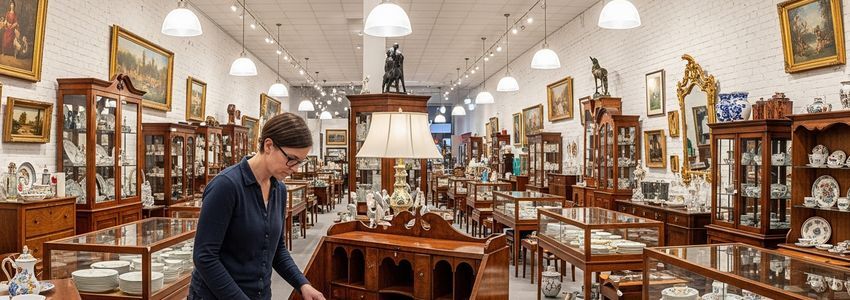
Running an antique store is a passion-driven business, but it still requires serious capital to grow. Whether you need to purchase estate lots at auction, renovate your showroom, expand to a second location, or simply manage cash flow between sales cycles, antique store business loans can provide the funding you need to keep your business thriving. This guide walks you through every financing option available to antique dealers and shop owners in 2026.
In This Article
- What Are Antique Store Business Loans?
- Key Benefits of Financing for Antique Shops
- How Antique Store Financing Works
- Types of Loans for Antique Dealers
- Best Ways to Use a Business Loan
- Who Qualifies for Antique Store Loans
- How Crestmont Capital Helps Antique Shop Owners
- Real-World Scenarios
- FAQ
- How to Get Started
What Are Antique Store Business Loans?
Antique store business loans are financing products designed to help antique dealers, vintage retailers, and collectibles shops access the capital they need to operate and grow. These loans function like standard small business loans but are applied to the unique financial demands of the antique trade: large one-time inventory purchases, seasonal fluctuations in buyer traffic, storage and display costs, and the working capital gaps that arise between acquiring stock and selling it.
Unlike industries that manufacture products with predictable costs, antique dealers often face highly variable inventory expenses. A single estate purchase at auction can cost tens of thousands of dollars. A museum-quality piece may sit in inventory for months before finding the right buyer. These characteristics make access to reliable financing especially critical for antique business owners.
The good news is that antique stores are small businesses like any other, and they qualify for a wide range of lending products including term loans, business lines of credit, inventory financing, and merchant cash advances. Lenders evaluate antique shops based on revenue, time in business, credit profile, and cash flow rather than on the specific nature of the inventory.
Industry Snapshot: The U.S. antique and collectibles market generates approximately $25 billion in annual revenue. With more than 20,000 antique stores operating nationwide, the industry represents a significant slice of America's retail economy.
Key Benefits of Financing for Antique Shop Owners
Many antique store owners initially hesitate to take on business debt, preferring to grow organically. However, strategic financing can accelerate growth significantly and protect the business from cash flow disruptions that are inherent to this industry.
- Capture estate and auction opportunities: The best inventory often appears at estate sales, liquidations, and auctions on short notice. Having access to capital means you can bid competitively and acquire high-value lots before competitors.
- Smooth seasonal cash flow: Antique shop revenue often spikes during holidays, spring estate sale season, and major local events, while slowing in off-peak months. A line of credit can bridge these gaps without disrupting operations.
- Expand inventory depth: More inventory means more sales. Financing allows you to stock your showroom more comprehensively and cater to a wider range of collectors and decorators.
- Fund renovation and display upgrades: A well-presented shop attracts more foot traffic and commands higher prices. A business loan can fund lighting improvements, display case upgrades, signage, and store layout redesigns.
- Open a second location: If your current store is performing well, a term loan can fund the security deposit, initial inventory, and buildout costs for a second location.
- Invest in e-commerce: Selling antiques online through platforms like Etsy, eBay, 1stDibs, or your own website requires investment in photography, packaging, and shipping infrastructure.
Ready to Fund Your Antique Business?
Get fast, flexible financing from the #1 business lender in the U.S. No obligation — apply in minutes.
Apply Now →How Antique Store Financing Works
The process of obtaining a business loan for your antique store is similar to the process for any retail or service business. Here is what to expect at each stage of the application and funding process.
Application
Most lenders, especially online lenders and alternative financing companies like Crestmont Capital, offer a streamlined application process. You will typically provide basic business information, your estimated annual revenue, and how long you have been in business. This can often be completed in 10-15 minutes online.
Documentation
After the initial application, lenders typically request supporting documents. For an antique store, this commonly includes three to six months of business bank statements, a copy of your business license, and sometimes recent tax returns. Lenders want to see consistent revenue deposits and manageable existing debt obligations.
Underwriting
The underwriter reviews your application to assess repayment ability. Key metrics they evaluate include your average monthly revenue, your debt service coverage ratio (DSCR), your personal and business credit scores, and how long your business has been operating. Antique stores with at least one year in business and $10,000 or more in monthly revenue often find approval relatively accessible through alternative lenders.
Offer and Approval
Once approved, you receive a loan offer detailing the amount, interest rate or factor rate, repayment term, and payment schedule. With alternative lenders, this process can take as little as 24 to 48 hours from application to approval.
Funding
Upon signing the agreement, funds are typically deposited into your business bank account within one to three business days. Some lenders can fund within 24 hours for urgent needs such as an upcoming estate auction.
Quick Guide
How Antique Store Financing Works — At a Glance
Complete a 10-minute application with basic business and revenue information.
Provide bank statements, business license, and financial records.
Receive a loan offer within 24-48 hours from alternative lenders.
Capital deposited to your account in 1-3 business days.
Types of Loans for Antique Dealers
Antique store owners have access to several different financing products, each suited to different use cases and business profiles.
Business Term Loans
A business term loan provides a lump sum of capital that you repay over a fixed period, typically six months to five years, with regular payments. Term loans are well-suited for major one-time expenditures such as purchasing a significant inventory lot, renovating your showroom, or opening a new location. Loan amounts range from $5,000 to $500,000 or more depending on your revenue and creditworthiness.
Business Line of Credit
A business line of credit functions like a credit card for your business. You are approved for a maximum credit limit and can draw from it as needed, repaying what you use and then drawing again. This revolving structure makes it ideal for antique dealers who face irregular cash flow. You only pay interest on the amount you actually use.
Inventory Financing
As the name suggests, inventory financing is specifically designed to help businesses purchase stock. The inventory itself often serves as collateral for the loan, which can make qualification easier. For antique dealers who need to purchase estate lots, auction acquisitions, or bulk merchandise, inventory financing is a natural fit.
Merchant Cash Advance (MCA)
A merchant cash advance provides a lump sum in exchange for a percentage of your future daily credit and debit card sales. MCAs are fast to obtain — sometimes funded within 24 hours — and require minimal documentation. However, the effective cost (expressed as a factor rate rather than an interest rate) is higher than traditional loans. MCAs are best for short-term cash flow needs when speed is critical.
SBA Loans
For established antique businesses with strong financials, SBA loans offer some of the most favorable interest rates and longest repayment terms available. SBA 7(a) loans can fund up to $5 million and are backed by the U.S. Small Business Administration. The tradeoff is a longer application process — typically 30 to 90 days — and stricter documentation requirements.
Equipment Financing
If your antique store needs display cases, specialized storage systems, security equipment, point-of-sale technology, or climate control systems to protect sensitive inventory, equipment financing is an ideal solution. The equipment serves as collateral, and loan amounts align directly with the equipment purchase price.
Working Capital Loans
A working capital loan covers day-to-day operational expenses such as rent, payroll, utilities, and marketing. These unsecured loans are typically repaid within 6 to 18 months. They are particularly useful during slow seasons when revenue dips but fixed expenses continue.
Pro Tip: Many antique dealers benefit from having BOTH a business line of credit (for opportunistic inventory purchases) and a term loan (for major capital investments like renovation or expansion). These products serve different purposes and can coexist in a smart financing strategy.
| Loan Type | Best For | Speed | Typical Amount |
|---|---|---|---|
| Term Loan | Renovation, expansion, large inventory | 1-5 days | $5K-$500K+ |
| Line of Credit | Cash flow gaps, opportunistic buys | 1-5 days | $10K-$250K |
| Inventory Financing | Purchasing auction lots and estate contents | 3-7 days | $5K-$300K |
| Merchant Cash Advance | Urgent cash needs, short-term gaps | 24-48 hours | $5K-$250K |
| SBA Loan | Major expansion, long-term investment | 30-90 days | Up to $5M |
| Equipment Financing | Display cases, security, POS systems | 1-5 days | $5K-$200K |
| Working Capital Loan | Rent, payroll, utilities in slow season | 1-5 days | $5K-$150K |
Best Ways to Use a Business Loan for Your Antique Store
Strategic use of borrowed capital separates antique dealers who grow sustainably from those who struggle to maintain momentum. Here are the most impactful ways to deploy business financing in an antique shop context.
Purchase Inventory at Scale
The most common use of antique store business loans is inventory acquisition. Whether you are buying at estate sales, regional auctions, dealers-only shows, or from private collectors, having cash readily available means you can move decisively. Many of the best deals in the antique trade are time-sensitive. A $40,000 estate lot that yields $90,000 in retail sales represents an excellent ROI, but only if you have the capital to bid without hesitation.
Expand Your Showroom
A larger, better-organized showroom allows you to display more inventory effectively. This translates directly to higher revenue per customer visit. Loan funds can cover construction costs, shelving, display cases, lighting improvements, and interior decoration to create an inviting shopping environment that encourages customers to linger and buy.
Upgrade Your E-Commerce Presence
The online antique market has exploded in recent years. Platforms like 1stDibs, Chairish, and eBay have democratized access to buyers worldwide. Investing in professional product photography, an upgraded website, better product description writing, and improved packaging for shipping can dramatically expand your customer base beyond your local area. Business loans can fund all of these investments upfront.
Bridge Seasonal Cash Flow Gaps
Antique retail is highly seasonal in many markets. Summer and fall estate sale seasons bring abundant inventory opportunities; spring and holiday seasons drive the highest buyer traffic. During off-peak months, a line of credit or working capital loan can cover fixed costs without depleting your cash reserves or forcing you to liquidate inventory at below-market prices.
Market Your Business
Antique store marketing often includes local advertising, antique fair booth fees, participation in regional shows, social media advertising, email marketing to past customers, and search engine optimization (SEO) for your website. A business loan dedicated to marketing can generate a measurable return in increased foot traffic and online sales.
Hire and Train Staff
Scaling from a solo operation to one with knowledgeable staff requires upfront payroll investment before new employees generate returns. Loan funds can cover the salary and training costs during the ramp-up period.
By the Numbers
Antique & Collectibles Industry — Key Data
$25B
Annual U.S. antique market revenue
20K+
Antique stores operating in the U.S.
42%
Small business loan approval rate (alt. lenders)
24hr
Funding speed with alternative lenders
Who Qualifies for Antique Store Business Loans
Qualification requirements vary by lender and loan type. Here is a general overview of what most lenders look for when evaluating an antique store for financing.
Time in Business
Most alternative lenders require at least six months to one year of business history. Traditional banks and SBA lenders typically want two or more years of operating history. If you are a newer antique store with less than a year in business, you may be limited to merchant cash advances or startup financing products.
Annual Revenue
Lenders want to see sufficient revenue to support loan repayment. Most alternative lenders have a minimum annual revenue threshold of $100,000 to $150,000, though some work with businesses generating as little as $60,000 per year. Traditional bank lenders typically require higher revenue thresholds.
Credit Score
Your personal credit score plays a significant role in most lending decisions, especially for smaller businesses. Alternative lenders often work with scores as low as 550-600, while SBA loans and traditional bank loans typically require 680 or higher. Crestmont Capital works with a wide range of credit profiles to find solutions that fit.
Cash Flow and Bank Statements
Lenders review your bank statements to understand your average monthly cash flow. They want to see regular revenue deposits, manageable overdrafts, and sufficient average daily balances. Three to six months of business bank statements is the standard documentation request.
Debt Service Coverage Ratio (DSCR)
Your DSCR measures how well your cash flow covers your existing debt obligations plus the proposed new loan payment. Most lenders want a DSCR above 1.25, meaning you generate 25% more income than needed to cover all debt payments. For more details on how this is calculated, see our guide on Debt Service Coverage Ratio (DSCR).
Tip for Antique Dealers: Antique stores are often cash-heavy businesses, which can complicate the documentation process. Make sure your bank account accurately reflects your business revenue — avoiding "under the table" cash transactions that don't appear in your deposit history will significantly improve your loan eligibility.
How Crestmont Capital Helps Antique Shop Owners
Crestmont Capital is a direct business lender with over 15 years of experience helping small business owners access the capital they need. As the #1 rated business lender in the U.S., we offer a range of financing products perfectly suited to the needs of antique dealers and collectibles retailers.
We understand that antique business owners often need capital quickly — an estate sale doesn't wait for a 90-day bank loan process. Our streamlined application takes minutes, our underwriters review applications the same day, and we can fund your account within 24 to 72 hours. We work with a wide range of credit profiles and business sizes, from solo dealers with a single storefront to multi-location antique malls.
Our financing products for antique dealers include:
- Business Line of Credit — ideal for ongoing inventory purchases and cash flow management
- Unsecured Working Capital Loans — for operating expenses and short-term needs
- SBA Loans — for major expansion and long-term investment
- Inventory Financing — specifically designed for purchasing stock
- Equipment Financing — for display cases, security systems, and technology
- Merchant Cash Advances — for urgent cash needs with fast turnaround
Don't Miss Your Next Great Find
When the perfect estate lot comes up, you need capital ready. Crestmont Capital gets you funded fast — apply today.
Apply Now →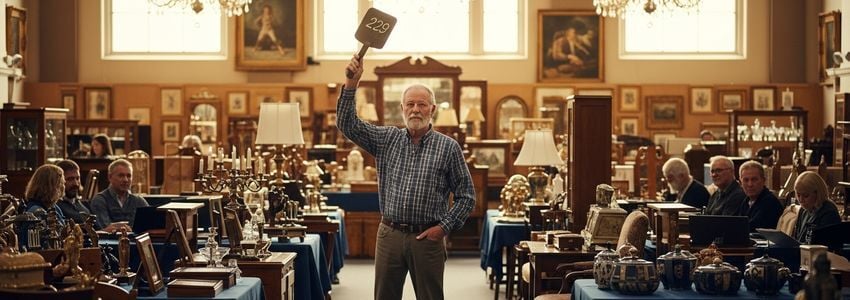
Real-World Scenarios: Antique Store Financing in Action
Understanding how other antique dealers have used business financing can help you visualize how capital might benefit your own shop.
Scenario 1: The Auction Opportunity
Michael runs a mid-sized antique store in a suburb of Pittsburgh. He receives a call about an estate sale containing over 200 pieces of mid-century modern furniture, estimated to be worth $150,000 at retail. The estate is offering the entire lot for $55,000 to a single buyer, but the sale closes in 72 hours. Michael's bank account has $12,000 in it. He contacts Crestmont Capital, applies for a $45,000 term loan, and receives approval within hours. He completes the purchase, spends two months selling the pieces, and nets a profit of $70,000 after repaying the loan. Without the financing, he would have had to pass on the opportunity entirely.
Scenario 2: The Seasonal Cash Flow Gap
Sandra owns a charming antique shop in a tourist destination in Vermont. Her business is extremely strong from May through October, when visitors flood the area. From November through April, revenue drops by 65%. Her rent, utilities, and minimal staff payroll continue through the winter. Sandra establishes a $30,000 business line of credit with Crestmont Capital at the end of the summer season. She draws on it during winter months to cover expenses and repays the draws each spring as revenue rebounds. The revolving credit line costs her only the interest on what she borrows, and it eliminates the financial stress of winter entirely.
Scenario 3: The Showroom Renovation
David's antique mall in Georgia has 4,000 square feet of showroom space that has not been updated in over a decade. He recognizes that better lighting, professional display cases, improved signage, and a redesigned floor layout could significantly increase sales per square foot. He applies for a $75,000 business term loan from Crestmont Capital. The renovation takes eight weeks to complete. In the following year, his average monthly revenue increases by 35%, more than covering the loan payments. The renovation pays for itself in less than 18 months.
Scenario 4: The E-Commerce Expansion
Patricia has been selling antique jewelry in her small New England shop for 12 years. She recognizes that her most valuable and portable inventory - estate jewelry, pocket watches, and small silver pieces - would sell exceptionally well online to a national audience. She applies for a $25,000 working capital loan to invest in professional photography equipment, a jewelry photographer's services, a redesigned website with e-commerce functionality, and six months of online advertising. Her first year of e-commerce sales exceeds $120,000, representing a 40% increase in total revenue.
Scenario 5: Opening a Second Location
James has operated a successful antique store in a thriving small city for eight years. A second storefront becomes available in the same town, near a popular farmers market and restaurant district. The security deposit, initial inventory, display fixtures, and first three months of rent for the new location total $85,000. James applies for a $100,000 SBA 7(a) loan through Crestmont Capital, using his existing business's strong revenue history as the basis for approval. The second location opens successfully and breaks even within six months.
Scenario 6: The Multi-Dealer Mall Conversion
Linda has been running a solo antique shop for years but recognizes that converting to a multi-dealer antique mall model would allow her to earn rental income from other dealers renting booth space in her building. The conversion requires new electrical work, additional display fixtures, improved security cameras, and a new point-of-sale system capable of tracking multiple vendor sales. She finances the $40,000 project with a business term loan and within a year, rental income from 18 dealers covers most of her fixed costs, significantly improving her profitability.
Frequently Asked Questions
Can antique stores qualify for business loans?
Yes. Antique stores qualify for the same business loan products available to any retail business. Lenders evaluate antique shops based on revenue, time in business, credit scores, and cash flow — not on the specific type of products sold.
What credit score do I need to get an antique store business loan?
Alternative lenders like Crestmont Capital work with credit scores as low as 550-600. Traditional bank loans and SBA loans typically require 680 or higher. The higher your credit score, the better the rates and terms you can expect.
How much can I borrow for my antique store?
Loan amounts vary widely based on your revenue and creditworthiness. Most antique stores qualify for $10,000 to $500,000 depending on the loan type. Business lines of credit typically range from $10,000 to $250,000, while term loans can go higher for established businesses with strong revenues.
How fast can I get a business loan for my antique shop?
With alternative lenders like Crestmont Capital, you can receive approval within 24 to 48 hours and funding in as little as 24 to 72 hours after approval. SBA loans take 30 to 90 days. Traditional bank loans typically take 2 to 4 weeks.
Can I get a business loan to buy inventory at auction?
Yes. Business term loans, business lines of credit, and inventory financing can all be used to purchase inventory at estate auctions. Given that auction opportunities are time-sensitive, alternative lenders who can fund within 24-72 hours are typically the best choice for these situations.
Do I need collateral to get an antique store business loan?
Not necessarily. Many working capital loans, business lines of credit, and merchant cash advances are unsecured, meaning they do not require specific collateral. For larger amounts, especially SBA loans, some collateral may be required. Equipment loans use the purchased equipment as collateral.
What documents do I need to apply for an antique store loan?
Typical requirements include three to six months of business bank statements, a business license, photo ID, and sometimes the last one to two years of business tax returns. Some alternative lenders require only bank statements and a brief application form.
Can a new antique shop with less than one year in business get a loan?
It is more challenging but not impossible. Some alternative lenders work with businesses that are at least six months old. Startup loan products and merchant cash advances have the most flexible time-in-business requirements. Building six months of strong revenue history and maintaining a good credit profile will significantly improve your options.
What interest rates can I expect on an antique store business loan?
Interest rates vary significantly by loan type, credit profile, and lender. SBA loans typically range from 6-12%. Alternative lender term loans may range from 10-30% APR. Merchant cash advances are expressed as factor rates (1.15-1.50 is common) rather than APR. Credit profile, revenue, and time in business all affect your specific rate.
What is the best type of loan for purchasing estate lot inventory?
For estate lot purchases, a business line of credit or a short-term term loan works best due to the speed of funding. Merchant cash advances are also useful for very urgent situations. Inventory financing can be appropriate for very large purchases where the inventory itself serves as collateral.
Can I use a business loan to open an online antique store?
Yes. Business loans can fund e-commerce development including website design, photography equipment and services, shipping infrastructure, and digital marketing campaigns. Working capital loans and business lines of credit are commonly used for these investments.
Does Crestmont Capital offer financing for antique multi-dealer malls?
Yes. Crestmont Capital finances all types of antique retail operations, including single-dealer shops, multi-location stores, and multi-vendor antique malls. The specific loan structure will depend on your business model, revenue, and financing needs.
How does a merchant cash advance work for antique stores?
With an MCA, a lender provides a lump sum in exchange for a percentage of your future daily credit card and debit card sales. Repayment is automatic - the lender deducts a set percentage each day your card processor processes sales. During slow sales periods, your daily repayment is lower; during busy periods, repayments are higher.
Can I refinance my antique store business loan for a lower rate?
Yes. As your business matures and your credit profile improves, you may qualify for better rates and terms. Refinancing an existing high-cost loan into a lower-rate product can reduce your monthly payments and free up cash flow. Crestmont Capital can help you evaluate whether refinancing makes sense for your situation.
What makes Crestmont Capital different from a bank for antique store loans?
Crestmont Capital is a direct lender with a streamlined application process, fast approvals (24-48 hours), and flexible qualification criteria. We do not require years of financial history for every loan product, and we work with a broader range of credit profiles than most traditional banks. Our focus is on your business's cash flow and revenue potential rather than rigid checklist-based underwriting.
How to Get Started
Complete our quick application at offers.crestmontcapital.com/apply-now — takes just a few minutes.
A Crestmont Capital advisor will review your antique store's needs and match you with the right financing option — whether that's a line of credit for auction purchases or a term loan for expansion.
Receive your funds and put them to work — often within 24-72 hours of approval. Be ready for your next estate sale opportunity.
Conclusion
Antique store business loans provide the capital that makes it possible for dealers to act decisively on the best inventory opportunities, weather seasonal downturns without stress, invest in their showroom and digital presence, and expand their operations. Whether you are looking for fast access to auction capital, a revolving line of credit for ongoing cash flow management, or a longer-term loan to fund a major business transformation, the right financing product exists for your antique shop.
Crestmont Capital specializes in small business lending and has helped thousands of retail business owners across the country access the capital they need to grow. As the #1 rated business lender in the U.S., we offer competitive rates, fast approvals, and a team of specialists who understand the unique financial dynamics of retail businesses including antique stores and collectibles dealers.
Apply today and discover how antique store business loans from Crestmont Capital can help your shop reach its full potential.
Disclaimer: The information provided in this article is for general educational purposes only and is not financial, legal, or tax advice. Funding terms, qualifications, and product availability may vary and are subject to change without notice. Crestmont Capital does not guarantee approval, rates, or specific outcomes. For personalized information about your business funding options, contact our team directly.