Dance floor rental equipment financing gives event rental companies a practical way to buy wood, vinyl, and LED dance floor systems without draining working capital. Whether you are launching a new party rental business or expanding an existing fleet to meet wedding season demand, the right financing structure lets you add inventory now and pay for it with the rental revenue it generates.
This guide breaks down how dance floor rental equipment financing works, what it costs, who qualifies, and how to compare options so you can make a confident decision before your next big booking season.
In This Article
What Is Dance Floor Rental Equipment Financing?
Dance floor rental equipment financing is a type of business equipment funding built specifically for event and party rental companies that need to purchase portable dance floor systems. Instead of paying the full purchase price out of pocket, a business works with a lender who advances the capital needed to buy the equipment, and the business repays that amount over a fixed term, typically with weekly or monthly payments.
The dance floor itself, along with any subfloor panels, edging, and connection hardware, generally serves as the collateral securing the loan. That structure is what makes this type of financing accessible to many event rental businesses, including newer companies that might not qualify for a large unsecured line of credit.
This financing can apply to classic wood and vinyl panel systems, sleek black or white gloss floors used for corporate and product launch events, and premium LED or light-up dance floors that have become a signature feature at weddings and milestone celebrations.
Key Benefits of Financing Dance Floor Equipment
Buying a commercial dance floor system outright can require anywhere from a few hundred dollars for a small vinyl panel set to tens of thousands of dollars for a full LED installation. Financing spreads that cost over time instead of requiring it all upfront.
- Preserve working capital. Keep cash available for marketing, staffing, storage, and other operational needs during your busiest booking months.
- Match payments to revenue. Many event rental businesses see seasonal demand spikes around spring and fall wedding season; financing terms can be structured to align with that cash flow pattern.
- Expand inventory faster. Add a second or third dance floor style (wood, LED, custom branded) to serve more client requests without waiting years to self-fund each purchase.
- Build business credit. On-time payments on an equipment financing account can help strengthen your business credit profile over time.
- Potential tax advantages. Financed equipment may be eligible for depreciation deductions; a qualified accountant can confirm how this applies to your business.
- Keep pace with trends. LED and interactive dance floors are increasingly requested at weddings and corporate events; financing makes it easier to add trending inventory without a large cash outlay.
Key Stat: The event planning and rental services sector is a meaningful part of the broader U.S. events economy, and industry data consistently shows access to capital remains a top constraint for small event businesses looking to expand inventory ahead of peak booking seasons.
Ready to Expand Your Event Rental Inventory?
Get fast, flexible equipment financing from the #1 business lender in the U.S. No obligation, apply in minutes.
Apply Now →How Dance Floor Rental Equipment Financing Works
The process is similar across most equipment financing lenders, though specific terms and documentation requirements vary. Here is the general path from application to funded equipment.
Quick Guide
How Dance Floor Equipment Financing Works, At a Glance
Choose your dance floor system and get a written quote or invoice from the manufacturer or supplier.
Provide basic business details, recent bank statements, and the equipment quote to the lender.
Review the term length, payment schedule, and total financed cost before signing.
The lender funds the vendor directly, and your dance floor system ships to your warehouse or storage facility.
You begin fixed payments while generating rental revenue from the new equipment.
Approval decisions for smaller equipment amounts can often come back within a day or two, while larger purchases, such as a full LED dance floor system priced above $25,000, may take a bit longer due to additional underwriting steps. Business owners researching options can also review general SBA loan program guidance to understand how government-backed financing compares with direct equipment financing for larger purchases.
Types of Dance Floor Equipment You Can Finance
Not every dance floor rental business needs the same equipment. Understanding the main categories helps you decide what to finance first.
Classic Wood and Vinyl Panel Floors
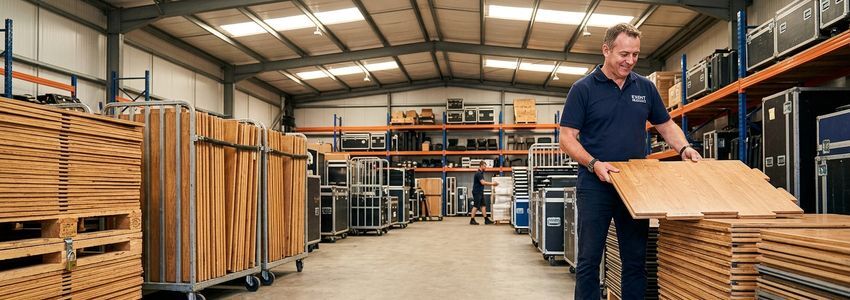
These modular panel systems, often sized in 1x1, 3x3, or 4x4 foot sections, remain the most commonly rented option for weddings, receptions, and corporate dinners. Purchase costs typically range from $2 to $8 per square foot depending on finish quality, making a standard 12x12 foot floor a few hundred to a few thousand dollars to acquire.
Black and White Gloss Floors
Gloss finish floors create a sleek, modern look favored for product launches, galas, and upscale corporate events. These tend to carry a slightly higher per-square-foot cost than standard wood finishes due to the reflective surface treatment.
LED and Light-Up Dance Floors
Interactive LED floors have become one of the most requested upgrades for weddings and milestone celebrations. Entry-level LED systems can start around $2,500, while larger magnetic-connection systems with full programmability can run from roughly $12,000 to $35,000 or more depending on size. Because of the higher price point, LED systems are a common target for equipment financing rather than outright cash purchase.
Custom Branded and Printed Floors
Vinyl wrap and custom print dance floors let event companies offer monogrammed or fully branded surfaces for weddings and corporate activations. Custom full-color print designs can range from roughly $2,500 to $5,000 or more for standard sizes.
Subfloors and Leveling Systems
For outdoor events on grass or uneven ground, a plywood or engineered subfloor system is often required underneath the dance floor itself. These leveling systems are frequently bundled into the same equipment financing package since they are essential for outdoor bookings.
Transport and Storage Equipment
Dollies, carts, and enclosed trailers used to move and store dance floor panels can often be included in the same financing arrangement, since they are necessary to deliver, install, and retrieve the equipment at each event.
Who This Financing Is Best For
Dance floor rental equipment financing tends to be the strongest fit for:
- New event rental companies launching with limited startup capital who need inventory before they can generate rental revenue.
- Established party rental businesses looking to add a second dance floor style, such as LED, to capture higher-margin bookings.
- Wedding and event planning companies expanding from planning services into owning their own rental inventory.
- Venue operators such as banquet halls, hotels, and event centers that want to offer in-house dance floor rentals instead of outsourcing to third parties.
- Mobile DJ and entertainment companies adding dance floor packages to existing sound and lighting service offerings.
Financing vs. Leasing vs. Paying Cash
Business owners generally have three paths to acquiring dance floor equipment: financing, leasing, or paying cash upfront. Each has tradeoffs worth understanding before committing.
| Option | Ownership | Upfront Cost | Best For |
|---|---|---|---|
| Equipment Financing | You own it after term ends | Low to none | Businesses planning to use equipment long-term |
| Equipment Leasing | Lender retains ownership | Typically lowest | Businesses wanting to upgrade equipment frequently |
| Paying Cash | Immediate full ownership | Full purchase price | Businesses with substantial cash reserves to spare |
Financing generally makes the most sense when you plan to keep and use the dance floor system for multiple seasons, since every payment builds toward full ownership. Leasing can be a better fit if you expect to swap in newer LED technology every couple of years and prefer lower monthly payments over ownership.
How Crestmont Capital Helps
Crestmont Capital works with event and party rental business owners to structure equipment financing around the realities of seasonal booking cycles. Rather than a one-size-fits-all loan product, financing terms can be tailored to your business's cash flow pattern, whether that means lighter payments during slower winter months and higher capacity during peak wedding season.
For businesses that prefer lower monthly payments or plan to refresh their dance floor inventory on a shorter cycle, equipment leasing is also available as an alternative structure. Event rental companies that are just getting started, or that have less-than-perfect credit, may also want to explore used equipment financing options for previously owned dance floor systems and transport equipment, which can lower the total amount financed.
If your event rental business is also adding complementary inventory, Crestmont Capital has published detailed financing guides on related equipment categories, including tent and canopy rental financing and balloon arch and event decor equipment financing, both of which are commonly bundled with dance floor rentals for the same client events.

Crestmont Capital's application process is designed to move quickly, with most equipment financing decisions for straightforward requests returned within one to three business days. The goal is to get your dance floor system ordered, delivered, and ready for your next booked event with minimal delay.
Book More Events With the Right Inventory
Crestmont Capital helps event rental businesses finance the equipment they need to grow. See what you qualify for today.
Apply Now →Pro Tip: Ask your dance floor vendor for a written quote before applying. Lenders can often move faster and offer more accurate terms when the exact equipment cost and specifications are already documented.
Real-World Scenarios
The following scenarios illustrate how event rental business owners commonly use dance floor rental equipment financing. These are illustrative examples and do not represent guaranteed outcomes, terms, or approval.
Scenario 1: The New Business Launch
A first-time entrepreneur plans to launch a wedding and event rental company but has limited startup savings. Rather than waiting years to save for a full dance floor inventory, she finances a 12x12 vinyl panel system and a basic LED floor together, using the equipment as collateral, and begins booking her first weddings within weeks of approval.
Scenario 2: The Seasonal Expansion
An established party rental company notices client requests for LED dance floors have doubled over the past two wedding seasons. Instead of turning down those bookings or subcontracting to a competitor, the owner finances a larger LED system ahead of peak season, repaying the equipment cost with the additional rental revenue those bookings generate.
Scenario 3: The Venue Upgrade
A banquet hall that previously outsourced dance floor rentals to a third-party vendor decides to bring that revenue in-house. By financing their own dance floor inventory, the venue captures the rental fee directly instead of splitting it with an outside company, improving margins on every event booked at the facility.
Scenario 4: The Equipment Refresh
A ten-year-old event rental business has aging wood panel floors showing visible wear that clients have started to notice in photos. The owner finances a full replacement set of modern gloss-finish panels, protecting the company's reputation for high-end events without pulling cash from reserves set aside for payroll and insurance.
Scenario 5: The Multi-Category Bundle
A growing event company finances a dance floor system alongside a tent and canopy package and a balloon arch display kit in a single application, consolidating multiple equipment purchases into one predictable payment schedule instead of managing several separate vendor invoices.
Next Steps
Get Started
Three Steps to Financing Your Dance Floor Equipment
Contact your preferred dance floor manufacturer or supplier for a written price quote.
Submit your application with basic business details and recent bank statements.
Once approved, your equipment is ordered and delivered so you can begin accepting event bookings.
Your Next Booking Season Starts With the Right Equipment
Don't let limited cash flow hold back your event rental business. Explore dance floor rental equipment financing today.
Apply Now →Frequently Asked Questions
Conclusion
Dance floor rental equipment financing gives event and party rental business owners a practical, structured way to acquire wood, vinyl, gloss, and LED dance floor systems without tying up cash reserves. Whether you are launching a new event rental company or expanding an established fleet ahead of wedding season, financing can turn a costly equipment purchase into a manageable monthly payment backed by the revenue that equipment generates.
Business owners researching broader small business funding trends can also review resources from the U.S. Census Bureau's Statistics of U.S. Businesses and small business financing coverage from Forbes to understand how access to capital affects growth across service-based industries like event rentals.
If you are ready to explore dance floor rental equipment financing for your business, Crestmont Capital can walk you through available options and help you find a structure that fits your booking calendar and budget.
Disclaimer: The information provided in this article is for general educational purposes only and is not financial, legal, or tax advice. Funding terms, qualifications, and product availability may vary and are subject to change without notice. Crestmont Capital does not guarantee approval, rates, or specific outcomes. For personalized information about your business funding options, contact our team directly.