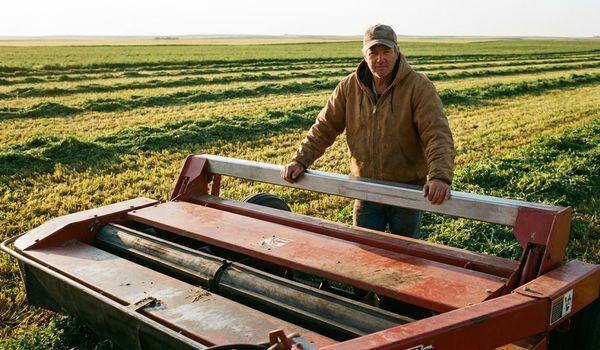
Short-term equipment leasing gives business owners access to the tools, machinery, and technology they need without committing to a long-term contract or draining their working capital. Whether you are managing a seasonal spike, piloting new equipment before buying, or responding to an unexpected project opportunity, short-term leasing can be one of the most flexible and cost-effective financing strategies available to small and mid-sized businesses.
Understanding when short-term equipment leasing is the right move — and when it is not — can help you make smarter financial decisions that protect your cash flow and keep operations running at full capacity. This guide breaks down the core scenarios, benefits, trade-offs, and real-world applications of short-term equipment leasing so you can decide if it fits your business today.
In This Article
- What Is Short-Term Equipment Leasing?
- When Short-Term Leasing Makes the Most Sense
- How Short-Term Equipment Leasing Works
- Key Benefits of Short-Term Equipment Leasing
- Types of Short-Term Leasing Arrangements
- Short-Term Leasing vs. Other Financing Options
- Who Qualifies for Short-Term Equipment Leasing?
- Industries That Benefit Most
- Real-World Scenarios
- Potential Drawbacks to Consider
- How Crestmont Capital Can Help
- Frequently Asked Questions
- How to Get Started
What Is Short-Term Equipment Leasing?
Short-term equipment leasing is a financing arrangement in which a business rents equipment for a defined period — typically ranging from a few weeks to 24 months — rather than purchasing it outright or entering a multi-year lease agreement. At the end of the lease term, the business returns the equipment, renews the agreement, or in some cases, exercises a purchase option.
Unlike long-term leases that may stretch to five or seven years, short-term arrangements are designed around flexibility. They allow businesses to match equipment access to the actual duration of the need, rather than locking in payments long after the equipment has served its purpose. The lessor retains ownership throughout, and the lessee simply pays for the right to use the asset.
Short-term leasing is distinct from equipment rentals primarily in terms of structure: lease agreements often include defined obligations, terms, and end-of-lease options, while pure rentals tend to be more informal and day-to-day. For businesses that need equipment for a predictable but temporary window — such as a construction project, a seasonal rush, or a product launch — short-term leasing strikes the ideal balance between commitment and flexibility.
Key Stat: According to the Equipment Leasing and Finance Association (ELFA), over 80% of U.S. companies use some form of equipment financing or leasing, with short-term and flexible arrangements growing in popularity among businesses with variable revenue cycles.
When Short-Term Leasing Makes the Most Sense
There is no one-size-fits-all answer to when short-term equipment leasing is beneficial. The right moment depends on your cash flow, operational needs, technology cycle, and business growth stage. However, several clear scenarios consistently favor the short-term approach over purchasing or long-term leasing.
Seasonal Business Demand
If your revenue spikes during specific months and drops significantly during others, owning equipment year-round often means carrying an expensive asset that sits idle for months. Short-term leasing aligns your equipment costs directly with your revenue-generating periods. A landscaping company might lease additional mowers and trimmers for spring and summer. A holiday retailer might lease extra POS terminals and display fixtures for Q4. A catering company might lease commercial kitchen equipment for high-volume wedding or event seasons.
By timing lease agreements to your actual busy periods, you avoid the financial drag of depreciation, maintenance, and storage costs on idle equipment during your off-season. This keeps your break-even point lower and your profit margins healthier.
Project-Based Equipment Needs
Many businesses take on specific contracts or projects that require specialized equipment for a defined period. A general contractor winning a bridge repair project may need heavy excavation equipment for six months. A production company shooting a major commercial campaign may need professional-grade lighting and camera rigs for eight weeks. An IT firm onboarding a large client may need server infrastructure for 12 months while the client transitions to cloud-based systems.
In each case, owning the equipment makes no financial sense — the useful life of the asset extends far beyond the project's scope, leaving the business with capital tied up in depreciating assets it no longer needs. Short-term leasing structures costs precisely around the project window, aligning expenses with revenue.
Testing New Equipment Before Committing
Technology evolves rapidly, and investing six figures in machinery that turns out to be a poor fit for your operations is a costly mistake many businesses have made. Short-term leasing allows you to test new equipment — a new CNC router, a next-generation MRI scanner, a more efficient conveyor system — in your actual operating environment before deciding whether to purchase, enter a long-term lease, or move on.
This "try before you buy" approach is especially valuable when adopting automation technologies, specialized diagnostic equipment, or production machinery where operator learning curves and integration challenges may not become apparent until the equipment is in real-world use.
Bridging Equipment Gaps During Repairs or Replacements
When a critical piece of equipment breaks down unexpectedly and repairs will take weeks, or when replacement equipment has a lead time of several months, short-term leasing fills the gap. Losing production capacity for weeks or months due to a broken piece of equipment can be far more expensive than the cost of a short-term lease. Restaurants, manufacturers, medical practices, and logistics companies frequently use short-term leasing as a bridge when primary equipment is unavailable.
Rapid Business Growth Outpacing Capital
Fast-growing businesses often face a situation where revenue growth outpaces available capital. A company scaling from $500,000 to $2 million in annual revenue may have the demand to justify new equipment but lack the balance sheet strength to purchase it outright or qualify for a traditional long-term financing arrangement. Short-term leasing provides access to necessary capacity without a heavy upfront burden, allowing the business to grow into its cash flow before making larger commitments.
Need Equipment Access Without the Long-Term Commitment?
Crestmont Capital offers flexible equipment leasing and financing solutions tailored to your business timeline. Apply in minutes — no obligation.
Apply Now →How Short-Term Equipment Leasing Works
The process of entering a short-term equipment lease is straightforward, and many arrangements can be structured and approved within days. Here is a general overview of how it works from start to finish.
Quick Guide
How Short-Term Equipment Leasing Works — At a Glance
Define exactly what equipment you need, for how long, and what performance specifications are required.
Submit a lease application with basic business and financial information. Approval timelines are often 24-72 hours.
Confirm the term length, monthly payment, maintenance responsibilities, and end-of-lease options before signing.
Equipment is delivered, installed, or made available. You begin operations immediately and make scheduled payments.
Return the equipment, extend the lease, or exercise a purchase option if one is available in your agreement.
Key Benefits of Short-Term Equipment Leasing
Short-term equipment leasing carries a range of financial and operational advantages that make it attractive across industries and business sizes. The most significant benefits include:
- Cash Flow Preservation: Instead of a large upfront purchase, you spread costs across manageable monthly payments, keeping more cash available for payroll, inventory, and operating expenses.
- No Obsolescence Risk: When the lease ends, you return the equipment and can upgrade to newer models — ideal in fast-moving technology sectors where equipment can become outdated quickly.
- Flexible Terms: Short-term leases can often be structured to match your project timeline, seasonal window, or trial period with greater flexibility than traditional loans.
- Lower Qualification Barriers: Leasing can be more accessible than purchase loans for businesses with limited credit history or those in earlier growth stages, as the lessor retains ownership as collateral.
- Predictable Costs: Fixed monthly lease payments make budgeting easier and reduce the financial uncertainty associated with owning aging equipment that requires unpredictable repair costs.
- Potential Tax Treatment: In many cases, lease payments may be deductible as a business operating expense. Consult your tax advisor for specifics applicable to your situation.
- Rapid Access: Short-term leases are typically faster to approve and fund than purchasing, allowing you to respond to opportunities and emergencies quickly.
Pro Tip: When evaluating a short-term lease, always calculate the total cost of the lease versus the cost of ownership over the same period. Include maintenance, insurance, and depreciation in your ownership cost analysis for an accurate comparison.
Types of Short-Term Leasing Arrangements
Not all short-term equipment leases are identical. The structure that makes most sense for your business will depend on your end goal, the type of equipment, and your financial position.
Operating Lease
An operating lease is the most common type for short-term arrangements. The lessor retains ownership and the risks associated with ownership, while the lessee pays for use. At the end of the term, the equipment is returned. Operating leases are typically off-balance-sheet in many accounting contexts, though this can vary based on current GAAP standards — consult your accountant for specifics.
Month-to-Month Lease
Some equipment providers offer month-to-month lease agreements, which provide maximum flexibility. These arrangements can be terminated with relatively short notice, making them ideal for businesses with uncertain project timelines or demand fluctuations they cannot predict more than a few weeks in advance.
Sale-Leaseback
In a sale-leaseback, a business sells equipment it already owns to a leasing company and then leases it back. This structure unlocks capital tied up in existing assets while allowing the business to continue using the equipment. For businesses needing short-term liquidity without disrupting operations, a sale-leaseback can be an effective solution.
Rent-to-Own with Short-Term Path
Some agreements begin as short-term leases with an embedded option to purchase at the end of the term. These arrangements are useful when a business wants to evaluate the equipment before committing to ownership but wants the option available if the equipment proves valuable.
Short-Term Leasing vs. Other Financing Options
It is useful to compare short-term equipment leasing directly to other methods of accessing equipment so you can choose the approach that best serves your business needs and financial position.
| Feature | Short-Term Lease | Long-Term Lease | Equipment Purchase | Rental |
|---|---|---|---|---|
| Typical Duration | 1-24 months | 24-84 months | Permanent | Days to weeks |
| Upfront Cost | Low (1st/last payment) | Low to moderate | High (full price or down) | Very low |
| Flexibility | High | Low | Low (hard to liquidate) | Very high |
| Ownership | Lessor | Lessor | Business | Rental company |
| Upgrade Ability | Easy at term end | Difficult mid-term | Must sell/trade | Immediate |
| Cost Per Month | Moderate to high | Lower long-term | Loan payment + maint. | Highest per-day rate |
| Best For | Seasonal, project, trials | Long-term operational needs | Core, long-use assets | Immediate, very short needs |
By the Numbers
Short-Term Equipment Leasing — Key Statistics
80%+
of U.S. companies use equipment financing or leasing in some form
$1T+
in equipment financed annually across all U.S. industries (ELFA)
24-72 hrs
Typical approval window for equipment lease applications with alternative lenders
30%+
of small businesses cite cash flow as the primary reason they choose leasing over buying
Who Qualifies for Short-Term Equipment Leasing?
Short-term equipment leasing has more flexible qualification criteria than many other financing products, which is part of its appeal for businesses at various stages of growth. Generally, lenders and lessors will evaluate:
Business Credit and Financial History
While some lenders look at personal credit for newer businesses, established companies are more often evaluated on their business credit profile. Strong payment history with suppliers and lenders, combined with solid revenue, increases approval odds and can lead to more favorable terms.
Time in Business
Most traditional lessors prefer businesses that have been operating for at least 12-24 months. However, some alternative lenders and equipment finance companies will work with businesses as early as 6 months in operation, particularly if revenue trends are strong and the need for equipment is clearly tied to business activity.
Revenue and Cash Flow
Lenders want to see that your business generates sufficient revenue to cover monthly lease payments comfortably. Typical minimum thresholds vary by lender, but annual revenues of $100,000 or more are commonly sought for larger equipment arrangements.
Industry and Equipment Type
Certain industries and equipment types are viewed as higher risk — cannabis, adult entertainment, or highly specialized machinery with limited resale value, for example. Standard commercial equipment in established sectors (construction, food service, healthcare, transportation) tends to qualify more easily and at better rates.
Key Insight: For businesses with limited credit history, offering a larger security deposit or the first and last month's payment upfront can significantly improve approval odds for short-term equipment lease applications.
Industries That Benefit Most from Short-Term Equipment Leasing
While virtually any industry can benefit from short-term leasing under the right circumstances, certain sectors rely on it as a regular part of their operations strategy.
Construction and General Contracting
Construction companies frequently face project-specific equipment needs. A residential builder might need a specific size of excavator for a foundation job but return it once the foundation is complete. Short-term leasing is almost a standard operating practice in construction because projects vary in scope, timeline, and equipment requirements. Crestmont Capital specializes in construction equipment financing and leasing for businesses of all sizes.
Healthcare and Medical Practices
Medical practices sometimes need specialized diagnostic or treatment equipment for a temporary period — covering for a machine being repaired, supporting a temporary specialist's clinic, or piloting new technology. Short-term leasing enables healthcare providers to maintain service quality without lengthy procurement processes. Learn more about medical equipment financing and leasing options available through Crestmont Capital.
Food Service and Restaurants
Restaurant owners expanding for a catering event, adding temporary outdoor service, or upgrading kitchen equipment ahead of a renovation can benefit from short-term leasing. The industry's thin margins make cash flow management critical, and short-term leasing reduces the risk of over-committing capital. Crestmont offers dedicated restaurant equipment financing and leasing programs.
Retail and E-Commerce
Retailers scaling up for the holiday season or a major sale event may need additional POS systems, display fixtures, or warehouse equipment. Short-term leasing aligns costs precisely with the seasonal revenue opportunity rather than requiring year-round financing for temporary needs.
Logistics and Transportation
Transportation companies winning a new distribution contract may need additional trucks or handling equipment for the contract duration. Leasing provides the capacity without permanently expanding the fleet. Explore commercial truck financing and leasing solutions designed for logistics businesses.
Manufacturing
Manufacturers receiving a large one-time order that exceeds their current capacity can lease additional production equipment for the fulfillment period rather than purchasing machinery that will sit idle after the order is complete. Crestmont provides manufacturing equipment financing and leasing tailored to these operational patterns.
Ready to Access the Equipment Your Business Needs?
Crestmont Capital is the #1 rated U.S. business lender. Get matched with the right equipment financing option in minutes — no hassle, no obligation.
Get Your Quote →
Real-World Scenarios Where Short-Term Leasing Wins
Abstract benefits become clearer through concrete examples. Here are several real-world scenarios that illustrate when short-term equipment leasing provides a clear financial advantage.
Scenario 1: The Seasonal Landscaping Company
A mid-sized landscaping company based in the Midwest earns 70% of its annual revenue between March and October. It currently owns two commercial riding mowers but wins several large contracts in spring that require a third machine. Rather than purchasing a $28,000 mower that will sit in storage for six months each year, the company enters an 8-month lease at $650 per month. Total lease cost: $5,200 — compared to $28,000 plus storage, insurance, and maintenance on a year-round basis. The decision preserves over $20,000 in capital while fully meeting seasonal demand.
Scenario 2: The Restaurant Expanding for a Private Event Contract
A catering business wins a contract to provide food service for a series of large corporate events over nine months. The contract requires commercial holding units and serving equipment the company does not currently own. Rather than purchasing $18,000 in equipment for a nine-month contract, the owner leases it for $900 per month — an $8,100 outlay against contract revenue of over $95,000. The lease cost is minimal, the equipment is returned after the contract concludes, and the business's cash reserves remain intact.
Scenario 3: The Dental Practice Bridging for Repair
A dental practice's primary X-ray unit develops a critical malfunction and requires a 10-week manufacturer repair. Rather than turning away patients and losing revenue during the repair window, the practice arranges a short-term lease on a comparable unit for 12 weeks while the repair is completed. The lease cost is well below the lost revenue that would result from canceling patient appointments, and patient care continuity is maintained.
Scenario 4: The IT Firm Testing Automation Equipment
An IT services firm is evaluating whether to integrate physical server infrastructure into its service delivery model or remain cloud-only. Rather than committing $75,000 to equipment before validating the business model, the firm enters a 12-month lease agreement. By the end of the lease, they have sufficient data on client demand and cost efficiency to make a fully informed decision — whether to purchase, extend the lease, or return the equipment.
Scenario 5: The Construction Company Winning a Major Bid
A general contractor bids on and wins a $2.1 million highway rehabilitation project that requires specialized pavement equipment it does not own. The equipment is needed for 14 months. Purchasing would cost $320,000 with uncertain resale value after the project. A short-term lease is arranged for $9,800 per month — a total of $137,200 for the project duration. The lease cost is built into the project bid, equipment is returned when the project concludes, and the company's balance sheet is not encumbered by a depreciating specialty asset.
Scenario 6: The Startup Growing Faster Than Its Capital
A food production startup lands its first retail distribution deal with a regional grocery chain, requiring a tripling of production capacity within 60 days. The company cannot qualify for a traditional equipment loan given its 18-month operating history, but a short-term lease arrangement with a flexible lender provides access to the industrial mixers and packaging equipment needed. The lease payments are covered by the new distribution revenue, and the company establishes a payment track record that positions it for more favorable financing in the future.
Potential Drawbacks to Consider
Short-term equipment leasing is not universally the right choice. Understanding the trade-offs will help you make a balanced decision.
Higher Per-Month Cost Than Long-Term Leasing
Because the lessor is distributing their return over a shorter period, short-term lease payments are typically higher on a month-by-month basis than equivalent long-term agreements. If you are confident that equipment will be needed for three to five years, a long-term lease will almost always be more cost-effective.
No Equity or Ownership Built
Unlike purchasing equipment — whether with cash or a loan — leasing does not build ownership equity. At the end of the term, you have no asset on your balance sheet. For businesses in industries where equipment holds its value well, ownership may be strategically preferable.
Usage Restrictions
Many lease agreements include restrictions on how equipment can be used, where it can be operated, and what modifications can be made. Businesses with unusual or intensive usage requirements should review lease terms carefully to avoid excess wear charges or contract violations.
Early Termination Costs
Ending a lease before its stated term typically incurs penalties, sometimes equivalent to the remaining balance of payments. If your business situation changes and you no longer need the equipment, exiting the lease early can be expensive. Month-to-month arrangements mitigate this risk but may carry higher per-month rates.
For businesses where long-term ownership makes more strategic sense, Crestmont Capital's equipment financing programs offer competitive loan structures that combine the benefits of financing with eventual ownership — a strong alternative when equipment needs are stable and long-term.
How Crestmont Capital Can Help
Crestmont Capital has helped thousands of small and mid-sized businesses across the United States access the equipment they need to operate and grow — from construction machinery and restaurant equipment to medical devices and transportation fleets. As a nationally recognized business lender, Crestmont offers equipment financing and leasing solutions tailored to the specific needs of each industry and business stage.
Whether you need short-term leasing to cover a seasonal rush, bridge a repair gap, or pilot new technology before committing, or whether you are looking for a longer-term financing solution that builds toward ownership, Crestmont's team of advisors will work with you to structure the right arrangement. The application process is fast, straightforward, and designed to get decisions quickly so your business is never waiting for the equipment it needs to run.
Explore our full range of equipment leasing solutions or visit our small business financing hub to learn about all the ways Crestmont can support your growth.
Apply for Equipment Financing with Crestmont Capital
Fast decisions. Flexible terms. The #1 business lender in America. Apply now and receive your financing offer within 24 hours.
Apply Now →Frequently Asked Questions
What is considered short-term in equipment leasing?
Short-term equipment leasing generally refers to arrangements lasting from a few weeks up to 24 months. Agreements under 12 months are considered very short-term, while 12 to 24 months fall in the short-to-medium range. Anything beyond 24 months is typically classified as a long-term or standard equipment lease.
Is short-term equipment leasing more expensive than long-term?
On a per-month basis, yes — short-term lease payments are typically higher because the lessor is recovering their cost and profit over a shorter period. However, when you only need equipment for a limited time, the total cost of a short-term lease can be far lower than owning equipment you will not use long-term. The comparison should always be based on total cost of ownership versus total lease cost over the relevant period.
Can a startup qualify for short-term equipment leasing?
Yes, though qualification criteria vary by lender. Some alternative and equipment-specific lessors work with businesses as young as 6 months if revenue is demonstrable and the equipment being leased has clear commercial value. Startups may face higher monthly rates or requirements for a larger security deposit. Having strong personal credit as an owner can also improve approval odds for newer businesses.
What happens at the end of a short-term lease?
At the end of a short-term lease, you typically have three options: return the equipment to the lessor, extend the lease for an additional term (often on a month-to-month or renewed short-term basis), or exercise a purchase option if one was included in the original agreement. The right choice depends on whether your need for the equipment has changed and what the purchase price versus market value comparison looks like.
Does short-term leasing appear on a business credit report?
Whether a lease appears on your business credit report depends on the lender and whether they report to business credit bureaus. Some lessors do report, and making timely payments can help build your business credit profile. Defaulting on a lease will typically be reported and negatively affect your credit. Always confirm with the lessor whether they report lease activity to credit agencies.
What types of equipment can be leased short-term?
Almost any business equipment can be leased short-term, including construction machinery, medical devices, restaurant equipment, vehicles, office technology, manufacturing tools, agricultural equipment, and more. Equipment with strong resale value and broad market demand is generally easier to lease and tends to attract better rates. Highly specialized or niche equipment may require lessors who focus on specific industries.
Can I cancel a short-term lease early?
Most lease agreements include early termination clauses that require payment of remaining lease obligations or a specific termination fee. The exact terms vary by agreement. If you anticipate your need may be uncertain in duration, negotiating early termination provisions or opting for a month-to-month arrangement from the outset can provide additional flexibility — though often at a higher monthly rate.
How does short-term leasing affect cash flow compared to buying?
Leasing significantly reduces the immediate cash flow impact versus purchasing. Buying equipment requires either a lump-sum payment or a down payment plus loan origination, whereas leasing typically requires only the first month's payment (and sometimes last month's) upfront. This keeps significantly more cash available for daily operations, payroll, and other critical needs — which is especially important for businesses managing tight working capital cycles.
Who is responsible for maintenance on leased equipment?
This depends on the lease agreement terms. In an operating lease, the lessor often retains responsibility for major maintenance and repairs, while the lessee is responsible for routine upkeep and returning the equipment in agreed-upon condition. In other arrangements, the lessee assumes full maintenance responsibility. Review the maintenance provisions carefully before signing any lease agreement to avoid unexpected costs.
Is short-term equipment leasing better than a business loan for temporary needs?
For purely temporary needs, short-term leasing is generally more efficient than a business loan used to purchase equipment. A loan gives you ownership — which is valuable if you plan to use the equipment long-term — but the loan must be repaid regardless of how long you actually use the equipment. Leasing aligns payment obligations precisely with the period of use. For longer-term needs, a loan with ownership may be more economical overall.
Do I need insurance on leased equipment?
Yes, virtually all lease agreements require the lessee to carry insurance on the leased equipment — typically naming the lessor as an additional insured. This usually includes property damage and liability coverage. The specific requirements vary by equipment type and lessor, so confirm insurance obligations before signing. Failure to maintain required insurance can put you in breach of the lease agreement.
How quickly can I get approved for a short-term equipment lease?
With alternative and equipment-focused lenders like Crestmont Capital, approval timelines of 24 to 72 hours are common for equipment leases that fall within standard underwriting parameters. Larger transactions or more complex equipment types may take a few business days. Traditional banks typically have longer approval processes, making alternative lenders a preferred choice when speed is important.
What credit score is needed for short-term equipment leasing?
Minimum credit score requirements vary significantly by lender. Traditional bank lessors may require personal or business credit scores of 680 or above. Alternative equipment lessors often work with credit scores as low as 550-600, particularly for shorter-term arrangements or lower-value equipment. Providing additional documentation of revenue stability can offset lower credit scores in many cases.
Can I lease used equipment short-term?
Yes, used equipment can be leased in many short-term arrangements. Leasing used equipment typically carries lower monthly payments than leasing new equipment of the same type, which can make it attractive for businesses that need functionality over the latest technology. Ensure that any used equipment being leased comes with adequate service history and warranty provisions, and that the lessor or vendor has inspected its condition before the lease commences.
Should I choose leasing or purchasing if I need the equipment for more than two years?
If your equipment need extends reliably beyond 24 months, a long-term lease or purchase with financing is typically more cost-effective than a series of short-term arrangements. Long-term leases have lower monthly payments, and purchasing with an equipment loan builds equity while locking in a fixed cost basis. Short-term leasing makes most sense when the duration of need is genuinely uncertain or definitively temporary. For long-term needs, contact Crestmont Capital to discuss equipment financing and long-term leasing structures that may provide better total economics.
How to Get Started
Complete our quick application at offers.crestmontcapital.com/apply-now — takes just a few minutes and requires no obligation.
A Crestmont Capital advisor will review your equipment need, timeline, and financial situation to match you with the right lease or financing structure.
Once approved, your equipment is made available quickly so your business can operate at full capacity without delay. Start generating revenue with the right tools in hand.
Conclusion
Short-term equipment leasing is a powerful, flexible tool when used in the right circumstances. Whether you are managing seasonal demand, completing a specific project, bridging a gap during repairs, or testing new technology before making a long-term commitment, short-term leasing gives you access to the equipment you need without overcommitting capital or locking into obligations that outlast your need.
The key is matching the structure to the situation. For genuinely temporary needs, short-term leasing consistently delivers better financial outcomes than purchasing. For long-term operational requirements, other structures may make more sense — and Crestmont Capital offers the full range of options to help you find the right fit. When you are ready to explore your options, our team is here to help you move quickly and confidently.
Disclaimer: The information provided in this article is for general educational purposes only and is not financial, legal, or tax advice. Funding terms, qualifications, and product availability may vary and are subject to change without notice. Crestmont Capital does not guarantee approval, rates, or specific outcomes. For personalized information about your business funding options, contact our team directly.