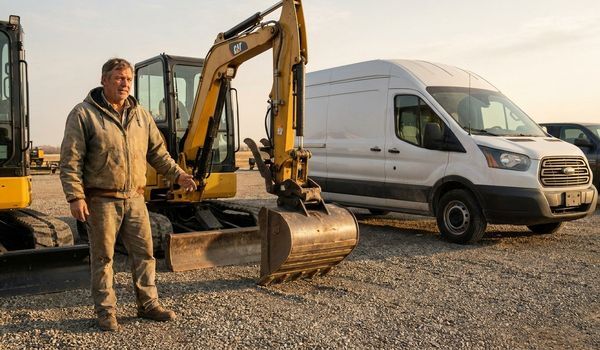
When your equipment lease reaches its end date, you have a critical decision to make: walk away, renew, or buy the equipment outright. Understanding equipment lease buyout options is one of the most valuable skills any business owner can develop, because making the wrong choice can cost thousands of dollars and disrupt daily operations. Whether you are leasing commercial kitchen equipment, construction machinery, medical devices, or office technology, knowing the buyout structures available to you puts you firmly in control of your financial future.
This guide walks through every major lease buyout option available to U.S. businesses, explains how each structure works, and helps you determine which path makes the most sense for your specific situation. We will also cover how Crestmont Capital helps businesses navigate equipment financing from initial lease to long-term ownership.
In This Article
- What Is an Equipment Lease Buyout?
- The Three Main Lease Buyout Structures
- Dollar Buyout Leases Explained
- Fair Market Value Buyout Leases
- Fixed Percentage Buyout Leases
- Comparing All Three Options
- Buyout Options at a Glance
- How to Decide Which Buyout Is Right for You
- Negotiating Your Equipment Lease Buyout
- How Crestmont Capital Helps
- Real-World Scenarios
- Frequently Asked Questions
- How to Get Started
What Is an Equipment Lease Buyout?
An equipment lease buyout is the option to purchase leased equipment from the lessor at the conclusion - or sometimes during - a lease agreement. Rather than returning the equipment and walking away, you pay an agreed-upon price to take full ownership. This arrangement is common across nearly every industry, from restaurants and healthcare to manufacturing and transportation.
Lease buyout terms are negotiated and written into your original lease agreement. That means understanding the buyout structure before you sign is just as important as understanding the monthly payment. Businesses that skip this step often find themselves surprised when their $400-per-month lease on a commercial oven ends with a $12,000 balloon payment - or alternatively, a $1 formality that transfers ownership immediately.
Buyout provisions fall into three primary categories: the dollar buyout (also called the $1 buyout), the fair market value (FMV) buyout, and the fixed-percentage buyout. Each has distinct advantages depending on how long you plan to keep the equipment, your cash flow situation, and how quickly the equipment depreciates.
Key Fact: According to the Equipment Leasing and Finance Association (ELFA), U.S. businesses invest over $1 trillion annually in equipment and software, with a significant portion acquired through leasing. Understanding your buyout options can directly affect your total cost of ownership by 10-40%.
The Three Main Lease Buyout Structures
Before diving into each individual structure, it helps to understand the fundamental difference between them. The core question each buyout type answers differently is: who bears the risk of equipment depreciation?
In a dollar buyout lease, the lessee (you) bears all depreciation risk and benefits from any residual value. In an FMV lease, the lessor retains that risk and benefit. In a fixed-percentage lease, both parties share it proportionally. Your monthly payments will reflect whichever arrangement you choose - lower payments typically come with higher end-of-term buyout costs, while higher payments deliver ownership at minimal cost.
Here is what each structure looks like in practice:
Dollar Buyout Leases Explained
A dollar buyout lease - sometimes called a $1 out lease, capital lease, or finance lease - gives you the option to purchase the equipment for just $1.00 at the end of the lease term. For all practical purposes, this structure is identical to a loan: you are financing the purchase of the equipment over the lease period, and you will own it outright when the final payment is made.
Because the lender knows you will take ownership, they structure your monthly payments to fully amortize the purchase price plus interest over the lease term. This typically means higher monthly payments compared to an FMV lease of the same equipment. However, there is no uncertainty at the end - ownership transfers automatically for a nominal $1.
Best for: Equipment you know you will keep long-term, machinery that holds its value well, or assets that are deeply integrated into your operations and cannot easily be returned or replaced. Heavy construction equipment, specialized manufacturing machinery, and commercial kitchen buildouts are common candidates.
Tax treatment: The IRS treats dollar buyout leases similarly to purchased assets. You may be able to capitalize the equipment on your balance sheet and claim depreciation deductions over its useful life. Always consult a tax professional regarding your specific situation.
Accounting note: Under FASB ASC 842, dollar buyout leases are typically classified as finance leases and appear on your balance sheet, affecting both your assets and liabilities. This can influence your financial ratios and loan covenants, so discuss the implications with your accountant before signing.
Considering a Dollar Buyout Lease?
Crestmont Capital structures equipment financing to match your goals - whether that means owning from day one or preserving cash flow with a flexible lease. Apply in minutes.
Apply Now ->Fair Market Value Buyout Leases
A fair market value (FMV) lease gives you the option - but not the obligation - to purchase the equipment at the end of the term for whatever its fair market value is at that time. Because the lessor retains ownership risk throughout the term, your monthly payments are typically lower than a dollar buyout lease on the same piece of equipment.
The FMV at lease end is determined by an independent appraisal or by reference to published market data for that equipment type. For equipment that depreciates quickly (technology, computers, vehicles), the FMV may be quite low. For equipment that holds its value (heavy machinery, specialized tools), the FMV could still be substantial.
Best for: Equipment that becomes outdated quickly or needs regular upgrading, such as computers, medical imaging devices, and commercial AV systems. FMV leases give you the flexibility to return the equipment, upgrade to a newer model, or purchase at a price that reflects actual depreciation.
The flexibility advantage: At lease end, you typically have three choices: buy at FMV, renew the lease (often at a reduced rate), or return the equipment. This flexibility is particularly valuable for businesses in technology-intensive industries where staying current gives you a competitive edge.
Accounting note: FMV leases are typically classified as operating leases under ASC 842, which means monthly payments appear as operating expenses rather than capital obligations. This keeps the equipment off your balance sheet and preserves your borrowing capacity.
Pro Tip: If you are leasing equipment in a rapidly evolving field - such as medical diagnostics, point-of-sale technology, or CNC machining - an FMV lease can protect you from being stuck with outdated assets. The ability to return and upgrade every 3-5 years keeps your operation competitive without large capital outlays.
Fixed Percentage Buyout Leases
A fixed-percentage buyout lease specifies the exact purchase price as a predetermined percentage of the original equipment cost - for example, 10%, 15%, or 20% of the original value. This percentage is locked in when you sign the lease, giving you certainty about the eventual buyout cost regardless of market fluctuations.
Fixed-percentage leases occupy a middle ground between dollar buyout and FMV structures. Your monthly payments are typically lower than a dollar buyout lease but higher than a pure FMV lease. In exchange, you know exactly what you will pay to own the equipment outright, regardless of whether the market value drops or rises.
Best for: Businesses that want the certainty of knowing their total cost of ownership at lease inception, and those dealing with equipment in markets where resale values are difficult to predict. Agricultural machinery, specialized industrial tools, and certain types of commercial vehicles often work well under this structure.
Negotiation opportunity: The percentage is often negotiable before you sign. If you believe the equipment will depreciate significantly faster than the standard residual rate, pushing for a lower buyout percentage protects you from overpaying at lease end.
Comparing All Three Options
| Feature | Dollar Buyout ($1) | Fair Market Value | Fixed Percentage |
|---|---|---|---|
| Monthly Payment | Highest | Lowest | Middle |
| Buyout Cost at End | $1 | Market value (variable) | Set % of original cost |
| Ownership Intent | Always own | Optional/flexible | Likely own |
| Depreciation Risk | Lessee bears all | Lessor bears all | Shared/hybrid |
| Accounting Treatment | Finance lease (on B/S) | Operating lease (off B/S) | Usually finance lease |
| Best Equipment Type | Long-life assets | Tech/fast-depreciating | Specialized machinery |
| Upgrade Flexibility | Limited | High | Moderate |
| Cost Predictability | High (total known) | Low (depends on market) | High (% locked in) |
Buyout Options at a Glance
By the Numbers
Equipment Lease Buyout - Key Statistics
$1T+
Annual U.S. equipment investment via leasing (ELFA)
80%
Of U.S. businesses that lease at least some equipment
40%
Average savings vs. cash purchase when using FMV lease
3-7 Yrs
Typical lease terms where buyout options become active
How to Decide Which Buyout Is Right for You

Choosing the right lease buyout structure begins with honestly answering a few strategic questions about your business and the equipment in question. No single structure is universally superior - each serves a different set of business needs.
Question 1: Do you plan to keep this equipment long-term? If the answer is yes, a dollar buyout lease is usually the most economical path. Although monthly payments are higher, you avoid a large end-of-term purchase and the uncertainty of negotiating a purchase price later. Equipment like commercial refrigeration units, CNC machines, or specialized medical devices that will remain in service for 10+ years are ideal candidates.
Question 2: How quickly does this equipment become obsolete? Technology-dependent equipment - computers, diagnostic imaging devices, point-of-sale systems, and communication infrastructure - can become outdated within 3-5 years. An FMV lease gives you the ability to return and upgrade without being stuck owning depreciated assets. If staying current is operationally critical, the slightly higher total cost of an FMV arrangement is often worth it.
Question 3: How important is cash flow preservation right now? If your business is in a growth phase and cash flow is tight, lower monthly payments from an FMV lease might be the right choice even if you eventually intend to own the equipment. You can always negotiate a buyout later if market conditions are favorable.
Question 4: What are the tax implications? Dollar buyout and fixed-percentage leases generally result in the equipment appearing on your balance sheet, which means depreciation deductions but also liability recognition. FMV leases typically result in fully deductible monthly payments as operating expenses. Your accountant can help you model the after-tax cost of each structure.
Question 5: What does the resale market look like? For equipment with a strong secondary market - certain types of construction equipment, commercial trucks, and agricultural machinery - you may be able to negotiate a lower fixed-percentage buyout knowing the equipment will hold its value. For equipment with weak resale markets, an FMV lease protects you from overpaying.
Not Sure Which Structure Fits Your Business?
Crestmont Capital's equipment financing specialists work with you to structure the right lease or loan for your exact situation. Get a same-day assessment with no obligation.
Get My Assessment ->Negotiating Your Equipment Lease Buyout
Many business owners do not realize how much flexibility exists in lease buyout terms - especially when negotiating at the outset. Lessors set residual values and buyout structures based on risk models, but those models contain assumptions that can be challenged with good information and clear business needs.
Negotiate before you sign. The best time to lock in favorable buyout terms is before you execute the lease. Once the agreement is signed, your negotiating leverage drops considerably. Before signing, research the equipment's actual depreciation curves, talk to industry peers about what they paid for similar buyouts, and push back if the proposed residual seems higher than market realities suggest.
Request a fixed-percentage instead of FMV if you want ownership certainty. If a lessor offers you an FMV lease but you know you will want the equipment at term end, ask to convert that to a fixed-percentage buyout. The monthly payment may increase slightly, but you eliminate the risk of an unexpectedly high appraisal when lease end arrives.
Negotiate mid-lease buyout rights. Some lease agreements allow early buyout at specific intervals - for example, at the 24-month or 36-month mark. If there is any possibility you will want to accelerate ownership, having these rights in writing protects you. Early buyouts typically come at a discount to the outstanding balance schedule.
Understand the appraisal process for FMV leases. If you are entering an FMV lease, clarify in writing how "fair market value" will be determined. Will it be based on an independent appraisal? Published market data? The lessor's internal valuation? Vague appraisal language is a common source of disputes at lease end. Get it in writing.
Bundle multiple equipment purchases. If you are leasing several pieces of equipment from the same lessor, you often have stronger negotiating leverage as a volume customer. Request more favorable buyout terms across the board in exchange for the aggregate business relationship.
Important: Review your existing lease agreements before your end date approaches. Many leases automatically roll into month-to-month arrangements if you miss the notification window for exercising your buyout option - often 60-90 days before lease end. Missing this window can cost you thousands in extra payments.
How Crestmont Capital Helps
Crestmont Capital is the #1 rated business lender in the U.S., and our equipment financing programs are designed to give small and mid-size businesses the same financial sophistication that large corporations enjoy. Whether you are entering a new lease, approaching lease end, or looking to refinance existing equipment obligations, we have a solution built for your situation.
Our equipment financing programs include both dollar buyout and operating lease structures, tailored to your industry and equipment type. For businesses that want to own their equipment outright from the beginning, our traditional term loans offer competitive rates and flexible repayment schedules. For businesses that want maximum flexibility, our equipment leasing programs offer FMV structures with the option to upgrade at term end.
We also work with businesses that need to refinance equipment they already own. If you purchased equipment outright and need to free up working capital, a sale-leaseback arrangement allows you to sell your equipment to a leasing company and then lease it back, giving you immediate cash while retaining use of the equipment. This is a powerful tool for businesses managing tight cash flow during growth phases.
Our application process takes just a few minutes online, and most businesses receive a decision within 24-48 hours. We work with businesses across all credit profiles and industries - from restaurants and healthcare providers to construction companies and manufacturing operations.
Real-World Scenarios
Scenario 1: The Restaurant Owner Who Chose Wrong
Maria runs a mid-size catering company in Chicago. When she leased her commercial refrigeration and cooking equipment five years ago, the lessor offered her an FMV lease with lower monthly payments. She chose it to preserve cash flow during a period of growth. At lease end, the FMV appraisal came in at $28,000 - more than she expected because commercial kitchen equipment had appreciated in value due to supply chain disruptions. She could either pay $28,000 to own the equipment she had been using for five years, continue leasing at a revised monthly rate, or return the equipment and find replacements. She ended up negotiating a $22,000 buyout, but the experience taught her that for long-life assets like commercial kitchen equipment, a dollar buyout lease would have been far more predictable.
Scenario 2: The Tech Company That Got It Right
James operates a video production company in Austin. When he leased his editing workstations and high-end cameras, he chose an FMV lease specifically because he knew technology evolves rapidly in his industry. Three years into the lease, his equipment was already becoming outdated relative to what clients expected. At lease end, the FMV was less than 20% of the original cost, and he opted to return the equipment and upgrade to the latest generation. His lower monthly payments over the term gave him the cash to invest in client acquisition instead of owning depreciating assets.
Scenario 3: The Manufacturer Who Negotiated Smart
Patricia runs a metal fabrication shop in Detroit. When she negotiated a lease for CNC machining equipment, she asked for a fixed-percentage buyout at 12% of the original $180,000 equipment cost. The monthly payments were slightly higher than a pure FMV lease, but she locked in a $21,600 buyout price regardless of market conditions. When the lease ended five years later, the secondary market for similar machines was strong - fair market value had barely dropped due to the durability and demand for the equipment type. She exercised her buyout at the predetermined price, effectively buying $150,000 worth of equipment for $21,600 plus her lease payments.
Scenario 4: The Startup That Used Sale-Leaseback
David started a landscaping company three years ago and purchased his equipment outright using personal savings. As the business grew, he needed working capital for additional staff and vehicles but did not want to take on high-interest unsecured debt. Crestmont Capital structured a sale-leaseback on his commercial mowers and trailers, giving David $45,000 in immediate capital while he retained full use of his equipment under a new lease agreement. The monthly lease payments were manageable, and the capital injection allowed him to double his crew size and take on commercial contracts.
Scenario 5: The Healthcare Provider Planning Ahead
Dr. Chen operates a radiology clinic in Phoenix. She leased an MRI machine under an FMV structure five years ago with the intention of upgrading to a higher-field-strength model when the lease ended. As the lease approached termination, she proactively reached out to Crestmont Capital to line up financing for the new equipment before the end of her current lease. By arranging the new financing in advance, she avoided any gap in equipment availability and negotiated better terms on the new lease by demonstrating a clean payment history on her existing agreement.
Frequently Asked Questions
What is the difference between a lease buyout and a lease renewal?
A lease buyout means you purchase the equipment outright at the end of the lease, transferring ownership to you. A lease renewal extends the lease agreement for an additional term, typically at a reduced monthly rate, without transferring ownership. Buyouts are appropriate when you plan to keep the equipment long-term; renewals make sense when you need more time before committing to ownership or upgrading.
Can I negotiate an early buyout before the lease ends?
Yes, many leases allow early buyout - but it depends on what your lease agreement says. Early buyout provisions are often negotiated at the outset. Even if your lease does not include formal early buyout rights, you can often negotiate with your lessor outside the contract. Lessors may be willing to accept an early buyout at a price equal to the outstanding scheduled payments plus a modest premium, especially if they can redeploy the capital.
How is fair market value determined at lease end?
Fair market value is typically determined through an independent third-party appraisal or by reference to published industry price guides. Some lease agreements specify a particular methodology - for example, using auction results for similar equipment or published dealer pricing. Always clarify the FMV determination process in writing before signing your lease. Vague appraisal language is the most common source of end-of-lease disputes.
Does exercising a lease buyout affect my business credit?
Exercising a buyout itself does not hurt your credit. In fact, successfully completing a lease and purchasing the equipment demonstrates creditworthiness and can strengthen your business credit profile. If you finance the buyout through a new loan, that new credit inquiry and loan will appear on your credit report in the normal way. On-time payments on the new loan will build your credit positively over time.
What happens if I do not exercise the buyout option?
If you do not exercise a buyout option, your typical choices are to return the equipment, renew the lease, or simply let the lease expire and negotiate a new arrangement. For FMV leases, you can return the equipment with no further obligation (subject to condition requirements). For dollar buyout leases, the $1 purchase is essentially automatic - not exercising it would mean forfeiting the equipment after making payments that fully amortized its cost.
Can I finance a lease buyout through a separate lender?
Yes. If your FMV or fixed-percentage buyout price is larger than your available cash, you can absolutely finance the buyout through a separate lender like Crestmont Capital. This is actually quite common. You would take out an equipment loan or a small business term loan equal to the buyout price, use those funds to complete the purchase from the lessor, and then repay the new loan over time with the equipment as collateral.
Are lease payments tax deductible for businesses?
Generally, lease payments on operating leases (typically FMV leases) are fully deductible as business expenses in the year they are paid. For finance leases (dollar buyout and some fixed-percentage leases), the treatment is similar to loan payments - the interest component is deductible, but the principal repayment is not; instead, you claim depreciation on the asset. Tax treatment varies based on your specific lease terms and business structure, so always consult a qualified tax professional.
How does a sale-leaseback work as a buyout strategy?
A sale-leaseback is a strategy where you sell equipment you already own to a leasing company, then immediately lease it back under a new agreement. This is typically used to free up capital tied up in owned equipment. It is not a buyout of a lease but rather the reverse - converting owned equipment into a lease. Crestmont Capital offers sale-leaseback arrangements that let businesses access working capital without disrupting operations or selling assets permanently.
What is a residual value guarantee, and does it affect my buyout?
Some leases include a residual value guarantee, where the lessee promises that if they return the equipment and its value is below a specified amount, they will pay the difference. This shifts depreciation risk back to the lessee. If your lease includes a residual value guarantee, the buyout dynamics change - purchasing the equipment may sometimes be more economical than returning it and paying the guarantee shortfall. Review this clause carefully with your attorney or financial advisor.
How much notice do I need to give before exercising a buyout?
Most lease agreements require 60-90 days written notice before lease end to exercise a buyout option, return equipment, or prevent automatic renewal. These notice requirements are strictly enforced - missing the window can result in automatic lease renewal for another term. Mark your lease end date and the notification deadline on your calendar well in advance. If you are unsure of your notice requirements, contact your lessor now to confirm.
What equipment types benefit most from dollar buyout leases?
Dollar buyout leases are ideal for equipment with long useful lives and slow depreciation: heavy construction machinery, commercial kitchen equipment, industrial manufacturing tools, agricultural equipment, and specialized medical devices. These are assets that businesses plan to use for 10, 15, or even 20 years - the certainty of $1 ownership at term end is extremely valuable when the equipment represents a core operational asset.
Can a startup qualify for equipment lease buyout financing?
Yes, startups can qualify for equipment financing including structures with buyout options. Crestmont Capital works with businesses at various stages, including early-stage companies. Approval factors for startups typically include the owner's personal credit score, the value of the equipment as collateral, industry experience, and projected cash flow. Startup equipment financing may carry slightly higher rates than established businesses, but it is absolutely accessible through the right lender.
What is the difference between a capital lease and an operating lease?
Under current accounting standards (ASC 842), the terms have been updated, but the concepts remain: a finance lease (formerly capital lease) transfers substantially all risks and rewards of ownership to the lessee and appears on the balance sheet as both an asset and liability. An operating lease does not transfer ownership and typically keeps the asset off the balance sheet with payments treated as expenses. Dollar buyout leases are almost always finance leases; FMV leases are typically operating leases.
How do I know if my equipment is worth buying out?
Compare the proposed buyout price to the cost of replacing the equipment with new or comparable used alternatives. Research the secondary market for your equipment type through auction results, dealer listings, and industry publications. If the buyout price is below or near market value for comparable equipment in good condition, and the equipment still has meaningful useful life remaining, exercising the buyout is typically the right financial decision. Also factor in the cost and disruption of sourcing, vetting, and installing replacement equipment.
Does Crestmont Capital offer lease buyout financing?
Yes. Crestmont Capital provides both lease buyout financing and direct equipment financing. If you are approaching the end of a lease and need capital to exercise your buyout option, we can structure a fast equipment loan to cover the purchase price. We also offer new lease structures (both dollar buyout and FMV), sale-leaseback programs, and equipment lines of credit. Contact our team or apply online to discuss your specific equipment and situation.
How to Get Started
Pull your existing lease agreement and note your buyout option type, buyout price or formula, lease end date, and notice deadline. If you are in the market for new equipment, decide which buyout structure aligns with your ownership goals.
Complete our quick application at offers.crestmontcapital.com/apply-now - takes just a few minutes. Tell us about your equipment needs and current situation.
A Crestmont Capital advisor will review your equipment type, lease history, and buyout goals to structure the right financing solution for your business.
Receive your equipment financing and complete your lease buyout or new lease. Most businesses are approved and funded within 24-72 hours of application.
Conclusion
Understanding equipment lease buyout options is not just a financial technicality - it is a strategic skill that directly affects your total cost of equipment ownership and your business's long-term competitiveness. Whether you choose a dollar buyout lease for certainty of ownership, a fair market value lease for flexibility and upgrades, or a fixed-percentage lease for a balanced middle ground, the key is making that decision deliberately before you sign.
Equipment lease buyout terms are negotiable, the buyout process can be financed through external lenders, and your decision at lease end has real implications for cash flow, balance sheet health, and operational continuity. Businesses that treat lease buyout planning as an ongoing strategic function - rather than a surprise at contract end - consistently make better financial decisions and retain more value over time.
Crestmont Capital is here to help at every stage: structuring the right lease when you acquire new equipment, financing a buyout when your current lease ends, or accessing working capital through sale-leaseback on equipment you already own. Apply online today and see what financing options your business qualifies for.
Ready to Take Control of Your Equipment Costs?
Apply with the #1 rated business lender in the U.S. Get fast approval, flexible terms, and a financing structure built around your lease buyout goals.
Apply Now ->Disclaimer: The information provided in this article is for general educational purposes only and is not financial, legal, or tax advice. Funding terms, qualifications, and product availability may vary and are subject to change without notice. Crestmont Capital does not guarantee approval, rates, or specific outcomes. For personalized information about your business funding options, contact our team directly.