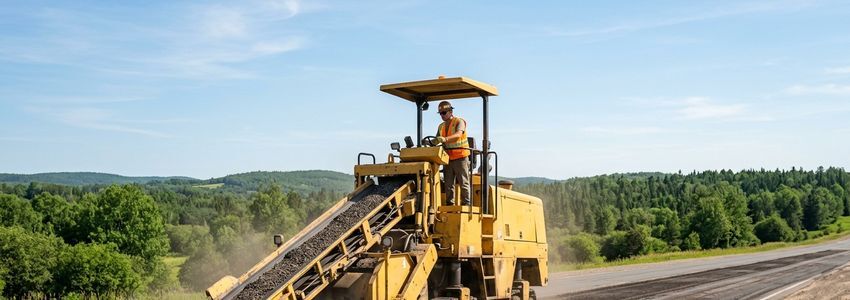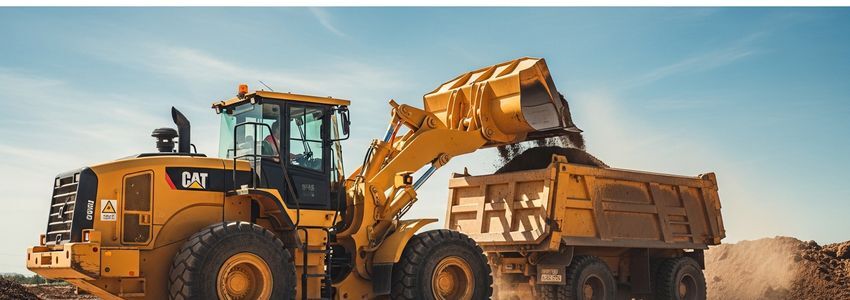
A wheel loader is one of the most versatile and productive machines on any job site. Whether you are moving dirt, loading dump trucks, handling material at a quarry, or clearing a construction site, the right wheel loader can dramatically increase your output. But purchasing one outright is a significant investment - new models from Caterpillar, John Deere, Komatsu, or Volvo can cost anywhere from $100,000 to over $500,000. That is where wheel loader financing comes in.
Wheel loader financing allows contractors, construction companies, landscaping businesses, quarry operators, and fleet managers to acquire the equipment they need without depleting cash reserves or tying up capital in a depreciating asset. Instead of a single large payment, you spread costs over time, preserve liquidity, and often get started with little to no money down. This guide covers everything you need to know: how financing works, what lenders look for, how to compare your options, and how to get approved fast.
In This Article
- What Is Wheel Loader Financing?
- Types of Wheel Loader Financing
- How Wheel Loader Financing Works
- Rates, Terms, and Down Payments
- Who Qualifies for Wheel Loader Financing?
- Financing New vs. Used Wheel Loaders
- How Crestmont Capital Can Help
- The Application Process
- Real-World Scenarios
- Frequently Asked Questions
- How to Get Started
What Is Wheel Loader Financing?
Wheel loader financing is a type of equipment loan or lease that allows a business to acquire a wheel loader by making periodic payments over a set term rather than paying the full purchase price upfront. The financing agreement is secured by the equipment itself, which means the loader acts as collateral - making it easier to qualify than unsecured business loans and often resulting in lower interest rates.
This type of financing is offered by banks, credit unions, equipment finance companies, and alternative lenders. Depending on the structure you choose, you may own the equipment outright at the end of the term, have the option to purchase it at a predetermined residual value, or simply return it and upgrade to a newer model. Financing is available for new equipment from dealers, used loaders from private sellers or auctions, and even refinancing existing equipment to free up capital.
For contractors and business owners who rely on wheel loaders daily, financing is often the most practical way to keep operations running without tying up cash that could be better used for payroll, materials, insurance, and growth.
Industry Insight: According to the Equipment Leasing and Finance Association (ELFA), over 80% of U.S. businesses that use equipment choose to finance or lease rather than pay cash - preserving liquidity and improving return on capital.
Types of Wheel Loader Financing
Not every financing structure works the same way, and choosing the right product depends on your business goals, tax situation, and how long you plan to keep the equipment. Here are the main options available for wheel loader financing.
Equipment Loans (Traditional Financing)
An equipment loan is the most straightforward option. The lender provides the capital to purchase the loader, and you repay it over a fixed term - typically 36 to 84 months - with interest. Once the loan is paid off, you own the equipment free and clear. This is ideal if you plan to keep the loader long-term and want to build equity in your equipment assets. Monthly payments are predictable, and the loader appears on your balance sheet as an asset.
Equipment Leasing
Leasing allows you to use a wheel loader for a set period while making monthly payments, but without taking on full ownership. At the end of the lease, you may have options to buy the equipment at fair market value, renew the lease, or return it. Leases are popular when you want lower monthly payments, prefer to upgrade equipment every few years, or have strong reasons to keep the asset off your balance sheet. Equipment leasing can also offer flexibility when your fleet needs change seasonally.
SBA Loan for Equipment
The Small Business Administration's SBA 7(a) loan program and SBA 504 program can be used to finance equipment, including wheel loaders. SBA loans offer some of the most competitive rates available and terms up to 10 years for equipment. The tradeoff is a longer approval process - often 30 to 90 days - and more documentation. If time is not critical and you want the lowest long-term cost, SBA financing deserves consideration.
Sale-Leaseback Financing
If you already own a wheel loader free and clear (or nearly so), a sale-leaseback allows you to sell the equipment to a lender and then lease it back immediately. You receive a lump sum of capital - useful for cash flow or business investment - while continuing to use the loader as before. The equipment stays on your job site; you just no longer own it outright until you complete the leaseback payments.
Lines of Credit for Equipment
An equipment line of credit allows approved businesses to draw funds as needed for equipment purchases up to a set limit. This works well for contractors who buy or upgrade equipment frequently. Rather than applying for a new loan each time, you draw from your existing line, make purchases as needed, and repay what you use.
Need to Finance a Wheel Loader?
Get fast, flexible equipment financing from the #1 business lender in the U.S. Compare options and get approved in as little as 24 hours.
Apply Now ->How Wheel Loader Financing Works
The wheel loader financing process follows a straightforward path from application to funded purchase. Understanding each step helps you prepare documentation ahead of time and move quickly when you find the right machine.
Step 1: Identify the Equipment
Start by identifying the specific wheel loader you need - brand, model, size (bucket capacity, operating weight), new or used, and price. Having a quote from a dealer or a listing from an auction helps lenders evaluate the collateral and process your application faster. Common brands include Caterpillar (CAT), John Deere, Komatsu, Volvo, Case, and Hyundai.
Step 2: Choose a Lender
You can apply through the equipment dealer's in-house financing arm, a traditional bank, or a direct equipment finance company like Crestmont Capital. Dealer financing is convenient but may not offer the best rates. Banks offer competitive pricing but often have strict requirements and slow timelines. Alternative equipment lenders offer faster approvals and more flexible underwriting - especially important for businesses with less than perfect credit or limited history.
Step 3: Submit Your Application
Most equipment finance applications require basic business information, a few months of bank statements, and the equipment details. For loans above $250,000 or for newer businesses, you may also need tax returns, a business plan, and financial statements. The stronger your credit profile and cash flow documentation, the faster and smoother the process.
Step 4: Underwriting and Approval
The lender reviews your credit, cash flow, time in business, and the value of the collateral (the wheel loader). For well-qualified applicants, approvals can come within 24 to 48 hours. SBA loans take longer - typically several weeks. Once approved, you receive a term sheet outlining the loan amount, rate, term, monthly payment, and any fees.
Step 5: Funding and Equipment Delivery
After you sign the loan documents, the lender wires funds directly to the dealer or seller. The equipment is then delivered to your job site. In many cases, the entire process from application to funded purchase can be completed in under a week for straightforward deals.
Quick Guide
How Wheel Loader Financing Works - At a Glance
Choose the wheel loader model, size, and condition (new or used) and get a price quote from a dealer or seller.
Submit a simple application with basic business financials. Many lenders approve in 24-48 hours.
Review your loan amount, rate, term, and monthly payment. Sign documents electronically or in person.
Lender wires funds to the seller. Your wheel loader is delivered - and you start generating revenue immediately.
Rates, Terms, and Down Payments
Understanding typical financing parameters helps you budget accurately and evaluate the competitiveness of any offer you receive. Rates and terms vary based on your credit profile, time in business, equipment age, and the lender you choose.
Interest Rates
Wheel loader financing rates currently range from approximately 5% to 18% APR depending on the borrower's credit score, business financials, and whether the equipment is new or used. Borrowers with strong credit (700+) and established businesses typically qualify for rates in the 5% to 9% range. Businesses with moderate credit or shorter histories may see rates from 10% to 15%. Hard-to-qualify borrowers with credit challenges may be offered rates from 15% to 18% or higher, though this is less common for secured equipment loans.
Loan Terms
Standard equipment loan terms for wheel loaders range from 24 to 84 months. Shorter terms (24 to 36 months) result in higher monthly payments but less total interest paid. Longer terms (60 to 84 months) reduce monthly payments significantly but increase total cost of capital. Most businesses choose 48 to 60-month terms as a balance between affordability and total interest expense.
Down Payments
Many equipment lenders offer 0% to 10% down for qualified borrowers, particularly for new equipment from established manufacturers. Some programs offer 100% financing with no down payment required. Used equipment and higher-risk applicants may be asked for 10% to 20% down. If cash flow is a concern, ask your lender specifically about no-money-down options - they are more common in equipment financing than in other loan types.
Financing Tip: Wheel loaders retain value well compared to many other types of heavy equipment, which makes them excellent collateral. This often results in more favorable loan terms compared to financing soft-cost assets like software or unsecured working capital.
Comparison of Financing Structures
| Feature | Equipment Loan | Equipment Lease | SBA Loan |
|---|---|---|---|
| Ownership | Yes - at end of term | Optional buyout | Yes - at end of term |
| Typical Rate | 5% - 18% APR | Varies by structure | 6% - 10% APR |
| Term Length | 24 - 84 months | 12 - 60 months | Up to 10 years |
| Down Payment | 0% - 20% | First/last payment | 10% - 20% |
| Approval Speed | 24 - 72 hours | 24 - 72 hours | 30 - 90 days |
Who Qualifies for Wheel Loader Financing?
Wheel loader financing is available to a wide range of businesses, from established construction companies with strong credit to newer contractors still building their financial profile. Here is what lenders typically look at and what helps you qualify for the best terms.
Credit Score
Most equipment lenders look at both your personal and business credit scores. A personal score of 650 or above typically qualifies for standard programs, while scores of 700+ open the door to the most competitive rates. Scores below 600 may still be approvable through bad credit equipment financing programs, though rates will be higher and down payment requirements may increase.
Time in Business
Most traditional lenders prefer businesses with at least two years of operating history. Alternative equipment lenders may work with businesses as young as six months, especially when the owner has strong personal credit and the equipment is solid collateral. Startups can sometimes qualify through startup equipment financing programs, which place more weight on credit score and less on revenue history.
Annual Revenue and Cash Flow
Lenders want to confirm that your business generates enough revenue to service the debt comfortably. A general rule of thumb is that your monthly payment should not exceed 10% to 15% of your average monthly revenue. Most lenders review three to six months of business bank statements to assess cash flow. Consistent deposits and positive average daily balances are strong positive signals.
Equipment as Collateral
Because wheel loaders hold their value well and have an active resale market, they serve as strong collateral. This benefits borrowers because lenders are more willing to extend financing - even to less-than-perfect applicants - knowing they can recover value from the asset if payments stop. Well-maintained equipment from reputable brands (Caterpillar, John Deere, Komatsu) tends to be viewed most favorably.
By the Numbers
Wheel Loader Financing - Key Statistics
80%+
Of U.S. businesses choose to finance or lease equipment rather than pay cash
$500K+
Maximum price for large new wheel loaders from top manufacturers
24-48 hrs
Typical approval turnaround through alternative equipment lenders
0%
Down payment required for qualified borrowers on many programs
Financing New vs. Used Wheel Loaders
One of the most important decisions in the wheel loader financing process is choosing between new and used equipment. Each option has distinct financing implications, and the right choice depends on your budget, job requirements, and how long you plan to keep the machine.
New Wheel Loader Financing
New wheel loaders come with manufacturer warranties, the latest technology and fuel efficiency features, and zero hours on the machine. They qualify for the most favorable financing terms - lower interest rates, longer repayment periods (up to 84 months), and the easiest approvals. Dealers often have relationships with multiple lenders and can arrange financing quickly at the point of sale. New machines also qualify for some of the best OEM financing promotions (0% APR for a limited term, deferred payment structures, etc.).
The main downside is cost - new wheel loaders are significantly more expensive than used, and depreciation is highest in the first few years of ownership. For businesses that keep machines for 10 to 15 years, this may not matter much. But for those who upgrade frequently, leasing new equipment often makes more sense than buying and selling repeatedly.
Used Wheel Loader Financing
Used wheel loaders represent an opportunity to acquire a capable, productive machine at a fraction of the new cost. A well-maintained five-year-old CAT 950 or John Deere 544 can deliver the same daily productivity at perhaps 40% to 60% of the new price. Used equipment financing is widely available through equipment lenders and alternative finance companies, though terms may be slightly shorter (up to 60 months vs. 84 for new) and rates may be modestly higher.
Key considerations for used equipment financing include the machine's age (most lenders limit loans to equipment under 10 to 15 years old), total hours on the machine, and overall condition. An independent appraisal or inspection report can help support financing approval and may result in better terms. Our guide to excavator financing covers many of the same principles that apply to used heavy equipment of all types.
Auction and Private Party Purchases
Wheel loaders purchased at auction or from private sellers are also financeable, though the process works slightly differently. Because there is no dealer involved, you will need to arrange financing before or immediately at purchase. Alternative lenders like Crestmont Capital specialize in this type of transaction and can often approve financing quickly - enabling you to bid confidently at auction knowing your capital is ready.
Finance New or Used Wheel Loaders
Crestmont Capital finances new and used equipment nationwide. Get a quick quote today and put your next loader to work.
Get a Free Quote ->How Crestmont Capital Can Help
Crestmont Capital is a direct lender rated #1 in the U.S. for small business financing. We specialize in equipment financing for contractors, construction companies, and businesses across every industry. Our team understands heavy equipment - from wheel loaders to excavators, bulldozers to motor graders - and we have built programs specifically designed for the needs of contractors and fleet operators.
Here is what sets Crestmont Capital apart for wheel loader financing:
- Fast approvals: Most applications receive a decision within 24 to 48 hours. We know job sites do not wait, and neither should your financing.
- Flexible underwriting: We look at the full picture of your business - not just your credit score. Strong cash flow can offset imperfect credit, and we work with businesses at every stage of growth.
- New and used equipment: We finance loaders from dealers, auctions, and private sellers nationwide.
- Competitive rates: Our direct lending model means no broker markups. You work directly with your funding specialist from application to funding.
- Multiple loan structures: Equipment loans, leases, lines of credit, and sale-leaseback programs available depending on your needs.
If your credit is less than ideal, ask about our programs for businesses with challenged credit histories. We also have programs for small business loans that can be layered with equipment financing when you need capital for multiple purposes simultaneously - for example, buying a loader while also covering operational costs during a project ramp-up.
For contractors who finance multiple pieces of heavy equipment regularly, our equipment line of credit can simplify the process significantly. Similar to how our customers in the skid steer and compact loader category use skid steer financing programs to manage their fleet, a line of credit gives you pre-approved purchasing power for future acquisitions without a new full application each time.
Did You Know? According to the Small Business Administration, access to capital is one of the top barriers to growth for small and mid-sized businesses. Equipment financing removes that barrier by letting you acquire productive assets without exhausting your reserves.
The Application Process: What to Prepare
A smooth application process starts with having the right documentation ready. While requirements vary by lender, the following checklist covers what most equipment lenders will ask for.
Basic Documentation (Most Loans Under $150,000)
For smaller equipment loans, many lenders - including Crestmont Capital - operate on a "soft-pull" or minimal-doc basis for established businesses. Typical requirements include a completed application, three to six months of business bank statements, and equipment details (dealer quote or equipment listing with price, make, model, and year).
Full Documentation (Loans Over $150,000 or Higher-Risk Profiles)
- Two years of business and personal tax returns
- Year-to-date profit and loss statement
- Business balance sheet
- Current business bank statements (3 to 6 months)
- Accounts receivable aging schedule (for construction businesses with contract revenue)
- Equipment appraisal or inspection report (for high-value used equipment)
- Business plan or project description (sometimes requested for startups)
Tips to Accelerate Approval
Organize your documents before applying. Incomplete applications are the leading cause of delays. If you are buying from a dealer, get a formal quote with equipment details in writing. If buying used, have a basic inspection report from a qualified mechanic. If your credit has any issues - slow payments, collections, judgments - be prepared to explain them proactively. Lenders respond well to applicants who are transparent and prepared.
For a deeper look at what lenders evaluate, including financial ratios and cash flow metrics, see our complete guide on how equipment financing works and what factors drive approval decisions.
Real-World Scenarios
Understanding how other businesses have used wheel loader financing can help you think through how it applies to your own situation. Here are six realistic examples drawn from common contractor and business scenarios.
Scenario 1: General Contractor Expanding Fleet
A mid-sized general contractor in Texas had been renting a wheel loader for $4,500 per month for site prep work. After calculating that a new CAT 926M would cost $185,000 and have a monthly payment of approximately $3,200 on a 60-month term, the math was clear - financing saved over $1,300 per month compared to renting, and at the end of the term the business owned a $70,000+ resale value asset. The company applied through Crestmont Capital, was approved in 48 hours, and took delivery before their next major project.
Scenario 2: Landscaping Company Seasonal Upgrade
A commercial landscaping business in Florida needed a compact wheel loader for material handling at large commercial accounts. They had been sharing equipment with a partner company and losing profitable jobs because of scheduling conflicts. With a used John Deere 524K priced at $62,000, they secured a 48-month equipment loan at 8.5% APR - a payment of roughly $1,540/month - and immediately booked three new accounts that more than covered the payment.
Scenario 3: Quarry Operator Refinancing Existing Equipment
A quarry operation in Ohio owned a Volvo L180H outright after paying off an older loan. They used a sale-leaseback to free up $120,000 in equity from the loader to fund a major blasting contractor they had hired for a new quarry face. The loader stayed on site and in production - they just extracted dormant capital from it to fuel growth.
Scenario 4: Startup Contractor Buying First Loader
A contractor who had been an employee for 15 years went out on his own and needed his first wheel loader. With only 8 months in business, no tax returns for the new entity, and a personal credit score of 680, he worried he would not qualify. Through a startup equipment financing program, he secured a 60-month loan for a used CAT 950K at $78,000 with 10% down. Within six months, his business revenue had doubled because he no longer needed to rent or subcontract loader work.
Scenario 5: Municipality Contractor Equipment Upgrade
A contractor doing municipal work in the Midwest had government contracts requiring equipment no older than 10 years. Their loader was 9 years old and about to become non-compliant. Rather than letting the contract lapse, they financed a new loader through their equipment line of credit, drew the needed funds in one business day, and remained in compliance for contract renewal.
Scenario 6: Multi-Machine Financing Package
A construction company in the Pacific Northwest financed three pieces of equipment simultaneously: a wheel loader, an excavator, and a skid steer. By bundling the applications and using a single lender, they streamlined the approval process and negotiated a slightly better rate on the package. This is a common approach for growing contractors who need multiple machines to take on larger projects. See our related resources on construction equipment financing for more on multi-machine strategies.
Frequently Asked Questions
What credit score do I need to finance a wheel loader?
Most equipment lenders prefer a personal credit score of 650 or higher for standard programs. Scores of 700+ typically qualify for the best rates and terms. Scores below 600 may still be approved through specialized bad credit equipment financing programs, though rates will be higher and a down payment may be required. Crestmont Capital works with borrowers across a wide range of credit profiles.
Can I finance a used wheel loader?
Yes. Used wheel loader financing is widely available. Most lenders finance used equipment up to 10 to 15 years old in good condition. Rates may be slightly higher than for new equipment, and terms may be capped at 60 months rather than 84. An inspection report or appraisal can help support your application for higher-value used machines.
How much does it cost to finance a wheel loader?
The cost depends on the purchase price, interest rate, and loan term. As an example, a $150,000 wheel loader financed at 8% APR over 60 months results in a monthly payment of approximately $3,042. Over the life of the loan, you would pay about $32,500 in interest. Lower rates and shorter terms reduce total interest paid. Using an equipment loan calculator before applying helps you understand your true cost of capital.
How long does it take to get approved for wheel loader financing?
Alternative and direct equipment lenders like Crestmont Capital typically provide decisions within 24 to 48 hours for straightforward applications. Funding can occur within one to three business days after approval. SBA loans take significantly longer - typically 30 to 90 days - due to the more extensive documentation and review process.
Do I need a down payment to finance a wheel loader?
Many equipment financing programs offer 0% to 10% down for qualified borrowers, and some offer 100% financing with no down payment required. Higher-risk applicants or older used equipment may require 10% to 20% down. If preserving cash is a priority, ask your lender specifically about no-money-down options when you apply.
Can a startup company get wheel loader financing?
Yes. Startup equipment financing programs exist specifically for newer businesses. These programs typically rely more heavily on the owner's personal credit score (680+ preferred) and may require a larger down payment (20% to 30%) or additional collateral. Some programs also factor in the operator's industry experience even if the business entity is new.
What brands of wheel loaders can be financed?
Virtually all major wheel loader brands can be financed, including Caterpillar (CAT), John Deere, Komatsu, Volvo, Case, Hyundai, Doosan, Liebherr, and Terex. Financing is available regardless of whether you purchase from a dealer, at auction, or from a private seller. Well-known brands with active resale markets are typically viewed most favorably by lenders due to their strong collateral value.
Is it better to buy or lease a wheel loader?
It depends on your priorities. Buying (via an equipment loan) is better if you plan to keep the machine long-term, want to build equity, and expect to use the loader intensively for years. Leasing is better if you prefer lower monthly payments, want the flexibility to upgrade frequently, or want to keep the asset off your balance sheet. Both are valid strategies - the key is aligning the structure with your business model and financial goals.
Can I finance a wheel loader with bad credit?
Yes. Because wheel loaders serve as collateral, lenders are often willing to approve financing for applicants with imperfect credit. Expect higher interest rates, a larger down payment requirement, and possibly a shorter loan term. Alternative lenders specializing in bad credit equipment financing can often approve applicants that traditional banks would decline. Strong cash flow and a good payment history on other obligations help offset credit score weaknesses.
How long are wheel loader financing terms?
Equipment loan terms for wheel loaders typically range from 24 to 84 months (2 to 7 years). New equipment from major manufacturers typically qualifies for the longest terms. Used equipment often has maximum terms of 48 to 60 months. Most businesses choose terms in the 48 to 60-month range to balance monthly payment affordability with total interest cost.
What is the difference between a wheel loader and a skid steer for financing purposes?
From a financing perspective, both are treated as heavy equipment and use the same loan structures. Wheel loaders are typically larger, more expensive, and have a larger resale market - which can make them slightly easier to finance. Skid steers are smaller and lower cost, which means smaller loan amounts. The key difference is that wheel loaders are articulated (center-pivot steering) while skid steers use differential steering - but both are strong collateral for equipment loans.
Can I refinance an existing wheel loader loan?
Yes. Equipment refinancing allows you to replace an existing loan with a new one - often at a lower rate if your credit has improved, or with an extended term if you need to lower monthly payments. You can also do a sale-leaseback on equipment you own outright to extract cash equity while continuing to use the machine. Contact Crestmont Capital to discuss refinancing options for your existing equipment.
Does financing a wheel loader affect my business credit?
Equipment financing that is properly structured in the name of the business entity typically reports to business credit bureaus rather than personal credit reports. On-time payments can build your business credit profile over time, making it easier and cheaper to obtain future financing. Make sure your loan is structured in your business name (LLC, S-Corp, etc.) rather than personally to take full advantage of this benefit.
Can I pay off a wheel loader loan early?
Many equipment loans allow early repayment, but some have prepayment penalties - typically a percentage of the remaining balance. Ask about prepayment terms before signing. If early payoff is important to your financial strategy, negotiate to have prepayment penalties waived or minimized before finalizing your loan agreement.
What documents do I need to apply for wheel loader financing?
For loans under $150,000, most lenders require a completed application, three to six months of business bank statements, and equipment details (quote or listing with price, make, model, year). For larger loans, you may also need two years of tax returns (business and personal), a profit and loss statement, balance sheet, and equipment appraisal. Having these documents ready before you apply significantly speeds up the approval process.
How to Get Started
Complete our quick application at offers.crestmontcapital.com/apply-now. No lengthy paperwork, no branch visits - apply from your phone or computer in minutes.
A Crestmont Capital equipment finance specialist will review your application, discuss your options, and identify the best loan or lease structure for your wheel loader purchase.
Most applicants receive a decision in 24 to 48 hours. Once approved and documents are signed, funds are wired directly to the seller and your loader is ready to go to work.
Conclusion
Wheel loader financing is one of the smartest tools available to contractors, construction companies, landscaping businesses, quarry operators, and any business that relies on this versatile machine. Rather than tying up hundreds of thousands of dollars in a single equipment purchase, financing lets you preserve capital, manage cash flow predictably, and put your loader to work generating revenue from day one.
The key is choosing the right financing structure - equipment loan, lease, equipment line of credit, or SBA loan - based on your ownership goals, cash flow, and how long you plan to keep the machine. Whether you are buying new from a CAT dealer, picking up a used John Deere at auction, or refinancing an existing loader to free up capital, Crestmont Capital has the programs and expertise to get you funded fast.
According to U.S. Census Bureau data, the construction industry accounts for over 750,000 business establishments and generates trillions in annual output - and equipment investment is at the core of that productivity. Businesses that invest in the right equipment at the right time consistently outperform competitors who wait. CNBC and Forbes consistently highlight equipment investment as a primary driver of small business productivity growth.
Do not let capital constraints hold your business back from the equipment it needs. Apply today and get your wheel loader financed with Crestmont Capital.
Ready to Finance Your Wheel Loader?
Apply in minutes and get a decision in as little as 24 hours. Crestmont Capital is the #1 small business lender in the U.S. - get funded today.
Apply Now ->Disclaimer: The information provided in this article is for general educational purposes only and is not financial, legal, or tax advice. Funding terms, qualifications, and product availability may vary and are subject to change without notice. Crestmont Capital does not guarantee approval, rates, or specific outcomes. For personalized information about your business funding options, contact our team directly.