
Vietnamese restaurants are among the fastest-growing dining segments in the United States, drawing customers with bold flavors, fresh ingredients, and deeply rooted culinary traditions. Whether you are opening your first location, expanding a thriving pho shop, or upgrading your commercial kitchen, securing the right financing is one of the most important steps you will take as a business owner. This guide walks you through every aspect of Vietnamese restaurant business loans, from the types of funding available to the qualification requirements and how Crestmont Capital can help you move fast.
In This Article
- What Are Vietnamese Restaurant Business Loans?
- Benefits of Financing Your Vietnamese Restaurant
- Loan Types Available to Vietnamese Restaurant Owners
- How Vietnamese Restaurant Financing Works
- Who Qualifies for a Vietnamese Restaurant Business Loan?
- How Crestmont Capital Helps Vietnamese Restaurant Owners
- Real-World Financing Scenarios
- Frequently Asked Questions
- Next Steps
- Conclusion
What Are Vietnamese Restaurant Business Loans?
Vietnamese restaurant business loans are financing products specifically designed to help restaurant owners fund the unique operational and growth needs of running a Vietnamese dining establishment. These loans can come from traditional banks, credit unions, Small Business Administration (SBA) programs, or alternative online lenders. Each product carries different terms, rates, and qualification standards, but all serve the same fundamental purpose: giving Vietnamese restaurant owners access to capital when they need it most.
The Vietnamese restaurant industry in the United States has grown steadily over the past two decades. According to data from the U.S. Census Bureau, the number of Asian-owned restaurants including Vietnamese establishments has surged in major metropolitan areas. This growth creates real capital needs, from importing specialty ingredients and training kitchen staff to renovating dining rooms and acquiring commercial cooking equipment.
Unlike general-purpose small business loans, Vietnamese restaurant financing often addresses costs specific to this type of cuisine: industrial pho broth stations, large stock pots and commercial burners, custom noodle preparation stations, walk-in refrigerators for fresh produce, and front-of-house renovations that create the authentic ambiance customers expect. Understanding these specific needs is the first step to matching your restaurant with the right loan product.
Ready to Grow Your Vietnamese Restaurant?
Get fast, flexible financing from the #1 business lender in the U.S. No obligation -- apply in minutes.
Apply Now →Benefits of Financing Your Vietnamese Restaurant
Accessing capital through a business loan provides Vietnamese restaurant owners with options that cash flow alone rarely affords. Here are the core advantages of pursuing restaurant financing:
Preserve Working Capital
Rather than depleting your reserves on a major equipment purchase or renovation, a loan spreads costs over time while keeping cash available for payroll, inventory, and daily operations. For a Vietnamese restaurant, where fresh ingredients must be purchased frequently and staff ratios are often high, maintaining liquid reserves is critical to day-to-day stability.
Move Fast on Opportunities
A competitor closes. A desirable retail space opens up in a high-traffic neighborhood. A new catering contract comes through that requires additional equipment. Business moves quickly, and having access to financing means you can act before the opportunity disappears. Alternative lenders like Crestmont Capital can fund fast business loans in as little as 24 to 48 hours.
Build Business Credit
Responsibly managing a business loan builds your restaurant's credit profile, making future financing easier and more affordable. Many Vietnamese restaurant owners who start with a smaller working capital loan graduate to larger SBA-backed financing within two to three years.
Tax Advantages
Interest paid on business loans is generally tax-deductible. Equipment purchased with financing may also qualify for Section 179 deductions under the IRS tax code. Always consult a qualified tax professional to understand the specific implications for your business.
Fund Growth Without Giving Up Equity
Unlike bringing in an investor or partner, a business loan does not require you to share ownership or profits. You borrow, repay, and retain full control of your restaurant.
PRO TIP
Vietnamese restaurant owners who apply for financing during a growth phase -- rather than waiting for a cash crisis -- consistently receive better loan terms. Lenders prefer applicants who are proactive rather than reactive.
Loan Types Available to Vietnamese Restaurant Owners
The financing landscape for restaurant owners is broad. Understanding the options available helps you match the right product to your specific need.
Small Business Loans (Term Loans)
A traditional small business loan provides a lump sum that is repaid over a fixed term with interest. This is ideal for large, one-time expenses such as opening a new location, completing a full renovation, or purchasing a major piece of equipment. Loan amounts typically range from $25,000 to $5 million, with terms from 12 months to 10 years.
SBA Loans
The Small Business Administration offers loan programs specifically designed to help small business owners access affordable capital. SBA loans are partially guaranteed by the federal government, which reduces lender risk and typically results in lower interest rates and longer repayment terms. The SBA 7(a) loan is the most common option for restaurant owners and can fund up to $5 million. The SBA 504 loan is well-suited for real estate or large equipment purchases. The primary tradeoff is that SBA loans require more documentation and have longer processing times, often four to eight weeks.
Equipment Financing
Vietnamese restaurants depend on specialized, often expensive equipment: industrial pho stations, commercial wok burners, large-capacity rice cookers, walk-in coolers, and conveyor dishwashers. Equipment financing uses the purchased equipment as collateral, which often makes approval easier and rates lower than unsecured loans. Loan terms typically match the expected useful life of the equipment, ranging from two to seven years.
Business Line of Credit
A business line of credit works like a credit card: you draw funds as needed, up to a preset limit, and pay interest only on what you use. This is ideal for managing cash flow gaps between busy and slow seasons, covering unexpected repairs, or bridging payroll during a slow week. Credit lines typically range from $10,000 to $500,000.
Merchant Cash Advance
A merchant cash advance (MCA) provides an upfront lump sum in exchange for a percentage of future daily credit card sales. This product is accessible to restaurants with lower credit scores or shorter operating histories but carries higher effective costs than traditional loans. It is best used sparingly for short-term needs when other options are unavailable.
Working Capital Loans
Working capital loans are short-term loans designed to cover everyday operating expenses: inventory, utilities, wages, and marketing. They provide a quick infusion of cash and are typically repaid within 3 to 18 months. Vietnamese restaurant owners often use working capital loans to stock up on specialty ingredients ahead of busy seasons like Tet (Vietnamese New Year) or to cover costs during seasonal slowdowns.
How Vietnamese Restaurant Financing Works
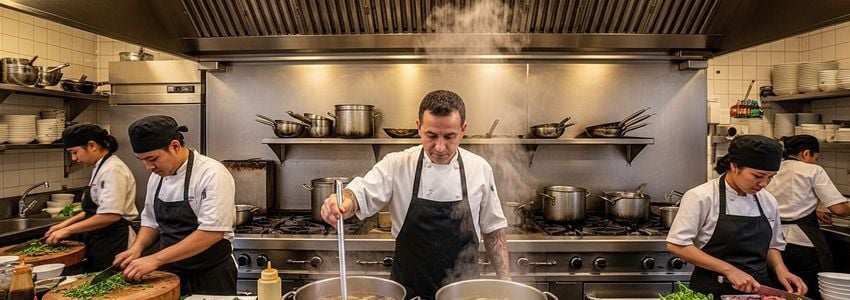
The process of obtaining a business loan for your Vietnamese restaurant typically follows these steps:
- Assess Your Needs: Determine how much you need and what you will use it for. Lenders will ask, and having a clear answer demonstrates business acumen and reduces approval friction.
- Check Your Eligibility: Review your credit score, time in business, and average monthly revenue. These three factors determine which products are available to you and at what rates.
- Gather Documentation: Most lenders require 3 to 6 months of business bank statements, tax returns, a government-issued ID, and basic business information. SBA loans require additional documents including a business plan and financial projections.
- Apply: Submit your application. With alternative lenders like Crestmont Capital, the online application takes as little as 5 minutes. Traditional bank and SBA applications take longer.
- Review Offers: Compare loan amounts, interest rates, repayment terms, and fees before accepting any offer.
- Receive Funds: Once approved and terms are accepted, funds are typically deposited directly into your business bank account. Alternative lenders can fund in 24 to 48 hours; banks and SBA programs may take several weeks.
- Repay: Repayments are made on a fixed schedule -- daily, weekly, or monthly -- depending on the loan type and lender.
By the Numbers
Vietnamese Restaurant Financing -- Key Statistics
$25K-$5M
Typical loan range for restaurant owners
24-48hrs
Typical funding speed with alternative lenders
$1.2T
U.S. restaurant industry revenue (NRA 2023)
82%
Restaurant owners report financing is critical to operations
Who Qualifies for a Vietnamese Restaurant Business Loan?
Qualification requirements vary significantly by lender and loan type. Here is a general breakdown of what you can expect:
Alternative Lenders (e.g., Crestmont Capital)
- Minimum credit score: 550+ (some products as low as 500)
- Time in business: 6 months or more
- Monthly revenue: $10,000 or more
- Valid business bank account
Traditional Bank Loans
- Minimum credit score: 680+
- Time in business: 2+ years
- Strong financial statements and profitability
- Collateral may be required
SBA Loans
- Minimum credit score: 640+ (varies by lender)
- Time in business: 2+ years (startups may qualify under special programs)
- U.S. for-profit business with reasonable owner equity
- Must have exhausted other financing options first
Vietnamese restaurant owners who are newer to business ownership or who have faced credit challenges in the past are not out of options. Alternative lenders evaluate a broader set of factors, including revenue trends, bank statement cash flow, and time in business, which means a solid-performing restaurant can qualify even without a perfect credit score. According to a report from Forbes, alternative lending has become the primary route to capital for a significant share of minority-owned small businesses in the U.S., a category that includes many Vietnamese restaurant owners.
IMPORTANT NOTE
Even if your personal credit score is below 600, a Vietnamese restaurant generating consistent monthly revenue of $15,000 or more has a strong chance of qualifying for working capital financing or a merchant cash advance through Crestmont Capital. Revenue tells the story that a credit score alone cannot.
How Crestmont Capital Helps Vietnamese Restaurant Owners
Crestmont Capital is the #1 business lender in the United States, with a proven track record of helping restaurant owners across all cuisine types access the capital they need to thrive. Our approach to Vietnamese restaurant financing is built on three principles: speed, flexibility, and transparency.
Speed
We understand that restaurant owners operate in real time. When your commercial refrigerator fails or a lease opportunity appears, you cannot wait weeks for a bank decision. Our streamlined online application takes minutes, and qualified borrowers often receive approval and funding within 24 to 48 hours.
Flexibility
We offer a full suite of financing products tailored to the restaurant industry. Whether you need a lump-sum term loan to fund a full kitchen renovation, equipment financing for a new commercial pho station, or a revolving line of credit for inventory management, Crestmont Capital has a product designed for your situation.
Transparency
We believe in clear terms and honest communication. Our loan officers explain every aspect of your offer before you sign, and there are no hidden fees or prepayment penalties on most of our products. You will know exactly what you are borrowing, what it costs, and what your repayment schedule looks like before committing to anything.
Vietnamese restaurant owners who are exploring their financing options can also review our guide on Thai restaurant business loans for insights on how the restaurant financing process works for similar cuisine-focused establishments.
Speak With a Restaurant Financing Specialist
Our team understands the Vietnamese restaurant industry. Get personalized loan options with no obligation in minutes.
Apply Now →Real-World Financing Scenarios for Vietnamese Restaurant Owners
Understanding how other Vietnamese restaurant owners have used financing can help you identify the right approach for your own business.
Scenario 1: Opening a Second Pho Restaurant Location
Mai owns a successful pho restaurant in Houston that has been operating for four years. Her restaurant generates $55,000 per month in revenue and has a loyal customer base. She identifies a second location in a growing neighborhood and needs $180,000 to cover the lease deposit, interior build-out, equipment purchases, and initial inventory. With a personal credit score of 680 and four years of strong financials, Mai qualifies for an SBA 7(a) loan at a competitive rate. She works with Crestmont Capital to prepare her application and closes the loan in six weeks, funding the full buildout of her second location.
Scenario 2: Emergency Kitchen Equipment Replacement
Thanh operates a Vietnamese restaurant in Atlanta. His commercial pho broth station -- the heart of his kitchen -- fails during the busy dinner rush on a Friday. Replacement and installation will cost $28,000. He cannot operate without it. Thanh applies for equipment financing through Crestmont Capital on Saturday morning and receives approval by Monday. Funds are in his account Tuesday, and the new equipment is installed by Wednesday. His restaurant reopens fully operational within five days.
Scenario 3: Seasonal Working Capital for Tet Promotions
Linh runs a Vietnamese restaurant in San Jose. She wants to run a large Tet (Vietnamese New Year) promotion that requires extra inventory, additional staffing, and a targeted marketing campaign. She estimates she needs $40,000 to execute the promotion properly, but her cash reserves are committed to rent and payroll. She applies for a working capital loan of $40,000 through Crestmont Capital, receives funding in 48 hours, and generates an additional $75,000 in revenue over the two-week promotion period. The loan pays for itself several times over.
Scenario 4: Full Dining Room Renovation
Duc owns a Vietnamese restaurant in Chicago that has been open for eight years. The dining room looks dated and foot traffic has declined. He invests $95,000 in a renovation: new flooring, lighting, furniture, and updated decor with modern Vietnamese design elements. He finances the project with a term loan from Crestmont Capital and sees a 30% increase in weeknight covers within three months of reopening. The renovation is funded within the same week he applies.
Scenario 5: Catering Business Expansion
Hong runs a well-regarded Vietnamese restaurant in Dallas and has been approached by a corporate client offering a large recurring catering contract. Fulfilling the contract requires a catering van, additional kitchen equipment, and working capital to cover upfront supply costs. She uses a combination of equipment financing for the van and a line of credit for ongoing catering supply purchases. Crestmont Capital structures both facilities simultaneously, allowing her to start the catering operation within two weeks of signing the corporate contract.
Scenario 6: Franchise Development Funding
Minh has operated a Vietnamese restaurant brand with two successful locations for six years and wants to develop a franchise model, opening three additional franchised units in the next 18 months. He uses an SBA 7(a) loan for the franchise development infrastructure and individual equipment financing packages for each franchisee. Crestmont Capital's experience with multi-unit restaurant operators helps him structure the financing efficiently, allowing rapid expansion without draining the profits of his existing locations.
Each of these scenarios reflects the diverse financing needs that Vietnamese restaurant owners face at different stages of business growth. The right loan product depends on the specific use of funds, urgency, business age, and creditworthiness of the borrower.
Frequently Asked Questions
What are Vietnamese restaurant business loans?
Vietnamese restaurant business loans are financing products designed to help Vietnamese restaurant owners access capital for startup costs, equipment, renovations, working capital, expansion, and other business needs. They come in several forms including term loans, SBA loans, equipment financing, lines of credit, and merchant cash advances.
How do I qualify for a Vietnamese restaurant business loan?
Qualification requirements vary by lender. Alternative lenders like Crestmont Capital typically require a credit score of 550 or above, at least 6 months in business, and monthly revenue of $10,000 or more. Traditional banks and SBA programs have stricter requirements, generally looking for a credit score of 640 to 680 and two or more years in operation.
How much can I borrow for my Vietnamese restaurant?
Loan amounts typically range from $25,000 to $5 million depending on the loan type and your qualifications. Working capital loans and lines of credit may start as low as $10,000, while SBA 7(a) loans can reach up to $5 million. Equipment financing is typically sized to the value of the specific equipment being purchased.
What credit score do I need for restaurant financing?
Credit score requirements vary by lender and product. Alternative lenders may approve financing with scores as low as 550. SBA loans generally require 640 or higher. Traditional bank loans often require 680 or above. However, your credit score is only one part of the evaluation -- revenue, time in business, and cash flow all play important roles.
Can I use a loan to purchase restaurant equipment?
Yes. Equipment financing is one of the most common loan types used by Vietnamese restaurant owners. It can fund commercial pho stations, industrial burners, walk-in refrigerators, dishwashers, point-of-sale systems, and any other equipment necessary to operate your restaurant. The equipment itself typically serves as collateral, which can make approval easier.
What is working capital and why do restaurants need it?
Working capital is the money available to cover day-to-day operating expenses such as payroll, inventory, utilities, and supplies. Restaurants have seasonal and cyclical revenue patterns, and a working capital loan provides a buffer during slower periods or when a large expense arises unexpectedly. For Vietnamese restaurants, working capital is especially important around major promotional periods like Tet.
Are SBA loans a good option for Vietnamese restaurant owners?
SBA loans offer some of the lowest interest rates and longest repayment terms available to small business owners, making them an excellent long-term financing option when you qualify. The tradeoff is that SBA loans require more documentation and take longer to process -- often four to eight weeks. They are best suited for planned investments like new locations, major renovations, or large equipment purchases rather than urgent needs.
How fast can I get funded for my Vietnamese restaurant?
Funding speed depends on the loan type and lender. Alternative lenders like Crestmont Capital can fund qualified applicants in as little as 24 to 48 hours. Traditional bank loans typically take one to four weeks. SBA loans can take four to eight weeks or longer. If speed is a priority, an alternative lender is usually the fastest route to capital.
What documents do I need to apply for a restaurant business loan?
Most alternative lenders require three to six months of business bank statements, a government-issued ID, and basic business information including your EIN. Traditional banks and SBA lenders typically also require two years of business tax returns, a profit and loss statement, a balance sheet, and sometimes a business plan or financial projections.
Can I get a business loan with bad credit?
Yes, it is possible to obtain financing with less-than-perfect credit. Alternative lenders evaluate revenue, cash flow, and time in business in addition to credit score. A Vietnamese restaurant generating $15,000 or more per month in consistent revenue can often qualify for working capital financing or a merchant cash advance even with a credit score below 600. Building your business credit over time will open up better financing options in the future.
What can I use Vietnamese restaurant loan funds for?
Funds from a Vietnamese restaurant business loan can be used for a wide range of purposes: purchasing or leasing equipment, renovating the dining room or kitchen, covering payroll during slow periods, stocking inventory, launching marketing campaigns, paying for staff training, opening additional locations, purchasing an existing restaurant, or handling unexpected repairs and emergencies.
How do I compare lenders for restaurant financing?
When comparing lenders, look at the annual percentage rate (APR) or factor rate to understand the true cost of borrowing. Also compare loan terms, repayment frequency, prepayment penalties, origination fees, funding speed, and the lender's experience with restaurant businesses. Working with a lender who specializes in restaurant financing ensures they understand the unique cash flow patterns and needs of your industry.
How are Vietnamese restaurant loans different from regular business loans?
Vietnamese restaurant loans are not a fundamentally different product -- they are standard business loan products applied to the specific context and needs of restaurant ownership. The key differences are in how lenders evaluate restaurant businesses (including seasonality, inventory turnover, and dining industry benchmarks) and how the funds are used (restaurant-specific equipment, build-outs, food service licensing, etc.).
How does Crestmont Capital help Vietnamese restaurant owners specifically?
Crestmont Capital offers a full range of loan products tailored to restaurant owners, with a streamlined application process, fast funding, and loan officers who understand the restaurant industry. We work with Vietnamese restaurant owners at every stage of business growth, from first-time borrowers to experienced multi-unit operators. Our team helps you identify the right loan product, structure the financing to match your cash flow, and move quickly when timing matters.
Can I apply for a Vietnamese restaurant business loan online?
Yes. Crestmont Capital offers a fully online application that takes as little as five minutes to complete. You can apply at any time from any device. Once submitted, our team reviews your application quickly and follows up with options tailored to your restaurant's profile. There is no obligation to accept any offer, and applying does not impact your credit score.
Next Steps: How to Get Financing for Your Vietnamese Restaurant
Ready to move forward? Follow these steps:
- Define your funding need -- Know the amount you need and exactly what it will be used for before applying.
- Check your credit score -- Review both your personal and business credit scores so you know which products you likely qualify for.
- Gather your documents -- Have your last 3 to 6 months of bank statements, tax returns, and business ID ready to go.
- Compare loan products -- Review the options at Crestmont Capital's small business loans page to identify the best fit.
- Apply online -- Submit your application at Crestmont Capital in minutes. Our team will follow up with options specific to your restaurant.
- Review your offer -- Understand the full terms, rate, and repayment schedule before accepting any financing offer.
- Receive your funds -- Once approved and terms are accepted, funds are deposited directly into your business bank account, often within 24 to 48 hours.
Conclusion
Vietnamese restaurants represent one of the most vibrant and growing segments of the U.S. food service industry. With the right financing in place, Vietnamese restaurant owners can move decisively on growth opportunities, manage cash flow with confidence, and build businesses that serve their communities for generations. Whether you need equipment financing to upgrade your kitchen, a working capital loan to navigate a slow season, or an SBA loan to fund a second location, the right product exists for your situation.
Crestmont Capital has helped thousands of restaurant owners across the country access the capital they need to grow. Our process is fast, our terms are transparent, and our team understands the restaurant business. If you are ready to explore your options, we invite you to apply today with no obligation and no impact to your credit score.
For Vietnamese restaurant owners who want to compare notes on financing strategies used by owners in related cuisine categories, our guide on Thai restaurant business loans covers many parallel topics and is worth reviewing alongside this resource.
Start Your Vietnamese Restaurant Loan Application Today
Join thousands of restaurant owners who trust Crestmont Capital. Apply in minutes with no obligation.
Apply Now →Disclaimer: The information provided in this article is for general educational purposes only and is not financial, legal, or tax advice. Funding terms, qualifications, and product availability may vary and are subject to change without notice. Crestmont Capital does not guarantee approval, rates, or specific outcomes. For personalized information about your business funding options, contact our team directly.