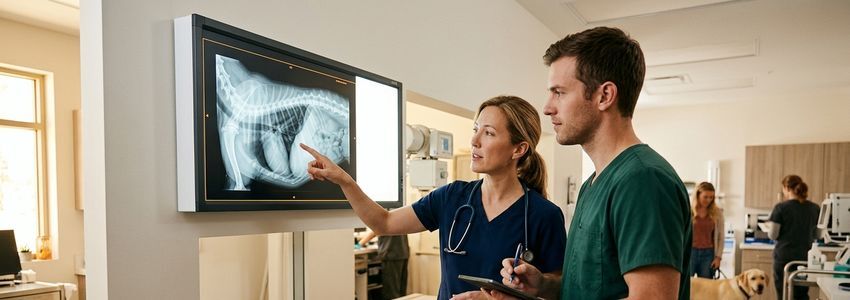
Veterinary imaging equipment financing gives animal hospitals and clinics a way to acquire digital X-ray systems, ultrasound machines, and CT scanners without paying the full purchase price up front. For most practices, a single digital radiography system costs between $30,000 and $90,000, and advanced diagnostic imaging can run well beyond that. Financing spreads that cost into predictable monthly payments so a practice can add diagnostic capability now instead of waiting years to save enough cash.
Modern veterinary medicine increasingly depends on in-house imaging. Pet owners expect same-visit diagnostics, referring veterinarians look for practices with strong imaging capability, and emergency cases often cannot wait for an outside radiology appointment. Yet imaging equipment remains one of the largest capital expenses a veterinary practice will ever take on, which is exactly why financing has become the standard way practices acquire it.
This guide walks through every major financing option for veterinary imaging equipment, what the equipment actually costs, how lenders evaluate applications, and how to choose between financing and leasing. By the end, you will know exactly which path fits your practice's situation.
In This Article
- Why Imaging Equipment Financing Matters
- Types of Veterinary Imaging Equipment
- Financing Options Explained
- How Imaging Equipment Financing Works
- What Veterinary Imaging Equipment Costs
- Leasing vs. Buying Imaging Equipment
- Who Qualifies for Imaging Equipment Financing
- How Crestmont Capital Helps
- Real-World Scenarios
- Next Steps
- Frequently Asked Questions
Why Imaging Equipment Financing Matters
Diagnostic imaging has moved from a specialty service to a baseline expectation at most veterinary practices. Digital X-ray lets a veterinarian view a fracture or foreign body within seconds instead of waiting for film to develop. Ultrasound allows real-time evaluation of internal organs during a routine visit. For practices without in-house imaging, every referral out the door is lost revenue and a slower diagnosis for the patient.
The problem is cost. A full digital radiography suite, including the generator, detector plate, and imaging software, typically costs $40,000 to $80,000 installed. Add ultrasound, a dental radiography unit, and possibly a CT scanner, and a practice can easily face a $150,000 to $400,000 capital investment. Very few veterinary practices carry that much cash on hand, which is why financing exists as a standard, expected part of equipment acquisition in this industry.
- Preserve working capital: Financing keeps cash available for payroll, inventory, and day-to-day operations instead of tying it up in one purchase.
- Match payments to revenue: Monthly payments can be structured to align with the additional revenue the new equipment generates.
- Access newer technology sooner: Financing allows a practice to upgrade to current-generation imaging equipment rather than running outdated systems for years.
- Predictable budgeting: Fixed monthly payments make it easier to forecast expenses compared to a large one-time cash outlay.
Types of Veterinary Imaging Equipment
Before comparing financing options, it helps to understand what falls under "imaging equipment" in a veterinary setting, since financing structures and costs vary significantly by equipment type.
Digital Radiography (Digital X-Ray)
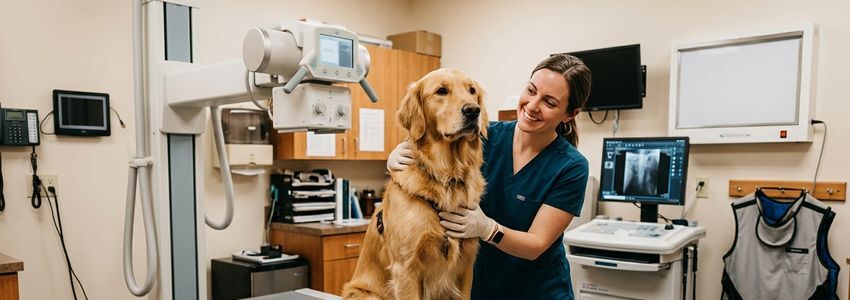
Digital X-ray systems have largely replaced film-based radiography in veterinary practice. They produce images in seconds, require no darkroom or chemical processing, and integrate directly with practice management software. Most general practices treat digital X-ray as a core, non-negotiable piece of equipment.
Ultrasound
Ultrasound units range from portable, entry-level machines suitable for basic abdominal scans to high-end cart-based systems with cardiac and Doppler capability. Many practices start with a mid-range unit and finance an upgrade later as caseload and specialty services grow.
Dental Radiography
Dental X-ray units are smaller and less expensive than full-body digital radiography systems, but they are essential for identifying root disease, fractures, and resorptive lesions that are invisible on a standard oral exam. Many lenders bundle dental radiography into a broader imaging equipment financing package.
CT and Advanced Imaging
Computed tomography (CT) is increasingly common at larger general practices, emergency hospitals, and specialty referral centers. A veterinary CT system is a significant investment, often $150,000 to $500,000 depending on whether it is new or refurbished, which makes financing essentially mandatory for all but the largest corporate-backed hospitals.
Key Stat: According to Forbes, equipment financing routinely covers 80 to 100 percent of the purchase price, since the equipment itself typically secures the loan, reducing the amount of collateral a borrower needs to provide separately.
Financing Options Explained
Veterinary practices have several distinct paths to fund imaging equipment. Each has different qualification requirements, cost structures, and ideal use cases.
Equipment Loans
An equipment loan provides a lump sum used specifically to purchase the imaging system, with the equipment itself serving as collateral. This typically results in easier approval and better rates than an unsecured loan, since the lender has a tangible asset backing the financing. Terms usually run 24 to 84 months depending on the equipment's expected useful life.
Equipment Leasing
Leasing allows a practice to use the imaging equipment for a set term while making monthly payments, with options to purchase, renew, or return the equipment at the end of the term. Leasing often has a lower monthly payment than a loan and can make sense for equipment that depreciates quickly or gets superseded by newer technology within a few years.
SBA Loans
SBA 7(a) and 504 loans can be used to finance large imaging purchases, particularly when bundled with a broader practice expansion, buildout, or acquisition. SBA financing offers longer terms and lower rates than most conventional options, but the application and approval process takes considerably longer, often 30 to 90 days.
Business Line of Credit
A line of credit is not typically the primary tool for financing a large imaging system, but it can bridge a gap, for example covering an unexpected installation cost or a deposit while a larger equipment loan is finalized.
Ready to Upgrade Your Practice's Imaging Capability?
Get fast, flexible equipment financing from the #1 business lender in the U.S. No obligation, apply in minutes.
Apply Now →By the Numbers
Veterinary Imaging Equipment Financing: Key Statistics
$40K-$80K
Typical cost of a digital radiography system
80-100%
Portion of purchase price equipment loans commonly cover
24-72 hrs
Typical approval time with online equipment lenders
$150B+
Annual U.S. pet industry spending
24-84 mo
Common equipment loan repayment terms
650+
Credit score most lenders prefer for the best rates
Sources: SBA, industry lender benchmarks. Figures represent typical ranges, not guarantees.
How Imaging Equipment Financing Works
The process for financing veterinary imaging equipment is more straightforward than most practice owners expect, especially compared to a traditional bank loan. Here is the typical sequence from start to funding.
Quick Guide
How Equipment Financing Works, At a Glance
Obtain a written quote from the imaging equipment manufacturer or distributor, including installation and training costs.
Provide basic practice financials, time in business, and the equipment quote to the lender.
Most equipment lenders return a decision within 24 to 72 hours, along with the rate, term, and monthly payment.
The lender pays the vendor directly, and the equipment is delivered and installed at the practice.
Payments typically start 30 to 60 days after funding, giving the practice a short runway before the first bill is due.
Because the equipment itself secures the loan in most cases, the underwriting process focuses heavily on the equipment's resale value and the practice's ability to generate revenue from it, rather than requiring extensive additional collateral.
What Veterinary Imaging Equipment Costs
Understanding real-world pricing helps a practice owner budget accurately and avoid sticker shock mid-negotiation. Costs vary by manufacturer, whether the unit is new or refurbished, and what software and training are bundled in.
- Digital X-ray (DR) system: $30,000 to $90,000 installed, including generator, detector panel, and imaging software
- Computed radiography (CR) system: $15,000 to $35,000, a lower-cost alternative to full DR
- Dental radiography unit: $6,000 to $15,000
- Ultrasound (entry to mid-range): $15,000 to $50,000
- Ultrasound (cardiac/advanced): $50,000 to $100,000+
- CT scanner (refurbished): $80,000 to $200,000
- CT scanner (new): $200,000 to $500,000+
Beyond the equipment itself, practices should budget for installation, staff training, service contracts, and, for CT and some digital X-ray systems, potential facility modifications for radiation shielding. A thorough vendor quote should itemize all of these costs so they can be rolled into the financed amount rather than surfacing as a surprise after the equipment arrives.
Pro Tip: Finance Installation and Training, Not Just the Hardware
Many practices only budget for the imaging unit itself and forget installation, calibration, and staff training costs. Ask your lender if these can be rolled into the total financed amount so you are not covering them out of pocket separately.
Leasing vs. Buying Imaging Equipment
Whether to lease or finance a purchase outright depends on how quickly the equipment is likely to be replaced, how the practice wants to handle taxes, and cash flow preferences.
| Factor | Equipment Loan (Buying) | Leasing |
|---|---|---|
| Monthly payment | Typically higher | Typically lower |
| Ownership at end of term | Yes, automatic | Optional buyout, renewal, or return |
| Best for | Equipment with a long useful life (X-ray, dental) | Fast-evolving technology (advanced imaging software, CT) |
| Upgrade flexibility | Lower, requires resale of owned unit | Higher, can upgrade at end of lease term |
| Total cost over time | Usually lower if equipment is kept long-term | Can be higher if renewed repeatedly |
General guidance: practices that expect to use the same digital X-ray unit for 8 to 10 years typically come out ahead financing a purchase. Practices that want to stay on the newest ultrasound or CT technology every few years, or that want to preserve maximum monthly cash flow, often lean toward leasing. Our equipment leasing page breaks down the mechanics of lease structures in more detail.
Who Qualifies for Imaging Equipment Financing
Veterinary practices are generally considered strong candidates for equipment financing because the industry has stable, recurring demand and the equipment itself provides solid collateral. That said, lenders still evaluate several factors before approving an application.
Credit Score
Personal credit scores of 650 or higher typically qualify for the most competitive rates. Practices with scores in the 600 to 649 range can often still qualify, though at a somewhat higher rate. Some equipment lenders will work with scores as low as 550 given the collateral backing.
Time in Business
Established practices with two or more years of operating history have access to the widest range of lenders and the best rates. Newer practices, including those under one year, can often still qualify for equipment financing specifically, since the equipment secures the loan regardless of the practice's age. Our guide to equipment financing with bad credit covers strategies for practices with a shorter track record or credit challenges.
Revenue and Cash Flow
Lenders want assurance the practice generates enough revenue to comfortably cover the new payment on top of existing expenses. Most equipment lenders look for at least $10,000 to $15,000 in average monthly revenue, though this varies by lender and loan size.
Down Payment
Many equipment lenders finance 80 to 100 percent of the purchase price. A down payment, when required, is often just 0 to 20 percent, considerably lower than what is typically required for a commercial real estate purchase or a large unsecured loan.
How Crestmont Capital Helps
Crestmont Capital works with veterinary practices nationwide to structure imaging equipment financing that fits both the practice's budget and its growth plans. Rather than a one-size-fits-all product, the process starts with understanding what equipment is being purchased and how it fits into the practice's broader financial picture.
For practices weighing multiple funding needs at once, such as an imaging system alongside a facility expansion, our SBA loan programs can bundle larger capital projects into a single, longer-term facility. For practices that want to preserve flexibility for smaller or recurring equipment needs, a business line of credit can complement a dedicated equipment loan.
Practices researching the broader financing landscape for their clinic, not just the imaging equipment itself, may also find our guide on veterinary practice financing useful for understanding SBA options, acquisition loans, and working capital solutions that often accompany a major equipment purchase. Human healthcare practices facing a similar decision can review our related guide on diagnostic imaging center financing, which covers many of the same underwriting principles that apply to veterinary imaging.
Ready to Add In-House Imaging to Your Practice?
Apply in minutes and see financing options tailored to your veterinary practice, with no obligation.
Apply Now →Real-World Scenarios
Scenario 1: Replacing an Aging CR System with Digital X-Ray
A five-year-old general practice was still using a computed radiography (CR) system that took nearly a minute to produce an image, slowing down busy days. The clinic financed a $55,000 digital radiography upgrade over 60 months, adding roughly $1,050 a month to expenses while cutting imaging time from a minute to under five seconds and reducing retake rates significantly.
Scenario 2: Adding Ultrasound to Expand Diagnostic Services
A two-doctor practice had been referring all ultrasound cases to an outside specialty hospital, losing both the diagnostic revenue and, often, the client relationship. Financing a $28,000 mid-range ultrasound system allowed the practice to perform routine abdominal scans in-house, recouping the equipment cost within roughly 14 months based on the additional imaging revenue.
Scenario 3: Emergency Hospital Financing a CT Scanner
A 24-hour emergency veterinary hospital financed a refurbished CT scanner for $140,000 using a combination of an equipment loan and a modest cash down payment. The hospital's after-hours trauma caseload made CT a critical diagnostic tool, and the financing structure allowed the purchase without disrupting working capital reserves needed for staffing and inventory.
Scenario 4: New Practice Bundling Imaging with Startup Costs
A newly licensed veterinarian opening a first practice needed digital X-ray, dental radiography, and a basic ultrasound unit as part of the initial buildout. Rather than three separate applications, the equipment vendor and lender bundled all three purchases, totaling $85,000, into a single equipment financing agreement with one monthly payment.
Scenario 5: Multi-Location Group Standardizing Imaging Across Clinics
A three-location veterinary group standardized on a single digital radiography platform across all sites to simplify staff training and technical support. Financing the rollout as a single $180,000 master agreement, rather than three separate purchases, allowed the group to negotiate better per-unit pricing from the manufacturer.
Next Steps
How to Get Started with Veterinary Imaging Equipment Financing
- Identify the specific equipment need: Digital X-ray, ultrasound, dental radiography, or CT, since each has different pricing and financing structures.
- Get a full vendor quote: Include installation, training, service contracts, and any facility modifications in the total.
- Review your practice's financials: Have recent bank statements and a sense of monthly revenue ready before applying.
- Compare loan versus lease structures: Decide which fits your equipment's expected useful life and cash flow preferences.
- Apply with a lender experienced in veterinary equipment: Industry-specific experience often means faster underwriting and more accurate terms.
- Schedule installation and training: Coordinate delivery timing with staff availability to minimize disruption to appointment scheduling.
See What Your Practice Qualifies For
Fast, flexible equipment financing from the #1 business lender in the U.S. No obligation, apply in minutes.
Apply Now →Conclusion
Veterinary imaging equipment financing has become the standard way practices add or upgrade digital X-ray, ultrasound, dental radiography, and CT capability without draining working capital. Whether a practice chooses an equipment loan, a lease, or an SBA-backed structure, the goal is the same: matching the payment structure to the equipment's useful life and the revenue it generates. With approval timelines as short as 24 to 72 hours for standard equipment loans, a practice can move from vendor quote to fully installed imaging system in a matter of weeks rather than months.
Frequently Asked Questions
What is veterinary imaging equipment financing?
Veterinary imaging equipment financing is a loan or lease used specifically to purchase diagnostic imaging equipment such as digital X-ray systems, ultrasound machines, dental radiography units, or CT scanners for a veterinary practice.
How much does veterinary imaging equipment cost?
Costs vary widely by equipment type. Digital X-ray systems typically run $30,000 to $90,000, dental radiography units cost $6,000 to $15,000, ultrasound machines range from $15,000 to $100,000 or more, and CT scanners can cost $80,000 to $500,000 depending on whether the unit is new or refurbished.
Can a new veterinary practice finance imaging equipment?
Yes. Because equipment financing is secured by the equipment itself, newer practices, including those under one year in business, can often qualify even without an extensive credit history.
What credit score do I need for imaging equipment financing?
Most lenders prefer a personal credit score of 650 or higher for the best rates. Some equipment lenders will work with scores as low as 550 given the equipment serves as collateral.
Is it better to lease or buy veterinary imaging equipment?
Buying typically makes sense for equipment with a long useful life, such as digital X-ray or dental radiography, that a practice plans to use for 8 to 10 years. Leasing can make more sense for equipment likely to be upgraded more frequently, such as advanced ultrasound or CT systems.
How long does it take to get approved for equipment financing?
Standard equipment loans are often approved within 24 to 72 hours. SBA-backed financing for larger imaging purchases typically takes 30 to 90 days.
How much down payment is required for imaging equipment financing?
Many equipment lenders finance 80 to 100 percent of the purchase price, meaning a down payment, when required, is often 0 to 20 percent of the total cost.
Can I finance installation and training along with the equipment?
Yes. Many lenders allow installation, calibration, staff training, and service contract costs to be rolled into the total financed amount rather than paid separately out of pocket.
What is the difference between digital radiography (DR) and computed radiography (CR)?
Digital radiography (DR) produces an image directly on a digital detector panel in seconds. Computed radiography (CR) uses a cassette that must be scanned separately, which takes longer but typically costs less than a full DR system.
Can I bundle multiple pieces of imaging equipment into one loan?
Yes. Many veterinary equipment lenders will bundle a digital X-ray system, dental radiography unit, and ultrasound machine into a single financing agreement with one combined monthly payment.
Does financing imaging equipment affect my ability to get other loans?
Equipment financing does add to a practice's overall debt load, which lenders factor into future applications. However, because equipment loans are secured and predictable, they generally have a smaller impact on future borrowing capacity than unsecured debt.
What documents are needed to apply for imaging equipment financing?
Typical requirements include a vendor quote for the equipment, several months of business bank statements, basic practice financials, and information about time in business and ownership structure.
Can refurbished imaging equipment be financed?
Yes. Refurbished digital X-ray, ultrasound, and CT equipment can typically be financed, often at a lower total cost than new equipment, though some lenders may require additional documentation on the equipment's condition and remaining useful life.
How do I calculate the ROI of new imaging equipment?
Estimate the additional imaging revenue and reduced referral losses the equipment will generate each month, then compare that figure to the monthly loan or lease payment. Many practices recoup the cost of a mid-range ultrasound or digital X-ray system within 12 to 24 months.
What happens at the end of an equipment lease?
At the end of a lease term, a practice typically has the option to purchase the equipment for a predetermined amount, renew the lease, upgrade to newer equipment, or return the unit, depending on the lease structure agreed to at signing.
Disclaimer: The information provided in this article is for general educational purposes only and is not financial, legal, or tax advice. Funding terms, qualifications, and product availability may vary and are subject to change without notice. Crestmont Capital does not guarantee approval, rates, or specific outcomes. For personalized information about your business funding options, contact our team directly.