
 (800) 949-0401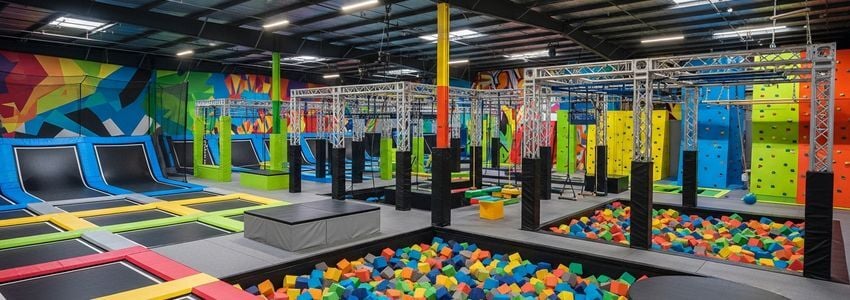
Trampoline Park Business Loans: The Complete Financing Guide for Trampoline Park Owners
Trampoline park business loans give bounce venue owners the capital they need to launch, expand, and stay competitive in one of America's fastest-growing entertainment industries. Whether you are opening your first facility, adding new attractions, or navigating seasonal cash flow, the right financing can make all the difference. This guide covers every loan option available to trampoline park operators, how to qualify, and how Crestmont Capital can help you get funded fast.
In This Article
What Are Trampoline Park Business Loans?
Trampoline park business loans are financing products designed to meet the unique capital needs of indoor bounce and action sports venues. These loans help owners fund everything from the initial facility buildout and equipment purchase to day-to-day operating costs, marketing campaigns, and major expansions.
Indoor trampoline parks are capital-intensive businesses. A single large trampoline court, foam pit, or ninja warrior course can cost tens of thousands of dollars to install. When you factor in building lease improvements, safety padding, party rooms, concession equipment, point-of-sale systems, staffing, and insurance, the investment adds up quickly. Business loans give trampoline park operators the financial runway to build and grow without depleting personal savings or sacrificing equity.
Unlike general-purpose small business loans, lenders who understand the recreation and entertainment sector can tailor financing to your park's revenue cycles, growth plan, and physical assets. This makes trampoline park financing more accessible and more strategic than many owners realize.
Key Fact: The global indoor trampoline park market was valued at over $1.4 billion in 2023 and is projected to grow at a compound annual growth rate of more than 7% through 2030, according to industry research. The U.S. remains the largest single market for these facilities.
Trampoline parks typically need financing for one or more of the following reasons:
- New facility construction or buildout: Converting a warehouse or retail shell into a full trampoline park with courts, foam pits, obstacle courses, and party rooms requires significant capital investment.
- Equipment and attraction upgrades: Jump pads, springs, foam blocks, dodgeball courts, parkour zones, virtual reality zones, and ninja warrior courses all require purchase and ongoing maintenance.
- Working capital: Covering payroll, utilities, insurance premiums, and supply costs between peak and slow seasons.
- Marketing and digital growth: Birthday party promotions, social media advertising, local SEO, and group event packages are essential for steady traffic.
- Additional locations: Expanding to a second or third park often requires substantial upfront capital before revenue from the new site materializes.
Key Benefits of Financing Your Trampoline Park
Smart trampoline park owners use financing strategically rather than waiting to accumulate capital organically. Here are the primary benefits of business loans for trampoline park operators:
Preserve Cash Flow
Rather than depleting your reserve fund on equipment or renovations, a loan allows you to spread large costs over time while keeping cash available for payroll, insurance, and unexpected expenses. This is especially important during seasonal dips when revenue is lower but fixed costs remain constant.
Move Faster Than Competitors
The indoor entertainment space is competitive. A well-funded park can add a new climbing wall, VR experience, or expanded party venue before a competitor does. Financing lets you act on growth opportunities immediately rather than waiting months to save up.
Build Business Credit
Establishing and repaying business loans helps build your company's credit profile, which can lower your borrowing costs over time and open doors to larger credit facilities. This is especially valuable for newer parks that are still building their financial track record. Learn more about how to build business credit strategically.
Tax Advantages
Interest paid on business loans is generally tax-deductible as a business expense. Equipment purchased with financing may also qualify for accelerated depreciation under Section 179 rules, further reducing your tax burden. Always consult a qualified tax advisor for specifics.
Access to Larger Capital Amounts
Growing from one park to two, or upgrading from basic trampolines to a premium multi-attraction facility, requires more capital than most owners have available out of pocket. Business loans give you access to six- or seven-figure capital amounts that would take years to accumulate through retained earnings alone.
Ready to Grow Your Trampoline Park?
Get fast, flexible financing from the #1 business lender in the U.S. No obligation - apply in minutes.
Apply NowHow Trampoline Park Financing Works
The process of obtaining a trampoline park business loan follows a predictable series of steps. Understanding each step helps you prepare the right documentation and move through the application quickly.
Step 1: Assess Your Financing Needs
Before applying, get a clear picture of exactly how much you need and what it will be used for. Break your capital needs into categories: equipment, leasehold improvements, working capital, marketing, and contingency. Having a detailed breakdown demonstrates to lenders that you have thought through the use of funds carefully.
Step 2: Review Your Business Financials
Lenders will want to see your business bank statements (typically 3-12 months), profit and loss statements, tax returns, and sometimes a business plan or revenue projections. If you are a newer park, your personal credit history and financial statements will play a larger role. Check your business and personal credit reports before applying so you know where you stand.
Step 3: Compare Loan Options
Different loan products serve different needs. A term loan is better for large one-time expenses like a facility buildout; a business line of credit is better for covering variable seasonal costs. Equipment financing is ideal when purchasing specific attraction gear. Compare offers from multiple lenders before committing. You can learn more at our guide to types of business loans.
Step 4: Gather Your Application Documents
Common documents include: government-issued ID, business formation documents (LLC or corporation), EIN, business bank statements, tax returns (personal and business), business plan, equipment quotes or lease agreements, and proof of existing revenue or bookings.
Step 5: Submit Your Application
Many alternative lenders can process applications in 24 to 48 hours. Provide complete, accurate information and respond promptly to any follow-up requests from underwriting. Delays in documentation are the most common reason for extended approval timelines.
Step 6: Review and Accept the Offer
Once approved, carefully review the loan terms: interest rate or factor rate, repayment schedule, prepayment penalties, and any origination fees. Make sure the monthly payment fits within your projected cash flow. Then sign and receive your funds, often within 1 to 3 business days.
By the Numbers
Trampoline Park Industry - Key Statistics
$1.4B+
Global trampoline park market value (2023)
7%+
Projected annual market growth rate through 2030
800+
Trampoline parks operating in the United States
$500K+
Average startup cost for a mid-size trampoline park
Types of Financing Available for Trampoline Parks
Trampoline park owners can access a variety of financing products depending on their needs, credit profile, and how long they have been in business. Here is an overview of the most common options:
SBA Loans
Small Business Administration loans offer some of the best terms available to small business owners, including low interest rates, longer repayment periods, and higher loan amounts. The SBA 7(a) loan program is the most popular, with amounts up to $5 million and terms up to 10 years for working capital and up to 25 years for real estate. The tradeoff is that SBA loans require strong credit, solid financials, and can take several weeks to close. Learn more about SBA loans and whether they are right for your park.
Equipment Financing
Equipment financing is specifically designed to fund the purchase of physical assets: trampoline courts, foam pit blocks, spring systems, mats, safety netting, climbing walls, and arcade or redemption machines. The equipment itself serves as collateral, which makes approval easier and often results in lower interest rates than unsecured loans. Terms typically range from 24 to 72 months, and many lenders can fund within a week. Explore equipment financing options at Crestmont Capital.
Business Term Loans
A traditional business term loan provides a lump sum that is repaid over a set period, typically 1 to 5 years for shorter-term products and up to 10 years for longer-term options. Term loans are well-suited for large one-time investments like a facility buildout, major renovation, or opening a new location. Interest rates vary based on your credit profile, time in business, and revenue. For a deep dive on small business financing, visit our resource hub.
Business Line of Credit
A business line of credit is a revolving credit facility that you draw from as needed and repay over time, similar to a credit card but with lower rates and higher limits. Lines of credit are ideal for managing seasonal cash flow gaps, covering unexpected repairs, bridging payroll during slow months, and funding short-term marketing campaigns. You only pay interest on what you actually draw. Learn more about business lines of credit and how they work.
Working Capital Loans
Working capital loans provide short-term funding specifically for operational expenses: payroll, utilities, rent, inventory, and marketing. These loans are typically repaid within 6 to 24 months and are designed to keep your park running smoothly during slow seasons or between major revenue events. Explore unsecured working capital loans for fast access to operational funds.
Revenue-Based Financing
Revenue-based financing advances capital against your future revenue, with repayments structured as a percentage of daily or weekly receipts. This makes it ideal for trampoline parks with strong revenue but fluctuating monthly income. When business is slow, you pay less; when business is booming, you pay more and retire the debt faster. Learn how revenue-based financing could work for your park.
Equipment Leasing
Rather than purchasing equipment outright, equipment leasing allows you to use trampoline systems and other gear in exchange for monthly payments. At the end of the lease term, you can buy the equipment, upgrade to newer models, or return it. Leasing preserves cash flow and can be advantageous if you plan to upgrade attractions frequently. Compare equipment leasing options at Crestmont Capital.
| Loan Type | Best For | Typical Amount | Typical Term | Speed |
|---|---|---|---|---|
| SBA Loan | Large expansions, real estate | $50K - $5M | Up to 25 years | 2-4 weeks |
| Equipment Financing | Trampoline systems, attractions | $10K - $500K | 2-6 years | 1-5 days |
| Term Loan | Facility buildout, renovation | $25K - $2M | 1-10 years | 1-7 days |
| Business Line of Credit | Seasonal cash flow, emergencies | $10K - $500K | Revolving | 1-3 days |
| Working Capital Loan | Payroll, operations, marketing | $10K - $250K | 6-24 months | 1-2 days |
| Revenue-Based Financing | Variable revenue businesses | $10K - $1M | 3-18 months | 1-2 days |
Who Qualifies for Trampoline Park Business Loans?
Qualification requirements vary by lender and loan type, but most trampoline park operators can access at least one form of financing. Here are the general criteria you should be aware of:
Time in Business
Most traditional lenders and SBA programs prefer borrowers with at least 2 years of operating history. Alternative lenders are typically more flexible, with some accepting businesses as young as 6 months. If you are a brand-new park, your personal financial strength, industry experience, and the quality of your business plan will carry more weight.
Annual Revenue
Lenders want to see sufficient revenue to support loan repayments. Most alternative lenders require a minimum of $100,000 to $200,000 in annual gross revenue. Higher revenue opens the door to larger loan amounts and better rates. Banks and SBA lenders typically look for $300,000 or more in annual revenue for significant loan amounts.
Credit Score
For SBA loans and bank financing, a personal credit score of 680 or higher is typically required. Alternative lenders are more flexible, often working with scores as low as 550 to 600. Your business credit score also matters if you have been operating for some time. If your credit needs work, check out our guide on how to apply for a business loan strategically.
Cash Flow
Lenders will review your bank statements to verify that your park generates sufficient cash flow to cover loan payments. They typically look for monthly deposits that are at least 1.25 times the projected monthly payment. Consistent, growing revenue is a strong positive signal.
Collateral
For secured loans, you may need to pledge assets such as equipment, facility lease improvements, or personal assets as collateral. Equipment financing uses the purchased equipment itself as collateral. Unsecured working capital loans and lines of credit do not require collateral but may require a personal guarantee.
Industry and Business Type
Trampoline parks are generally viewed by lenders as a viable entertainment business category. Having strong safety protocols, appropriate insurance coverage, and liability waivers in place can further bolster your credibility with lenders who evaluate risk in the entertainment and recreation sector.
Pro Tip: Even if your personal credit score is below 680, you can still access trampoline park financing through alternative lenders who focus on your revenue and cash flow rather than credit score alone. According to the SBA, maintaining proper business insurance and documented safety procedures also strengthens your loan applications.
How to Apply for a Trampoline Park Business Loan
Applying for a trampoline park loan is straightforward when you have the right documentation ready. Here is a step-by-step breakdown:
1. Calculate Your Exact Funding Need
Do not apply for a vague "some amount." Get specific quotes from equipment vendors, contractors, or marketing agencies. Know exactly what you plan to spend the money on and be able to articulate the expected return. Lenders look more favorably on applicants who have done their homework.
2. Pull Your Credit Reports
Check both your personal and business credit reports before applying. Dispute any errors and pay down high credit card balances if possible. Even a small improvement in your score can result in meaningfully better interest rates. Allow at least 30 to 60 days if you plan to dispute errors before applying.
3. Prepare Your Financial Documents
Gather the last 3 to 6 months of business bank statements, the last 2 years of business and personal tax returns, a profit and loss statement, a current balance sheet, and any existing loan or lease agreements. For newer parks, also prepare a formal business plan with revenue projections.
4. Choose Your Lender and Loan Type
Match your funding need to the right product. For equipment, use equipment financing. For a facility buildout, consider a term loan or SBA loan. For ongoing operational needs, open a line of credit. Applying for the wrong product type can result in unnecessary denials or unfavorable terms. See our complete guide on how to apply for a business loan for more details.
5. Submit Your Application
With Crestmont Capital, you can apply online in minutes at offers.crestmontcapital.com/apply-now. Provide complete, accurate information. Incomplete applications are the most common cause of delays. After submission, respond promptly to any requests from underwriting for additional documentation.
6. Review the Offer Carefully
When you receive a loan offer, review the APR, repayment schedule, fees, prepayment penalties, and any covenants or requirements. Compare offers from at least two or three lenders before accepting. Do not be afraid to ask for better terms if you have strong financials.
Get Your Trampoline Park Funded Today
Crestmont Capital funds trampoline parks and entertainment businesses fast. No lengthy bank process. Apply now.
Apply NowHow Crestmont Capital Helps Trampoline Park Owners
Crestmont Capital is the #1 business lender in the U.S., and we have helped hundreds of entertainment and recreation businesses access the capital they need to grow. Here is what sets Crestmont apart for trampoline park owners:
Broad Loan Portfolio
We offer term loans, lines of credit, equipment financing, working capital loans, SBA loans, and revenue-based financing all in one place. Rather than shopping multiple lenders, you can compare options side by side with a single advisor who understands your business.
Fast Approvals
Traditional bank loans can take weeks or months. Crestmont Capital regularly funds trampoline park owners in as little as 24 to 72 hours after application. We understand that in the entertainment industry, timing is everything.
Flexible Qualification Standards
We work with trampoline park owners who have credit scores as low as 550, have been in business for as little as 6 months, and who have experienced revenue fluctuations due to seasonal patterns. Our underwriting team evaluates the full picture of your business, not just a credit score.
Competitive Rates
As a high-volume lender with access to multiple capital sources, Crestmont Capital is able to offer competitive rates compared to direct lenders. We negotiate on your behalf so you get the best possible terms for your situation.
Dedicated Support
Every Crestmont Capital client is assigned a dedicated funding specialist who guides you from application through funding and beyond. If your needs change, we are here to help you refinance, increase your credit line, or access additional capital.
According to Forbes, the alternative lending market has grown substantially because business owners want speed and flexibility that traditional banks cannot provide. Crestmont Capital combines the speed of alternative lending with the professionalism and competitive rates that growing businesses deserve.
Real-World Scenarios: Trampoline Park Financing in Action
To make the financing process more concrete, here are five realistic scenarios showing how trampoline park owners use business loans:
Scenario 1: Opening a New Park from Scratch
Maya had a signed lease on a 20,000-square-foot warehouse space in a suburb of Dallas and quotes from a trampoline equipment supplier totaling $380,000. She had strong personal credit (720 score) and 5 years of management experience at another park but no operating history under her own entity. Crestmont Capital structured an SBA 7(a) loan for $450,000, covering equipment, leasehold improvements, signage, and working capital for the first six months. The 10-year repayment term kept monthly payments manageable while the park ramped up attendance.
Scenario 2: Adding Attractions to an Existing Park
Carlos owned a trampoline park that had been operating for three years and generating $1.2 million in annual revenue. He wanted to add a ninja warrior obstacle course and expand the party room area, with a total project cost of $175,000. Rather than tapping his operating reserves, Carlos applied for equipment financing through Crestmont Capital. He was approved for $175,000 at a competitive rate with a 48-month term, keeping his cash flow intact and allowing the new attractions to generate revenue that more than covered the monthly payment.
Scenario 3: Bridging a Seasonal Revenue Gap
Priya's trampoline park in Colorado saw revenue drop 40% during February and March compared to the summer peak. Staff costs remained constant, and she needed to cover three weeks of payroll plus marketing spend ahead of spring break. She opened a $75,000 business line of credit through Crestmont Capital. When the slow season hit, she drew $45,000, made the necessary payments, and repaid the draw in full once spring break revenue surged. She only paid interest on the $45,000 she actually used.
Scenario 4: Opening a Second Location
Tom's first trampoline park had been operating profitably for four years and was generating $2.1 million in annual revenue. He identified a high-traffic shopping center location in a neighboring city and needed $600,000 to build out the new facility and fund pre-opening costs. Crestmont Capital helped Tom secure a combination of an SBA 504 loan for the leasehold improvements and a term loan for equipment and working capital. The financing was structured to allow revenue from the existing park to service most of the debt while the new location established itself.
Scenario 5: Recovering from Unexpected Equipment Damage
A section of trampoline courts at Jennifer's park sustained damage from a faulty spring system, requiring $85,000 in emergency repairs and replacement. Closing that section was costing her approximately $8,000 per week in lost revenue. Jennifer applied for an emergency working capital loan through Crestmont Capital on a Monday and had funds in her account by Wednesday. The repairs were completed by the following weekend, limiting her total revenue loss to just two weeks. As CNBC has reported, access to fast business capital is one of the most important factors in small business resilience.
Frequently Asked Questions
How much does it cost to open a trampoline park?
The cost to open a trampoline park varies significantly based on facility size, location, and the range of attractions offered. A small park (under 10,000 sq ft) may cost $300,000 to $500,000, while a large multi-attraction park can exceed $1 million to $2 million in startup costs. Key cost categories include building lease and improvements, trampoline equipment, safety padding and netting, point-of-sale systems, staffing, insurance, and pre-opening marketing. Business loans can fund all of these categories.
Can I get a trampoline park loan with bad credit?
Yes. While traditional bank loans and SBA programs typically require credit scores of 680 or higher, alternative lenders like Crestmont Capital work with scores as low as 550. If your credit is poor, focusing on demonstrating strong and consistent revenue, solid cash flow, and a clear plan for using the funds can help offset a lower credit score in the approval process.
How quickly can I get funded?
With alternative lenders like Crestmont Capital, trampoline park owners can often receive funding within 24 to 72 hours of a completed application. SBA loans typically take 2 to 4 weeks. Traditional bank loans can take 4 to 8 weeks. The speed of funding depends on the loan type, the completeness of your application, and how quickly you respond to documentation requests.
What can I use a trampoline park loan for?
Trampoline park business loans can be used for a wide range of purposes including: facility buildout and leasehold improvements, trampoline and attraction equipment, safety gear and padding, staffing and payroll, marketing and advertising, technology and POS systems, insurance premiums, working capital, seasonal cash flow gaps, and opening additional locations.
Do I need collateral for a trampoline park loan?
It depends on the loan type. Equipment financing uses the equipment itself as collateral. SBA loans may require a lien on business assets or a personal guarantee. Unsecured working capital loans and lines of credit do not require collateral but may require a personal guarantee. If you do not want to pledge assets, ask your lender specifically about unsecured options.
Are trampoline park loans considered high risk by lenders?
Some traditional lenders view entertainment and recreation businesses as higher risk due to seasonal revenue fluctuations and liability exposure. However, trampoline parks are a well-established business category with strong industry growth data. Having proper insurance coverage, documented safety protocols, strong revenue, and a solid business plan helps mitigate lender concern. Alternative lenders are generally more comfortable with this industry category than traditional banks.
What interest rates can I expect on a trampoline park loan?
Interest rates for trampoline park business loans vary based on loan type, credit profile, and lender. SBA loans typically range from 7% to 12% APR. Equipment financing often ranges from 5% to 15%. Alternative term loans and working capital products may range from 15% to 40% APR depending on risk factors. Revenue-based financing is priced using factor rates, typically between 1.15 and 1.50. Strong credit and revenue will always result in better rates.
How do trampoline park owners handle seasonal cash flow?
Trampoline parks typically see peak revenue during school holidays, summer break, and weekends, with slower periods during January, February, and early spring (in warm-weather markets). The most effective strategies for managing seasonal cash flow include maintaining a business line of credit to draw from during slow periods, building cash reserves during peak seasons, using revenue-based financing that adjusts payments to your revenue level, and developing off-peak revenue streams like school programs, corporate events, and membership packages.
Can a startup trampoline park get a business loan?
Yes, but options are more limited for true startups with no operating history. SBA loans and traditional bank loans are difficult to obtain without at least 2 years in business. Alternative startup lenders may work with businesses that have been operating for 6 months or more. For a brand-new park that has not yet opened, options include SBA startup loans, equipment financing (using the purchased equipment as collateral), personal loans (if the amount is manageable), and investor or seller financing arrangements.
What documents do I need to apply for a trampoline park loan?
Standard documentation for a trampoline park business loan includes: government-issued photo ID, business formation documents (LLC operating agreement or articles of incorporation), EIN (Employer Identification Number), business bank statements (3 to 6 months minimum), business and personal tax returns (2 years), profit and loss statement, balance sheet, and a description of the loan purpose. SBA loans and larger amounts may also require a formal business plan with financial projections.
Can I use a business loan to franchise a trampoline park brand?
Yes. Franchise trampoline park systems like Sky Zone, Urban Air, and others have established business models that lenders are often more comfortable financing because the brand has a proven track record. SBA 7(a) loans are frequently used for franchise purchases and buildouts. The franchisor's Franchise Disclosure Document (FDD) is a critical piece of documentation for loan applications in this context.
How do trampoline park business loans compare to personal loans?
Business loans are almost always preferable to personal loans for funding a trampoline park. Business loans are reported to your business credit profile (building business credit), offer higher loan amounts, may have lower interest rates for established businesses, and keep your business and personal finances separate. Personal loans are limited in amount (typically up to $50,000 to $100,000) and put personal assets at greater risk.
What is the typical repayment structure for trampoline park loans?
Repayment structures vary by loan type. Term loans typically involve fixed monthly payments of principal and interest over the loan term. Equipment financing follows a similar structure. Business lines of credit require monthly interest payments on drawn amounts plus periodic principal reduction. Revenue-based financing is repaid as a percentage of daily or weekly revenue, so payments fluctuate with business performance. SBA loans are usually repaid on a monthly fixed-payment schedule.
Can I refinance an existing trampoline park loan?
Yes. Refinancing makes sense if your credit or revenue profile has improved since you originally borrowed, if market interest rates have dropped, or if you are paying a high-cost merchant cash advance and want to shift to a lower-cost term loan. Refinancing can reduce your monthly payments, lower your total interest cost, or extend your repayment term to improve cash flow. Always calculate the total cost of the new loan (including origination fees) before refinancing.
Is Crestmont Capital a direct lender for trampoline park loans?
Crestmont Capital works as a funding specialist with access to a broad network of capital sources, allowing us to match you with the best loan product and terms for your specific situation. This approach gives you access to more options and more competitive pricing than working with a single direct lender. Our team handles the matching and negotiation process so you can focus on running your park.
How to Get Started
Complete our quick application at offers.crestmontcapital.com/apply-now - takes just a few minutes.
A Crestmont Capital advisor will review your trampoline park's needs and match you with the right financing option for your goals and budget.
Receive your funds and put them to work - often within days of approval. Purchase equipment, fund your buildout, or cover operations today.
Conclusion
Trampoline parks are a thriving segment of the American entertainment economy, but like any capital-intensive business, they require smart financial management to reach their full potential. Trampoline park business loans give owners the resources to build better facilities, add new attractions, manage cash flow through slow seasons, and expand to new markets before the competition does.
The key is matching the right financing product to your specific need. Equipment financing for jump courts and obstacle courses. Working capital loans or a line of credit for seasonal gaps. SBA loans for major expansions and new locations. And revenue-based financing when you want payments that flex with your business performance.
Crestmont Capital has helped hundreds of entertainment and recreation businesses access the capital they need to grow. Whether you are just starting out or running multiple locations, our team is ready to help you find the right loan at competitive rates with minimal hassle.
Ready to bounce forward? Apply now at offers.crestmontcapital.com/apply-now and get your trampoline park funded with the speed and flexibility your business deserves.
Start Your Application Today
Get fast, flexible trampoline park financing from the #1 business lender in the U.S. No obligation - apply in minutes.
Apply NowDisclaimer: The information provided in this article is for general educational purposes only and is not financial, legal, or tax advice. Funding terms, qualifications, and product availability may vary and are subject to change without notice. Crestmont Capital does not guarantee approval, rates, or specific outcomes. For personalized information about your business funding options, contact our team directly.








