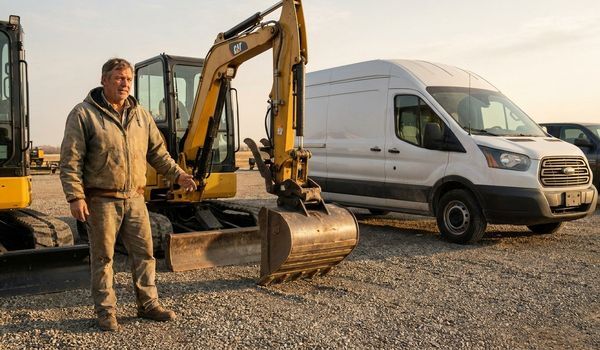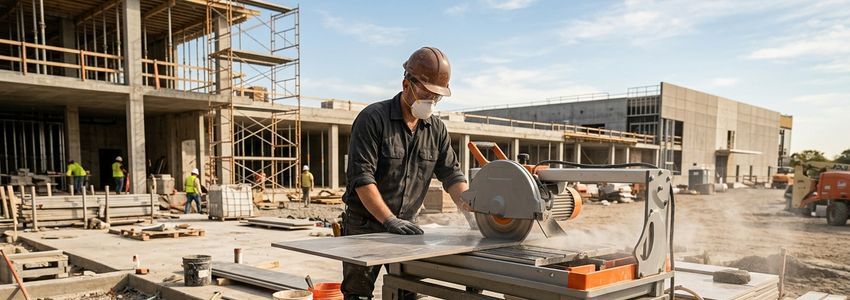
Tile cutting equipment financing gives flooring and tile contractors a way to acquire wet saws, tile setters, mixing stations, and leveling systems without draining working capital. Whether you are replacing a worn-out wet saw or outfitting a crew for a large commercial buildout, financing lets you get the equipment on the job site now and pay for it over time as the work generates revenue.
Tile and flooring contractors run on tight margins and tighter schedules. A cracked wet saw blade or a failing mixing station in the middle of a commercial buildout can stall a crew for days, and days of downtime on a bonded project can mean penalty clauses or a client who starts calling competitors. Equipment financing exists precisely for this kind of pressure point: it turns a large one-time expense into a predictable monthly payment while keeping cash on hand for payroll, materials, and the next bid.
In This Article
What Is Tile Cutting Equipment Financing?
Tile cutting equipment financing is a type of commercial equipment loan or lease used specifically to purchase or upgrade the machinery a tile and flooring contractor needs to run job sites efficiently. This includes wet saws, tile nippers and manual cutters, tile setting machines, mortar mixing stations, laser leveling systems, and dust extraction equipment.
Instead of paying the full purchase price up front, a contractor works with a lender to spread the cost across a fixed term, typically 24 to 72 months, with a set monthly payment. The equipment itself usually serves as collateral, which is one reason equipment financing tends to be easier to qualify for than an unsecured loan of the same size.
This structure applies whether you are buying a single high-end wet saw for a growing crew or outfitting an entire fleet of trucks with matching equipment for a multi-site commercial contract. The financing scales with the size of the purchase.
Tile and terrazzo contracting is a specific, defined trade in federal business classification data. According to U.S. Census Bureau NAICS classification data, tile, terrazzo, marble, and mosaic installation is tracked under code 238340, reflecting a well-established, capital-intensive segment of the specialty trade contracting industry. Businesses in this category typically rely on a mix of hand tools and powered equipment that requires periodic replacement as jobs scale up in size and complexity.
Key Stat: The U.S. equipment finance market reached roughly $1.02 trillion in new business volume in 2025, with small businesses accounting for approximately 35% of that activity, according to industry equipment finance data. Specialty trade contractors, including tile and flooring companies, represent a meaningful share of that small business segment.
The U.S. Small Business Administration has also noted a broader shift toward smaller, targeted term loans across small business lending generally, with a growing share of approved loans going toward specific equipment and working capital needs rather than large, general-purpose financing. That trend lines up with what many tile and flooring contractors experience directly: the financing need is rarely abstract, it is a specific saw, a specific mixer, or a specific truck standing between the business and the next job.
Key Benefits of Financing Tile and Flooring Equipment
- Preserve working capital. Keep cash available for payroll, materials deposits, and unexpected job site costs instead of tying it up in one large equipment purchase.
- Predictable monthly payments. Fixed payments make it easier to budget and bid future jobs with confidence.
- Faster equipment acquisition. Financing can move faster than saving up cash reserves, letting you take on bigger jobs sooner.
- Potential tax advantages. Many contractors structure equipment purchases to take advantage of accelerated depreciation rules; a tax professional can confirm what applies to your business.
- Upgrade without waiting. Replace aging or unreliable equipment before it fails mid-project, rather than limping along with worn-out tools.
- Build business credit. On-time payments on an equipment loan can help establish or strengthen your company's credit profile for future financing needs.
How Tile Cutting Equipment Financing Works
Identify the wet saw, tile setter, mixing station, or full equipment package you need, along with a vendor quote.
Provide basic business information; most equipment financing applications can be completed in minutes.
Compare term length, monthly payment, and any down payment or first-and-last-payment requirement.
Once approved, funds are typically released to the vendor quickly so your crew can get the new equipment on site.
Lenders generally evaluate time in business, personal and business credit history, and cash flow. Because the equipment secures the loan, contractors with less-than-perfect credit or a shorter operating history often still qualify, though terms may vary.
Small business lending patterns support this approach. Reporting on national small business lending trends has noted that smaller, targeted term loans, the kind used for a single equipment purchase, tend to see stronger approval rates than larger, general-purpose loans, since lenders can tie the funding directly to an asset with resale value. That dynamic is part of why equipment-specific financing has become a default funding tool for trade contractors rather than a fallback option.
Ready to Upgrade Your Tile Shop?
Get fast, flexible equipment financing from the #1 business lender in the U.S. No obligation, apply in minutes.
Apply Now →Types of Tile and Flooring Equipment You Can Finance
Tile cutting equipment financing is not limited to a single machine. Most lenders, including Crestmont Capital, will finance any legitimate business equipment purchase related to your trade. Common categories include:
- Wet saws and tile saws. From compact jobsite models to large-format porcelain and stone-cutting saws for slabs up to 5 feet or more.
- Tile setting machines and vacuum lifters. Equipment that speeds up setting large-format tile and slabs while reducing crew strain and injury risk.
- Mortar and thinset mixing stations. Powered mixers that keep material consistency uniform across large commercial jobs.
- Laser leveling and layout systems. Tools that improve accuracy on large-format and complex pattern installations.
- Dust extraction and ventilation equipment. Increasingly required on commercial job sites for silica dust compliance.
- Grinders, polishers, and edge finishing tools. For natural stone, terrazzo, and polished concrete finishing work.
- Work trucks and trailers. Vehicles and trailers used to transport crews, tile, and equipment between job sites.
Many contractors also use equipment financing to fund an entire mobile shop setup at once, bundling a new work trailer with saws, mixers, and hand tools into a single financed package rather than juggling multiple purchases.
Why Equipment Age Matters More Than It Used To
Large-format tile has become significantly more common in both residential and commercial installations over the past several years, with slabs now regularly exceeding 5 feet in a single piece. Older, smaller-capacity wet saws simply cannot handle this material, which means contractors who want to bid competitively on modern jobs often need to upgrade equipment more frequently than in the past. Financing makes that upgrade cycle sustainable instead of forcing a company to run outdated equipment until it fails.
Dust and silica exposure control has also become a bigger factor in equipment purchasing decisions. Occupational safety guidance from federal regulators has pushed many general contractors to require documented dust suppression on job sites involving cutting or grinding of silica-containing materials like tile, stone, and concrete. Contractors who do not already own compliant equipment may find themselves unable to bid on certain commercial and government-adjacent projects until they upgrade, making this an increasingly common driver of equipment financing requests.
Who This Financing Is Best For
Tile cutting equipment financing tends to make the most sense for:
- Established tile and flooring contractors replacing aging or unreliable equipment
- Growing companies adding a second or third crew and needing duplicate equipment sets
- Contractors who just won a large commercial bid requiring equipment they do not currently own
- Business owners who want to preserve cash reserves for payroll and materials rather than a large cash outlay
- Companies with seasonal cash flow that want to match equipment payments to revenue timing
It is generally a poor fit for brand-new businesses with no operating history and no revenue, since most lenders want to see at least some track record before extending equipment financing, though options do exist for newer businesses with strong personal credit.
Owner-Operators vs. Multi-Crew Companies
A one-person or two-person tile operation typically needs a leaner equipment package: a quality wet saw, a mixing station, and basic hand tools. Financing for this tier is usually straightforward and fast, often approved same-day given the relatively modest total cost involved.
Multi-crew companies face a different calculation. Each crew needs its own equipment set to avoid downtime waiting for shared tools to become available, which multiplies the total investment required. For these businesses, financing is less about affordability and more about capital efficiency, keeping cash free for the materials deposits and payroll that scale with each additional crew added.
Tile Equipment Financing vs. Other Funding Options
| Funding Option | Best For | Collateral | Typical Speed |
|---|---|---|---|
| Equipment Financing | Purchasing specific machinery or vehicles | The equipment itself | Fast, often 1-3 business days |
| Business Line of Credit | Ongoing, flexible expenses (materials, payroll) | Varies by lender | Fast once established |
| Working Capital Loan | General cash flow needs, not equipment-specific | Often unsecured | Fast |
| SBA Loan | Larger purchases, real estate, expansion | Varies, may require personal guarantee | Slower, weeks to months |
Equipment financing is usually the most efficient choice when the funding purpose is a specific, identifiable piece of machinery. A business line of credit or working capital loan makes more sense when the need is broader, such as covering payroll during a slow season or bridging the gap between invoicing and payment on a large job.
National business reporting from outlets including CNBC has repeatedly highlighted that access to funding, not lack of demand for services, is a primary growth constraint cited by small business owners across trades. For a tile or flooring contractor, that often shows up as turning down a job because the required equipment is not on hand rather than a shortage of available work. Matching the funding tool to the actual need, equipment financing for a specific machine versus a line of credit for general flexibility, helps avoid over-borrowing or under-funding a growth opportunity.
How Crestmont Capital Helps Tile and Flooring Contractors
Crestmont Capital works with tile, flooring, and specialty trade contractors across the country to fund the equipment that keeps job sites moving. As a top-rated U.S. business lender, Crestmont offers equipment financing and equipment leasing tailored to contractors who need to move quickly on a purchase decision.
For contractors financing larger, heavier machinery alongside tile-specific tools, such as demolition or subfloor prep equipment, Crestmont also provides dedicated construction equipment financing. And for contractors who need funding flexibility beyond a single equipment purchase, such as covering a materials deposit or bridging payroll on a large commercial job, Crestmont's business line of credit can round out a full funding strategy.
Contractors researching related equipment decisions may also find value in Crestmont's guides on flooring contractor business loans and tile installation business loans, which cover broader financing strategies for the trade.
Don't Let Old Equipment Slow Your Crew Down
Crestmont Capital funds tile and flooring equipment fast, often within days of approval.
Apply Now →By the Numbers
Tile and Flooring Equipment Financing: Key Statistics
$1.02T
U.S. equipment finance new business volume in 2025
~35%
Share of equipment finance activity from small businesses
73%
Approval rate reported for equipment loan applicants
6,900+
Tile and terrazzo contractor businesses operating in the U.S.
Real-World Scenarios

Scenario 1: Replacing a Failed Wet Saw Mid-Project
A flooring contractor's primary wet saw seizes up two weeks into a large residential remodel. Rather than delay the job while saving up cash for a replacement, the owner finances a new saw, receives it within days, and keeps the crew on schedule without missing the client's move-in deadline.
Scenario 2: Winning a Commercial Bid That Requires New Equipment
A tile contractor wins a bid for a large hotel lobby renovation that requires a large-format porcelain slab saw the company does not own. Equipment financing lets the owner acquire the saw against the value of the signed contract, without disrupting cash flow needed for materials and labor on the same job.
Scenario 3: Expanding to a Second Crew
A growing tile company adds a second installation crew to keep up with demand. Rather than pulling equipment away from the first crew, the owner finances a duplicate set of saws, mixers, and hand tools so both crews can run simultaneously on separate job sites.
Scenario 4: Meeting Dust Compliance Requirements
A commercial general contractor requires all subcontractors on a job site to use approved dust extraction systems for silica compliance. A tile subcontractor finances the required extraction equipment across several saws rather than paying for it all up front, keeping the company eligible to bid on future commercial work with the same requirement.
Scenario 5: Upgrading From Manual to Powered Mixing
A small flooring company that has relied on manual mixing for thinset and mortar finances a powered mixing station to speed up large commercial pours. The upgrade reduces labor hours per job, and the monthly payment is offset by the time savings across multiple projects.
Frequently Asked Questions
What is tile cutting equipment financing?
It is a type of business equipment loan or lease used to purchase wet saws, tile setters, mixing stations, and related tools for tile and flooring contractors, allowing the cost to be spread across fixed monthly payments instead of paid up front.
What equipment can be financed under this type of loan?
Wet saws, tile nippers, tile setting machines, mortar and thinset mixers, laser leveling systems, dust extraction equipment, grinders and polishers, and even work trucks or trailers used to support installation crews.
How much does a wet saw or tile setting equipment package typically cost?
Costs vary widely based on size and capability, from a few hundred dollars for a compact jobsite saw to tens of thousands of dollars for large-format slab saws and full mixing station setups. Financing is available across this entire range.
How long are typical financing terms for tile equipment?
Terms commonly range from 24 to 72 months depending on the equipment cost, expected useful life, and lender. Larger, longer-lasting equipment often qualifies for longer terms.
Do I need good credit to qualify?
Strong credit helps secure the best rates, but because the equipment itself serves as collateral, contractors with fair or building credit can often still qualify. Time in business and cash flow are also weighed heavily.
How fast can I get funded?
Many equipment financing applications are approved and funded within one to three business days, which is significantly faster than traditional bank loans or SBA financing.
Is a down payment required?
It depends on the lender and the applicant's credit profile. Some financing structures require no down payment, while others may ask for a first and last payment up front or a modest percentage of the equipment cost.
Can I finance used equipment?
Yes, most equipment lenders will finance used equipment purchased from a dealer or another business, though terms and rates may differ slightly from new equipment financing.
What is the difference between equipment financing and equipment leasing?
With financing, you typically own the equipment at the end of the term. With leasing, you may return the equipment, renew, or purchase it for a residual value, which can be useful for equipment that becomes outdated quickly.
Can a new tile or flooring business qualify for equipment financing?
It is more challenging without an operating history, but not impossible. Lenders will weigh personal credit, industry experience, and any signed contracts or bids that demonstrate expected revenue.
What documents are typically needed to apply?
Common requirements include a completed application, a vendor quote or invoice for the equipment, recent business bank statements, and basic business identification information such as an EIN.
Can financing cover an entire mobile shop setup, not just one saw?
Yes, many contractors bundle a work trailer, multiple saws, mixing equipment, and hand tools into a single financed package rather than financing each item separately.
Are there tax benefits to financing versus paying cash?
Many businesses can deduct financed equipment under standard depreciation rules regardless of whether it was purchased with cash or financing. A tax professional can advise on what applies to your specific situation.
What happens if I fall behind on payments?
As with any secured loan, missed payments can result in fees, credit impact, and in serious cases repossession of the financed equipment. Contact your lender immediately if you anticipate a payment issue to discuss options.
How do I get started with tile cutting equipment financing?
Gather a quote for the equipment you need and submit a straightforward application with a lender like Crestmont Capital. Most applicants receive a decision quickly, often within one business day.
Get Your Tile Equipment Funded Today
Simple application, fast decisions, and funding built around how contractors actually work.
Apply Now →Next Steps
Identify the exact saw, mixer, or equipment package and get a written quote.
Complete a short application online in minutes, no lengthy paperwork required.
Compare terms and choose the payment schedule that fits your cash flow.
Get your new equipment on the job site and keep your crews productive.
Industry Outlook for Tile and Flooring Contractors
Residential and commercial construction spending patterns have a direct effect on demand for tile and flooring installation. Coverage from outlets like Reuters has tracked how construction activity responds to interest rate cycles, with renovation and remodeling work often proving more resilient than new-build construction during periods of higher borrowing costs. For tile and flooring contractors, this has translated into steady demand from the remodeling and commercial tenant improvement segments even when new residential construction slows.
This resilience matters for equipment planning. A contractor who leans on financing to keep equipment current is better positioned to pursue whichever segment of the market, new construction or renovation, happens to be more active in a given year, rather than being locked out of opportunities by outdated or insufficient tools.
Choosing the Right Equipment Financing Partner
Not every equipment lender understands the tile and flooring trade the same way. Some questions worth asking before signing an agreement:
- Does the lender finance both new and used equipment? Many contractors buy quality used saws and mixers to control costs.
- Is there a prepayment penalty? If a strong season lets you pay off the balance early, you want that option available without a fee.
- How fast is funding after approval? A saw sitting in a dealer's warehouse does not help a stalled job site.
- Can the lender bundle multiple equipment items into one application? This saves time versus financing each tool separately.
- What happens if the equipment needs to be upgraded before the term ends? Some lenders offer early upgrade or trade-in options for growing businesses.
A lender that specializes in working with contractors and trade businesses, rather than a generic consumer finance company, will typically move faster and structure terms that better match how tile and flooring companies actually generate revenue throughout the year.
Conclusion
Tile cutting equipment financing gives flooring and tile contractors a practical way to keep crews equipped without draining the cash reserves a business needs for payroll, materials, and day-to-day operations. Whether you need a single replacement wet saw or a full mobile shop setup for a new crew, financing turns a large upfront cost into a manageable monthly payment that scales with your business.
Crestmont Capital works with tile and flooring contractors across the country to structure equipment financing that fits how these businesses actually operate, fast decisions, straightforward applications, and funding that gets equipment on the job site quickly. If aging or missing equipment is holding your crew back, financing can close that gap without putting the rest of your business at risk.
The tile and flooring trade rewards contractors who can move quickly when a bid comes in, when a saw fails, or when a client wants an accelerated timeline. Equipment financing removes the single biggest obstacle to that speed: waiting to save up enough cash before acting. For a business built on tight schedules and hard deadlines, that kind of flexibility is not a luxury, it is a competitive advantage over contractors still paying cash for every tool they own.
Disclaimer: The information provided in this article is for general educational purposes only and is not financial, legal, or tax advice. Funding terms, qualifications, and product availability may vary and are subject to change without notice. Crestmont Capital does not guarantee approval, rates, or specific outcomes. For personalized information about your business funding options, contact our team directly.