Cheese making equipment financing gives creameries, artisan cheesemakers, and small-batch dairy processors a way to buy vats, presses, pasteurizers, and aging equipment without draining working capital. Whether you are launching a farmstead creamery or scaling an established cheese production facility, the right financing structure lets you invest in production capacity while keeping cash on hand for ingredients, labor, and marketing.
In This Article
What Is Cheese Making Equipment Financing?
Cheese making equipment financing is a category of business lending built around the specific capital needs of creameries, cheese factories, and artisan dairy processors. Instead of paying cash upfront for a $60,000 cheese vat or a $200,000 pasteurization line, a business spreads the cost over a fixed term while the equipment itself typically serves as collateral. This structure works much like standard equipment financing, but lenders who understand dairy production also account for seasonal milk supply, aging-room timelines, and the multi-step nature of cheese production when structuring terms.
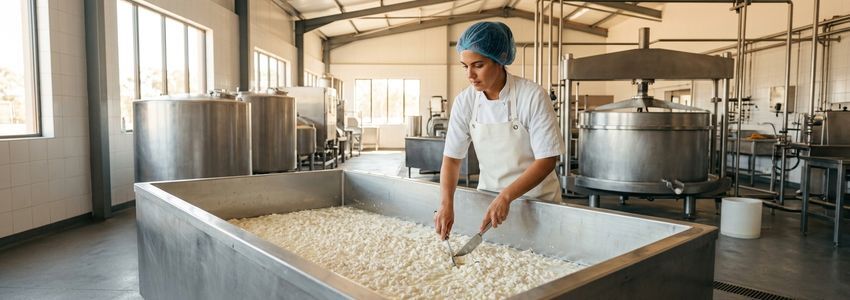
Cheese production has become one of the more capital-intensive corners of the specialty food industry. A single production line can include a pasteurizer, a cheese vat with mechanical stirring, a curd knife system, a press, a brining tank, vacuum packaging equipment, and a climate-controlled aging room, each with its own price tag and installation requirements. Financing lets a creamery acquire this equipment as a complete production system rather than piecing it together slowly, which matters when a wholesale account or retail opportunity has a narrow window to act.
Key Fact: The U.S. specialty and artisan cheese segment has grown steadily as consumers shift toward farmstead and small-batch dairy products, according to reporting on food and beverage trends from Forbes. That growth has pushed more small producers to expand production capacity faster than retained earnings alone can fund.
Types of Financing Available for Cheese Makers
Equipment Financing and Leasing
Equipment financing is the most direct tool for acquiring cheese vats, presses, pasteurizers, and packaging lines. The equipment secures the loan, which typically produces lower rates than unsecured products and faster approval since the lender has a clear collateral position. Leasing is an alternative structure worth considering for equipment that may need to be upgraded on a shorter cycle, such as packaging or labeling machinery.
SBA Loans
SBA loans offer the lowest rates on the market for creameries that can wait 30 to 90 days for funding. The SBA 7(a) program can fund up to $5 million and works well for a combined facility buildout and equipment purchase, such as converting a barn or outbuilding into a licensed production space. SBA 504 loans are built specifically for major fixed assets like a full processing line paired with real estate.
Working Capital Loans
Working capital loans address the cash flow reality of cheese production: milk and cultures are purchased and paid for now, but many aged cheeses cannot be sold for weeks, months, or in the case of clothbound cheddars and alpine styles, over a year. A working capital loan bridges that gap, covering payroll and ingredient costs while inventory ages toward saleable condition.
Business Lines of Credit
A business line of credit gives seasonal creameries a revolving buffer for the spring flush, when milk volume from pasture-based dairies increases sharply and production ramps up to match it. Draw against the line during high-production months, repay as sales come in, and avoid paying interest on capital you are not actively using.
Manufacturing Equipment Financing
For larger-scale cheese factories running automated production, manufacturing equipment financing covers higher-volume systems such as continuous vats, mechanized pressing lines, and automated wrapping and casing equipment. These systems can represent the single largest capital investment a growing cheese business will make.
Food Equipment Financing
Food equipment financing is a broader category that also covers ancillary equipment: walk-in coolers, blast chillers, commercial dishwashers for sanitation compliance, and lab equipment for quality testing that regulatory agencies require of licensed dairy processors.
Ready to Expand Your Cheese Production?
Get fast, flexible financing from the #1 business lender in the U.S. No obligation, apply in minutes.
Apply Now →By the Numbers
Cheese Making Equipment Financing - Key Statistics
$40K-$500K
Typical financed amount for a starter to mid-size creamery production line
5-15%
Typical equipment financing interest rate range
24-72h
Typical funding timeline for equipment and working capital loans
3-10 Yrs
Common repayment term for a full production line purchase
How Cheese Making Equipment Financing Works
The Application Process
Most alternative lenders use a straightforward online application: basic business information, 3 to 6 months of bank statements, and an equipment quote or invoice from the manufacturer or dealer. Decisions on equipment financing and working capital loans typically come back within 24 hours, with funding following shortly after. SBA loans require more documentation, including tax returns, a business plan, and financial projections, but deliver meaningfully lower rates in exchange for the longer timeline.
Underwriting Considerations Specific to Cheese Production
Lenders who understand dairy processing look beyond a simple credit score. They consider your milk supply arrangement (owned herd, contracted dairy, or purchased milk), your licensing status with state and federal dairy regulators, your production volume history if you are expanding rather than starting fresh, and your sales channels, whether wholesale, farmers markets, retail, or direct-to-consumer. A creamery with a signed distribution agreement or a growing wholesale account base presents a stronger underwriting picture than projected sales alone.
Rates and Terms
Equipment financing for cheese production equipment typically runs 5 to 15 percent depending on credit profile and equipment type, with terms of 3 to 10 years matched to the useful life of the asset. Working capital loans from alternative lenders run 8 to 35 percent over shorter terms of 3 to 18 months. SBA 7(a) loans currently run 7 to 11 percent with terms up to 25 years when real estate is involved, or up to 10 years for equipment-only SBA financing.
Pro Tip: If your cheese requires an extended aging period before it can be sold, build that timeline into your financing request. Lenders who specialize in food and agriculture financing can structure payment schedules with a short deferral period, or interest-only payments, so your loan payments do not outpace your inventory's readiness for sale.
Equipment You Can Finance for Cheese Production
Cheese Vats and Pasteurizers
The cheese vat is the heart of any production facility, combining heating, cooling, and mechanical agitation to develop curd from raw or pasteurized milk. Vat sizes range from small 100-gallon batch vats used by farmstead producers to multi-thousand-gallon continuous systems used by larger operations. Pasteurizers, whether batch (vat) pasteurizers or high-temperature-short-time (HTST) systems, are frequently financed alongside the vat as a combined system.
Presses and Molds
Cheese presses apply controlled pressure to expel whey and shape curd into its final form, ranging from simple gravity presses for small-batch operations to pneumatic and hydraulic multi-mold systems for higher volume production. Financing a press system alongside molds and hoops lets a creamery standardize batch sizes and improve consistency across production runs.
Brining Tanks and Aging Rooms
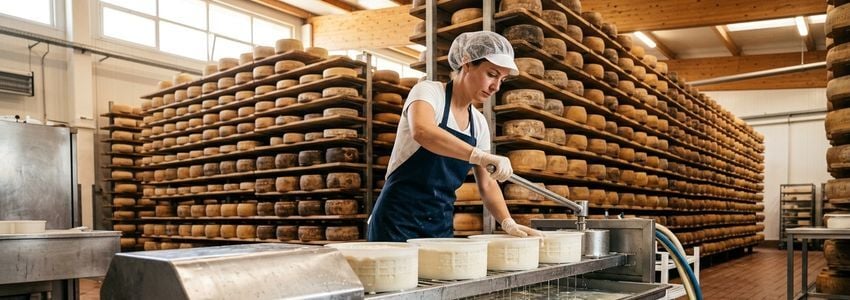
Many cheese styles require a brine bath immediately after pressing, followed by an extended aging period in a temperature- and humidity-controlled room. Building or retrofitting an aging room with proper refrigeration, humidification, and shelving represents a significant capital investment that financing can spread over the multi-year life of the equipment.
Packaging and Labeling Equipment
Vacuum sealers, wax dipping equipment, wheel wrapping systems, and automated labeling machinery help a growing creamery move from hand-wrapping individual wheels to production-scale packaging that meets retail and wholesale account requirements. This category also includes case-sealing and palletizing equipment for creameries shipping to regional or national distribution.
Quality Testing and Lab Equipment
Licensed dairy processors are required to test for pathogens, moisture content, pH, and other quality markers. Lab equipment including pH meters, moisture analyzers, and incubators for pathogen testing can be financed alongside production equipment, and is often required before a state dairy inspector will approve a facility for licensing.
Refrigeration and Cold Storage
Beyond the aging room itself, walk-in coolers for finished inventory, blast chillers for rapid cooling after pasteurization, and refrigerated delivery vehicles for wholesale distribution round out the equipment list most growing cheese businesses need to finance as they scale.
How to Qualify for Cheese Making Equipment Financing
Minimum Requirements
- At least 6 to 12 months in business for term financing (startup equipment financing options exist for newer operations)
- Personal credit score of 600 or higher for competitive equipment rates (some lenders work with scores as low as 550)
- Valid state dairy processing license or documented plan to obtain one
- Active business bank account with regular deposits
- An equipment quote, invoice, or purchase agreement from a manufacturer or dealer
Documents Needed
- 3 to 6 months of business bank statements
- Government-issued photo ID
- Voided business check
- Equipment quote or invoice with make, model, and price
- For SBA or larger loans: 2 years of tax returns, profit and loss statement, and balance sheet
Strengthening Your Application
Lenders respond well to documented sales relationships. A signed purchase agreement with a regional grocery chain, a standing farmers market presence with consistent revenue, or a wholesale distribution contract all demonstrate that new production capacity has somewhere to go. If you are converting from raw milk sales or a small side operation into a licensed commercial creamery, a clear business plan showing your production timeline, aging schedule, and projected first-year sales strengthens your case significantly.
Comparing Financing Options
| Loan Type | Best For | Amount | Rate | Speed |
|---|---|---|---|---|
| Equipment Financing | Vats, presses, pasteurizers | $10K-$2M | 5-15% | 24-72h |
| Working Capital | Payroll during aging periods | $10K-$500K | 8-35% | 24-72h |
| Line of Credit | Seasonal milk flush production | $10K-$500K | 10-25% | 2-5 days |
| SBA 7(a) | Facility buildout plus equipment | Up to $5M | 7-11% | 30-90 days |
| Manufacturing Equipment Financing | Automated, high-volume lines | $50K-$5M | 6-16% | 3-10 days |
How Crestmont Capital Helps Cheese Producers
Crestmont Capital is the #1 rated business lender in the United States, and we work with food and beverage producers who need financing structured around real production cycles, not generic business loan templates. We understand that a cheese business is not the same as a restaurant or a retail shop: revenue can be delayed by weeks or months while product ages, milk supply can be seasonal, and equipment often needs to be financed as an integrated system rather than piece by piece.
We evaluate your application based on the full picture of your business, including your production plans, sales channels, and growth trajectory, not just a credit score in isolation. Explore our manufacturing equipment financing and food equipment financing options, or learn how we've helped related dairy and food producers in our guides to dairy farm equipment financing and food processing equipment financing. Apply online in minutes and get a decision in as little as 24 hours.
Ready to Build Out Your Creamery?
Crestmont Capital offers fast, flexible financing built around real production cycles. Decisions in as little as 24 hours.
Get Funded Today →Real-World Scenarios
Scenario 1: Farmstead Creamery Adds a Second Vat
A farmstead goat cheese producer in Vermont had built a loyal following at regional farmers markets but was consistently selling out within the first two hours of each market. A second 200-gallon vat and matching press system cost $85,000. Equipment financing over 5 years kept monthly payments manageable, and the doubled production capacity let the creamery add two new farmers markets and a small wholesale account with a local grocery cooperative within the first season.
Scenario 2: Cheese Shop Converts to Licensed Production
A retail cheese shop that had built a strong customer base selling other producers' cheese decided to begin making its own small-batch cheddar and Monterey Jack in-house. Converting a back room into a licensed production space required a pasteurizer, vat, press, and aging cooler totaling $130,000, plus $40,000 in facility buildout. An SBA 7(a) loan financed the full project at 8.75 percent over 10 years, and the in-house cheese program became the shop's highest-margin product line within 18 months.
Scenario 3: Established Creamery Expands Aging Capacity
A specialty cheddar producer in Wisconsin had outgrown its aging room and was turning away wholesale orders because it could not hold enough inventory through the required 9-month aging period. A dedicated 1,200-square-foot aging room addition with humidity and temperature control cost $210,000. Equipment and buildout financing over 7 years allowed the creamery to accept two new regional grocery accounts that had previously gone to a competitor with more aging capacity.
Scenario 4: Mobile Creamery Bridges a Seasonal Cash Gap
A sheep dairy producing seasonal cheese only during the spring and summer milking season faced a predictable off-season cash crunch each winter, when no milk meant no new inventory but fixed costs continued. A $60,000 business line of credit provided a standing buffer for winter overhead, drawn down each off-season and repaid in full as spring cheese sales ramped back up, preserving the owner's ability to keep a small year-round staff.
Scenario 5: Cheese Factory Scales to Automated Production
A regional cheese factory producing string cheese and mozzarella for foodservice accounts needed to move from manual curd handling to an automated stretching and molding line to meet growing demand from a national pizza chain contract. The automated line cost $850,000 installed. Manufacturing equipment financing over 8 years made the investment feasible, and the new capacity let the factory fulfill the full contract volume within the required ramp-up window, securing a multi-year supply agreement.
Scenario 6: Creamery Adds Packaging Automation
A growing artisan cheese producer had been hand-wrapping and hand-labeling every wheel, which limited daily output regardless of production capacity elsewhere in the facility. A semi-automated wrapping and labeling system cost $95,000. Equipment financing over 4 years eliminated the packaging bottleneck, tripling the creamery's daily shippable output and enabling it to fulfill a new distributor's minimum order requirements for the first time.
Frequently Asked Questions
What is cheese making equipment financing?
Cheese making equipment financing is a business loan structured specifically to help creameries and cheese producers purchase vats, presses, pasteurizers, aging equipment, and packaging systems. The equipment typically secures the loan, which spreads the cost over a fixed term instead of requiring a large upfront cash outlay.
What types of cheese making equipment can I finance?
Common financed equipment includes cheese vats, batch and HTST pasteurizers, presses and molds, brining tanks, aging room refrigeration and humidity systems, vacuum sealers and wax dipping equipment, wheel wrapping and labeling machinery, lab and quality testing equipment, and walk-in coolers or blast chillers.
What credit score do I need to qualify?
Alternative lenders often work with scores as low as 550, though 600 or higher produces more competitive equipment financing rates. SBA loans generally require 680 or higher. Because the equipment itself serves as collateral, equipment financing is often more accessible for newer or lower-credit borrowers than unsecured working capital loans.
How quickly can I get funded?
Equipment financing and working capital loans from alternative lenders typically fund within 24 to 72 hours of approval. Business lines of credit take 2 to 5 business days to establish. SBA loans take 30 to 90 days from application to funding, but offer significantly lower rates for larger, planned investments.
Can I finance equipment for a new creamery that hasn't opened yet?
Yes, though options are somewhat more limited than for an established business. Startup-friendly equipment financing programs exist that weigh your business plan, industry experience, and personal credit more heavily than time in business. A documented dairy license application and equipment quotes strengthen a startup application significantly.
Do I need a dairy processing license before I can get financing?
Most lenders want to see either an active license or a clear, documented plan and timeline for obtaining one, since licensing is required to legally sell cheese commercially in every state. Some lenders will fund equipment purchases while your license application is in process, particularly if the equipment itself is a licensing requirement.
How do lenders handle the long aging period before cheese can be sold?
Lenders experienced in food and agriculture financing can structure deferred payment periods, interest-only phases, or seasonal payment schedules that align with your aging and sales timeline. Explaining your specific aging requirements upfront, whether it is 60 days for a fresh cheddar or 12 months for a clothbound alpine-style cheese, helps the lender structure appropriate terms.
What is the difference between equipment financing and a working capital loan for a cheese business?
Equipment financing is secured by the specific equipment purchased and is intended for that one-time capital investment, typically over 3 to 10 years. Working capital is unsecured, shorter-term, and intended for operational costs like payroll, milk purchases, or ingredients while waiting on cheese to age or accounts receivable to be collected.
Can I use an SBA loan to build a new creamery facility?
Yes. SBA 7(a) loans can fund a combined project of facility construction or renovation plus equipment purchase, up to $5 million. SBA 504 loans are specifically designed for major fixed assets including real estate and large equipment, often with a lower down payment requirement than conventional commercial real estate financing.
What interest rates should I expect?
Equipment financing typically runs 5 to 15 percent depending on credit and equipment type. SBA loans run 7 to 11 percent. Working capital loans from alternative lenders run 8 to 35 percent. Lines of credit run 10 to 25 percent. Strong credit, an established sales history, and a solid business plan produce the most competitive rates across all product types.
Can I finance used cheese making equipment?
Yes. Used equipment financing is common in the dairy processing space, since quality stainless steel vats, presses, and pasteurizers hold their value and functionality well when properly maintained. Financing used equipment typically carries a slightly higher rate than new equipment but can meaningfully lower the total project cost.
How does seasonal milk supply affect my financing options?
Lenders who work with agricultural and food producers understand that pasture-based dairies often see a spring milk flush followed by lower winter volume. A business line of credit is often the most useful tool for managing this seasonality, letting you draw capital during high-production months and repay during slower periods without renegotiating a new loan each cycle.
Will applying for financing affect my personal credit score?
Prequalification typically uses a soft credit pull that does not affect your score. A full application generates a hard pull with a small, temporary impact. Applying with multiple lenders within a short window, generally 14 to 45 days, is usually treated as a single inquiry by credit scoring models.
Can I refinance existing cheese production equipment debt for better terms?
Yes. If your creamery's revenue or credit profile has improved since your original equipment purchase, refinancing into a lower rate or a term better matched to your cash flow cycle can free up working capital. Review your current loan agreement for any prepayment penalties before pursuing a refinance so the savings clearly outweigh the cost.
Can I finance a full production line as one package instead of individual pieces of equipment?
Yes. Many lenders will finance a complete system, including vat, pasteurizer, press, and packaging equipment, as a single loan when purchased together, simplifying the application and approval process compared to financing each component separately.
How to Get Started
Reach out to your equipment manufacturer or dealer for a formal quote covering the vat, press, pasteurizer, or full production line you need.
Complete our quick application at offers.crestmontcapital.com/apply-now with recent bank statements and your equipment quote ready.
A Crestmont Capital advisor will review your production plans and match you with the right financing structure for your timeline.
Receive your funds, often within 24 to 72 hours, and put your new equipment to work growing your cheese business.
Conclusion
Cheese making equipment financing gives creameries and artisan cheesemakers a practical way to invest in the vats, presses, pasteurizers, and aging infrastructure that production growth requires, without exhausting the cash reserves needed to buy milk, pay staff, and carry inventory through its aging period. Whether you are a farmstead producer adding a second vat, a cheese shop converting to licensed production, or an established factory automating for a new wholesale contract, matching the right financing structure to your production and sales cycle makes the difference between a stressful capital investment and a smooth one.
Crestmont Capital works with food and dairy producers who need financing structured around real production timelines rather than a one-size-fits-all template. Apply today and get a decision in as little as 24 hours, and let us help you build the cheese production capacity your business needs to grow.
Ready to Fund Your Cheese Production Equipment?
Apply in minutes and get a decision in as little as 24 hours. Crestmont Capital is the #1 business lender in the U.S.
Apply Now →Disclaimer: The information provided in this article is for general educational purposes only and is not financial, legal, or tax advice. Funding terms, qualifications, and product availability may vary and are subject to change without notice. Crestmont Capital does not guarantee approval, rates, or specific outcomes. For personalized information about your business funding options, contact our team directly.