
 (800) 949-0401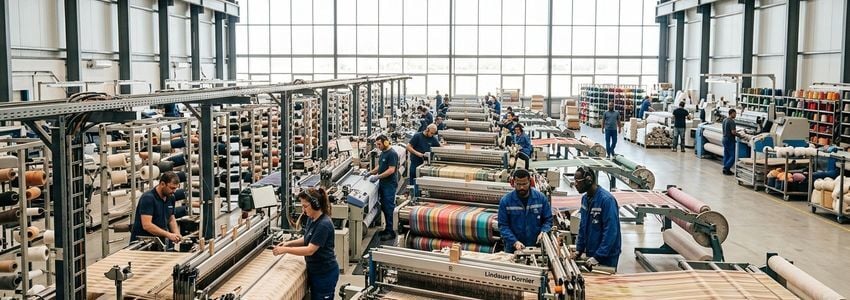
Textile Manufacturing Business Loans: The Complete Financing Guide
Textile manufacturing is one of the most capital-intensive industries in the United States, requiring continuous investment in machinery, raw materials, labor, and technology to remain competitive. Whether you operate a small apparel production facility or a large fabric manufacturing plant, access to reliable business financing can be the difference between falling behind competitors and scaling with confidence. Textile manufacturing business loans give operators the capital to purchase equipment, bridge seasonal cash flow gaps, hire skilled workers, and expand capacity when demand surges.
In This Article
What Are Textile Manufacturing Business Loans?
Textile manufacturing business loans are financing products designed specifically for companies that produce fabrics, yarns, threads, apparel, technical textiles, home goods, and related materials. These loans provide capital for operational and growth needs that are unique to manufacturing environments: buying weaving machines, dyeing equipment, spinning machinery, cutting and sewing systems, and large volumes of raw material inventory.
Unlike generic small business loans that may not account for the cycles and capital requirements of manufacturing, textile-focused financing recognizes the industry's dynamics. Lenders who work with manufacturers understand that a fabric producer may have high receivables on 60-90 day payment terms, or that an apparel maker needs to purchase seasonal raw materials months before generating revenue. This contextual understanding allows lenders like Crestmont Capital to structure financing that genuinely fits how textile businesses operate.
Textile manufacturers can access several types of loans and credit facilities, from equipment financing and working capital loans to lines of credit and invoice financing. The right mix depends on whether you need capital for a one-time equipment purchase, recurring operational expenses, or ongoing cash flow support during growth cycles.
Industry Snapshot: According to the U.S. Census Bureau, the U.S. textile and apparel manufacturing sector employs over 500,000 workers and generates more than $70 billion in annual output. Despite global competition, domestic specialty manufacturers remain active in technical textiles, medical fabrics, and performance apparel where quality and fast turnaround matter most.
Key Benefits of Financing Your Textile Business
Securing textile manufacturing business loans delivers concrete advantages beyond simply having more cash on hand. The right financing can reshape how your business operates and grows.
- Modernize your machinery: Older looms, knitting machines, and sewing systems slow production and increase defect rates. Financing lets you upgrade to automated, faster, more precise equipment without depleting reserves.
- Meet bulk material orders: Large retailers and brands often require significant minimum order quantities. Working capital financing helps you secure raw material at competitive prices before receiving payment from customers.
- Manage seasonal cash flow: Apparel and textile demand spikes around fashion seasons and major retail buying cycles. Short-term financing bridges cash flow gaps during slow periods so payroll and vendor payments stay current.
- Expand capacity quickly: When a major contract arrives, you need to scale fast. A business line of credit or equipment loan lets you add floor space, machinery, and staff without waiting months to save capital.
- Hire and retain skilled labor: Skilled sewers, pattern makers, and machine operators are difficult to find and expensive to train. Financing ensures you can offer competitive wages and retain your best people.
- Compete on delivery terms: Fast fulfillment requires having inventory and production capacity ready. Inventory financing and working capital loans make just-in-time production viable at scale.
Ready to Fund Your Textile Business?
Get flexible financing designed for manufacturers. Fast approvals, competitive rates, and funding in as little as 24-48 hours.
Apply Now →Types of Financing Available for Textile Manufacturers
Textile manufacturers are not limited to a single financing product. The most successful operations combine multiple financing tools to address different capital needs simultaneously.
Equipment Financing
Equipment financing is one of the most common solutions for textile businesses. It allows you to purchase weaving machines, circular knitters, dyeing kettles, industrial sewing systems, cutting tables, embroidery machines, and finishing equipment without a large upfront cash payment. The equipment itself typically serves as collateral, which makes approval easier and interest rates more competitive than unsecured options. Terms typically range from 24 to 84 months, and many lenders offer up to 100 percent of the equipment purchase price. Crestmont Capital's equipment financing program covers a wide range of textile machinery at competitive rates.
Working Capital Loans
Working capital loans provide short- to medium-term funding for day-to-day operational costs including payroll, utilities, raw materials, and vendor payments. For textile manufacturers who operate on thin margins and deal with long receivables cycles, working capital financing keeps the business running smoothly between production runs and customer payments. Unsecured working capital loans from Crestmont Capital require no collateral and fund quickly.
Business Line of Credit
A revolving business line of credit gives you on-demand access to capital up to a predetermined limit. You draw what you need, pay it back, and draw again. For textile manufacturers, this is invaluable for managing unpredictable material costs, rush orders, or seasonal demand shifts without applying for a new loan each time. Interest is charged only on the outstanding balance, keeping costs controlled. Learn more about business lines of credit at Crestmont Capital.
Invoice Financing
Many textile manufacturers sell to large retailers, wholesalers, or brands on net-30 to net-90 payment terms. This creates a cash flow gap where you have delivered goods but have not yet received payment. Invoice financing (also called accounts receivable financing) allows you to borrow against your outstanding invoices, receiving 80-90 percent of the invoice value upfront. When your customer pays, you receive the remainder minus a small fee. This solves the receivables timing problem without taking on traditional debt.
SBA Loans
For textile manufacturers with strong financials and some time in business, SBA 7(a) loans offer long repayment terms (up to 10-25 years), lower down payments, and competitive interest rates. SBA loans are ideal for major capital investments such as building expansions, substantial equipment packages, or acquisition financing. The tradeoff is a longer application and approval process compared to alternative lenders.
Inventory Financing
Raw fabric, yarns, dyes, trims, and finished goods represent significant capital for textile manufacturers. Inventory financing uses your inventory as collateral to secure a loan or line of credit, giving you capital to stock up on materials ahead of busy seasons, take advantage of bulk discounts, or fulfill large orders on short notice.
By the Numbers
Textile Manufacturing Financing - Key Statistics
$70B+
U.S. textile and apparel manufacturing annual output
500K+
U.S. textile and apparel manufacturing workers employed
24-48h
Typical funding time with alternative business lenders
80%
Of textile manufacturers use some form of business financing
How Textile Manufacturing Financing Works
The application and funding process for textile manufacturing business loans is more streamlined today than it has ever been. Alternative and direct lenders like Crestmont Capital have removed the complexity and waiting time that once made bank financing impractical for many manufacturers.
Here is what the process typically looks like from application to funded account:
Step 1: Submit Your Application. Most lenders accept online applications that take 5-15 minutes to complete. You will provide basic business information - legal name, structure, time in business, annual revenue, and the loan amount you are requesting. Some lenders also ask for the intended use of funds.
Step 2: Document Verification. You will typically need to provide three to six months of business bank statements, your most recent tax return, and basic financial documents. For equipment financing, you may also need a quote or invoice from the equipment vendor. Established manufacturers with strong financials often face minimal documentation requirements.
Step 3: Underwriting and Approval. The lender reviews your application, financial statements, and business profile. Alternative lenders typically make decisions within 24-48 hours. SBA loans take considerably longer, often 30-90 days. Direct lenders like Crestmont Capital have in-house underwriting teams that can provide fast decisions tailored to manufacturing businesses.
Step 4: Receive Your Offer. If approved, you receive a loan offer detailing the loan amount, interest rate or factor rate, repayment terms, and any associated fees. You have the opportunity to review the offer and ask questions before signing.
Step 5: Funding. Once you sign and accept your offer, funds are typically deposited into your business bank account within one to three business days. For equipment financing, funds may go directly to the vendor.
Pro Tip: Textile manufacturers with clean financial records, consistent revenue, and strong customer relationships typically qualify for the best rates and terms. If you are planning a major capital investment, start building your credit profile and financial documentation at least 90 days before you intend to apply.
What You Can Fund with Textile Manufacturing Business Loans
Textile manufacturing business loans are flexible - they can be applied to virtually any legitimate business expense. The most common uses in the textile sector include:
Machinery and Equipment
Industrial weaving looms, knitting machines, dyeing and finishing equipment, cutting tables, industrial sewing machines, embroidery machines, screen printing systems, heat transfer presses, and fabric inspection equipment. The textile machinery market offers equipment at widely varying price points, from entry-level industrial sewing systems at $10,000 to large-format automated weaving machines that cost hundreds of thousands of dollars.
Raw Materials and Inventory
Yarns, threads, woven and knitted fabrics, synthetic and natural fibers, dyes and chemicals, zippers, buttons, trims, and finished goods waiting for delivery. Raw material costs are among the largest expenses for textile manufacturers and fluctuate significantly with commodity prices and supply chain conditions.
Facility Expansion and Improvement
Expanding your production floor, adding climate-controlled storage for sensitive materials, upgrading electrical systems to support heavier machinery, improving ventilation and dust extraction systems, or adding warehouse space for finished goods. Facility investments often accompany equipment upgrades when manufacturers scale production capacity.
Working Capital and Payroll
Keeping payroll current, covering utilities and rent, paying vendor invoices, and managing the financial gap between production completion and customer payment. In an industry where receivables terms can stretch 60-90 days, working capital financing is often essential for cash flow management.
Technology Investments
ERP and production management software, CAD/CAM design systems, barcode and inventory tracking systems, quality control automation, and digital pattern-making technology. Modern textile manufacturers are increasingly tech-driven, and software investments improve efficiency across design, production, and distribution.
Fleet and Logistics
Delivery vehicles, forklifts, pallet jacks, and other equipment used to move materials within facilities or deliver finished goods to customers. For manufacturers with in-house distribution, vehicle financing reduces the cash burden of maintaining a functional logistics operation.
Who Qualifies for Textile Manufacturing Business Loans
Qualification requirements vary by lender and loan type, but most reputable direct lenders evaluate several key factors when reviewing textile manufacturing loan applications.
Time in Business
Most conventional and alternative lenders prefer businesses that have been operating for at least 12-24 months. Startups and businesses under 12 months old face more limited options, though some lenders do offer startup-focused products. More established manufacturers typically qualify for larger loan amounts and better terms.
Annual Revenue
Lenders look at your gross annual revenue to assess whether your business generates enough income to comfortably service the requested debt. Most lenders require a minimum of $100,000 to $150,000 in annual revenue. Higher revenue qualifies you for larger loan amounts.
Credit Score
Both personal and business credit scores are reviewed. For alternative lenders, a minimum personal credit score of 550-600 is often acceptable. Traditional bank lenders typically require scores above 680-700. Strong business credit, maintained through on-time vendor payments and established trade lines, can supplement a lower personal score.
Financial Documentation
Bank statements, profit and loss statements, and tax returns provide lenders with evidence of your business's financial health. Consistent revenue, manageable existing debt, and a positive cash flow pattern all strengthen your application.
Industry-Specific Factors
Lenders familiar with textile manufacturing will also consider the nature of your customer base, your production contracts, and your position in the supply chain. A manufacturer with long-term retail or brand contracts is generally seen as lower risk than one dependent on spot-market orders.
Find Out If You Qualify
Crestmont Capital works with textile manufacturers at every stage. Apply today and get a decision within 24-48 hours.
Check Your Options →How Crestmont Capital Helps Textile Manufacturers
Crestmont Capital is a direct lender rated #1 in the U.S. for small business lending. We have extensive experience working with manufacturers across a wide range of industries, including textile and apparel businesses of every size. Our funding specialists understand the capital cycles, equipment requirements, and cash flow dynamics unique to textile manufacturing.
Unlike traditional banks that apply a one-size-fits-all approach to manufacturing loans, Crestmont Capital tailors financing solutions to fit your specific situation. Whether you need a quick $50,000 working capital injection to cover payroll during a slow season or a $500,000 equipment loan to install an automated knitting line, our team builds the financing package around your goals and financial profile.
Our manufacturing equipment financing program covers all major categories of textile machinery with competitive rates, flexible terms, and fast approvals. For businesses that need broader capital flexibility, our working capital and line of credit products complement equipment financing by covering operational expenses, inventory, and growth initiatives simultaneously.
If you want a framework for how other manufacturers have approached their capital strategy, our guide on manufacturing business loans covers the full range of financing products available across the manufacturing sector. And for businesses exploring the equipment financing process specifically, our Equipment Financing 101 guide breaks down exactly how the process works and what to expect.

Real-World Scenarios: Textile Manufacturers Using Business Loans
Understanding how financing works in practice helps clarify which products and strategies are best suited to your situation. Here are six realistic scenarios drawn from common textile manufacturing business situations.
Scenario 1: The Apparel Startup Landing Its First Big Retail Contract
A small cut-and-sew operation in North Carolina lands a purchase order from a regional clothing brand for 10,000 units per month. The order is three times their current capacity. The owner applies for a $150,000 equipment loan to purchase two industrial sewing lines and additional cutting tables. Combined with a $50,000 working capital loan to cover materials and labor while awaiting the first payment, the owner fulfills the contract, builds a relationship with the brand, and scales to six additional employees within six months.
Scenario 2: The Fabric Dyer Facing Seasonal Cash Flow Gaps
A fabric dyeing company based in South Carolina serves multiple home furnishings manufacturers. Orders surge in Q3 as manufacturers prepare for holiday inventory, but the payment cycle means the dyeing company often waits 60-75 days to receive payment after delivery. A $200,000 business line of credit allows the owner to draw capital during peak production, pay off the line when customers pay, and draw again for the next production cycle. This eliminates the constant stress of timing cash flow around customer payments.
Scenario 3: The Technical Textile Manufacturer Upgrading Production
A technical textile company producing performance fabrics for outdoor gear brands in Portland, Oregon decides to invest in automated fabric testing and inspection equipment. The new systems cost $320,000 but will reduce defect rates, lower quality control labor costs, and allow the company to pursue contracts with higher-end brands that require ISO certification. A 60-month equipment financing arrangement covers the purchase with monthly payments that are easily covered by the cost savings from reduced defect-related returns.
Scenario 4: The Wholesale Yarn Distributor Seeking Inventory Financing
A wholesale yarn distributor in Massachusetts notices a significant price dip in natural wool due to supply chain disruptions abroad. Purchasing a six-month supply of wool at the discounted price would save approximately $80,000 but requires $250,000 in upfront capital that the distributor does not have on hand. An inventory financing facility allows the company to purchase the stock, sell it at normal market prices over the following months, and repay the loan with the margin earned on the favorable purchase.
Scenario 5: The Embroidery and Custom Apparel Business Winning a Government Contract
A small embroidery shop in Texas wins a government contract to supply customized uniforms for a municipal agency. The contract requires 50,000 units to be delivered within 90 days. The owner uses $75,000 in working capital financing to purchase blank garments, hire temporary workers, and run double shifts. The loan is repaid upon delivery and payment of the contract, generating a net profit that funds the next phase of business growth.
Scenario 6: The Legacy Mill Modernizing to Stay Competitive
A third-generation weaving mill in the Southeast has been losing contracts to overseas competitors. After researching the market, the owner determines that investing in modern high-speed rapier looms will allow the mill to produce specialty technical fabrics that foreign competitors cannot easily replicate. A $1.2 million SBA 7(a) loan with a 10-year repayment term funds the machinery purchase and facility modifications. Within two years, the mill has repositioned itself as a specialty technical textile supplier and regained market share.
External Resource: According to the U.S. Small Business Administration, manufacturing businesses represent one of the strongest categories for SBA loan approvals. Understanding your market position and having a clear use of funds significantly improves approval outcomes.
Frequently Asked Questions
How to Get Started
Complete our quick application at offers.crestmontcapital.com/apply-now. The application takes 5-10 minutes and requires basic business information and financial data.
A Crestmont Capital advisor with manufacturing industry experience will review your application, discuss your goals, and match you with the right financing solution for your textile business.
You will receive a financing offer with clear terms, rates, and repayment schedule. Review it with your accountant or financial advisor before signing - no pressure, no hidden fees.
Once approved and signed, funds typically arrive in your business bank account within 1-3 business days. For equipment financing, funds go directly to your vendor so production can start faster.
Start Your Application Today
Join thousands of U.S. manufacturers who trust Crestmont Capital for fast, flexible business financing. Apply in minutes, get funded in days.
Apply Now - It's Free →Conclusion
Textile manufacturing business loans are an essential tool for operators in one of America's most resilient and diversified industries. Whether you are a small cut-and-sew operation looking to land your first major retail contract, an established fabric producer upgrading to automated equipment, or a technical textile manufacturer scaling to meet growing demand for specialty materials, financing gives you the capital to act decisively without draining the cash reserves your business depends on to operate.
The key to successful financing is matching the right product to your specific need - equipment loans for long-lived machinery investments, working capital for operational expenses, lines of credit for flexible ongoing needs, and invoice financing to bridge receivables gaps. Understanding your options and working with a lender who understands manufacturing ensures you get terms that genuinely support your business rather than creating unnecessary financial strain.
Crestmont Capital offers the full range of textile manufacturing business loans with fast approvals, competitive rates, and financing specialists who understand your industry. Apply today and take the first step toward the equipment, inventory, and working capital your textile business needs to grow.
Disclaimer: The information provided in this article is for general educational purposes only and is not financial, legal, or tax advice. Funding terms, qualifications, and product availability may vary and are subject to change without notice. Crestmont Capital does not guarantee approval, rates, or specific outcomes. For personalized information about your business funding options, contact our team directly.








