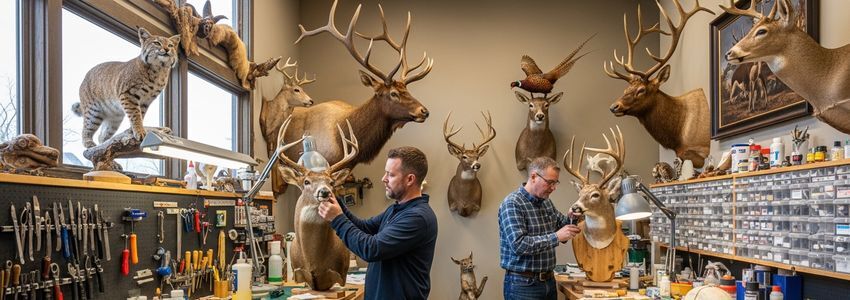
The art of taxidermy combines biology, craftsmanship, and a deep appreciation for wildlife, turning a passion into a viable business. As a taxidermist, your focus is on creating lifelike mounts, but to grow your studio, you need the right financial tools. This is where taxidermy business loans become essential, providing the capital to purchase specialized equipment, manage seasonal cash flow, and expand your operations to meet client demand.
In This Article
- What Are Taxidermy Business Loans?
- Why Taxidermy Business Owners Need Financing
- Types of Business Loans for Taxidermy Shops
- How Taxidermy Business Financing Works
- Who Qualifies for Taxidermy Business Loans?
- How Much Can You Borrow?
- Financing Taxidermy Equipment and Supplies
- Real-World Scenarios: How Taxidermists Use Financing
- How Crestmont Capital Helps Taxidermy Business Owners
- How to Apply for a Taxidermy Business Loan
- Frequently Asked Questions
- How to Get Started
What Are Taxidermy Business Loans?
A taxidermy business loan is not a single, specific product. Instead, it is a broad category of commercial financing solutions designed to meet the unique financial needs of a taxidermy studio. Unlike a generic personal loan, these financial tools are structured for business purposes, with terms, repayment schedules, and loan amounts tailored to the operational realities of your craft. Whether you are a solo artist working from a home studio or a large-scale operation with multiple employees, the right financing can be the catalyst for stability and growth.
These loans acknowledge the specific challenges and opportunities within the taxidermy industry. Lenders who understand your business know that you face significant upfront costs for equipment like freeze-dryers and fleshing machines, the need to purchase supplies in bulk to save money, and the seasonal revenue fluctuations tied to hunting seasons. A taxidermy business loan can provide a lump sum of cash for a major investment, a flexible line of credit to manage day-to-day expenses, or a specialized equipment loan that uses the asset itself as collateral.
The core purpose of this type of financing is to empower you to invest in your business's future. It allows you to move beyond simply covering immediate costs and start making strategic decisions. You can upgrade your tools to improve the quality and speed of your work, expand your workshop to take on more projects, or launch a marketing campaign to attract high-value clients. In essence, taxidermy business loans are a strategic resource for transforming your artistic skill into a more profitable and sustainable enterprise.
Why Taxidermy Business Owners Need Financing
The journey from a skilled hobbyist to a professional taxidermist requires more than just talent. It demands significant capital investment. The costs associated with running a modern, efficient, and competitive taxidermy studio are substantial. Here are the primary reasons why taxidermy business owners seek financing to start, run, and grow their operations.
Startup Costs for a New Studio
Launching a new taxidermy business from scratch is a major undertaking. Initial capital is needed to cover a wide range of foundational expenses before you can even accept your first project. These include:
- Workshop Lease or Purchase: Securing a suitable commercial space with proper ventilation, drainage, and security is often the largest initial expense.
- Permits and Licensing: Federal and state licenses (like a Federal Migratory Bird Taxidermy Permit), business registration, and insurance are mandatory and come with associated fees.
- Initial Tool & Supply Inventory: This includes everything from basic hand tools, knives, and sculpting supplies to your first order of mannequins, glass eyes, tanning chemicals, and mounting materials.
- Studio Setup: Building out the workspace with appropriate workbenches, lighting, plumbing, and storage solutions.
Purchasing and Upgrading Specialized Equipment
The quality of your work is directly tied to the quality of your tools. Modern taxidermy equipment can dramatically increase efficiency, improve the final product, and allow you to offer services that competitors cannot. Financing is often essential for these high-cost assets:
- Fleshing Machines: A critical tool for speeding up the preparation process, costing anywhere from $2,000 to $7,000 or more.
- Commercial Freeze-Dryers: The gold standard for preserving delicate specimens like fish, reptiles, and pet memorials. This is a major investment, with costs ranging from $50,000 to over $150,000.
- Tanning Drums: For studios that handle their own tanning in-house, a commercial drum is necessary for consistent, high-quality results, costing $5,000 to $15,000.
- Airbrush and Compressor Systems: Essential for the fine detail work and finishing that sets a professional mount apart from an amateur one.
Key Stat: According to a report by the U.S. Fish and Wildlife Service, over 101 million Americans participated in wildlife-related recreation, including hunting and fishing, spending billions of dollars annually. This creates a large and sustained market for taxidermy services.
Managing Seasonal Cash Flow
The taxidermy business is heavily influenced by hunting seasons. You may be inundated with work in the fall and winter, leading to a surge in revenue. However, the spring and summer months can be significantly slower. This creates a cash flow gap where you still have fixed costs like rent, utilities, and payroll, but less income. A business line of credit or a working capital loan can bridge this gap, ensuring you can operate smoothly year-round and purchase supplies in advance for the busy season.
Expansion and Renovation
As your reputation grows, so does your workload. You may find yourself running out of space. Financing can fund a variety of expansion projects:
- Enlarging Your Workshop: Adding square footage to accommodate more projects simultaneously, reducing turnaround times.
- Building a Showroom: Creating a professional space to display your best work, meet with clients, and elevate your brand image.
- Opening a Second Location: Expanding your reach to a new geographic market.
- Adding New Services: Investing in the space and equipment needed for services like skull cleaning (dermestid beetle colonies) or habitat creation.
Marketing and Business Development
Exceptional skill is not enough; potential clients need to find you. Strategic marketing requires investment. A business loan can fund:
- A Professional Website: Creating a high-quality online portfolio to showcase your work.
- Trade Show Participation: Attending hunting and outdoor expos to connect directly with your target audience.
- Digital Advertising: Running targeted ads on social media and search engines to reach local hunters and anglers.
- Professional Photography: High-quality images of your work are your most powerful marketing tool.
Hiring and Training Staff
To scale your business, you cannot do everything yourself. Financing can provide the capital to hire an apprentice, a skilled taxidermist, or an administrative assistant. This frees you up to focus on high-value tasks, take on more work, and reduce project backlogs, ultimately increasing your revenue potential.
Ready to Grow Your Taxidermy Studio?
Secure the capital you need for equipment, expansion, or cash flow. Apply in minutes with Crestmont Capital.
Get a Free QuoteTypes of Business Loans for Taxidermy Shops
Choosing the right type of financing is crucial. The best loan for your taxidermy business depends on what you need the funds for, how much you need, and your business's financial health. Here is a breakdown of the most common and effective financing options for taxidermists.
Term Loans
A traditional term loan provides a lump sum of cash upfront, which you repay with interest over a fixed period (the "term"). Repayments are typically made in regular installments (monthly or weekly). This structure makes them ideal for large, planned investments where you know the exact cost.
- Best For: Major expansions, purchasing commercial real estate for your studio, buying out a competitor, or financing a suite of new equipment.
- Example: You want to build a 1,000-square-foot addition to your workshop. A 7-year term loan for $80,000 would allow you to fund the construction and pay it back with predictable monthly payments.
SBA Loans
SBA loans are term loans partially guaranteed by the U.S. Small Business Administration. This government guarantee reduces the risk for lenders, often resulting in lower interest rates and longer repayment terms than conventional loans. While the application process can be more intensive, the favorable terms make them an excellent option for established, creditworthy businesses.
- Best For: Similar uses as traditional term loans, such as purchasing a building (SBA 504 loan) or for general business purposes like working capital and equipment (SBA 7(a) loan).
- Example: An established taxidermy studio with strong financials could use an SBA 7(a) loan to acquire a retiring competitor's business, including their client list and real estate.
Equipment Financing
This is one of the most relevant loan types for taxidermists. Equipment financing is a loan used specifically to purchase machinery and equipment. The equipment itself serves as collateral for the loan, which can make it easier to qualify for than other types of financing. If you default, the lender can repossess the equipment.
- Best For: Purchasing new or used taxidermy-specific equipment like freeze-dryers, fleshing machines, tanning drums, or commercial-grade airbrush systems.
- Example: You need a new commercial freeze-dryer costing $120,000 to start offering pet preservation services. An equipment loan would cover up to 100% of the cost, and the freeze-dryer would be the collateral.
Business Line of Credit
A business line of credit provides access to a specific amount of capital that you can draw from as needed. You only pay interest on the funds you use. Once you repay the amount you've drawn, your credit line is replenished. This flexibility makes it perfect for managing ongoing, unpredictable, or cyclical expenses.
- Best For: Managing seasonal cash flow gaps, purchasing supplies as needed, covering unexpected repairs, or funding small, ongoing marketing efforts.
- Example: During the slow summer months, you use your $30,000 line of credit to draw $5,000 for payroll and $3,000 to pre-order mannequins for the fall rush. You only pay interest on the $8,000 you used.
Working Capital Loans
These are short-term loans designed to cover everyday operational expenses rather than large, long-term assets. They are typically easier and faster to obtain than traditional term loans, providing quick access to cash to bridge revenue gaps or seize immediate opportunities.
- Best For: Paying staff during a slow period, launching a large marketing campaign before hunting season, or purchasing a large, discounted bulk order of supplies.
- Example: Your main supplier offers a 20% discount if you purchase a year's worth of tanning chemicals at once. A $15,000 working capital loan allows you to take advantage of the savings, with a repayment term of 12 months.
Loan Comparison for Taxidermy Businesses
| Loan Type | Best For | Typical Amounts | Repayment Term | Key Benefit |
|---|---|---|---|---|
| Term Loan | Large, one-time investments (expansion, real estate) | $25,000 - $500,000+ | 2 - 10 years | Predictable payments, lower rates |
| SBA Loan | Major purchases with strong business financials | Up to $5 Million | 10 - 25 years | Excellent rates and long terms |
| Equipment Financing | New or used equipment (freeze-dryers, fleshing machines) | $5,000 - $250,000+ | 2 - 7 years | Easier to qualify for, preserves cash |
| Business Line of Credit | Managing cash flow, buying supplies, emergencies | $10,000 - $250,000 | Revolving | Maximum flexibility, only pay for what you use |
| Working Capital Loan | Short-term operational needs, opportunities | $5,000 - $150,000 | 6 - 24 months | Fast funding, simple application |
How Taxidermy Business Financing Works
Navigating the world of business financing can seem daunting, but the process is more straightforward than many business owners expect, especially when working with a modern lender like Crestmont Capital. While specifics can vary by loan type and lender, the journey from identifying a need to receiving funds generally follows a clear path.
Step 1: Assess Your Business Needs
The first step is internal. Before you approach any lender, you need a precise understanding of your financial requirements. Ask yourself critical questions:
- What is the purpose of the loan? Are you buying a specific piece of equipment, covering payroll for three months, or remodeling your showroom? Be specific.
- How much capital do you need? Get quotes for equipment, estimate construction costs, or calculate your working capital shortfall. It is better to have a well-researched number than a rough guess.
- How will this investment generate revenue? Lenders want to see a return on investment. You need to be able to articulate how the loan will help your business grow and make it easier to repay the debt. For example, "A new fleshing machine will let me process 3 more deer per week, increasing my revenue by $X."
Step 2: Choose the Right Lender and Loan Product
With your needs defined, you can select the best partner and product. You have two primary options for lenders:
- Traditional Banks: Banks and credit unions often offer competitive rates but are known for their stringent underwriting processes, high credit score requirements, and long application-to-funding times. They may be less familiar with the specifics of a niche business like taxidermy.
- Alternative/Online Lenders (like Crestmont Capital): Online lenders specialize in small business financing and prioritize speed and flexibility. They often have more lenient qualification criteria, streamlined online applications, and can provide funding in a matter of days, not weeks or months. They are also more likely to understand and fund businesses in specialized industries.
Based on your assessment in Step 1, you can now select the most appropriate loan type from the options discussed previously (term loan, equipment financing, line of credit, etc.).
Step 3: Prepare and Submit Your Application
Once you have chosen a lender, you will need to complete their application. For online lenders, this is typically a simple digital form that takes only a few minutes. You will also need to provide some basic documentation to verify your business's identity and financial health. Common requirements include:
- Recent business bank statements (usually 3-6 months)
- Business and personal tax returns
- Government-issued ID
- Business registration documents
- For larger loans or startups, a detailed business plan and financial projections may be required.
Step 4: Underwriting and Approval
This is where the lender evaluates your application. Their underwriting team will review your credit history, time in business, annual revenue, cash flow, and the overall health of your business. They are assessing the level of risk involved in lending to you. At Crestmont Capital, our advanced technology allows us to perform this review quickly, often providing a decision within hours.
Step 5: Review Your Offer and Receive Funding
If your application is approved, you will receive a formal loan offer. This document will detail the loan amount, interest rate, repayment term, and any associated fees. It is critical to review this offer carefully and ensure you understand all the terms. If you accept the offer, you will sign the loan agreement electronically. Once the agreement is signed, the funds are transferred directly to your business bank account, often as fast as the same day.
Quick Guide
How Taxidermy Business Financing Works - At a Glance
- Define Your Need
Clearly identify the purpose of the loan (e.g., equipment, cash flow) and calculate the exact amount of capital required.
- Apply Online
Complete a simple online application in minutes and upload basic financial documents like recent bank statements.
- Get Approved
Our underwriting team reviews your application quickly, often providing a decision and a clear loan offer within a few hours.
- Receive Funds
Once you accept the offer, the funds are transferred directly to your business account, often on the same day.
Who Qualifies for Taxidermy Business Loans?
Lenders evaluate several key factors to determine a business's eligibility for financing and the level of risk involved. While specific requirements vary between lenders and loan products, understanding these core criteria will help you prepare a stronger application and set realistic expectations. For a niche industry like taxidermy, showcasing stability and a solid business plan is particularly important.
Credit Score
Your personal and business credit scores are primary indicators of your financial responsibility. A higher credit score suggests a history of managing debt well and making timely payments.
- Traditional Banks: Often require excellent personal credit scores, typically 680 or higher.
- Online Lenders: Are often more flexible, with some programs accepting scores as low as 550, though a score above 600 will open up more and better options.
Building a strong business credit profile, separate from your personal credit, is also highly beneficial for long-term financing success.
Time in Business
Lenders prefer to see a track record of stability and success. The longer your taxidermy studio has been in operation, the more confident they will be in your ability to manage the business and repay a loan.
- Startups (Under 1 year): Securing financing can be challenging but not impossible. Options might include SBA microloans, equipment financing (where the asset is collateral), or loans based on strong personal credit and a comprehensive business plan.
- Established Businesses (1+ years): You will have access to a much wider range of financing options, including term loans and lines of credit. Most lenders require a minimum of 6-12 months in business.
Annual Revenue
Your business's revenue is a direct measure of its health and its capacity to take on new debt. Lenders need to see a consistent flow of income to ensure you can afford the loan payments. Minimum revenue requirements vary significantly:
- Some online lenders may have minimums as low as $100,000 in annual revenue (or around $8,000 - $10,000 per month).
- Larger loans and bank loans will require substantially higher annual revenues, often $250,000 or more.
Be prepared to provide bank statements to verify your revenue claims.
Cash Flow and Profitability
Beyond top-line revenue, lenders analyze your cash flow. They want to see that you have more money coming into the business than going out, leaving enough of a margin to comfortably cover a new loan payment. Positive, consistent cash flow is one of the most important factors in an underwriting decision.
Industry-Specific Considerations
Unfortunately, some traditional banks may classify taxidermy as a niche or "specialty" industry, which they can perceive as higher risk compared to more mainstream businesses. This is where alternative lenders shine. Companies like Crestmont Capital have experience working with skilled trades and unique businesses, from hunting outfitters to jewelry repair shops. We understand the business models and are better equipped to evaluate the actual risk and potential of your taxidermy studio. If you have been turned down by a bank, do not assume financing is out of reach. Exploring options with a lender that understands your industry can make all the difference. For more information, you can read our guide on high risk business loans.
How Much Can You Borrow?
The amount of financing your taxidermy business can secure is not an arbitrary number. It is a calculated figure based on your business's ability to support and repay the debt. Lenders look at a combination of the factors discussed above to determine a loan amount that is both helpful for your growth and responsible from a risk management perspective.
The primary driver of your borrowing capacity is your annual revenue and cash flow. A common rule of thumb for many short-term loan products is that a business can qualify for an amount equivalent to 8-15% of its annual gross revenue. For example, a taxidermy studio with $300,000 in annual sales might qualify for a working capital loan between $24,000 and $45,000. For larger, asset-backed loans like equipment financing or real estate loans, the value of the collateral plays a much larger role, and the loan amount can be significantly higher.
Here is a breakdown of how different factors influence your borrowing potential:
- Revenue and Profitability: Higher, more consistent, and more profitable revenue streams demonstrate a greater capacity to handle larger loan payments, thus increasing the amount you can borrow.
- Credit Score: A stronger credit profile reduces the lender's perceived risk, often leading to higher loan offers and more favorable terms.
- Time in Business: A longer, more stable operational history can unlock larger loan amounts compared to a newer business with the same revenue.
- Loan Purpose and Type: The intended use of the funds matters. A request for a $100,000 equipment loan to purchase a freeze-dryer that costs $100,000 is more likely to be approved than a request for $100,000 in unsecured working capital for a business with only $150,000 in annual revenue.
- Existing Debt: Lenders will look at your current debt-to-income ratio. If your business is already heavily leveraged with other loans, it may limit the amount of new debt you can take on.
Key Insight: According to a Small Business Credit Survey by the Federal Reserve, one of the top reasons small businesses seek financing is to expand their business or pursue new opportunities. This highlights the proactive, growth-oriented mindset that business loans can support.
It is crucial to borrow responsibly. While it may be tempting to seek the maximum amount possible, you should only take on debt that you have a clear plan to repay. A good lender will work with you to find an amount that achieves your goals without overextending your business's finances.
Financing Taxidermy Equipment and Supplies
For a taxidermist, your tools are not just accessories; they are the core of your business. The quality, efficiency, and capabilities of your equipment directly impact your final product, your turnaround time, and your profitability. Investing in the right equipment is non-negotiable for growth, but the high costs can be a significant barrier. This is where specialized financing becomes a game-changer.
The High Cost of Professional Taxidermy Equipment
Moving from hobbyist-grade tools to professional, commercial-grade equipment represents a substantial financial leap. Here are some realistic cost estimates for the essential machinery that can transform a taxidermy studio:
- Commercial Freeze-Dryers: The most significant investment for many. A new, medium-to-large commercial unit capable of handling large specimens or multiple projects can easily cost $50,000 to $150,000+. This single piece of equipment can open up high-margin services like pet preservation.
- Fleshing Machines: A high-quality, durable fleshing machine is essential for efficiency. Expect to pay between $2,000 and $7,000 for a top-tier model that will save countless hours of manual labor.
- Tanning Drums: For in-house tanning, a commercial-grade drum ensures consistent results. Costs can range from $5,000 to $15,000 depending on size and features.
- Band Saws and Grinders: Essential for form alterations and habitat creation. Industrial-quality saws and grinders can cost $1,500 to $5,000.
- Heavy-Duty Sewing Machines: For repairing hides and skins, a commercial sewing machine is a must. These typically cost $1,000 to $4,000.
- Dust Collection Systems: To maintain a safe and clean working environment, a professional dust collection system is vital, costing $1,000 to $3,000.
How Equipment Financing Works for Taxidermists
Paying cash for this equipment would drain the working capital of even a successful studio. Equipment financing provides a smarter alternative. The process is straightforward:
- You identify the specific piece of equipment you want to purchase and get a quote from the vendor.
- You apply for an equipment loan for the amount of the quote.
- The lender pays the vendor directly for the equipment.
- You receive the equipment and begin using it immediately to generate revenue.
- You make regular payments to the lender over a set term (e.g., 3-7 years).
The key benefit is that the equipment itself serves as collateral, making these loans easier to secure. Furthermore, you can often finance 100% of the equipment cost, including taxes, shipping, and installation, preserving your cash for other business needs.
Financing Supplies: Mannequins, Chemicals, and More
While equipment is a capital expense, supplies are an operational one. The costs of mannequins, glass eyes, tanning agents, clays, and paints add up quickly. A business line of credit is the perfect tool for managing these inventory costs. It allows you to:
- Buy in Bulk: Purchase supplies in larger quantities to receive volume discounts from suppliers, lowering your cost per project.
- Manage Seasonality: Stock up on necessary forms and materials before the busy hunting season begins, even if cash flow is temporarily low.
- Smooth Out Cash Flow: Pay for supplies using your line of credit and then pay it down as clients pay for their finished mounts.
Tax Advantages of Financing
There can be significant tax benefits to financing equipment. Under Section 179 of the IRS tax code, businesses can often deduct the full purchase price of qualifying new or used equipment in the year it is placed into service. This can provide a substantial tax savings that makes financing an even more attractive option. Always consult with a tax professional to understand how Section 179 and other deductions apply to your specific situation.
Need to Upgrade Your Taxidermy Equipment?
Finance your next freeze-dryer, fleshing machine, or other essential tools with our fast and flexible equipment loans.
Learn More About Equipment FinancingReal-World Scenarios: How Taxidermists Use Financing
To better understand the practical application of taxidermy business loans, let’s explore a few hypothetical scenarios that reflect common challenges and opportunities in the industry.
Scenario 1: The Startup - "First Ridge Taxidermy"
The Challenge: Michael is a talented taxidermist who has been working out of his garage for years. His work is gaining recognition, but his space is too small, and he lacks professional-grade equipment to take his business to the next level. He needs to lease a commercial space and purchase essential startup equipment.
The Solution: Michael creates a detailed business plan with three years of financial projections. He applies for a $75,000 SBA-backed term loan. He uses the funds to cover the first six months of rent and the security deposit on a small industrial unit ($15,000), purchase a high-quality fleshing machine and band saw ($10,000), buy an initial inventory of forms, chemicals, and supplies ($20,000), and invest in professional branding, a website, and marketing to announce his official opening ($10,000). The remaining $20,000 serves as his initial working capital to cover expenses until revenue becomes consistent.
The Outcome: The loan allows Michael to launch his business professionally from day one. His new, efficient setup enables him to produce higher-quality work faster, and the professional location and marketing attract more serious clients, setting him on a path to profitability.
Scenario 2: The Expansion - "Wild Reflections Studio"
The Challenge: Maria runs a successful taxidermy business that has a six-month backlog of projects. She is constantly turning away work, especially requests for delicate fish and bird mounts, because she doesn't have a freeze-dryer. She sees a huge opportunity to increase revenue and serve a new market segment.
The Solution: Maria gets a quote for a mid-size commercial freeze-dryer for $95,000, including delivery and installation. She applies for a $95,000 equipment financing loan. Because the loan is secured by the freeze-dryer itself, the application is approved quickly based on her business's strong revenue history.
The Outcome: Maria can now accept fish, bird, and small mammal projects that she previously had to decline. She markets her new freeze-drying service to local fishing guides and pet owners, creating a new, high-margin revenue stream. The income generated by the new machine more than covers the monthly loan payment, and her business's overall profitability soars.
Scenario 3: The Seasonal Crunch - "Trophy Tines Taxidermy"
The Challenge: David's studio is extremely busy from October to February. However, by May, work slows down, and cash flow becomes tight. He still has to pay his rent, utilities, and the salary for his part-time assistant, but his income is a fraction of what it is during the peak season. He also wants to take advantage of a summer sale on whitetail deer forms for the upcoming season.
The Solution: David applies for and is approved for a $25,000 business line of credit. He doesn't touch it during the busy season. In June, he draws $4,000 to cover payroll and rent. In July, he draws another $6,000 to purchase the discounted deer forms. He only pays interest on the $10,000 he has used.
The Outcome: The line of credit eliminates the stress of the seasonal slowdown. David can operate his business smoothly year-round without having to dip into his personal savings. By purchasing the forms at a discount, he increases his profit margin on each deer mount in the fall, and he easily repays the drawn amount once his busy season kicks in.
How Crestmont Capital Helps Taxidermy Business Owners
At Crestmont Capital, we recognize that taxidermy is a highly skilled trade and a legitimate, vital part of the outdoor recreation industry. We look past the stereotypes that might cause a traditional bank to hesitate and focus on the fundamentals of your business: your revenue, your passion, and your potential for growth. We are proud to be a leading financial partner for taxidermists across the country.
Here is how we provide a better funding experience:
- We Understand Your Industry: We are not a one-size-fits-all lender. Our team has experience working with niche businesses and understands the seasonal nature, equipment needs, and cash flow patterns of a taxidermy studio. You will not have to waste time explaining the basics of your craft to us.
- Speed and Efficiency: We know that opportunities do not wait. Our application process is entirely online and can be completed in minutes. Decisions are often made the same day, and funding can be in your account in as little as 24 hours. This speed allows you to buy that discounted equipment or secure that perfect retail space before someone else does.
- A Full Suite of Products: Whether you need a small working capital boost, a flexible line of credit, or a major equipment loan, we have a solution. Our funding advisors work with you to identify the specific product that aligns perfectly with your business goals. -
- High Approval Rates: By using a wider range of data points than just a credit score, we are able to approve a higher percentage of small business applicants than traditional banks. We look for reasons to say "yes."
- Personalized Service: When you partner with Crestmont Capital, you are assigned a dedicated funding advisor. This person is your single point of contact, ready to answer your questions and guide you through the process from start to finish.
We believe in the entrepreneurs who are the backbone of the American economy, and that includes the skilled artisans running taxidermy businesses. Our mission is to provide you with the capital you need to succeed, with a process that is as simple, transparent, and respectful as possible. Apply today and experience the Crestmont Capital difference.
How to Apply for a Taxidermy Business Loan
Securing financing with Crestmont Capital is designed to be a fast and hassle-free experience, allowing you to get back to what you do best: creating stunning wildlife art. Follow these simple steps to get the funding your taxidermy business needs.
Step 1: Determine Your Funding Needs
Before you begin the application, have a clear idea of how much you need and what it will be used for. Whether it is a $7,000 fleshing machine or a $50,000 working capital injection, having a specific goal will streamline the process.
Step 2: Gather Your Basic Information
Our application process requires minimal paperwork. To expedite the process, have the following information and documents ready:
- Your business's legal name and address
- Your business's Tax ID Number (EIN)
- Your estimated annual gross revenue
- Your personal contact information
- Your three most recent months of business bank statements
Step 3: Complete Our Secure Online Application
Our application is a simple, one-page form that can be completed from your computer or mobile device in just a few minutes. There is no cost or obligation to apply. Simply enter your information, upload your bank statements, and submit.
Step 4: Speak with Your Dedicated Funding Advisor
Shortly after you submit your application, a dedicated funding advisor will contact you. They will discuss your business, confirm your goals, and review the financing options you qualify for. This is your opportunity to ask any questions and ensure you fully understand the terms of the offers available to you.
Step 5: Review, Sign, and Get Funded
Once you have selected the best option for your business, you will receive a clear, easy-to-understand loan agreement to review and sign electronically. After the agreement is finalized, the funds will be wired directly to your business bank account. In many cases, the entire process from application to funding can be completed in less than 24 hours.
Start Your Application Now
The fastest path to funding your taxidermy business is just a click away. No obligation, no hidden fees.
Apply in MinutesFrequently Asked Questions
Can I get a loan for a new taxidermy business?
Yes, financing for a startup taxidermy business is possible, though options may be more limited than for established businesses. Lenders will typically require a strong personal credit score, a detailed business plan with financial projections, and potentially some personal collateral or a down payment. SBA microloans and equipment financing are common starting points for new studios.
What credit score do I need for a taxidermy business loan?
Credit score requirements vary. Traditional banks often look for scores of 680 or higher. Alternative lenders like Crestmont Capital are more flexible, with programs available for business owners with scores in the low 600s or even the mid-500s, depending on other factors like revenue and time in business. A higher score will generally result in better rates and terms.
How quickly can I get funded?
The speed of funding is a major advantage of online lenders. While a bank or SBA loan can take weeks or months, many of our financing options at Crestmont Capital can be funded in as little as 24 hours after approval. The entire process from application to funding can often be completed in 1-3 business days.
Do I need collateral for a taxidermy business loan?
It depends on the loan type. Equipment financing is self-collateralized by the equipment you purchase. Term loans and lines of credit may be secured by business assets or may be unsecured, often relying on a personal guarantee instead of specific collateral. We offer both secured and unsecured options.
Can I use a loan to buy out a retiring taxidermist?
Absolutely. Buying an existing, reputable taxidermy business can be a fantastic growth strategy. A term loan or an SBA loan is perfectly suited for a business acquisition, allowing you to finance the purchase of the business's assets, client list, and goodwill.
Is taxidermy considered a high-risk industry by lenders?
Some traditional banks may view taxidermy as a niche or specialty industry, which they might classify as higher risk due to its non-mainstream nature and seasonal revenue. However, alternative lenders like Crestmont Capital have extensive experience with such industries and evaluate them based on their actual financial performance, not on outdated classifications.
What is the difference between a term loan and a line of credit?
A term loan provides a one-time lump sum of cash that you repay over a fixed term with regular, predictable payments. It's best for large, planned purchases. A line of credit gives you access to a revolving pool of funds that you can draw from and repay as needed. It's best for managing ongoing, fluctuating expenses and cash flow.
How much working capital should my taxidermy business have?
A general rule of thumb for any small business is to have enough working capital to cover 3-6 months of fixed operating expenses (rent, utilities, insurance, payroll). For a seasonal business like taxidermy, aiming for the higher end of this range is a wise strategy to comfortably navigate the slower months.
Can I finance a used freeze-dryer or other equipment?
Yes, many lenders, including Crestmont Capital, offer financing for both new and used equipment. Financing used equipment can be a great way to get the tools you need at a lower cost. The lender will typically want to verify the condition and fair market value of the used equipment before approving the loan.
Are there specific loans for buying animal forms and supplies in bulk?
While there isn't a loan product called a "supply loan," this is a perfect use for a business line of credit or a short-term working capital loan. These products provide the quick cash needed to take advantage of bulk-purchase discounts from your suppliers, ultimately increasing your profit margins.
What documents are typically required for an application?
For a streamlined application with an online lender, you will typically need just a few items: your last 3-6 months of business bank statements, your business tax ID (EIN), and a government-issued photo ID. Larger or more complex loans may require additional documents like tax returns or financial statements.
Will applying for a loan affect my credit score?
Most lenders, including Crestmont Capital, use a "soft credit pull" for the initial application and pre-qualification process. A soft pull does not impact your credit score. A "hard credit pull," which can have a small, temporary impact on your score, is typically only performed once you decide to move forward with a specific loan offer.
What are typical interest rates for these loans?
Interest rates vary widely based on the loan type, lender, and your business's financial profile (credit, revenue, time in business). SBA loans and bank term loans for highly qualified borrowers will have the lowest rates. Short-term working capital loans and financing for businesses with lower credit scores will have higher rates to reflect the increased risk.
Can I get a loan if my business is seasonal?
Yes. Lenders who understand small businesses know that many industries, including taxidermy, have seasonal peaks and valleys. They will typically look at your total annual revenue and the consistency of your cash flow year-over-year, rather than penalizing you for a predictable slow season. A business line of credit is an excellent tool specifically designed to help manage seasonal cash flow.
How does Crestmont Capital's process differ from a traditional bank?
The key differences are speed, flexibility, and technology. Our process is almost entirely digital, requiring minimal paperwork and allowing for approvals in hours, not weeks. We have more flexible qualification criteria and are more willing to fund niche industries. A bank's process is typically much slower, more paper-intensive, and has more rigid, conservative underwriting standards.
How to Get Started
Taking the next step toward funding your taxidermy business is simple. Here is a clear, three-step path to securing the capital you need to achieve your goals.
Define Your Funding Goal
Identify the specific amount you need and how it will be used. Whether it is for a new piece of equipment, expansion, or working capital, having a clear objective is the first step to a successful application.
Gather Basic Information
Prepare your most recent business bank statements and have your basic business information on hand. This will make the online application process even faster.
Apply Online in Minutes
Click the link below to access our secure, one-page application. It takes just a few minutes to complete, and there is no obligation. Get a decision quickly and take the first real step toward growing your business.
Your passion and skill have built your taxidermy business. Now, let the right financial tools help you elevate it. Strategic financing is not just about covering costs; it is about investing in efficiency, quality, and growth. From purchasing a state-of-the-art freeze-dryer to navigating seasonal slow periods with confidence, the right taxidermy business loans provide the foundation for long-term success. At Crestmont Capital, we are ready to be your partner in that growth. Contact us today to explore your options and see how we can help you achieve your vision.
Disclaimer: The information provided in this article is for general educational purposes only and is not financial, legal, or tax advice. Funding terms, qualifications, and product availability may vary and are subject to change without notice. Crestmont Capital does not guarantee approval, rates, or specific outcomes. For personalized information about your business funding options, contact our team directly.