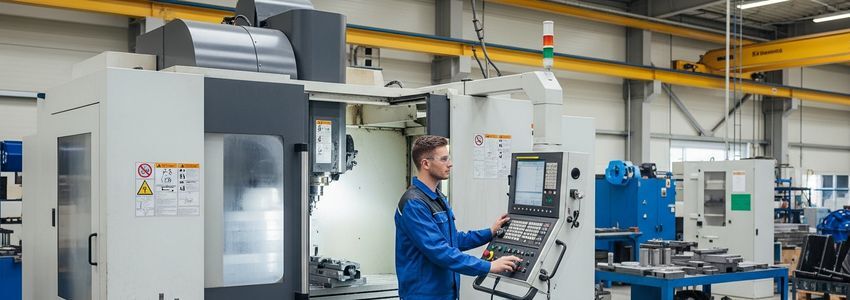
The CNC machining industry is the backbone of modern manufacturing, a sector where precision, technology, and capital converge. For business owners, staying competitive means constantly investing in advanced equipment, skilled labor, and operational efficiency. Whether you are launching a new shop, expanding your production capacity, or upgrading to the latest 5-axis technology, securing adequate funding is a critical component of success. This is where CNC machining business loans become an indispensable tool, providing the necessary capital to acquire assets, manage cash flow, and seize growth opportunities without depleting your own reserves.
Navigating the world of commercial finance can be complex. There are numerous loan products, each with its own terms, qualifications, and ideal use cases. Understanding the differences between equipment financing, working capital loans, and SBA-backed options is essential for making an informed decision that aligns with your business goals. The right financing partner can do more than just provide funds; they can offer industry expertise and structure a deal that supports your long-term profitability and growth trajectory.
This comprehensive guide is designed to demystify the process of obtaining CNC machining business loans. We will explore the various types of financing available, detail the benefits for your shop, walk through the application and approval process, and answer the most common questions owners have. By the end, you will have a clear roadmap for securing the capital you need to drive your CNC machining business forward.
In This Article
- What Are CNC Machining Business Loans?
- Benefits of Financing for CNC Machine Shops
- Types of Financing Available for CNC Shops
- How CNC Machining Business Loans Work: A Step-by-Step Process
- Who Qualifies for CNC Machining Loans?
- How Crestmont Capital Helps CNC Shops Secure Funding
- Comparison of Top Financing Options
- Real-World Scenarios: Financing in Action
- Frequently Asked Questions
- How to Get Started
- Conclusion: Powering Your Precision Business
What Are CNC Machining Business Loans?
CNC machining business loans are a specialized category of commercial financing designed specifically to meet the capital needs of machine shops and precision manufacturing companies. Unlike a generic business loan, these financial products are structured with a deep understanding of the industry's unique assets, operational cycles, and growth drivers. The funds can be used for a wide range of purposes, from purchasing a single piece of equipment to funding a full-scale facility expansion.
The core purpose of these loans is to enable business owners to invest in their operations without tying up essential working capital. CNC machinery, whether it is a vertical machining center (VMC), a lathe, a router, or a multi-axis marvel, represents a significant capital expenditure. A single new 5-axis machine can easily cost hundreds of thousands of dollars. Financing allows a shop to acquire this revenue-generating asset immediately while paying for it over time through predictable monthly payments. This approach aligns the cost of the equipment with the income it helps generate.
These loans are not a one-size-fits-all solution. They encompass a variety of financing structures, including:
- Asset-Based Loans: Where the CNC machine itself serves as the primary collateral.
- Term Loans: A lump sum of cash repaid over a fixed period, suitable for major investments.
- Lines of Credit: Flexible access to capital for ongoing needs like material purchases or payroll.
- SBA-Guaranteed Loans: Government-backed financing with favorable terms for qualified small businesses.
Ultimately, a CNC machining business loan is a strategic financial tool. It empowers owners to make critical investments in technology and infrastructure, which are essential for maintaining quality, improving efficiency, and securing a competitive advantage in a demanding market. By partnering with a lender who understands the manufacturing sector, businesses can access capital solutions that are tailored to the high value and long lifespan of their essential equipment.
Benefits of Financing for CNC Machine Shops
Leveraging financing offers a multitude of strategic advantages that go far beyond simply acquiring new equipment. For a CNC machine shop, where technology and capacity are directly linked to revenue, smart financing is a powerful catalyst for growth and stability. Here are the primary benefits of using CNC machining business loans.
Acquire Cutting-Edge Technology
The CNC industry evolves rapidly. Newer machines offer greater precision, faster cycle times, higher efficiency, and advanced capabilities like 5-axis simultaneous machining or automated part loading. Financing makes this technology accessible. Instead of waiting years to save enough cash, you can acquire the best equipment now, allowing you to take on more complex, higher-margin jobs from demanding sectors like aerospace, medical, and defense. This keeps your shop at the forefront of the industry.
Preserve Working Capital and Improve Cash Flow
Paying cash for a $250,000 CNC machine can severely deplete a company's liquidity. This cash is vital for day-to-day operations: covering payroll, purchasing raw materials, marketing, and handling unexpected expenses. Financing allows you to spread the cost of the asset over its useful life. This converts a massive one-time capital expenditure into a manageable monthly operating expense, freeing up your cash reserves for other critical business needs and creating a more predictable and stable cash flow.
Scale Operations and Seize Opportunities
Growth often requires significant investment. You might win a large contract that requires you to double your production capacity, or you may see an opportunity to expand into a new market. CNC machining business loans provide the immediate capital needed to act on these opportunities. This could mean purchasing multiple machines, hiring and training new operators, or even leasing a larger facility. Without financing, these growth opportunities might pass you by.
Gain a Competitive Advantage
A shop with modern, efficient equipment can produce parts faster, with tighter tolerances, and at a lower cost per unit than a competitor using older machinery. This efficiency translates directly into a competitive advantage. You can bid more aggressively on jobs, offer shorter lead times, and deliver higher quality products. Financing is the key that unlocks this advantage by ensuring your technology is never a limiting factor.
Build Business Credit
Successfully managing and repaying a business loan is one of the most effective ways to build a strong business credit profile. As you make consistent, on-time payments, your business demonstrates its creditworthiness to lenders. A strong credit history makes it easier and more affordable to secure financing for future needs, whether it is for another machine, a building purchase, or a line of credit.
Potential Tax Advantages
Financing equipment can offer significant tax benefits. Under Section 179 of the IRS tax code, businesses may be able to deduct the full purchase price of qualifying new or used equipment in the year it is placed into service. Additionally, the interest paid on a business loan is typically tax-deductible. These advantages can substantially lower the true cost of acquiring new assets. (Consult with a tax professional to understand how these benefits apply to your specific situation).
Types of Financing Available for CNC Shops
CNC machine shop owners have several distinct financing avenues to explore. Each option is suited for different needs, timelines, and financial situations. Understanding the nuances of each will help you select the most effective tool for your business objective.
1. Equipment Financing
This is one of the most common and straightforward forms of CNC machine financing. An equipment loan is specifically designed for the purchase of machinery, and the asset being purchased serves as the collateral for the loan. This structure often makes it easier to qualify for than other types of loans, as the lender's risk is secured by a tangible, high-value asset.
- Best For: Purchasing new or used CNC mills, lathes, grinders, EDM machines, or other specific pieces of manufacturing equipment.
- How It Works: You receive funds to cover up to 100% of the equipment's cost. You then make fixed monthly payments over a set term (typically 2-7 years). At the end of the term, you own the equipment outright.
- Pros: High approval rates, fast funding, predictable payments, and the machine itself is the collateral.
- Cons: Funds can only be used for the specified equipment purchase.
2. Business Term Loans
A traditional term loan provides a lump sum of capital that you repay with interest over a predetermined period. These loans are highly versatile and can be used for a wide range of business purposes beyond just equipment acquisition.
- Best For: Major investments like facility expansion, business acquisition, hiring a team of skilled machinists, or bundling multiple large purchases together.
- How It Works: After approval, the full loan amount is deposited into your business bank account. Repayment consists of regular installments (usually monthly) over a term that can range from one to ten years or more.
- Pros: Can be used for almost any business purpose, often have competitive interest rates for well-qualified borrowers.
- Cons: The application process can be more intensive, often requiring detailed financial statements, and may require additional collateral beyond the purchased assets.
3. Business Line of Credit
A business line of credit provides access to a revolving pool of funds up to a certain limit. It functions similarly to a credit card: you draw funds as needed, pay interest only on the amount you have used, and as you repay the principal, your available credit is replenished.
- Best For: Managing fluctuating cash flow, purchasing raw materials in bulk, covering unexpected repairs, or bridging the gap between invoicing and receiving payment from clients.
- How It Works: You are approved for a maximum credit limit. You can access any amount up to that limit at any time. It's a flexible tool for ongoing capital needs rather than a single large purchase.
- Pros: Extremely flexible, you only pay for what you use, and funds are readily available when needed.
- Cons: Interest rates can be higher than term loans, and there may be fees for maintaining the line.
4. Working Capital Loans
Working capital loans are short-term financing solutions designed to cover everyday operational expenses. They are not intended for long-term asset purchases but rather to ensure the smooth functioning of the business.
- Best For: Covering payroll during a slow period, launching a marketing campaign to attract new clients, investing in inventory of common stock materials, or paying for routine maintenance.
- How It Works: These are typically short-term loans (3-18 months) that provide a quick infusion of cash. Repayment is often made through fixed daily or weekly debits from your business account. Crestmont Capital offers a range of working capital loans to suit these needs.
- Pros: Very fast funding (sometimes within 24 hours), streamlined application process with minimal paperwork.
- Cons: Higher interest rates and shorter repayment terms compared to other loan types.
5. SBA Loans
The U.S. Small Business Administration (SBA) does not lend money directly but instead guarantees a portion of loans made by partner lenders like banks and credit unions. This government guarantee reduces the lender's risk, resulting in more favorable terms for the borrower, such as lower interest rates and longer repayment periods.
- Best For: Large, significant investments such as purchasing commercial real estate for your shop, acquiring a competitor's business, or financing multiple pieces of high-value equipment.
- How It Works: The two most common programs are the SBA 7(a) loan (versatile, for general business purposes) and the CDC/504 loan (for major fixed assets like real estate and equipment). You apply through an SBA-approved lender.
- Pros: Among the lowest interest rates and longest repayment terms available, making large investments more affordable.
- Cons: The application process is notoriously long and requires extensive documentation. Qualification criteria are strict, and funding can take several weeks or even months. For more details, you can visit the official SBA loans page.
Expert Tip: Many machine shops use a combination of financing types. For example, they might use an equipment financing agreement for a new CNC machine and a business line of credit to manage the fluctuating costs of raw materials like aluminum and titanium.
How CNC Machining Business Loans Work: A Step-by-Step Process
Securing a CNC machining business loan can seem daunting, but it follows a logical progression. By understanding each step, you can prepare effectively and navigate the process with confidence. Here is a breakdown of what to expect from application to funding.
Step 1: Assess Your Business Needs and Financial Health
Before you approach any lender, you must have a clear understanding of your own needs. Ask yourself critical questions:
- What is the purpose of the loan? Be specific. Is it to buy a Haas VF-4, a Mazak Integrex, or to cover payroll for three months?
- How much capital do you need? Get quotes for equipment and calculate your total required funding accurately. It is better to ask for the right amount once than to come up short.
- How much can you afford to repay each month? Analyze your business's cash flow statements to determine a sustainable monthly payment.
- What is your financial standing? Check your personal and business credit scores. Review your recent revenue, profit and loss statements, and bank statements.
This initial self-assessment is crucial for identifying the right loan product and setting realistic expectations.
Step 2: Gather Required Documentation
Preparation is key to a smooth application process. While requirements vary by lender and loan type, most will ask for a standard set of documents. Having these ready will significantly speed up the process.
Commonly required documents include:
- Business Bank Statements: Typically the last 3-6 months.
- Financial Statements: Profit & Loss Statement and Balance Sheet.
- Tax Returns: Both personal and business returns for the last 1-2 years.
- Business Plan: Especially for startups or major expansion projects, outlining how the funds will be used to generate revenue.
- Equipment Quote/Invoice: For equipment financing, a detailed quote from the seller is required.
- Business Legal Documents: Articles of incorporation, business licenses, and ownership agreements.
Step 3: Research and Choose a Lender
Not all lenders are created equal. Your choice of lender will have a major impact on your rates, terms, and overall experience.
- Traditional Banks: Offer competitive rates but have stringent qualification criteria and a slow, paper-intensive process. They are often a better fit for highly established businesses with perfect credit.
- Alternative Lenders (like Crestmont Capital): Specialize in small business financing and often have more flexible requirements. They prioritize speed and convenience, with streamlined online applications and much faster funding times. They also possess deep industry knowledge, understanding the value of manufacturing assets.
- SBA Lenders: These are banks or other institutions that are certified to offer SBA-guaranteed loans.
Step 4: Complete and Submit the Application
Once you have chosen a lender, you will complete their application. With modern lenders like Crestmont Capital, this is typically a simple online form that can be completed in minutes. Be sure to fill out all information accurately and completely to avoid delays. Submit all your prepared documentation along with the application.
Step 5: Underwriting and Review
This is the stage where the lender evaluates your application and assesses the risk. The underwriting team will review your credit history, financial statements, cash flow, time in business, and the collateral (if applicable). For equipment financing, they will also evaluate the value and expected lifespan of the CNC machine you intend to purchase. A lender with experience in manufacturing equipment financing will be able to underwrite the deal more effectively and quickly.
Step 6: Receive and Review the Offer
If your application is approved, the lender will present you with a formal loan offer. This document will detail all the critical terms:
- Loan Amount: The total capital being offered.
- Interest Rate: The cost of borrowing, expressed as a percentage.
- Term: The length of the repayment period.
- Monthly Payment: The fixed amount you will pay each month.
- Fees: Any origination fees or other charges associated with the loan.
Review this offer carefully. Make sure you understand all the terms and that the monthly payment fits comfortably within your budget. Do not hesitate to ask your loan officer to clarify any points you are unsure about.
Step 7: Sign the Agreement and Receive Funding
Once you are satisfied with the offer, you will sign the loan agreement. After the paperwork is finalized, the lender will disburse the funds. For equipment financing, the funds are often paid directly to the equipment vendor. For term loans or working capital, the money is typically deposited directly into your business bank account. With efficient lenders, this final step can happen in as little as 24 hours after approval.
By the Numbers
CNC Machining Industry - Key Statistics
$100.9B
The projected global CNC machine market size by 2025, indicating strong and sustained industry growth.
7.1%
The compound annual growth rate (CAGR) for the CNC market, driven by demand in aerospace and medical manufacturing.
18,000+
The approximate number of machine shop businesses currently operating in the United States, according to industry analysis.
$150k+
The typical starting price for a new, entry-level 5-axis CNC machining center, highlighting the need for financing.
Who Qualifies for CNC Machining Loans?
Lenders evaluate several key factors to determine a business's eligibility for financing and to set the terms of the loan. While specific requirements vary, understanding these core criteria will help you assess your own qualifications and strengthen your application. Here are the primary factors lenders consider for CNC machining business loans.
Credit Score
Your personal and business credit scores are a primary indicator of your financial responsibility. A higher score suggests a history of managing debt well and making payments on time, which reduces the lender's risk.
- Excellent Credit (720+): Applicants in this range will typically qualify for the best rates and most favorable terms from a wide variety of lenders, including traditional banks.
- Good Credit (650-719): Most alternative lenders, like Crestmont Capital, work extensively with businesses in this range. You can still access excellent financing options with competitive rates.
- Fair or Challenged Credit (Below 650): While traditional banks may decline these applications, many alternative lenders can still provide financing. They will place more weight on other factors like cash flow and time in business. The rates will likely be higher to compensate for the increased risk.
Time in Business
The longer your machine shop has been in operation, the more stable it appears to lenders. An established track record demonstrates that your business model is viable and that you can navigate market fluctuations.
- 2+ Years: This is the gold standard for most lenders and opens up the widest range of financing options.
- 6 Months - 2 Years: Many alternative lenders are willing to work with younger businesses that can demonstrate strong revenue and cash flow.
- Startups (Under 6 Months): Securing financing for a brand-new shop is more challenging but not impossible. Lenders will focus heavily on the owner's personal credit, industry experience, and a comprehensive business plan. SBA loans can also be a good option for well-prepared startups.
Annual Revenue
Your company's revenue is a direct measure of its market traction and ability to generate the cash flow needed to support loan payments. Lenders have minimum annual revenue thresholds to ensure the business is large enough to handle new debt.
- Minimums: While this varies greatly, a common minimum annual revenue for many alternative lenders is around $150,000 - $250,000.
- Impact: Higher, more consistent revenue will help you qualify for larger loan amounts and better terms. Lenders will look for steady or, ideally, growing revenue streams over the past several months.
Cash Flow
Positive and consistent cash flow is perhaps the most critical factor. Lenders will analyze your business bank statements to see if you have enough incoming cash to cover your existing expenses plus the new loan payment. A business with high revenue but low profit margins or inconsistent cash flow may be seen as a higher risk. They want to see a healthy daily or monthly bank balance and no recent history of non-sufficient funds (NSF) or overdrafts.
Collateral
Collateral is an asset that secures the loan. For CNC machining business loans, this is often a straightforward part of the equation.
- For Equipment Financing: The CNC machine itself is the collateral. This is known as a self-collateralizing loan and makes these products easier to qualify for.
- For Other Loans: For unsecured working capital loans, no specific collateral is required. For larger term loans or SBA loans, the lender may place a general lien on all business assets or require additional collateral, such as real estate or accounts receivable.
See What You Qualify For
Our streamlined application takes just minutes. Discover your CNC machining financing options today with no impact on your credit score.
Apply NowHow Crestmont Capital Helps CNC Shops Secure Funding
Choosing the right lending partner is just as important as choosing the right CNC machine. At Crestmont Capital, rated the #1 business lender in the U.S., we are not just a source of capital; we are a strategic partner dedicated to the growth of the manufacturing sector. We understand the unique challenges and opportunities within the CNC machining industry, and our services are tailored to meet those specific needs.
Deep Industry Expertise
Our financing specialists understand the difference between a 3-axis VMC and a 5-axis universal machining center. We recognize the value and long-term revenue-generating potential of brands like Haas, Mazak, DMG Mori, and Okuma. This industry-specific knowledge allows us to underwrite loans based on the true value of the asset and your business's potential, not just on generic credit metrics. This expertise translates into higher approval rates and more favorable terms for our clients.
Speed and Efficiency
We know that in manufacturing, opportunities are time-sensitive. A delay in funding can mean losing a major contract or falling behind a competitor. Unlike traditional banks that can take weeks or months to approve a loan, our process is built for speed. Our simple online application takes minutes to complete, and we can often provide approvals within hours and funding in as little as 24 hours. We help you get the equipment you need on your shop floor and making chips as quickly as possible.
Flexible and Customized Solutions
There is no single "best" loan for every machine shop. That is why we offer a comprehensive suite of financing products, including equipment financing, term loans, working capital solutions, and business lines of credit. Our dedicated account managers work with you to understand your specific goals and financial situation, then structure a financing solution that is customized to your needs. Whether you are a startup or an established multi-million-dollar operation, we have a solution that fits.
Financing for a Wide Range of Needs
Our support for CNC shops extends beyond just the primary machine. We can finance:
- New and Used Equipment: We fund all types of CNC machinery, regardless of age.
- Software: We can bundle the cost of essential CAD/CAM software (like Mastercam or Fusion 360) into your financing package.
- Tooling and Accessories: Finance the tool holders, probes, and other accessories needed to get your machine operational.
- Soft Costs: We can often include costs like shipping, installation, and training in the total loan amount.
A True Partnership Approach
We view our relationship with clients as a long-term partnership. Our goal is to provide the capital you need to succeed and to be your trusted funding source as your business grows and evolves. From your first machine to a full-scale expansion, Crestmont Capital is here to support your vision. We offer a level of personalized service and industry insight that larger, more bureaucratic institutions simply cannot match, making us a preferred partner for businesses in precision manufacturing and other related fields like those seeking Metal Fabrication Business Loans.
Comparison of Top Financing Options
Choosing the right type of financing depends on your specific goal. This table provides a side-by-side comparison of the most common CNC machining business loans to help you identify the best fit for your situation.
| Feature | Equipment Financing | Term Loan | Line of Credit | Working Capital Loan | SBA Loan |
|---|---|---|---|---|---|
| Best For | Purchasing specific new or used CNC machines. | Large, multi-purpose investments (e.g., expansion, acquisition). | Managing cash flow, material purchases, unexpected costs. | Short-term needs like payroll, marketing, or inventory. | Major long-term investments like real estate or multiple high-value assets. |
| Loan Amount | $10,000 - $5,000,000+ (Tied to equipment cost) | $25,000 - $2,000,000+ | $10,000 - $500,000 | $5,000 - $250,000 | Up to $5,000,000 |
| Repayment Term | 2 - 7 years | 1 - 10 years | Revolving (typically renewed annually) | 3 - 18 months | 7 - 25 years |
| Interest Rates | Low to Moderate | Low to Moderate | Moderate | Moderate to High | Very Low |
| Funding Speed | 1 - 3 days | 3 days - 2 weeks | 1 - 2 weeks (initial setup) | As fast as 24 hours | 30 - 90+ days |
| Collateral | The equipment itself | Often a general lien on business assets | May be secured or unsecured | Typically unsecured | General lien and often requires real estate collateral |
Real-World Scenarios: Financing in Action
Theory is helpful, but seeing how CNC machining business loans are applied in practice provides a clearer picture of their value. Here are a few common scenarios that machine shop owners face and the financing solutions that help them succeed.
Scenario 1: The Startup Shop's First Machine
The Challenge: Sarah, an experienced machinist, decides to open her own job shop. She has a strong business plan, good personal credit, and some initial clients lined up, but she lacks the $120,000 in cash needed to purchase her first Haas VF-2 CNC mill.
The Solution: Sarah works with Crestmont Capital to secure an equipment financing agreement. Because the loan is secured by the brand-new machine, the lender is comfortable with her status as a startup. She is approved for 100% financing with a 5-year term. The monthly payment is predictable and affordable, allowing her to manage her cash flow carefully in the crucial early months.
The Outcome: Sarah gets her shop operational without draining her personal savings. The revenue generated by the new mill easily covers the monthly loan payment and other operating costs, setting her business on a path to profitability from day one.
Scenario 2: Expanding Capacity for a Large Contract
The Challenge: "Precision Parts Inc.," an established shop, wins a major 3-year contract with an aerospace company. To meet the production demands, they need to purchase a new $400,000 DMG Mori 5-axis machine and hire two more machinists immediately. They also need an extra $50,000 for the initial purchase of specialized titanium stock.
The Solution: The owner uses a two-pronged financing strategy. First, they secure an equipment loan specifically for the 5-axis machine, benefiting from a fast approval process that ensures the machine is ordered without delay. Second, they obtain a short-term working capital loan for $50,000. This provides the immediate cash needed for materials and initial payroll for the new hires.
The Outcome: The shop acquires the necessary equipment and resources in under a week. They begin production on the new contract on schedule, securing a highly profitable long-term relationship with a key client. The combined payments are structured to be covered by the monthly revenue from the new contract.
Key Insight: Combining different loan types is a sophisticated strategy. It allows businesses to match the right financing tool to each specific need, optimizing terms and cash flow. For example, similar strategies apply to businesses seeking Welding Business Loans, where equipment and working capital needs often arise simultaneously.
Scenario 3: Upgrading Outdated Technology
The Challenge: A 20-year-old family-owned machine shop is struggling to compete. Their older CNC machines are slower, less precise, and require more maintenance than modern equipment. They are losing bids to more technologically advanced competitors. They identify a new Okuma lathe that could dramatically improve efficiency but are hesitant about the $180,000 price tag.
The Solution: The owners apply for an equipment loan. The financing specialist helps them calculate the return on investment (ROI) for the new machine. They determine that the increased speed, reduced scrap rate, and ability to run "lights-out" will save them over $6,000 per month in operational costs and generate new revenue, more than covering the projected $3,500 monthly loan payment.
The Outcome: The shop finances the new lathe. Within six months, their production efficiency has increased by 40%. They are now winning more competitive bids and have improved their profit margins significantly. The financing allowed them to make a necessary technological leap to ensure the business's long-term viability.
Scenario 4: Managing Seasonal Cash Flow Gaps
The Challenge: A CNC shop that specializes in parts for the agricultural industry experiences a predictable slow-down in the winter months. However, they need to purchase raw materials during this time to prepare for the busy spring season. This creates a temporary cash flow crunch.
The Solution: The owner proactively establishes a $100,000 business line of credit. During the slow winter, they draw $40,000 to purchase steel and aluminum stock at a good price. They only pay interest on the $40,000 they have used. As orders and payments pick up in the spring, they pay back the balance, restoring their full credit line for future use.
The Outcome: The business navigates its seasonal cycle without stress. They have the materials on hand to begin production immediately when orders ramp up, avoiding delays and maximizing their peak season revenue. The line of credit acts as a financial safety net, providing flexibility and peace of mind.
Ready to Write Your Success Story?
From startups to established shops, we have the financing to fuel your growth. Get your custom quote today.
Apply NowFrequently Asked Questions
1. Can I finance a used CNC machine?
Absolutely. Lenders like Crestmont Capital frequently finance the purchase of used CNC equipment. Financing a used machine can be a very cost-effective strategy, especially for startups or shops looking to add capacity on a budget. The lender will assess the value and expected lifespan of the used machine as part of the underwriting process. As long as the equipment is in good working condition and retains its value, it is an excellent candidate for financing.
2. What credit score do I need for a CNC machining business loan?
The credit score requirements vary by lender. Traditional banks typically look for a personal credit score of 700 or higher. However, alternative lenders are more flexible. At Crestmont Capital, we work with a wide range of credit profiles, often providing approvals for business owners with scores in the mid-600s or even lower. We take a holistic view, considering factors like your business's cash flow, revenue, and time in business in addition to your credit score.
3. How long does the financing process take from application to funding?
The timeline depends heavily on the lender and the loan type. Traditional bank loans and SBA loans can take several weeks or even months. With an efficient alternative lender, the process is much faster. For equipment financing and working capital loans, you can often go from application to funding in as little as 24 to 48 hours, provided you have all your documentation ready.
4. Are there prepayment penalties if I want to pay off my loan early?
This depends on the specific loan agreement. Some loans, particularly those from traditional banks, may include prepayment penalties. However, many modern financing products offered by alternative lenders are structured without prepayment penalties, allowing you the flexibility to pay off your debt early and save on interest if your business has a particularly profitable period. Always be sure to clarify this point with your lender when reviewing your loan offer.
5. What is the difference between an equipment loan and an equipment lease?
With an equipment loan, you are borrowing money to purchase the asset, and you build equity with each payment. At the end of the loan term, you own the CNC machine outright. With a lease, you are essentially renting the equipment for a set period. Lease payments are often lower than loan payments, but you do not own the asset at the end. Leases often include options to purchase the equipment, renew the lease, or return it. A loan is generally better for equipment you plan to use for its entire lifespan, while a lease can be advantageous for technology that rapidly becomes obsolete.
6. How much of a down payment is required?
For many equipment financing agreements, it is possible to secure 100% financing, meaning no down payment is required. This is especially true for well-qualified borrowers or for new equipment. In some cases, such as for startups or businesses with challenged credit, a lender may ask for a down payment of 10-20% to reduce their risk. For SBA loans, a down payment of at least 10% is typically required.
7. Can I bundle other costs like software, shipping, and installation into the loan?
Yes, many lenders allow you to finance these "soft costs" along with the hard asset. Bundling the cost of essential CAD/CAM software, transportation, rigging, installation, and initial operator training into a single loan simplifies the process and conserves your cash. This creates a turnkey financing solution where one convenient monthly payment covers everything needed to get your new machine up and running.
8. Will applying for a loan affect my credit score?
Most reputable alternative lenders, including Crestmont Capital, use a "soft credit pull" for the initial application and pre-approval process. A soft pull does not impact your credit score. This allows you to explore your options and see what you qualify for without any negative effect. A "hard credit pull," which can temporarily lower your score by a few points, is only conducted once you decide to move forward with a specific loan offer.
9. What are typical interest rates for CNC machining loans?
Interest rates can vary widely based on several factors: the type of loan, the loan term, your creditworthiness, your time in business, and the overall economic climate. SBA loans generally have the lowest rates. Equipment financing and term loans for well-qualified businesses can have very competitive, single-digit rates. Working capital loans and financing for businesses with lower credit scores will have higher rates to reflect the increased risk to the lender. According to recent data from Reuters, rates for small business loans have been influenced by broader federal rate changes.
10. My business is new. Can I still get financing?
Yes, financing for startups is available, though the options may be more limited. Lenders will place a heavy emphasis on the owner's personal credit score and relevant industry experience. A detailed business plan with realistic financial projections is also essential. Equipment financing is often one of the most accessible options for startups because the machine itself provides strong collateral for the loan.
11. What kind of documents do I need to apply?
For a simple application with an alternative lender, you may only need a completed application form and your last 3-6 months of business bank statements. For larger loans or more traditional financing, you will likely need to provide more extensive documentation, including business and personal tax returns, a profit and loss statement, a balance sheet, and a detailed quote for the equipment you plan to purchase.
12. Can I use a CNC machining business loan to pay for payroll or rent?
Yes, but you need to choose the right type of loan. An equipment financing loan is restricted to the purchase of the asset. However, a working capital loan, a term loan, or a business line of credit provides flexible funds that can be used for a wide range of operating expenses, including payroll, rent, utilities, and marketing.
13. What happens if I miss a payment?
Missing a payment can have serious consequences, including late fees, a negative report to credit bureaus (which will lower your credit score), and potentially defaulting on the loan. If you anticipate having trouble making a payment, it is crucial to communicate with your lender proactively. Many lenders are willing to discuss temporary hardship options or payment adjustments if you are transparent about your situation.
14. How do I choose the right lender for my machine shop?
Look for a lender with specific experience in the manufacturing and machining industries. They will understand the value of your assets and the nature of your business better than a generalist lender. Compare their funding speed, customer service reputation, and the flexibility of their loan products. A partner like Crestmont Capital combines industry expertise with a streamlined process, making them an ideal choice for CNC shops.
15. Can I finance more than one machine at a time?
Yes. If you are looking to purchase multiple pieces of equipment for an expansion or a new facility, you can often bundle them into a single equipment financing agreement or use a larger term loan to cover the entire purchase. This simplifies your finances by consolidating your debt into one monthly payment. The total amount you can finance will depend on your business's overall financial health and qualifications. According to the U.S. Census Bureau, investment in manufacturing equipment remains a key driver of economic productivity, making such expansions common. You can explore more manufacturing data on the Census.gov website.
How to Get Started
Ready to take the next step and secure the financing your CNC machine shop needs to thrive? The process with Crestmont Capital is designed to be simple, fast, and transparent. Here is how you can get started today.
Apply Online in Minutes
Complete our secure online application. It takes less than five minutes and requires only basic information about you and your business. This initial step is fast, free, and will not impact your credit score.
Review Your Options
A dedicated financing specialist will contact you to discuss your application, understand your specific needs, and present you with the best available loan options. We will walk you through the rates and terms of each offer, ensuring you can make a fully informed decision.
Get Funded
Once you select your preferred option and sign the agreement, we work quickly to finalize the loan. Funds can be in your account or on their way to your equipment vendor in as little as 24 hours. It is that simple.
Don't Let Capital Hold You Back
The right equipment is waiting. Let us help you acquire it. Apply now for a no-obligation quote.
Apply NowConclusion: Powering Your Precision Business
In the competitive landscape of precision manufacturing, growth is not just an ambition; it is a necessity. The ability to invest in superior technology, expand capacity, and maintain healthy cash flow is what separates thriving machine shops from those that stagnate. Capital is the fuel for this growth, and strategic financing is the most efficient way to access it. By understanding the diverse landscape of financial products available, from specialized equipment financing to flexible lines of credit, you can make empowered decisions that align with your operational needs and long-term vision.
The right financing partner does more than provide funds; they provide speed, flexibility, and industry-specific expertise that can become a true competitive advantage. By leveraging the right financial tools, you can acquire the revenue-generating assets your shop needs today while preserving your capital for the operational demands of tomorrow. Investing in your business through smart financing is the most direct path to enhancing your capabilities, increasing your profitability, and securing your position as a leader in the precision machining industry. When you are ready to explore your options, a well-structured plan and a knowledgeable lending partner are the keys to unlocking your shop's full potential with CNC machining business loans.
Disclaimer: The information provided in this article is for general educational purposes only and is not financial, legal, or tax advice. Funding terms, qualifications, and product availability may vary and are subject to change without notice. Crestmont Capital does not guarantee approval, rates, or specific outcomes. For personalized information about your business funding options, contact our team directly.