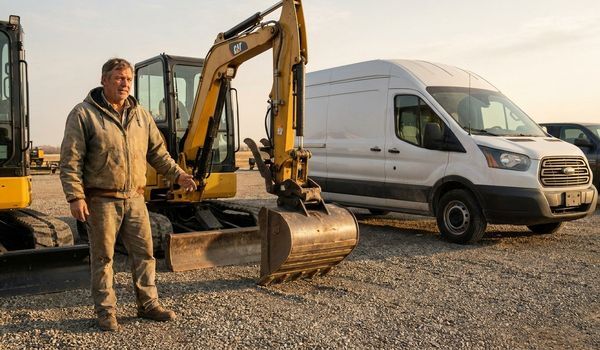
Structural steel business loans give contractors and fabricators the capital to purchase heavy equipment, cover payroll between project milestones, and bid on larger commercial contracts with confidence. Whether you operate a fabrication shop, manage a steel erection crew, or run a full-service structural steel contracting firm, the right financing can determine whether your business grows or stalls. This guide covers every major loan type, qualification criteria, and real-world scenarios so you can find the best funding path for your operation.
In This Article
- What Are Structural Steel Business Loans?
- Key Benefits of Financing for Steel Contractors
- How Structural Steel Business Financing Works
- Types of Loans for Structural Steel Contractors
- Who Qualifies for Structural Steel Business Loans?
- Real-World Scenarios
- Industry Stats and Insights
- How Crestmont Capital Helps Structural Steel Businesses
- Frequently Asked Questions
- How to Get Started
- Conclusion
What Are Structural Steel Business Loans?
Structural steel business loans are commercial financing products designed to meet the specific capital demands of companies that fabricate, erect, or supply structural steel. These loans fund a wide range of operational needs, from purchasing welding equipment and cranes to managing cash flow during the gap between project completion and owner payment. Unlike general small business loans, the amounts, terms, and qualifying criteria are tailored to the project-based, capital-intensive nature of the steel construction industry.
The structural steel sector operates on long project cycles that can stretch from months to years. During that time, contractors must pre-purchase materials, pay skilled tradespeople, maintain heavy equipment, and meet bonding requirements, all before receiving a single payment from the general contractor or building owner. Financing bridges that gap and allows steel businesses to operate at full capacity without pausing work or turning down contracts.
Structural steel financing is not a single product. It encompasses term loans, equipment financing, lines of credit, SBA loans, invoice factoring, and more. The best option depends on your company's size, project pipeline, cash position, and growth goals. Understanding each product category is the first step toward making the right funding decision.
Industry Fact: The U.S. structural steel market generates over $20 billion in annual revenue, according to industry research, with fabrication and erection firms accounting for a substantial share of commercial and industrial construction spending.
For a broader look at how business lending works across the construction trades, see our complete guide to construction business loans. The structural steel industry has its own nuances, but many of the foundational financing principles apply across the sector.
Key Benefits of Financing for Steel Contractors
Access to financing allows structural steel contractors to take on larger, more profitable projects without depleting their operating reserves. A fabrication shop that secures a $500,000 equipment line, for example, can install a new CNC plasma cutting system that reduces labor costs and shortens lead times. That single investment can fundamentally change the firm's competitive position in local and regional markets.
Working capital financing helps contractors manage the timing mismatch between expenses and revenue. On a large commercial project, a steel contractor may spend heavily on materials and labor for 60 to 90 days before submitting a pay application. A business line of credit or short-term loan covers those costs and prevents cash flow crunches that can lead to missed payrolls or delayed deliveries.
Financing also allows business owners to preserve equity. Many contractors self-fund equipment purchases or project costs by drawing down savings or taking on partners. Debt financing preserves ownership and keeps personal assets protected. When structured correctly, loan payments are manageable expenses that come directly out of project revenue, making the cost of capital predictable and manageable.
Finally, building a track record with commercial lenders strengthens a company's financial profile over time. Contractors who demonstrate consistent repayment history and responsible borrowing become eligible for larger credit facilities, better rates, and faster approvals as their businesses grow. Starting with a modest small business loan today can open the door to a seven-figure credit facility within a few years.
Ready to Fund Your Next Steel Project?
Get fast, flexible financing from the #1 business lender in the U.S. No obligation - apply in minutes.
Apply Now →How Structural Steel Business Financing Works
The financing process for structural steel companies follows a predictable path, though the timeline and documentation requirements vary by lender and loan type. Most applications begin with an online submission that captures basic business information, revenue figures, and the intended use of funds. A lender then reviews the application, requests supporting documents, and issues a term sheet or offer letter outlining the loan amount, rate, and repayment schedule.
Documentation requirements typically include recent bank statements, business tax returns, a profit and loss statement, and sometimes a project schedule or backlog report showing active and upcoming contracts. Equipment financing applications may also require an invoice or quote from the vendor selling the machinery. SBA loans require more extensive documentation, including a business plan, personal financial statements, and collateral schedules.
Once approved, funds are disbursed directly to the business bank account for working capital loans or directly to the equipment vendor for machinery purchases. Repayment begins immediately for most term loans, though some lenders offer brief interest-only periods during project mobilization. Lines of credit are revolving: you draw what you need, repay it as project payments arrive, and draw again on the next contract.
Speed varies significantly by lender. Alternative business lenders like Crestmont Capital can approve and fund applications in as little as 24 to 48 hours. Traditional banks and SBA lenders typically take two to eight weeks. For contractors who need to respond quickly to a bid opportunity or cover an unexpected expense, the speed of approval can be as important as the rate.
Types of Loans for Structural Steel Contractors
Several financing products are well-suited to the structural steel industry. The right product depends on the specific use of funds, the repayment timeline, and the borrower's financial profile. The table below summarizes the most common options.
| Loan Type | Best For | Typical Amount | Term | Speed |
|---|---|---|---|---|
| Equipment Financing | Cranes, welders, plasma cutters, forklifts | $25K - $5M+ | 2-7 years | 1-5 days |
| Business Line of Credit | Ongoing cash flow, payroll, materials | $10K - $500K | Revolving | 1-3 days |
| Short-Term Business Loan | Bridge funding, material purchases, mobilization | $5K - $500K | 3-18 months | 24-48 hours |
| Long-Term Business Loan | Facility expansion, fleet purchases, refinancing | $50K - $5M | 2-10 years | 3-10 days |
| SBA Loan | Long-term growth, real estate, major equipment | Up to $5M | Up to 25 years | 2-8 weeks |
| Equipment Leasing | Heavy equipment without large down payment | $10K - $2M | 1-5 years | 1-5 days |
| Working Capital Loan | Day-to-day expenses, subcontractor payments | $10K - $500K | 3-24 months | 24-48 hours |
Equipment Financing
Equipment financing is one of the most widely used tools in the structural steel industry. The equipment itself serves as collateral, which makes these loans easier to qualify for than unsecured products. A fabrication shop can finance a new overhead crane, CNC beam drill, or laser cutting system and repay the loan from the increased revenue the equipment generates.
Many lenders offer equipment financing with no additional collateral requirements, and approval decisions are based heavily on the equipment's value and the borrower's basic creditworthiness. For contractors with strong revenues but limited real estate or other hard assets, this is often the fastest path to acquiring the machinery they need. Equipment leasing is a related option that provides access to machinery with lower monthly payments and the flexibility to upgrade at lease end.
Business Line of Credit
A business line of credit functions like a commercial credit card but with higher limits and lower rates. Structural steel contractors use lines of credit to manage the timing gap between material purchases and owner payments. When a new contract is signed, the contractor draws on the line to buy steel, pay workers, and cover project costs. As pay applications are approved and funds arrive, the line is repaid and becomes available again.
Lines of credit are particularly valuable for companies managing multiple simultaneous projects at different stages of completion. Rather than applying for a new loan for each project, the contractor maintains a standing credit facility that provides flexible access to capital whenever it is needed. This flexibility reduces administrative burden and allows business owners to focus on operations rather than financing.
SBA Loans
SBA loans backed by the U.S. Small Business Administration offer the lowest interest rates available to small businesses. The SBA 7(a) program, which provides loans up to $5 million, is commonly used by structural steel contractors to finance facility acquisitions, major equipment purchases, and business expansions. The SBA 504 program is specifically designed for commercial real estate and long-term asset purchases.
SBA loans require more documentation and a longer approval process than alternative lenders, but the favorable rates and extended repayment terms make them an excellent option for well-qualified borrowers who can afford to wait. According to the SBA, manufacturing and construction businesses consistently rank among the top industries receiving SBA loan approvals.
Short-Term and Long-Term Business Loans
Short-term business loans are ideal for covering immediate capital needs - material purchases, project mobilization costs, or payroll during a slow payment period. These loans are typically repaid within 3 to 18 months and can be funded within 24 to 48 hours through alternative lenders. Long-term business loans, by contrast, are better suited for major investments that generate returns over several years, such as fabrication facility upgrades or fleet expansion.
Who Qualifies for Structural Steel Business Loans?
Qualification criteria vary significantly by lender and loan product, but most commercial lenders evaluate the same core factors: time in business, annual revenue, credit score, and cash flow. Structural steel businesses that have been operating for at least one year and generate $150,000 or more in annual revenue can typically qualify for working capital loans and lines of credit through alternative lenders. Banks and SBA lenders generally require two or more years in business and revenues in excess of $500,000.
Credit scores play a role but are rarely the sole deciding factor. Many alternative lenders approve applications with owner credit scores in the 580-620 range if the business demonstrates strong revenue and consistent bank deposits. Traditional banks typically require scores of 680 or higher for standard business loans and 700 or higher for SBA products. Borrowers with lower personal credit scores may be able to compensate with stronger business financials or by providing collateral.
Qualification Tip: Structural steel contractors with strong project backlogs but modest historical revenue can improve their loan eligibility by providing signed contracts, purchase orders, or letters of intent from general contractors. Many lenders will factor forward-looking revenue into their decisions when backed by documented commitments.
Collateral requirements depend on the loan type. Equipment financing is secured by the equipment itself. Working capital loans and lines of credit are often unsecured for borrowers with strong credit profiles, though lenders may place a general lien on business assets. SBA loans almost always require collateral, which may include equipment, real estate, or a personal guarantee from the business owner.
Industry experience matters too. Lenders familiar with the construction and fabrication sectors understand that project-based businesses have irregular revenue patterns. A company that shows strong annual revenues but uneven monthly deposits is not necessarily in trouble - it may simply be operating on a typical construction payment schedule. Working with a lender who understands this nuance can make the difference between approval and denial.
For detailed guidance on construction industry lending standards, the SBA's business resource center provides useful background on documentation requirements and qualification benchmarks for small construction businesses.
Real-World Scenarios
Scenario 1: Fabrication Shop Equipment Upgrade
A mid-sized structural steel fabrication shop in the Midwest had been using aging welding equipment and a manual beam drill that limited production throughput. The owner identified a new automated beam drill line priced at $280,000 that would cut production time by 40 percent. Using equipment financing, the company secured the machinery with a five-year term, monthly payments of approximately $5,200, and no requirement for additional collateral outside the machine itself. The increased capacity allowed the shop to accept two additional contracts within the first year, more than covering the loan payments.
Scenario 2: Cash Flow Bridge During a Large Commercial Project
A structural steel erection contractor landed a contract on a six-story office building but faced a 90-day payment delay before the first pay application would be processed. With a crew of 18 ironworkers and significant mobilization costs, the contractor needed $350,000 to cover the first three months of operations. A working capital loan provided the bridge funding, repaid in full when the first pay application was approved and funded. The contractor went on to complete the project successfully and used the completed project as a reference to secure two additional commercial contracts.
Scenario 3: Multi-Project Line of Credit
A structural steel subcontractor managing four simultaneous projects established a $500,000 business line of credit to coordinate material purchasing across all job sites. Rather than tying up operating capital in pre-purchased materials, the contractor drew on the line as needed and repaid it as project payments arrived. The revolving structure kept credit available for all four projects simultaneously and eliminated the need to choose which contracts to prioritize based on cash position.
Scenario 4: SBA Loan for Facility Expansion
A 12-year-old fabrication company needed to expand its shop from 20,000 to 40,000 square feet to accommodate a new contract with a regional general contractor requiring on-site fabrication. The owner used an SBA 504 loan to finance the building purchase and renovation, securing a 20-year term at a fixed rate that made monthly payments predictable and manageable. The expanded facility allowed the company to add a second shift and increase annual revenue by 60 percent within two years of opening.
Scenario 5: Fast Funding for Emergency Equipment Repair
A steel erection contractor had a crane failure on an active job site that required $85,000 in emergency repairs to get the machine back in service. With project deadlines at risk and liquidated damages clauses in the contract, the contractor needed funding within 48 hours. A fast business loan was approved and funded the same day, allowing repairs to begin immediately and the project to stay on schedule. The total cost of the loan was significantly less than the potential liquidated damages exposure.
Scenario 6: Startup Steel Contractor Building Initial Credit
A veteran ironworker launched his own structural steel erection company after 15 years working for larger firms. With limited business credit history, he started with a small business loan of $75,000 to purchase a used crane and basic rigging equipment. After 18 months of on-time payments and consistent revenue growth, he qualified for a $250,000 equipment financing facility that allowed him to add a second crane and take on larger projects. Building credit through small initial loans created a financial foundation for sustained growth.
Industry Stats and Insights
Structural Steel and Construction: Key Industry Data
Sources: U.S. Census Bureau, SBA, Bureau of Labor Statistics
The structural steel sector is a significant component of U.S. commercial and industrial construction. According to the U.S. Census Bureau, total construction put in place consistently exceeds $1.8 trillion annually, with commercial and industrial projects representing a large share of that figure. Structural steel is integral to the majority of multi-story commercial buildings, industrial facilities, and infrastructure projects in that spending total.
The Bureau of Labor Statistics reports that structural metal fabrication and erection employs more than 140,000 workers across the United States, with average wages well above the national median for construction trades. Growth in data center construction, manufacturing reshoring, and infrastructure investment under recent federal legislation has created sustained demand for structural steel contractors through the remainder of the decade.
How Crestmont Capital Helps Structural Steel Businesses
Crestmont Capital is a leading business lender serving contractors and fabricators across the United States. Our team understands the unique financing needs of the structural steel industry, including the long billing cycles, high equipment costs, and project-based revenue patterns that define the sector. We offer a full range of financing products tailored to steel contractors at every stage of growth.
Our application process is straightforward and designed for busy contractors who do not have time for lengthy paperwork. Most applications can be completed in under 10 minutes online, and our credit decisions are typically issued within hours. Funded amounts range from $10,000 to several million dollars, with flexible repayment structures that align with project payment schedules where possible.
We offer equipment leasing for contractors who prefer to preserve cash, construction loans for project-specific capital needs, and unsecured working capital loans for businesses that need fast access to funds without pledging collateral. Our team works with borrowers to identify the right product mix and structure repayment terms that fit within project cash flows.
Crestmont Capital has funded thousands of construction and fabrication businesses. Our understanding of the industry means we evaluate applications in context, not just by credit score, which allows us to approve qualified borrowers who might be declined by traditional banks unfamiliar with construction industry financials. For a deeper look at how equipment financing works within the industry, see our guide: Equipment Financing 101: How It Works.
Speak With a Steel Industry Financing Specialist
Our team understands structural steel contractor finances. Get a customized quote with no commitment required.
Get My Quote →Frequently Asked Questions
What is the minimum revenue required to qualify for a structural steel business loan? +
Most alternative lenders require a minimum of $150,000 in annual revenue for working capital loans and lines of credit. Banks and SBA lenders typically require $500,000 or more. Revenue requirements vary by loan size and lender, so it is worth applying even if your revenue falls below common thresholds, particularly if your business is growing quickly.
How fast can I get funding for my structural steel company? +
Alternative lenders like Crestmont Capital can approve and fund applications in as little as 24 to 48 hours. Equipment financing approvals often come within one business day once all documentation is submitted. SBA loans and bank term loans require two to eight weeks. If timing is critical, working with an alternative lender is the fastest path to capital.
Can I get a business loan if my credit score is below 600? +
Some alternative lenders will work with credit scores in the 550-580 range if the business demonstrates strong and consistent revenue. Equipment financing lenders in particular may approve lower credit scores because the equipment itself secures the loan. SBA and bank products generally require scores of 650 or higher. If your score is low, focus on lenders who prioritize business cash flow over personal credit.
What documents do I need to apply for a steel contractor business loan? +
Standard documentation includes three to six months of business bank statements, the most recent one to two years of business tax returns, a profit and loss statement, and a government-issued ID. Equipment financing applications typically require a vendor invoice or quote. SBA loan applications require additional materials including a business plan, personal financial statements, and a detailed collateral schedule.
What types of equipment can be financed for a structural steel business? +
Virtually any business-use equipment can be financed, including overhead cranes, mobile cranes, beam drill lines, CNC plasma cutters, laser cutting systems, welding equipment, forklifts, flatbed trucks, steel service center equipment, and shop tooling. Both new and used equipment qualifies, though lenders may require an appraisal or inspection for used machinery above certain values.
Are SBA loans available to structural steel fabricators? +
Yes. Structural steel fabricators qualify for SBA 7(a) and SBA 504 loans. The SBA 7(a) program provides working capital, equipment, and real estate loans up to $5 million. The SBA 504 program is specifically designed for commercial real estate and major fixed-asset purchases. Both programs offer below-market interest rates and extended repayment terms compared to conventional business loans.
How much can I borrow for my structural steel business? +
Loan amounts depend on your revenue, creditworthiness, and the specific product. Working capital loans and lines of credit typically range from $10,000 to $500,000 through alternative lenders. Equipment financing can reach several million dollars for large machinery purchases. SBA loans are capped at $5 million for 7(a) products, though the 504 program can fund projects above that threshold when combined with other financing.
Can a startup structural steel company get a business loan? +
Most traditional lenders require at least one to two years in business. However, some equipment financing programs are available to newer businesses if the owner has strong personal credit (680+) and sufficient capital for a down payment. SBA microloans are another option for startup contractors needing smaller amounts. Building business credit early, even with small loans, creates the foundation for larger financing as the company matures.
What is the typical interest rate on a structural steel business loan? +
Interest rates vary widely based on loan type, creditworthiness, and market conditions. SBA loans typically range from 6 to 10 percent. Equipment financing rates generally fall between 5 and 15 percent. Alternative working capital loans and short-term products may carry higher effective rates due to the speed and flexibility they offer. The best way to understand your true cost of capital is to compare multiple offers and look at total repayment amount, not just the stated interest rate.
Do I need collateral to get a structural steel business loan? +
It depends on the product. Equipment financing is secured by the equipment being purchased, so no additional collateral is required. Many working capital loans and lines of credit from alternative lenders are unsecured for qualified borrowers. Bank term loans and SBA products typically require collateral, which may include business assets, real estate, or a personal guarantee from the business owner.
How does invoice factoring work for steel contractors? +
Invoice factoring allows contractors to sell unpaid invoices to a factoring company at a slight discount in exchange for immediate cash. Rather than waiting 60 to 90 days for a general contractor to process a pay application, the steel contractor receives 80 to 90 percent of the invoice value upfront. The factoring company then collects the full amount from the project owner. This approach is particularly useful for companies with strong contracts but slow-paying clients.
Can I use a business loan to hire additional ironworkers or welders? +
Yes. Working capital loans, lines of credit, and general purpose business loans can be used for payroll, including the cost of hiring and onboarding skilled tradespeople. Many steel contractors use financing specifically to staff up for large contracts, then repay the loan as project payments are received. This approach allows companies to take on larger projects than their current workforce would support.
How does a business line of credit differ from a term loan for steel contractors? +
A term loan provides a lump sum that is repaid on a fixed schedule over a set period. It is best for one-time, defined expenses like an equipment purchase or facility upgrade. A line of credit is revolving: you draw funds as needed, repay them, and draw again. Lines of credit are better suited for ongoing cash flow management, where the timing and amount of capital needs fluctuate from month to month. Many steel contractors maintain both products simultaneously.
Will applying for a business loan hurt my credit score? +
Initial pre-qualification checks are typically soft inquiries that do not affect your credit score. A full underwriting review may include a hard credit pull, which can reduce your score by a small number of points temporarily. If you are shopping multiple lenders, clustering your applications within a short window (14-30 days) limits the cumulative credit impact. For most established businesses, the credit impact of an inquiry is minimal compared to the benefit of securing needed capital.
What is the best loan type for a structural steel company buying a second crane? +
Equipment financing is the most straightforward option for a crane purchase. The crane serves as its own collateral, simplifying the approval process and often resulting in competitive rates. Equipment leasing is an alternative if you prefer lower monthly payments and the ability to upgrade the equipment at the end of the lease term. For very large cranes (over $500,000), SBA 504 loans or conventional bank term loans may offer better long-term rates if you qualify.
How to Get Started
Complete our quick application at offers.crestmontcapital.com/apply-now - takes just a few minutes. Tell us how much you need and what you plan to use it for.
A Crestmont Capital specialist will review your application and present the best financing options for your structural steel business. You will receive a clear breakdown of amounts, rates, and repayment terms with no obligation to proceed.
Once approved, funds are deposited directly into your business account - often within 24 to 48 hours. Use your capital to buy equipment, cover payroll, or pursue larger contracts. Repay on a schedule that aligns with your project cash flow.
Conclusion
The structural steel industry demands significant capital to operate effectively. From heavy machinery and skilled labor to materials purchased weeks before a pay application is approved, the financial requirements of running a steel fabrication or erection business are substantial. The right financing strategy gives contractors the working capital, equipment, and flexibility they need to pursue larger contracts, improve operational efficiency, and build a more resilient company.
Whether you need a fast working capital loan to bridge a payment gap, equipment financing for a new crane or CNC machine, or an SBA loan to fund a facility expansion, there are financing products purpose-built for your situation. The key is matching the right product to the right need and working with a lender who understands how construction businesses actually operate.
Crestmont Capital has the products, expertise, and speed to meet structural steel contractors where they are. Our team is ready to help you identify the right financing solution and get funds in your account quickly. Apply today and see what your business qualifies for.
Take the Next Step for Your Steel Business
Apply in minutes. No obligation. Fast decisions from a lender that knows the construction industry.
Apply for Financing →Disclaimer: The information provided in this article is for general educational purposes only and is not financial, legal, or tax advice. Funding terms, qualifications, and product availability may vary and are subject to change without notice. Crestmont Capital does not guarantee approval, rates, or specific outcomes. For personalized information about your business funding options, contact our team directly.

Allan Garfinkle
Allan Garfinkle is the Chief Revenue Officer at Crestmont Capital, where he has spent more than a decade leading revenue strategy, business development, and operational growth. With 28 years of experience building and advising startups and small businesses, Allan has helped more than 10,000 business owners navigate financing decisions, growth opportunities, and changing economic conditions. He earned a Bachelor of Science in Economics and an MBA with a concentration in Finance from Northeastern University, as well as a Juris Doctor from New England Law, where his studies focused on contracts and business law. His writing draws on extensive practical experience in small-business lending, equipment financing, business credit, and commercial finance.