The sports performance industry is more competitive than ever, with athletes from youth leagues to professional ranks seeking every possible edge. As a performance training business owner, you provide the expertise, environment, and tools to help them succeed. To stay ahead, you need state-of-the-art equipment, a top-tier facility, and skilled staff, all of which require significant capital. This is where sports performance business loans become a critical tool for growth, allowing you to invest in your business without depleting your cash reserves.
In This Article
- What Are Sports Performance Business Loans?
- Key Benefits of Sports Performance Business Financing
- How Sports Performance Business Loans Work
- Types of Financing for Sports Performance Businesses
- Who Qualifies for Sports Performance Business Loans?
- Equipment and Facility Costs: What Can You Finance?
- How Crestmont Capital Helps Sports Performance Businesses
- Real-World Scenarios: Sports Performance Businesses That Used Financing
- Comparison Table: Loan Types for Sports Performance Businesses
- Frequently Asked Questions
- How to Get Started
- Conclusion
What Are Sports Performance Business Loans?
Sports performance business loans are specialized financial products designed to meet the unique capital needs of athletic training facilities, performance centers, and sports-specific gyms. Unlike a generic business loan, this type of funding is structured to address the specific high-cost assets and operational expenses common in the industry. These funds provide the necessary capital to purchase advanced equipment, renovate or expand facilities, hire expert coaches, and manage day-to-day operations.
The core purpose of these loans is to bridge the gap between your current financial state and your growth objectives. Whether you are launching a new facility from the ground up or upgrading an existing one, financing provides immediate access to cash. This allows you to make strategic investments that can increase revenue, attract high-caliber athletes, and solidify your market position.
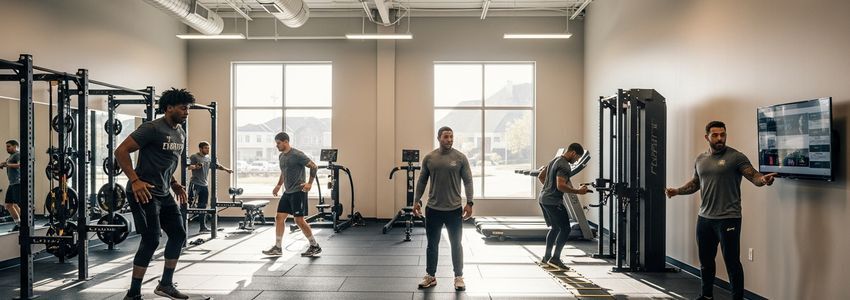
These financial solutions can be used for a wide range of purposes. You might need to finance a set of smart power racks with velocity-based training (VBT) sensors, install a new turf field for speed and agility drills, or invest in a marketing campaign to attract new clients. The flexibility of sports training facility financing ensures that you can direct funds where they will have the most significant impact on your business's success and an athlete's development.
Ultimately, these loans are an investment in your business's future. By leveraging external capital, you can acquire assets and make improvements that generate a return far greater than the cost of the financing. This strategic use of debt empowers you to build a premier training destination without waiting years to save the required funds, ensuring you can capitalize on market opportunities as they arise.
Key Benefits of Sports Performance Business Financing
Securing financing for your sports performance center offers a multitude of strategic advantages that go far beyond a simple cash infusion. It empowers you to build a competitive, modern, and profitable business. The right funding can be the catalyst that propels your facility from a local gym to a regional leader in athletic development.
Acquire Cutting-Edge Equipment
The sports performance industry is driven by technology and data. Athletes and coaches now expect access to equipment that not only builds strength but also provides precise feedback. Financing allows you to purchase high-end gear like force plates, 3D motion capture systems, laser timing gates, and body composition analyzers without a massive upfront cash outlay.
This investment directly translates to better training outcomes for your clients, justifying premium pricing and attracting serious athletes. It also positions your facility as a forward-thinking leader in the field. With flexible options like Equipment Financing, the equipment itself can serve as collateral, making the approval process more accessible.
Facility Expansion and Renovation
As your client base grows, so does the demand on your space. Overcrowding can lead to a poor customer experience and limit the number of athletes you can train simultaneously. A business loan can fund a facility expansion, whether that means leasing a larger space, building an addition, or renovating your current layout to optimize workflow.
This could involve adding a dedicated recovery zone with cryotherapy and compression therapy tools, installing an indoor turf field, or building out private training rooms. An upgraded, spacious, and well-designed facility enhances your brand image and improves operational efficiency. These improvements contribute directly to client retention and your ability to scale revenue.
Hiring and Training Specialized Staff
Your coaches and support staff are the heart of your business. To attract top talent-certified strength and conditioning specialists, sports scientists, and physical therapists-you need to offer competitive salaries and benefits. Financing can provide the working capital needed to expand your team, ensuring you have the right experts to deliver elite-level coaching.
Furthermore, funds can be used for ongoing professional development, allowing your staff to stay current with the latest training methodologies and certifications. A highly qualified team is a major selling point for your business. It builds trust with athletes, parents, and sports organizations, solidifying your reputation for excellence.
Improve Cash Flow Management
Even successful sports performance businesses experience fluctuations in cash flow, especially those with seasonal sports cycles. A loan or a Business Line of Credit provides a crucial financial safety net. It ensures you can cover payroll, rent, utilities, and other fixed costs during slower periods without stress.
This financial stability allows you to make decisions from a position of strength, not desperation. You can invest in marketing during the off-season to build a pipeline for the next peak period or take advantage of an unexpected opportunity, like buying lightly used equipment at a discount. Healthy cash flow is the foundation of a resilient and sustainable business.
Gain a Competitive Edge
The fitness and training market is crowded. Sports performance business loans give you the resources to differentiate your facility from standard gyms and less-specialized competitors. By offering superior equipment, a better environment, and more qualified staff, you create a premium brand that can command higher prices.
This competitive advantage is self-reinforcing. A better facility attracts better athletes, whose success stories become powerful marketing testimonials. This, in turn, attracts more clients and allows you to continue investing in the business, creating a cycle of growth and success that leaves competitors behind.
How Sports Performance Business Loans Work
Navigating the financing process can seem complex, but it generally follows a clear and structured path. Understanding these steps helps you prepare your application and know what to expect. Lenders, especially those experienced in your industry like Crestmont Capital, aim to make the process as efficient as possible so you can get back to training athletes.
The journey begins with an initial application, where you provide fundamental details about your business, its financial health, and your funding needs. This includes information like your time in business, annual revenue, and personal credit score. Based on this preliminary data, the lender determines which loan products you are likely to qualify for and provides an initial consultation.
Following the consultation, you will submit more detailed documentation, such as bank statements, tax returns, and a list of equipment you intend to purchase. The lender's underwriting team reviews this information to assess risk and finalize the terms of the loan, including the amount, interest rate, and repayment schedule. Once you accept the offer, the funds are disbursed, often in as little as 24 hours for certain loan types, allowing you to put the capital to work immediately.
Quick Guide
How Sports Performance Business Loans Work - At a Glance
Apply Online
Complete a simple online application in minutes. Provide basic information about your business and funding requirements to get the process started quickly and securely.
Review Your Options
A dedicated funding specialist will contact you to discuss your goals. They will review your qualifications and present the best financing options tailored to your sports performance business.
Submit Documents
Provide necessary financial documents, such as recent bank statements and proof of revenue. Our secure portal makes this step straightforward and protects your sensitive information.
Receive Your Funds
Once your loan is approved and you accept the terms, the capital is transferred directly to your business bank account. You can start purchasing equipment and implementing your growth plans immediately.
Types of Financing for Sports Performance Businesses
Not all financing is created equal. The best option for your sports performance center depends on your specific needs, financial situation, and long-term goals. Understanding the different types of loans available is the first step toward making an informed decision.
Equipment Financing
Equipment financing is one of the most common and effective funding solutions for performance training businesses. This type of loan is specifically designed for purchasing new or used equipment, from squat racks and force plates to cryotherapy chambers. The structure is straightforward: the loan provides up to 100% of the equipment's cost, and the equipment itself serves as collateral for the loan.
This secured nature often results in favorable interest rates and makes it easier to qualify for, even for businesses with less-than-perfect credit. Repayment terms typically align with the expected lifespan of the equipment, ranging from two to seven years. This is an ideal choice for acquiring specific, high-value assets that are essential to your service offerings.
Working Capital Loans
While equipment is vital, so is the cash needed to run your daily operations. Working Capital Loans provide a lump sum of cash to cover short-term expenses. This can include payroll for your coaching staff, marketing campaigns to attract new athletes, inventory for supplements or apparel, or bridging revenue gaps during a slow season.
These loans are typically unsecured, meaning they don't require specific collateral, and are known for their fast funding times. They are perfect for addressing immediate operational needs and seizing opportunities that require quick access to capital. The repayment terms are usually shorter, often ranging from three to 24 months, with regular fixed payments.
Business Line of Credit
A business line of credit offers the ultimate flexibility for managing ongoing or unexpected expenses. Instead of a one-time lump sum, you are approved for a maximum credit limit that you can draw from as needed. You only pay interest on the funds you actually use, making it a cost-effective tool for cash flow management.
This is ideal for a sports performance center that needs to cover fluctuating costs, such as equipment repairs, travel for team training, or last-minute marketing opportunities. Once you repay the amount you've drawn, that credit becomes available to use again. It acts as a reusable financial safety net for your business.
SBA Loans
SBA loans are partially guaranteed by the U.S. Small Business Administration, which reduces the risk for lenders. This often results in some of the most favorable terms available, including long repayment periods (up to 10 years for working capital or 25 for real estate) and low interest rates. The two most common types are the SBA 7(a) and 504 loans.
SBA loans can be used for a wide variety of purposes, including equipment purchase, real estate acquisition, and working capital. However, the application process is notoriously lengthy and requires extensive documentation. According to the SBA, businesses must meet strict eligibility criteria, making these loans best suited for well-established, financially strong businesses that can afford to wait for funding.
Term Loans
A traditional term loan provides a lump sum of capital that you repay with fixed, regular payments over a set period. These loans are highly versatile and can be used for almost any business purpose, from expansion and renovation to debt consolidation. The predictability of fixed payments makes them easy to budget for.
Term lengths can vary from short-term (1-3 years) to long-term (5-10 years), depending on the lender and the use of funds. Lenders typically require a strong credit history and solid business financials for approval. They are a great option for financing large, planned projects with a clear return on investment.
Ready to Upgrade Your Training Facility?
Don't let capital hold you back. Get the funds you need for elite equipment and facility expansion. See what you qualify for in minutes.
Apply Now →
Who Qualifies for Sports Performance Business Loans?
Lenders evaluate several key factors to determine a business's eligibility for financing. While specific requirements vary between loan products and lenders, understanding the general criteria will help you prepare a strong application. For a sports performance business, demonstrating stability and a clear plan for growth is essential.
Credit Score
Your personal and business credit scores are primary indicators of your financial responsibility. Most lenders look for a personal credit score of 600 or higher, but premium products like SBA loans or bank term loans often require scores above 680. A higher credit score signals lower risk to the lender, which can result in better interest rates and more favorable terms.
If your credit score is on the lower end, don't be discouraged. Alternative lenders and specific products like equipment financing or a merchant cash advance may have more flexible credit requirements. Building a strong payment history and managing your existing debt are key steps to improving your score over time.
Time in Business
Lenders prefer to work with established businesses that have a proven track record of success. The standard requirement is typically at least one to two years in operation. This history provides evidence that your business model is viable and that you have experience managing revenue and expenses.
Startups and businesses with less than a year of history may find it more challenging to secure traditional financing. However, options still exist. These can include SBA microloans, financing based on the owner's strong personal credit and collateral, or business credit cards to build an initial credit history.
Annual Revenue
Your business's annual revenue is a direct measure of its financial health and ability to repay a loan. Lenders want to see a consistent and sufficient stream of income to cover the new debt payments. The minimum annual revenue requirement can range from $100,000 to $250,000 or more, depending on the loan size and type.
Be prepared to provide bank statements and tax returns to verify your revenue figures. Showing steady or growing revenue year-over-year will significantly strengthen your application. It demonstrates that your business is not just surviving but thriving in a competitive market.
Required Documentation
A well-prepared application includes all the necessary documentation to give the lender a complete picture of your business. Gathering these documents ahead of time can expedite the approval process. Common requirements include:
- Bank Statements: Typically the last 3-6 months to verify revenue and cash flow.
- Tax Returns: Both business and personal tax returns for the past 1-2 years.
- Business Plan: Especially for new businesses or large funding requests, outlining how you will use the funds and your projections for growth.
- Equipment Quotes: If applying for equipment financing, provide official quotes from vendors.
- Legal Documents: Articles of incorporation, business licenses, and lease agreements.
Pro Tip: Before applying, review your business's financial statements for accuracy and consistency. A clean and organized financial record makes a strong impression on underwriters and can speed up the approval process significantly.
Equipment and Facility Costs: What Can You Finance?
The capital needs of a sports performance center are diverse and substantial. Financing can be applied to nearly every aspect of your business, from the foundational strength equipment to the sophisticated technology that sets you apart. Understanding the full scope of what you can fund helps you create a comprehensive growth strategy.
Strength and Conditioning Equipment
This is the backbone of any training facility. Financing can cover the entire cost of outfitting your weight room. This includes essential items like power racks, custom platforms, barbells, bumper plates, dumbbells, and kettlebells. It also extends to specialized machines such as leg presses, cable columns, and glute-ham developers.
You can also finance items crucial for athletic development beyond traditional weightlifting. This includes sleds for speed work, plyometric boxes for explosive power training, medicine balls, and resistance bands. A well-equipped facility with a wide variety of high-quality tools allows you to train a diverse clientele effectively.
Performance Technology and Analytics
Data-driven coaching is the new standard in sports performance. Investing in technology gives you a significant competitive advantage. Small business loans can be used to purchase advanced analytical tools that provide objective feedback to athletes and coaches.
Examples of financeable technology include force plates for measuring ground reaction forces, velocity-based training (VBT) systems like GymAware or PUSH, laser timing systems for sprints and agility drills, and GPS trackers for monitoring on-field performance. You can also finance body composition analysis machines like InBody or DEXA scanners and heart rate monitoring systems to optimize conditioning programs.
Facility Upgrades and Build-Outs
The physical environment of your facility plays a huge role in client experience and training effectiveness. Financing can cover major renovations and upgrades. This could mean installing high-performance athletic turf for indoor field work, specialized rubber flooring for weightlifting areas, or building out a dedicated recovery lounge.
Other potential projects include upgrading locker rooms, improving lighting and HVAC systems for a more comfortable environment, or building a reception area and offices. If you're moving to a new location, a loan can cover the entire build-out cost, transforming an empty shell into a state-of-the-art training center. These investments enhance your brand and justify premium membership fees.
Operational and Soft Costs
Financing isn't just for physical assets. You can also use funds to cover the "soft costs" and operational expenses that are crucial for growth. This includes covering payroll for new hires, investing in certification and continuing education for your coaching staff, or launching a comprehensive digital marketing campaign to attract new clients.
Funds can also be used to purchase business management software for scheduling and billing, invest in branding and signage, or cover initial inventory costs for a pro shop selling supplements and apparel. Using a working capital loan or line of credit for these expenses keeps your cash flow healthy while you invest in scaling your operations.
How Crestmont Capital Helps Sports Performance Businesses
At Crestmont Capital, we understand that a sports performance center is more than just a gym. It's a highly specialized business that requires specific knowledge and tailored financing solutions. We have extensive experience working with owners of athletic training facilities, and we recognize the unique challenges and opportunities you face in this dynamic industry.
For business owners in adjacent industries, our guides on sports complex business loans and gym and fitness studio financing offer additional context on how similar facilities structure their funding.
Our approach is built on speed and simplicity. We know that when you identify a need-whether it's a new piece of technology or an opportunity to expand-you need to act quickly. Our streamlined online application takes only minutes to complete, and for many of our loan products, we can provide a decision and funding in as little as 24 hours. This allows you to seize opportunities and stay ahead of the competition.
We offer a diverse portfolio of funding options, ensuring we can find the right fit for your specific goal. From flexible Equipment Financing that helps you acquire the latest training tools to versatile Working Capital Loans for managing daily operations, we have a solution. Our dedicated funding specialists work with you to understand your business and recommend the product that best aligns with your financial situation and growth strategy.
We believe in building partnerships, not just processing transactions. Our team is here to guide you through every step of the process, answering your questions and providing the support you need to make confident financial decisions. We are committed to helping you build a successful, thriving sports performance business that empowers athletes to reach their full potential.
Partner with a Lender Who Understands Your Game
Crestmont Capital offers fast, flexible financing designed for the unique needs of sports performance centers. Let us help you fund your vision.
Apply for Funding →Real-World Scenarios: Sports Performance Businesses That Used Financing
To better understand the practical impact of sports performance business loans, let's explore a few detailed, hypothetical scenarios. These examples illustrate how different types of financing can solve specific challenges and unlock growth for businesses at various stages.
Scenario 1: The Startup Facility - "Velocity Sports Training"
The Challenge: A former collegiate strength coach, Sarah, decides to open her own 5,000-square-foot sports performance facility. She has a solid business plan and some personal savings for the lease deposit and initial marketing, but she lacks the $150,000 needed for the essential equipment to attract serious high school and college athletes.
The Solution: Sarah applies for an equipment financing agreement. Because the loan is secured by the equipment itself, the lender is more comfortable funding a new business. She provides detailed quotes for power racks, a set of dumbbells up to 150 lbs, Olympic bars and plates, a cable crossover machine, and a 20-yard strip of athletic turf.
The Outcome: Sarah is approved for $150,000 with a 5-year term. The funds are paid directly to the equipment vendors, and the gear is delivered and installed before her grand opening. Velocity Sports Training launches with a professional, fully-equipped facility, allowing Sarah to immediately begin training athletes and generating revenue, making the monthly loan payments manageable.
Scenario 2: The Expansion Project - "Apex Athlete Development"
The Challenge: Apex Athlete Development has been operating successfully for five years and has built a strong reputation. They are constantly at capacity and have a long waitlist. The owner, Mike, finds an opportunity to lease an adjacent unit, which would double his facility's size and allow him to add a dedicated sports science lab and a larger open turf area.
The Solution: Mike needs significant capital for the build-out, new equipment, and initial operating costs for the larger space. He applies for a medium-term loan of $250,000. He presents his strong financial history, including three years of profitable tax returns and consistent revenue growth, to the lender.
The Outcome: Mike secures the term loan with a 7-year repayment schedule and a competitive interest rate. He uses the funds to complete the renovation, purchase force plates and a 3D motion analysis system for the new lab, and hire two additional coaches. The expansion allows Apex to serve its waitlisted clients, launch new team training programs, and increase its annual revenue by 60% within the first year.
Scenario 3: The Technology Upgrade - "Precision Performance Lab"
The Challenge: An established training center, Precision Performance Lab, wants to stay on the cutting edge. Their competitors have started using velocity-based training (VBT) and detailed analytics, and they risk losing clients seeking more data-driven coaching. The owner, David, needs to invest $50,000 in VBT sensors for all his racks and a comprehensive athlete management software platform.
The Solution: Since this is a focused, short-term need, David opts for a short-term working capital loan. The application process is fast, and he is approved within 48 hours based on his business's strong monthly cash flow. He needs the capital quickly to implement the new systems before the busy summer training season begins.
The Outcome: David receives the $50,000 lump sum and immediately purchases the technology. He markets the new "Smart Facility" features to local sports teams and is able to sign three new team contracts. The data-driven approach improves training outcomes, enhances client retention, and provides a clear return on investment that easily covers the loan's short 18-month repayment term.
Industry Insight: The Global Health & Fitness Club market is projected to continue its growth, with a rising demand for specialized training services. According to a report from IBISWorld, facilities that offer unique, results-oriented programs are best positioned to capture this market share.
Scenario 4: Managing Seasonal Cash Flow - "Gridiron Training Academy"
The Challenge: Gridiron Training Academy specializes in preparing football players for combines and the pre-season. Their revenue peaks from January to July but sees a significant drop from August to December when athletes are in-season. The owner, Chris, needs a way to cover fixed costs like rent and staff salaries during the slow months.
The Solution: Chris applies for a business line of credit for $75,000. This provides him with a flexible financial cushion. He doesn't have to take the full amount at once; he can simply draw funds as needed to cover payroll or other expenses during the off-season.
The Outcome: During a slow month in October, Chris draws $15,000 to ensure his staff is paid on time. As revenue picks up again in January, he repays the drawn amount plus interest. The line of credit remains available for future needs, giving him peace of mind and the ability to operate smoothly year-round without having to take on a large, fixed loan.
Comparison Table: Loan Types for Sports Performance Businesses
Choosing the right financing option requires a clear understanding of how each product differs. This table provides a side-by-side comparison of the most common loan types for sports performance businesses, helping you identify which solution best fits your specific needs.
| Loan Type | Best For | Typical Amount | Term Length | Speed of Funding |
|---|---|---|---|---|
| Equipment Financing | Purchasing new or used training equipment, technology, and machinery. | $10,000 - $500,000+ | 2 - 7 years | 2 - 5 days |
| Working Capital Loan | Covering short-term operational costs like payroll, marketing, and inventory. | $5,000 - $250,000 | 3 - 24 months | As fast as 24 hours |
| Business Line of Credit | Managing fluctuating cash flow, unexpected expenses, and ongoing projects. | $10,000 - $1,000,000 | Revolving (1 - 5 years) | 1 - 2 weeks |
| SBA Loan | Large-scale projects like real estate purchase, major expansion, or debt refinancing. | Up to $5 million | 7 - 25 years | 30 - 90+ days |
| Term Loan | Financing significant, one-time investments with predictable repayment schedules. | $25,000 - $500,000 | 1 - 10 years | 3 days - 2 weeks |
Frequently Asked Questions
1. How quickly can I receive funding for my sports performance business?
The speed of funding varies by loan type. Working capital loans can often be funded in as little as 24 hours. Equipment financing typically takes 2-5 days, while SBA loans can take 30-90 days or longer due to their extensive documentation requirements.
2. What is the minimum credit score required for a loan?
Most lenders look for a minimum personal credit score of 600. However, some alternative financing options may be available for scores in the 500s. For the most competitive rates and terms, such as those with SBA or bank loans, a score of 680 or higher is often required.
3. Can I get a loan if my sports performance business is a startup?
Yes, financing is available for startups, although options may be more limited. Equipment financing is a popular choice for new businesses, as the equipment itself secures the loan. SBA microloans and financing based on strong personal credit and a solid business plan are also potential avenues.
4. Is collateral required for all sports performance business loans?
No, not all loans require specific collateral. Unsecured working capital loans and some lines of credit do not require you to pledge assets. However, secured loans like equipment financing (where the equipment is the collateral) or SBA loans (which may require a lien on business assets or real estate) often offer better rates due to the lower risk for the lender.
5. What are typical interest rates for these types of loans?
Interest rates depend heavily on the loan type, your creditworthiness, time in business, and overall market conditions. SBA and bank term loans offer the lowest rates, often in the single digits. Alternative and short-term loans will have higher rates to compensate for increased risk and speed of funding.
6. Can I use a loan to pay for marketing and advertising?
Absolutely. A working capital loan or a business line of credit is perfectly suited for funding marketing campaigns, hiring a digital marketing agency, or paying for advertising to attract new athletes and teams to your facility.
7. How does the repayment process work?
Most loans, like term loans and equipment financing, have fixed repayment schedules with daily, weekly, or monthly payments automatically debited from your business bank account. A line of credit is more flexible; you make payments only on the amount you've drawn.
8. Can I finance used equipment for my facility?
Yes, many lenders, including Crestmont Capital, offer equipment financing for both new and used equipment. This can be a cost-effective way to acquire high-quality, durable equipment from top brands at a lower price point.
9. Will applying for a loan affect my credit score?
Most lenders perform a "soft" credit pull for pre-qualification, which does not impact your credit score. A "hard" credit inquiry, which can have a small, temporary impact on your score, is typically only performed once you decide to move forward with a formal loan application.
10. What's the difference between a loan and a line of credit?
A loan provides a single lump sum of cash upfront, which you repay over a set term. A line of credit gives you access to a pool of funds up to a certain limit, which you can draw from and repay as needed, similar to a credit card.
11. Can I pay off my loan early?
This depends on the lender and the specific loan agreement. Some loans may have prepayment penalties, while others allow you to pay off the balance early without any extra fees. It's important to clarify this with your lender before signing the agreement.
12. How much funding can I qualify for?
The amount you can qualify for depends on your business's financial health, including annual revenue, cash flow, credit history, and time in business. Funding can range from a few thousand dollars for a small working capital loan to several million for a large SBA loan.
13. Do I need a perfect business plan to get approved?
While a formal business plan is essential for startups and SBA loan applications, it's not always required for established businesses seeking other types of financing. However, having a clear plan for how you will use the funds and generate a return on the investment will always strengthen your application.
14. What if my business is seasonal?
Lenders who understand the sports industry recognize that seasonality is common. They will look at your overall annual revenue and cash flow patterns. A business line of credit is an excellent tool for seasonal businesses to manage cash flow during slower periods.
15. Can I use funds to open a second location?
Yes, expansion is one of the most common reasons business owners seek financing. A term loan or an SBA loan can provide the significant capital needed to cover the lease, build-out, equipment, and initial staffing for a new facility.
How to Get Started
Taking the next step toward funding your sports performance business is simple and straightforward. We've designed our process to be efficient, so you can get the capital you need without unnecessary delays. Follow these three steps to begin your journey to growth.
Apply Online in Minutes
Fill out our secure, one-page online application. It's fast, easy, and won't impact your credit score. Just provide some basic information about your business to get started.
Speak with a Specialist
A dedicated funding specialist will reach out to discuss your specific needs and goals. We'll work with you to identify the best financing solutions available for your sports performance center.
Get Funded Fast
Once you're approved and accept an offer, the funds will be deposited directly into your business bank account. You can put your capital to work right away to grow your business.
Don't Wait to Build Your Premier Training Center
The application is free, fast, and there's no obligation. Discover your funding options today and take the first step towards achieving your business goals.
See Your Options →Conclusion
In the highly competitive world of athletic development, staying stagnant is not an option. Investing in your facility, technology, and staff is essential for attracting top-tier athletes and building a profitable business. Sports performance business loans provide the critical capital needed to make these strategic investments without compromising your day-to-day cash flow.
From purchasing state-of-the-art diagnostic tools to expanding your physical footprint, the right financing solution empowers you to realize your vision. By understanding the different types of loans available and preparing your business for the application process, you can secure the funding necessary to create a premier training destination.
At Crestmont Capital, we are dedicated to helping you succeed. Our expertise in the sports and fitness industry, combined with our fast and flexible funding options, makes us the ideal partner for your growth journey. Take the next step today and invest in the future of your business and the athletes you train.
Disclaimer: The information provided in this article is for general educational purposes only and is not financial, legal, or tax advice. Funding terms, qualifications, and product availability may vary and are subject to change without notice. Crestmont Capital does not guarantee approval, rates, or specific outcomes. For personalized information about your business funding options, contact our team directly.