
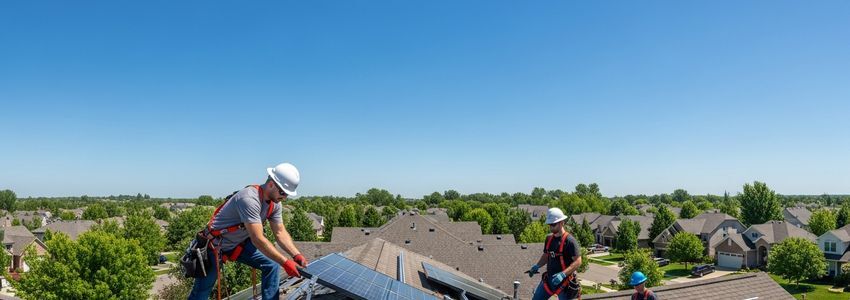
The solar energy industry is one of the fastest-growing sectors in the U.S. economy, creating enormous opportunities for solar installation contractors across the country. Whether you are a residential solar installer, a commercial solar contractor, or a solar startup looking to break into the market, access to the right solar installation business loans can mean the difference between landing your next big project and turning it down. This guide breaks down every financing option available to solar companies, explains how to qualify, and shows you how Crestmont Capital can help you get funded fast.
In This Article
- The Solar Installation Industry in 2026
- Types of Financing for Solar Installation Businesses
- How Solar Installation Business Loans Work
- Who Qualifies for Solar Contractor Financing
- Equipment Financing for Solar Contractors
- Working Capital Solutions for Solar Businesses
- How Crestmont Capital Helps Solar Installation Companies
- Real-World Financing Scenarios for Solar Contractors
- How to Apply for Solar Business Financing
- How to Get Started
- Frequently Asked Questions
- Conclusion
The Solar Installation Industry in 2026
The U.S. solar market has transformed dramatically over the past decade. According to data from CNBC, the solar industry now supports over 260,000 jobs nationwide, with solar photovoltaic installers consistently ranking among the fastest-growing occupations in America. Residential solar installations have surged as homeowners seek lower electricity bills and energy independence, while the commercial and utility-scale sectors continue to attract billions in investment capital each year.
For solar installation contractors, the business opportunity has never been greater. Homeowners across the country are replacing fossil fuel-based energy with rooftop solar panels at record rates. Commercial property owners are retrofitting warehouses, retail centers, and office buildings with solar arrays to meet sustainability goals and reduce operating costs. Government incentives including the federal Investment Tax Credit (ITC) have made solar projects more financially attractive than ever, driving demand across every market segment.
However, growth in this industry comes with real capital demands. Solar installation businesses carry significant upfront costs - from purchasing solar panels, inverters, racking systems, and electrical components to funding payroll, insurance, and vehicle fleets before client payments arrive. For many solar contractors, a single commercial project can require $100,000 or more in working capital before the first payment is received. That is where solar installation business loans become essential tools for sustainable growth.
According to the U.S. Small Business Administration, access to capital remains the number one challenge for small and mid-size contractors in growth industries like solar. The good news is that multiple financing products are available specifically suited to the cash flow dynamics and capital needs of solar installation businesses.
Ready to Fund Your Solar Business?
Crestmont Capital provides fast, flexible financing for solar installation companies. Get approved in as little as 24 hours.
Apply Now ->Types of Financing for Solar Installation Businesses
Solar installation companies have access to several types of business financing, each designed for different needs and situations. Understanding the right product for your situation is the first step toward getting funded efficiently. The most common financing options for solar contractors include equipment financing, working capital loans, SBA loans, business lines of credit, and invoice financing.
Equipment Financing
Equipment financing is one of the most powerful tools for solar contractors. This type of loan is secured by the equipment itself, which typically means lower interest rates and easier qualification than unsecured loans. Solar installation companies can finance solar panels, inverters, battery storage systems, mounting hardware, conduit benders, electrical testing equipment, cranes, boom lifts, and work vehicles. Loan amounts generally range from $25,000 to $5 million, with repayment terms from 24 to 84 months. Because the equipment serves as collateral, lenders can often approve companies with credit scores as low as 600.
Working Capital Loans
Working capital loans are designed to cover day-to-day operating expenses and bridge the gap between project costs and client payments. For solar contractors who often wait 30 to 90 days after project completion to receive full payment, a working capital loan provides the cash to keep operations running smoothly. These loans are typically unsecured, with terms ranging from 6 to 24 months and funding available in as little as 24 to 48 hours.
SBA Loans
SBA loans offer the lowest interest rates available to small business owners, typically ranging from 6% to 10% for SBA 7(a) loans. The SBA 7(a) program can fund solar installation businesses with up to $5 million for general business purposes including equipment, working capital, and expansion. The SBA 504 program is ideal for commercial real estate and major equipment purchases over $500,000. The tradeoff is a longer approval process - typically 30 to 90 days - and more extensive documentation requirements. SBA loans are best for established solar companies with at least two years in business and strong credit histories.
Business Line of Credit
A business line of credit gives solar contractors flexible access to funds they can draw as needed and repay on their own timeline. This is ideal for companies managing multiple projects simultaneously, where cash needs fluctuate throughout the month. Lines of credit typically range from $25,000 to $500,000 and function like a business credit card - you only pay interest on what you draw. For seasonal solar businesses that see demand spike in spring and summer, a line of credit provides a financial cushion during slower winter months.
Invoice Financing
Invoice financing - also known as accounts receivable financing - allows solar contractors to borrow against outstanding invoices. If you have completed a $150,000 commercial solar installation and are waiting 60 days for payment, invoice financing lets you access up to 85% to 90% of that invoice value immediately. This eliminates cash flow gaps caused by slow-paying commercial clients and government entities without taking on traditional debt.
| Loan Type | Amount Range | Typical Terms | Best For |
|---|---|---|---|
| Equipment Financing | $25K - $5M | 24 - 84 months | Solar panels, inverters, vehicles, tools |
| Working Capital Loan | $10K - $500K | 6 - 24 months | Payroll, materials, operating costs |
| SBA 7(a) Loan | Up to $5M | Up to 10 - 25 years | Established businesses, low-rate long-term funding |
| Business Line of Credit | $25K - $500K | Revolving / 12 - 24 months | Flexible, ongoing cash flow needs |
| Invoice Financing | Up to 90% of invoice value | 30 - 90 days | Slow-paying commercial clients |
How Solar Installation Business Loans Work
Getting a small business loan as a solar installation contractor follows a straightforward process with most lenders. The key is understanding what lenders evaluate and how to present your business in the strongest possible light. Unlike consumer loans that rely almost entirely on credit score, business loans consider your company's revenue, cash flow, time in business, industry outlook, and owner experience.
The application process typically starts with submitting basic business information - your legal business name, EIN, business structure, and contact details. From there, most lenders request three to six months of bank statements, your most recent business tax returns (or two years for SBA loans), a recent profit and loss statement, and any licenses or certifications relevant to your solar contracting work. Some lenders also want to see your accounts receivable aging report, especially for larger loans above $250,000.
Once you submit your application, lenders underwrite your file based on several key factors: your personal credit score (typically 600 minimum for alternative lenders, 680+ for bank and SBA loans), your business's annual revenue (most lenders want at least $100,000 to $150,000 per year), your time in business (usually six months minimum for alternative lenders, two years for banks and SBA), and your debt service coverage ratio - essentially whether your cash flow can support the new loan payment. For equipment financing, the value and useful life of the equipment being financed also plays a role.
Approval timelines vary significantly. Alternative lenders like Crestmont Capital can approve and fund solar business loans in 24 to 48 hours. Traditional banks typically take two to four weeks. SBA loans require the most time - between 30 and 90 days from application to funding. For solar contractors who need capital quickly to purchase materials for a new project or cover a payroll cycle, the speed of alternative lenders is often a decisive advantage.
By the Numbers
Solar Installation Industry - Key Statistics
$50B+
U.S. solar market size annually
260K+
Solar industry jobs in the U.S.
$20K
Average residential solar install cost
23%
Projected annual job growth rate for solar PV installers
Who Qualifies for Solar Contractor Financing
Qualification requirements vary by lender and loan type, but there are standard benchmarks most solar installation businesses should be aware of before applying. Understanding these requirements in advance lets you position your application strategically and choose the lender most likely to approve your specific profile.
Credit Score: Alternative and online lenders typically accept personal credit scores starting at 580 to 600 for working capital loans and equipment financing. Business lines of credit usually require a minimum score of 620 to 650. SBA loans from traditional banks generally require a 680 or higher personal credit score. If your credit score falls below these thresholds, options such as secured loans or revenue-based financing can bridge the gap - lenders place more weight on business cash flow in these products. Building your business credit profile over time by opening trade accounts with suppliers and using a business credit card responsibly will strengthen future applications.
Time in Business: Most alternative lenders require a minimum of six months to one year in business. Traditional bank and SBA lenders typically want two or more years of operating history. If you are a solar startup in your first year, revenue-based financing and equipment loans secured by the equipment being purchased tend to be the most accessible options. Many lenders also consider whether the business owner has prior industry experience even if the specific solar company is newly formed.
Annual Revenue: Lenders want assurance that your solar installation business generates enough revenue to service the loan. Minimum annual revenue thresholds typically range from $100,000 for smaller working capital loans to $250,000 or more for larger equipment financing and SBA loans. Revenue consistency matters as much as total volume - a business with steady monthly deposits is viewed more favorably than one with highly irregular cash flow.
Industry Licensing and Insurance: Most lenders require that solar installation companies hold valid state contractor licenses and maintain appropriate general liability and workers compensation insurance. These requirements protect the lender in the event of a default or claim and demonstrate that your business operates professionally. Having up-to-date NABCEP certifications (North American Board of Certified Energy Practitioners) can strengthen your application by demonstrating professional credibility in the solar field.
Key Insight: According to the SBA, solar and clean energy contractors who maintain consistent revenue records, hold proper licensing, and keep their personal credit above 650 have approval rates comparable to contractors in any other specialty trade - and often higher, given strong industry growth projections that lenders view favorably.
Find Out What You Qualify For
Get pre-qualified in minutes with no impact to your credit score. Fast approvals, flexible terms tailored for solar contractors.
Check My Options ->Equipment Financing for Solar Contractors
For solar installation businesses, equipment is everything. The quality of your panels, inverters, mounting hardware, and installation tools directly determines your project output, customer satisfaction, and reputation in the market. Equipment financing allows solar contractors to acquire the tools and technology they need without depleting working capital or waiting years to save up enough cash to purchase outright.
The list of equipment that can be financed through solar contractor loans is extensive. On the installation side, this includes solar PV panels, string inverters, microinverters, power optimizers, racking and mounting systems, conduit and wiring, battery energy storage systems (BESS), EV charging equipment, and monitoring systems. On the operational side, solar companies can finance boom lifts, scissor lifts, rooftop safety systems, trenching equipment, conduit benders, electrical testing equipment, and service vehicles. Even business software - such as solar design platforms like Aurora Solar or Nearmap - can sometimes be financed as a software-as-a-service agreement.
One of the key advantages of equipment financing is that the equipment itself serves as collateral, which reduces the lender's risk and typically results in lower rates than unsecured business loans. This means even solar companies with moderate credit profiles can access substantial financing amounts. Terms from 24 to 84 months give contractors the flexibility to align monthly payments with the revenue generated by the equipment - a critical advantage when scaling a solar fleet or adding specialized installation capability for commercial-scale projects.
Many solar contractors also use equipment financing strategically at the start of a large project. By financing a bulk order of solar panels and mounting equipment before beginning a commercial installation, the contractor preserves operating cash for labor, permits, and overhead throughout the project lifecycle. This approach maintains healthy cash reserves while allowing the business to take on larger contracts than it could otherwise afford. For a detailed look at how specialty contractors approach this strategy, see our guide to contractor loans for general contractors.
Working Capital Solutions for Solar Businesses
Cash flow management is one of the most persistent challenges for solar installation companies. Unlike retail businesses that collect payment at the point of sale, solar contractors typically complete significant work - ordering materials, paying crews, pulling permits, conducting inspections - before receiving any payment from the client. On residential projects, this gap might be two to four weeks. On commercial or government contracts, payment terms of 45 to 90 days after project completion are standard. During that waiting period, the business still needs to make payroll, pay suppliers, cover insurance premiums, and potentially begin work on the next project.
Working capital solutions solve this problem by putting cash in your account today, secured by your business's revenue stream rather than physical collateral. Options range from short-term merchant cash advances (best for solar companies with strong credit card or ACH revenue) to unsecured working capital loans (ideal for businesses with consistent monthly revenue). For solar contractors who invoice large commercial clients, invoice financing offers a particularly efficient solution - rather than waiting 60 days for a $200,000 commercial project payment, you can access up to 85% of that invoice immediately and repay the advance once your client pays.
Seasonal fluctuations in solar demand add another layer of complexity. In most markets, solar installations peak from April through October and slow significantly in winter months. A fast business loan or revolving line of credit gives solar contractors the flexibility to cover fixed costs during slower seasons without drawing down reserves built up during peak months. This approach smooths out cash flow volatility and allows the business to retain skilled crew members year-round rather than cycling through seasonal layoffs and rehires.
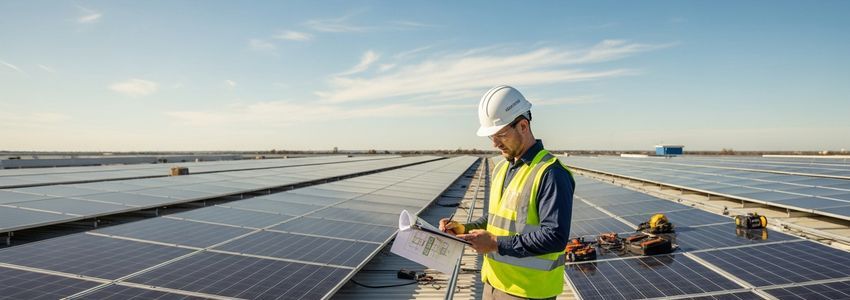
Pro Tip: Solar installation contractors who establish a business line of credit before they need it - during a period of strong revenue - access better rates and larger credit limits than those who apply during a cash flow crunch. Set up your line of credit now, and use it strategically when opportunities arise.
How Crestmont Capital Helps Solar Installation Companies
Crestmont Capital is the #1 business lender in the U.S., rated for speed, flexibility, and customer service. We understand that solar installation companies operate on project timelines, not bank processing schedules. When you need financing to purchase materials for a project starting Monday or to cover payroll while waiting for a commercial client to pay, you need a lender who can move as fast as your business does. That is exactly what Crestmont Capital delivers.
Our small business loans for solar contractors are designed with the realities of the installation industry in mind. We offer approvals in as little as 24 hours, with funding often available within one to two business days of approval. Unlike traditional banks that require months of documentation and weeks of review, our streamlined underwriting process gets you an answer fast. We evaluate your entire business picture - not just your credit score - which means solar companies with strong revenue but imperfect credit history can still qualify for substantial financing.
The range of products available through Crestmont Capital covers every phase of a solar contractor's growth journey. For equipment acquisition, our equipment financing program offers competitive rates on solar panels, inverters, vehicles, and installation tools with terms up to 84 months. For day-to-day cash flow management, our business line of credit provides flexible access to funds whenever you need them. For solar companies planning major expansions, our SBA loan programs offer the lowest available rates with long repayment terms.
We serve solar contractors at every stage - from electrician-background business owners launching their first solar installation operation (see our guide to electrician financing) to established commercial solar companies managing multi-million dollar project pipelines. Whatever your situation, our financing specialists take the time to understand your business and recommend the right product for your specific goals.
Real-World Financing Scenarios for Solar Contractors
Understanding how financing applies in practice helps solar contractors identify the right solution for their own situation. Here are three real-world scenarios illustrating how solar installation businesses use Crestmont Capital financing to solve specific challenges.
Scenario 1: The Growing Residential Solar Company
A residential solar installation company in Arizona has been operating for three years with five employees and $750,000 in annual revenue. The business has strong demand - it has enough project bookings to stay busy for the next six months - but the owner is turning down new customers because his current equipment fleet can only handle four simultaneous installations. Adding a second crew would require $120,000 in new panels, inverters, racking, and a service truck.
The owner applies to Crestmont Capital for an equipment financing package. With three years of operating history, consistent revenue, and a personal credit score of 660, he qualifies for a $135,000 equipment loan at competitive rates with a 60-month term. Monthly payments fit comfortably within his cash flow. Within six weeks of funding, the second crew is operational, the business is completing six simultaneous projects, and monthly revenue has increased by 40%. The equipment loan pays for itself within the first quarter of expanded operations.
Scenario 2: The Commercial Solar Contractor Scaling Up
A commercial solar installation company in California has just won a $1.2 million contract to install a 500 kW solar array on a distribution warehouse. The contract is a major milestone - the largest in the company's seven-year history - but it requires $380,000 in materials upfront, with the client paying 50% at project midpoint and 50% upon completion. The company has sufficient crew and equipment but needs cash to purchase the materials before work begins.
Rather than depleting its operating reserves, the company applies for a $400,000 working capital loan from Crestmont Capital. The underwriting takes 48 hours, and funds are deposited within one business day of approval. The business purchases all materials, begins the installation on schedule, and receives its first client payment at the project midpoint - which it uses to pay down a portion of the loan. After project completion and final client payment, the loan is repaid in full and the business has earned a net profit of $280,000 on the contract.
Scenario 3: The Solar Startup Gaining Traction
An electrician with ten years of commercial electrical experience launches a solar installation startup in Texas. After eight months in business, she has completed fourteen residential installations, earned $210,000 in revenue, and built a strong referral network. A local solar developer has offered her a subcontract to install solar on 25 residential homes in a new subdivision - a $525,000 contract that would be transformational for her young business. However, she needs $75,000 to purchase materials and fund two months of expanded payroll before the developer's first draw is released.
Her startup, at eight months old with strong revenue growth, qualifies for a Crestmont Capital fast business loan of $80,000. The combination of her personal electrical contracting experience, consistent business bank statements, and a signed subcontract agreement strengthens her application. Funding arrives in two business days, the subdivision project begins on schedule, and she is on track to close the year with over $700,000 in revenue - setting the stage for an SBA loan the following year to fund further expansion.
Did You Know? The U.S. Bureau of Labor Statistics projects solar PV installer jobs will grow by 23% over the next decade - far faster than virtually any other occupation. This growth means sustained demand for solar installation services, which lenders view as a strong positive signal when evaluating solar contractor loan applications.
How to Apply for Solar Business Financing
Applying for solar installation business financing is more straightforward than many contractors expect. The key to a smooth process is preparing the right documents in advance and choosing a lender whose requirements match your business profile. According to Forbes, businesses that submit complete applications with organized documentation are approved significantly faster and often receive better terms than those that apply without preparation.
Start by gathering your core financial documents. You will need three to six months of recent business bank statements (the lender's primary tool for evaluating cash flow), your most recent one to two years of business tax returns, a current profit and loss statement, and proof of business ownership (articles of incorporation or organization). If you are applying for equipment financing, you will also need an equipment quote or invoice from the supplier. For larger SBA loans, lenders typically require a business plan, projected financial statements, a business debt schedule, and personal financial statements from all owners with 20% or greater ownership.
When choosing a lender for your solar business loan, consider three factors: speed, flexibility, and total cost of capital. If you need funds within days, an alternative lender like Crestmont Capital is the right choice - traditional banks simply cannot match that timeline. If you have excellent credit and can wait 30 to 90 days, an SBA loan offers the lowest long-term cost. If your need is recurring and variable, a line of credit gives you the flexibility to borrow and repay as your cash flow demands. Most experienced solar contractors maintain relationships with more than one financing source - a line of credit for ongoing operational needs and a term loan facility for major equipment acquisitions.
How to Get Started
Complete our quick application at offers.crestmontcapital.com/apply-now - takes just a few minutes and does not affect your credit score.
A Crestmont Capital solar financing specialist will review your needs and match you with the right product - whether that is equipment financing, working capital, a line of credit, or an SBA loan.
Receive your funds and put them to work - often within 24 to 48 hours of approval. No waiting weeks for a bank decision.
Take Your Solar Business to the Next Level
Do not let capital constraints slow your growth. Crestmont Capital is ready to help - apply today and get funded fast.
Apply Now ->Frequently Asked Questions
What are solar installation business loans?
Solar installation business loans are financing products designed to help solar contractors, solar companies, and solar-related businesses access capital for equipment, working capital, project financing, and business growth. They include equipment loans, working capital loans, SBA loans, business lines of credit, and invoice financing tailored to the cash flow patterns of solar installation businesses.
How much can a solar installation company borrow?
Loan amounts for solar installation businesses range from $10,000 for small working capital loans to $5 million or more for SBA loans and large equipment financing packages. The amount you can borrow depends on your annual revenue, credit score, time in business, and the specific lender. Most alternative lenders will fund up to 150% to 200% of your monthly revenue as a working capital loan, while equipment loans can cover the full cost of the equipment being financed.
What credit score do I need for solar contractor financing?
Credit score requirements vary by lender and product. Alternative lenders like Crestmont Capital typically accept personal credit scores starting at 580 to 600 for working capital loans and equipment financing. Business lines of credit generally require 620 or higher. Traditional bank loans and SBA loans typically require 680 or above. If your credit score is below these thresholds, revenue-based financing, secured equipment loans, and invoice financing are often still accessible.
How fast can I get approved for a solar business loan?
Alternative lenders like Crestmont Capital can approve solar business loans in as little as 24 hours and fund within one to two business days. Traditional bank loans typically take two to four weeks. SBA loans require the longest timeline, generally 30 to 90 days from application to funding. If you need capital quickly to start a project or cover payroll, an alternative lender is typically the fastest path to funding.
What solar equipment can I finance?
Solar installation businesses can finance a wide range of equipment including solar PV panels, string inverters, microinverters, power optimizers, battery energy storage systems, mounting and racking hardware, conduit and wiring, testing equipment, boom lifts, scissor lifts, service vehicles and trucks, trailers, and installation tools. Even some software subscriptions and design tools used in solar operations can be financed through certain equipment financing programs.
Are SBA loans available for solar installation businesses?
Yes. SBA loans are fully available to solar installation businesses. The SBA 7(a) loan program offers up to $5 million for general business purposes including equipment, working capital, and expansion. The SBA 504 program provides long-term financing for major fixed assets like commercial real estate and large equipment over $500,000. SBA loans carry the lowest interest rates available to small businesses but require at least two years of operating history, strong credit, and detailed documentation.
Can a new solar installation startup get a business loan?
Yes, solar startups can access financing, though options are more limited than for established businesses. Startups with six or more months of operating history and consistent revenue can qualify for equipment financing and working capital loans from alternative lenders. Prior industry experience - such as an electrician or construction background - strengthens the application. Equipment loans are often the most accessible for startups because the equipment serves as collateral, reducing the lender's risk regardless of the business's age.
What documents do I need to apply for solar contractor financing?
Standard documents for solar business loan applications include three to six months of business bank statements, the most recent one to two years of business tax returns, a current profit and loss statement, proof of business ownership (articles of incorporation or organization), government-issued ID, and your contractor license. For equipment financing, add an equipment quote or invoice from the supplier. For SBA loans, a business plan, personal financial statements, and a complete business debt schedule are also required.
What is the difference between a solar business loan and a solar business line of credit?
A solar business loan provides a lump sum of capital repaid over a fixed term with scheduled payments - ideal for a specific, known expense like purchasing equipment or funding a single large project. A business line of credit is a revolving facility you draw from as needed and repay on your schedule - best for ongoing, variable cash flow needs. Many solar contractors benefit from having both: a term loan for major capital investments and a line of credit for day-to-day operational flexibility.
How does a solar installation company manage seasonal cash flow gaps?
Solar installation companies typically experience peak demand from spring through fall, with slower winter months in many markets. The best approach to managing seasonal cash flow is to establish a business line of credit during a high-revenue period when qualification is strongest. During slower months, draw from the line to cover fixed costs like payroll, insurance, and vehicle payments. Repay the line during peak season when project volume and revenue are at their highest. This approach prevents the need to lay off skilled crew members during slow periods and ensures the business is operationally ready when demand picks back up.
Can solar contractors use invoice financing for commercial projects?
Yes. Invoice financing is particularly well-suited to solar contractors with commercial clients who pay on 30 to 90 day net terms. Once a commercial solar installation is complete and invoiced, the contractor can immediately access 80% to 90% of the invoice value from the lender. The lender collects payment directly from the client when the invoice comes due, then remits the remaining balance minus fees to the contractor. This eliminates the cash flow gap between project completion and client payment, allowing the contractor to start the next project without delay.
What if I have bad credit - can I still get solar business financing?
Yes. Solar installation companies with imperfect credit histories can still qualify for financing, especially if the business has strong monthly revenue and consistent bank deposits. Equipment loans secured by the solar equipment being purchased are accessible at lower credit scores because the collateral reduces lender risk. Revenue-based financing evaluates primarily your monthly cash flow rather than your credit score. Working with an alternative lender rather than a traditional bank also expands your options significantly - alternative lenders place more weight on business performance than on personal credit history.
How can I improve my chances of getting approved for a solar business loan?
The most effective ways to strengthen a solar business loan application are: maintain clean business bank statements with consistent monthly deposits and no returned items; keep your personal credit score above 650 by paying all obligations on time; hold valid contractor licenses and insurance; build business credit by opening trade accounts with solar suppliers and reporting them to business credit bureaus; and apply for financing while your business is in a strong period rather than waiting until a cash crisis. Providing additional documentation like a signed project contract or customer backlog can also significantly strengthen an application.
Can I refinance my existing solar equipment with a new loan?
Yes. Solar contractors can refinance existing equipment loans to lower their monthly payments, access equity in paid-off equipment, or consolidate multiple equipment notes into a single payment. Equipment refinancing typically requires an appraisal or invoice for the equipment being refinanced, proof of ownership, and standard business financial documents. If your business has grown or your credit has improved since the original loan, refinancing may result in meaningfully lower rates and better terms.
How does Crestmont Capital differ from a traditional bank for solar business loans?
Crestmont Capital is an alternative lender, which means we operate with fundamentally different criteria and timelines than traditional banks. We approve solar business loans in 24 to 48 hours compared to two to four weeks at a bank. We evaluate your entire business picture - revenue trends, industry outlook, project pipeline, and owner experience - rather than relying primarily on credit score and collateral. We accept businesses with as little as six months of operating history that banks would decline. And unlike banks that offer a narrow menu of products, Crestmont Capital offers equipment financing, working capital loans, lines of credit, SBA-backed programs, and more - all under one roof.
Conclusion
The solar installation industry presents one of the most compelling growth opportunities in the U.S. small business landscape. With demand for residential and commercial solar installations rising year after year, solar contractors who have access to the right financing can scale their operations, win larger contracts, and build lasting businesses in one of the economy's most future-proof sectors. Whether you need solar installation business loans for equipment, working capital, or business expansion, the right financing strategy can accelerate your growth in ways that organic cash flow alone cannot match.
Understanding your options - from equipment financing and working capital loans to SBA programs and invoice financing - gives you the flexibility to match your financing strategy to your specific situation and goals. The key is choosing the right product for the right purpose: long-term equipment loans for capital assets, revolving lines of credit for ongoing operational needs, and fast-approval working capital loans for project-driven cash flow gaps.
Crestmont Capital is the #1 business lender in the U.S. and is ready to help solar installation contractors at every stage of growth. Our specialists understand the solar industry, move at the speed of your business, and offer a comprehensive range of financing solutions designed to help you win more projects and grow your revenue. Apply today at offers.crestmontcapital.com/apply-now and get the solar installation business loans your company needs to reach the next level.
Disclaimer: The information provided in this article is for general educational purposes only and is not financial, legal, or tax advice. Funding terms, qualifications, and product availability may vary and are subject to change without notice. Crestmont Capital does not guarantee approval, rates, or specific outcomes. For personalized information about your business funding options, contact our team directly.



