
 (800) 949-0401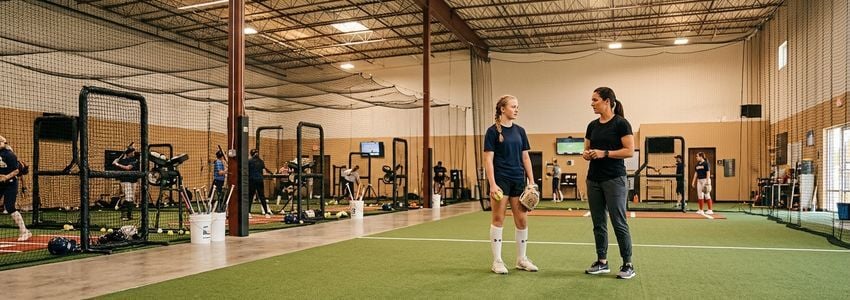
Softball Training Academy Equipment Financing: The Complete Guide for Business Owners
Softball training academy equipment financing gives facility owners the capital they need to build out batting cages, install pitching machines, upgrade turf, and modernize training bays without draining cash reserves. Whether you are opening a new indoor academy or expanding an existing facility to keep up with rising demand from travel ball programs, financing lets you move fast on equipment purchases while preserving working capital for payroll, rent, and marketing. As youth softball participation continues to climb and families invest more in year-round skill development, academy owners who can equip their facilities quickly are better positioned to capture that demand.
In This Article
What Is Softball Training Academy Equipment Financing?
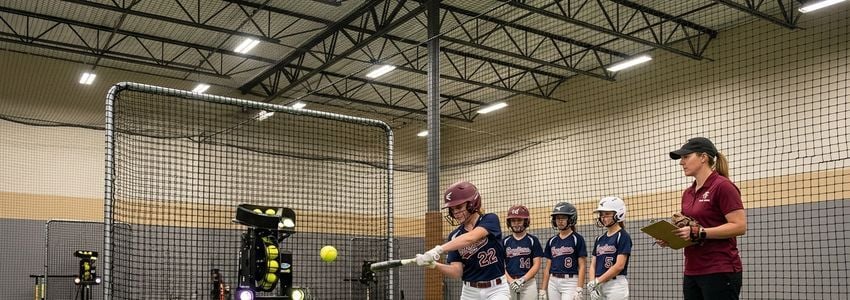
Softball training academy equipment financing is a category of business funding designed specifically for owners of indoor and outdoor softball training facilities, hitting academies, and youth softball development centers. This financing covers the specialized equipment these businesses depend on, including batting cages, pitching machines, radar and swing-tracking technology, portable mounds, protective netting, turf flooring, and video analysis systems used to break down a player's mechanics.
Because training equipment can represent a substantial upfront investment, most academy owners do not pay cash out of pocket. Instead, they use equipment financing, equipment leasing, SBA loans, or working capital products to spread the cost over time while the equipment generates revenue from lesson bookings, camps, and team rentals. Lenders evaluating this type of financing typically look at the equipment itself as collateral, which often makes approval faster and more accessible than unsecured lending options.
Softball training academies sit at the intersection of youth sports and small business services, an industry segment that has grown considerably as families invest more heavily in specialized athletic development. Facility owners who can equip their academy with modern, reliable equipment are better positioned to attract serious athletes, run efficient group sessions, and differentiate themselves from general-purpose batting cage operations.
Industry Snapshot: Forbes reports the North American youth sports market is valued at approximately $37.5 billion, with year-round specialization and rising per-athlete household spending driving continued demand for dedicated training facilities.
Key Benefits of Financing Your Softball Training Academy Equipment
Financing equipment rather than paying cash offers several strategic advantages for softball academy owners, whether you are launching a new facility or expanding an established one.
- Preserve working capital: Keep cash available for rent, coaching staff payroll, and marketing instead of tying it up in equipment purchases.
- Open or expand faster: Equip an entire facility in weeks rather than saving up capital over months or years.
- Access newer technology: Finance advanced pitching machines and swing-analysis systems that would otherwise be out of reach.
- Match payments to revenue: Structure monthly payments that align with lesson and membership income as your academy grows.
- Build business credit: Consistent on-time payments strengthen your business credit profile for future financing needs.
- Reduce equipment risk: Many equipment financing products include options to upgrade or replace aging machines before they become unreliable.
- Stay competitive: Travel ball families increasingly compare facility quality, and up-to-date equipment helps you stand out from older, underequipped competitors.
Academy owners who finance equipment purchases can also scale their offerings more deliberately. Rather than building out one cage at a time as cash becomes available, financing allows an owner to open with multiple stations from day one, capturing more lesson volume and group class revenue immediately.
Ready to Equip Your Softball Academy?
Get fast, flexible financing from the #1 business lender in the U.S. No obligation, apply in minutes.
Apply Now →How Softball Training Academy Equipment Financing Works
The process of financing training equipment follows a straightforward path, especially when working with a lender experienced in small business and specialty equipment funding.
You start by submitting an application with basic business details: legal business name, time in operation, annual or projected revenue, and a list or estimate of the equipment you plan to purchase. Most lenders also request recent bank statements and, for established businesses, tax returns from the past one to two years.
From there, an underwriter reviews your application. Because equipment financing is often secured by the equipment itself, lenders weigh factors like the type and resale value of the equipment, your credit profile, and your business's cash flow. New academies without established revenue can still qualify, particularly if the owner has strong personal credit or coaching industry experience that supports the business plan.
Once approved, funds are typically disbursed directly to the equipment vendor or to your business account within one to five business days for alternative lenders. SBA-backed loans take longer, generally thirty to ninety days, due to additional underwriting requirements. You then repay the loan on a fixed monthly schedule over a term that usually ranges from one to seven years depending on the equipment type and loan structure.
Quick Guide
How Equipment Financing Works, At a Glance
Submit your business details, revenue, and equipment list. Takes just a few minutes.
Lenders evaluate the equipment, your credit, and cash flow to determine terms.
Compare rate, term, and monthly payment before accepting.
Funds arrive and equipment installs, often within days of approval.
Types of Financing Available for Softball Training Academies
Softball academy owners have access to several financing products, each suited to different needs and stages of business growth.
Equipment Financing
Equipment financing is purpose-built for purchasing physical assets like batting cages, pitching machines, netting systems, portable mounds, and video analysis equipment. The equipment itself typically serves as collateral, which makes approval more accessible even for newer businesses or owners with less-than-perfect credit. Crestmont Capital offers equipment financing with fast approvals and competitive terms for training and recreation businesses.
SBA Loans
SBA 7(a) and SBA 504 loans offer longer repayment terms and lower rates for qualified borrowers, making them well suited for larger buildouts that combine leasehold improvements, turf installation, and equipment purchases in one project. SBA loans typically require two or more years in business, strong personal credit, and detailed financial documentation. Learn more about SBA loans available through Crestmont Capital.
Business Line of Credit
A business line of credit provides revolving access to funds you can draw on as needed, which is useful for academies with seasonal demand tied to school schedules and travel ball tryout periods. You draw funds to cover slower months and repay as lesson bookings pick back up. Explore business lines of credit with Crestmont Capital.
Working Capital Loans
Working capital loans provide a lump sum for day-to-day operating needs including staff wages, rent, insurance, and marketing during ramp-up periods. These loans are typically repaid over three to eighteen months and pair well with equipment financing when an academy needs both equipment and operating cash. Unsecured working capital loans from Crestmont Capital require no collateral.
Equipment Leasing
Leasing offers lower monthly payments than financing and the flexibility to upgrade equipment at the end of the lease term, which is attractive for technology-driven equipment like radar guns and swing-tracking systems that improve rapidly. At lease end, you can return, renew, or purchase the equipment depending on the lease structure.
Merchant Cash Advance
A merchant cash advance provides fast funding in exchange for a percentage of future card sales. MCAs can fund within twenty-four to forty-eight hours and do not require strong credit, but they carry higher costs than most other options. This product works best for urgent, short-term needs rather than a primary equipment purchase strategy.
By the Numbers
Softball Training Academy Financing, Key Statistics
$37.5B
Estimated value of the North American youth sports market (Forbes)
78,078
SBA 7(a) loans approved in FY2025 nationwide
1-5 Days
Typical funding timeline with alternative lenders
$25K-$750K
Typical loan range for training facility buildouts
Who Qualifies for Softball Training Academy Equipment Financing?
Qualification requirements vary by lender and product type, but most softball academy owners, including first-time entrepreneurs, can find a financing option that fits their situation.
Time in Business
Established academies with two or more years of operating history have the widest range of options, including SBA loans. Newer businesses and startups can still qualify for equipment financing and some alternative lending products, particularly when the owner has relevant coaching or business experience and strong personal credit.
Revenue
Lenders want to see consistent, verifiable revenue from lesson bookings, camps, memberships, and facility rentals. Many alternative lenders require a minimum of eight thousand to fifteen thousand dollars per month in gross revenue for working capital products, though equipment financing thresholds are often more flexible since the equipment secures the loan.
Credit Score
Personal FICO scores of 600 or higher typically qualify for equipment financing and alternative lending products. SBA loans generally require 650 to 680 or higher. Stronger credit unlocks lower rates and better terms, so addressing any credit issues before applying can meaningfully improve your offer.
Collateral
Equipment financing is inherently secured by the purchased equipment, which reduces the need for additional collateral. SBA loans above certain thresholds may require additional collateral or a personal guarantee. Working capital loans and MCAs are often unsecured but may still require a personal guarantee from the business owner.
Business Plan
For startup academies or larger buildouts, a clear business plan detailing your target market, pricing structure, staffing plan, and projected revenue strengthens your application considerably. Lenders want confidence that the facility will generate enough revenue to comfortably service the debt.
Pro Tip: If your academy has seasonal enrollment patterns tied to school schedules, present twelve months of revenue data so lenders can see your full annual cycle rather than judging you on a single slow month.
Comparing Your Financing Options
Choosing the right financing product depends on speed, cost, flexibility, and your eligibility profile. The table below summarizes the major options available to softball training academy owners.
| Financing Type | Best For | Typical Rate | Speed | Credit Needed |
|---|---|---|---|---|
| Equipment Financing | Cages, machines, netting, turf | 7-25% | 1-5 days | 580+ |
| SBA 7(a) Loan | Full buildouts, real estate | 7-11% | 30-90 days | 650+ |
| Business Line of Credit | Seasonal cash flow gaps | 8-30% | 3-10 days | 620+ |
| Working Capital Loan | Payroll, rent, marketing | 12-45% | 1-3 days | 580+ |
| Merchant Cash Advance | Urgent, short-term needs | Factor rate 1.15-1.5 | Same day - 48 hrs | 500+ |
How Crestmont Capital Helps Softball Training Academy Owners
Crestmont Capital is rated the number one business lender in the United States, offering financing solutions tailored to sports training facility owners, including softball academies, batting cage operators, and youth sports businesses. Our team understands the seasonal enrollment patterns and equipment-heavy cost structure of this industry and structures financing to match.
We offer fast approvals, often within twenty-four to forty-eight hours, and can fund qualified borrowers in as little as one business day. Our product lineup spans short-term working capital through long-term SBA-backed financing, so whether you need fifteen thousand dollars for a single pitching machine or half a million dollars to build out a multi-bay indoor facility, we have an option that fits.
Beyond funding, our advisors help you compare the true cost of different financing structures so you choose the product that best supports your academy's growth. We work with owners across the credit spectrum, from established businesses with strong financials to first-time academy owners just getting started.
Owners exploring facility financing may also want to review our guide to batting cage business loans or our overview of sports performance business loans for related facility and equipment funding strategies.
Build the Softball Academy Your Athletes Deserve
Crestmont Capital specializes in sports training and recreation business financing. Apply in minutes, get funded fast.
Apply Now →Real-World Scenarios: How Academy Owners Use Equipment Financing
These scenarios illustrate common situations softball training academy owners face when financing equipment.
Scenario 1: Launching a New Indoor Facility
A former college softball player in Ohio wants to open a six-thousand-square-foot indoor training academy with four batting cages, two pitching lanes, and a video analysis room. The buildout requires two hundred twenty thousand dollars for equipment, netting, turf, and technology. She secures an SBA 7(a) loan for one hundred eighty thousand dollars over seven years at 9 percent, supplemented by a forty thousand dollar equipment financing line for pitching machines and swing sensors. Her combined monthly payment is manageable against projected lesson revenue from day one.
Scenario 2: Expanding an Existing Academy
An established softball academy in Texas has waited lists for lesson slots and decides to add two additional cages and a second pitching machine to increase capacity. The owner uses a sixty-five thousand dollar equipment financing agreement, funded within three business days, to purchase and install the new equipment before the fall travel ball season begins, capturing additional enrollment immediately.
Scenario 3: Bridging a Seasonal Cash Flow Gap
A softball academy in the Midwest sees enrollment spike from January through July around tryout season, then drop significantly during late fall. The owner establishes a fifty thousand dollar business line of credit to cover rent and staff wages during the slower months, drawing funds as needed and repaying the balance once spring bookings pick back up.
Scenario 4: Upgrading Aging Equipment
An academy that opened five years ago is running pitching machines that increasingly break down mid-lesson, frustrating clients and coaches. The owner finances thirty-five thousand dollars in new commercial-grade pitching machines and radar equipment through an equipment financing agreement, improving lesson reliability and client retention within the first month of installation.
Scenario 5: Adding a Softball Program to an Existing Sports Facility
A multi-sport training facility in Florida notices strong local demand for dedicated softball instruction and decides to add a softball-specific wing. Using an eighty-five thousand dollar equipment financing loan, the owner installs two batting cages and a pitching lane within six weeks, immediately cross-selling softball lessons to existing baseball and multi-sport clients.
Scenario 6: Financing a Second Location
A successful softball academy operator in Georgia wants to open a second location thirty minutes away to serve a growing suburb. She needs three hundred thousand dollars for leasehold improvements, equipment, and working capital. Using a combination of an SBA loan for the buildout and an equipment financing agreement for cages and machines, she opens the second academy in time for spring tryout season.
Frequently Asked Questions
How to Get Started
Complete our quick application at offers.crestmontcapital.com/apply-now. It takes just a few minutes and involves no commitment.
A Crestmont Capital advisor reviews your academy's financial profile and matches you with the right financing option for your equipment needs and timeline.
Receive your funds and install your equipment, often within days of approval, so you can start booking lessons sooner.
Conclusion
Softball training academy equipment financing gives facility owners a practical way to build and grow a modern training business without exhausting cash reserves. Whether your priority is launching a new academy, adding capacity to an existing facility, or upgrading aging pitching machines and cages, the right financing product can accelerate your timeline while protecting your operational stability.
The key is matching your specific equipment needs to the right financing structure and working with a lender who understands the youth sports training industry. Crestmont Capital has helped thousands of small business owners across the country access the capital they need to build thriving facilities. As the number one rated business lender in the country, we are ready to help your softball training academy reach its full potential.
Do not let outdated equipment or a slow buildout hold your academy back while competitors expand. Apply today and see how softball training academy equipment financing can put your growth plans into motion.
Disclaimer: The information provided in this article is for general educational purposes only and is not financial, legal, or tax advice. Funding terms, qualifications, and product availability may vary and are subject to change without notice. Crestmont Capital does not guarantee approval, rates, or specific outcomes. For personalized information about your business funding options, contact our team directly.








