The septic service industry is one of the most quietly essential segments of the American home services economy. Roughly one in five U.S. households depends on an onsite wastewater system, and every one of those systems needs pumping, inspection, repair, and eventually replacement. For owners of septic pumping and installation companies, that built-in demand translates into steady recurring revenue. For researchers, journalists, and lenders, the latest septic service statistics reveal a mature but growing industry with resilient cash flow and meaningful capital needs. This report compiles the most important septic service statistics for 2026, covering market size, growth trends, household reliance, pricing benchmarks, equipment costs, regional patterns, and the financing landscape that keeps the industry running.
Whether you run an established septic pumping fleet, are evaluating a new business launch, or are researching the wastewater services market, the data below gives you a clear, numbers-first picture of where the industry stands in 2026 and where it is heading.
In This Article
- Septic Service Industry Overview
- Key Septic Service Statistics at a Glance
- Market Size and Growth Trends
- What Drives Demand for Septic Services
- Pricing and Cost Benchmarks
- Equipment and Operating Costs
- Regional Trends and State-Level Data
- Business Ownership and Employment Data
- Financing Trends in the Septic Industry
- How Crestmont Capital Helps Septic Businesses
- Frequently Asked Questions
- How to Get Started
Septic Service Industry Overview
Septic service companies pump, inspect, maintain, repair, and install onsite wastewater treatment systems. These systems treat and dispose of household and commercial wastewater in areas without access to municipal sewer lines. Because a failed septic system is a health hazard and a property emergency, demand for septic services is non-discretionary. Homeowners cannot postpone a backup or a saturated drain field the way they might postpone a kitchen remodel.
The industry sits at the intersection of home services, environmental services, and construction. Most operators are small, locally owned businesses running one to ten trucks. Barriers to entry are moderate: a new operator needs a vacuum truck, tanks, hoses, state licensing, and disposal site access, but does not need a storefront or a large staff. That structure keeps the industry fragmented, with thousands of independent operators serving defined local territories.
Several structural forces support the industry in 2026. Continued suburban and exurban housing development puts new homes on septic systems. Aging infrastructure in rural America means a large installed base of systems built in the 1970s and 1980s is reaching end of life. And tightening environmental rules in many states require more frequent inspections and certified maintenance, expanding the compliance-driven service market.
Key Stat: According to the U.S. Environmental Protection Agency, more than 60 million people in the United States are served by septic systems or other onsite wastewater treatment, making this one of the largest decentralized utility segments in the country.
Key Septic Service Statistics at a Glance
The headline numbers below summarize the state of the septic service industry in 2026. Each figure is drawn from federal data, industry research, or widely cited market estimates, and each is explored in more depth in the sections that follow.
By the Numbers
Septic Service Industry - Key Statistics for 2026
1 in 5
U.S. households rely on a septic system for wastewater treatment
$7B
Estimated annual U.S. septic service industry revenue
3-5 yrs
Recommended interval between professional septic tank pumpings
$350K
Typical cost of a new fully equipped septic vacuum truck
These figures point to an industry defined by recurring demand and high capital intensity. The service itself repeats on a fixed cycle for millions of households, while the trucks and equipment required to deliver it represent six-figure investments. That combination explains both the industry's stability and its steady demand for financing.
Market Size and Growth Trends
Market researchers estimate the U.S. septic, drain, and sewer cleaning services segment generates approximately $7 billion in annual revenue in 2026. The broader onsite wastewater category, which includes installation, repair, and inspection work beyond pumping, pushes the total addressable market higher still. Growth has averaged roughly 2% to 3% per year over the past five years, tracking housing development patterns and population migration toward suburban and rural counties.
Three growth trends stand out in the 2026 data. First, new housing starts in counties without sewer infrastructure continue to add thousands of new septic systems each year. U.S. Census Bureau construction data shows a persistent share of new single-family homes are built outside sewer service areas, particularly in the Southeast, the Midwest, and fast-growing exurban counties in Texas and Florida. Each new installation becomes a long-term service customer.
Second, the installed base is aging. A conventional septic system lasts 20 to 40 years depending on soil conditions, household usage, and maintenance history. Systems installed during the rural building booms of the 1970s and 1980s are now reaching replacement age in large numbers, driving a replacement and upgrade cycle that favors installers and repair specialists.
Third, regulation is expanding the service market. More states and counties now require point-of-sale inspections when a property with a septic system changes hands, and several states mandate periodic inspections or pumping records. Compliance-driven demand is less price-sensitive than discretionary work, which supports margins for established operators.
Ready to Grow Your Septic Service Business?
Get fast, flexible financing from the #1 business lender in the U.S. No obligation, apply in minutes.
Apply Now →What Drives Demand for Septic Services
Demand in this industry is unusually predictable compared with most home services. The core driver is the physics of the system itself: solids accumulate in every septic tank, and tanks must be pumped on a regular cycle to prevent failure. The EPA recommends professional inspection at least every three years and pumping every three to five years for a typical household. With tens of millions of systems in service, that guidance alone generates an enormous recurring workload.
Household behavior adds volume on top of the maintenance cycle. Garbage disposal use, high water consumption, and flushing non-degradable materials all shorten the interval between service calls. Larger households and multigenerational living arrangements, which Census data shows have grown over the past decade, increase tank loading and service frequency.
Real estate transactions create another reliable demand stream. Home inspectors and lenders increasingly flag septic condition during due diligence, and many counties now require a certified inspection before closing. That requirement turns every home sale in a septic-served area into a probable service appointment, and often into repair or replacement work when older systems fail inspection.
Weather and climate patterns matter as well. Heavy rainfall seasons saturate drain fields and expose marginal systems, producing emergency call spikes. Drought followed by intense storms stresses aging tanks and lines. Operators in storm-prone regions report that severe weather years reliably correlate with higher emergency service revenue.
Finally, commercial customers add a higher-value layer. Restaurants, campgrounds, RV parks, schools, and industrial facilities outside sewer districts operate larger onsite systems or grease traps that require scheduled service contracts. Commercial accounts typically sign recurring agreements, which stabilize monthly revenue and raise the overall value of a septic service book of business.
Pricing and Cost Benchmarks
Pricing data gives homeowners a yardstick and gives operators a sense of where their rates sit relative to national norms. The table below summarizes widely reported 2026 price ranges for common septic services across the United States. Actual pricing varies by region, tank size, access difficulty, and local disposal fees.
| Service | Typical 2026 Price Range | Notes |
|---|---|---|
| Standard tank pumping | $300 to $600 | Most common service call; larger tanks cost more |
| Septic inspection | $150 to $450 | Often required for home sales and refinancing |
| Drain field repair | $2,000 to $10,000 | Depends on soil, access, and system design |
| Full system replacement | $6,000 to $20,000+ | Engineered and mound systems run higher |
| New system installation | $8,000 to $25,000+ | Varies by soil test, permits, and system type |
| Emergency service call | $500 to $1,200 | After-hours and weekend premiums apply |
Several pricing trends stand out in 2026. Disposal fees at treatment facilities have risen steadily, and operators pass those costs through. Labor costs have climbed alongside the broader skilled trades market, with experienced technicians and CDL drivers commanding higher wages. And because septic work is non-discretionary, operators have held pricing power even in softer consumer spending periods, a dynamic that business publications such as Forbes have highlighted across the home services sector.
Pro Tip: Operators who bundle pumping, inspection, and minor repair into an annual maintenance agreement report higher customer lifetime value and smoother seasonal cash flow than operators who rely on one-off emergency calls.
Equipment and Operating Costs
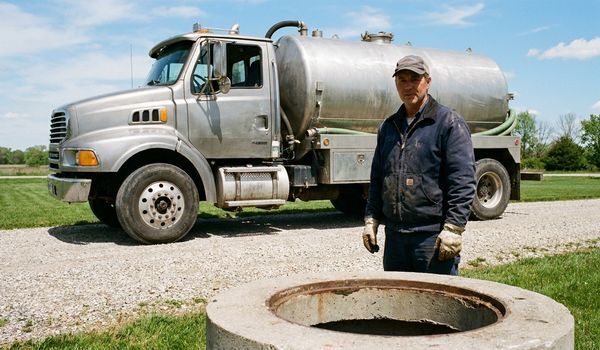
Septic service is a capital-intensive trade. The vacuum truck is the center of the operation, and it is expensive. A new fully equipped vacuum truck with a 2,000 to 4,000 gallon tank typically runs $200,000 to $400,000 or more in 2026, depending on chassis, tank material, and pump configuration. Used trucks in serviceable condition range from $60,000 to $150,000, which is why many operators start with used equipment and upgrade as the customer base grows.
Beyond the truck, operators budget for portable toilets and service units if they offer sanitation rentals, high-pressure jetting equipment for line clearing, camera inspection systems for diagnostics, and installation machinery such as excavators for replacement and new-system work. A full-service installation crew can carry $500,000 or more in rolling equipment.
Operating costs compound the capital burden. Commercial insurance for vacuum trucks runs significantly higher than standard fleet coverage because of the waste-hauling exposure. Fuel is a major variable cost, and route density directly affects profitability. Disposal fees at approved treatment facilities have risen in many markets as plants tighten acceptance rules. Licensing, continuing education, and environmental compliance add administrative overhead that smaller operators feel most acutely.
Because equipment represents such a large share of startup and expansion budgets, equipment financing is a standard tool in this industry. Spreading a $300,000 truck purchase over a fixed monthly payment lets an operator put the truck on route immediately and pay for it out of the revenue it generates, rather than draining working capital in a single purchase.
Regional Trends and State-Level Data
Septic system concentration varies dramatically by region, and the geography of the installed base explains where service businesses cluster. The EPA estimates that roughly 20% of U.S. households use onsite wastewater systems, but that share rises above 40% in some states and falls below 5% in heavily urbanized ones.
The Southeast carries the densest concentration. States such as North Carolina, South Carolina, Georgia, Alabama, and Tennessee have large rural populations, long histories of septic-served development, and active housing growth in counties without sewer lines. Florida adds a distinctive dynamic: its high water table and environmental sensitivity have produced some of the strictest inspection and upgrade mandates in the country, which expands compliance-driven service work.
The Northeast and New England show a different pattern. Vermont, New Hampshire, and Maine have some of the highest household septic usage rates in the nation, and their installed base skews old. Replacement and modernization work is a larger share of revenue there than in faster-growing regions.
The Midwest and Great Plains combine moderate household usage with large lot sizes and agricultural communities that support installation and repair specialists. In the West, growth corridors in Texas, Idaho, and parts of Arizona and Colorado are adding new septic-served subdivisions at the urban fringe. U.S. Census Bureau housing data consistently shows new single-family construction concentrated in exactly these exurban counties, which is where tomorrow's service contracts are being created today.
For operators, the regional takeaway is straightforward: local market density matters more than national averages. A county with 60% septic household penetration and active homebuilding supports far more route density per mile than a region where septic is rare. Population migration data tracked by outlets such as Reuters continues to show Americans moving toward lower-density counties, a trend that quietly expands the septic service footprint year after year.
Expand Your Fleet Without Draining Cash
Finance your next vacuum truck or jetter and pay it off from the revenue it earns. Fast approvals, flexible terms.
Get Funded →Business Ownership and Employment Data
The septic service industry is a small-business stronghold. Industry research estimates several thousand dedicated septic service establishments operate in the United States, the vast majority of them independently owned companies with fewer than 20 employees. The U.S. Small Business Administration counts more than 33 million small businesses across the economy, and home and environmental services trades like septic service are consistently among the most owner-operated categories in SBA.gov data.
Revenue per operator varies widely with scale. A single-truck owner-operator in a dense market can generate $150,000 to $300,000 in annual revenue with strong margins, since the owner draws a salary from operations. Multi-truck regional operators with commercial contracts and installation divisions commonly run $1 million to $5 million in annual revenue. Acquisition activity has picked up as private buyers and roll-up platforms target essential-service businesses with recurring revenue, and well-run septic companies with documented maintenance agreements command healthy sale multiples.
Employment in the trade faces the same skilled-labor pressure seen across construction and field services. CDL drivers with tanker endorsements are in short supply, and experienced technicians who can diagnose drain field failures or size a replacement system take years to develop. Operators report that recruiting and retention rank among their top three challenges, alongside equipment costs and disposal access.
Succession is an emerging storyline. A large share of septic businesses are owned by operators nearing retirement age, and many lack a family successor. That has created a buyer's market for acquisitions in some regions, where a new owner can acquire trucks, customer lists, and disposal relationships in a single transaction. For entrepreneurs evaluating how to start a septic business, acquiring an existing route is often faster and less risky than building from zero, and acquisition financing has become one of the more common uses of small business capital in this trade.
Financing Trends in the Septic Industry
Access to capital shapes who can enter the industry and who can scale within it. The capital stack for a septic business is predictable: trucks and heavy equipment, working capital for payroll and fuel between invoicing cycles, and expansion capital for acquisitions or new service lines such as portable sanitation or grease trap service.
Traditional bank loans remain available but slow, and many banks are cautious with waste-hauling businesses they do not understand. SBA-backed loans offer longer terms and lower down payments for qualified borrowers, and the agency's loan programs are frequently used for truck and real estate purchases in this industry. Approval timelines, however, can stretch to weeks or months, which does not fit the pace of an equipment auction or a sudden truck failure.
That speed gap is where alternative business lenders have taken share. Online and specialty lenders fund equipment purchases in days rather than months, underwrite on cash flow rather than just collateral, and structure payments around seasonal revenue patterns. For an operator whose truck dies in the middle of a busy season, the difference between funding in three days and funding in three months is the difference between keeping and losing a route.
A business line of credit has become a standard cash-flow tool for septic operators, smoothing the gap between residential service revenue and the lumpy timing of installation project payments. Meanwhile, unsecured working capital loans cover short-term needs such as fuel spikes, insurance renewals, and marketing pushes without tying up truck equity.
Key Stat: Replacement cost is the silent budget killer in this trade. A single vacuum truck replacement at $250,000 to $400,000 can consume more than a year of profit for a small operator, which is why most growth-minded owners pre-arrange financing before equipment fails rather than after.
How Crestmont Capital Helps Septic Businesses
Crestmont Capital works with septic service companies at every stage, from first-truck startups to multi-crew regional operators. As the #1 rated business lender in the U.S., Crestmont structures financing around the realities of the trade: high equipment costs, seasonal revenue swings, and the recurring-service cash flow that makes septic businesses fundamentally strong borrowers.
For equipment purchases, Crestmont finances new and used vacuum trucks, jetters, camera systems, and installation machinery with terms that match the useful life of the asset. Our septic pumping truck financing guide walks through truck-specific options in detail, and our septic service business loans overview covers the full range of funding structures available to this industry.
For day-to-day flexibility, Crestmont offers lines of credit and working capital products sized to route-based revenue. For acquisitions and expansion, term financing covers route purchases, competitor buyouts, and new territory launches. Applications are completed online in minutes, decisions come fast, and funding can land in days. If the statistics in this report describe your market opportunity, the fastest way to act on it is a quick conversation with a Crestmont funding specialist through our small business financing team.
What the 2026 Data Means for Septic Business Owners
Read together, the 2026 septic service statistics describe an industry with durable fundamentals. Demand is locked in by the installed base and refreshed continuously by new construction, real estate transactions, and regulatory compliance. Revenue is recurring by nature. Pricing power has held through economic cycles because the service is non-discretionary.
The constraints are equally clear. Equipment is expensive and getting more so. Skilled labor is scarce. Disposal access and environmental compliance add cost and complexity. The operators who thrive in this environment share a common profile: they invest in reliable equipment before failures force the issue, they build recurring revenue through maintenance agreements, and they maintain financing relationships that let them move quickly when opportunity or necessity strikes.
For journalists, researchers, and industry watchers, the septic sector offers a case study in how unglamorous essential services quietly compound value. For owners and operators, the data argues for planning capital needs proactively. The industry's growth may be measured in single digits, but its stability is measured in decades.
Frequently Asked Questions
How big is the septic service industry in 2026? +
Market research estimates place U.S. septic service revenue at approximately $7 billion per year, with the broader onsite wastewater category adding installation and repair work on top of that figure. The industry has grown roughly 2% to 3% annually in recent years, tracking housing development in unsewered areas.
How many U.S. homes use septic systems? +
About one in five U.S. households, roughly 20%, relies on a septic system or other onsite wastewater treatment. The EPA estimates more than 60 million Americans are served by these systems, with the highest concentrations in the Southeast and New England.
Is the septic service industry growing? +
Yes. The industry grows steadily at about 2% to 3% per year. Growth is driven by new construction in unsewered counties, an aging installed base of systems reaching replacement age, and expanding inspection and compliance mandates in many states.
How much does septic pumping cost in 2026? +
A standard residential septic tank pumping typically costs $300 to $600 in 2026, depending on tank size, access, and regional disposal fees. Emergency or after-hours service calls generally run $500 to $1,200.
How much does a new septic system cost to install? +
New septic system installation typically runs $8,000 to $25,000 or more, depending on soil conditions, permits, and system design. Engineered systems and mound systems in difficult soils sit at the high end of that range.
How many septic service businesses operate in the U.S.? +
Industry research estimates several thousand dedicated septic service establishments operate nationwide. The trade remains highly fragmented, with most companies independently owned and running fewer than 20 employees.
What is the average revenue of a septic service company? +
A single-truck owner-operator in a dense market commonly generates $150,000 to $300,000 per year. Multi-truck regional operators with commercial contracts and installation divisions frequently run $1 million to $5 million in annual revenue.
How often should a septic tank be pumped? +
The EPA recommends a professional inspection at least every three years and pumping every three to five years for a typical household. Larger households, garbage disposal use, and smaller tanks shorten that interval.
How long does a septic system last? +
A conventional septic system lasts 20 to 40 years depending on soil conditions, household usage, and maintenance history. Regular pumping and water conservation extend system life, while neglect or overloading shortens it significantly.
Which states have the most septic systems? +
The highest household septic usage rates are found in Vermont, New Hampshire, Maine, North Carolina, South Carolina, and parts of the Southeast and Midwest. In several of these states, more than 40% of households use onsite wastewater systems.
How much does a septic vacuum truck cost? +
A new fully equipped vacuum truck typically costs $200,000 to $400,000 or more in 2026. Used trucks in serviceable condition range from $60,000 to $150,000, which is why many operators finance equipment rather than paying cash.
Is a septic service business profitable? +
Yes, when run with route density and recurring maintenance agreements. Margins are supported by non-discretionary demand and pricing power. Profitability depends heavily on controlling fuel, disposal, insurance, and equipment financing costs.
What are the biggest expenses for septic service companies? +
The largest expense categories are equipment purchases and financing payments, fuel, commercial insurance, disposal fees at treatment facilities, and labor. Equipment alone can represent a six-figure annual commitment for growing fleets.
How do septic companies finance trucks and equipment? +
Most operators use equipment financing or leasing, which spreads the cost over fixed monthly payments matched to the asset useful life. SBA loans, term loans, and specialty business lenders are all common funding sources in this trade.
Where can a septic business get fast working capital? +
Specialty business lenders such as Crestmont Capital fund working capital loans and lines of credit in days rather than the weeks or months traditional banks require. Operators apply online, receive fast decisions, and use the funds for fuel, payroll, insurance, or expansion.
Put the 2026 Data to Work
The septic industry rewards operators who invest ahead of demand. Get the capital to grow before your competitors do.
Apply Now →How to Get Started
Complete our quick application at offers.crestmontcapital.com/apply-now in just a few minutes.
A Crestmont Capital advisor will review your needs and match you with the right financing option for your septic business.
Receive your funds and put them to work, often within days of approval.
Conclusion
The septic service statistics for 2026 tell a consistent story. One in five American households depends on the systems this industry maintains. Revenue approaches $7 billion and grows steadily on the back of new construction, aging infrastructure, and expanding compliance requirements. Demand is recurring, pricing power is real, and the businesses that serve this market are durable, owner-operated companies with meaningful capital needs.
For owners and operators, the numbers point to the same conclusion they point to every year: the work will be there. The question is whether your trucks, crew, and cash position let you capture it. If you are ready to add a truck, buy a route, or simply put reliable working capital behind a healthy book of business, Crestmont Capital can help you move at the speed this market rewards. Review the septic service statistics above, size the opportunity in your territory, and take the next step today.
Disclaimer: The information provided in this article is for general educational purposes only and is not financial, legal, or tax advice. Funding terms, qualifications, and product availability may vary and are subject to change without notice. Crestmont Capital does not guarantee approval, rates, or specific outcomes. For personalized information about your business funding options, contact our team directly.

Allan Garfinkle
Allan Garfinkle is the Chief Revenue Officer at Crestmont Capital, where he has spent more than a decade leading revenue strategy, business development, and operational growth. With 28 years of experience building and advising startups and small businesses, Allan has helped more than 10,000 business owners navigate financing decisions, growth opportunities, and changing economic conditions. He earned a Bachelor of Science in Economics and an MBA with a concentration in Finance from Northeastern University, as well as a Juris Doctor from New England Law, where his studies focused on contracts and business law. His writing draws on extensive practical experience in small-business lending, equipment financing, business credit, and commercial finance.