In the competitive landscape of modern business, maintaining healthy cash flow is not just an advantage; it is a necessity for survival and growth. Many business owners find themselves in a challenging position: rich in assets but short on the liquid capital needed to seize new opportunities, manage operational costs, or navigate economic uncertainties. A powerful yet often underutilized solution to this common problem is the sale leaseback. This comprehensive guide will explore every facet of sale-leaseback financing, providing you with the knowledge to determine if this strategic financial tool is the right move for your business.
In This Article
- What Is Sale-Leaseback Financing?
- How Does Sale-Leaseback Financing Work?
- Types of Sale-Leaseback Agreements
- Benefits of Sale-Leaseback Financing for Business Owners
- Potential Drawbacks to Consider
- Who Is Sale-Leaseback Financing Best For?
- How Crestmont Capital Can Help
- Real-World Scenarios
- How to Apply for Sale-Leaseback Financing
- Sale-Leaseback vs. Other Financing Options
- Frequently Asked Questions
- Next Steps
- Conclusion
What Is Sale-Leaseback Financing?
A sale-leaseback, also known as a sale and leaseback, is a financial transaction in which a business sells an asset it owns and immediately leases it back from the buyer. In essence, the business converts the equity in its assets into cash without disrupting its operations. The seller becomes the lessee, and the buyer becomes the lessor. This arrangement allows the business to receive a lump sum of capital while retaining the full use of the asset for its day-to-day activities.
This financial strategy can be applied to a wide range of assets, including heavy machinery, manufacturing equipment, commercial vehicle fleets, technology hardware, and commercial real estate. The core principle remains the same across all asset types: unlock the value tied up in your balance sheet and put it to work for your company.
Unlike a traditional loan, a sale leaseback is not a debt instrument. You are not borrowing money; you are selling an asset. This distinction has important implications for your company's balance sheet and credit profile. Instead of adding a liability (a loan), you are exchanging a fixed asset for a current asset (cash) and creating a new operating expense (the lease payment). This can make your company's financial ratios appear stronger to potential investors, partners, and future lenders.
The transaction is governed by two primary legal documents: a sales agreement, which transfers ownership of the asset to the financing company, and a lease agreement, which outlines the terms under which your business can continue to use the asset. These terms include the length of the lease, the amount of the periodic payments, and any options available at the end of the lease term, such as renewing the lease, purchasing the asset back, or returning it. For businesses seeking flexible and immediate capital, an equipment sale leaseback often proves to be a more accessible and strategic option than traditional bank financing.
How Does Sale-Leaseback Financing Work?
Understanding the mechanics of a sale-leaseback transaction is crucial for any business owner considering this option. While the specifics can vary depending on the lender and the asset, the process generally follows a clear, structured path. Here is a step-by-step breakdown of how a typical sale leaseback works:
- Asset Identification and Valuation: The process begins when your business identifies the assets it owns outright that it wishes to use for financing. These must be unencumbered assets, meaning there are no existing liens or loans against them. You will provide a list of these assets to a financing company like Crestmont Capital. The lender will then conduct an appraisal to determine the fair market value (FMV) or orderly liquidation value (OLV) of the equipment. This valuation is the foundation for the entire transaction.
- Offer and Agreement: Based on the asset valuation, the financing company will extend an offer. This offer is typically a percentage of the asset's value, often ranging from 70% to 90%. The offer will also detail the proposed lease terms, including the monthly payment, the duration of the lease (typically 3 to 10 years), and the end-of-lease options. If you accept the offer, you move on to formal documentation.
- Documentation and Sale: You will sign a purchase agreement to legally sell the asset to the financing company. Simultaneously, you will sign a lease agreement that grants your business the exclusive right to use that same asset for the agreed-upon term. This dual-document process ensures a seamless transition where your operations are never interrupted.
- Funding: Once the paperwork is finalized and ownership is transferred, the financing company releases the funds to your business. This is usually a lump-sum wire transfer, providing you with immediate access to a significant amount of working capital. The speed of this step is a major advantage of sale-leaseback financing compared to the lengthy underwriting process of traditional bank loans.
- Lease Period and Payments: Your business will begin making regular, fixed lease payments to the financing company as outlined in the agreement. These payments are treated as an operating expense. Throughout this period, you continue to use the asset exactly as you did before, responsible for its maintenance, insurance, and upkeep.
- End-of-Lease Options: When the lease term concludes, you typically have several choices. The most common options include:
- Purchase the asset back: You can repurchase the equipment for a predetermined price, often its fair market value or a nominal amount like $1.
- Renew the lease: If you still need the equipment, you can extend the lease, often at a reduced payment rate.
- Return the asset: You can simply return the equipment to the lessor, freeing you from any further obligation.
This entire process is designed to be efficient, providing capital quickly without forcing you to part with mission-critical equipment.
Sale-Leaseback Financing: By the Numbers
70-90%
Typical advance rate based on the equipment's fair market value.
3-10 Years
Common range for lease terms, offering flexibility in payment structure.
24-72 Hours
Typical time from final approval to funding, much faster than traditional loans.
$1.00
A common purchase option at the end of a capital lease term.
Unlock the Capital in Your Assets Today
Your equipment holds significant value. Convert that value into working capital without disrupting your operations. Crestmont Capital offers fast, flexible sale-leaseback solutions tailored to your business needs.
Get a Free QuoteTypes of Sale-Leaseback Agreements
While the fundamental concept of a sale and leaseback is consistent, the structure of the agreement can vary, primarily based on the type of asset involved and the accounting treatment desired. Understanding these variations is key to choosing the right path for your business.
Equipment Sale-Leaseback
This is the most common type of sale-leaseback for small and mid-sized businesses. It involves tangible, non-real estate assets that are essential to a company's operations. The range of eligible equipment is vast and spans nearly every industry:
- Manufacturing and Industrial: CNC machines, lathes, presses, packaging lines, robotic arms.
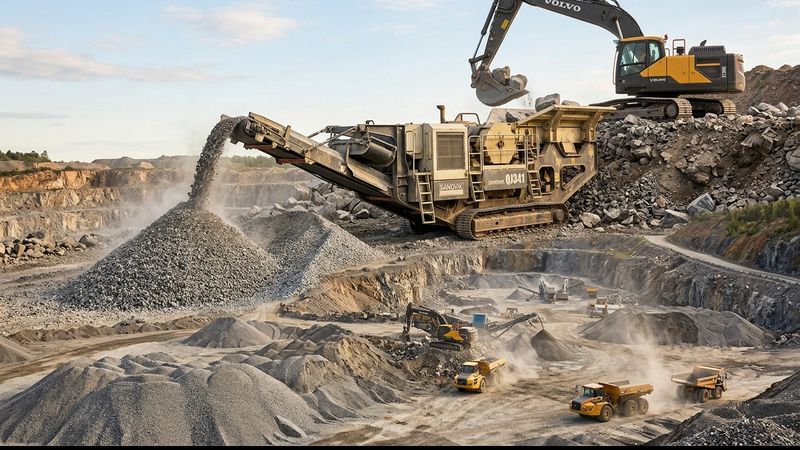
- Construction: Excavators, bulldozers, cranes, backhoes, dump trucks.
- Transportation and Logistics: Semi-trucks, trailers, delivery vans, forklifts.
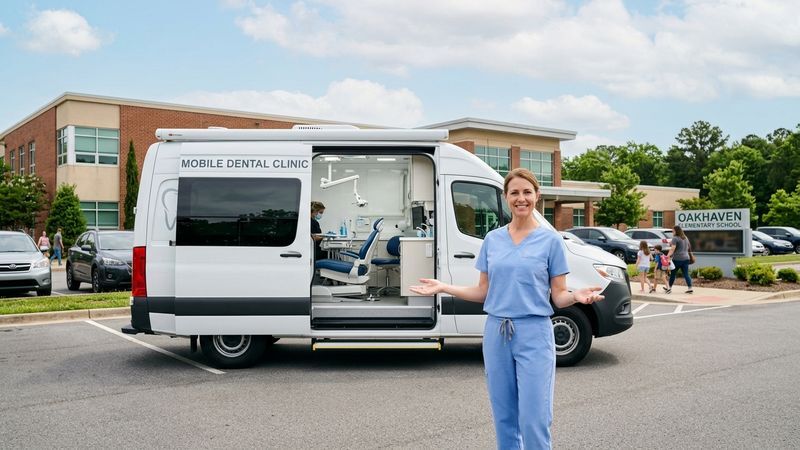
- Medical and Dental: MRI machines, X-ray equipment, dental chairs, diagnostic tools.
- Technology: Servers, data centers, high-end computer systems, telecommunications hardware.
- Restaurant and Hospitality: Commercial ovens, refrigeration units, point-of-sale (POS) systems.
An equipment sale leaseback is particularly attractive because it allows a business to extract capital from the very tools it uses to generate revenue. The process is generally faster than real estate transactions due to simpler valuation and titling processes.
Commercial Real Estate Sale-Leaseback
On a larger scale, companies can execute a sale-leaseback on their real estate assets, such as office buildings, warehouses, manufacturing facilities, or retail storefronts. In this transaction, the company sells its property to an investor or a real estate investment trust (REIT) and signs a long-term lease to continue operating in the same location. This is a common strategy for large corporations looking to free up massive amounts of capital from their balance sheets for reinvestment in core business activities.
While Crestmont Capital specializes in equipment-based financing, understanding the real estate option provides a complete picture of the sale-leaseback landscape. Real estate sale-leasebacks involve more complex legal processes, longer closing times, and are typically for much higher dollar amounts than equipment transactions.
Lease Classifications
From an accounting perspective, the lease portion of the agreement is often classified as either an operating lease or a capital lease (also known as a finance lease). The classification affects how the transaction is recorded on the company's financial statements.
- Operating Lease: Under this structure, the lease payments are treated as a simple operating expense, and the asset does not appear on the lessee's balance sheet. This can improve certain financial ratios, like return on assets (ROA). The lessor retains the risks and rewards of ownership.
- Capital/Finance Lease: This type of lease is more akin to a loan. The asset is recorded on the lessee's balance sheet along with a corresponding liability for the lease payments. The lessee also records depreciation on the asset. This structure is common when the lease term covers the majority of the asset's useful life or includes a bargain purchase option at the end.
The choice between these structures has significant financial reporting implications. It is essential to consult with your accountant or financial advisor to determine which classification is most appropriate and beneficial for your company's specific financial situation and goals.
Benefits of Sale-Leaseback Financing for Business Owners
A sale-leaseback transaction offers a unique combination of benefits that are difficult to find in other financing products. For business owners seeking a strategic infusion of capital, these advantages can be transformative.
- Immediate and Substantial Cash Infusion: The primary benefit is the rapid access to a large sum of liquid capital. Unlike a small business loan that may have caps, a sale leaseback is based on the value of your assets. If you have millions of dollars in equipment, you can potentially unlock a seven-figure sum in a matter of days or weeks, not months. This capital can be used for any business purpose without restriction: funding expansion, launching a new product, paying off high-interest debt, managing payroll, or simply strengthening your cash reserves.
- Continued Use of Essential Assets: This is the defining feature of a sale leaseback. You get the cash without losing the machine, vehicle, or tool that your business relies on. There is zero operational downtime. Your production schedules, delivery routes, and service offerings continue uninterrupted, ensuring no loss of revenue during the financing process.
- Improved Balance Sheet and Financial Ratios: By converting a fixed asset into cash, you increase your company's liquidity and working capital. In many cases (particularly with operating leases), you also remove the asset and any associated debt from your balance sheet. This can improve key financial metrics like return on assets (ROA) and debt-to-equity ratio, making your company look more financially sound to investors, partners, and lenders.
- Predictable, Fixed Payments: Lease payments are typically fixed for the entire term of the agreement. This makes budgeting and financial forecasting much simpler and more reliable. You are protected from the interest rate volatility that can affect variable-rate loans, allowing for better long-term financial planning.
- Fewer Restrictions and Covenants: Traditional bank loans often come with restrictive covenants that can limit a company's operational and financial flexibility. These might include rules about maintaining certain financial ratios, limits on future capital expenditures, or restrictions on owner compensation. Sale-leaseback agreements generally have fewer such covenants, giving you more freedom to run your business as you see fit.
- Alternative to Traditional Debt: For businesses that may be at their borrowing limit or have a credit profile that makes a new bank loan challenging, a sale leaseback provides a powerful alternative. The approval is based primarily on the value and quality of your assets, not just your credit score. This opens up financing opportunities for companies that might otherwise be shut out of traditional lending markets.
"According to a report highlighted by Forbes Advisor, 82% of small business failures are due to poor cash flow management. A sale-leaseback directly addresses this primary challenge by converting illiquid assets into vital working capital, providing a crucial lifeline for stability and growth."
Potential Drawbacks to Consider
While the benefits are compelling, a sale-leaseback is a significant financial decision that requires a balanced perspective. Business owners must also understand the potential downsides and trade-offs before committing.
- Loss of Ownership and Equity: The most fundamental drawback is that you no longer own the asset. This means you forfeit any future appreciation in the asset's value. If the equipment's market value increases significantly after you sell it, that gain belongs to the new owner (the lessor). You are trading future potential equity for present-day liquidity.
- Overall Cost Can Be Higher: While you receive a lump sum upfront, the total of all lease payments made over the full term will almost always exceed the amount of capital you received. This difference represents the lessor's profit and the cost of financing. It is crucial to calculate the total cost of the lease and compare it to the interest you would pay on a traditional loan to understand the true expense of the transaction.
- Lease Obligation is Fixed: The fixed payments that are a benefit for budgeting can become a liability if your business experiences a downturn. A lease is a binding contract, and you are obligated to make the payments for the entire term, regardless of your revenue or profitability. Defaulting on a lease can have serious consequences, including the repossession of the essential asset.
- Restrictions on Asset Modification: Since you no longer own the equipment, you may be restricted from making significant alterations or modifications without the lessor's permission. The lease agreement will specify your responsibilities for maintenance and care, but major upgrades may be prohibited, which could limit your ability to adapt the equipment to changing production needs.
- Importance of a Reputable Partner: The success of a sale-leaseback transaction heavily depends on the integrity and financial stability of the lessor. It is vital to partner with a well-established and reputable financing company like Crestmont Capital. Working with an unreliable partner could lead to unfair terms, hidden fees, or disputes over the asset's condition at the end of the lease.
Weighing these potential drawbacks against the significant benefits is a critical step in the decision-making process. For many businesses, the immediate strategic value of the capital injection far outweighs the long-term cost and loss of ownership.
| Feature | Sale-Leaseback Financing | Traditional Bank Loan | Equipment Financing |
|---|---|---|---|
| Asset Ownership | Transferred to lessor during the lease term. May be repurchased at end. | Retained by the business. A lien is placed by the lender. | Lender holds a lien until the loan is paid off. Business owns it. |
| Source of Funds | Equity from existing, owned assets. | Lender's capital, creating new debt. | Lender's capital specifically for purchasing new or used equipment. |
| Balance Sheet Impact | Removes fixed asset, increases cash. Creates an operating expense. Can avoid adding debt. | Adds a long-term liability (debt) and a corresponding asset (cash). | Adds both an asset (the equipment) and a long-term liability (the loan). |
| Approval Speed | Very Fast (Days). Based on asset value. | Slow (Weeks to Months). Based on extensive credit and financial review. | Fast (Days). Based on credit and the value of the equipment being purchased. |
| Use of Funds | Unrestricted. Can be used for any business purpose. | Typically unrestricted, but may have some covenants. | Restricted. Funds can only be used to purchase the specified equipment. |
| Credit Requirements | More flexible. Heavily weighted on asset quality. | Strict. Requires strong business and personal credit history. | Moderate to strong credit is typically required. |
Who Is Sale-Leaseback Financing Best For?
Sale-leaseback financing is a versatile tool, but it is particularly well-suited for certain types of businesses and specific financial situations. Understanding the ideal candidate profile can help you determine if it aligns with your company's circumstances.
Businesses with Significant Investment in Hard Assets
The most obvious candidates are companies in asset-intensive industries. If your business owns a substantial amount of valuable, unencumbered (fully paid-off) equipment, you are in a prime position for a sale leaseback. This includes sectors like:
- Manufacturing: Companies with CNC machines, fabrication equipment, and production lines.
- Construction: Contractors who own their fleet of excavators, cranes, and other heavy machinery.
- Transportation/Logistics: Trucking companies with a fleet of trucks and trailers, or distribution centers with forklifts and material handling equipment.
- Healthcare: Medical practices, clinics, and hospitals that own expensive diagnostic and imaging equipment.
Companies Needing Rapid Capital for Growth or Opportunities
Speed is a major differentiator for sale-leasebacks. This makes it ideal for businesses facing time-sensitive opportunities, such as:
- Winning a large contract that requires an immediate investment in raw materials and labor.
- Acquiring a competitor or a complementary business that suddenly becomes available.
- Funding a strategic expansion into a new market or launching a new product line ahead of the competition.
In these scenarios, the weeks or months required for a traditional bank loan could mean missing the opportunity entirely.
Businesses with Less-Than-Perfect Credit
Because the transaction is secured by a hard asset that the lender will own, the underwriting process is often more flexible regarding credit history. A sale leaseback is an asset-based solution. While credit is still a factor, the primary consideration is the value and condition of the equipment. This makes it an accessible option for:
- Younger businesses that lack the long financial history required by banks.
- Companies that have experienced a recent financial setback but have strong underlying assets.
- Business owners with personal credit challenges that would disqualify them from traditional loans.
Companies Looking to Restructure Their Balance Sheet
A sale leaseback can be a sophisticated financial strategy for improving a company's financial health. It is a good fit for businesses aiming to:
- Pay off expensive debt, such as merchant cash advances or high-interest credit cards, and consolidate it into a single, predictable lease payment.
- Improve liquidity ratios ahead of a planned fundraising round or sale of the company.
- Shift from a capital-intensive (CapEx) model to an operating expense (OpEx) model, which can be attractive to some investors.
If your business fits one or more of these profiles, exploring a sale leaseback financing for business growth could be a highly strategic and beneficial move.
Is a Sale-Leaseback Right for Your Business?
Every business is unique. Our team of financing experts can help you analyze your assets and goals to determine if a sale-leaseback is the best path forward. Let's start the conversation.
Consult with an ExpertHow Crestmont Capital Can Help
Navigating the world of commercial financing can be complex, and choosing the right partner is paramount. At Crestmont Capital, the #1 rated business lender in the U.S., we specialize in creating tailored financing solutions that empower businesses to achieve their goals. Our expertise in equipment sale leaseback transactions makes us an ideal partner for companies looking to leverage their assets for growth.
We understand that a sale leaseback is more than just a financial transaction; it is a strategic decision. Our process is built on transparency, speed, and a deep understanding of the industries we serve. When you work with Crestmont Capital, you gain a partner dedicated to your success. Here is how we help:
- Expert Valuation: Our team has extensive experience in appraising a wide variety of commercial equipment. We work to establish a fair and accurate valuation for your assets, ensuring you receive the maximum possible capital. We pride ourselves on understanding the true operational value of your equipment, not just its auction price.
- Streamlined Process: We have refined our application and underwriting process to be as efficient as possible. We know that when you need capital, you need it now. We eliminate the red tape and bureaucratic delays common with traditional lenders, moving you from application to funding in a fraction of the time.
- Flexible and Customized Terms: We do not believe in one-size-fits-all solutions. We work with you to structure a lease agreement that aligns with your cash flow, business cycle, and long-term objectives. Whether you need a shorter term with a buyout option or a longer term with lower payments, we can build a solution that fits.
- A Full Suite of Financing Options: A sale-leaseback is a powerful tool, but it may not always be the only or best option. As a full-service lender, we can advise you on a range of solutions. Perhaps traditional Equipment Financing to acquire new assets is a better fit, or maybe an Equipment Leasing program makes more sense. We can also explore Asset-Based Financing or Working Capital Loans. Our goal is to find the right solution for you, leveraging resources like our Equipment Financing 101 guide to help you make an informed decision.
"The global asset-based lending market is projected to grow significantly, reaching over $1.5 trillion by 2027. This trend, reported by market analysts, underscores the increasing reliance of businesses on asset-centric financing solutions like the sale-leaseback to fuel growth and maintain liquidity in a dynamic economy."
Real-World Scenarios
To better illustrate the practical power of a sale-leaseback, let's explore six scenarios across different industries where this financing strategy provides a perfect solution.
1. The Manufacturing Company
Situation: A mid-sized metal fabrication shop owns five CNC machines, purchased over the last few years, with a collective fair market value of $1.2 million. They unexpectedly win a massive contract from an aerospace client, but they need $750,000 immediately to purchase raw materials and hire temporary staff to meet the demanding production schedule. A bank loan would take at least 60 days to approve.
Solution: The company engages Crestmont Capital for a sale-leaseback on the five CNC machines. The machines are appraised, and Crestmont offers 75% of their value, providing $900,000 in capital. The company accepts, sells the machines, and leases them back on a 5-year term. They receive the funds in under a week, secure the materials, and begin work on the lucrative contract without any interruption to their operations.
2. The Construction Contractor
Situation: A general contractor owns a fleet of excavators, bulldozers, and dump trucks valued at $2 million. It's the slow winter season, and cash flow is tight, but they need to make a significant down payment on a performance bond for a major public works project starting in the spring. Their credit line is maxed out from a previous project.
Solution: The contractor executes a sale-leaseback on a portion of their fleet, specifically the newer, high-value equipment. They sell assets worth $800,000 and receive $600,000 in cash. This allows them to secure the bond for the new project and cover payroll during the lean months. They continue to use the equipment for smaller jobs and are perfectly positioned to start the big project when the weather breaks.
3. The Trucking and Logistics Fleet
Situation: A regional trucking company owns a fleet of 50 trailers free and clear, but their 25 tractors are aging and becoming unreliable, leading to high maintenance costs and downtime. They want to upgrade the tractors but lack the cash for a down payment on a new fleet loan.
Solution: The company uses a sale-leaseback on the 50 trailers, which have a stable market value. They sell the entire trailer fleet to a financing company and lease them back. The transaction generates over $1 million in capital, which they immediately use as a substantial down payment on 25 brand-new, fuel-efficient tractors. This move lowers their maintenance and fuel costs, improves driver retention, and makes their entire operation more profitable, all while keeping their essential trailers in service.
4. The Medical Practice
Situation: A successful orthopedic clinic owns a 3-year-old MRI machine valued at $1.5 million. The partners want to open a second location in a neighboring town to expand their patient base, a project requiring $1 million for the build-out and new equipment.
Solution: The clinic arranges a sale-leaseback on the MRI machine. They sell it to a medical equipment lessor for $1.1 million and sign a 7-year lease to continue using it. The cash injection fully funds the new clinic's development without the partners needing to contribute personal capital or take on complex real estate debt. The predictable lease payment for the MRI machine is simply factored into their operational budget.
5. The Restaurant Group
Situation: An established restaurant group owns three successful locations. They want to acquire a fourth prime location from a retiring owner, but the deal requires a quick close and $400,000 in cash. The value of their business is in its brand and operations, not easily collateralized for a fast bank loan.
Solution: The group inventories the fully-owned kitchen equipment, including high-end ovens, walk-in coolers, and POS systems across all three existing locations. They execute a sale-leaseback on this package of equipment, raising $450,000. They use the funds to close the acquisition and for initial renovations on the new restaurant, all while their current kitchens continue to operate seamlessly.
6. The E-commerce Retailer
Situation: A rapidly growing e-commerce company owns its own warehouse and all the associated fulfillment equipment: conveyor systems, sorting machines, and forklifts, valued at $750,000. They are facing a cash crunch due to investing heavily in inventory for the holiday season and need capital to fund a massive digital marketing campaign to drive sales.
Solution: The retailer completes a sale-leaseback on its warehouse and fulfillment equipment. They receive $550,000 in working capital, which they pour directly into their marketing efforts. The campaign is a huge success, leading to record holiday sales. The lease payments on the equipment are easily covered by the increased revenue, demonstrating a clear return on the financing decision.
How to Apply for Sale-Leaseback Financing
Applying for a sale-leaseback with a lender like Crestmont Capital is designed to be a straightforward and transparent process. Here is a typical step-by-step guide to securing this type of financing:
Step 1: Initial Consultation and Asset Identification
The first step is to connect with a financing specialist. You will discuss your capital needs, business goals, and the assets you own. You will then compile a detailed list of the unencumbered equipment you wish to use for the sale-leaseback, including make, model, year, and serial numbers.
Step 2: Submit Application and Documentation
You will complete a simple application form. Along with the asset list, you will typically need to provide basic financial documents, such as recent business bank statements and financial statements (profit & loss, balance sheet). This information helps the lender understand your company's overall financial health.
Step 3: Asset Valuation and Proposal
The lender will perform a desktop appraisal or, for very high-value equipment, a physical inspection to determine the fair market value of your assets. Based on this valuation and a review of your application, they will present you with a formal proposal. This document will outline the purchase price (the amount of capital you will receive) and the specific terms of the leaseback, including payment, term length, and end-of-lease options.
Step 4: Review and Acceptance
Carefully review the proposal with your financial advisor or accountant. If the terms meet your needs, you will sign the agreement documents. This will include the bill of sale to transfer ownership and the master lease agreement to govern your use of the assets.
Step 5: Funding
Once all documents are signed and processed, the funds are transferred directly to your business bank account, typically via wire transfer. The entire process, from application to funding, can often be completed in just a few business days, providing the quick capital infusion that makes this option so attractive.
Sale-Leaseback vs. Other Financing Options
To make the best decision for your business, it is helpful to compare a sale-leaseback directly against other common financing methods.
Sale-Leaseback vs. Refinancing
The term "refinancing" usually refers to replacing an existing loan with a new one, often to get a better interest rate or different term. An equipment "cash-out refinance" is similar to a sale-leaseback, where you borrow against the equity in your equipment. The key difference in the sale leaseback vs refinancing debate lies in ownership and balance sheet treatment. With refinancing, you retain ownership but add a loan (a liability) to your balance sheet. With a sale-leaseback, you relinquish ownership for the lease term, and the transaction is treated as a sale and an operating expense, not new debt. This can be advantageous for companies trying to manage their debt load.
Sale-Leaseback vs. Working Capital Loans
A working capital loan is typically an unsecured, short-term loan designed to cover day-to-day operational expenses. While useful, these loans are often for smaller amounts and can come with higher interest rates because they are not backed by collateral. A sale-leaseback, being an asset-based transaction, allows a business to access a much larger amount of capital based on its equipment value, often at a more favorable effective rate than an unsecured loan.
Sale-Leaseback vs. Selling the Asset Outright
If you have an underutilized piece of equipment, selling it might seem like a simple way to raise cash. However, if the asset is critical to your operations, selling it outright is not an option. A sale-leaseback provides the best of both worlds: you get the cash as if you sold the asset, but you retain its full use. This avoids the operational disruption and the potential future cost of having to buy or lease a replacement asset.
Sale-Leaseback vs. Equity Financing
Equity financing involves selling a stake in your company to investors (like venture capitalists or angel investors) in exchange for capital. The major drawback is dilution; you are giving up a portion of your ownership and future profits, and often, some measure of control over your business. A sale-leaseback allows you to raise significant capital without diluting your equity at all. You retain 100% ownership of your company.
Frequently Asked Questions
What is a sale leaseback?
A sale leaseback is a financial transaction where a company sells an asset it owns (like equipment or property) and then immediately leases it back from the new owner. This allows the company to receive a lump sum of cash from the sale while continuing to use the asset for its operations.
What types of assets can be used in a sale leaseback?
A wide range of hard assets can be used, including construction machinery, manufacturing equipment, commercial vehicle fleets, medical and dental technology, IT hardware, and even commercial real estate. The key requirement is that the asset has a clear, appraisable value and is owned free of any existing liens.
How much money can I get from a sale leaseback?
The amount of capital you can receive is based on a percentage of the asset's appraised value, typically its Fair Market Value (FMV) or Orderly Liquidation Value (OLV). Most financing companies will advance between 70% and 90% of this value.
How fast is the sale-leaseback financing process?
It is significantly faster than traditional bank lending. Once you provide the necessary documentation and asset list, the process from application to funding can often be completed in just a few business days to a week.
Will a sale leaseback affect my business operations?
No. A major benefit of a sale leaseback is that it causes zero disruption to your daily operations. You sell the asset and lease it back in a seamless transaction, so you never lose access to your mission-critical equipment.
Who owns the equipment during the lease term?
The financing company (the lessor) that purchased the asset from you holds the legal title and ownership during the lease term. Your company (the lessee) has the exclusive right to use the equipment as specified in the lease agreement.
What happens at the end of the lease?
You typically have several options. Common choices include purchasing the asset back for a predetermined price (which could be Fair Market Value or a nominal $1 buyout), renewing the lease for an additional term, or simply returning the equipment to the lessor.
Is my credit score a major factor for approval?
While your credit history is considered, it is not the primary factor for a sale leaseback. The approval is more heavily weighted on the value, condition, and marketability of the assets you are using for the transaction. This makes it a great option for businesses with strong assets but less-than-perfect credit.
Are lease payments fixed?
Yes, in almost all cases, the lease payments are fixed for the entire duration of the term. This provides predictability for budgeting and protects your business from rising interest rates.
What is the difference between a sale leaseback and a loan?
A loan is a debt transaction where you borrow money and promise to pay it back with interest, creating a liability on your balance sheet. A sale leaseback is the sale of an asset. It converts an asset you own into cash and creates an operating expense (the lease payment), which can have different and often more favorable accounting implications.
Can I use a sale leaseback for old equipment?
Yes, as long as the equipment is in good working condition and still holds a reasonable market value, its age is not necessarily a barrier. The lender's appraisal will determine its eligibility and the amount of capital you can receive against it.
Who is responsible for maintenance and insurance on the equipment?
The lessee (your company) is typically responsible for all maintenance, repairs, and insurance on the equipment throughout the lease term, just as you were when you owned it.
What if I want to upgrade the equipment during the lease?
Lease agreements may have provisions for technology upgrades. This is an important point to discuss with your financing partner during the negotiation phase. Some lessors offer flexible programs that allow for mid-lease upgrades.
Can I pay off the lease early?
Early buyout options may be available, but this depends on the specific terms of your lease agreement. Some leases may have prepayment penalties, while others might offer a structured early purchase option. Be sure to clarify this before signing.
Why should I choose Crestmont Capital for a sale leaseback?
Crestmont Capital is the #1 rated business lender in the U.S., specializing in fast, flexible, and transparent financing solutions. Our expertise in asset valuation and structuring tailored agreements ensures you get the most value from your assets with a partner you can trust.
Ready to Turn Your Equipment into Capital?
The process is faster and simpler than you think. Get a no-obligation quote from Crestmont Capital and discover the hidden financial power of your business assets.
Apply NowNext Steps
If you believe a sale-leaseback could be the right strategic move for your business, here are the immediate next steps you can take to explore this powerful financing option.
Assess Your Assets
Create a preliminary list of the major equipment, vehicles, or machinery your company owns outright. Note the make, model, year, and general condition. This will form the basis of your initial conversation with a financing specialist.
Define Your Capital Needs
Clearly identify how much capital you need and what you plan to use it for. Whether it is for expansion, debt consolidation, or an acquisition, having a clear purpose will help structure the ideal financing solution.
Speak with a Crestmont Capital Specialist
Contact our team for a free, no-obligation consultation. We will review your asset list and financial goals, answer all your questions, and provide you with a clear, preliminary quote on how much capital you can access through a sale leaseback. This is the most effective way to get concrete numbers and a clear path forward.
Conclusion
In today's economic climate, business agility and financial liquidity are more important than ever. A sale leaseback offers a sophisticated, efficient, and powerful way for asset-rich companies to unlock dormant capital and convert it into fuel for growth, stability, and opportunity. By selling an asset and immediately leasing it back, you gain a vital cash infusion without sacrificing the equipment that makes your business run.
While it involves trade-offs, such as the loss of ownership, the strategic benefits are often overwhelming. From improving your balance sheet to funding rapid expansion, the applications are vast. It provides a viable and often superior alternative to traditional debt, especially for businesses that need speed and flexibility. If your company owns valuable equipment, you are sitting on a reservoir of untapped capital. A sale leaseback from a trusted partner like Crestmont Capital can provide the key to unlocking it, positioning your business for a stronger, more prosperous future.
Disclaimer: The information provided in this article is for general educational purposes only and is not financial, legal, or tax advice. Funding terms, qualifications, and product availability may vary and are subject to change without notice. Crestmont Capital does not guarantee approval, rates, or specific outcomes. For personalized information about your business funding options, contact our team directly.