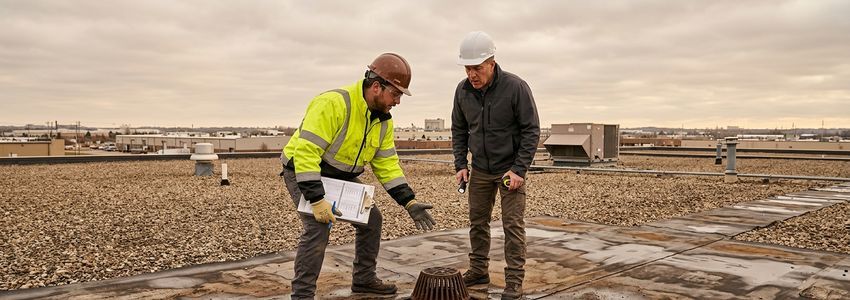
A commercial roof leak rarely waits for a convenient moment. Water finds its way into inventory, equipment, ceiling tiles, and electrical systems fast, and the damage keeps compounding for every day the leak goes unaddressed. When an insurance adjuster comes back with a payout that falls short of the actual repair estimate, or a claim gets delayed for weeks while water damage spreads, business owners need another way to move forward immediately. A roof repair loan gives commercial property owners and tenants the fast, flexible capital needed to fund repairs now, without waiting on a drawn-out insurance process or draining cash reserves that the rest of the business depends on.
This guide covers how roof leak repair financing works, which loan products fit different repair scenarios, what qualifies as an insurance coverage gap, and how Crestmont Capital helps business owners get funded quickly when a leaking roof threatens to shut down operations.
In This Article
What Is a Roof Repair Loan?
A roof repair loan is a form of commercial financing, typically a working capital loan, business line of credit, or short-term loan, used to cover the cost of repairing or partially replacing a commercial roof when the expense is not fully covered by an existing insurance policy. Rather than being tied to the roof itself as collateral, most roof repair loans are unsecured and underwritten based on the strength of the business's cash flow and revenue history.
Insurance coverage gaps are common in roof damage claims. A policy might exclude certain causes of damage, apply a high deductible, cap the payout below the actual repair estimate, or simply take longer to process than the business can afford to wait. A roof repair loan bridges that gap, letting a business move forward with contractors immediately instead of leaving a compromised roof exposed to further water intrusion, mold growth, or structural damage while a claim works through the insurer's process.
Industry Insight: The U.S. Small Business Administration notes that unexpected property damage is one of the leading disruptions small businesses face, and that having a financing plan in place before an emergency occurs meaningfully shortens recovery time.
Because roof leaks affect nearly every type of commercial property, from retail storefronts and warehouses to restaurants, medical offices, and manufacturing facilities, this type of financing is not limited to any single industry. What matters most to lenders is the business's ability to repay based on consistent revenue, not the condition of the building itself.
According to data compiled by the U.S. Census Bureau, small businesses make up the overwhelming majority of commercial property occupants nationwide, which means most roof leak emergencies happen to owners without a large capital reserve set aside specifically for building repairs.
Why Insurance Often Falls Short
Business owners are frequently surprised by how much of a roof repair bill lands outside their insurance coverage. Understanding the common gaps helps explain why so many turn to financing rather than waiting on a claim to fully resolve.
- High deductibles: Commercial property policies often carry deductibles in the thousands of dollars, and some roof-specific endorsements carry separate, higher deductibles tied to wind or hail damage.
- Wear-and-tear exclusions: Many policies exclude damage attributed to gradual deterioration, age, or lack of maintenance, even when a sudden leak is the visible symptom.
- Actual cash value payouts: Some policies pay actual cash value rather than full replacement cost, leaving a gap between the payout and what a contractor actually charges.
- Claims processing delays: Adjuster visits, documentation requirements, and appraisal disputes can stretch a claim out for weeks or months while the leak continues to cause damage.
- Scope disagreements: Insurers and contractors frequently disagree on the scope of repair needed, and businesses are often left covering the difference to get the work done properly and quickly.
Business owners who line up financing before or immediately after a leak is discovered are able to authorize repairs the same week, rather than leaving a compromised roof exposed while a claim slowly moves through review. That speed often prevents a moderate repair from becoming a much larger, more expensive project.
Need Fast Capital for a Roof Repair?
Get flexible financing from the #1 business lender in the U.S. Apply in minutes, no obligation required.
Apply Now →How Roof Leak Repair Financing Works
Financing a roof repair follows the same general underwriting approach used across most fast commercial financing products, with an emphasis on speed since leaks worsen the longer they go unaddressed.
Application and Documentation
Most lenders, including Crestmont Capital, ask for three to six months of business bank statements, basic company information, and a general description of the repair. Some lenders request a contractor estimate or insurance correspondence for context, though this is generally used to confirm the funding amount rather than as a strict underwriting requirement.
Underwriting and Approval
Underwriters evaluate average monthly revenue, time in business, and existing debt obligations. Because this type of financing is typically unsecured and based on the business's cash flow rather than the building itself, approval can often move forward even while an insurance claim is still open or under dispute.
Funding and Deployment
Once approved, funds are deposited directly into the business bank account and can be used at the owner's discretion, whether that means paying a roofing contractor's deposit, covering the gap between an insurance payout and the full repair estimate, or funding emergency tarping and water mitigation while a permanent fix is scheduled.
Quick Guide
Roof Repair Financing at a Glance
A roofing contractor assesses the leak and provides a written repair or replacement estimate.
Submit a short application with basic business and bank statement information.
Lenders assess revenue and cash flow, often within 24 to 48 hours.
Approved funds are deposited directly into your account so repairs can begin right away.
Types of Financing for Roof Repairs
The right financing product depends on how much capital is needed, how quickly funds must be available, and whether the roof damage is a one-time repair or the first sign of a larger deferred-maintenance issue.
Business Line of Credit
A revolving business line of credit is a strong fit when the full scope of roof damage is not yet known, such as when a leak has been patched temporarily but the extent of interior water damage is still being assessed. You draw only what you need as costs are confirmed, and interest accrues only on the outstanding balance.
Unsecured Working Capital Loan
An unsecured working capital loan delivers a lump sum upfront, which works well once a contractor has provided a firm estimate and the business needs a defined amount to cover the repair in a single payment or deposit.
Commercial Real Estate Financing
For roof damage severe enough to require a substantial capital improvement or partial roof replacement rather than a simple patch, commercial real estate financing can provide a longer repayment term better suited to a larger project cost.
Short-Term Business Loans
A short-term loan with a repayment period of three to eighteen months suits a defined, contained repair project, such as replacing a section of membrane roofing or repairing flashing around a rooftop HVAC unit, where the business expects the expense to be fully resolved on a known timeline.
Commercial Line of Credit
Property owners managing multiple buildings or ongoing maintenance needs across a portfolio may prefer a commercial line of credit, which offers similar flexibility to a business line of credit but is structured for larger commercial financing needs.
Key Point: Roofing contractors and public adjusters commonly advise business owners not to delay emergency mitigation, such as tarping or temporary sealing, even while financing and insurance details are still being sorted out, since additional water intrusion is often the most expensive part of a delayed repair.
Who This Financing Is Best For
Roof leak repair financing is not limited to any one type of business. Any company that owns, leases, or operates out of a building with a roof carries some exposure to this kind of unplanned expense, and the financing options above are built to serve that broad range of situations.
General Qualification Criteria
- Time in business: Most lenders look for at least six months to a year of operating history, though established businesses typically see faster approvals and better terms.
- Monthly revenue: Lenders generally want to see consistent monthly revenue of at least $10,000 to $15,000, though requirements vary by product and lender.
- Business bank statements: Three to six months of statements are the standard documentation requirement for fast-turnaround financing.
- Credit profile: A personal credit score in the 600s is often sufficient for working capital products, with higher scores unlocking better rates.
Businesses That Benefit Most
- Retail and storefront businesses where a leak threatens inventory or customer-facing space
- Restaurants and food service operations where water intrusion raises health code concerns
- Warehouse and distribution operators protecting stored inventory from water damage
- Medical and professional offices needing to keep patient or client areas usable
- Manufacturing facilities where roof leaks threaten equipment or production lines
- Property owners managing tenant complaints tied to an unresolved leak
If a business's credit profile has been affected by other challenges, working capital and revenue-based financing options often remain accessible since underwriting emphasizes cash flow over credit history alone.
Property Owners vs. Tenants
Financing needs differ depending on whether the business owns the building or leases it. Property owners are typically responsible for the full cost of structural roof repairs and often use these loan products to protect the long-term value of their real estate asset. Commercial tenants operating under a triple-net or gross lease may share repair responsibility with the landlord, but many still choose to finance their portion of the cost, or fund interior damage separately, so that operations are not held up while landlord and insurer negotiations continue. In either case, having independent access to capital means the business is not stuck waiting on someone else's timeline to fix a problem that is actively affecting revenue.
Comparing Your Repair Financing Options
Choosing between financing types comes down to how quickly funds are needed, how well-defined the repair cost is, and how large the overall project turns out to be once a contractor inspects the damage.
| Financing Type | Best For | Speed to Fund | Repayment Term |
|---|---|---|---|
| Business Line of Credit | Damage scope still being assessed | 1 to 3 days | Revolving |
| Working Capital Loan | Known, fixed-cost repair estimate | 1 to 3 days | 3 to 24 months |
| Short-Term Business Loan | Single, contained repair project | 1 to 2 days | 3 to 18 months |
| Commercial Real Estate Financing | Large-scale repair or partial replacement | 1 to 4 weeks | Longer-term |
| Commercial Line of Credit | Multi-property or ongoing maintenance needs | 2 to 5 days | Revolving |
How Crestmont Capital Helps
Crestmont Capital is recognized as the #1 business lender in the country, built around getting business owners the capital they need quickly, without the delays typical of traditional banks. When a roof leak threatens inventory, equipment, or day-to-day operations, Crestmont's streamlined application and underwriting process is designed to move at the speed the situation demands.
Through a business line of credit, businesses can draw funds as repair costs are confirmed, covering everything from emergency tarping to full contractor invoices without reapplying for new financing at each stage. For businesses that already have a firm repair estimate in hand, an unsecured working capital loan delivers a lump sum that can be deployed immediately.
Crestmont's team also works with businesses managing the broader financial impact of property damage, including situations where insurance falls short. If a business is separately covering a large deductible tied to the same roof claim, Crestmont's guide on financing a large insurance deductible covers additional strategies worth reviewing alongside this guide. Businesses recovering from more extensive property damage, such as a fire or flood that also affected the roof, may also want to read Crestmont's overview of disaster recovery financing, and property owners planning a full roof replacement rather than a targeted repair can review Crestmont's guide to financing an aging commercial roof.
Most applicants receive a credit decision within 24 to 48 hours, and funds are commonly available within one to three business days of approval, giving business owners the ability to authorize repairs almost as fast as a leak is discovered.
Don't Let a Leak Become a Bigger Problem
Crestmont Capital offers fast, flexible financing so your business can repair roof damage without waiting on insurance.
Get Your Rate →
Real-World Scenarios: Roof Repair Financing in Action
Seeing how businesses have used roof repair financing in practice helps illustrate the real value of having fast capital available when a leak strikes.
Scenario 1: The Regional Distribution Warehouse
A distribution warehouse discovered a membrane roof failure that had allowed water to pool above a section of the facility storing packaged goods. The insurance adjuster determined that gradual wear contributed to the failure and reduced the payout well below the $85,000 repair estimate. The owner used a working capital loan to cover the shortfall and authorize repairs the same week, preventing further inventory loss.
Scenario 2: The Family-Owned Restaurant
A restaurant owner noticed staining and dripping near the kitchen ceiling during a storm. The health inspector flagged the moisture as a compliance risk requiring immediate correction. With a $22,000 repair quote and a policy deductible that covered less than half the cost, the owner secured a short-term business loan within two days and had the leak sealed before the next scheduled inspection.
Scenario 3: The Medical Office Building
A multi-tenant medical office building experienced a roof leak above a shared hallway that began affecting two tenant suites. The property manager needed $58,000 for immediate repairs plus interior drywall and flooring restoration, while the insurance claim remained under review for scope disagreements. A business line of credit allowed the manager to fund the repair in stages as invoices came in from the contractor and restoration crew.
Scenario 4: The Auto Repair Shop
An auto repair shop owner found rusted flashing around a rooftop HVAC unit had allowed water to reach electrical panels below. The $34,000 repair, including electrical inspection and rooftop sealing, was financed through an unsecured working capital loan, allowing the shop to stay open with minimal disruption while the work was completed over a weekend.
Scenario 5: The Retail Strip Center
A strip center owner faced roof damage across three connected retail units after a severe hailstorm. The insurance payout, based on actual cash value rather than full replacement cost, left a $110,000 gap between the settlement and the contractor's replacement bid. The owner combined a working capital loan with a longer-term commercial real estate financing product to cover both the immediate repair and the difference in the replacement cost.
Scenario 6: The Manufacturing Facility
A small manufacturing facility discovered a persistent leak directly above a production line after noticing water stains on ceiling panels. With $47,000 needed for emergency tarping, structural inspection, and permanent repair, and the insurance claim still pending appraisal, the owner used a short-term business loan to get the repair scheduled immediately, avoiding a costly production shutdown.
How to Get Started
Have a licensed roofing contractor inspect the damage and provide a detailed repair or replacement estimate.
Compare the estimate against your insurance settlement or deductible to determine exactly how much financing you need.
Complete our quick application at offers.crestmontcapital.com/apply-now, with your last three months of bank statements ready.
Once approved, funds are typically available within one to three business days so repairs can begin right away.
Apply for Roof Repair Financing in Minutes
Crestmont Capital, the #1 business lender in the U.S. Fast approvals, flexible terms, no obligation to apply.
Apply Now →Frequently Asked Questions
What is a roof repair loan?
A roof repair loan is commercial financing, most commonly a business line of credit, working capital loan, or short-term loan, used to cover the cost of repairing a commercial roof leak, especially when insurance does not fully cover the expense.
How fast can I get funding for a roof leak repair?
Many alternative lenders, including Crestmont Capital, can deliver a credit decision within 24 to 48 hours and fund approved loans within one to three business days, far faster than waiting on an insurance settlement.
Why doesn't insurance always cover the full cost of a roof leak repair?
Common reasons include high deductibles, wear-and-tear exclusions, actual cash value payouts instead of full replacement cost, and disagreements between the insurer and contractor over the scope of the repair.
Can I get financing while my insurance claim is still open?
Yes. Roof repair financing is typically unsecured and based on business cash flow rather than the insurance claim itself, so approval can move forward even while a claim is pending or under appraisal.
What can roof repair financing be used for?
Funds can be used for emergency tarping and water mitigation, contractor deposits, full repair or partial replacement costs, structural inspections, and any interior restoration tied to the leak, such as drywall or flooring.
What credit score do I need for a roof repair loan?
Requirements vary by lender and product, but many working capital and line of credit options are available to businesses with a personal credit score in the 600s. Stronger credit and consistent revenue generally unlock better rates.
Is a business line of credit or a lump-sum loan better for a roof repair?
A business line of credit works well when the scope of damage is still being assessed, since you draw only what you need. A lump-sum working capital loan is often better once a contractor has provided a firm repair estimate.
How much does a commercial roof leak repair typically cost?
Costs vary widely based on the size of the building and extent of damage, ranging from a few thousand dollars for a small, contained leak to well over $100,000 for a major repair or partial roof replacement.
Can a new business qualify for roof repair financing?
Businesses with as little as six months of operating history may qualify for certain working capital products, though most lenders prefer at least one year in business for the most competitive rates and terms.
Will a roof repair loan affect my business credit?
Responsibly managed financing, where payments are made on time, generally has a positive effect on business credit over time by establishing a track record of reliable repayment.
What documents are needed to apply for roof repair financing?
Most lenders require a completed application, three to six months of business bank statements, and basic information about the business. A contractor's repair estimate is helpful but not always required.
Is commercial real estate financing a good option for a roof repair?
Commercial real estate financing can be a strong option for large-scale repairs or partial roof replacements, though the approval process typically takes longer, making it less suited to urgent, time-sensitive leaks.
Can financing cover both the repair and interior water damage restoration?
Yes. Working capital financing is flexible and can be used to cover the roof repair itself along with related interior restoration, such as damaged ceiling tiles, drywall, flooring, or affected inventory.
What is the difference between a roof repair and a roof replacement for financing purposes?
A repair typically addresses a specific leak or damaged section and costs less, while a replacement involves the entire roof system and requires a larger, often longer-term financing solution such as commercial real estate financing.
Should I wait for my insurance settlement before starting repairs?
Most contractors and adjusters advise against waiting, since delayed repairs allow water damage to spread and can increase the total cost. Many businesses use financing to start repairs immediately and adjust the loan amount once the insurance settlement is finalized.
A roof leak is one of the most disruptive and unpredictable expenses a commercial property owner can face, and insurance rarely covers the full cost as quickly or completely as businesses expect. A roof repair loan gives you the fast, flexible capital needed to authorize repairs immediately, protect inventory and equipment from further water damage, and keep operations running smoothly while any remaining insurance claim continues to work through the process. Acting quickly, with the right financing in place, is often what separates a contained repair from a much larger, more expensive property loss.
Disclaimer: The information provided in this article is for general educational purposes only and is not financial, legal, or tax advice. Funding terms, qualifications, and product availability may vary and are subject to change without notice. Crestmont Capital does not guarantee approval, rates, or specific outcomes. For personalized information about your business funding options, contact our team directly.