
 (800) 949-0401
Ready-Mix Concrete Business Loans: The Complete Financing Guide for Ready-Mix Concrete Business Owners
Running a ready-mix concrete business means managing one of the most capital-intensive operations in the construction supply chain. From maintaining a fleet of mixer trucks to keeping your batching plant running at full capacity, the equipment and working capital demands are significant. This guide covers every financing option available to ready-mix concrete producers so you can make smart funding decisions and keep your business growing.
- The Ready-Mix Concrete Industry: Size and Opportunity
- Why Ready-Mix Concrete Businesses Need Specialized Financing
- Types of Loans for Ready-Mix Concrete Businesses
- Equipment Financing for Mixer Trucks and Batching Plants
- Working Capital Loans for Concrete Producers
- SBA Loans for Ready-Mix Concrete Companies
- How to Qualify for Ready-Mix Concrete Business Loans
- Loan Type Comparison Table
- The Application Process: Step by Step
- Using Financing to Grow Your Ready-Mix Concrete Business
- Frequently Asked Questions
- Next Steps
- Conclusion
The Ready-Mix Concrete Industry: Size and Opportunity
The ready-mix concrete industry is a cornerstone of American infrastructure. Every commercial building, highway overpass, residential foundation, and bridge project requires reliable access to fresh, properly mixed concrete delivered on time. Ready-mix producers are the critical link between raw materials and finished construction.
According to data from the U.S. Census Bureau, the ready-mix concrete manufacturing sector generates tens of billions in annual revenue and employs hundreds of thousands of workers across the country. The industry is closely tied to construction spending, which the Small Business Administration notes continues to be driven by both private investment and federal infrastructure programs.
Infrastructure investment through federal legislation has further accelerated demand for ready-mix concrete. Projects ranging from highway resurfacing to new water treatment facilities all require large-scale concrete supply. For ready-mix producers with the capacity and capital to scale, the opportunity is substantial.
But capturing that opportunity requires money. Mixer trucks cost $150,000 to $300,000 each. Batching plant upgrades run into the millions. Seasonal cash flow swings can leave even profitable businesses cash-strapped heading into peak season. That is where purpose-built financing comes in.
Why Ready-Mix Concrete Businesses Need Specialized Financing
Ready-mix concrete production is fundamentally different from most other construction-adjacent businesses. The capital requirements are closer to manufacturing than contracting, and the operational risks are unique to the industry.
High Equipment Costs
A single transit mixer truck represents a major capital investment. Most mid-size ready-mix operations run fleets of 10 to 30 trucks, meaning fleet value alone can reach several million dollars. Batching plants, aggregate bins, cement silos, conveyor systems, and water recycling equipment add to the capital base. Unlike general contractors who rent equipment on a project basis, ready-mix producers must own and maintain their production infrastructure year-round.
Raw Material Costs
Cement, aggregate, sand, admixtures, and water represent ongoing variable costs that must be paid regardless of how many orders come in. Cement suppliers often require payment within 30 days, while ready-mix producers may wait 45 to 90 days to collect from commercial contractors. This creates a consistent working capital gap that financing can bridge.
Seasonal Revenue Swings
In northern markets, cold weather halts most concrete pours from November through March. Ready-mix producers carry fixed costs through the winter while revenue drops sharply. A line of credit structured around seasonal cash flow can make the difference between a manageable off-season and a financial crisis.
Fleet Maintenance and Replacement
Mixer trucks are hard-working machines that require intensive maintenance. Drums wear out, hydraulic systems fail, and engines run hard under constant load. Scheduled maintenance and unexpected repairs represent ongoing capital needs that can spike without warning.
Types of Loans for Ready-Mix Concrete Businesses
Ready-mix concrete businesses have access to a wide range of financing products. The right choice depends on your specific need - whether that is new equipment, working capital, facility expansion, or growth acquisition.
Crestmont Capital offers small business loans designed specifically for capital-intensive industries like ready-mix concrete production. Here is a breakdown of the primary options.
Term Loans
Traditional term loans provide a lump sum upfront, repaid over a fixed period with scheduled payments. For ready-mix businesses, term loans work well for major capital projects like batching plant upgrades, facility construction, or fleet expansion. Repayment terms typically range from 1 to 10 years, with longer terms available through SBA programs.
Equipment Financing
Equipment financing is purpose-built for purchasing mixer trucks, batching plants, aggregate handlers, and other production equipment. The equipment itself serves as collateral, which can make qualification easier and interest rates more competitive. Loan terms typically align with the useful life of the equipment.
Business Line of Credit
A business line of credit gives ready-mix producers flexible access to capital they can draw on as needed. This is ideal for managing raw material purchases, covering payroll during seasonal slowdowns, and handling unexpected maintenance expenses. You only pay interest on what you draw, making lines of credit cost-efficient for variable needs.
Working Capital Loans
Unsecured working capital loans provide fast access to funds without requiring collateral. These are particularly useful for ready-mix producers who need to bridge the gap between material purchases and customer collections, or who want to take on a large project without straining daily operations.
Equipment Leasing
Equipment leasing allows businesses to use mixer trucks and other assets without the full purchase price. Leasing preserves capital for operations, offers potential tax advantages, and makes it easier to upgrade equipment as technology improves. Some ready-mix operators lease their newest trucks while owning their older backup fleet.
Short-Term Business Loans
Short-term business loans provide quick capital for immediate needs, typically repaid within 3 to 18 months. These are best suited for bridge financing, inventory purchases ahead of peak season, or covering a large project startup before first payment arrives.
Ready to Fund Your Ready-Mix Concrete Business?
Crestmont Capital specializes in financing for capital-intensive industries. Get pre-qualified in minutes with no impact to your credit score.
Apply Now - Free, No ObligationEquipment Financing for Mixer Trucks and Batching Plants
Equipment is the core of any ready-mix concrete operation, and equipment financing is almost always the most cost-effective way to acquire it. Here is what ready-mix producers need to know about financing their capital assets.
Mixer Trucks
Transit mixer trucks are the most visible and most expensive assets in a ready-mix operation. New drum-style mixer trucks from major manufacturers like McNeilus, London, and Beck Industrial range from $150,000 to $280,000 depending on capacity and specification. With equipment financing, you can purchase the truck with a down payment of 10% to 20% and spread the remainder over 48 to 84 months.
The truck itself secures the loan, making equipment financing easier to qualify for than unsecured lending. Your lender will look at the asset's condition, the down payment amount, and your business's cash flow and creditworthiness to determine terms.
Batching Plants
A concrete batching plant is the production heart of your operation. Small portable plants suitable for one or two trucks start around $100,000. Full-scale commercial batching plants with dual-shaft mixers, computerized batch controllers, aggregate bins, and recycling systems can exceed $1 million. Many established ready-mix operators finance batching plant purchases or upgrades using long-term long-term business loans with 5 to 10 year terms to keep monthly payments manageable.
Supporting Equipment
Beyond trucks and plants, ready-mix operations invest in front-end loaders, aggregate conveyors, cement silos, admixture storage systems, water meters, and wash-out pits. These supporting assets can be bundled into a single equipment financing package or funded through a separate line of credit as needed.
Financing New vs. Used Equipment
Used mixer trucks are commonly available in the $40,000 to $120,000 range. While financing used equipment generally carries slightly higher interest rates than new equipment purchases, the lower principal can make used trucks a smart choice for businesses watching their monthly payment obligations. Lenders typically finance equipment up to 10 years old with a clear title.
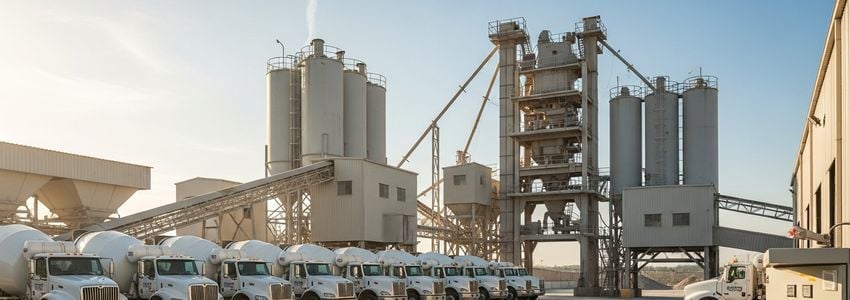
A modern ready-mix concrete operation requires significant capital investment in fleet and plant equipment.
Ready-Mix Concrete Business: Key Financing Facts
Working Capital Loans for Concrete Producers
Equipment financing addresses asset acquisition, but working capital is what keeps the plant running day to day. Ready-mix concrete producers face persistent working capital pressure from the mismatch between input costs and revenue collection.
Managing the Cash Flow Gap
Here is the fundamental problem: Your cement supplier expects payment in 30 days. Your aggregate supplier may extend 45 days. But your commercial contractor clients often take 60 to 90 days to pay. Every yard of concrete you pour represents cash out the door weeks before cash comes back in. Scale that across 50 to 100 deliveries per day, and the working capital requirement becomes massive.
Working capital loans and lines of credit are designed precisely for this situation. A revolving line of credit lets you draw funds as needed to cover material purchases and payroll, then repay as customer payments arrive. According to reporting by Forbes, managing working capital effectively is one of the top predictors of small business survival and growth.
Seasonal Financing Strategies
In seasonal markets, ready-mix producers need to plan winter financing well in advance. Options include:
- Establishing a revolving line of credit in summer when cash flow is strong and lenders are most receptive
- Negotiating extended payment terms with suppliers ahead of the slow season
- Using a short-term working capital loan to cover off-season fixed costs (rent, insurance, loan payments, key employees)
- Pre-selling capacity or negotiating deposits from customers for spring projects
Project-Based Working Capital
When a large project comes in - say, a major commercial development requiring 5,000 yards over three months - the startup costs can be substantial. Materials must be purchased, additional drivers may need to be hired, and plant capacity may need temporary expansion. Project-based working capital loans allow you to fund the startup and operational costs of a major project against the expected revenue.
If you need money fast, Crestmont Capital also offers same-day business loans and fast business loans for situations where timing is critical.
SBA Loans for Ready-Mix Concrete Companies
SBA loans are among the most attractive financing options for established ready-mix concrete businesses due to their competitive interest rates and long repayment terms. The Small Business Administration does not lend directly but guarantees a portion of loans made through approved lenders, reducing the lender's risk and enabling more favorable terms for borrowers.
SBA 7(a) Loans
The SBA 7(a) program is the most flexible and widely used SBA product. Ready-mix concrete businesses can use 7(a) proceeds for equipment purchases, working capital, real estate acquisition, debt refinancing, and business acquisitions. Maximum loan amounts reach $5 million, and repayment terms extend to 10 years for equipment and 25 years for real estate.
According to the SBA, interest rates on 7(a) loans are capped based on the prime rate plus a spread, typically making them among the most affordable long-term financing options for qualifying businesses.
SBA 504 Loans
The SBA 504 program is specifically designed for fixed-asset purchases - making it ideal for ready-mix producers looking to acquire real estate for a new plant location or purchase major production equipment. The 504 structure typically involves 50% from a conventional lender, 40% from an SBA Certified Development Company, and a 10% down payment from the borrower. This structure allows businesses to acquire major assets with minimal upfront cash.
SBA Loan Qualifications
To qualify for SBA financing, ready-mix concrete businesses generally need:
- At least 2 years in business (some lenders require 3)
- A credit score of 650 or higher (680+ preferred)
- Demonstrated ability to repay from business cash flow
- No recent bankruptcies or serious delinquencies
- U.S.-based, for-profit business classification
- Meeting SBA size standards for the concrete manufacturing industry
Explore SBA and Conventional Loan Options
Our team will match you with the right program for your ready-mix concrete operation - from SBA 7(a) to equipment financing to revolving credit lines.
Get Matched - Apply Free TodayHow to Qualify for Ready-Mix Concrete Business Loans
Lenders evaluate ready-mix concrete businesses using a combination of financial metrics, operational history, and industry-specific factors. Understanding what lenders look for helps you prepare a stronger application and anticipate potential objections.
Credit Score
Both personal and business credit scores matter. For conventional business loans and lines of credit, most lenders want to see a personal credit score of at least 620, with 680+ opening access to better terms. Business credit scores (Dun and Bradstreet Paydex, Experian Business) are increasingly important for larger loan requests.
Time in Business
Established operators have a clear advantage. Most conventional lenders prefer at least 2 years of operating history, while SBA lenders often want 3 or more. Newer operations (6-24 months) may qualify for working capital products with alternative lenders, though rates will be higher.
Annual Revenue
Lenders typically look for annual revenue of at least $250,000 for working capital products and $500,000 or more for larger equipment and term loans. Ready-mix operations with $1 million or more in annual revenue have access to the full range of financing products at the most competitive rates.
Cash Flow Coverage
Debt service coverage ratio (DSCR) measures whether your business generates enough cash flow to service its debt. Most lenders require a DSCR of at least 1.25, meaning your net operating income covers loan payments 1.25 times over. For a ready-mix business with seasonal swings, lenders may average cash flow across 12 to 24 months.
Collateral
Equipment loans are self-collateralized by the purchased asset. For larger term loans and lines of credit, lenders may request a blanket lien on business assets, personal guarantees, or real estate collateral. Ready-mix operators with an owned batching plant or real estate are in a strong collateral position for larger financing requests.
Industry-Specific Factors
Lenders familiar with the construction supply industry understand seasonal cash flow patterns and the capital intensity of ready-mix operations. Working with lenders who specialize in construction and manufacturing lending can result in more appropriate loan structures and less friction in underwriting.
Loan Type Comparison Table
| Loan Type | Best For | Loan Amount | Term | Speed | Credit Req. |
|---|---|---|---|---|---|
| Equipment Financing | Mixer trucks, batching plant | $25K - $2M+ | 2-7 years | 2-5 days | 600+ |
| Business Line of Credit | Working capital, seasonal costs | $10K - $500K | Revolving | 1-3 days | 620+ |
| SBA 7(a) Loan | Major expansion, acquisitions | Up to $5M | Up to 10-25 yrs | 30-90 days | 650+ |
| Working Capital Loan | Cash flow gaps, project startup | $10K - $500K | 3-24 months | Same day - 48 hrs | 580+ |
| Term Loan | Plant upgrades, fleet expansion | $50K - $2M | 1-10 years | 3-7 days | 640+ |
| Equipment Leasing | Trucks without full purchase | $25K - $1M+ | 2-5 years | 2-5 days | 600+ |
| SBA 504 Loan | Real estate, major equipment | Up to $5.5M | 10-25 years | 60-90 days | 680+ |
The Application Process: Step by Step
Applying for a ready-mix concrete business loan does not need to be complicated. Here is what to expect at each stage.
Step 1: Define Your Financing Need
Before you apply, be specific about what you need the money for and how much you need. Lenders respond better to precise, well-justified requests. "I need $350,000 to purchase two used mixer trucks to handle new contracts in the commercial sector" is much stronger than "I need money for equipment."
Step 2: Organize Your Documentation
Most lenders will request some combination of the following:
- 2-3 years of business tax returns
- Current year profit-and-loss statement and balance sheet
- 3-6 months of business bank statements
- Accounts receivable aging report
- Equipment appraisals or invoices (for equipment financing)
- Business license and entity formation documents
- Personal tax returns and personal financial statement
Step 3: Check Your Credit
Pull your personal credit report from all three bureaus before applying. Dispute any errors and pay down any revolving balances you can. Even a 10-point improvement in your credit score can make a meaningful difference in interest rates on larger loans.
Step 4: Apply with the Right Lender
Crestmont Capital works with ready-mix concrete businesses across the country. Our application process takes minutes online, and decisions often come back within 24 hours for qualified applicants. Unlike banks that may not understand the cyclical nature of concrete production, our team has experience with construction supply businesses and can structure financing that fits your operational reality.
Step 5: Review Your Offer Carefully
When reviewing a loan offer, look beyond the interest rate to the full cost of financing. Pay attention to the annual percentage rate (APR), any origination fees, prepayment penalties, and whether the payment structure aligns with your cash flow pattern. A loan with slightly higher interest but no prepayment penalty may be a better deal than a lower-rate loan that penalizes you for paying it off early.
Step 6: Close and Fund
Once you accept an offer, the closing process for most working capital and equipment loans takes one to three business days. SBA loans have longer closing timelines due to additional documentation requirements, but conventional financing can often be in your account within 48 to 72 hours of approval.
Using Financing to Grow Your Ready-Mix Concrete Business
Strategic use of financing does more than solve immediate cash flow problems. It can be the engine that drives sustainable growth for your ready-mix operation.
Fleet Expansion
The most direct path to revenue growth for a ready-mix business is adding trucks. Each new mixer truck represents additional delivery capacity, more daily yardage, and more contracts you can accept. Equipment financing structured properly allows you to add trucks whose revenue production covers the loan payment, resulting in a self-funding growth cycle.
For related concrete industry financing strategies, see our guides on concrete contractor business loans and concrete pumping business loans.
Plant Upgrades and Automation
Modern batching plant automation systems can dramatically reduce waste, improve mix consistency, and reduce labor requirements. Computerized batch controllers, automated aggregate feeding systems, and real-time quality monitoring all require capital investment but can pay back quickly through reduced material waste and improved throughput. According to reporting by Reuters, construction supply companies that invest in technology and efficiency see measurably stronger margins over time.
Geographic Expansion
Ready-mix concrete has a natural service radius - typically 30 to 45 minutes from the batching plant. Establishing a second or third plant location can open entirely new markets. This kind of expansion typically requires SBA financing or a substantial term loan, combined with working capital to cover startup costs before the new location reaches profitability.
Acquiring a Competitor
Business acquisitions are one of the fastest ways to scale in the ready-mix industry. Acquiring a competitor brings their customer base, their fleet, and their plant - reducing the timeline to new revenue dramatically compared to organic growth. SBA 7(a) loans are frequently used for business acquisitions and can finance up to $5 million of the purchase price.
Diversifying Services
Some ready-mix producers add complementary services like concrete pumping, aggregate sales, or on-site mixing services to increase revenue per customer relationship. Expanding service lines requires additional equipment and working capital but can reduce dependence on any single revenue stream.
As noted in reporting by CNBC, small businesses in the construction supply space that proactively invest in capacity expansion tend to outperform peers during infrastructure spending cycles.
Take the Next Step for Your Ready-Mix Business
Whether you need one truck or a complete fleet overhaul, Crestmont Capital has the financing solutions to fuel your growth. Apply today and get a decision in as little as 24 hours.
Start Your Application NowFrequently Asked Questions
Can a ready-mix concrete startup qualify for business loans?
Yes, though with more limited options than established businesses. Startups (under 2 years) typically qualify for equipment financing secured by the purchased trucks or plant equipment, microloans through SBA programs or nonprofit lenders, and some working capital products from alternative lenders. Strong personal credit (680+), a solid business plan, and industry experience significantly improve your chances. As your business builds a track record, you will gain access to more products at better rates.
What credit score do I need to finance a mixer truck?
Most equipment lenders require a personal credit score of at least 600 for mixer truck financing, with 640+ opening access to competitive rates. If your credit score is below 600, options include finding a co-signer with stronger credit, making a larger down payment (25-30%), or working with specialized lenders who place more weight on business cash flow and equipment value than credit scores alone.
How much can I borrow for a ready-mix concrete business?
Loan amounts vary widely by product and lender. Equipment loans for individual trucks or small fleets typically range from $50,000 to $2 million. Working capital lines of credit often range from $25,000 to $500,000. SBA loans go up to $5 million for 7(a) products and $5.5 million for 504 loans. For very large operations seeking $5 million or more for acquisitions or plant construction, commercial real estate and construction lending provides additional capacity. Your revenue, cash flow, and credit profile determine where you fall within these ranges.
How long does it take to get approved for a ready-mix concrete business loan?
Approval timelines vary by product. Working capital loans and lines of credit through alternative lenders like Crestmont Capital can be approved within 24 to 48 hours and funded within 1 to 3 business days. Equipment financing typically takes 2 to 5 business days. SBA loans require 30 to 90 days due to additional documentation and government review requirements. If you need capital quickly, working capital products and same-day business loans offer the fastest path to funding.
Can I finance a used mixer truck?
Yes. Most equipment lenders will finance used mixer trucks up to 10 to 15 years old, provided the truck has a clear title and is in good working condition. Some lenders may require an independent appraisal or inspection for older used equipment. Rates on used equipment financing are typically 1 to 3 percentage points higher than for new equipment due to the lower collateral value, but the lower purchase price often results in lower overall monthly payments.
What is the difference between equipment financing and equipment leasing for concrete trucks?
Equipment financing means you are purchasing the truck with borrowed money - you own it at the end of the loan term and build equity over time. Equipment leasing means you are paying to use the truck for a defined period - at lease end, you typically return the truck, purchase it at fair market value, or roll into a new lease. Leasing offers lower monthly payments, easier upgrades, and potential tax advantages, but you do not build equity. Financing is better for trucks you plan to run for 5 to 10 years; leasing is better for staying current with newer technology or managing monthly cash flow.
Are there specific lenders that specialize in ready-mix concrete financing?
While there are equipment finance companies that specialize in commercial truck and concrete equipment, most business lenders can serve the ready-mix industry effectively. The key is working with a lender who understands seasonal cash flow patterns, the high capital intensity of the business, and the revenue potential of fleet expansion. Crestmont Capital works with construction supply businesses including concrete producers and can structure financing appropriate for the industry's unique characteristics.
Do I need collateral for a ready-mix concrete business loan?
It depends on the loan type. Equipment financing is self-collateralized by the purchased asset - no additional collateral is needed. Unsecured working capital loans do not require collateral but typically carry higher interest rates. Lines of credit may be secured or unsecured depending on the amount and your creditworthiness. SBA loans often require a personal guarantee and may place a lien on business assets. For very large term loans, real estate or equipment owned free and clear can strengthen your application and reduce your rate.
Can I get financing to purchase a batching plant?
Yes. Batching plant financing falls under equipment financing or, for large purpose-built facilities, commercial real estate or SBA 504 loans. Portable or modular batching plants in the $100,000 to $300,000 range can be financed through standard equipment loan programs. Full-scale permanent batching plants costing $500,000 to $2 million are typically financed through SBA 504 loans or larger equipment finance structures. The plant serves as collateral, which can make qualification more accessible even for substantial loan amounts.
What interest rates should I expect on ready-mix concrete business loans?
Interest rates vary based on loan type, your credit profile, and market conditions. As a general guide: SBA loans typically range from prime plus 2.25% to prime plus 4.75%; conventional equipment loans range from 6% to 18% APR; working capital loans and lines of credit range from 8% to 30% APR depending on creditworthiness; and short-term working capital products can carry factor rates translating to higher effective APRs. Borrowers with strong credit (700+), solid cash flow, and 3+ years in business consistently receive rates at the low end of these ranges.
How do I handle financing during the slow winter season?
The best approach is to establish financing during peak season before you need it. A business line of credit set up in summer or fall gives you a pre-approved capital reserve to draw on during winter slowdowns. Some lenders also offer seasonal loan structures with interest-only payments during off-season months and principal repayment concentrated in peak months. Additionally, building a cash reserve during peak production periods and negotiating extended payment terms with key suppliers can reduce your winter financing needs.
What financial documents do ready-mix concrete businesses need to apply for a loan?
For most business loans, you will need: 2-3 years of business tax returns; current-year profit-and-loss statement and balance sheet; 3-6 months of business bank statements; accounts receivable and accounts payable aging reports; a list of current equipment and its approximate values; business license and entity documents; and personal tax returns plus a personal financial statement. For equipment loans, you will also need an invoice or appraisal for the equipment being purchased. SBA loans require additional forms and third-party documentation. Having these documents organized in advance significantly speeds up the approval process.
Can ready-mix concrete businesses use financing to acquire a competitor?
Yes, and acquisitions are one of the most efficient growth strategies in the industry. SBA 7(a) loans are the most commonly used financing vehicle for business acquisitions, offering up to $5 million with competitive rates. Conventional term loans from commercial lenders can supplement or replace SBA financing for acquisitions. Lenders will evaluate the financial performance of the target business, the purchase price relative to earnings, and your ability to service the combined debt load. Having a strong track record with your current operation significantly improves your chances of acquisition financing approval.
Is equipment financing or a working capital loan better for my concrete business?
They serve different purposes and most businesses benefit from both. Equipment financing is purpose-built for purchasing trucks, plants, and other hard assets - it is typically the most cost-effective way to acquire capital equipment because the asset itself secures the loan. Working capital loans address operational needs: covering payroll, purchasing raw materials, bridging cash flow gaps between billing and collections. If you need to buy a truck, equipment financing is almost always the right tool. If you need to keep operations funded between projects or through a slow season, working capital products are more appropriate. Many ready-mix businesses maintain both simultaneously.
How does the federal infrastructure investment affect financing opportunities for ready-mix producers?
Federal infrastructure investment creates sustained demand for ready-mix concrete across highway, bridge, water system, and public building projects. This demand signal makes lenders more confident in the long-term revenue prospects of ready-mix businesses, which can translate to better financing terms and higher approved loan amounts. Additionally, government construction contracts often provide more reliable payment timing than private commercial work, which can improve your accounts receivable profile and strengthen a loan application. Ready-mix producers positioned to bid on public infrastructure work are in a particularly strong financing position right now.
Next Steps: Getting Financing for Your Ready-Mix Concrete Business
- Identify your specific financing need - Be clear on what you are funding (new truck, working capital, plant upgrade) and how much you need before applying.
- Pull your credit reports - Check personal and business credit for errors, dispute inaccuracies, and pay down revolving balances where possible.
- Organize your financial documents - Gather 2-3 years of tax returns, current financials, and bank statements before you start applications.
- Compare loan products - Review the comparison table above and identify which product type best matches your timing, amount, and repayment needs.
- Apply with Crestmont Capital - Submit your application online in minutes. Our team specializes in construction supply and manufacturing financing and can present multiple options based on your profile.
- Review your offers carefully - Compare total cost of capital, not just interest rates. Look at APR, fees, prepayment terms, and payment timing.
- Use financing strategically - Think beyond the immediate need. The best time to establish a line of credit or pre-approval is before you need it urgently.
Conclusion
Ready-mix concrete businesses are capital-intensive by nature, but that capital requirement does not have to be a constraint on your growth. From equipment financing for new mixer trucks to SBA loans for plant expansion to revolving lines of credit for seasonal cash flow management, there are financing solutions specifically suited to how your business operates.
The key is matching the right financing product to the right need, applying with lenders who understand the industry, and building financing relationships before you urgently need them. Ready-mix concrete producers who manage their capital proactively - securing credit lines during peak season, financing fleet growth through self-funding equipment loans, and using working capital to bridge the collection gap - consistently outperform those who treat financing as a last resort.
Crestmont Capital has helped concrete industry businesses across the country access the capital they need to grow. Whether you are purchasing your first additional truck or planning a multi-plant expansion, our team can help you navigate your options and find the right structure for your specific situation.
Disclaimer: The information provided in this article is for general educational purposes only and is not financial, legal, or tax advice. Funding terms, qualifications, and product availability may vary and are subject to change without notice. Crestmont Capital does not guarantee approval, rates, or specific outcomes. For personalized information about your business funding options, contact our team directly.








