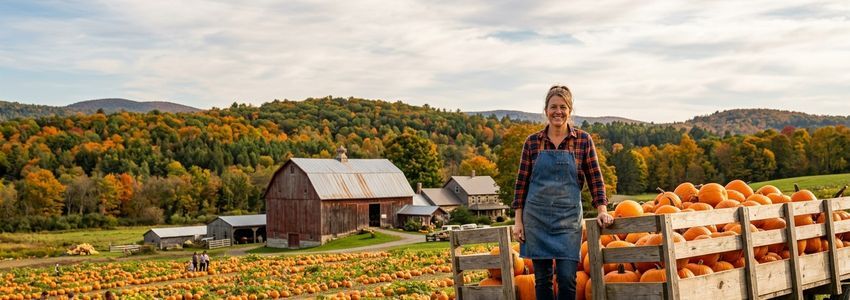
Running a pumpkin patch is a race against the calendar. Most operators generate the bulk of their annual revenue in a six to eight week window between mid-September and Halloween, which means the equipment, staffing, and infrastructure investments have to be made months before a single admission ticket is sold. A pumpkin patch business loan gives seasonal farm owners the working capital and equipment financing they need to prepare for the harvest rush without draining cash reserves that need to last through the slow winter and spring months.
This guide covers everything a pumpkin patch, corn maze, or fall agritourism attraction owner needs to know about financing: the loan types available, typical rates and terms, how to qualify, and how to structure financing around a highly seasonal revenue cycle.
In This Article
- What Is a Pumpkin Patch Business Loan?
- Key Benefits of Financing
- How It Works
- Types of Financing Available
- Pumpkin Patch Financing: Key Numbers
- Who This Financing Is Best For
- Comparing Your Financing Options
- How Crestmont Capital Helps
- Real-World Financing Scenarios
- Frequently Asked Questions
- How to Get Started
What Is a Pumpkin Patch Business Loan?
A pumpkin patch business loan is any financing product used to fund the equipment, land preparation, staffing, and marketing costs that go into operating a seasonal fall agritourism attraction. This includes standalone pumpkin patches, corn mazes, hayride operations, and combined fall festival attractions that may also feature petting zoos, food concessions, and gift shops.
Unlike a typical retail or restaurant business that generates steady revenue year-round, a pumpkin patch is fundamentally a seasonal business. Nearly all of the season's revenue arrives in a narrow window, but the costs of preparing for that window (planting, land grading, purchasing hayride wagons, building admission booths, hiring seasonal staff) begin months earlier. Financing bridges that gap between spending and earning.
Pumpkin patch operators typically fall into two categories: standalone farm attractions built around pumpkin sales and a corn maze, and diversified farms that add a pumpkin patch as a seasonal revenue line alongside crop production, a farm stand, or a wedding/event venue. Both categories can benefit from targeted financing, though the equipment and infrastructure needs differ slightly.
Key Benefits of Financing a Pumpkin Patch Business
Financing offers several advantages over paying cash for every pre-season expense, particularly for a business with such a compressed revenue window.
- Preserve working capital through the off-season. A pumpkin patch has to survive 10 months of the year on the revenue from an 8 week season. Financing pre-season purchases keeps more cash in reserve for the slow months.
- Match payments to your revenue cycle. Seasonal financing structures allow payments to align with when the money actually comes in, rather than a flat monthly payment that ignores your business's cash flow pattern.
- Fund growth before the season starts. Whether it's adding a corn maze, expanding parking, or building a covered pavilion for school field trips, financing lets you make improvements that pay for themselves in a single season.
- Cover the labor spike. Seasonal staffing costs jump dramatically during peak weekends. Working capital financing smooths out payroll during the ramp-up before ticket revenue arrives.
- Take advantage of vendor discounts. Many equipment vendors and wagon builders offer better pricing to buyers who can pay in full or with a deposit. Financing can make that possible even before peak season cash arrives.
Key Stat: According to the U.S. Census Bureau's Statistics of U.S. Businesses, small businesses with fewer than 20 employees make up the vast majority of U.S. farm and recreation-related establishments, meaning most pumpkin patch operators are competing for financing as small, seasonal enterprises rather than large agribusiness operations.
How Pumpkin Patch Financing Works
The financing process for a seasonal agritourism business follows the same general steps as any small business loan, with a few seasonal-specific considerations built in.
Step 1: Identify your funding need. Determine whether you need equipment financing (wagons, tractors, admission systems), working capital (staffing, marketing, supplies), or a combination. Larger infrastructure projects like a new barn or event pavilion may call for a different product than seasonal operating cash.
Step 2: Time your application correctly. Most successful pumpkin patch operators apply for financing in late spring or early summer, well before the fall rush. Applying early gives you time to shop equipment, negotiate vendor pricing, and avoid the scramble of last-minute funding in August or September.
Step 3: Gather your documentation. Lenders will typically want to see 3 to 6 months of business bank statements, prior year tax returns if you have them, and a breakdown of how the funds will be used. If your pumpkin patch is a new addition to an existing farm, include revenue history from the farm's core operations.
Step 4: Apply and get a decision. Alternative lenders like Crestmont Capital can typically provide a decision within 24 to 48 hours, compared to weeks for a traditional bank loan. Speed matters when your entire revenue window is a matter of weeks.
Step 5: Deploy funds and prepare for the season. Once funded, move quickly to lock in equipment orders, hire and train seasonal staff, and launch your marketing campaign well ahead of opening day.
Types of Financing Available for Pumpkin Patch Operators
Equipment Financing
Equipment financing is the most direct fit for physical assets like hayride wagons, tractors, admission scanning systems, and corn maze cutting equipment. The equipment itself typically serves as collateral, which keeps rates competitive and approval requirements manageable even for a business with a short operating history.
Agricultural Equipment Financing
For pumpkin patches that are part of a broader working farm, agricultural equipment financing covers tractors, planting equipment, and irrigation systems used to grow the pumpkin crop itself, not just the visitor-facing attraction elements.
Irrigation Equipment Financing
Pumpkin yields depend heavily on consistent watering during the growing season. Irrigation equipment financing lets growers invest in drip lines, pumps, and sprinkler systems that protect the crop against a dry summer, which directly protects fall revenue.
Working Capital / Unsecured Business Loans
General unsecured working capital loans cover the softer costs of a season: seasonal payroll, marketing and advertising, insurance premiums, portable restroom rentals, and concessions inventory. These loans are not tied to a specific piece of equipment and offer flexibility to cover whatever the season requires.
Business Line of Credit
A business line of credit is particularly well suited to seasonal businesses. You draw funds as pre-season expenses come up, repay as ticket revenue arrives, and the line remains available again for next year without reapplying from scratch.
SBA Loans
For larger, longer-term investments like land purchase, a new barn, or a permanent event pavilion, an SBA loan offers the lowest rates and longest terms available to small businesses, though the application process takes longer and requires more documentation than alternative financing.
Get Your Farm Ready for Peak Season
Crestmont Capital offers fast, flexible financing for seasonal agritourism businesses. Apply in minutes, no obligation.
Apply Now →Pumpkin Patch Financing: Key Numbers
By the Numbers
Pumpkin Patch Business Loans - What to Know
6-8 Wks
Typical length of a pumpkin patch's peak revenue season
24-48 Hrs
Typical approval time with alternative lenders
600+
Minimum credit score for most equipment financing programs
24-60 Mo
Typical repayment term for seasonal attraction equipment
Who This Financing Is Best For
Pumpkin patch and fall agritourism financing works best for a range of operators, each with slightly different needs.
- Established farms adding a seasonal attraction. Working farms that want to diversify revenue by opening the property to fall visitors, often the easiest to finance given existing farm revenue history.
- Standalone pumpkin patch and corn maze operators. Businesses built entirely around the fall season, where equipment financing and a line of credit typically form the core financing strategy.
- Growing operations expanding attractions. Patches adding a corn maze, petting zoo, food concessions, or covered event space to increase revenue per visitor.
- Multi-generational family farms. Operations transitioning acreage from row crops to a higher-margin agritourism model, often needing both equipment and working capital financing during the shift.
- New entrants with strong personal credit. First-year operators without business history can still qualify through startup-friendly equipment financing programs, particularly with a solid personal credit score and a clear business plan.
Comparing Your Financing Options
| Financing Type | Best For | Typical Term | Loan Amount |
|---|---|---|---|
| Equipment Financing | Wagons, tractors, admission systems | 24 - 60 months | $10K - $500K |
| Working Capital Loan | Payroll, marketing, supplies | 6 - 24 months | $5K - $250K |
| Business Line of Credit | Recurring seasonal ramp-up costs | Revolving | $10K - $500K |
| SBA Loan | Land, barns, permanent structures | Up to 25 years (real estate) | Up to $5M |
Most pumpkin patch operators end up using a combination: equipment financing for the physical attraction assets, plus a line of credit to smooth out seasonal cash flow year after year.
How Crestmont Capital Helps Seasonal Farm Owners
Crestmont Capital is a direct business lender rated #1 in the United States, with experience funding seasonal and agricultural businesses that don't fit neatly into a traditional bank's underwriting model. We understand that a pumpkin patch's financial picture looks different in March than it does in October, and we structure financing accordingly.
For pumpkin patch and agritourism operators, Crestmont offers equipment financing for wagons, tractors, and attraction infrastructure, working capital loans to cover pre-season staffing and marketing, and flexible business lines of credit that can be reused season after season. Our streamlined application process is designed to move fast, because a seasonal business doesn't have the luxury of waiting weeks on a decision.
If your pumpkin patch is part of a larger farm operation, you may also want to review our guides on agritourism business loans and U-Pick farm financing, both of which cover complementary revenue streams that many pumpkin patch owners add to extend their season.
According to the U.S. Small Business Administration, access to capital remains one of the most cited barriers for small and seasonal businesses, particularly those whose revenue is concentrated in a short window. Alternative lenders like Crestmont exist specifically to fill that gap with faster, more flexible underwriting than a traditional bank can typically offer.

Prepare Your Attraction Before the Rush
Fast approvals and flexible terms designed around your farm's seasonal cash flow. Apply in minutes.
Apply Now →Real-World Financing Scenarios
Every pumpkin patch business is different, but these scenarios illustrate how financing typically comes together for seasonal farm attractions.
Scenario 1: Family Farm Adding a Pumpkin Patch. A row-crop family farm with 3 years of tax returns wants to convert 10 acres to a pumpkin patch and corn maze. They secure $45,000 in equipment financing for two hayride wagons and an admission booth, repaid over 36 months, with payments structured to align with their fall revenue.
Scenario 2: Standalone Patch in Its Second Season. An operator who launched a patch the prior year with strong attendance applies for a $30,000 working capital loan to expand seasonal staffing and run a paid marketing campaign, aiming to double visitor traffic in year two.
Scenario 3: Multi-Attraction Expansion. An established patch with 5 years of operating history wants to add a petting zoo, food truck pad, and covered pavilion for school field trips. They use a combination of a $120,000 equipment loan and a $50,000 business line of credit to fund the expansion before the next season opens.
Scenario 4: First-Year Operator With Strong Personal Credit. A new entrant with a 700 personal credit score and no business history secures $25,000 in startup equipment financing for a small wagon and basic infrastructure, backed by a personal guarantee, to launch a first season on rented farmland.
Scenario 5: Irrigation Investment to Protect Yield. A grower whose pumpkin crop suffered during a dry summer finances a $35,000 drip irrigation system to protect next year's yield, using agricultural equipment financing repaid over 48 months.
Scenario 6: Bridging the Off-Season. An operator with strong fall revenue but tight cash flow in the winter and spring opens a $75,000 business line of credit, drawing on it in early summer to cover pre-season costs and repaying it in full once fall ticket sales come in.
Frequently Asked Questions
What can a pumpkin patch business loan be used for?
Pumpkin patch financing can cover hayride wagons and tractors, corn maze design and equipment, admission and ticketing systems, seasonal staffing and payroll, marketing and advertising, portable restrooms, concessions equipment, irrigation systems for the growing season, and permanent structures like barns or covered pavilions.
How much does it cost to start or expand a pumpkin patch?
Costs vary widely depending on scale. A small patch added to an existing farm might require $10,000 to $30,000 for basic equipment and signage. A full attraction with a corn maze, hayride wagons, petting zoo, and concessions can run $75,000 to $250,000 or more, particularly if new structures or parking areas are needed.
Can a seasonal business qualify for financing if revenue is concentrated in just a few months?
Yes. Alternative lenders regularly work with seasonal businesses and understand that revenue arrives in concentrated windows. Lenders will typically look at your prior season's total revenue and bank statement history rather than expecting smooth month-to-month income, and can structure repayment to match your seasonal cash flow.
What credit score is needed for pumpkin patch equipment financing?
Most equipment financing programs require a personal credit score of at least 600, with the best rates available above 680. SBA loans typically require 680 or higher. First-year operators with limited business history but strong personal credit can often still qualify through startup-friendly equipment financing programs.
When should I apply for financing before the fall season?
Late spring through early summer is ideal. Applying by May or June gives you time to order equipment, negotiate with vendors, hire and train staff, and launch marketing well before opening day in September. Waiting until August often means rushed decisions and less negotiating leverage on equipment purchases.
Is it better to buy or lease hayride wagons and attraction equipment?
Buying through equipment financing builds equity in assets you will use season after season for many years, which usually makes sense for core equipment like wagons and tractors. Leasing can make sense for equipment you expect to upgrade frequently, such as ticketing or point-of-sale technology, or for a first season where you want to test an attraction before committing to ownership.
Can I get financing for a corn maze in addition to the pumpkin patch?
Yes. Corn maze design services, GPS-guided cutting equipment, and maze-related signage and structures can typically be bundled into the same equipment financing or working capital loan used for the broader pumpkin patch attraction, since both are part of the same seasonal revenue operation.
How fast can I get funded for a pumpkin patch business loan?
With alternative lenders like Crestmont Capital, approval decisions typically come within 24 to 48 hours, with funding following within 1 to 5 business days. This speed is critical for a seasonal business working against a fixed opening date. SBA and traditional bank loans generally take several weeks to a few months.
What documents do I need to apply?
Most lenders request 3 to 6 months of business bank statements, prior year tax returns if available, a government-issued ID, and a summary of how the funds will be used. If the pumpkin patch is a new addition to an existing farm, include revenue history from the farm's other operations to strengthen your application.
Can I use a business line of credit instead of a term loan?
A business line of credit is often the best long-term tool for a seasonal operation, since you can draw funds as pre-season costs come up and repay once ticket revenue arrives, then reuse the same line the following year without reapplying. Many operators pair a line of credit for recurring seasonal costs with equipment financing for larger one-time asset purchases.
Does a pumpkin patch loan require collateral?
Equipment financing is typically secured by the equipment itself, such as the wagons or tractors being purchased. Working capital loans and lines of credit are often unsecured but generally require a personal guarantee from the business owner. Larger SBA loans may require additional collateral such as real estate or other business assets.
Can financing help with irrigation for the pumpkin crop itself?
Yes. Irrigation equipment financing covers drip lines, pumps, and sprinkler systems that protect crop yield during the growing season. Since a poor pumpkin harvest directly reduces fall revenue, many growers treat irrigation investment as a priority alongside visitor-facing attraction equipment.
What happens if a bad weather season reduces my revenue?
Weather risk is inherent to any outdoor seasonal attraction. It is worth discussing payment flexibility options with your lender before signing, and some seasonal financing structures include deferred or graduated payment schedules that provide more breathing room in a weak season. Maintaining a cash reserve and appropriate business insurance also helps manage this risk.
How is pumpkin patch financing different from a general small business loan?
A pumpkin patch business loan is not a distinct legal loan product, but the way it is structured accounts for the seasonal nature of the business, whether through equipment financing tied to attraction assets, a reusable line of credit for recurring pre-season costs, or a repayment schedule aligned with the fall revenue window. A general small business loan may offer a flat monthly payment that does not reflect this seasonal reality as effectively.
How to Get Started
Complete our quick application at offers.crestmontcapital.com/apply-now - it takes just a few minutes and does not affect your credit score.
A Crestmont Capital advisor will review your equipment and working capital needs and match you with the right financing structure for your timeline.
Receive funds - often within 24 to 72 hours of approval - so you can order equipment, hire staff, and launch marketing well ahead of opening day.
Conclusion
A pumpkin patch business loan gives seasonal farm owners the flexibility to prepare for their entire year's revenue window without draining the cash needed to survive the off-season. Whether the need is equipment financing for hayride wagons, working capital for seasonal staffing, or a reusable line of credit that comes back year after year, the right financing structure should match the unique rhythm of a fall agritourism business.
Crestmont Capital works with seasonal and agricultural businesses across the country to structure financing that respects a concentrated revenue window rather than forcing a one-size-fits-all repayment schedule. As reported by The Associated Press, seasonal and agritourism businesses have become an increasingly important part of the rural small business economy, and access to fast, flexible capital is often the deciding factor in whether an operator can scale to meet growing visitor demand.
If you are planning next season's pumpkin patch, corn maze, or fall attraction, now is the time to line up financing so equipment orders, staffing, and marketing are locked in well before opening day.
Apply for Pumpkin Patch Financing Today
Get fast approvals, flexible terms, and dedicated support from Crestmont Capital - the #1 rated business lender in the U.S.
Apply Now →Disclaimer: The information provided in this article is for general educational purposes only and is not financial, legal, or tax advice. Funding terms, qualifications, and product availability may vary and are subject to change without notice. Crestmont Capital does not guarantee approval, rates, or specific outcomes. For personalized information about your business funding options, contact our team directly.