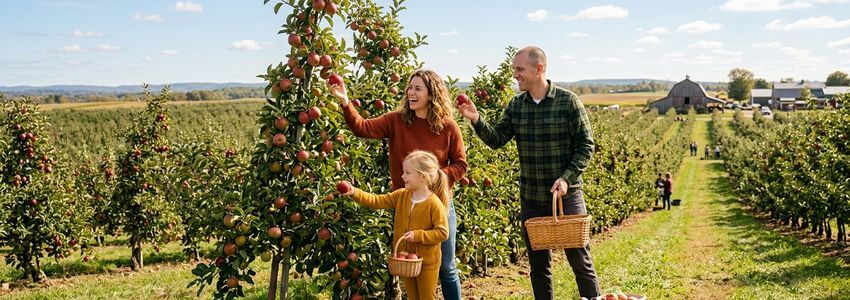
Running a u-pick farm means juggling two businesses at once: growing a crop that meets exacting quality standards, and running a public-facing agritourism attraction that draws families, event planners, and repeat customers season after season. Between irrigation upgrades, parking lot improvements, farm stand buildouts, and staffing surges during peak picking weekends, a u-pick operation has real capital needs that don't wait for harvest revenue to arrive. That is where u-pick farm business loans come in. Whether you are expanding acreage, adding agritourism amenities, or simply smoothing out cash flow between seasons, the right financing can determine whether your farm thrives or just survives.
In This Article
- What Are U-Pick Farm Business Loans?
- Why U-Pick Farms Need Business Financing
- Types of Loans Available for U-Pick Farms
- U-Pick Farm Financing - At a Glance
- How to Qualify for a U-Pick Farm Business Loan
- How Crestmont Capital Helps U-Pick Farms
- Real-World Financing Scenarios
- Comparing Your Financing Options
- Frequently Asked Questions
- How to Get Started
What Are U-Pick Farm Business Loans?
U-pick farm business loans are financing products designed to help pick-your-own farms, orchards, berry patches, and agritourism attractions access the capital needed to operate, expand, and improve the visitor experience. These are standard small business loan products, including working capital loans, equipment financing, business lines of credit, SBA loans, and term loans, applied specifically to the unique operating rhythm of a u-pick agricultural business.
According to a 2022 agricultural census analysis, approximately 28,600 U.S. farms and ranches reported income from agritourism or on-farm recreation activities, generating roughly $1.26 billion in combined gross receipts, a 33 percent increase since the previous census cycle. U-pick operations sit at the intersection of that agritourism growth and traditional direct-to-consumer farm sales, which together generated more than $4.5 billion in reported farm income nationally. Despite this expanding market, u-pick farm owners face a financing landscape that most traditional lenders simply are not built to understand.
The core challenge is timing. A u-pick farm's entire annual revenue often arrives in a matter of weeks during harvest season, while expenses for land preparation, irrigation, staffing, signage, and visitor infrastructure are incurred months earlier. Business loans built for this cycle bridge that gap and let owners invest ahead of the season with confidence rather than scrambling to self-fund every improvement out of last year's harvest proceeds.
Market Insight: On-farm sales, the category that includes u-pick revenue, represented roughly 35 percent of total U.S. agritourism market activity in recent industry estimates, making it one of the largest single segments of the farm-to-consumer economy.
Why U-Pick Farms Need Business Financing
The u-pick business model creates several recurring financial pressure points that make proactive access to capital essential rather than optional. Understanding these dynamics helps you plan a financing strategy instead of reacting to cash shortfalls after they happen.
Seasonal Revenue Concentration Creates Cash Flow Gaps
Most u-pick farms generate the overwhelming majority of annual revenue during a compressed harvest window, whether that is six weeks of berry season or two months of apple and pumpkin season. Fixed costs, including land lease or mortgage payments, insurance, and year-round labor, continue through the off-season. A revolving business line of credit is purpose-built for exactly this kind of seasonal cash flow management, letting you draw funds during the slow months and repay from harvest revenue.
Pre-Season Investment Precedes Revenue
Irrigation repairs, new plantings, fencing, parking lot grading, and hiring seasonal staff all need to happen weeks or months before the first paying visitor arrives. Working capital loans bridge this gap so owners can prepare the farm properly instead of cutting corners on maintenance or staffing right before the season that generates most of their income.
Visitor Infrastructure Requires Ongoing Capital
Modern u-pick farms increasingly compete on visitor experience, not just crop quality. Covered pavilions, restroom facilities, farm stands, point-of-sale systems, and safe parking areas all cost real money and differentiate a farm that draws repeat family visits from one that does not. Farm equipment financing allows owners to invest in these upgrades without depleting the cash reserves needed to operate day to day.
Acreage and Planting Expansion Requires Long-Term Capital
Expanding into new acreage, adding a second crop variety, or planting trees and bushes that take several years to reach commercial yield all require patient, long-horizon financing. Term loans and SBA loans are well suited to these larger, defined investments with multi-year payback timelines.
Weather and Crop Risk Demand a Cash Buffer
A single hailstorm, late frost, or wet harvest weekend can meaningfully reduce visitor traffic and crop yield in a business with a short revenue window. Farms that have established a line of credit or working capital relationship before a bad season has a much easier time absorbing the hit than farms scrambling to find emergency funding after the damage is done.
Ready to Fund Your U-Pick Farm?
Get fast, flexible financing from the #1 business lender in the U.S. Apply in minutes, no obligation.
Apply Now →Types of Loans Available for U-Pick Farms
There is no single loan product labeled "u-pick farm loan." Instead, several mainstream small business and agricultural financing structures serve different needs within a pick-your-own operation. Understanding each option helps you match the right product to your actual need rather than accepting the first offer that comes your way.
Working Capital Loans
Working capital loans provide a lump-sum cash injection for short-to-medium-term operational needs, including seasonal staffing, pre-season supplies, marketing, and land preparation. These are typically unsecured, meaning no collateral is required, and can be approved and funded within 24 to 48 hours through alternative lenders. Loan amounts generally range from $10,000 to $500,000, with repayment terms from 3 to 24 months. For a u-pick farm preparing for a harvest season that is still weeks away, a working capital loan is the fastest and most flexible funding tool available.
Business Line of Credit
A business line of credit gives you revolving access to capital up to a set credit limit. You draw what you need, repay it, and draw again. This product is ideal for managing the deep seasonal swings of a u-pick operation. You draw funds during the slow off-season months, then repay when harvest revenue arrives. You only pay interest on what you draw, making it more cost-effective than holding a large cash reserve on the balance sheet year-round. Crestmont Capital's business lines of credit are specifically structured for businesses with cyclical and seasonal revenue patterns.
SBA Loans
The SBA 7(a) loan program provides government-backed financing with the most favorable rates and terms available to small businesses, including agricultural operations. Loan amounts go up to $5 million, and repayment terms can extend up to 10 years for equipment and working capital, or 25 years for real estate. For established u-pick farms planning a major investment, such as new acreage, a permanent farm stand structure, or an irrigation system overhaul, SBA loans offer excellent long-term economics. The trade-off is a lengthy application process requiring detailed documentation, typically taking 4 to 12 weeks to close.
Farm Equipment Financing
Equipment financing allows u-pick farm owners to acquire specific assets, including tractors, irrigation systems, refrigeration units, point-of-sale hardware, picking baskets and carts, and visitor safety equipment, spreading the cost over time with the equipment itself serving as collateral. This preserves working capital while keeping farm infrastructure current. Terms generally run 2 to 7 years depending on the asset type. For farms investing in irrigation upgrades or replacing aging tractors before planting season, equipment financing is often the most cost-effective acquisition path.
Term Loans
Business term loans provide a fixed lump sum repaid in scheduled installments over a defined period. These loans work well for planned, specific investments with clear costs, such as a new farm stand building, a parking lot expansion, or a marketing campaign to launch a new pick-your-own crop variety. Terms typically range from 1 to 5 years with alternative lenders, or longer for SBA products. A u-pick farm adding a corn maze or hayride attraction might use a term loan to cover the build-out, then repay from the additional visitor revenue over several seasons.
Revenue-Based Financing
Revenue-based financing provides capital in exchange for a percentage of future monthly revenue until a total repayment amount is reached. Payments scale with your revenue, higher during harvest season and lower or paused entirely during the off-season. For u-pick farms with extremely concentrated seasonal revenue, this structure can offer more breathing room than a traditional fixed-payment term loan, since repayment naturally aligns with when the cash is actually coming in.
U-Pick Farm Financing - By the Numbers
At a Glance
Key Stats for U-Pick Farm Business Financing
$10K-$500K
Typical loan range for qualified u-pick farm operators
24-48 Hrs
Approval and funding turnaround with alternative lenders
28,600+
U.S. farms reporting agritourism and on-farm recreation income
$1.26B
Combined gross agritourism receipts reported by U.S. farms
550+
Minimum credit score accepted by most alternative lenders
$5M
Maximum SBA 7(a) loan amount for qualified farm operators
How to Qualify for a U-Pick Farm Business Loan
Qualification requirements vary significantly depending on lender type and loan product. Here is a clear breakdown of what to expect when applying for u-pick farm financing.
Alternative Lenders - Fastest Approval Path
Alternative lenders like Crestmont Capital have developed streamlined underwriting designed for seasonal businesses. Rather than requiring years of audited financials or extensive collateral, they evaluate your business based on recent revenue and cash flow performance, including seasonal patterns. Typical requirements include:
- Time in business: 6 to 12 months minimum
- Monthly or seasonal revenue: consistent deposits during your operating season, generally $8,000 or more per active month
- Personal credit score: 550 or higher; 600 or above preferred for the best rates
- Documentation: 3 to 12 months of business bank statements to capture seasonal patterns, plus basic business information
- Collateral: not required for most unsecured working capital products
Traditional Banks and Farm Credit Lenders
Traditional banks and Farm Credit System institutions offer competitive rates but require substantially more documentation and a stronger financial profile. Typical minimums include a credit score of 680 or higher, 2 or more years in business, and a full financial documentation package including tax returns, profit and loss statements, and a balance sheet. Approval and funding timelines typically range from 3 to 8 weeks.
SBA Lenders
SBA loan qualification is rigorous but provides access to the best rates in the market. Lenders review personal credit, typically 650 or higher, along with business financials, cash flow projections, collateral, and a detailed business plan. Approval timelines range from 30 to 90 days depending on the program. For u-pick farms planning major expansion, the patience required for SBA approval is usually justified by the significantly lower long-term cost of capital.
What All Lenders Evaluate
Across all lender types, these factors consistently influence loan decisions: total seasonal and annual revenue, cash flow trends over multiple seasons, existing debt obligations including land or equipment loans, credit score, and the specific purpose of the requested funds. U-pick farms with organized records of visitor counts, revenue by season, and clear documentation of crop acreage present stronger applications regardless of lender type.
Pro Tip for U-Pick Farm Owners: Apply for financing immediately after a strong harvest season, when your bank statements show peak revenue deposits, rather than waiting until you are deep into off-season planning. Lenders weigh recent cash flow trends heavily, and a strong recent season speaks louder than a multi-year average.
How Crestmont Capital Helps U-Pick Farms
Crestmont Capital is the #1 rated business lender in the United States, and we work with agricultural and agritourism businesses including u-pick farms, orchards, and pick-your-own berry operations across the country. We understand that these businesses operate on concentrated seasonal revenue cycles, require pre-season capital investment, and need fast access to funding when weather windows and planting schedules do not wait.
As a direct lender, not a broker, Crestmont Capital makes every lending decision in-house. That means faster approvals, less paperwork, and a direct relationship with the team evaluating your application rather than your file being shopped around to multiple third parties with added broker fees.
Our agritourism and farm clients access a full suite of financing options through a single application:
- Unsecured working capital loans from $10,000 to $500,000 with flexible terms
- Business lines of credit for ongoing seasonal cash flow management
- Farm equipment financing for tractors, irrigation systems, refrigeration, and visitor infrastructure
- Short-term bridge loans for immediate pre-season needs with approval in as little as 24 hours
- SBA-backed programs for larger investments in acreage, buildings, or acquisitions
- Revenue-based financing with repayment tied to your seasonal harvest revenue
Whether you are running a single-crop berry patch or a multi-attraction agritourism destination with u-pick orchards, a farm stand, and seasonal events, we have the products and the expertise to support your growth. Many of our farm clients also benefit from our broader agritourism business loans guide, which covers financing strategies across the full range of farm-based visitor attractions. If your operation includes a fruit orchard component, our fruit orchard business loans guide dives deeper into tree crop financing timelines and considerations.
Crestmont Capital Supports U-Pick Farm Owners
Fast approvals. Flexible terms. Direct lender. Apply today and speak with a specialist who understands seasonal agricultural businesses.
Get Funded →
Real-World Financing Scenarios for U-Pick Farms
Abstract loan descriptions only go so far. Here are six realistic scenarios showing how u-pick farm owners use business financing to address specific challenges and opportunities.
Scenario 1: Pre-Season Staffing and Supply Buildup
A strawberry u-pick farm expects to open in six weeks and needs to hire 12 seasonal pickers' aides, purchase picking baskets and carts, and stock the farm stand with packaging supplies, all before the first paying visitor arrives and before any revenue comes in. A $30,000 working capital loan covers the pre-season costs. When the six-week harvest season opens, revenue repays the loan within 90 days, and the owner enters the following year with a documented repayment history that supports a larger facility next time.
Scenario 2: Irrigation System Upgrade Before Planting
An apple orchard operating a u-pick program identifies that its aging irrigation system is limiting yield and increasing water costs. A modern drip irrigation upgrade costs $65,000 and needs to be installed before the spring growing season begins. Farm equipment financing covers the full purchase over 5 years, with the irrigation equipment itself serving as collateral. The improved system increases yield by an estimated 15 percent, and the resulting additional harvest revenue covers the loan payment with margin to spare within the first two seasons.
Scenario 3: Seasonal Line of Credit for Year-Round Stability
A blueberry u-pick farm in the Southeast generates nearly all of its annual revenue in an eight-week window from late May through mid-July. Fixed costs, including land lease payments and a small year-round maintenance crew, total $12,000 per month across the remaining ten months. Rather than draining personal savings every off-season, the owner establishes a $60,000 revolving business line of credit with Crestmont Capital. He draws roughly $40,000 across the off-season months, then repays fully from harvest revenue. The line costs him only the interest on what he draws, keeping the maintenance crew intact and the orchard properly cared for year-round.
Scenario 4: Acreage Expansion and New Plantings
A well-established u-pick pumpkin and apple farm identifies an adjacent 15-acre parcel that would allow it to double visitor capacity and add a new crop variety. The land purchase, site preparation, and initial plantings total $340,000. An SBA 7(a) loan of $350,000 over 15 years provides the capital at a competitive fixed rate. The new acreage reaches partial production within three years and full production within six, and the expanded visitor capacity from the larger footprint drives significant growth in farm stand and agritourism revenue well before the new trees reach peak yield.
Scenario 5: Adding a Farm Stand and Visitor Pavilion
A cherry and peach u-pick operation wants to add a covered farm stand building and a shaded visitor pavilion to improve the customer experience and extend average visit length. Construction, permitting, and furnishing costs total $95,000. A term loan funds the buildout, with repayment structured over 5 years to match the multi-season payback horizon. The new pavilion increases average visitor spend by encouraging longer stays and additional purchases, and the farm sees a measurable increase in repeat family visits the following season.
Scenario 6: Weather Recovery Bridge Financing
A peach u-pick farm loses roughly 40 percent of its expected harvest to a late spring frost, significantly reducing the revenue it had counted on to cover off-season fixed costs. A $50,000 working capital loan bridges the gap, covering land payments, insurance, and minimal staffing through the following winter. The owner also uses part of the funds to invest in frost protection equipment for future seasons. The farm returns to a normal harvest the following year, and the frost protection investment reduces the risk of a repeat loss going forward.
Key Principle: The most successful u-pick farm owners treat business financing as a planned strategic resource, not an emergency backstop. Establishing a line of credit before the off-season begins, and timing term loan applications to coincide with a documented strong harvest, positions your farm to invest ahead of opportunity instead of playing catch-up after the fact.
Comparing Your U-Pick Farm Financing Options
Different loan products serve different needs. This table provides a clear side-by-side comparison to help you identify the right fit for your u-pick farm's current situation.
| Loan Type | Best For | Loan Amount | Approval Speed | Credit Required |
|---|---|---|---|---|
| Working Capital Loan | Pre-season staffing, supplies, marketing | $10K - $500K | 24-48 hours | 550+ |
| Business Line of Credit | Off-season cash flow management | $10K - $250K | 2-5 days | 600+ |
| Farm Equipment Financing | Irrigation, tractors, visitor infrastructure | $5K - $500K | 1-3 days | 580+ |
| SBA 7(a) Loan | Acreage expansion, land purchase, major buildout | $50K - $5M | 30-90 days | 650+ |
| Term Loan | Farm stand, pavilion, attraction buildout | $25K - $500K | 2-7 days | 600+ |
| Revenue-Based Financing | Highly seasonal, concentrated harvest revenue | $10K - $250K | 1-3 days | 550+ |
According to the U.S. Census Bureau, the vast majority of agricultural and food-related small businesses in the United States operate with fewer than 20 employees, placing most u-pick farms well within the target range for all of the financing products listed above. With proper preparation and the right lender relationship, most u-pick farm owners qualify for at least one of these options.
Frequently Asked Questions
What is a u-pick farm business loan?
A u-pick farm business loan is a small business financing product applied to a pick-your-own agricultural operation. This includes working capital loans, business lines of credit, farm equipment financing, SBA loans, and term loans, all structured to help u-pick farms manage seasonal cash flow, invest in visitor infrastructure, and expand acreage or crop variety.
Can a u-pick farm qualify for a small business loan?
Yes. U-pick farms qualify for the same range of small business loans available to other seasonal service and retail businesses. The key requirements are consistent revenue during your active season, at least 6 months of operating history, and a reasonable credit profile. Alternative lenders like Crestmont Capital work with agricultural operators across a broad range of business sizes and credit situations.
What credit score do I need to get a u-pick farm business loan?
Credit score requirements vary by lender type and loan product. Alternative lenders like Crestmont Capital accept personal credit scores of 550 or higher, with better rates available at 600 or above. Traditional banks and Farm Credit lenders generally require 680 or higher. SBA loans typically require 650 or above. Strong seasonal revenue can help offset a lower credit score with many alternative lenders.
How much can a u-pick farm borrow?
Loan amounts depend on your seasonal revenue, credit history, loan type, and time in business. Working capital loans through alternative lenders typically range from $10,000 to $500,000. Business lines of credit often run from $10,000 to $250,000. SBA 7(a) loans go up to $5 million for qualifying operations. Most lenders approve amounts roughly equal to 1 to 3 months of your peak seasonal revenue for working capital products.
How quickly can a u-pick farm get funded?
Through alternative lenders like Crestmont Capital, most u-pick farm operators receive a decision within 24 to 48 hours and can have funds deposited within 1 to 3 business days. Traditional bank loans take 3 to 8 weeks. SBA loans take 30 to 90 days. If you are racing a planting window or a pre-season prep deadline, alternative lenders offer the only realistic timeline.
What can I use a u-pick farm business loan for?
U-pick farm business loans can be used for virtually any legitimate business purpose: pre-season seasonal staffing, irrigation and equipment upgrades, farm stand and pavilion construction, marketing campaigns, acreage expansion, weather recovery costs, and new plantings. The key is matching the loan product to the nature of the investment, short-term operational needs are better served by working capital products, while long-term investments benefit from term loans or SBA programs.
Is collateral required for u-pick farm business loans?
Not always. Many alternative lenders offer unsecured working capital loans that require no specific collateral, with approval based on revenue and cash flow history. Equipment financing uses the purchased equipment as collateral, which simplifies approval. SBA loans typically require collateral for amounts over $25,000, which may include land or existing farm equipment. A personal guarantee is standard for most small business loans regardless of collateral requirements.
Can a new or first-year u-pick farm get business financing?
New u-pick farms have more limited options than established operations, but financing is available. Equipment financing is often the most accessible option for new farms because the equipment itself serves as collateral. Having a detailed business plan, strong personal credit, and documentation of your planting timeline and expected first-harvest yield significantly improves approval odds. After 6 to 12 months of operating history, a wider range of products becomes available.
What documents do I need to apply for a u-pick farm business loan?
For alternative lenders, typical requirements include 3 to 12 months of business bank statements to show seasonal patterns, a completed application, and basic business information. For SBA and traditional bank loans, you will also need 2 to 3 years of tax returns, profit and loss statements, a balance sheet, and often a formal business plan describing acreage, crop mix, and visitor projections. Having these documents organized before applying significantly speeds up the process.
How does seasonal revenue affect my loan options?
Seasonal revenue concentration is the defining financial characteristic of u-pick farms, and experienced lenders account for it. Rather than judging your business on a single slow month, lenders typically review a full year or more of bank statements to understand your annual pattern. A revolving line of credit is specifically designed for this kind of business, letting you draw during the off-season and repay fully once harvest revenue arrives.
How does a business line of credit differ from a term loan for u-pick farms?
A term loan provides a one-time lump sum repaid over a fixed schedule, best when you know the exact amount you need and how you will use it, such as a farm stand buildout. A business line of credit is revolving, letting you draw what you need, repay it, and draw again up to your credit limit. Lines of credit are generally better suited to the unpredictable, recurring cash flow gaps of a seasonal farm, while term loans fit one-time, defined capital projects.
Are SBA loans a good option for u-pick and agritourism farms?
Yes, particularly for established farms planning larger investments such as acreage expansion, a permanent farm stand structure, or purchasing adjacent land. SBA 7(a) loans offer the lowest rates and longest terms available to small businesses, up to $5 million and 25 years for real estate-backed projects. The tradeoff is a longer, more document-intensive application process, generally 30 to 90 days, which works well for planned expansion but not for urgent, immediate needs.
Can financing cover a farm stand or retail buildout?
Yes. Term loans and SBA loans are both commonly used to fund farm stand construction, visitor pavilions, restroom facilities, and retail buildouts. These are defined, one-time construction projects with a clear cost estimate, making them well suited to fixed-term financing with predictable monthly payments spread over several years to match the project's payback horizon.
Can a business loan help with weather-related crop losses?
Yes. A working capital loan or short-term bridge loan can help cover fixed costs, insurance, and minimal staffing when a frost, hailstorm, or wet harvest weekend significantly reduces expected revenue. Many u-pick farm owners also use financing to invest in frost protection or weather mitigation equipment after a loss to reduce the risk of a repeat event affecting future seasons.
How can I improve my chances of getting approved for a u-pick farm business loan?
Focus on the factors lenders evaluate most heavily: document your seasonal revenue clearly across multiple years, maintain positive bank account balances, minimize existing debt obligations, and keep accurate records of acreage, crop yield, and visitor counts. When applying, be specific about how you will use the funds and how the investment will generate returns, for example, explaining that an irrigation upgrade will increase yield by a documented percentage. Applying immediately after a strong harvest season also significantly improves approval odds.
How to Get Started
Complete our quick application at offers.crestmontcapital.com/apply-now, takes just a few minutes.
A Crestmont Capital advisor will review your u-pick farm's seasonal cash flow and match you with the right financing option for your operation.
Receive your funds, often within 24 to 48 hours, and put them to work ahead of your next harvest season.
Your U-Pick Farm Deserves the Right Financing
Apply today and get a decision within 24 hours from the #1 rated business lender in the U.S.
Apply Now →Conclusion
U-pick farm business loans are one of the most valuable and underused tools available to agritourism entrepreneurs. Whether you are bridging a seasonal cash flow gap with a revolving line of credit, upgrading irrigation before planting season with equipment financing, expanding acreage with an SBA 7(a) loan, or recovering from a weather setback with a working capital loan, the right capital at the right time accelerates every dimension of your farm's growth.
The agritourism and on-farm sales market continues to grow steadily, but businesses with adequate capital to invest ahead of the season, staff appropriately, and maintain their visitor infrastructure consistently outperform those that operate on a shoestring between harvests. Access to business financing is what separates u-pick farms that grow year over year from those that simply hold steady.
Crestmont Capital is the #1 rated business lender in the United States, and we specialize in helping agricultural and agritourism business owners like you access fast, flexible capital without the delays and bureaucracy of traditional banking. Apply today and discover what your u-pick farm can accomplish with the right financial foundation behind it.
Disclaimer: The information provided in this article is for general educational purposes only and is not financial, legal, or tax advice. Funding terms, qualifications, and product availability may vary and are subject to change without notice. Crestmont Capital does not guarantee approval, rates, or specific outcomes. For personalized information about your business funding options, contact our team directly.