
 (800) 949-0401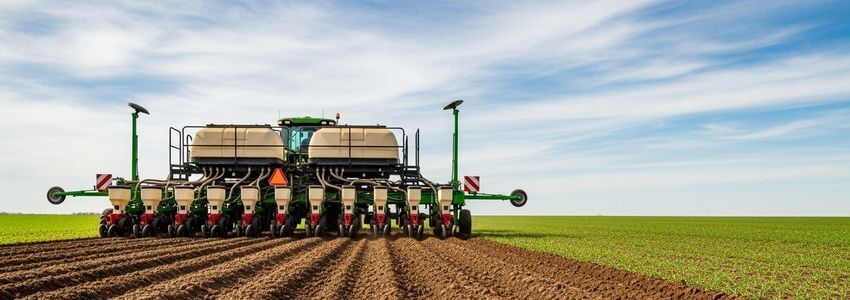
Planter Equipment Financing: The Complete Guide for Farm and Business Owners
The success of a modern farm hinges on timing, precision, and efficiency. Nowhere are these factors more critical than during planting season. The right planter can dramatically impact yield, reduce input costs, and set the stage for a profitable year. However, this advanced agricultural machinery represents a significant capital investment, often ranging from tens of thousands to over half a million dollars. For most farm operations, paying cash for such an asset is not just impractical-it's poor financial strategy. This is where a specialized funding solution becomes essential. Understanding and utilizing **planter equipment financing for farm** operations is a key component of strategic growth and cash flow management. It allows you to acquire the exact technology your fields need-when you need it-without depleting the working capital required for seed, fertilizer, fuel, and labor. Whether you're upgrading to a state-of-the-art precision planter, expanding your fleet, or replacing an aging machine, a tailored financing plan provides the necessary leverage to improve productivity and stay competitive. This comprehensive guide will walk you through every aspect of planter equipment financing. We will cover how it works, the types of planters you can finance, the significant benefits for your bottom line, and the specific qualifications lenders look for. We will also compare different financing structures like loans and leases, explore typical rates and terms, and provide real-world examples to help you make the most informed decision for your agricultural business.In This Article
- What Is Planter Equipment Financing?
- Types of Planters You Can Finance
- Key Benefits of Financing Your Planter
- How Planter Equipment Financing Works
- Planter Financing By the Numbers
- Who Qualifies for Planter Financing?
- Financing Options: Loans vs. Leasing
- Typical Rates, Terms, and Loan Amounts
- How Crestmont Capital Helps
- Real-World Financing Scenarios
- Planter Financing vs. Other Options
- Frequently Asked Questions
- How to Get Started
What Is Planter Equipment Financing?
Planter equipment financing is a type of asset-based lending specifically designed for the acquisition of new or used agricultural planters, seeders, and drills. Unlike a traditional bank loan that might require extensive collateral or be used for general business purposes, this financing is secured directly by the planter itself. The equipment you are purchasing serves as the primary collateral for the loan or lease. This structure is highly advantageous for farm owners. It means the lender's primary risk is tied to the value of a tangible, essential asset, which often results in a more streamlined application process, faster funding times, and less stringent requirements compared to unsecured loans. The core purpose is to enable farms to obtain critical revenue-generating equipment immediately, paying for it over time in predictable installments as it contributes to the farm's productivity and income. The process involves a business owner, a lender (like Crestmont Capital), and an equipment vendor or private seller. The farm owner selects the desired planter, the lender provides the funds directly to the seller, and the farm owner then makes regular payments to the lender over a predetermined term. At the end of the term, depending on the financing agreement (a loan or a lease), the farm may own the equipment outright or have the option to purchase it, return it, or upgrade to a newer model. This financial tool is fundamental to modern agricultural equipment financing strategies, allowing for smart capital allocation and operational growth.Types of Planters You Can Finance
Lenders can finance a wide array of planting and seeding equipment, from small, specialized units to massive, technologically advanced machines. The specific type of planter a farm needs depends on the crops grown, acreage, soil type, and tillage practices. Fortunately, financing is available for nearly every category.Row Crop Planters
These are the most common type of planters, used for crops like corn, soybeans, sunflowers, and cotton. They are designed to place seeds at a precise depth and spacing in rows. They can range in size from 2-row units for small farms to massive 48-row planters for large-scale commercial operations. Financing for these is common due to their high cost and critical role in maximizing yield.Air Seeders and Air Drills
Often used for small grains like wheat, barley, and oats, as well as cover crops, air seeders use a stream of air to deliver seed from a central hopper to individual openers. They can cover very large areas quickly and efficiently. These systems are complex and expensive, making them prime candidates for financing.No-Till and Minimum-Till Drills
As conservation tillage practices become more popular, so does the equipment that supports them. No-till drills are built to be heavier and more durable, designed to cut through crop residue from the previous season and plant seeds directly into undisturbed soil. This reduces soil erosion and improves soil health but requires robust, specialized equipment that often carries a higher price tag.Precision Planters
This is not a separate category so much as an advanced feature set that is becoming standard on modern planters. Precision technology includes:- Variable Rate Seeding: Automatically adjusts seeding rates based on GPS-enabled field prescription maps. - Individual Row Shut-offs: Prevents over-seeding in headlands or point rows, saving significant seed costs. - Automated Downforce Control: Hydraulic or pneumatic systems that constantly adjust pressure on each row unit to ensure consistent seed depth regardless of soil conditions. - Electric Drives: Offer precise per-row population control and eliminate the maintenance complexities of mechanical drive systems.
Specialty Planters
This category includes equipment designed for specific, often high-value, crops. Examples include vegetable planters, potato planters, and sugarcane billet planters. These machines are highly specialized and can be very expensive, making financing a necessary tool for growers in these niche markets. Whether you are looking at a brand-new John Deere, Case IH, or Kinze planter with all the latest technology, or a reliable used model from a reputable dealer or private party, a good financing partner can structure a deal to help you acquire it.Key Stat: According to a report by Bloomberg, the global agricultural equipment market is projected to grow to over $300 billion by 2030, driven largely by the adoption of precision agriculture technologies that require significant capital investment.
Key Benefits of Financing Your Planter
Choosing to finance a planter instead of paying cash offers numerous strategic advantages that go far beyond simply acquiring a piece of equipment. These benefits impact a farm's financial health, operational efficiency, and long-term competitive positioning.1. Preservation of Working Capital
This is arguably the most significant benefit. Agriculture is a capital-intensive business with unpredictable variables like weather and commodity prices. Tying up hundreds of thousands of dollars in a single piece of equipment can leave a farm vulnerable. Financing keeps your cash liquid and available for other critical operating expenses:- Purchasing seed, fertilizer, and chemicals
- Covering fuel and labor costs
- Making unexpected repairs to other machinery
- Seizing opportunities, like purchasing land or pre-paying for inputs at a discount
2. Access to Modern, Efficient Technology
Financing bridges the gap between the equipment you have and the equipment you need to be most profitable. Modern precision planters can increase yields by 5-10% or more while simultaneously reducing seed costs by a similar margin. The ROI on this technology is well-documented. However, the upfront cost can be prohibitive. Financing makes this technology accessible immediately, allowing the equipment to start paying for itself from the very first season.3. Predictable, Manageable Payments
A loan or lease provides a fixed, predictable monthly or annual payment. This makes budgeting and financial forecasting far simpler than dealing with large, irregular capital expenditures. Furthermore, many lenders who specialize in farm equipment financing offer flexible payment structures that align with a farm's revenue cycle. These can include:- Seasonal Payments: Making larger payments after harvest when cash flow is strongest, with smaller or no payments during the off-season.
- Deferred Payments: Delaying the first payment for 90 or 180 days, allowing the equipment to be put to use before the first payment is due.
4. Potential Tax Advantages
Financing equipment can offer significant tax benefits. In the United States, Section 179 of the IRS tax code allows businesses to deduct the full purchase price of qualifying new or used equipment in the year it is placed into service. Bonus depreciation is another tool that can allow for an accelerated depreciation schedule. While a lease payment is typically treated as an operating expense, an equipment finance agreement allows you to take advantage of these powerful deductions. This can substantially lower your taxable income. (Note: Always consult with a qualified tax advisor to understand how these deductions apply to your specific situation.)5. Building Business Credit
Successfully managing and paying off an equipment loan is a positive mark on your business's credit history. A strong credit profile makes it easier and cheaper to secure financing for future needs, whether it's for more equipment, land, or operating lines of credit. It demonstrates to lenders that your farm is a reliable and well-managed enterprise.6. Speed of Acquisition
In farming, timing is everything. If your old planter breaks down right before planting season, you don't have a year to save up for a new one. The financing process is designed for speed. With a streamlined lender, you can often get approved and have funding in place within 24-48 hours, ensuring you can get the machine you need from the dealer and into the field with minimal downtime.Ready to Upgrade Your Planting Equipment?
Don't let capital hold you back. Get a fast, no-obligation quote and see how affordable your new planter can be.
Apply Now ->How Planter Equipment Financing Works (Step by Step)
The process of securing planter equipment financing for your farm is more straightforward than many business owners realize, especially when working with a lender that specializes in the field. Here is a typical step-by-step breakdown of the journey from application to acquisition.Step 1: Identify Your Equipment and Determine the Cost
Before you can apply for financing, you need to know what you're buying. Research different makes and models to find the planter that best suits your acreage, crop type, and technological needs. Decide whether a new or used machine is the right fit for your budget and operation. Once you've selected a specific planter, get a formal quote or bill of sale from the dealership, auction house, or private seller. This document will be required by the lender.Step 2: Choose Your Lender and Complete the Application
Select a lender that has experience in agricultural financing. Look for a company with a simple application process and a reputation for fast turnarounds. Most modern lenders, like Crestmont Capital, offer a one-page online application that can be completed in minutes. You will typically need to provide basic information about your farm (name, address, time in business) and yourself (name, contact information).Step 3: Provide Necessary Documentation
The documentation required will vary based on the loan amount and your farm's financial profile.- For smaller amounts (e.g., under $250,000): A simple one-page application may be all that's needed. This is often called an "application-only" program.
- For larger amounts (e.g., over $250,000): Lenders will likely require a more detailed financial package, which could include 2-3 years of business tax returns, recent bank statements, and a personal financial statement.
Step 4: Underwriting and Approval
Once your application and documents are submitted, the lender's underwriting team will review your file. They assess the "Three C's" of credit:- Credit: They will review your personal and business credit scores and history.
- Cash Flow: They will analyze your bank statements or tax returns to ensure your farm generates enough revenue to comfortably support the new payment.
- Collateral: The value of the planter itself is a key factor. They will assess its age, condition, and market value.
Step 5: Review Terms and Sign Loan Documents
Upon approval, the lender will present you with a financing offer. This will detail the loan amount, interest rate, term length, and monthly payment. It will also specify whether it's a loan (Equipment Finance Agreement) or a lease. Review these documents carefully. If everything looks good, you will sign them electronically.Step 6: Funding
This is the final step. The lender will coordinate with the equipment seller you identified in Step 1. They will verify the equipment details and wire the funds directly to the seller. You will be notified once the transaction is complete. At this point, you can take delivery of your planter and put it to work. Your first payment will typically be due 30 days later, unless you have arranged for a deferred or seasonal payment plan.Planter Financing: By the Numbers
The Impact of Strategic Farm Equipment Financing
Investing in modern planting technology is a key driver of farm profitability. Here's a look at the numbers.
$250k - $750k+
The typical cost range for a new, large-frame precision row crop planter, making financing a necessity for most operations.
5% - 10%
Potential yield increase from upgrading to a precision planter with features like automated downforce and individual row shut-off.
~80%
Roughly 80% of all agricultural equipment in the U.S. is acquired using loans or leases, according to the Equipment Leasing and Finance Association.
24 Hours
The speed at which many modern lenders can approve and fund planter financing, minimizing downtime and getting you in the field faster.
Who Qualifies for Planter Financing?
Lenders evaluate several factors to determine a farm's eligibility for equipment financing. While requirements can vary between lenders, most focus on a few key areas to assess risk and determine the likelihood of repayment. Understanding these criteria can help you prepare a stronger application.Credit Score
A strong personal credit score is one of the most important factors, especially for small to mid-sized farms where the owner's finances are closely tied to the business.- Excellent Credit (720+): Applicants in this range will qualify for the best interest rates, longest terms, and are most likely to be approved for application-only programs with minimal documentation.
- Good Credit (650-719): This is a very common range for farm owners. You can still expect competitive rates and terms, though the lender might ask for additional documentation like bank statements to verify cash flow. - Fair or Challenged Credit (Below 650): Approval is still possible, but it becomes more challenging. Lenders will place more weight on other factors like time in business, cash flow, and the value of the collateral. You should expect higher interest rates and may be required to make a down payment.
Time in Business
Lenders prefer to work with established operations. A farm that has been in business for two years or more is generally considered stable and has a track record of generating revenue. This reduces the lender's risk. However, financing is available for newer farms, including startups. In these cases, lenders will look for strong personal credit, significant industry experience from the owner, and a solid business plan.Annual Revenue and Cash Flow
The ability to repay the loan is paramount. Lenders will analyze your farm's revenue to ensure it can support the new monthly payment without straining your finances. They will look at historical revenue through tax returns or recent cash flow via bank statements. A general rule of thumb is that your total debt payments (including the proposed new loan) should not exceed a certain percentage of your income.The Equipment Itself (Collateral)
Since the planter secures the loan, its value is a critical part of the qualification process. Lenders are more willing to finance equipment that holds its value well.- New Equipment: Easiest to finance, as its value is clear and it comes with a manufacturer's warranty.
- Used Equipment: Still highly financeable, especially from a reputable dealer. The lender will assess the age, hours, and condition to determine its market value. Financing older or more obscure equipment from a private party can be more difficult but is not impossible.
Financing Options: Loans vs. Leasing vs. Lines of Credit
When seeking planter equipment financing, you will generally encounter two primary structures: an equipment loan (often called an Equipment Finance Agreement or EFA) and a lease. Understanding the fundamental differences is key to choosing the right option for your farm's financial goals.Equipment Loans (EFAs)
An equipment loan is a straightforward financing product. You borrow a specific amount of money to purchase the planter, and you make regular payments of principal and interest over a set term.- Ownership: You are the owner of the equipment from day one. The lender simply holds a lien on the title until the loan is fully paid off.
- End of Term: Once you make the final payment, the lien is released, and you own the planter free and clear.
- Pros: You build equity in the asset. There are no restrictions on hours of use. You can take full advantage of tax depreciation benefits like Section 179.
- Cons: Monthly payments are typically higher than a lease payment for the same piece of equipment.
- Best For: Farmers who plan to keep their planter for a long time (5+ years) and want to build long-term equity in their machinery fleet. This is the most common form of Equipment Financing.
Equipment Leases
A lease is essentially a long-term rental agreement. You pay a monthly fee to use the equipment for a specified period (the term). At the end of the term, you have several options depending on the type of lease.- $1 Buyout Lease (or Capital Lease): This functions very similarly to a loan. You make payments for the term, and at the end, you can purchase the equipment for a nominal amount, typically $1. For tax purposes, it is often treated like a purchase. - Fair Market Value (FMV) Lease (or Operating Lease): This is a true lease. Your payments are lower because you are only paying for the depreciation of the equipment during the term, not its full value. At the end of the term, you can choose to:
- Return the equipment to the leasing company.
- Purchase it for its fair market value at that time.
- Renew the lease for an additional term.
- Pros: Lower monthly payments (especially for FMV leases), which improves cash flow. It allows you to consistently operate newer equipment and avoid the risks of obsolescence. Lease payments are often treated as a direct operating expense.
- Cons: You do not build equity during the term (on an FMV lease). There may be restrictions on annual hours of use.
- Best For: Farms that want the lowest possible payment, prefer to upgrade their equipment every 3-5 years to take advantage of new technology, or have concerns about the long-term reliability of a specific machine.
Business Lines of Credit
A business line of credit is a revolving credit account with a set limit. You can draw funds as needed, up to your limit, and you only pay interest on the amount you've drawn. While not typically used for a single large purchase like a planter, it can be a useful tool for smaller equipment needs or for having flexible capital on hand. It's less structured than a term loan and might carry a variable interest rate.Key Stat: According to the USDA, farm production expenses have steadily risen, with machinery, fuel, and labor being major contributors. Financing equipment allows farmers to manage these large capital costs over time, aligning expenses with revenue generation.
Typical Rates, Terms, and Loan Amounts
The specific financial details of your planter financing agreement will be unique to your farm's profile and the equipment being purchased. However, we can outline the typical ranges you can expect to see in the market.Interest Rates
Interest rates are the cost of borrowing money and are determined by risk. The lower the lender's perceived risk, the lower your rate will be.- Prime Applicants (Strong credit, established business): Can expect rates in the single digits, often starting around 6% to 9%.
- Near-Prime Applicants (Good credit, solid cash flow): Rates typically fall in the 9% to 15% range.
- Subprime or "Story" Credits (Challenged credit, new business): Rates can range from 15% to 25% or higher. In these cases, the lender is taking on significantly more risk.
Loan Terms
The term is the length of time you have to repay the loan. For farm equipment like planters, terms are designed to match the useful life of the asset.- Typical Terms: 3 to 7 years (36 to 84 months).
- New Equipment: Often qualifies for longer terms, such as 6 or 7 years.
- Used Equipment: Terms are generally shorter, often 3 to 5 years, depending on the age and hours of the machine.
Loan Amounts
Financing is available for a wide spectrum of equipment costs.- Minimum Amount: Most lenders have a minimum financing amount, often around $10,000 to $25,000.
- Maximum Amount: For large, new planters, loan amounts can easily exceed $500,000. Crestmont Capital and similar lenders can facilitate funding well into the millions for large-scale operations acquiring multiple pieces of equipment.
Down Payments
One of the major advantages of equipment financing is the potential for 100% financing, meaning no down payment is required. For well-qualified borrowers, it's common to finance the entire purchase price, including taxes, delivery, and other fees. For applicants with weaker credit or for financing older equipment, a down payment of 10% to 20% may be requested to reduce the lender's risk and secure an approval.How Crestmont Capital Helps Farm Owners Get Funded
Navigating the world of equipment financing can be complex, but you don't have to do it alone. Working with a specialized lender like Crestmont Capital provides a distinct advantage. We understand that farming isn't just a business-it's a unique industry with its own cycles, challenges, and opportunities.Deep Industry Expertise
We are not generalist bankers; we are equipment financing specialists with a deep understanding of the agricultural sector. Our team knows the difference between an air seeder and a row crop planter. We understand the importance of getting funded before planting season, not after. This expertise allows us to structure financing solutions that make sense for your specific operation, including options like seasonal payments that align with your harvest schedule. Our focus on farm equipment financing means we're better equipped to serve your needs.A Simple, Fast-Track Process
Time is your most valuable asset. We've designed our process to respect that. Our simple, one-page online application takes just a few minutes to complete. For many requests under $250,000, that's all the paperwork we need. We leverage technology to provide credit decisions in hours, not weeks. Our goal is to take the friction out of financing so you can focus on running your farm.Access to a Wide Lender Network
Crestmont Capital operates as both a direct lender and a capital marketplace. This hybrid model gives you a significant advantage. It means we have access to a vast network of funding partners, each with different credit appetites and specialties. We do the shopping for you, matching your application with the lender most likely to offer the best possible rates and terms for your situation. This increases your chances of approval and ensures you get a competitive offer.Financing for All Credit Profiles
We believe that a credit score is just one part of the story. We work with A-tier clients with perfect credit, but we also have programs designed for farmers with past credit challenges or those who are just starting out. We look at the complete picture-your experience, your cash flow, and the value of the equipment-to find a path to "yes."Personalized, One-on-One Service
When you work with Crestmont, you are assigned a dedicated financing specialist. This person is your single point of contact throughout the entire process. They will answer your questions, explain your options, and work tirelessly to get your deal funded quickly and efficiently. We build long-term relationships with our clients, becoming a trusted financial partner for all their equipment needs, from planters to combines to compact tractors.Partner with the Agricultural Financing Experts
Let our team find the perfect financing solution for your farm. Experience a faster, simpler funding process.
Apply Now ->Real-World Financing Scenarios for Farmers
To better illustrate how planter financing works in practice, let's explore a few common scenarios that farm owners face.Scenario 1: The Expanding Grain Farm
* The Farm: Miller Family Farms, a 10-year-old, 2,500-acre corn and soybean operation with good credit (740 score). * The Need: Their current 16-row planter is becoming a bottleneck. To cover all their acres in the optimal planting window, they need to upgrade to a new 24-row high-speed precision planter. * The Cost: The new John Deere planter costs $450,000. * The Solution: Miller Farms applies with Crestmont Capital. Due to their strong credit and time in business, they are approved for an application-only program. They secure a 7-year (84-month) Equipment Finance Agreement (EFA) at a competitive 7.5% interest rate. This gives them a manageable monthly payment and allows them to take full advantage of Section 179 depreciation. They get funded in 48 hours and take delivery of the planter a week later, well ahead of planting season.Scenario 2: The Startup Organic Vegetable Grower
* The Farm: Green Sprout Organics, a new farm in its first year of operation. The owner has 15 years of experience as a farm manager but the business itself has no credit history. Her personal credit is fair (660 score). * The Need: She needs a specialized 4-row vegetable planter to accurately seed high-value crops like carrots and lettuce. * The Cost: A used Jang seeder in excellent condition is available from a dealer for $35,000. * The Solution: A traditional bank might decline the loan due to the short time in business. However, she applies with a lender that specializes in story credits. The lender places significant weight on her industry experience and the strong collateral value of the planter. They approve her for a 4-year (48-month) loan with a 10% down payment. The interest rate is higher, around 14%, but it allows her to acquire the essential equipment needed to generate revenue and build a credit history for her new business.Scenario 3: The Tech-Focused, Cost-Conscious Farmer
* The Farm: Prairie Tech Ag, a well-established farm that prioritizes having the latest technology to maximize efficiency. * The Need: They want to upgrade their 3-year-old planter to the newest model, which offers improved electric drives and better downforce control. They don't want to be tied to a machine for 7+ years. * The Cost: The new Kinze planter is $525,000. * The Solution: Instead of a loan, they opt for a 3-year (36-month) Fair Market Value (FMV) lease. Their monthly payments are significantly lower than they would be on a loan because they are only paying for the planter's depreciation over three years. At the end of the term, they plan to return the planter and lease the next new model, ensuring they always have the most advanced and reliable technology in their fields without the long-term commitment of ownership.Planter Financing vs. Other Farm Financing Options
An equipment loan is a powerful tool, but it's important to understand how it compares to other common financing methods used in agriculture. The best choice depends on your specific needs and financial situation.| Feature | Planter Equipment Loan | USDA / SBA Loan | Business Line of Credit | Paying Cash |
|---|---|---|---|---|
| Speed of Funding | Very Fast (1-3 days) | Very Slow (Weeks to Months) | Fast (once established) | Instant |
| Use of Funds | Specific to the equipment purchase | Broad (equipment, land, operations) | Flexible, for any business need | Any purpose |
| Collateral | The planter itself | Often requires blanket liens on all farm assets | Can be secured or unsecured | N/A |
| Paperwork | Minimal (often application-only) | Extensive and complex | Moderate to extensive initially | N/A |
| Impact on Cash Flow | Preserves cash with predictable payments | Preserves cash, but process is slow | Flexible draws, can be unpredictable | Massive negative impact |
| Best For... | Quickly acquiring specific new or used equipment. | Large, complex projects with long planning horizons, like buying a farm. See SBA.gov for details. | Managing short-term cash flow gaps and smaller, recurring purchases. | Very small, inexpensive equipment purchases where cash flow is not a concern. |
Frequently Asked Questions
1. What is planter equipment financing?
Planter equipment financing is a type of business loan or lease used specifically to purchase new or used agricultural planters. The planter itself serves as the collateral for the financing, making it an asset-backed transaction. This allows farms to acquire essential equipment without a large upfront cash payment.
2. How much does a planter cost?
The cost varies dramatically. A small, used planter might cost $15,000 to $50,000. A new, large-frame 24-row precision planter from a major brand like John Deere or Case IH can easily cost between $400,000 and $750,000 or more, depending on the technology and options included.
3. What credit score do I need?
While a score of 650 or higher is ideal and will get you better rates, financing is available for a wide range of credit profiles. Lenders like Crestmont Capital have programs for credit scores down into the high 500s. For lower scores, factors like time in business, cash flow, and a potential down payment become more important.
4. What are typical loan terms for planter financing?
Typical terms range from 2 to 7 years (24 to 84 months). New equipment generally qualifies for the longest terms, while terms for used equipment are often shorter and based on the machine's age and expected useful life.
5. Can I finance a used planter?
Yes, absolutely. Financing for used equipment is very common. Lenders will assess the planter's age, hours, condition, and fair market value to determine the financing terms. You can finance equipment purchased from a dealer or a private party.
6. What's the difference between a loan and a lease for planter equipment?
A loan (or EFA) means you are the owner from day one, building equity with each payment. A lease is a long-term rental where you pay to use the equipment. Leases often have lower monthly payments but do not build equity. At the end of a lease, you can typically return the equipment, purchase it, or renew the lease.
7. Do I need a down payment?
Not always. For well-qualified applicants (good credit, established business), 100% financing with no money down is very common. For those with challenged credit or for riskier transactions (e.g., very old equipment), a down payment of 10-20% may be required to secure an approval.
8. How quickly can I get approved?
The process is very fast with modern lenders. Approval can often be granted in as little as 2-4 hours after submitting a simple application. Funding can be completed within 24-48 hours, allowing you to purchase your equipment almost immediately.
9. Can I finance a planter if my farm is new?
Yes, financing is available for new farms and startups. Lenders will place more emphasis on the owner's personal credit score, industry experience, and may require a business plan or down payment. It's more challenging than for an established farm, but definitely achievable.
10. What documents do I need to apply?
For amounts under $250,000, you often only need to complete a one-page application and provide a quote for the equipment. For larger amounts, you may need to provide the last 2 years of tax returns, the last 3-6 months of business bank statements, and a personal financial statement.
11. Are there seasonal payment options for planter financing?
Yes. Many lenders who specialize in agriculture offer flexible payment structures. This can include seasonal plans (e.g., annual or semi-annual payments that coincide with harvest) or deferred payment plans where your first payment isn't due for 90-180 days.
12. Can I finance multiple pieces of farm equipment at once?
Yes. You can bundle multiple pieces of equipment into a single financing agreement. For example, you could finance a planter along with essential soil testing equipment. This simplifies the process and gives you one convenient monthly payment.
13. What happens if my planter breaks down during the loan term?
You are responsible for all maintenance and repairs, just as you would be if you paid cash. The loan agreement is separate from the equipment's operational condition. This is why it's important to consider extended warranties, especially for complex, high-tech planters.
14. Is planter financing available for hobby farms?
Generally, commercial equipment financing is for businesses that generate revenue. If your hobby farm is structured as a business (e.g., an LLC) and generates some income, you may qualify. If it is purely for personal use, you would typically need a personal loan or consumer financing, like that offered for compact tractor financing at a dealership.
15. How do I get the best rate on planter equipment financing?
To secure the best rate, focus on maintaining a strong personal and business credit score, have your financial documents organized, and demonstrate consistent cash flow. Working with a financing partner like Crestmont Capital, who can shop your application to multiple lenders, also ensures you see the most competitive offers available for your profile.
How to Get Started
Securing the financing you need to grow your farm is a simple, three-step process with Crestmont Capital. We've eliminated the hurdles and paperwork of traditional lending to get you funded faster.
1Apply Online
Complete our secure, one-page application in under five minutes. There's no cost, no obligation, and it won't impact your credit score.
2Speak with a Specialist
A dedicated agricultural financing expert will contact you to review your application, discuss your specific needs, and present the best funding options available.
3Get Funded
Once you select your offer, we'll handle the final paperwork and send the funds directly to the equipment seller. You can then pick up your new planter and get to work.
Your Next Planting Season Starts Now
Don't wait. Secure the equipment that will drive your farm's profitability. Start your risk-free application today.
Apply Now ->Conclusion
In modern agriculture, the right equipment is not a luxury-it is the engine of productivity, efficiency, and profitability. A high-performance planter is a direct investment in a better yield and a stronger bottom line. However, the significant cost of this machinery requires a smart financial strategy. As we've explored, **planter equipment financing for farm** owners is the most effective way to acquire this critical asset while protecting your farm's most valuable resource: its working capital. By preserving cash, enabling access to the latest technology, and offering predictable payments with significant tax advantages, financing empowers you to grow your operation sustainably. Whether you choose a loan to build long-term equity or a lease to maintain a low monthly payment and access to the newest models, there is a solution tailored to your farm's unique goals. Understanding the qualifications, the process, and your options is the first step toward making a strategic investment that will pay dividends for many seasons to come.Disclaimer: The information provided in this article is for general educational purposes only and is not financial, legal, or tax advice. Funding terms, qualifications, and product availability may vary and are subject to change without notice. Crestmont Capital does not guarantee approval, rates, or specific outcomes. For personalized information about your business funding options, contact our team directly.








