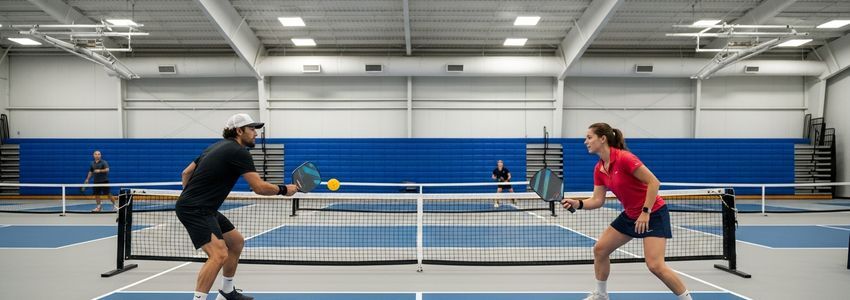
Pickleball has exploded into one of the fastest-growing sports in America, and savvy entrepreneurs are racing to open dedicated facilities, expand existing clubs, and capitalize on the demand. Whether you are building your first dedicated pickleball venue, adding courts to an existing gym, or upgrading equipment to serve a growing membership base, securing the right financing is a critical step in your growth plan. This guide covers everything pickleball facility owners need to know about business loans - from loan types and qualification criteria to strategies for getting approved and scaling your club.
- The Pickleball Industry: Why Now Is the Time to Invest
- Startup and Expansion Costs for Pickleball Facilities
- Business Loan Types for Pickleball Club Owners
- SBA Loans for Pickleball Facilities
- Equipment Financing for Courts, Nets, and Technology
- Business Lines of Credit for Ongoing Operations
- How to Qualify for Pickleball Business Financing
- The Loan Application Process: Step by Step
- Smart Ways to Use Business Loan Funds
- Revenue Models That Strengthen Your Loan Application
- Frequently Asked Questions
- Next Steps
The Pickleball Industry: Why Now Is the Time to Invest
The numbers do not lie. Pickleball participation in the United States surpassed 36 million players in 2023, up from just 4.8 million in 2016 - a staggering growth rate that has few parallels in the history of recreational sports. According to the Sports and Fitness Industry Association, pickleball has ranked as the fastest-growing sport in the U.S. for multiple consecutive years, drawing players of all ages but especially resonating with the booming 50-plus demographic and with younger millennials looking for a social, accessible alternative to tennis.
This explosive growth has created enormous demand for dedicated facilities. The vast majority of pickleball is currently played on converted tennis courts or temporary setups in recreation centers and community gyms. Entrepreneurs who build purpose-built pickleball clubs with premium courts, consistent lighting, climate control, pro shops, and organized leagues are capturing loyal memberships and high court reservation rates that traditional gyms simply cannot match.
The business model is compelling. A well-run pickleball facility can generate revenue from multiple streams simultaneously - memberships, drop-in court reservations, private lessons, youth programs, corporate events, tournaments, and pro shop retail sales. Unlike many fitness businesses that depend on a single revenue channel, pickleball clubs naturally diversify their income. For lenders evaluating loan applications, this multi-stream model reduces risk and makes pickleball facilities increasingly attractive borrowers.
The Association of Pickleball Professionals estimates the U.S. will need more than 10,000 new pickleball courts by 2026 to meet current demand. That gap represents a major business opportunity for facility owners positioned to fill the void in their local markets.
Major investors and brands have taken notice. Companies like Life Time Fitness have invested heavily in pickleball infrastructure, and celebrity investors from LeBron James to Drew Brees have backed professional pickleball ventures. This mainstream validation signals to traditional lenders that pickleball is not a passing fad - it is a durable market with institutional backing. For independent club owners, that credibility translates into real-world access to financing that might have been harder to obtain just five years ago.
If you are exploring financing options for a fitness or sports facility business, understanding the full landscape of available capital will help you make smart, strategic decisions for your club's future.
Startup and Expansion Costs for Pickleball Facilities
Before applying for a loan, you need a clear picture of what pickleball facility financing is actually meant to cover. Costs vary widely depending on whether you are building from scratch, converting an existing space, or expanding a current facility.
New Facility Construction or Major Renovation
Building a ground-up pickleball facility or fully converting a warehouse or big-box retail space involves the largest capital outlay. Key expense categories include:
- Real estate or long-term lease costs: Securing a suitable building often requires a down payment or lease deposits ranging from $50,000 to $300,000 or more depending on your market.
- Court construction: A single indoor pickleball court typically costs $15,000 to $40,000 to build, including flooring, surfacing, lines, and net posts. Most commercial facilities build four to twelve courts to achieve the scale needed for leagues and tournaments.
- HVAC, lighting, and electrical: Proper climate control and sports-grade lighting for indoor courts can add $50,000 to $150,000 depending on the size of the facility.
- Locker rooms and amenities: Full locker rooms, showers, and spectator areas can run $30,000 to $100,000.
- Pro shop buildout: If you plan to sell equipment and apparel, a small retail build-out may run $10,000 to $30,000.
Adding Courts to an Existing Gym or Sports Complex
Many gym and fitness studio owners are discovering that adding pickleball courts to existing facilities is an excellent way to serve a growing membership base without the overhead of a standalone facility. Court conversions or additions in existing spaces typically run $20,000 to $80,000 per court depending on current floor conditions, ceiling height, and lighting requirements. For guidance on gym and fitness studio financing, including how to structure multi-purpose facility expansions, explore how other owners have approached similar growth scenarios.
Equipment and Technology
Beyond courts, a fully operational pickleball club needs a range of equipment and technology investments:
- Nets and posts: $200 to $800 per court
- Paddle and ball inventory for rentals and pro shop: $5,000 to $25,000
- Court reservation software and member management platforms: $2,000 to $10,000 upfront plus recurring fees
- Ball machines for clinics and lessons: $1,500 to $4,000 each
- Security cameras and access control systems: $5,000 to $20,000
- Signage and branding: $3,000 to $15,000
Working Capital for Launch and First Year
Many new facility owners underestimate the working capital needed to sustain operations during the ramp-up period before membership revenue stabilizes. Plan for three to six months of operating expenses - including staff wages, utilities, insurance, marketing, and supplies - as part of your initial financing need. This often ranges from $50,000 to $200,000 for a mid-sized facility.
When building your loan request, always include working capital as a line item. Lenders want to see that you have planned beyond just construction and equipment - the ability to survive the early months is what separates successful launches from those that stall out.
Ready to Fund Your Pickleball Facility?
Crestmont Capital works with sports and fitness business owners to find the right financing - fast approvals, flexible terms, and funding from $10K to $5M.
Explore Financing OptionsBusiness Loan Types for Pickleball Club Owners
Not all business loans are created equal, and the right product for your pickleball club depends on what you need the money for, how quickly you need it, and where your business currently stands in terms of revenue and credit history. Here is a breakdown of the most relevant loan types for pickleball facility owners.
Term Loans
A standard term loan provides a lump sum of capital that you repay over a fixed period - typically two to ten years for business purposes - with either fixed or variable interest rates. Term loans are well-suited for large, defined capital expenditures like court construction, building renovation, or facility expansion. They offer predictable monthly payments that make cash flow planning straightforward.
For pickleball facilities, term loans in the range of $100,000 to $2 million are common for significant expansion projects. Approval depends heavily on your personal credit score, business revenue history (if you already operate a related business), collateral, and the strength of your business plan.
SBA Loans
Small Business Administration loans are partially guaranteed by the federal government, which reduces lender risk and typically results in lower interest rates and longer repayment terms for borrowers. For sports and recreation facilities, SBA 7(a) loans and SBA 504 loans are both frequently used. We will cover these in detail in the dedicated section below.
Equipment Financing
Equipment financing allows you to purchase specific assets - courts, ball machines, HVAC systems, point-of-sale technology - using the equipment itself as collateral. This structure often results in faster approvals and lower credit requirements compared to unsecured term loans. If your facility needs are equipment-heavy, this can be an efficient way to finance specific purchases without tying up other collateral.
Business Lines of Credit
A revolving line of credit gives your pickleball club access to capital that you can draw on as needed and repay over time. Lines of credit are ideal for managing seasonal fluctuations, covering payroll during slow months, purchasing inventory for your pro shop, or funding marketing campaigns. Unlike term loans, you only pay interest on the amount you actually draw.
Commercial Real Estate Loans
If you plan to purchase the property for your pickleball facility rather than lease it, a commercial real estate loan is the appropriate vehicle. These loans typically require 20 to 30 percent down and are amortized over 20 to 25 years. Owning your facility eliminates lease risk and builds equity - a major long-term advantage for established club owners.
Revenue-Based Financing
For facilities with established monthly recurring revenue from memberships, revenue-based financing offers capital in exchange for a percentage of future revenues. This can be attractive because approval is based primarily on revenue rather than collateral or credit score, and repayment automatically adjusts with your income. The cost of capital is typically higher than bank loans, but the flexibility can be valuable for growing clubs.
SBA Loans for Pickleball Facilities
The SBA's loan programs are among the most powerful financing tools available to small business owners, and pickleball facility developers are well-positioned to take advantage of them. Here is what you need to know about the two most relevant programs.
SBA 7(a) Loans
The SBA 7(a) program is the most versatile and widely used SBA loan. It can be used for virtually any legitimate business purpose, including real estate, equipment, renovation, working capital, and refinancing existing debt. Key features include:
- Loan amounts: Up to $5 million
- Terms: Up to 10 years for working capital; up to 25 years for real estate
- Interest rates: Capped by the SBA, typically prime rate plus 2.25% to 4.75%
- Down payment: Typically 10% to 20%
- Guarantee: SBA guarantees 75% to 85% of the loan amount
For a pickleball club owner building a new facility or completing a major expansion, an SBA 7(a) loan can provide the combination of large loan amounts, low rates, and long repayment terms that make large capital projects feasible. The application process is more involved than conventional financing, requiring detailed business plans, financial projections, and personal financial statements, but the terms are often significantly better than alternative lenders can offer.
Explore SBA loan options through Crestmont Capital to understand how the process works and what documentation you will need to get started.
SBA 504 Loans
The SBA 504 program is specifically designed for fixed asset purchases - primarily commercial real estate and major equipment. It is structured differently from 7(a) loans: a certified development company (CDC) provides 40% of the financing at a fixed rate, a conventional lender provides 50%, and the borrower contributes 10% down.
- Loan amounts: Typically $250,000 to $5.5 million through the CDC portion
- Terms: 10, 20, or 25 years
- Interest rates: Fixed, based on U.S. Treasury rates - historically very competitive
- Best for: Purchasing land, buildings, or major construction projects
For a pickleball facility owner purchasing property, the 504 program's below-market fixed rates and low down payment requirement make it extremely attractive. The tradeoff is a longer, more complex approval process - plan for 60 to 90 days from application to funding.
Equipment Financing for Courts, Nets, and Technology
One of the most practical and accessible financing tools for pickleball facility owners is equipment financing. Because the financed assets serve as collateral, lenders often have lower credit requirements and can approve applications faster than unsecured loans.
For pickleball facilities, equipment financing can cover a remarkably broad range of purchases:
- Court surfacing systems: Professional-grade cushioned court surfaces can cost $8,000 to $20,000 per court and are ideal candidates for equipment financing since they have long useful lives and defined resale value.
- LED sports lighting systems: High-quality lighting is essential for player experience and is a capital-intensive purchase that equipment financing handles efficiently.
- HVAC and climate control: In regions with extreme weather, climate-controlled indoor facilities command premium pricing, and the HVAC investment is often the single largest equipment cost.
- Scoreboards and technology: Digital scoreboards, streaming equipment, and court management technology can be bundled into equipment financing packages.
- Pro shop fixtures and point-of-sale systems: Retail display cases, checkout counters, and POS hardware are commonly financed alongside court-related equipment.
Equipment loans and leases are structured differently. An equipment loan results in ownership of the asset at payoff, while a lease may offer lower monthly payments but leave you without an asset at the end of the term. For long-life assets like court surfaces and HVAC systems, ownership typically makes more financial sense.
Equipment financing terms for pickleball facility assets typically range from 24 to 84 months, with rates varying based on the borrower's credit profile, the type of equipment, and lender pricing. Many lenders can provide funding within 24 to 72 hours for straightforward equipment purchases, making this one of the fastest paths to getting your facility operational.

Business Lines of Credit for Ongoing Operations
While term loans and equipment financing address large capital needs, a business line of credit is one of the most valuable financial tools a pickleball club can maintain for day-to-day and seasonal needs.
Pickleball facilities often experience seasonal revenue patterns. Outdoor-only facilities may see significant dips in winter months. Even indoor facilities often experience slower membership growth in summer when competing recreational options expand. A line of credit allows you to draw funds during slow periods and repay as revenue picks back up - without the commitment of a fixed-term loan balance hanging over your operations.
Common uses for a business line of credit at a pickleball facility include:
- Bridging payroll during off-peak seasons
- Purchasing bulk inventory for pro shop ahead of busy seasons
- Funding marketing campaigns for league sign-ups and membership drives
- Covering unexpected maintenance and repair expenses
- Securing court time or venue deposits for tournaments and events
- Taking advantage of equipment or merchandise deals that require fast payment
Business lines of credit typically range from $25,000 to $500,000 for small to mid-sized sports facilities. Approval requirements are similar to term loans - credit score, revenue history, and time in business are all factors - but the revolving structure and interest-only-on-draws model makes them highly flexible financial tools.
Get a Business Line of Credit for Your Pickleball Club
Keep cash flowing through every season with a revolving credit line sized for your club's needs.
Check Your OptionsHow to Qualify for Pickleball Business Financing
Understanding what lenders look for - and how to position your application to meet those criteria - is the most important work you can do before submitting a loan request. Here are the key qualification factors and how they apply to pickleball facility owners.
Personal Credit Score
For most small business loans, especially for newer businesses, your personal credit score plays a significant role in loan approval and interest rate determination. General benchmarks by loan type:
- SBA loans: 650+ preferred, 680+ for best terms
- Traditional bank term loans: 680+ typically required
- Online/alternative lenders: Some approve down to 580-600
- Equipment financing: 600+ for most lenders, with some specialty lenders going lower
If your credit score needs improvement before applying, focus on paying down revolving balances, correcting any errors on your credit report, and avoiding new credit inquiries in the 90 days before your application.
Business Revenue History
For existing sports businesses adding pickleball courts or services, lenders want to see 12 to 24 months of business bank statements showing consistent revenue. If you are a startup, the strength of your business plan and projections takes on greater importance, along with the industry experience of your management team.
Debt Service Coverage Ratio
Lenders want to confirm that your business generates enough cash flow to comfortably cover loan payments. The debt service coverage ratio (DSCR) is calculated by dividing net operating income by total debt service. Most lenders require a DSCR of 1.25 or higher - meaning your income is 25% greater than your debt obligations. Build your financial projections to clearly demonstrate this threshold is achievable.
Collateral
Many business loans - especially larger amounts - require collateral to secure the debt. For pickleball facilities, collateral options may include:
- Real estate owned by the business or the owner personally
- Equipment purchased with loan proceeds
- Business assets including receivables and inventory
- Personal assets if required by the lender
Business Plan Quality
A detailed, realistic business plan is not just a formality - it is a critical document that either builds or destroys lender confidence. Your plan should include:
- Market analysis demonstrating local demand for pickleball facilities
- Competitive analysis of existing facilities and recreational options in your area
- Detailed financial projections for three to five years, with clear assumptions
- Management team bios demonstrating relevant experience
- Pricing strategy and membership model details
- Marketing and customer acquisition plan
According to U.S. Census Bureau economic data, recreational sports and fitness establishments represent one of the more resilient segments of the leisure economy - a point worth highlighting in your business plan narrative.
The Loan Application Process: Step by Step
Knowing what to expect from the application process reduces stress and helps you prepare effectively. Here is a typical timeline and checklist for a pickleball facility business loan application.
Step 1: Assess Your Needs and Choose the Right Product
Before approaching any lender, get clear on exactly how much you need, what you need it for, and how you plan to repay it. Different loan products are suited to different purposes - do not apply for a revolving line of credit when what you actually need is a five-year term loan for construction.
Step 2: Gather Documentation
Most lenders will require some combination of the following:
- Personal and business tax returns (2-3 years)
- Personal and business bank statements (3-12 months)
- Business financial statements (profit/loss, balance sheet)
- Business plan with financial projections
- Business license and formation documents
- Personal financial statement
- List of collateral with valuations
- Details on any existing debt obligations
Step 3: Compare Lenders and Submit Applications
Do not limit yourself to a single lender. Compare offers from traditional banks, credit unions, SBA-approved lenders, and alternative financing companies. Key factors to compare include interest rate, loan term, prepayment penalties, fee structure, and funding timeline.
Step 4: Review Offers and Negotiate Terms
When offers arrive, look beyond the headline interest rate. The annual percentage rate (APR) includes fees and gives a more accurate cost comparison across lenders. Negotiate where possible - especially on origination fees, prepayment penalties, and collateral requirements.
Step 5: Close and Fund
Once you accept an offer, the closing process typically involves signing loan documents, providing final verification of financial information, and completing any collateral perfection steps (recording liens on real estate, filing UCC statements on equipment). Traditional bank loans and SBA loans close through a formal settlement process; online lenders often fund directly to your bank account within days of approval.
Smart Ways to Use Business Loan Funds
Getting the loan is step one. Using the capital strategically to maximize return on investment is what determines whether the financing was worth it. Here are the highest-impact uses of business loan funds for pickleball facility owners.
Court Construction and Surface Quality
The courts themselves are the core product of your business. Investing in premium, cushioned surfaces that reduce player fatigue and injury risk is not just a luxury - it is a competitive differentiator that drives membership retention and word-of-mouth referrals. Players who play on excellent courts tell their friends. Players who play on poor surfaces find a better facility.
Lighting and Player Experience
Proper LED lighting for indoor courts dramatically improves play quality, reduces eye strain, and enables your facility to operate efficiently into evening hours - when demand is typically highest for working adults. High-quality lighting also makes your facility visually impressive for tournaments and events, which generates revenue and marketing content simultaneously.
Marketing and Membership Growth
Allocating loan funds toward digital marketing, social media advertising, local partnerships with employers and community organizations, and launch events can dramatically compress your membership ramp-up timeline. Many facility owners underinvest in marketing in the early months and struggle to reach breakeven - a disciplined marketing spend from day one builds the revenue base that services your debt.
Technology and Operational Systems
Court management software, member apps, automated billing systems, and digital access control create operational efficiency that allows a lean staff to manage a large, active facility. Investing in the right technology infrastructure early prevents costly retrofits and manual-process headaches as your membership grows.
For a broader look at how sports businesses grow strategically using financing, the approach taken by sporting goods store owners offers transferable lessons about phased investment and ROI-focused capital deployment.
By the Numbers: The Pickleball Business Opportunity
Revenue Models That Strengthen Your Loan Application
Lenders do not just evaluate your current financial position - they evaluate your ability to generate predictable future revenue that will service the debt. A pickleball club with a well-designed, multi-stream revenue model is significantly more fundable than one dependent on a single income source. Here is how to structure and present your club's revenue model for maximum lender confidence.
Membership Programs
Monthly or annual memberships provide the recurring, predictable revenue that lenders love. Structure tiered membership offerings that capture different customer segments:
- Basic membership: Access during off-peak hours at a low monthly rate
- Standard membership: Unlimited access to open play and discounted court reservations
- Premium membership: Priority booking, included guest passes, and pro shop discounts
- Corporate membership: Packages for businesses purchasing access for employee wellness programs
A facility with 300 members paying an average of $60 per month generates $18,000 in monthly recurring revenue before any court reservations, lessons, or retail sales. This kind of MRR base changes the risk profile of your loan application dramatically.
Court Reservations and Drop-In Fees
Beyond membership, individual court reservations and drop-in fees represent a significant revenue layer. Premium weekend and evening slots command higher prices - $25 to $60 per court per hour is typical in established markets. At a ten-court facility running 14 hours per day, even modest utilization rates generate substantial revenue.
Lessons and Clinics
Partnering with certified pickleball instructors (or employing them directly) for private lessons, group clinics, and youth programs creates high-margin revenue that also drives court reservations and membership conversions. Clinics for beginners are especially powerful as a customer acquisition tool - getting new players hooked on the sport and familiar with your facility simultaneously.
Leagues and Tournaments
Organized leagues and tournaments are community-building activities that also generate direct revenue through entry fees, spectator tickets, food and beverage sales, and sponsor partnerships. Sanctioned USAPA tournaments can attract regional players, put your facility on the map, and generate media coverage that supports membership growth.
Food, Beverage, and Pro Shop
Adding a small cafe, juice bar, or snack area alongside a well-stocked pro shop creates incremental revenue per visit and extends the time members spend at your facility. Even modest retail and food operations can add $5,000 to $20,000 per month in revenue at a busy facility.
Get Pre-Qualified for a Pickleball Club Business Loan
Find out how much your facility can qualify for. No hard credit pull required for initial review. Decisions in as little as 24 hours.
Get Pre-Qualified NowFrequently Asked Questions
Can I get a business loan to open a brand new pickleball facility?
Yes. Startup pickleball facilities can qualify for business loans, though the process is more involved than for established businesses. Lenders will place greater emphasis on your business plan, financial projections, industry experience, and personal credit score when evaluating startup applications. SBA loans, equipment financing, and alternative lenders are all viable paths for new facility owners. Having a strong down payment - typically 20 to 30 percent of the total project cost - also significantly improves approval odds for startups.
How much does it cost to build an indoor pickleball facility?
Construction or conversion costs for indoor pickleball facilities vary widely depending on location, facility size, and finish level. A basic conversion of an existing warehouse or gymnasium might run $150,000 to $400,000 for four to six courts. A purpose-built, full-amenity facility with ten or more courts, locker rooms, pro shop, and spectator areas can range from $1 million to $3 million or more. Equipment financing, SBA loans, and commercial real estate loans are all commonly used to finance these investments.
What credit score do I need for a pickleball business loan?
Credit score requirements vary by loan type and lender. SBA loans and traditional bank loans generally require personal credit scores of 650 or higher, with better rates available for scores above 700. Equipment financing lenders may approve applicants with scores as low as 600. Some online and alternative lenders work with scores in the 580 to 620 range but at higher interest rates. The higher your credit score, the better your terms - if your score needs improvement, take time to address it before applying.
What is the best SBA loan for a pickleball facility?
The SBA 7(a) loan is the most flexible option and works well for most pickleball facility projects - it can fund real estate, construction, equipment, and working capital in a single loan. The SBA 504 loan is the better choice if you are purchasing commercial real estate or making large fixed-asset investments, as it offers lower fixed interest rates and longer terms specifically for those purposes. SBA loans take longer to process than conventional loans but typically offer the best combination of loan amount, rate, and terms available to small business owners.
How long does it take to get a pickleball business loan approved?
Approval timelines vary significantly by loan type. Equipment financing can be approved and funded in 24 to 72 hours for straightforward applications. Online business term loans typically take 1 to 5 business days. Traditional bank term loans often take 2 to 4 weeks. SBA loans are the slowest - expect 30 to 90 days from application to funding, depending on the lender's SBA volume and the complexity of your application. Plan your project timeline accordingly, especially if a lease signing or construction start depends on financing being in place.
Can I use a business loan to hire pickleball instructors and staff?
Yes. Working capital loan proceeds can be used for payroll expenses, including hiring instructors, front desk staff, and facility managers. This is a common and legitimate use of business loan funds, particularly during the startup and ramp-up period before membership revenue fully covers operating expenses. When presenting your loan application, clearly identify staffing costs as part of your working capital need and show how revenue growth will cover those costs over time.
Do I need collateral to get a pickleball business loan?
Collateral requirements depend on the loan type and amount. Equipment loans are self-collateralizing - the equipment itself secures the loan. SBA loans require lenders to take available collateral but the SBA will not deny a loan solely due to insufficient collateral if the application is otherwise strong. Unsecured business lines of credit are available for established businesses with strong revenue and credit. For large loans - $500,000 or more - most lenders will require some form of collateral, often real estate or the assets purchased with loan proceeds.
What interest rates can I expect for a pickleball facility loan?
Interest rates depend on loan type, your credit profile, the lender, and current market conditions. As general benchmarks: SBA 7(a) loans typically range from 7% to 12% currently; traditional bank term loans range from 6% to 14%; equipment financing runs 6% to 20%; online lenders may charge 15% to 40% APR for higher-risk borrowers. The best rates go to borrowers with strong personal credit (700+), established business revenue, and adequate collateral. Shopping multiple lenders is essential - rate differences of even a few percentage points compound significantly over a multi-year loan term.
Is pickleball a stable enough business to qualify for long-term financing?
Yes - and the evidence for pickleball's durability as a business category is strong. The sport has grown consistently for nearly a decade, has a demographic tailwind from aging baby boomers and active millennials, and has attracted institutional investment from major fitness brands and celebrity investors. Lenders increasingly recognize pickleball facilities as viable long-term businesses. That said, individual facility performance varies based on location, management, competition, and market execution. A well-researched business plan with realistic financial projections is the most powerful tool for convincing lenders of your specific facility's stability.
Can an existing gym owner get a loan specifically to add pickleball courts?
Absolutely. Existing gym and fitness facility owners are actually well-positioned for pickleball expansion financing because they already have business revenue history, an existing customer base to market to, and an established relationship with their bank or lender. Expansion loans for adding courts can be structured as standard term loans against the existing business, equipment financing for court surfaces and lighting, or SBA loans if the expansion scope is large. A gym owner adding pickleball courts is also exploring gym loan options that Crestmont Capital frequently helps fitness businesses navigate.
How do I write a business plan for a pickleball facility loan application?
A loan-ready business plan for a pickleball facility should include: an executive summary describing the business concept and funding request; a market analysis demonstrating local demand (population demographics, competitor analysis, pickleball participation trends in your area); a detailed facility description including court count, amenities, and target customer profile; a revenue model covering memberships, court reservations, lessons, leagues, and ancillary revenue; financial projections for three to five years including monthly cash flow for at least the first 24 months; a management team section highlighting relevant sports business or operational experience; and a clear description of how loan funds will be used and how they will be repaid. Engaging an accountant or business plan professional to prepare financial projections adds credibility to your application.
What are the biggest financial risks for a pickleball facility?
The most common financial risks for pickleball facilities include: underestimating the ramp-up period before membership revenue stabilizes (many facilities take 12 to 18 months to reach full utilization); overbuilding for the local market and carrying more debt than revenue can service; not accounting for seasonal revenue fluctuations in your cash flow planning; underinvesting in marketing and depending on organic word-of-mouth growth alone; and lease terms that become unaffordable if the business underperforms initial projections. Proper financial modeling and conservative projections in your business plan help you anticipate and plan around these risks before they become crises.
Can I get a loan if I have no experience running a sports facility?
Lack of direct sports facility experience is a challenge but not an automatic disqualifier for business financing. Lenders will look for transferable experience - managing staff, running customer-facing businesses, handling real estate or construction projects, or background in sports administration or coaching. Partnering with or hiring an experienced facility manager, joining a pickleball business association, or working with a franchise model that provides operational support can offset experience gaps in the eyes of lenders. A very detailed, well-researched business plan also helps demonstrate that you understand the industry and have planned for its specific challenges.
Are there grants available for pickleball facilities?
Pure grant funding specifically for pickleball facilities is rare in the private sector, but there are adjacent funding sources worth exploring. Some municipalities and parks departments offer grants or subsidized lease arrangements for recreational facilities that serve underserved communities. Community Development Block Grants (CDBG) may be available through local governments for projects that generate local employment or serve specific demographics. Sports-focused foundations occasionally fund youth program infrastructure. These sources typically supplement rather than replace commercial financing, but they can meaningfully reduce the total loan amount needed.
How is a pickleball club loan different from a regular gym loan?
The fundamental loan structures and qualification criteria are very similar between pickleball clubs and traditional gyms. The key differences lie in the asset mix (court surfaces and sports lighting versus fitness equipment) and the revenue model (court reservations and leagues versus equipment-focused memberships). Lenders familiar with fitness industry financing will generally be comfortable with pickleball facilities, though some may require additional education about the market opportunity. For lenders less familiar with the niche, a strong market analysis demonstrating local demand and pickleball's growth trajectory is particularly important.
Next Steps: Getting Your Pickleball Club Financed
- Define your capital needs precisely. Build a detailed budget covering construction, equipment, working capital, and marketing. Know exactly how much you need and what it will be used for before approaching any lender.
- Review your credit profile. Pull your personal credit report and address any errors or outstanding issues before applying. A few months of credit repair can meaningfully improve your loan terms.
- Build your business plan. Invest time in a thorough, realistic business plan with three to five year financial projections. This document is your most powerful tool in the loan application process.
- Explore SBA options first. If your timeline allows it, SBA 7(a) or 504 loans typically offer the best combination of rates and terms for significant facility investments. Identify SBA-approved lenders in your area and initiate pre-qualification conversations early.
- Compare multiple lenders. Do not accept the first offer you receive. Get quotes from at least three to five lenders - including traditional banks, credit unions, SBA lenders, and alternative financing companies - and compare total cost of capital across all offers.
- Work with a lender who knows sports businesses. Lenders with experience in fitness and sports facility financing will move faster, ask better questions, and structure deals more effectively than generalist lenders unfamiliar with the industry.
- Apply and close strategically. Time your application to align with your project timeline. Have all documentation ready before submitting to avoid delays. Once funded, deploy capital according to your plan and track results against your financial projections.
The pickleball industry is in a rare moment - a sport at the intersection of explosive growth and limited facility supply. Business owners who act decisively now, with sound financial planning and the right capital behind them, are positioned to build durable, profitable facilities that serve their communities for years to come. Crestmont Capital specializes in helping sports and fitness business owners access the right financing to make those facilities a reality.
Ready to take the next step? Explore small business financing options through Crestmont Capital and get a decision in as little as 24 hours.
Disclaimer: The information provided in this article is for general educational purposes only and does not constitute financial, legal, or investment advice. Loan terms, interest rates, and qualification requirements vary by lender and are subject to change. Consult with a qualified financial advisor or lending professional to evaluate options appropriate for your specific situation.