
 (800) 949-0401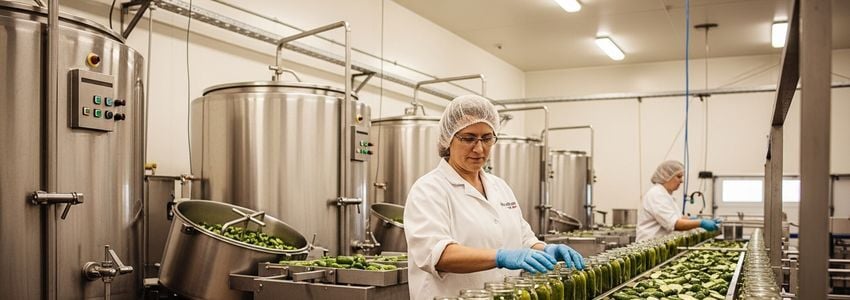
Pickle Company Business Loans: The Complete Financing Guide for Pickle Company Owners
The American appetite for pickles is more voracious than ever. From artisanal, small-batch creations to classic dills, the pickle industry is experiencing a remarkable surge in popularity, transforming from a simple condiment to a celebrated snack and gourmet ingredient. This growth presents a massive opportunity for entrepreneurs, but scaling a pickle company requires more than just a great recipe. It requires significant capital for ingredients, specialized equipment, marketing, and distribution. This is where pickle company business loans become a critical ingredient for success, providing the necessary funding to turn a budding brand into a household name.
Navigating the world of commercial financing can seem as complex as perfecting a secret brine recipe. Business owners often face challenges in securing capital due to the unique nature of food production, which involves managing perishable inventory, navigating health regulations, and investing in costly machinery. Whether you're a startup looking to equip your first commercial kitchen or an established brand aiming to launch a new product line and expand into national retail chains, understanding your financing options is paramount. This comprehensive guide is designed to demystify the process, exploring everything from the different types of funding available to the specific qualifications lenders look for.
At Crestmont Capital, we recognize the distinct financial needs of the food and beverage industry. We have helped countless entrepreneurs in this space secure the funding they need to thrive. This guide will provide a detailed roadmap for pickle company owners, covering how to qualify for financing, what loan amounts and terms to expect, and how to strategically use capital to fuel sustainable growth. By the end, you'll have a clear understanding of how to leverage pickle company business loans to take your business from a local favorite to a market leader.
In This Article
- What Are Pickle Company Business Loans?
- Types of Financing Available for Pickle Companies
- How Pickle Company Financing Works
- Who Qualifies for Pickle Company Business Loans?
- Loan Amounts, Rates, and Terms
- How Crestmont Capital Helps Pickle Companies
- Real-World Financing Scenarios for Pickle Businesses
- Industry Resources and Market Data
- Frequently Asked Questions
- How to Get Started
What Are Pickle Company Business Loans?
Pickle company business loans are not a single, one-size-fits-all product. Instead, the term refers to a broad category of financial solutions specifically structured or well-suited to meet the unique capital requirements of businesses involved in manufacturing, distributing, and selling pickles. These loans are designed to address the specific operational and growth challenges inherent in the food production industry, providing the working capital and investment funds necessary to scale operations effectively.
Unlike a generic personal loan, this type of financing is tailored for commercial use. The funds can be allocated to a wide range of business-critical activities. For a pickle company, this could mean purchasing a new pallet of high-quality glass jars, investing in an automated labeling machine to increase efficiency, launching a digital marketing campaign to attract new customers, or securing a larger facility to meet growing demand. The core purpose of these loans is to bridge the financial gap between your current operational capacity and your future growth potential.
The key differentiator for pickle company financing is its application to industry-specific needs. Consider the cash flow cycle of a pickle business: capital is spent upfront on cucumbers, spices, and other raw materials. Then, that inventory must sit for weeks or even months during the brining and curing process before it can be sold. This lag can create significant cash flow constraints. A working capital loan or a business line of credit can provide the liquidity needed to cover payroll, rent, and other operational expenses during this period. Similarly, financing designed for food production understands the need for FDA-compliant, stainless-steel equipment, which is often more expensive than standard machinery. Lenders familiar with the industry, like Crestmont Capital, can better evaluate the business case for such investments and structure a loan accordingly.
Types of Financing Available for Pickle Companies
Choosing the right type of financing is crucial for your company's financial health and growth trajectory. Each option offers different benefits and is suited for different business needs. Here is a breakdown of the most common and effective financing solutions for pickle companies.
SBA Loans
Loans backed by the U.S. Small Business Administration (SBA) are often considered the gold standard in small business financing. The government guarantee reduces the lender's risk, which typically results in lower interest rates and longer repayment terms for the borrower. For pickle companies, SBA loans are an excellent option for significant, long-term investments.
- SBA 7(a) Loans: This is the most popular SBA loan program, offering versatile funding up to $5 million. The funds can be used for a wide range of purposes, including working capital, equipment purchases, real estate acquisition, and even refinancing existing debt. The long repayment terms (up to 10 years for working capital and equipment, 25 years for real estate) can keep monthly payments manageable.
- SBA 504 Loans: This program is specifically designed for purchasing major fixed assets, such as commercial real estate or heavy machinery. A pickle company could use a 504 loan to buy a new production facility or a complete, state-of-the-art bottling line.
- SBA Microloans: For smaller needs, these loans provide up to $50,000. They are ideal for startups or small-scale producers needing capital for initial inventory, minor equipment, or marketing expenses.
While highly attractive, SBA loans are known for their rigorous application process and stringent qualification requirements, often demanding a strong credit history and detailed business documentation.
Term Loans
A traditional term loan provides a lump sum of cash upfront, which you repay with interest over a predetermined period through fixed monthly installments. This predictability makes it easy to budget for repayments. Term loans are ideal for planned, one-time investments where you know the exact cost.
- Best Uses for a Pickle Company: Financing a major facility upgrade, purchasing a delivery vehicle, funding a large-scale marketing campaign, or launching a new flavor that requires a significant initial investment in research and development.
- Considerations: Lenders will closely examine your business's financial health, credit score, and revenue history. Alternative lenders like Crestmont Capital often offer more flexible qualification criteria and faster funding times than traditional banks.
Business Line of Credit
A business line of credit operates much like a credit card for your business. You are approved for a specific credit limit and can draw funds as needed, up to that limit. You only pay interest on the amount you use, and as you repay the principal, your available credit is replenished. This flexibility makes it an invaluable tool for managing day-to-day cash flow.
- Best Uses for a Pickle Company: Covering unexpected expenses (like an equipment breakdown), managing seasonal fluctuations in cucumber supply and price, seizing a time-sensitive opportunity (like a bulk discount on jars), or bridging the gap while waiting for payments from large wholesale clients.
- Considerations: A line of credit is a powerful tool for ongoing financial management rather than a single large purchase. It provides a safety net and operational agility.
Equipment Financing
The pickle-making process requires specialized machinery, from industrial-grade brining vats and vegetable slicers to automated jarring, capping, and labeling systems. Equipment financing is a loan specifically designed for the purchase of this type of machinery. The equipment itself typically serves as the collateral for the loan, which can make it easier to qualify for than other types of financing.
- Best Uses for a Pickle Company: Purchasing new or used pickling tanks, pasteurizers, conveyor belts, refrigeration units, or packaging equipment. Upgrading to more efficient machinery can directly boost your production capacity and profitability. Crestmont Capital even offers specialized food equipment financing to meet these exact needs.
- Considerations: Terms are often tied to the expected lifespan of the equipment. This type of financing preserves your working capital for other business needs instead of tying it up in a large asset purchase.
Inventory Financing
For a pickle company, a significant portion of capital is tied up in inventory-both raw materials and finished goods sitting in jars. Inventory financing allows you to use your inventory as collateral to secure a loan. This is a powerful solution for businesses whose main asset is their stock.
- Best Uses for a Pickle Company: Funding the purchase of a large volume of seasonal cucumbers to last through the year, building up stock ahead of the busy summer barbecue season, or freeing up cash that is locked in curing products.
- Considerations: The loan amount is based on a percentage of your inventory's appraised value. This is a great short-term solution to manage the unique inventory cycle of food production.
Working Capital Loans
Sometimes, you just need a quick injection of cash to cover immediate operational costs. Working capital loans are typically short-term loans designed to finance the everyday expenses of your business. They are not meant for long-term investments but are crucial for maintaining smooth operations.
- Best Uses for a Pickle Company: Paying rent and utilities, meeting payroll during a slow sales month, covering marketing costs for a trade show, or purchasing necessary supplies like spices and vinegar.
- Considerations: These loans are valued for their speed. Approval and funding can often happen in as little as 24-48 hours, making them ideal for urgent needs.
Ready to Grow Your Pickle Empire?
Get the capital you need for new equipment, larger inventory, and market expansion. See your options in minutes.
Apply Now →How Pickle Company Financing Works
Securing a business loan can feel like a daunting process, but breaking it down into a series of clear, manageable steps can provide clarity and confidence. While the specifics may vary slightly between lenders, the general journey from application to funding follows a consistent path. Here is a step-by-step look at how pickle company financing works.
- Assess Your Needs and Determine a Use of Funds: The first step is internal. Before you approach any lender, you must have a precise understanding of why you need the capital and exactly how it will be used. Is it for a tangible asset, like a $40,000 jarring machine? Or is it for intangible needs, like a $20,000 marketing budget to enter a new regional market? Create a detailed plan that quantifies the amount needed and projects the return on investment. For example, "A $40,000 machine will increase our output by 50%, allowing us to fulfill a new contract worth $100,000 annually." This level of detail is crucial for both your own planning and for making a compelling case to a lender.
- Gather Essential Documentation: Lenders need to verify your business's financial health and identity. Being prepared with the necessary paperwork will significantly speed up the process. While requirements vary, you should be ready to provide:
- Business Financial Statements: Profit and loss statements, balance sheets, and cash flow statements for the past 2-3 years.
- Business and Personal Tax Returns: Typically for the last 2-3 years.
- Bank Statements: Usually the most recent 3-6 months of business bank statements to show cash flow.
- Business Plan: Especially important for startups or large loan requests, this should detail your business model, market analysis, and financial projections.
- Legal Documents: Articles of incorporation, business licenses, and any relevant contracts or leases.
- Choose the Right Lender and Submit Your Application: Not all lenders are created equal. Traditional banks often have the most attractive rates but are also the most risk-averse, with slow processes and strict requirements. Credit unions can be another option. Alternative lenders, like Crestmont Capital, specialize in working with small and medium-sized businesses and often provide a much faster, more flexible, and streamlined experience. Our online application process, for example, can be completed in minutes, drastically reducing the time and paperwork involved.
- Undergo the Underwriting and Review Process: Once your application is submitted, it moves to the underwriting stage. This is where the lender's team conducts a thorough review of your application and supporting documents. They will analyze your company's revenue, profitability, cash flow, credit history, and overall financial stability. For a pickle company, they might also look at factors like your distribution channels, supplier relationships, and production capacity. The goal is to assess the level of risk and determine your ability to repay the loan.
- Receive and Evaluate Loan Offers: If your application is approved, you will receive one or more loan offers. It is critical to review these offers carefully. Look beyond just the interest rate. Consider the total loan amount, the repayment term (length of the loan), the frequency of payments (daily, weekly, or monthly), and any associated fees (such as origination fees). A shorter-term loan may have a higher monthly payment but cost less in total interest over its life. Choose the offer that best aligns with your company's cash flow and long-term financial strategy.
- Accept the Offer and Receive Your Funds: After selecting the best offer, you will sign the final loan agreement. Once the contract is executed, the lender will disburse the funds directly into your business bank account. With modern lenders like Crestmont Capital, this final step is incredibly fast, with capital often available in as little as 24 hours after approval. You can then immediately put the funds to work growing your pickle business.
By the Numbers
Pickle Industry Financing - Key Statistics
$12.3B
The estimated size of the U.S. pickle market. This robust market size indicates strong consumer demand and a stable industry for lenders to invest in.
70%
Over 70% of all U.S. households purchase pickles regularly, showcasing a large and consistent customer base for pickle companies of all sizes.
$195B
The value of the U.S. specialty food market, which includes artisanal and gourmet pickles. This segment is a key driver of industry growth and innovation.
45%
Approximately 45% of small businesses seek financing to fund business expansion, a primary use for pickle company business loans.

Who Qualifies for Pickle Company Business Loans?
Lenders evaluate several key factors to determine a business's eligibility for financing. Understanding these criteria can help you strengthen your application and increase your chances of approval. While every lender has its own specific underwriting guidelines, they generally focus on the "Five Cs of Credit": Character, Capacity, Capital, Collateral, and Conditions.
Time in Business
Lenders prefer to see a track record of stability and success. Most traditional lenders require at least two years of operation. However, many alternative lenders, including Crestmont Capital, are more flexible and can work with businesses that have been operating for as little as six months. For startups with less than six months of history, options like SBA microloans or financing based on strong personal credit may be available, but a solid business plan is essential.
Annual Revenue
Your company's revenue is a direct indicator of its market acceptance and ability to generate cash. Lenders want to see consistent and sufficient sales to support loan repayments. Minimum annual revenue requirements can range from $100,000 to $250,000 or more, depending on the lender and the loan type. Lenders will analyze your bank statements to verify your monthly deposits and assess the health and consistency of your income stream.
Credit Score
Both your personal and business credit scores will be evaluated. A personal credit score is a reflection of your own financial reliability, while a business credit score reflects your company's history of paying its suppliers and creditors. For traditional bank loans and SBA loans, a personal credit score of 680 or higher is often required. Alternative lenders can be more accommodating, offering solutions for business owners with scores in the low 600s or even 500s, though terms may be less favorable. Building a strong credit profile for both yourself and your business is a key long-term strategy for accessing the best financing options.
Cash Flow and Profitability
Perhaps the most critical factor for many modern lenders is your business's cash flow. Lenders need to be confident that you have enough incoming cash to cover your existing operating expenses plus the new loan payment. They will analyze your bank statements to look for consistent deposits, a healthy average daily balance, and an absence of frequent non-sufficient funds (NSF) notices. Even a business that isn't highly profitable on paper can qualify for financing if it demonstrates strong, reliable cash flow.
Collateral
Collateral is an asset that you pledge to a lender to secure a loan. If you default on the loan, the lender can seize the collateral to recoup its losses. For pickle companies, common forms of collateral include equipment, real estate, accounts receivable, and inventory. Some loans, like equipment financing, are self-collateralizing. Other products, such as unsecured small business loans, do not require specific collateral, but they may require a personal guarantee, which is a promise to be personally responsible for the debt if the business cannot pay.
Loan Amounts, Rates, and Terms
The specific details of a business loan-the amount, interest rate, and repayment term-can vary significantly based on the type of loan, the lender, and your business's qualifications. Below is a comparison table outlining typical ranges for the most common financing options for pickle companies.
| Loan Type | Typical Loan Amount | Typical Interest Rates | Typical Repayment Term | Best For |
|---|---|---|---|---|
| SBA Loan | $30,000 - $5 Million | Prime + 2.75% - 4.75% | 7 - 25 years | Major long-term investments like real estate, business acquisition, or large-scale expansion. |
| Term Loan | $25,000 - $500,000 | 7% - 30% | 1 - 5 years | Specific, planned projects with a known cost, such as a facility renovation or launching a new product line. |
| Business Line of Credit | $10,000 - $250,000 | 8% - 35% | 6 months - 5 years (revolving) | Managing cash flow, handling unexpected expenses, and seizing short-term opportunities. |
| Equipment Financing | Up to 100% of equipment cost | 6% - 25% | 2 - 10 years (tied to asset life) | Purchasing new or used machinery like bottling lines, vats, and commercial kitchen appliances. |
| Working Capital Loan | $5,000 - $250,000 | Rates often quoted as factor rates (e.g., 1.15 - 1.50) | 3 - 18 months | Covering short-term operational needs like payroll, inventory purchases, or marketing pushes. |
Note: The figures above are estimates and can vary based on market conditions, lender policies, and individual business qualifications. Stronger business profiles generally receive more favorable terms.
How Crestmont Capital Helps Pickle Companies
As the #1 rated business lender in the US, Crestmont Capital is uniquely positioned to help pickle companies secure the funding they need to succeed and grow. We understand that your business is more than just numbers on a spreadsheet-it's a passion. Our approach to lending is built on speed, flexibility, and a deep understanding of the food and beverage industry.
Industry Expertise: We're not generalists. Our team has extensive experience working with businesses in the food production sector. We understand the seasonal cycles, the capital-intensive nature of equipment, and the cash flow challenges specific to companies like yours. This expertise allows us to look beyond standard metrics and see the true potential of your pickle business, whether you're making artisanal kimchi or classic kosher dills. Our work with clients in similar sectors, like those seeking bakery company business loans, gives us a broad perspective on the food manufacturing landscape.
A Wide Array of Funding Solutions: We believe in finding the right fit, not forcing a one-size-fits-all product. Crestmont Capital offers a comprehensive suite of financing options. Whether you need a flexible business line of credit to manage fluctuating ingredient costs, fast equipment financing for a new labeling machine, or a substantial term loan for expansion, we have a solution. We are also proficient in navigating the complexities of SBA loans, helping you access the best government-backed programs available.
Speed and Efficiency: In the fast-paced world of business, opportunities don't wait. Unlike traditional banks that can take weeks or even months to approve a loan, our process is designed for speed. Our streamlined online application takes just minutes to complete, and we can often provide a decision and deliver funding in as little as 24 hours. This agility means you can secure that bulk discount on cucumbers or begin your expansion project without delay.
Personalized Guidance: When you partner with Crestmont Capital, you are assigned a dedicated funding specialist who will be your point of contact throughout the entire process. They will take the time to understand your specific goals and challenges, answer your questions, and guide you to the financing option that makes the most sense for your business. We pride ourselves on building relationships, not just processing transactions.
High Approval Rates: Our extensive network of lending partners and our flexible underwriting criteria allow us to find funding solutions for a wide range of business profiles, including those that may have been turned down by traditional banks. We focus on your business's overall health and cash flow, providing opportunities for companies with varying credit histories and time in business.
Don't Let Financing Be a Sour Point.
Our specialists understand the food industry and can find the right funding for your pickle company's unique needs.
Apply Now →Real-World Financing Scenarios for Pickle Businesses
To better illustrate how different loan types can be applied, let's explore some hypothetical yet highly realistic scenarios that pickle company owners might face.
Scenario 1: The Artisanal Startup
"Crisp & Co." is a new artisanal pickle brand that has gained a loyal following at local farmers' markets. They are ready to move from a shared kitchen to their own small production space. They need $30,000 to cover the security deposit on a lease, purchase initial commercial-grade equipment like stainless-steel prep tables and a small vat, and buy their first large batch of jars and ingredients.
Solution: An SBA Microloan or a short-term working capital loan would be ideal. These options are accessible to newer businesses and provide the necessary startup capital to establish a dedicated operational base.
Scenario 2: The Production Bottleneck
"Perfectly Pickled Inc." is an established regional brand with products in 50 grocery stores. Demand is soaring, but their manual jarring and labeling process can't keep up, creating a bottleneck that limits growth. They identify an automated bottling and labeling line that costs $125,000.
Solution: Food equipment financing is the perfect tool here. The loan is secured by the machine itself, preserving the company's cash for other needs. The new equipment will immediately increase efficiency and output, allowing the loan to essentially pay for itself through increased sales and reduced labor costs.
Scenario 3: The Wholesale Cash Flow Gap
"Granny's Gourmet" just landed a massive purchase order from a national supermarket chain. This is a game-changing opportunity, but the chain's payment terms are net-90, meaning Granny's won't see the revenue for three months. In the meantime, they need $75,000 to cover payroll for two new employees, purchase raw materials for the huge order, and manage other operational costs.
Solution: A business line of credit or a short-term working capital loan would solve this cash flow problem. They can draw the funds needed to fulfill the order and cover expenses, then easily repay the loan once the large invoice is paid. This prevents the company from having to turn down a major growth opportunity due to a temporary cash shortage.
Scenario 4: The Seasonal Inventory Stock-Up
"The Brine Barrel" knows that the best pickling cucumbers are harvested locally during a short six-week window in the summer. A local farm offers them a significant discount if they purchase their entire season's supply at once. This requires an immediate outlay of $50,000, but it will secure their most important ingredient at a low cost for the entire year.
Solution: Inventory financing is an excellent choice. They can secure a loan against the value of the inventory they are purchasing. This allows them to capitalize on the seasonal opportunity without depleting their operating cash reserves.
Scenario 5: The Facility Purchase
After five years of leasing, "Dill-lightful Foods" wants to purchase its own 10,000-square-foot production facility. The property costs $800,000. Owning the building will provide long-term stability, build equity, and allow them to customize the space for optimal workflow.
Solution: An SBA 504 loan is tailor-made for this situation. It offers a low down payment and a long-term, fixed-rate mortgage for the majority of the project cost, making the purchase of a major real estate asset affordable and financially prudent.
Industry Resources and Market Data
Staying informed about industry trends, regulations, and market data is essential for running a successful business. Here are some valuable external resources that can help pickle company owners make strategic decisions and strengthen their business plans.
- U.S. Small Business Administration (SBA): The SBA is the definitive source for information on government-backed loan programs. Their website provides detailed guides on eligibility, application processes, and finding participating lenders. This is a must-visit resource for any business considering an SBA loan.
- Forbes Consumer & Retail Section: Forbes frequently publishes articles and analysis on the food and beverage industry, including trends in specialty foods, consumer behavior, and marketing strategies. Reading their insights can help you stay ahead of the curve and identify new market opportunities.
- U.S. Census Bureau - Food Manufacturing Data: For deep, credible data, the Census Bureau's page on "Fruit and Vegetable Canning, Pickling, and Drying" (NAICS code 311421) is invaluable. It provides statistics on the number of establishments, employment, and payroll, which can be crucial for market analysis and business planning.
Your Recipe for Success Starts Here.
Apply in minutes and get a decision quickly. Let's get your pickle company funded.
Apply Now →Frequently Asked Questions
How to Get Started
Ready to take the next step and secure the funding your pickle company deserves? Our process is simple, fast, and designed with busy entrepreneurs like you in mind.
Apply Online in Minutes
Fill out our secure, no-obligation online application. It takes less than five minutes and requires only basic information about you and your business. There's no impact on your credit score to see what you qualify for.
Consult with a Funding Specialist
A dedicated specialist will contact you to discuss your business needs, review your qualifications, and present you with the best available financing options. We'll answer all your questions and help you choose the perfect solution.
Receive Your Capital
Once you accept an offer, we'll finalize the paperwork and disburse the funds directly to your business bank account, often in as little as 24 hours. It's that simple.
The pickle industry is ripe with opportunity, but capitalizing on it requires the right financial resources. From sourcing the freshest ingredients to investing in state-of-the-art production technology and launching effective marketing campaigns, growth is fueled by strategic investment. Understanding and leveraging the right pickle company business loans can be the deciding factor between stagnation and market leadership. The diverse range of financing options available means there is a solution for nearly every business need, whether you are a startup just getting off the ground or an established brand ready to scale.
The key is to partner with a lender that understands your industry and is committed to your success. By preparing your documentation, having a clear plan for the funds, and choosing a financing partner like Crestmont Capital, you can navigate the funding process with confidence. We provide the speed, flexibility, and expert guidance that modern food entrepreneurs need to thrive in a competitive market.
Don't let a lack of capital hold your business back. The demand for unique, high-quality pickles has never been greater, and the time to invest in your company's future is now. By securing the right pickle company business loans, you can ensure you have the resources to perfect your recipe for success and build a brand that lasts.
Disclaimer: The information provided in this article is for general educational purposes only and is not financial, legal, or tax advice. Funding terms, qualifications, and product availability may vary and are subject to change without notice. Crestmont Capital does not guarantee approval, rates, or specific outcomes. For personalized information about your business funding options, contact our team directly.








