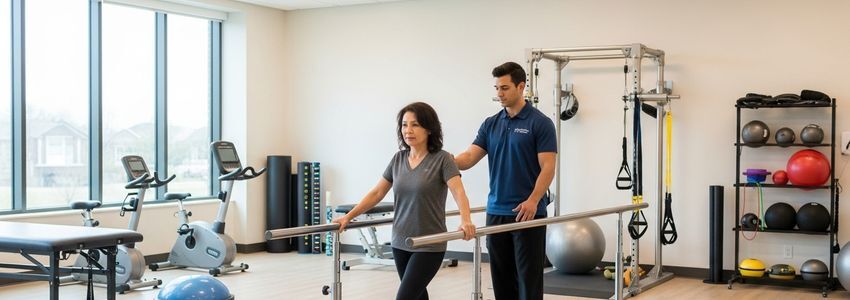
The physical rehabilitation industry is experiencing unprecedented growth, driven by an aging population, rising participation in sports, and advancements in medical procedures that necessitate post-operative care. For entrepreneurs and established practitioners alike, this presents a significant opportunity to build or expand a thriving practice that provides essential services to the community. However, launching, equipping, and scaling a physical rehabilitation center is a capital-intensive endeavor. From state-of-the-art therapeutic equipment and specialized treatment spaces to hiring skilled therapists and managing daily operational costs, the financial requirements can be substantial. This is where physical rehabilitation center business loans become a critical tool for success. Securing the right financing allows you to invest in the quality of care, patient experience, and operational efficiency that sets your clinic apart. This comprehensive guide will explore every facet of financing your rehab center, from the types of loans available to the qualification requirements and application process, empowering you to make informed decisions that fuel your center's growth and long-term success.
In This Article
- What Are Physical Rehabilitation Center Business Loans?
- Key Benefits of Financing Your Rehab Center
- Types of Business Loans for Physical Rehabilitation Centers
- How Physical Rehabilitation Center Loans Work
- Who Qualifies for Physical Rehabilitation Center Loans?
- Loan Amounts, Terms, and Rates for Rehab Centers
- How to Apply for Physical Rehabilitation Center Financing
- How Crestmont Capital Helps Physical Rehabilitation Centers
- Comparing Financing Options for Rehab Centers
- Real-World Scenarios: How Rehab Centers Use Business Loans
- Frequently Asked Questions
- How to Get Started
- Conclusion
What Are Physical Rehabilitation Center Business Loans?
Physical rehabilitation center business loans are not a single, one-size-fits-all product. Instead, this term encompasses a broad category of financial solutions specifically designed to meet the unique and diverse needs of physical therapy (PT), occupational therapy (OT), and other specialized rehabilitation clinics. Unlike a generic business loan that might not account for the specific capital requirements of a healthcare practice, these financing options are tailored to address the challenges and opportunities inherent in the rehabilitation industry.
These loans provide the necessary capital for a wide range of purposes, from the foundational steps of starting a new practice to the strategic moves of expanding an established one. The core function of these loans is to bridge the gap between your available cash and the funds required to invest in growth, quality of care, and operational stability. Whether you are a solo practitioner looking to open your first clinic or a multi-location enterprise aiming to upgrade your technology, a business loan provides the leverage to achieve your goals without depleting your liquid assets.
The funds can be used for virtually any legitimate business purpose, including:
- Purchasing or leasing commercial real estate to house your clinic.
- Renovating and building out a space to create treatment rooms, a reception area, and specialized facilities like a therapy pool.
- Acquiring cutting-edge therapeutic equipment, such as isokinetic dynamometers, anti-gravity treadmills, laser therapy units, and ultrasound machines.
- Covering start-up costs like licensing, insurance, and initial marketing campaigns.
- Managing day-to-day operational expenses through working capital, including payroll for therapists and staff, rent, utilities, and medical supplies.
- Expanding to a new location or acquiring a competing practice.
- Investing in marketing and advertising to attract a steady stream of new patients.
- Financing staff training and certifications to offer new, specialized services.
In essence, a physical rehabilitation center business loan is a strategic financial partnership. It allows you to invest in the assets and operations that generate revenue and improve patient outcomes today, while spreading the cost over a manageable period. This enables you to stay competitive, adopt the latest therapeutic technologies, and provide the highest standard of care in a rapidly evolving healthcare landscape.
Key Benefits of Financing Your Rehab Center
Opting for a business loan to fund your physical rehabilitation center is more than just a way to get cash; it's a strategic decision that can unlock significant advantages and accelerate your practice's growth. By leveraging external capital, you can overcome financial hurdles and seize opportunities that would otherwise be out of reach. Here are the key benefits of financing your rehab center.
Acquire State-of-the-Art Equipment
The quality of care you provide is directly linked to the quality of your equipment. Modern rehabilitation technology can lead to better patient outcomes, faster recovery times, and a wider range of treatable conditions. However, advanced equipment like AlterG Anti-Gravity Treadmills, hydrotherapy tanks, or Class IV laser therapy systems can cost tens or even hundreds of thousands of dollars. Financing allows you to acquire this essential technology without a massive upfront cash expenditure. This preserves your working capital for other needs while giving your patients access to the best possible tools for their recovery. It also serves as a powerful marketing tool, positioning your clinic as a leading-edge provider in your community.
Expand or Renovate Your Facility
As your patient list grows, your physical space can become a limiting factor. A cramped waiting room, insufficient private treatment areas, or a lack of specialized space can hinder your efficiency and detract from the patient experience. A business loan can fund a major expansion or renovation project. This could mean leasing a larger space, building an addition to your current facility, adding a dedicated pediatric therapy wing, or constructing an aquatic therapy pool. An expanded, modern facility not only allows you to serve more patients but also improves workflow for your staff and enhances your professional image.
Manage Cash Flow and Working Capital
Consistent cash flow is the lifeblood of any business, and healthcare is no exception. Physical rehabilitation centers often face unpredictable revenue cycles due to delays in insurance reimbursements. A business loan, particularly a business line of credit or a working capital loan, provides a crucial financial safety net. It ensures you have the funds to cover essential operating expenses like payroll, rent, utilities, and supplies, even when payments from insurers are slow. This stability allows you to focus on patient care instead of worrying about short-term financial shortfalls, ensuring your operations run smoothly month after month.
Hire and Train Specialized Staff
Your team is your greatest asset. Attracting and retaining top-tier physical therapists, occupational therapists, speech-language pathologists, and administrative staff is essential for delivering excellent care and building a strong reputation. Financing can provide the capital needed to offer competitive salaries and benefits, which is crucial in a tight labor market. Furthermore, it can fund ongoing education, specialized certifications, and advanced training for your staff. This not only enhances their skills and job satisfaction but also allows your clinic to offer more specialized, high-value services, attracting a broader patient base.
Competitive Edge: Investing in specialized staff and equipment through financing allows your center to offer niche services like vestibular rehabilitation or lymphedema therapy, setting you apart from generalized practices.
Boost Marketing and Patient Acquisition
Even the best rehabilitation center needs a steady flow of new patients to thrive. Effective marketing is essential for building brand awareness, attracting physician referrals, and reaching potential patients directly. A business loan can fund a comprehensive marketing strategy, including developing a professional website with SEO, running digital advertising campaigns on Google and social media, creating print materials for physician outreach, and engaging in community events. A dedicated marketing budget, fueled by financing, can significantly increase your patient volume and accelerate your return on investment.
Maintain Ownership and Control
When seeking capital, business owners often face a choice between debt financing (loans) and equity financing (selling a stake in the business). One of the most significant advantages of a business loan is that you retain full ownership and control of your practice. You are not required to give up equity or a percentage of your future profits to an investor. You simply repay the loan over an agreed-upon term, and once it's paid off, the financial obligation is complete. This allows you to build your business according to your vision without answering to outside partners or shareholders.
Types of Business Loans for Physical Rehabilitation Centers
The financing landscape offers a variety of loan products, each with its own structure, terms, and ideal use case. Understanding these options is the first step toward choosing the right financial tool for your rehabilitation center's specific needs. Here’s a detailed breakdown of the most common types of business loans available.
SBA Loans
Loans backed by the U.S. Small Business Administration (SBA) are often considered the gold standard in small business financing. While the SBA doesn't lend money directly, it guarantees a portion of the loan made by a partner lender (like a bank or Crestmont Capital), reducing the lender's risk. This results in highly favorable terms for the borrower.
- SBA 7(a) Loan: This is the SBA's most popular and versatile loan program. Funds can be used for a wide range of purposes, including working capital, equipment purchases, business acquisition, and commercial real estate. Loan amounts can go up to $5 million with long repayment terms (up to 10 years for working capital and equipment, and up to 25 years for real estate), leading to lower monthly payments.
- SBA 504 Loan: This program is specifically designed for financing major fixed assets, such as purchasing land or buildings, or acquiring long-term machinery and equipment. The loan is structured in two parts: one from a conventional lender and another from a Certified Development Company (CDC). They offer long terms and fixed, below-market interest rates, making them ideal for large-scale expansion projects.
SBA loans are highly competitive due to their excellent terms, but the application process can be documentation-intensive and take longer than other loan types. For more official information, you can visit the SBA's official website.
Traditional Term Loans
A term loan is what most people picture when they think of a business loan. You borrow a lump sum of capital upfront and repay it, plus interest, in regular fixed installments over a predetermined period (the "term"). Term lengths can range from one to ten years or more. These loans are excellent for financing specific, one-time investments with a clear cost, such as a major facility renovation, the purchase of a suite of new therapy equipment, or the acquisition of another practice. Lenders offer both secured (requiring collateral) and unsecured options, with rates and terms depending on your business's financial health and credit history.
Equipment Financing
Given the high cost of specialized therapeutic equipment, equipment financing is one of the most vital funding tools for a rehabilitation center. This type of loan is structured so that the equipment you are purchasing serves as its own collateral. This often makes it easier to qualify for than other types of loans, even for businesses with less-than-perfect credit. You can finance up to 100% of the cost of new or used equipment, including soft costs like taxes, shipping, and installation. Repayment terms are typically aligned with the expected useful life of the equipment, usually from 3 to 7 years. This is the perfect solution for acquiring items like:
- Ultrasound and electrotherapy machines
- Traction tables
- Hydrotherapy pools and underwater treadmills
- Isokinetic testing and exercise equipment
- Gait analysis systems
- Patient management and billing software
Business Line of Credit
A business line of credit provides flexible, on-demand access to capital. Instead of a lump sum, you are approved for a maximum credit limit (e.g., $100,000). You can draw funds from this line as needed, up to your limit, and you only pay interest on the amount you've actually used. As you repay the borrowed funds, your available credit is replenished, making it a revolving source of capital. This makes it an ideal tool for managing cash flow fluctuations, covering unexpected expenses (like an emergency equipment repair), or seizing time-sensitive opportunities without having to apply for a new loan each time. It’s a financial safety net for the unpredictable nature of running a business.
Unsecured Working Capital Loans
When you need a fast infusion of cash to cover immediate operational expenses, an unsecured working capital loan is an excellent option. These are typically short-term loans (6-24 months) designed to fund the everyday costs of doing business, such as making payroll during a slow month, purchasing medical supplies in bulk, or launching a new marketing campaign. Because they are "unsecured," they don't require specific collateral, which speeds up the approval process significantly. While interest rates may be higher than those for a long-term secured loan, the speed and convenience they offer can be invaluable for maintaining business momentum.
Commercial Real Estate Loans
If your long-term vision includes owning the property where your clinic operates, a commercial real estate (CRE) loan is the necessary financial instrument. Similar to a residential mortgage, these loans are used to purchase, construct, or refinance a commercial property. Terms are typically long, often 15, 20, or 25 years, and require a significant down payment (usually 10-30%). Owning your property can provide long-term stability, build equity, and potentially create an additional revenue stream if you lease out unused space.
Merchant Cash Advance (MCA)
A Merchant Cash Advance is not a traditional loan but rather an advance on your future credit and debit card sales. A lender provides you with a lump sum of cash in exchange for a percentage of your daily card transactions until the advance is repaid, plus a fee. MCAs offer extremely fast funding and have very high approval rates, as the decision is based more on your sales volume than your credit score. This can be a viable option for centers that need emergency cash quickly and have a high volume of card payments. However, it's crucial to understand that the effective interest rates (factor rates) are significantly higher than traditional loans, so they should be used with caution for short-term, urgent needs.
How Physical Rehabilitation Center Loans Work
Navigating the business loan process can seem daunting, but it follows a logical progression. Understanding each stage helps you prepare effectively and increases your chances of a successful outcome. Here is a step-by-step breakdown of how physical rehabilitation center loans work, from initial assessment to funding.
Step 1: Assess Your Financial Needs and Purpose
The process begins with a thorough internal evaluation. Before you approach any lender, you must have a crystal-clear understanding of why you need the funds and exactly how much you require. Are you starting a new clinic from scratch? Are you looking to purchase a specific piece of equipment like a $75,000 anti-gravity treadmill? Do you need $30,000 in working capital to cover payroll and marketing for the next quarter? Be specific. Create a detailed budget for your project. This clarity is not only for your own planning but is also something lenders will demand. A well-defined purpose demonstrates that you are a responsible and strategic business owner.
Step 2: The Application and Documentation Phase
Once you know your needs, you can begin the application process. This stage involves gathering and submitting a range of documents that give the lender a comprehensive picture of your business's financial health and viability. While requirements vary by lender and loan type, you should be prepared to provide:
- Business Financial Statements: Profit and Loss (P&L) statements, balance sheets, and cash flow statements for the last 2-3 years.
- Business and Personal Tax Returns: Typically for the last 2-3 years.
- Bank Statements: Usually the most recent 3-6 months of business bank statements to show cash flow.
- Business Plan: Especially critical for startups or major expansions. It should detail your business model, market analysis, management team, and financial projections.
- Legal Documents: Articles of incorporation, business licenses, and any relevant professional certifications.
- A Detailed Use of Funds: A breakdown of how you plan to spend the loan proceeds, including quotes for equipment or contractor estimates for renovations.
Pro Tip: Organize all your documents digitally in a secure folder before you start applying. This will dramatically speed up the process and make a professional impression on lenders.
Step 3: Underwriting and Approval
After you submit your application, it moves to the underwriting stage. An underwriter is a financial professional who assesses the risk of lending to your business. They will meticulously review all the documents you provided, analyzing key factors like:
- Creditworthiness: They will pull your personal and business credit reports to evaluate your history of managing debt.
- Cash Flow: They will analyze your bank statements and P&L to ensure your business generates enough consistent revenue to comfortably afford the new loan payment.
- Collateral: For secured loans, they will assess the value of the assets you are pledging as collateral.
- Industry and Market Conditions: They will consider the overall health and growth prospects of the physical rehabilitation industry.
The underwriter may come back with follow-up questions or requests for additional documentation. Once their review is complete, they will make a decision: approved, denied, or approved with conditions. If approved, you will receive a formal loan offer outlining the amount, interest rate, term, and any fees.
Step 4: Funding and Repayment
This is the final stage. If you are satisfied with the terms of the loan offer, you will sign the loan agreement. After the paperwork is finalized, the lender will disburse the funds directly into your business bank account. The time to funding can vary dramatically, from as little as 24 hours for an MCA or working capital loan to several weeks or even months for a complex SBA loan. Once the funds are received, your repayment schedule begins. Payments are typically debited automatically from your business account on a daily, weekly, or monthly basis, as specified in your loan agreement.
By the Numbers
Physical Rehabilitation Industry - Key Statistics
$43.2 Billion
The estimated market size of the U.S. physical and occupational therapy industry in 2024, reflecting strong and consistent demand for services.
4.5% CAGR
The projected compound annual growth rate for the physical therapy market through 2030, driven by an aging population and sports-related injuries.
117,000+
The approximate number of physical therapy businesses operating in the United States, indicating a competitive but opportunity-rich landscape.
15% Growth
The projected job growth for physical therapists from 2022 to 2032, much faster than the average for all occupations, signaling a need for more facilities.
Who Qualifies for Physical Rehabilitation Center Loans?
Lenders evaluate several key factors to determine a business's eligibility for a loan and to assess the level of risk involved. While specific criteria can vary between lenders and different loan products, most will analyze the following core areas. Understanding these will help you position your rehabilitation center for a successful application.
Credit Score
Your personal and business credit scores are primary indicators of your financial responsibility. Lenders use them to predict the likelihood that you will repay your loan on time.
- For SBA Loans and Bank Loans: You will typically need a strong personal credit score, often 680 or higher. Lenders will also look at your business credit score if it's established.
- For Alternative Lenders: Lenders like Crestmont Capital can often work with a wider range of credit profiles. While a higher score will get you better rates, it's often possible to qualify with a score in the low 600s, or sometimes even lower, depending on other factors like revenue.
- For MCAs: Credit score is less of a factor. The decision is heavily weighted on your daily sales volume.
A history of on-time payments, low credit utilization, and a clean credit report will significantly improve your chances of approval and help you secure more favorable terms.

Time in Business
The length of time your rehabilitation center has been in operation is a measure of its stability and track record.
- Startups (Under 2 years): Securing a traditional loan can be challenging for new businesses. Lenders often look for a strong business plan, solid financial projections, industry experience from the owner, and a significant personal investment. SBA loans can be a good option for well-prepared startups.
- Established Businesses (2+ years): Businesses with at least two years of operating history and tax returns have a much easier time qualifying for a wider range of financing options, including the most competitive bank and SBA loans. They have a proven track record of generating revenue and managing operations.
- Early-Stage Businesses (6-24 months): Many alternative lenders offer products specifically for businesses that have been operating for at least 6 months, such as working capital loans or lines of credit.
Annual Revenue
Your center's annual gross revenue is a direct measure of its ability to generate cash flow to support loan repayments. Lenders have minimum revenue requirements that vary by loan type. For example, a small working capital loan might only require $100,000 in annual revenue, while a larger term loan or SBA loan could require $250,000 or more. It’s important to demonstrate consistent, stable, or growing revenue. Lenders will verify this by reviewing your bank statements and tax returns.
Financial Health and Profitability
Beyond top-line revenue, lenders will dive deeper into your financial statements to assess the overall health of your business. They will look at:
- Profitability: Is your business consistently profitable? If not, is there a clear path to profitability outlined in your business plan?
- Cash Flow: This is arguably the most critical factor. Your bank statements must show that you have enough free cash flow each month to comfortably cover your existing expenses plus the new loan payment.
- Debt-Service Coverage Ratio (DSCR): This ratio compares your annual net operating income to your total annual debt payments. Lenders typically want to see a DSCR of 1.25x or higher, meaning you have $1.25 in cash flow for every $1.00 of debt.
Collateral
Collateral is an asset that you pledge to a lender to secure a loan. If you default on the loan, the lender can seize the collateral to recoup its losses.
- Secured Loans: SBA loans, commercial real estate loans, and equipment financing are almost always secured. The collateral can be the asset being purchased (the equipment or property) or other business assets like accounts receivable or a general lien on the business.
- Unsecured Loans: Many working capital loans and some lines of credit are unsecured, meaning they don't require specific collateral. However, they almost always require a personal guarantee from the business owner. This is a legal promise to be personally responsible for the debt if the business cannot pay it back.
Having valuable collateral can make it easier to get approved for larger loan amounts and may result in lower interest rates.
Loan Amounts, Terms, and Rates for Rehab Centers
The specific financial details of a business loan-the amount, repayment term, and interest rate-can vary significantly based on the type of loan, the lender, and the financial strength of your rehabilitation center. Below are typical ranges you can expect for the most common financing options.
SBA 7(a) Loans
- Loan Amounts: $30,000 to $5 million.
- Terms: Up to 10 years for working capital and equipment; up to 25 years for commercial real estate. These long terms result in lower, more manageable monthly payments.
- Rates: Interest rates are variable and tied to the Prime Rate plus a margin set by the lender. The SBA sets maximums for this margin, keeping rates very competitive, typically in the range of Prime + 2.25% to Prime + 4.75%.
Traditional Term Loans
- Loan Amounts: $25,000 to $1 million or more, depending on the lender and your business's financials.
- Terms: Typically range from 2 to 10 years. Shorter terms are common for smaller loan amounts, while larger loans for major investments can have longer terms.
- Rates: Fixed or variable interest rates can range from 7% to 30% annually, depending heavily on your credit score, time in business, and overall risk profile. Stronger, more established businesses will qualify for rates on the lower end of this spectrum.
Equipment Financing
- Loan Amounts: Can cover up to 100% of the equipment's value, from a few thousand dollars for a single treatment table to several hundred thousand for a complete gym or advanced diagnostic tools.
- Terms: Typically 3 to 7 years, designed to match the useful economic life of the equipment being financed.
- Rates: Interest rates generally fall between 6% and 25%. Because the equipment itself serves as collateral, these loans are less risky for lenders, which can result in more favorable rates compared to unsecured loans.
Business Line of Credit
- Credit Limits: $10,000 to $250,000 is common, though some lenders may offer higher limits for very strong businesses.
- Terms: These are typically revolving, meaning the line is open for a set period (often 1-2 years) and can be renewed. Repayment terms for individual draws usually range from 6 to 18 months.
- Rates: Interest rates are almost always variable and are applied only to the funds you've drawn. Rates can range from 8% to 35% APR, depending on the lender and your qualifications.
Unsecured Working Capital Loans
- Loan Amounts: $5,000 to $500,000.
- Terms: These are short-term solutions, with repayment periods typically ranging from 3 to 24 months. Payments are often made on a daily or weekly basis.
- Rates: These loans prioritize speed and convenience, so their cost is higher. Instead of a traditional interest rate, they often use a "factor rate" (e.g., 1.15 to 1.50). A $50,000 loan with a 1.20 factor rate means you repay a total of $60,000. The equivalent APR can be high, so it's important to understand the total cost of financing.
It is crucial to remember that these are general guidelines. The only way to know the exact terms you qualify for is to apply. A trusted lending partner like Crestmont Capital can review your profile and provide a clear, no-obligation quote tailored to your specific situation.
How to Apply for Physical Rehabilitation Center Financing
A well-prepared and organized application process can significantly improve your chances of securing the funding you need. By approaching it systematically, you can present your rehabilitation center in the best possible light and navigate the process with confidence.
Step 1: Define Your Needs and Choose the Right Loan
Before filling out a single form, circle back to your business plan. Clearly articulate what the funds are for and how they will benefit your practice. Are you buying a $50,000 laser therapy unit? An equipment loan is the obvious choice. Do you need flexible capital for ongoing expenses? A line of credit is likely the best fit. Need to fund a major build-out and purchase equipment for a new location? An SBA 7(a) loan might be the most comprehensive solution. Matching your need to the right loan product is the most important first step.
Step 2: Gather Your Documentation
This is the most labor-intensive part of the process, but having everything ready will make the rest of the steps much smoother. Create a digital folder and collect the following core documents:
- Identification: Driver's license for all owners with 20% or more stake.
- Business Formation Documents: Articles of Incorporation/Organization, Partnership Agreement.
- Business Licenses and Permits: Including professional licenses for therapists.
- Financial Statements: At least two years of Profit & Loss statements and Balance Sheets.
- Tax Returns: Two to three years of both personal and business tax returns.
- Bank Statements: The three to six most recent consecutive months of business bank statements.
- Business Plan: A detailed plan is essential for startups and large expansion requests.
- Debt Schedule: A list of all current business debts, including balances and monthly payments.
- Use of Funds Details: Invoices or quotes for equipment, estimates from contractors for renovations, etc.
Step 3: Research and Select a Lender
Not all lenders are created equal. Your choice of lender can have a major impact on the products available, the speed of the process, and the terms you receive.
- Traditional Banks: Best for highly qualified borrowers with excellent credit and several years in business. They offer the lowest rates (especially for SBA loans) but have a slow, stringent application process.
- Credit Unions: Similar to banks, they often have competitive rates and a focus on community relationships, but may have stricter membership requirements.
- Alternative Lenders (like Crestmont Capital): These fintech-powered lenders specialize in small business loans. They offer a wider variety of products, have more flexible qualification criteria, and boast a much faster and more streamlined online application process. They are an excellent choice for businesses that need funding quickly or may not meet the strict requirements of a traditional bank.
Step 4: Complete and Submit the Application
Whether you are applying online or in person, be meticulous. Double-check all information for accuracy before submitting. Any inconsistencies or errors can cause delays or even lead to a denial. Be honest and transparent about your business's financial situation. Lenders appreciate forthrightness and are more likely to work with you to find a solution if you are upfront about any challenges.
Step 5: Review the Offer and Finalize the Loan
If your application is approved, you will receive a loan offer or a term sheet. Do not just look at the loan amount and the monthly payment. Carefully review all the details:
- The Annual Percentage Rate (APR): This is the true cost of the loan, including interest and any fees.
- Total Repayment Amount: Understand the full cost of the capital over the life of the loan.
- Fees: Look for origination fees, application fees, or closing costs.
- Prepayment Penalties: Find out if you will be penalized for paying the loan off early.
If you have any questions, ask your loan officer for clarification. Once you are comfortable with the terms, you will sign the final loan documents to receive your funding.
Ready to Fund Your Rehabilitation Center's Growth?
Our simple online application takes just minutes to complete. See what financing options are available for your practice today.
Apply Now →How Crestmont Capital Helps Physical Rehabilitation Centers
At Crestmont Capital, we understand that running a physical rehabilitation center is more than just a business-it's a commitment to improving lives. We also understand the unique financial pressures and opportunities that exist within the healthcare industry. As the #1 rated business lender in the U.S., we have built our reputation on providing tailored, efficient, and transparent financing solutions that empower practice owners like you to achieve their goals.
Deep Industry Expertise
We are not generalist lenders. Our team has extensive experience working with healthcare professionals, including physical therapists, occupational therapists, and chiropractors. We understand the nuances of your business, from the high cost of specialized equipment to the challenges of navigating insurance reimbursement cycles. This expertise allows us to look beyond just the numbers on a page and understand the true potential of your practice. We speak your language and can help structure financing that makes sense for your specific operational model. For more insights, check out our comprehensive guide to healthcare business loans.
A Broad Spectrum of Financing Products
Your financing needs are not one-size-fits-all, so your lender shouldn't be either. Unlike a traditional bank that may only offer a couple of rigid loan products, Crestmont Capital provides a full suite of financing options under one roof. Whether you need a fast working capital loan to cover payroll, a specialized equipment financing agreement for a new hydrotherapy unit, a flexible line of credit, or a long-term SBA loan for a major expansion, we have a solution. Our dedicated advisors work with you to compare these options and identify the one that best aligns with your timeline, budget, and strategic objectives.
Speed, Simplicity, and Efficiency
We know that as a practice owner, your time is best spent with your patients and staff, not buried in paperwork. We have invested heavily in technology to create a streamlined, digital-first application process. Our online application can be completed in minutes, and we often provide decisions in a matter of hours, not weeks. By minimizing the bureaucratic hurdles common with traditional lending, we can get you the capital you need quickly, allowing you to seize opportunities as they arise.
Partnership Approach
At Crestmont Capital, you are more than just an application number. We believe in building long-term relationships with our clients. You will be assigned a dedicated funding advisor who will be your single point of contact throughout the entire process. They will take the time to understand your vision, answer your questions, and advocate on your behalf to find the best possible financing terms. Our goal is to become your trusted financial partner, supporting you at every stage of your business's growth journey.
Experience the Crestmont Capital Difference
Discover why thousands of business owners trust us for their financing needs. Get a no-obligation quote today.
Get Started →Comparing Financing Options for Rehab Centers
Choosing the right loan is critical. This table provides a side-by-side comparison to help you quickly assess which financing option best suits your rehabilitation center's immediate and long-term needs.
| Financing Option | Best For | Typical Amount | Typical Term | Key Advantage | Key Consideration |
|---|---|---|---|---|---|
| SBA Loan | Large-scale projects: buying real estate, business acquisition, major expansion. | $50k - $5M | 10 - 25 years | Lowest rates and longest terms available. | Long, documentation-heavy application process. |
| Term Loan | Specific, one-time investments like facility renovations or practice expansion. | $25k - $500k+ | 2 - 10 years | Predictable, fixed monthly payments. | Often requires strong credit and financials. |
| Equipment Financing | Purchasing new or used therapy equipment (e.g., ultrasound, treadmills, tables). | $5k - $1M+ | 3 - 7 years | Easier to qualify for as equipment is collateral. | Funds can only be used for equipment purchase. |
| Business Line of Credit | Managing cash flow, unexpected expenses, and short-term opportunities. | $10k - $250k | Revolving | Flexible access to cash; only pay interest on what you use. | Rates can be variable and higher than term loans. |
| Working Capital Loan | Short-term needs like payroll, inventory, marketing, or bridging revenue gaps. | $5k - $500k | 3 - 24 months | Very fast funding, often within 24-48 hours. | Higher cost of capital (factor rates); short repayment window. |
| Merchant Cash Advance | Emergency funding for businesses with high credit card sales and poor credit. | $5k - $250k | N/A (Repaid via sales) | Extremely fast funding with minimal requirements. | Very high cost; payments fluctuate with daily sales. |
Real-World Scenarios: How Rehab Centers Use Business Loans
To better understand the practical application of these financing tools, let's explore some detailed, real-world scenarios that physical rehabilitation centers commonly face.
Scenario 1: Launching a New Outpatient Clinic
The Situation: Dr. Sarah, a physical therapist with ten years of experience, decides to open her own private practice. She has found an ideal 2,500-square-foot retail space for lease, but it's just a shell. She needs capital for a complete build-out, all new equipment, and initial working capital to cover expenses before the practice becomes profitable.
The Financial Need:
- Leasehold Improvements (walls, flooring, plumbing, reception desk): $80,000
- Initial Equipment Package (treatment tables, ultrasound, exercise equipment): $65,000
- Computer Hardware & EMR Software: $15,000
- Working Capital (rent, payroll, marketing for first 6 months): $90,000
- Total Funding Needed: $250,000
The Solution: Dr. Sarah works with a lender like Crestmont Capital to secure an SBA 7(a) loan. This single loan is able to cover all her diverse needs-from construction and equipment to working capital. The 10-year repayment term keeps her monthly payments affordable, which is crucial during the critical first year of operation. The SBA guarantee helps her get approved despite being a startup, thanks to her strong business plan and industry experience.
Scenario 2: Upgrading to Advanced Technology
The Situation: "RecoveryMotion," a well-established clinic operating for 8 years, wants to differentiate itself from growing competition. They decide to invest in a state-of-the-art aquatic therapy program, which requires a hydrotherapy pool and an anti-gravity treadmill. This technology will allow them to better serve patients with mobility issues and attract high-value post-surgical and athletic clients.
The Financial Need:
- Hydrotherapy Pool (including installation): $90,000
- AlterG Anti-Gravity Treadmill: $75,000
- Total Funding Needed: $165,000
The Solution: The clinic owner opts for an equipment financing agreement. This is the perfect fit because the loan is specifically for tangible assets, and the equipment itself serves as the collateral. The application process is fast, and they are approved within 48 hours. They secure a 7-year term, aligning the loan's life with the equipment's expected lifespan. This allows them to acquire revenue-generating technology without touching their cash reserves, which they keep for marketing the new service.
Scenario 3: Managing an Insurance Reimbursement Gap
The Situation: A successful multi-therapist practice, "Wellness Rehab," experiences a sudden cash flow crunch. A major insurance carrier they work with has implemented a new claims processing system, causing reimbursement delays of 60-90 days instead of the usual 30. While revenue is strong on paper, actual cash in the bank is low, and they have a $40,000 payroll due in two weeks.
The Financial Need:
- Immediate access to funds to cover payroll and rent: ~$55,000
- A safety net for future, unexpected cash flow gaps.
The Solution: The practice manager applies for and is approved for a $100,000 business line of credit. They immediately draw $55,000 to cover their pressing obligations, ensuring their staff is paid on time and operations continue uninterrupted. Over the next few months, as the insurance payments start coming in, they pay down the balance. They only paid interest on the $55,000 they used, and now they have the remaining $45,000 (plus the replenished portion) available as a revolving safety net for any future emergencies, providing immense peace of mind.
Scenario 4: Expanding to a Second Location
The Situation: "Peak Performance PT," a thriving sports rehabilitation center, has maxed out its current location. They have a long waiting list and want to capitalize on their strong reputation by opening a second clinic in a neighboring, underserved town. They have identified a location and need funds for the down payment on the lease, renovations, and a basic equipment package.
The Financial Need:
- Lease Down Payment & Renovations: $50,000
- Equipment for the new location: $70,000
- Initial Marketing Blitz for the launch: $10,000
- Total Funding Needed: $130,000
The Solution: Given their strong financial history and the specific, planned nature of the expense, the owners apply for a traditional term loan. They are approved for $130,000 with a 5-year term. The lump sum of cash allows them to execute their expansion plan efficiently. The fixed monthly payments make it easy to budget and forecast financials for the new location. This strategic use of debt allows them to double their business's footprint and revenue potential in a single, decisive move.
Have a Growth Plan? We Have the Capital.
Whether you're starting, expanding, or upgrading, Crestmont Capital has a financing solution to bring your vision to life.
See Your Options →Frequently Asked Questions
1. Can I get a business loan for a brand new physical rehabilitation center?
Yes, it is possible to get a loan for a startup clinic, though it can be more challenging than for an established business. Lenders will place a heavy emphasis on your personal credit score, your industry experience, a comprehensive business plan with detailed financial projections, and your personal financial investment in the project. SBA loans are often the best option for well-qualified startups.
2. What is the minimum credit score required for a rehab center loan?
This varies by loan type. For traditional bank and SBA loans, a personal credit score of 680+ is typically required. Alternative lenders like Crestmont Capital can be more flexible, often working with scores in the low 600s or even 550+ for certain products, provided the business shows strong revenue and cash flow.
3. How long does the funding process take?
The timeline depends entirely on the lender and loan type. Fast-funding options like working capital loans and merchant cash advances can be funded in as little as 24-48 hours. Equipment loans and lines of credit often take a few days to a week. SBA loans are the longest, typically taking anywhere from 30 to 90 days from application to funding.
4. Do I need to provide collateral for my loan?
It depends on the loan. Equipment financing is self-collateralized by the equipment. Commercial real estate and SBA loans almost always require collateral. Many working capital loans and lines of credit are unsecured, meaning they don't require specific collateral, but they will require a personal guarantee from the owner(s).
5. Can I use a business loan to buy out a partner or acquire another practice?
Absolutely. Business acquisition is a very common and approved use of funds for both SBA loans and traditional term loans. Lenders will want to see the financials for both your practice and the one you intend to acquire to ensure the combined entity will be financially sound.
6. What documents are most important for my application?
While all requested documents are important, lenders pay closest attention to your most recent 3-6 months of business bank statements, your profit and loss statement, and your personal and business credit reports. For startups, the business plan is the most critical document.
7. Can I finance used rehabilitation equipment?
Yes, most equipment financing companies, including Crestmont Capital, will finance the purchase of used equipment. This can be a great way to save money. The lender will assess the value and expected remaining lifespan of the used equipment to determine the loan terms.
8. What if my practice has inconsistent monthly revenue?
Inconsistent revenue is common in many businesses. Lenders will typically look at your average monthly revenue over a 6-12 month period to smooth out any fluctuations. A business line of credit is an excellent tool for practices with seasonality or inconsistent cash flow, as you can draw funds only when you need them.
9. Will applying for a loan affect my credit score?
Most lenders, including Crestmont Capital, use a "soft credit pull" for the initial application and pre-approval process, which does not affect your credit score. A "hard credit pull," which can have a small, temporary impact on your score, is typically only performed once you decide to move forward with a specific loan offer.
10. Can I pay off my business loan early?
This depends on the loan agreement. Many modern loans from alternative lenders do not have prepayment penalties. However, some traditional bank loans and SBA loans may have penalties if you pay them off within the first few years. It's crucial to ask your lender about their specific prepayment policy before signing.
11. What is the difference between an interest rate and an APR?
The interest rate is simply the percentage charged on the principal loan amount. The Annual Percentage Rate (APR) is a broader measure of the cost of a loan. It includes the interest rate plus any additional fees, such as origination fees or closing costs, expressed as an annual percentage. APR gives you a more accurate picture of the total cost of borrowing.
12. Can I get a loan if I already have an existing business loan?
Yes, it's often possible to have more than one business loan, a practice known as "stacking." Lenders will evaluate your business's total debt load and cash flow to ensure you can comfortably afford all payments. Alternatively, you could consider a consolidation loan or refinancing to combine your existing debt with your new funding needs into a single, new loan.
13. Is financing better than paying with cash?
While paying with cash avoids debt, it can deplete your liquid assets, leaving you vulnerable to unexpected expenses or opportunities. Financing allows you to preserve your cash for working capital while leveraging the lender's capital to acquire revenue-generating assets. If the return on the investment (e.g., new equipment) is higher than the cost of the loan, financing is a smart strategic move.
14. What are common mistakes to avoid when applying?
Common mistakes include not knowing your credit score, having disorganized financial documents, not having a clear plan for the funds, applying for an unrealistic loan amount, and not reading the loan agreement carefully before signing. Preparation and due diligence are key.
15. How do I choose the right lender for my rehab center?
Look for a lender with experience in the healthcare industry. Compare their product offerings, qualification requirements, funding speed, and customer reviews. A lender like Crestmont Capital, which offers a wide range of products and a streamlined process, can provide the flexibility and expertise that a traditional bank might lack.
How to Get Started
Taking the next step toward financing your physical rehabilitation center is a straightforward process. Following these steps will put you on the fast track to securing the capital you need to grow your practice.
Define Your Funding Goal
Before you apply, clarify exactly how much funding you need and how you plan to use it. Obtain quotes for equipment, get estimates from contractors, and build a clear budget. This focus will help you apply for the right loan amount and effectively communicate your needs to lenders.
Gather Key Documents
Be prepared for a smooth application process by having your essential documents ready. At a minimum, collect your last 3-6 months of business bank statements, your most recent tax return, and your driver's license. Having these on hand will significantly speed up the process.
Apply with Crestmont Capital
Our simple, secure online application takes only a few minutes to complete and requires no upfront commitment. Once submitted, one of our dedicated funding advisors will contact you to discuss your options and guide you toward the best financing solution for your rehabilitation center. Get started today and see what you qualify for.
Conclusion
In the dynamic and growing field of physical rehabilitation, strategic investment is the key to staying competitive and providing the highest quality of patient care. Whether you are just starting your journey as a practice owner, looking to upgrade your therapeutic technology, or expanding your footprint to serve more of your community, physical rehabilitation center business loans provide the essential fuel for your ambition. By understanding the different types of financing available and preparing a thorough application, you can unlock the capital needed to transform your vision into reality.
Financing is more than just a transaction; it's a partnership in your success. It allows you to preserve your cash flow, invest in revenue-generating assets, and build a practice that is both clinically excellent and financially robust. At Crestmont Capital, we are dedicated to being that partner. With our industry expertise, streamlined process, and commitment to your growth, we are ready to help you navigate the financing landscape and secure the funding that will elevate your practice to new heights. Take the first step today and invest in the future of your rehabilitation center.
Disclaimer: The information provided in this article is for general educational purposes only and is not financial, legal, or tax advice. Funding terms, qualifications, and product availability may vary and are subject to change without notice. Crestmont Capital does not guarantee approval, rates, or specific outcomes. For personalized information about your business funding options, contact our team directly.