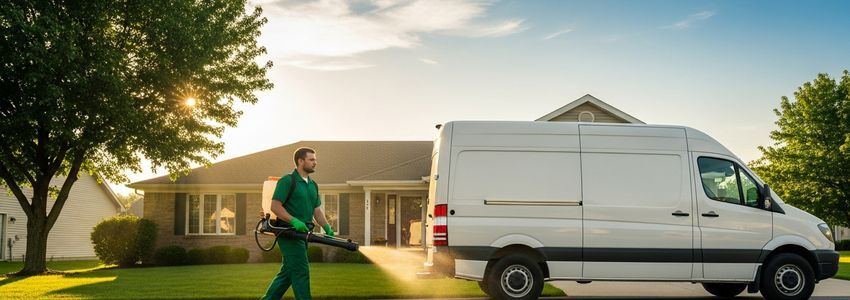
Pest control franchise business loans give aspiring and established franchise owners the capital needed to cover franchise fees, equipment, vehicles, and working capital - without depleting personal savings. Whether you are signing your first franchise agreement or expanding to multiple territories, the right financing partner can accelerate your growth in one of the most resilient service industries in the country.
In This Article
What Are Pest Control Franchise Business Loans?
Pest control franchise business loans are financing products specifically designed to help entrepreneurs acquire, launch, or expand a pest control franchise. These loans cover the unique capital requirements that come with franchising: initial franchise fees paid to the franchisor, vehicle purchases or leases, specialized treatment equipment, uniforms and branding materials, territory licensing costs, and the working capital needed to sustain operations through the early ramp-up period.
Unlike generic small business loans, pest control franchise financing is structured around the predictable revenue model of established brands such as Orkin, Terminix, Mosquito Joe, Truly Nolen, and dozens of other regional and national franchisors. Lenders who specialize in franchise financing understand franchise cash flow patterns and approval timelines, which typically makes the process faster and more favorable than trying to secure conventional bank financing on your own.
The pest control industry generates more than $23 billion in annual revenue in the United States, according to industry research. Residential and commercial demand for pest management services remains consistently high regardless of economic cycles, making pest control franchises a particularly attractive investment for entrepreneurs seeking a durable, cash-flow-positive business.
Key Benefits of Financing a Pest Control Franchise
Financing a pest control franchise rather than self-funding offers several strategic advantages that accelerate growth and reduce personal financial risk.
- Preserve working capital. Covering a $40,000-$80,000 franchise fee out of pocket can drain your cash reserves before you have even served your first customer. Financing spreads that cost across monthly payments, so you retain capital for payroll, supplies, and marketing.
- Launch faster. Access to capital means you can purchase equipment, wrap vehicles, hire technicians, and start marketing immediately rather than waiting months to accumulate enough savings.
- Scale to additional territories. Most pest control franchisors offer multi-territory rights at a discount. Financing lets you secure additional territories before a competitor enters your market.
- Build business credit. Responsible use of a business loan builds your company's credit profile, which improves access to better financing terms in the future.
- Take advantage of brand support. Many franchisors have preferred lenders or SBA-registered franchise registry status, which streamlines the loan approval process significantly.
Industry Insight: The U.S. pest control industry has grown consistently for more than two decades, driven by increased awareness of health risks associated with pests, climate changes that expand pest ranges, and homeowner demand for recurring service contracts. Franchise brands with established customer bases offer entrepreneurs a proven business model backed by national marketing, training, and operational support.
Ready to Launch Your Pest Control Franchise?
Get fast, flexible financing from the #1 business lender in the U.S. No obligation - apply in minutes.
Apply Now →How Pest Control Franchise Loans Work
Securing financing for a pest control franchise follows a structured process. Understanding each step helps you move quickly and avoid common mistakes that delay funding.
Step 1: Choose Your Franchise Brand
Before applying for financing, select the pest control franchise brand that fits your market, budget, and goals. Research the Franchise Disclosure Document (FDD), which every franchisor is legally required to provide. The FDD outlines total investment ranges, royalty structures, territory boundaries, and financial performance data from existing franchise owners. This document is essential for lenders who need to assess the viability of the franchise system.
Step 2: Determine Your Total Capital Needs
Add up every cost associated with launching your franchise: the initial franchise fee, vehicle purchase or down payment, equipment, insurance deposits, initial inventory of chemicals and supplies, signage, uniforms, marketing materials, and a working capital reserve to cover expenses for the first three to six months. Most pest control franchise loans cover 70-90% of this total, with the remainder coming from your own equity injection.
Step 3: Apply for Financing
Submit your loan application with supporting documents including your business plan, personal financial statements, tax returns, a copy of the FDD, and your signed (or conditional) franchise agreement. Lenders who specialize in franchise financing move faster because they are already familiar with major pest control brands and their financial profiles.
Step 4: Underwriting and Approval
The lender reviews your credit history, cash flow projections, personal financial strength, and the franchisor's track record. Established pest control franchises often benefit from streamlined underwriting because the brand's performance history reduces lender uncertainty. Approval timelines range from as few as 48 hours for alternative lenders to four to six weeks for SBA loans.
Step 5: Closing and Funding
Once approved, you sign the loan documents, pay the franchise fee, and begin buildout and equipment acquisition. Many lenders disburse funds directly to the franchisor or on a draw schedule based on startup milestones.
By the Numbers
Pest Control Franchise Industry - Key Statistics
$23B+
Annual U.S. pest control industry revenue
4.5%
Average annual industry growth rate
$75K
Typical total initial franchise investment (single territory)
85%+
Of pest control customers use recurring service contracts

Types of Financing Available for Pest Control Franchises
Pest control franchise owners can access several distinct financing products, each with different structures, costs, and ideal use cases.
SBA Loans
The Small Business Administration's 7(a) and 504 loan programs are among the most popular options for franchise financing. SBA loans offer longer repayment terms (up to 25 years for real estate, 10 years for equipment and working capital), competitive interest rates, and lower down payment requirements than conventional bank loans. The SBA maintains a Franchise Registry that includes thousands of franchise brands - if your chosen pest control franchisor is on the registry, the SBA underwriting process is significantly faster. The primary drawback is time: SBA loans can take four to eight weeks to close.
Equipment Financing
Pest control operations require specialized equipment: spray rigs, truck-mounted treatment systems, termite treatment machines, fumigation tents, monitoring devices, and personal protective equipment. Equipment financing allows you to purchase this equipment with the equipment itself serving as collateral, which generally results in favorable rates and terms. Many pest control franchisors have vendor relationships that simplify equipment financing approval.
Working Capital Loans
Even with strong franchise brand support, most pest control businesses take three to twelve months to generate enough revenue to cover all expenses. A working capital loan bridges this gap by covering payroll, chemical supplies, fuel, insurance premiums, and royalty payments during the ramp-up period. Working capital loans from alternative lenders can fund in as little as 24 to 72 hours, making them ideal for urgent operational needs.
Business Lines of Credit
A revolving business line of credit gives pest control franchise owners flexible access to capital that can be drawn, repaid, and drawn again as needed. Lines of credit are ideal for covering seasonal cash flow fluctuations (pest activity and therefore revenue tends to peak in warmer months), purchasing bulk chemical supplies at volume discounts, or handling unexpected equipment repair costs without disrupting operations.
Franchise-Specific Loans
Some lenders offer franchise-specific loan products that combine equipment financing, working capital, and franchise fee coverage into a single facility. These bundled loans simplify the financing process and ensure all startup costs are covered under one agreement with consistent terms.
Alternative Business Loans
Short-term business loans and revenue-based financing offer faster approval and funding than SBA loans, with qualification standards that focus on business cash flow rather than credit score alone. These products are particularly useful for existing franchise owners who need capital to expand to additional territories or replace equipment on short notice.
| Loan Type | Best For | Typical Terms | Speed |
|---|---|---|---|
| SBA 7(a) | Full franchise launch, multi-territory | Up to $5M, 10-25 years | 4-8 weeks |
| Equipment Financing | Spray rigs, trucks, treatment systems | Up to $500K, 2-7 years | 2-5 business days |
| Working Capital Loan | Payroll, supplies, ramp-up expenses | $25K-$500K, 3-36 months | 24-72 hours |
| Business Line of Credit | Seasonal fluctuations, bulk supplies | $10K-$500K, revolving | 1-5 business days |
| Alternative Loan | Expansion, urgent needs | $10K-$2M, 3-60 months | 24-72 hours |
Who Qualifies for Pest Control Franchise Loans
Lender requirements vary depending on the type of financing you pursue. Understanding the general qualification criteria helps you identify the best loan product for your situation.
SBA Loan Requirements
SBA loans have the most rigorous qualification standards but offer the best long-term value. Generally, you will need a personal credit score of 650 or higher, a net worth that demonstrates the ability to inject 10-20% equity into the project, two or more years of personal tax returns showing stable income, and a clean financial background without recent bankruptcies or significant collections. First-time franchise owners can qualify for SBA loans - lenders evaluate the strength of the franchise system as a mitigating factor for limited business operating history.
Alternative Lender Requirements
Alternative lenders and specialty franchise finance companies typically have more flexible qualification standards. Common requirements include a credit score of 600 or higher, six to twelve months of business operating history (though some franchise-specific lenders approve pre-revenue applicants with signed franchise agreements), and demonstrated personal financial stability. Revenue-based lenders focus primarily on monthly cash flow projections and may qualify applicants based on the franchise brand's track record rather than the individual owner's history.
Equipment Financing Requirements
Equipment financing is generally the easiest to qualify for because the equipment itself secures the loan. Most equipment financing approvals require a credit score of 580 or higher, a quote or invoice for the equipment being purchased, and basic business documentation. Startups and franchise owners with limited operating history can often qualify, particularly when the franchise brand is well-established.
Pro Tip: Even if you do not meet SBA loan requirements today, many pest control franchise owners start with alternative financing to launch, build 12-18 months of operating history, and then refinance into lower-cost SBA or conventional financing. This graduated approach is common and effective.
Typical Pest Control Franchise Startup Costs
Understanding the full cost of launching a pest control franchise is essential for sizing your loan correctly. Underfunding a franchise launch is one of the most common causes of early-stage struggles.
Initial Franchise Fee
Most pest control franchises charge an initial franchise fee ranging from $25,000 to $60,000 for a single territory. Multi-territory rights cost more upfront but typically come with volume discounts. This fee grants you the right to operate under the franchisor's brand, use their proprietary systems and software, and receive initial training and support.
Vehicles
A branded service vehicle is the single largest startup cost for most pest control franchises. A new service truck fully equipped and wrapped can cost between $35,000 and $80,000 depending on the vehicle type, equipment package, and branding requirements. Multi-technician operations require multiple vehicles. Many franchise owners use commercial vehicle financing or SBA loans to cover this cost.
Equipment and Chemical Inventory
Professional pest control requires spray equipment, termite treatment machines, monitoring traps, personal protective gear, and an initial inventory of EPA-registered pesticides, termiticides, and baiting systems. Equipment and initial chemical inventory typically costs between $10,000 and $25,000 depending on the service mix offered.
Insurance
Pest control franchises require general liability insurance, commercial vehicle insurance, workers' compensation (if hiring technicians), and in many states, a pesticide applicator bond. Annual insurance premiums typically range from $5,000 to $15,000 depending on territory size, number of employees, and services offered. Most franchisors require minimum coverage levels as a condition of the franchise agreement.
Working Capital Reserve
Industry best practices recommend maintaining a working capital reserve equal to three to six months of projected operating expenses. For a single-territory pest control franchise, this typically means having $20,000 to $50,000 available for payroll, royalties, chemical restocking, fuel, and unexpected costs during the ramp-up phase before recurring revenue covers all expenses.
How Crestmont Capital Helps Pest Control Franchise Owners
Crestmont Capital is a direct lender rated number one in the country for small business financing. We specialize in helping franchise owners access the capital they need to launch, grow, and dominate their markets - without the bureaucratic delays of traditional bank lending.
Our small business loan programs are designed for speed and flexibility. We understand that pest control franchise opportunities do not wait - territory rights can disappear, franchise fees are time-sensitive, and the best franchise brands have waiting lists. Our team structures financing that matches the real timeline of launching a pest control franchise, not the theoretical timeline that banks prefer.
We offer a range of products suited to pest control franchise owners at every stage:
- Startup franchise loans for first-time franchise owners who need to cover the franchise fee, vehicle, and initial operating capital
- Equipment financing for spray trucks, treatment systems, and specialized pest control machinery
- Working capital loans for operational expenses during the ramp-up phase and seasonal revenue gaps
- Expansion financing for existing franchise owners adding territories, vehicles, or technicians
- Business lines of credit for ongoing flexibility and bulk chemical purchasing
Our advisors have worked with franchise owners across dozens of pest control brands and understand the unique financial structure of service franchises with recurring revenue models. We move quickly, communicate clearly, and structure financing that works for you - not against you.
To compare your options and learn how much you can qualify for, explore our complete franchise loan guide or apply directly through our secure online application.
Get Funded and Start Serving Your Territory
Fast pest control franchise financing from the #1 business lender in the U.S. Apply in minutes - decisions in hours.
Apply Now →Real-World Scenarios: How Pest Control Franchise Owners Use Financing
Understanding how other franchise owners have used business financing helps illustrate the practical applications of pest control franchise loans.
Scenario 1: First-Time Franchisee Launching a Single Territory
Marcus is a former pest control technician who wants to own his own Mosquito Joe franchise. The total startup package for his territory is $68,000, which includes a $30,000 franchise fee, $28,000 for a wrapped service van, and $10,000 for equipment and initial supplies. Marcus has $15,000 in personal savings and uses an SBA 7(a) loan to finance the remaining $53,000 at a competitive rate over seven years. The predictable monthly payment fits within his projected first-year cash flow, and he begins generating revenue within 30 days of launch.
Scenario 2: Existing Owner Expanding to a Second Territory
Linda operates a successful Truly Nolen franchise in a suburban market. Her first territory is generating steady recurring revenue, and she has the opportunity to acquire an adjacent territory before a competitor does. She needs $55,000 for the additional franchise fee and a second vehicle within 30 days. Linda uses a working capital loan from Crestmont Capital to fund the expansion quickly, then refinances into an SBA loan once the new territory is operational and generating documented revenue.
Scenario 3: Seasonal Cash Flow Management
Roberto operates a multi-territory Orkin franchise in the Southeast. Pest activity and revenue peak significantly in the spring and summer months, but winter months bring slower customer acquisition. Rather than cutting staff during the off-season and rebuilding in the spring, Roberto uses a business line of credit to maintain his technician team year-round. He draws on the line October through February and repays it from peak season revenue, maintaining operational continuity and avoiding the significant cost and time of annual rehiring.
Scenario 4: Equipment Upgrade for a Growing Multi-Territory Operation
Sarah owns three pest control franchise territories and her fleet of service trucks is aging. Replacing all three vehicles simultaneously requires $120,000 she does not have liquid. She uses commercial vehicle and equipment financing to replace the trucks over 18 months, preserving her operating cash for chemical inventory, payroll, and the marketing push to grow her newest territory.
Scenario 5: Emergency Equipment Replacement
A critical termite treatment machine in David's pest control operation fails during the busiest quarter of the year. A replacement unit costs $18,000 and he cannot serve termite clients without it. A fast same-day business loan from Crestmont Capital funds the replacement within 24 hours, preventing a multi-week service disruption that would have cost significantly more in lost revenue and damaged customer relationships.
Scenario 6: Pre-Revenue Startup Financing
James has signed his franchise agreement with a leading pest control brand but has not yet served his first customer. He has the franchise fee covered but needs $45,000 for a truck, equipment, insurance, and working capital to operate for the first 90 days. A franchise-specific lender approves James based on the strength of the franchise system and his personal financial history, disbursing funds within five business days of approval.
Frequently Asked Questions
Can I get a pest control franchise loan with no business history?
Yes. Many franchise lenders, including SBA-approved lenders and specialty franchise finance companies, approve first-time franchise owners with no prior business operating history. These lenders evaluate the strength of the franchise system, your personal financial history, industry experience, and the viability of your business plan rather than requiring established business revenue. Having a signed franchise agreement in hand significantly strengthens your application.
What credit score do I need for a pest control franchise loan?
Requirements vary by lender and loan type. SBA loans typically require a minimum personal credit score of 650, with scores of 680 or higher improving your approval odds and interest rates. Equipment financing lenders often approve applicants with scores as low as 580. Alternative lenders and working capital loan providers may work with scores of 600 or higher, particularly when the franchise brand is well-established. Even if your credit is imperfect, there are franchise financing options worth exploring.
How much does it cost to start a pest control franchise?
Total startup costs for a pest control franchise typically range from $50,000 to $150,000 for a single territory, depending on the brand, territory size, and vehicle and equipment requirements. The initial franchise fee alone ranges from $25,000 to $60,000. Add vehicle costs ($35,000-$80,000), equipment and chemical inventory ($10,000-$25,000), insurance ($5,000-$15,000 annually), and a working capital reserve ($20,000-$50,000), and you have a comprehensive picture of total startup investment. Review the FDD for brand-specific estimates.
Are pest control franchise loans tax deductible?
Questions about tax deductions should be directed to a qualified CPA or tax advisor who is familiar with your specific business and financial situation. Tax treatment of business loan interest and expenses varies based on multiple factors including business structure, loan purpose, and applicable tax laws. Crestmont Capital does not provide tax advice.
How long does it take to get approved for a pest control franchise loan?
Approval timelines vary significantly by lender type. Alternative lenders and working capital loan providers can approve applications in as little as 24 to 72 hours and fund within days. Equipment financing typically takes 2 to 5 business days. SBA loans require 4 to 8 weeks on average from application to funding, though lenders who participate in the SBA Franchise Registry process can sometimes move faster. The fastest way to accelerate approval is to have all your documents ready before applying: tax returns, bank statements, the FDD, and your franchise agreement.
What is an FDD and why do lenders ask for it?
The Franchise Disclosure Document is a legal document that franchisors are required by the Federal Trade Commission to provide to prospective franchisees before signing a franchise agreement. The FDD includes 23 items covering the franchisor's history, litigation, financial performance of existing franchise locations, fees, territory rights, and training support. Lenders use the FDD to assess the viability and risk profile of the franchise system as part of their underwriting process. A well-established brand with strong FDD financials can improve your loan approval odds and terms.
Can I use a personal loan to fund a pest control franchise?
While technically possible, personal loans are generally not recommended for franchise funding. Personal loans carry higher interest rates than business financing, do not build business credit, and may violate some franchise agreements that require business-entity ownership structures. Business loans structured specifically for franchise use provide better terms, protect your personal credit profile from large debt utilization impacts, and help you build the business credit history that will benefit your franchise as it grows.
Do pest control franchisors offer any financing assistance?
Many pest control franchisors offer some form of financing support, though the level of assistance varies significantly by brand. Common franchisor financing programs include vendor financing for equipment purchased through franchisor-approved suppliers, referrals to preferred lenders who have approved the franchise system in advance, in-house financing for a portion of the franchise fee (usually 20-40%), and deferred royalty programs that reduce royalty payments for the first 6-12 months. Review the FDD for Item 10, which discloses all financing offered or arranged by the franchisor. Even with franchisor financing, most owners still need additional business financing to cover all startup costs.
What documents do I need to apply for a pest control franchise loan?
Document requirements vary by lender but typically include: personal tax returns for the past 2-3 years, personal bank statements for the past 3-6 months, a completed personal financial statement, business bank statements if you have existing business income, the Franchise Disclosure Document (FDD), your signed or conditional franchise agreement, a business plan or executive summary, equipment quotes or invoices, and proof of identity. Having these documents prepared before applying significantly accelerates the approval process. Some alternative lenders have simplified applications that require far fewer documents for smaller loan amounts.
Is it better to lease or buy a pest control service truck?
The lease-vs-buy decision depends on your capital situation, planned tenure with the franchise, and vehicle usage intensity. Leasing offers lower monthly payments and the ability to upgrade to newer vehicles every few years, which is beneficial for franchise owners who want to maintain a professional, modern fleet image without large capital outlays. Buying builds equity in the vehicle and eliminates payment obligations after the loan is paid off, which benefits long-term franchise owners. Most pest control franchise owners who plan to operate for 5 or more years benefit from purchasing service vehicles through commercial auto or equipment financing.
Can I get financing for a resale pest control franchise?
Yes. Purchasing an existing pest control franchise territory from a current owner (called a franchise resale or transfer) is a common way to enter the industry with an established customer base and immediate revenue. Financing a resale typically involves a business acquisition loan or SBA 7(a) loan that covers the purchase price and any additional working capital needed. Lenders evaluate resale purchases based on the existing business's documented revenue and cash flow, which often results in favorable terms since the business risk is lower than a startup. The franchisor must approve the transfer and will generally require the new owner to meet their qualification standards.
What are the biggest financial mistakes new pest control franchise owners make?
The most common financial mistakes include undercapitalizing the launch (not reserving enough working capital for the ramp-up period), underestimating vehicle and equipment costs, failing to account for seasonal revenue fluctuations, overextending to multiple territories before the first territory is profitable, and not building a business credit profile early. Working with a lender who understands franchise businesses helps avoid these pitfalls because experienced franchise lenders often identify capital gaps that first-time owners overlook.
How do royalties affect my loan qualification?
Royalty payments are a fixed operating expense that reduce net cash flow available for debt service. Lenders include royalties in their expense calculations when determining how much debt your projected revenue can support. Most pest control franchisors charge royalties of 5-10% of gross revenue. When projecting cash flow for loan qualification, use conservative revenue estimates and include all recurring expenses: royalties, marketing fund contributions, insurance, vehicle payments, chemical costs, payroll, and fuel. A realistic projection demonstrates financial sophistication to lenders and reduces the risk of cash flow problems after launch.
Can I finance a pest control franchise if I already have business debt?
Having existing business debt does not automatically disqualify you from franchise financing. Lenders evaluate your overall debt service coverage ratio, which measures how well your income covers total debt obligations. If your existing business is generating strong cash flow that comfortably covers its existing debt, many lenders will approve additional financing for a franchise expansion. The key is demonstrating that total debt service - including the new franchise loan payments - remains within a manageable percentage of your income. If debt levels are high, working with a lender to structure the right amount of franchise financing may be more appropriate than a full-scale launch.
What is the difference between a pest control franchise and an independent pest control business?
A pest control franchise provides access to a recognized brand name, proven operating systems, national marketing support, proprietary software, ongoing training, and a network of fellow franchise owners. These advantages come with ongoing royalty obligations and adherence to franchisor standards. An independent pest control business gives you complete ownership and control with no royalty obligations, but requires building your brand, systems, and customer base from scratch. From a financing perspective, franchises often qualify for better terms because lenders can evaluate the performance history of the franchise system - something that does not exist for a startup independent business.
How to Get Started
Complete our quick application at offers.crestmontcapital.com/apply-now - takes just a few minutes. Have your franchise agreement or FDD ready if available.
A Crestmont Capital advisor will review your franchise brand, capital needs, and financial profile to match you with the right financing product and amount.
Receive your funds, complete your equipment purchases, and start serving customers in your territory - often within days of approval.
Conclusion
Pest control franchise business loans are the financial foundation that allows ambitious entrepreneurs to enter one of the most stable and growing service industries in the country. Whether you are launching your first territory with a national brand or expanding a proven operation to capture additional market share, the right financing partner makes the difference between moving quickly and missing opportunities.
The pest control industry's recurring revenue model, essential nature of services, and strong consumer demand make it an ideal candidate for franchise financing. Lenders who understand the franchise model recognize that established brands reduce the startup risk that typically makes lending to new businesses challenging.
Crestmont Capital has helped thousands of franchise owners across the country access fast, flexible business financing tailored to their specific situations. From startup franchise loans to equipment financing to working capital lines, we structure deals that work for pest control franchise owners - not generic loan products that do not account for the realities of franchise operations.
Explore your options today. Apply online in minutes, and one of our franchise financing specialists will contact you to discuss your specific needs and find the best solution for your pest control franchise.
Disclaimer: The information provided in this article is for general educational purposes only and is not financial, legal, or tax advice. Funding terms, qualifications, and product availability may vary and are subject to change without notice. Crestmont Capital does not guarantee approval, rates, or specific outcomes. For personalized information about your business funding options, contact our team directly.