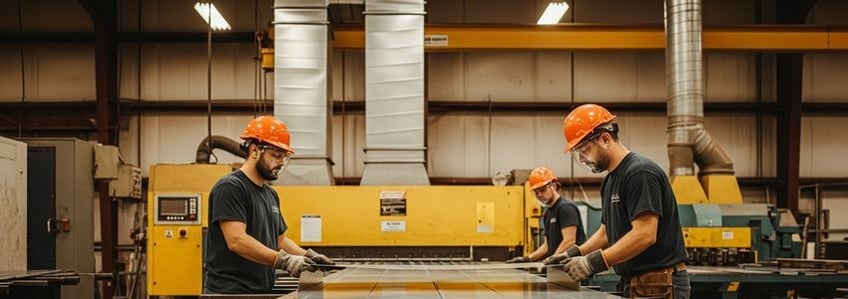
Equipment Financing for Remote and Hybrid Workforces

Equipment Financing for Remote and Hybrid Workforces

Equipment Financing for Remote and Hybrid Workforces

Remote and hybrid work are no longer temporary solutions. For many businesses, they are permanent operating models that demand a new approach to technology, budgeting, and growth. Laptops, secure servers, networking hardware, collaboration tools, and ergonomic office equipment are now essential infrastructure. The challenge is paying for it all without overextending cash reserves.

This is where equipment financing becomes a strategic advantage. Instead of tying up working capital in large upfront purchases, companies can spread costs over time while equipping teams to stay productive, secure, and competitive.

Below is a complete, practical guide to equipment financing for remote and hybrid workforces, including how it works, who it is best for, and how Crestmont Capital helps businesses fund growth without compromising cash flow.


Understanding equipment financing in today’s remote-first economy

Equipment financing is a business funding solution that allows companies to acquire essential equipment while paying for it over time. The equipment itself typically serves as collateral, which helps keep approval requirements and costs more accessible than many other funding options.

For remote and hybrid businesses, equipment financing often covers:

  • Laptops and desktops

  • Servers and cloud-related hardware

  • Cybersecurity infrastructure

  • Video conferencing and collaboration tools

  • Office furniture for distributed teams

  • Specialized equipment for remote technical or creative roles

As remote work expands, businesses face mounting pressure to standardize equipment, maintain security, and support productivity regardless of employee location. According to data from the U.S. Census Bureau, remote work adoption remains significantly higher than pre-pandemic levels, especially in professional services and technology sectors (https://www.census.gov).

Financing allows companies to meet these demands immediately rather than delaying upgrades due to budget constraints.


Why equipment financing makes sense for remote and hybrid teams

Funding distributed workforces presents unique financial challenges. Equipment financing directly addresses them with flexibility and scalability.

Key benefits of equipment financing

  • Preserves cash flow by avoiding large upfront purchases

  • Speeds deployment of critical technology to remote employees

  • Scales with growth as teams expand or upgrade equipment

  • Aligns costs with revenue through predictable monthly payments

  • Improves tax efficiency in some cases through depreciation or deductions

  • Reduces operational risk by keeping hardware current and secure

For businesses operating in competitive markets, these advantages can directly impact productivity, employee satisfaction, and long-term profitability.


How equipment financing works step by step

Equipment financing is straightforward, but understanding the process helps businesses make confident decisions.

  1. Identify equipment needs
    Businesses determine what equipment is required to support remote or hybrid operations, including quantities and specifications.

  2. Apply for financing
    Basic business details are submitted, such as time in business, revenue, and equipment type.

  3. Approval and terms review
    Approved applicants receive financing offers outlining payment terms, rates, and any upfront costs.

  4. Equipment purchase or vendor payment
    Funds are typically paid directly to the equipment vendor or supplier.

  5. Repayment over time
    Fixed monthly payments are made over an agreed term while the business uses the equipment.

The equipment itself often secures the financing, which reduces lender risk and makes approvals faster than unsecured funding options.


Common types of equipment financing for distributed workforces

Not all equipment financing solutions are structured the same. Choosing the right type depends on how long the equipment will be used and how your team operates.

Equipment loans

Ownership transfers to the business, and payments are made until the loan is fully paid off. This works well for long-term assets like servers or specialized machinery.

Equipment leases

Leases allow businesses to use equipment for a fixed period, often with upgrade options. This is ideal for technology that becomes outdated quickly.

Technology-specific financing

Some financing programs focus on IT hardware, software bundles, or managed service solutions designed for modern remote operations.

Vendor-direct financing

Vendors partner with financing providers to offer bundled purchase and financing options, simplifying procurement.

Each option has advantages depending on depreciation schedules, upgrade frequency, and cash flow strategy.


Who benefits most from equipment financing

Equipment financing is especially effective for businesses navigating rapid operational changes.

It is a strong fit for:

  • Growing companies hiring distributed teams

  • Startups preserving capital for marketing and expansion

  • Established businesses upgrading outdated technology

  • Companies transitioning from in-office to hybrid models

  • Organizations managing seasonal or project-based staff

Industries commonly using equipment financing for remote work include technology, professional services, healthcare administration, logistics, creative agencies, and consulting firms.


Equipment financing vs other funding options

Business owners often ask how equipment financing compares to alternatives such as credit cards, lines of credit, or term loans.

Equipment financing vs business credit cards

Credit cards offer flexibility but typically carry higher interest rates and lower limits. Equipment financing provides structured terms designed specifically for large purchases.

Equipment financing vs lines of credit

Lines of credit are useful for ongoing expenses, but using them for major equipment purchases can reduce available working capital when it is needed most.

Equipment financing vs term loans

Term loans may require stronger financials and do not always tie funding directly to asset value. Equipment financing is asset-backed, which can simplify approvals.

For businesses focused on predictable budgeting and asset-based funding, equipment financing is often the most efficient solution.


How Crestmont Capital supports equipment financing for modern workforces

Crestmont Capital specializes in helping businesses access flexible funding solutions that support growth without unnecessary friction. Their equipment financing programs are designed to meet the demands of modern operations, including remote and hybrid teams.

Through Crestmont Capital’s equipment financing solutions (https://www.crestmontcapital.com/equipment-financing) businesses can fund essential tools quickly while maintaining liquidity.

Additional Crestmont Capital resources include:

By combining industry insight with flexible underwriting, Crestmont Capital helps businesses fund infrastructure that supports long-term success.


Real-world examples of equipment financing in action

  1. Tech startup scaling remote hires
    A software company used equipment financing to provide standardized laptops and security hardware to new remote developers across three states.

  2. Professional services firm moving hybrid
    A consulting firm financed conference room upgrades and remote collaboration tools to support hybrid client meetings.

  3. Healthcare administration team upgrading systems
    A healthcare services provider financed secure servers and data storage to support HIPAA-compliant remote access.

  4. Creative agency expanding distributed talent
    A digital agency financed high-performance design equipment for remote creatives without impacting cash flow.

  5. Logistics firm modernizing operations
    A logistics company financed fleet tracking and remote monitoring technology for a distributed management team.

These scenarios highlight how equipment financing supports flexibility without sacrificing financial stability.


Frequently asked questions about equipment financing

What types of equipment qualify for financing?

Most business-critical equipment qualifies, including computers, servers, software bundles, furniture, and specialized tools used for operations.

Can startups qualify for equipment financing?

Many startups qualify depending on revenue, credit profile, and the type of equipment being financed.

Does the equipment act as collateral?

In most cases, yes. The financed equipment typically secures the funding.

How long are equipment financing terms?

Terms commonly range from 12 to 60 months, depending on equipment type and financing structure.

Is equipment financing tax deductible?

In some cases, payments or depreciation may offer tax advantages. Businesses should consult a tax professional for guidance.

How fast can funding be approved?

Approvals can often occur within days, allowing businesses to deploy equipment quickly.


Next steps for funding your remote or hybrid workforce

If your business is investing in distributed teams, equipment financing can provide the flexibility needed to move forward confidently. The right solution allows you to invest in productivity, security, and growth without placing unnecessary strain on your cash reserves.

Exploring options early helps align funding with operational goals and future expansion plans.


Conclusion

As remote and hybrid work models continue to shape the future of business, access to reliable technology is no longer optional. Equipment financing provides a practical, scalable way to equip teams, protect cash flow, and support long-term growth. With the right financing partner, businesses can invest in infrastructure today while staying financially agile for tomorrow.


Disclaimer:
The information provided in this article is for general educational purposes only and is not financial, legal, or tax advice. Funding terms, qualifications, and product availability may vary and are subject to change without notice. Crestmont Capital does not guarantee approval, rates, or specific outcomes. For personalized information about your business funding options, contact our team directly.

Using a Loan to Bring Outsourced Work In-House

Using a Loan to Bring Outsourced Work In-House

Using a Loan to Bring Outsourced Work In-House

Using a loan to bring outsourced work in-house has become a strategic move for businesses looking to reduce long-term costs, regain control over quality, and build internal expertise. As labor markets tighten and outsourcing fees continue to rise, many owners are realizing that investing in their own people, equipment, and systems can deliver stronger margins and more predictable growth.

Rather than paying ongoing vendor markups, companies can use financing to cover the upfront cost of hiring, training, and infrastructure, then benefit from lower per-unit costs over time. This approach is especially common in manufacturing, e-commerce, marketing, logistics, and professional services, where outsourced functions often represent a significant portion of monthly operating expenses.

This guide walks through exactly how using a loan to bring outsourced work in-house works, the benefits and risks to consider, and how businesses can structure financing the smart way.


What it means to bring outsourced work in-house

Bringing outsourced work in-house means transitioning tasks or operations currently handled by third-party vendors back under your company’s direct control. This can include hiring full-time employees, purchasing equipment, implementing software, or building internal teams to replace external providers.

Commonly insourced functions include:

  • Manufacturing or assembly

  • Marketing and advertising management

  • Customer service and call centers

  • Accounting and bookkeeping

  • IT support and software development

  • Warehousing and fulfillment

The challenge for many businesses is that insourcing often requires a significant upfront investment. Payroll, onboarding, equipment, and technology costs hit immediately, while the savings from eliminating vendors accrue over time. That gap is where strategic financing comes into play.


Why businesses use loans to bring work in-house

Using a loan to bring outsourced work in-house allows companies to act on long-term cost savings without straining short-term cash flow. Instead of waiting years to accumulate capital, a loan spreads the cost over time while benefits begin immediately.

Key benefits include:

  • Lower long-term costs by eliminating vendor margins

  • Improved quality control through direct oversight

  • Faster turnaround times with internal teams

  • Greater operational flexibility to adapt workflows

  • Retention of institutional knowledge inside the business

  • More predictable budgeting versus variable vendor pricing

According to data highlighted by the U.S. Small Business Administration, labor and overhead efficiency play a major role in sustainable business growth, particularly for companies scaling operations. External research from Reuters and Forbes has also pointed to reshoring and insourcing trends accelerating as businesses seek greater resilience and margin stability.


How using a loan to bring outsourced work in-house works

The process typically follows a structured path that helps ensure the move is financially sound.

Step 1: Analyze current outsourcing costs

Start by calculating your true monthly and annual costs for outsourced services. Include base fees, rush charges, management time, and any quality-related losses.

Step 2: Estimate in-house operating expenses

Project the cost of salaries, benefits, payroll taxes, equipment, software, workspace, and ongoing training.

Step 3: Identify the upfront investment gap

Most businesses find that while in-house operations are cheaper long term, the first 3–12 months require capital for setup.

Step 4: Structure a loan around the transition

A properly sized loan can cover hiring, equipment, and ramp-up costs while allowing vendor contracts to be phased out.

Step 5: Measure ROI and adjust

Track cost savings, productivity, and quality metrics to ensure the transition delivers the expected return.

Using a loan to bring outsourced work in-house is most effective when financing terms align with the timeline for savings to materialize.


Types of loans used for insourcing strategies

Different loan structures support different insourcing needs. Selecting the right option depends on the nature of the work and the assets involved.

Term loans

Often used for equipment purchases, build-outs, or hiring costs. Predictable payments make them ideal for long-term transitions.

Working capital loans

Useful for covering payroll, training, and short-term cash flow during the ramp-up period.

Equipment financing

Designed specifically for machinery, vehicles, or technology needed to replace outsourced production.

Business lines of credit

Provide flexibility when the transition timeline is uncertain or phased.

Each option can be part of a broader strategy when using a loan to bring outsourced work in-house.


Who this strategy is best suited for

This approach tends to work best for businesses that:

  • Have consistent, ongoing outsourced expenses

  • Can clearly quantify vendor costs and margins

  • Have stable or growing revenue

  • Need greater control over quality or timelines

  • Operate in industries with rising outsourcing rates

Manufacturers, e-commerce brands, agencies, logistics companies, and healthcare-adjacent services often see the strongest returns.

Data from the U.S. Census Bureau shows that labor efficiency and in-house production capability correlate strongly with higher productivity in small and mid-sized firms, reinforcing why this strategy has gained traction.


Comparing insourcing with other cost-reduction options

Using a loan to bring outsourced work in-house is not the only way to reduce expenses, but it offers distinct advantages.

Outsourcing renegotiation

Lower effort, but savings are often limited and temporary.

Automation and software

Effective for certain tasks, but may not replace human expertise entirely.

Hiring contractors directly

Reduces agency fees but still lacks full control and loyalty.

Insourcing with financing

Highest upfront complexity, but often delivers the strongest long-term margin improvement.

For businesses focused on scalability and resilience, insourcing supported by financing often provides the most durable outcome.


How Crestmont Capital helps businesses bring work in-house

Crestmont Capital works with businesses nationwide to structure funding strategies that support operational growth, including insourcing initiatives.

Depending on your needs, Crestmont Capital can help align financing with your transition timeline through solutions such as:

  • Working capital solutions to support hiring and payroll

  • Term loans for equipment and infrastructure investments

  • Flexible funding structures tailored to cash flow

Learn more about available options on Crestmont Capital’s website:

Rather than treating financing as a short-term patch, Crestmont Capital focuses on long-term business sustainability and ROI.


Real-world scenarios where insourcing with a loan makes sense

Manufacturing company reducing per-unit costs

A regional manufacturer replaces overseas assembly with in-house production, using equipment financing to purchase machinery. Monthly loan payments are offset by lower per-unit costs within six months.

E-commerce brand internalizing fulfillment

An online retailer brings warehousing and packing in-house to reduce third-party logistics fees and improve shipping speed.

Marketing agency hiring internal talent

An agency replaces outsourced design and media buying with salaried roles, funded by a working capital loan, improving client retention and margins.

Healthcare service provider improving compliance

Insourcing billing and administrative functions reduces errors and regulatory risk while lowering long-term costs.

Software company building an internal dev team

Instead of relying on contractors, a SaaS company hires full-time engineers, protecting intellectual property and accelerating product development.

Each example highlights how using a loan to bring outsourced work in-house can unlock strategic advantages beyond cost savings.


Risks and considerations to address

While powerful, this strategy requires careful planning.

  • Underestimating ramp-up time

  • Hiring challenges or turnover

  • Overextending on debt without clear ROI

  • Operational complexity during transition

Mitigating these risks involves conservative forecasting, phased transitions, and aligning loan terms with realistic timelines.


Frequently asked questions

How do I know if insourcing will actually save money?

Compare total vendor costs against fully loaded in-house expenses over at least 12–24 months. The savings should exceed loan costs.

Can a loan cover hiring and training expenses?

Yes. Many working capital and term loans are used specifically for payroll, onboarding, and training during transitions.

Is using a loan to bring outsourced work in-house risky?

Like any investment, it carries risk, but when vendor costs are stable and recurring, the ROI is often measurable and predictable.

How long does it take to see returns?

Many businesses see positive cash flow impact within 3–9 months, depending on the function and industry.

Will lenders care how the loan is used?

Most lenders focus on business health and repayment ability, not micromanaging operational decisions.

Is this strategy better for small or large businesses?

Both can benefit, but small and mid-sized businesses often see faster ROI due to lower complexity.


Next steps for businesses considering insourcing

Start by auditing your outsourced expenses and identifying which functions offer the clearest cost and quality gains if brought in-house. Build a realistic financial model, then explore financing options that match your timeline.

Speaking with a funding partner experienced in operational transitions can help avoid missteps and ensure the loan supports growth rather than strain.


Conclusion: making insourcing work with the right financing

For businesses facing rising vendor costs and reduced flexibility, using a loan to bring outsourced work in-house can be a smart, growth-oriented decision. When executed with clear financial modeling and properly structured funding, insourcing not only reduces expenses but strengthens long-term operational control.

By aligning financing with realistic timelines and measurable ROI, companies can turn what feels like a risky move into a strategic advantage that supports sustainable growth.


Disclaimer:
The information provided in this article is for general educational purposes only and is not financial, legal, or tax advice. Funding terms, qualifications, and product availability may vary and are subject to change without notice. Crestmont Capital does not guarantee approval, rates, or specific outcomes. For personalized information about your business funding options, contact our team directly.

Business Loan vs Line of Credit: How to Choose the Right Option for Expansion Planning

Business Loan vs Line of Credit: How to Choose the Right Option for Expansion Planning

Business Loan vs Line of Credit: How to Choose the Right Option for Expansion Planning

Expansion is an exciting stage for any business, but it often requires outside capital to execute well. One of the most common questions business owners face during this phase is the business loan vs line of credit decision. Both tools can fund growth, yet they function very differently and support distinct expansion strategies.

Using Equipment Financing to Open a New Department

Using Equipment Financing to Open a New Department

Using Equipment Financing to Open a New Department

Opening a new department is one of the most powerful ways to scale a business, increase revenue, and stay competitive. Whether you are expanding clinical services, adding a manufacturing line, launching a repair division, or introducing a new revenue stream altogether, the upfront cost of equipment can be substantial. This is where equipment financing becomes a strategic tool rather than a last resort.

Business Credit Lines for Managing Multiple Projects: A Smarter Way to Stay Flexible and Fund Growth

Business Credit Lines for Managing Multiple Projects: A Smarter Way to Stay Flexible and Fund Growth

Business Credit Lines for Managing Multiple Projects: A Smarter Way to Stay Flexible and Fund Growth

Managing multiple projects at once is a sign of growth—but it also introduces financial complexity. Payroll cycles don’t always align with client payments. Materials may need to be purchased before invoices go out. And opportunities can arise unexpectedly, requiring fast access to capital. This is where business credit lines for managing multiple projects become a critical financial tool, giving business owners flexibility, control, and confidence as they scale.

Why Growing Teams Turn to Working Capital Loans

Why Growing Teams Turn to Working Capital Loans

Why Growing Teams Turn to Working Capital Loans

In today’s competitive business environment, fast-growing teams need reliable access to capital to seize opportunities, manage cash flow, and sustain expansion. Working capital loans are one of the most effective tools for businesses at every stage of growth. From bridging seasonal revenue gaps to funding strategic hires, these financing solutions provide the agility and financial stability that ambitious companies require to thrive.

Using a Small Business Loan for Showroom Improvements

Using a Small Business Loan for Showroom Improvements

Using a Small Business Loan for Showroom Improvements

A physical showroom is more than a place to display products. It is often the first real-world interaction customers have with your brand, your quality standards, and your professionalism. For many businesses, the challenge is not recognizing the value of an upgraded showroom, but finding a practical way to fund it without draining cash flow. This is where a small business loan for showroom improvements can play a critical role in helping owners modernize, expand, and compete more effectively.

Financing Tech Upgrades with Equipment Loans

Financing Tech Upgrades with Equipment Loans

Financing Tech Upgrades with Equipment Loans

Technology is no longer a “nice to have.” For most businesses, it is core infrastructure that directly affects efficiency, security, growth, and competitiveness. Whether you are upgrading servers, replacing outdated point-of-sale systems, investing in cybersecurity tools, or modernizing manufacturing software, the cost of staying current can be significant.

Leveraging a Business Line of Credit for Cash Flow While Waiting on Big Invoices

Leveraging a Business Line of Credit for Cash Flow While Waiting on Big Invoices

Leveraging a Business Line of Credit for Cash Flow While Waiting on Big Invoices

Waiting on large invoices to get paid is one of the most common—and most stressful—cash flow challenges businesses face. Payroll still has to run. Inventory still has to be ordered. Marketing momentum can’t stop just because a client’s payment terms stretch to 30, 60, or even 90 days. This is exactly where a business line of credit for cash flow becomes a strategic tool rather than a last resort.

How a Seasonal Business Loan Helps You Prepare for a Busy Season

How a Seasonal Business Loan Helps You Prepare for a Busy Season

How a Seasonal Business Loan Helps You Prepare for a Busy Season

Busy seasons are where many businesses make the bulk of their annual revenue—but they are also where cash flow pressure is highest. A seasonal business loan gives you access to capital before demand spikes, allowing you to stock inventory, hire staff, and operate at full capacity when it matters most. Instead of scrambling for funds mid-season, proactive financing lets you plan strategically and protect profitability.

Equipment Loans for Scaling Subscription Delivery Services

Equipment Loans for Scaling Subscription Delivery Services

Equipment Loans for Scaling Subscription Delivery Services

Subscription delivery services have become one of the fastest-growing business models in the U.S., spanning industries from meal kits and pet products to beauty boxes and specialty foods. Predictable recurring revenue creates stability, but growth brings a new set of challenges. As order volume increases, so does the need for vehicles, packaging machinery, refrigeration, labeling systems, and warehouse equipment. For many operators, equipment loans are the most practical way to scale without draining cash reserves or slowing momentum.

This guide explains how equipment loans work for subscription delivery businesses, why they are often superior to other financing options, and how Crestmont Capital helps companies fund growth efficiently and responsibly.


What equipment loans are and why subscription delivery businesses rely on them

Equipment loans are a form of business financing specifically designed to help companies purchase or upgrade physical assets. Instead of paying upfront for expensive equipment, the business spreads the cost over time while using the equipment to generate revenue.

For subscription delivery services, equipment often sits at the center of operations. Delivery vans, box assembly machinery, cold storage units, pallet jacks, and automated sorting systems are not optional upgrades. They are foundational infrastructure that directly affects speed, accuracy, and customer retention.

Unlike general-purpose working capital, equipment loans are asset-backed. The equipment itself serves as collateral, which typically leads to better terms, longer repayment periods, and more predictable costs.


The benefits of equipment loans for subscription delivery companies

Scaling a subscription business requires balancing growth with financial discipline. Equipment loans support that balance in several important ways.

  • Preserve cash flow: Large equipment purchases can strain operating capital. Financing allows you to maintain liquidity for payroll, inventory, and marketing.

  • Predictable monthly payments: Fixed repayment schedules make budgeting easier, which is critical for businesses built on recurring revenue.

  • Faster operational scaling: Access equipment immediately rather than waiting to accumulate savings.

  • Ownership over time: Unlike leasing, most equipment loans result in full ownership once the loan is paid off.

  • Potential tax advantages: In some cases, equipment purchases may qualify for accelerated depreciation under current tax laws (consult your tax advisor).

  • Stronger operational efficiency: Modern equipment often reduces labor costs, minimizes errors, and improves delivery speed.

For subscription delivery operators, these benefits translate directly into improved margins and better customer experiences.


How equipment loans work step by step

Understanding the mechanics of equipment loans helps business owners evaluate whether this type of financing fits their growth strategy.

Step 1: Identify the equipment needed

Businesses start by defining what assets are required. This may include delivery vehicles, warehouse automation systems, cold storage equipment, or packaging machinery.

Step 2: Estimate total equipment cost

Quotes or invoices from vendors are used to determine the financing amount. Some loans can also cover installation, software, or training costs.

Step 3: Apply with a lender

The lender reviews business financials, time in operation, credit profile, and the equipment itself. Because the loan is asset-backed, approval is often easier than unsecured financing.

Step 4: Loan approval and funding

Once approved, funds are disbursed directly to the equipment vendor or seller.

Step 5: Repayment while using the equipment

The business begins using the equipment immediately while making fixed monthly payments over the loan term.

This structure aligns repayment with revenue generation, which is ideal for subscription-based models.


Common types of equipment financed by subscription delivery services

Subscription delivery businesses rely on a wide range of equipment, depending on product type and scale.

Delivery and logistics equipment

  • Cargo vans and box trucks

  • Refrigerated vehicles

  • GPS and route optimization systems

Warehouse and fulfillment equipment

  • Conveyor belts and sorting systems

  • Pallet jacks and forklifts

  • Shelving and racking systems

Packaging and processing equipment

  • Automated packing machines

  • Labeling and sealing systems

  • Weighing and scanning equipment

Cold storage and specialty equipment

  • Commercial refrigeration units

  • Freezers for perishable goods

  • Climate-controlled storage systems

Equipment loans are flexible enough to cover both standard and specialized assets.


Who equipment loans are best suited for

Equipment loans are particularly effective for subscription delivery businesses that meet certain criteria.

  • Companies experiencing consistent month-over-month order growth

  • Businesses with recurring revenue models and predictable cash flow

  • Operators expanding delivery routes or geographic coverage

  • Brands transitioning from manual to automated fulfillment

  • Subscription services scaling in-house logistics instead of outsourcing

Even newer subscription businesses may qualify if revenue trends are strong and the equipment supports growth.


Equipment loans compared to other financing options

Subscription delivery companies have multiple financing choices, but not all are equally effective for equipment purchases.

Equipment loans vs. business lines of credit

Lines of credit are flexible, but interest rates can be higher and balances fluctuate. Equipment loans offer stability and are purpose-built for asset purchases.

Equipment loans vs. leasing

Leasing lowers upfront costs but may restrict usage and does not always lead to ownership. Equipment loans allow businesses to build equity in essential assets.

Equipment loans vs. working capital loans

Working capital is ideal for short-term needs like inventory or marketing. Equipment loans provide longer repayment terms aligned with asset lifespan.

For long-term infrastructure investments, equipment loans are often the most cost-efficient option.


How Crestmont Capital supports equipment financing for delivery businesses

Crestmont Capital specializes in helping growing companies access smart, structured financing solutions that match operational needs. Subscription delivery businesses benefit from Crestmont Capital’s experience across logistics, fulfillment, and recurring revenue models.

Crestmont Capital provides flexible equipment financing solutions designed to support scaling operations without unnecessary financial strain. Learn more about available options at
https://www.crestmontcapital.com/equipment-financing/

Businesses seeking additional growth capital alongside equipment purchases can explore broader business loan solutions at
https://www.crestmontcapital.com/business-loans/

For companies that need liquidity while equipment investments ramp up efficiency, Crestmont Capital also offers working capital financing options at
https://www.crestmontcapital.com/working-capital/

You can also review Crestmont Capital’s approach and expertise on the homepage at
https://www.crestmontcapital.com/

When you are ready to move forward, the application process is streamlined and efficient:
https://www.crestmontcapital.com/apply-now/


Real-world scenarios: equipment loans in action

1. Meal kit delivery brand scaling local routes

A regional meal kit company used an equipment loan to purchase refrigerated vans. The upgrade allowed next-day delivery and expanded subscription capacity by 40 percent.

2. Pet subscription service automating fulfillment

A pet products subscription brand financed automated packing equipment to reduce manual labor. Order accuracy improved, and fulfillment costs dropped significantly.

3. Beauty box company bringing logistics in-house

After outsourcing fulfillment became too costly, a beauty subscription business financed warehouse equipment to handle packing internally, improving margins.

4. Specialty food subscription expanding cold storage

A gourmet food service used equipment loans to install additional refrigeration units, enabling higher-volume seasonal promotions.

5. Eco-friendly subscription startup upgrading packaging systems

An environmentally focused subscription business financed sustainable packaging equipment to align operations with brand values while increasing throughput.


Frequently asked questions about equipment loans

What credit score is required for equipment loans?

Requirements vary, but equipment loans are often more flexible than unsecured financing because the equipment serves as collateral.

Can startups qualify for equipment loans?

Yes, some startups qualify if revenue is growing and the equipment directly supports operations.

Are used or refurbished equipment purchases eligible?

In many cases, yes. Lenders may finance used equipment depending on age and condition.

How long are typical equipment loan terms?

Terms usually range from 24 to 72 months, depending on equipment type and cost.

Do equipment loans require a down payment?

Some lenders require a small down payment, while others offer 100 percent financing.

Can equipment loans be combined with other financing?

Yes, many businesses pair equipment loans with working capital to support broader growth.


Next steps for subscription delivery businesses

If your subscription delivery business is preparing to scale, evaluating equipment needs early can prevent bottlenecks and missed growth opportunities. Start by identifying which assets will deliver the highest operational impact, then compare financing options that align with your revenue model.

Speaking with a financing partner experienced in logistics and subscription-based businesses can streamline the process and help you secure terms that support long-term success.


Conclusion: scaling smarter with equipment loans

For subscription delivery services, growth depends on reliable infrastructure. Vehicles, automation, and fulfillment equipment directly affect customer satisfaction and operational efficiency. Equipment loans offer a practical, scalable way to fund these critical assets while preserving cash flow and maintaining financial stability.

With the right financing strategy and an experienced partner like Crestmont Capital, subscription delivery businesses can scale confidently, meet demand, and position themselves for sustained long-term growth.


Helpful external resources


Disclaimer:
The information provided in this article is for general educational purposes only and is not financial, legal, or tax advice. Funding terms, qualifications, and product availability may vary and are subject to change without notice. Crestmont Capital does not guarantee approval, rates, or specific outcomes. For personalized information about your business funding options, contact our team directly.

Business Credit Lines for Emergency Repairs and Maintenance

Business Credit Lines for Emergency Repairs and Maintenance

Business Credit Lines for Emergency Repairs and Maintenance

Unexpected repairs are one of the most common reasons businesses experience cash flow stress. A failing HVAC system, critical equipment breakdown, roof damage, plumbing emergencies, or electrical issues rarely arrive at a convenient time. When these disruptions occur, businesses must act immediately to avoid lost revenue, safety risks, and operational shutdowns. This is where business credit lines for emergency repairs become a critical financial tool.