
 (800) 949-0401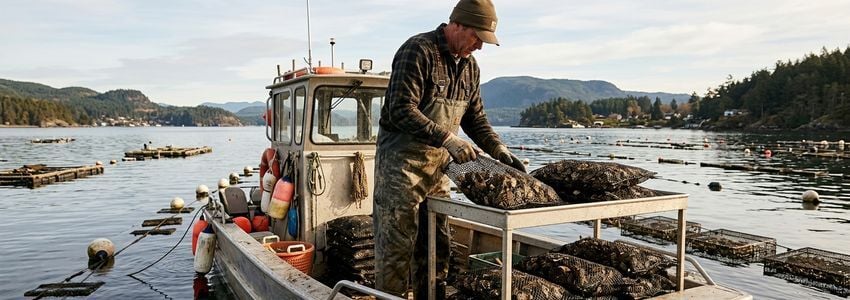
Oyster Farming Equipment Financing: The Complete Guide for Shellfish Aquaculture Owners
Oyster farming equipment financing gives shellfish aquaculture operators a practical way to acquire boats, cages, tumblers, sorting lines, and processing equipment without draining working capital. Whether you are launching a new oyster lease or scaling an established farm, the right financing structure can be the difference between a slow, cash-strapped build-out and a farm that hits full production capacity on schedule. This guide breaks down exactly how oyster farming equipment financing works, what it costs, and how to choose the right funding path for your operation.
In This Article
What Is Oyster Farming Equipment Financing?
Oyster farming equipment financing is a funding arrangement that lets shellfish aquaculture businesses purchase or lease the specialized gear they need to grow, harvest, and process oysters without paying the full cost upfront. Instead of writing one large check for a workboat, a mechanical tumbler, or a floating cage system, the operator spreads the cost across fixed monthly payments over a set term.
This type of financing is structured around the equipment itself, which typically serves as collateral. That structure often makes approval easier than an unsecured loan, because the lender has a tangible asset backing the transaction. For an industry as capital-intensive and seasonally cyclical as oyster aquaculture, matching equipment costs to a predictable payment schedule helps operators preserve cash for feed, labor, lease payments, and unexpected weather-related setbacks.
Oyster farming is unlike most land-based agriculture in that nearly every stage of production, from seed placement to final harvest, depends on specialized marine equipment that cannot simply be improvised. A farm without a reliable workboat cannot service its leases. A farm without adequate cage or bag systems cannot protect its crop from predators and storm surge. A farm without a functioning tumbler or grading line cannot produce the consistently shaped, market-ready oysters that restaurants and distributors expect. Because so much of the business depends on equipment that carries real resale value, lenders that specialize in equipment financing are often more comfortable extending credit to aquaculture operators than a general-purpose bank would be.
It also helps to understand who typically offers this type of financing. Some equipment manufacturers and dealers offer financing directly, but many oyster farm operators work with independent commercial finance companies that specialize in structuring deals across a wide range of industries, including marine and agricultural equipment. These independent lenders often have more flexibility than a bank's standardized loan products, which matters for an industry with unique seasonal and regulatory considerations like lease renewals, water quality permits, and harvest closures.
Key Stat: According to NOAA Fisheries, U.S. aquaculture production, including shellfish, has grown steadily as demand for domestically farmed seafood increases, with oysters representing one of the largest segments of the shellfish aquaculture industry by both volume and value.
Key Benefits of Financing Oyster Farming Equipment
Financing equipment instead of paying cash unlocks several advantages for oyster farm operators, especially those managing tight seasonal cash flow tied to spawning cycles, water temperatures, and harvest windows.
- Preserve working capital. Keep cash on hand for feed, seed stock, lease fees, insurance, and payroll instead of tying it up in a single equipment purchase.
- Match payments to revenue cycles. Structure payment schedules around harvest seasons so payments align with when cash is actually coming in.
- Access newer, more efficient equipment. Modern tumblers, sorting lines, and vessels can improve yield and reduce labor hours, and financing makes upgrading realistic without a large capital outlay.
- Potential tax advantages. Many financing structures allow businesses to deduct equipment costs as a business expense, though you should always consult a qualified tax professional for your specific situation.
- Build business credit. Consistent on-time payments on an equipment financing account can help establish a stronger credit profile for your farm.
- Fast access to growth capital. Approval and funding timelines are often measured in days, not months, which matters when a harvest window or lease opportunity is time-sensitive.
Ready to Expand Your Oyster Farm?
Get fast, flexible equipment financing built for aquaculture businesses. No obligation, apply in minutes.
Apply Now →How Oyster Farming Equipment Financing Works
The process for financing oyster farming equipment follows a straightforward path, though the details vary depending on the lender and the type of equipment involved.
- Identify the equipment need. Determine what you need to buy, whether that is a new workboat, floating cage systems, a mechanical grader, or a shucking and processing line.
- Get a vendor quote. Most lenders want a formal quote or invoice from the equipment seller before underwriting the deal.
- Submit an application. Provide basic business information, time in business, revenue figures, and the equipment quote. Many lenders offer streamlined applications for equipment amounts under a certain threshold.
- Underwriting and approval. The lender reviews your business's financial health, credit profile, and the value of the equipment as collateral. Because the equipment secures the loan, approval can be faster than unsecured financing.
- Funding and equipment delivery. Once approved, funds are usually sent directly to the vendor or dealer, and the equipment ships or is delivered to your farm or dock.
- Repayment. You make fixed monthly (or seasonally structured) payments over the agreed term, typically ranging from 24 to 84 months depending on the equipment's useful life.
Financing Terms, Rates, and Structures
Because oyster farming equipment financing is underwritten on a case-by-case basis, terms can vary significantly depending on the lender, the equipment type, and your business's financial profile. That said, there are a few general patterns worth understanding before you start comparing offers.
Repayment terms are generally tied to the expected useful life of the equipment. A workboat or larger vessel, which can remain productive for well over a decade with proper maintenance, will often qualify for a longer repayment term than a smaller item like a grading line or a set of tumblers, which may see more frequent replacement cycles. Matching the term length to the equipment's useful life keeps you from still making payments on equipment that has already been retired or replaced.
Down payment requirements also vary. Some lenders offer financing structures that cover close to the full purchase price for well-qualified borrowers, particularly on newer equipment with strong resale value. Others may require 10 to 20 percent down, especially for used equipment, older vessels, or borrowers with a thinner credit history. A larger down payment can also help secure a lower rate, since it reduces the lender's exposure.
Interest rates and factor rates on equipment financing depend on a combination of factors: your personal and business credit profile, time in business, annual revenue, the age and condition of the equipment, and overall market rate conditions. Newer farms or those with limited credit history should expect to pay a premium compared to an established operation with several years of clean payment history and strong revenue. Because rates are so specific to each deal, the most reliable way to understand your actual cost is to request a personalized quote rather than relying on generic published rate ranges.
Many lenders also offer structuring flexibility that is particularly valuable in aquaculture. Seasonal payment structures, for example, can reduce or skip payments during known slow months and increase them during peak harvest season. Step-up structures, where payments start lower and increase over time, can help a growing farm ease into a new piece of equipment before it is generating full revenue from the added capacity.
Types of Equipment You Can Finance
Oyster farming spans multiple stages of production, and financing can typically be structured for equipment across the entire operation.
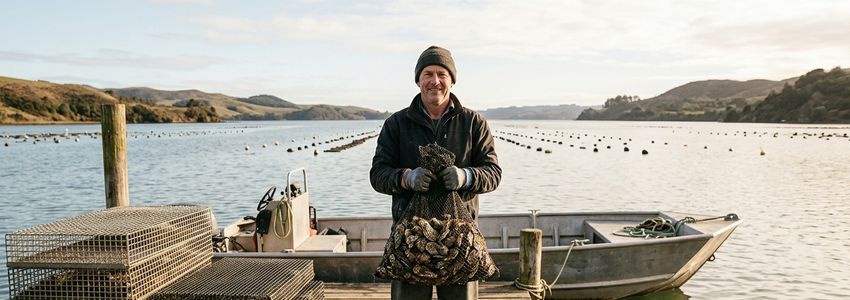
- Workboats and vessels. Aluminum or fiberglass work skiffs, barges, and larger harvest vessels used to service leases and transport product.
- Cage and gear systems. Floating cages, bags, racks, and longline systems used for grow-out.
- Mechanical tumblers and graders. Equipment that sizes and toughens oyster shells to improve shape and market value.
- Sorting and grading lines. Automated or semi-automated equipment that speeds up sorting by size ahead of harvest and sale.
- Processing and shucking equipment. Wash stations, refrigeration units, and shucking tables for value-added processing.
- Refrigeration and cold storage. Walk-in coolers, ice machines, and refrigerated transport equipment to maintain product quality and meet health code requirements.
- Docks, hoists, and handling equipment. Winches, davits, conveyor systems, and dock infrastructure used to move product efficiently.
- Water quality and monitoring equipment. Sensors, pumps, and testing equipment used to manage water conditions across grow-out sites.
Who Oyster Farming Equipment Financing Is Best For
This type of financing tends to work best for a specific set of shellfish aquaculture operators:
- Established oyster farms scaling production. Operators with an existing lease and a track record who need additional vessels or gear to expand grow-out capacity.
- New farms with a secured lease. Operators who have secured a state or local aquaculture lease and need startup equipment to begin operations.
- Farms adding processing capability. Businesses that currently sell raw product but want to add shucking, packaging, or value-added processing to increase margins.
- Seasonal operations needing flexible terms. Farms whose revenue is concentrated in certain months and need payment structures that reflect that cash flow pattern.
- Operators replacing aging equipment. Farms running older vessels or worn-out tumbling and grading equipment that is costing more in downtime and repairs than it would cost to finance new equipment.
Comparing Oyster Farming Equipment Financing to Other Options
Equipment financing is not the only way to fund aquaculture equipment purchases. Here is how it stacks up against the alternatives most oyster farm operators consider.
| Option | Best For | Speed | Collateral |
|---|---|---|---|
| Equipment Financing | Buying vessels, cages, tumblers, or processing gear | Days to about 1 week | The equipment itself |
| Equipment Leasing | Operators who want to upgrade equipment more frequently | Days to about 1 week | Leased asset, lower down payment |
| SBA Loan | Larger purchases with longer repayment needs | Weeks to months | Often equipment plus additional collateral |
| Business Line of Credit | Ongoing operational flexibility, smaller purchases | Days | Varies, sometimes unsecured |
| Cash Purchase | Operators with significant reserves who want to avoid any debt | Immediate | None, but ties up all cash |
For most oyster farm operators, equipment financing or leasing strikes the best balance between speed, preserved cash flow, and manageable monthly obligations. A SBA loan can make sense for a larger, longer-term buildout, while a business line of credit is often better suited for smaller, recurring needs like replacement gear or minor repairs.
By The Numbers
Oyster Farming Equipment Financing: Key Statistics
24-84
Typical repayment term range (months) for aquaculture equipment financing
1-2 Days
Typical time to approval for streamlined equipment financing applications
100%
Financing available on equipment cost with qualifying credit profiles
33M+
Small businesses in the U.S., per the SBA, that compete for the same capital access
How Crestmont Capital Helps Oyster Farm Owners
Crestmont Capital works with aquaculture and marine-based businesses that traditional banks often overlook because of the industry's seasonality and specialized equipment needs. Our equipment financing programs are built to accommodate vessels, cages, tumblers, and processing equipment, with terms structured around how your farm actually generates revenue.
If you are also weighing a lease-based option for equipment that you expect to upgrade every few years, our equipment leasing program can offer lower monthly payments and more flexibility at the end of the term. For farms that need broader operational funding alongside equipment, our working capital loans can help cover feed, labor, and lease costs during slower harvest months. And for farms with less-than-perfect credit histories, our bad credit equipment financing program is designed to keep growth on track even when a traditional bank has said no.
We have also helped operators in related aquaculture segments finance their equipment. Read our guide on commercial fish farming equipment financing or our broader overview of aquaculture business loans for additional context on how financing works across the aquaculture industry.
Scale Your Shellfish Operation Faster
Talk to a financing specialist who understands aquaculture businesses. No pressure, just answers.
Get Started →Real-World Scenarios
Scenario 1: Expanding Grow-Out Capacity
A three-year-old oyster farm on the Chesapeake Bay had outgrown its original lease acreage and secured an additional lease site. The farm needed 40 new floating cage systems and a second workboat to service the expanded footprint. Rather than draining reserves built up over three seasons, the owner financed both the cages and the vessel, spreading the cost over 60 months with payments timed to land heavier in the fall harvest months.
Scenario 2: Adding a Processing Line
An oyster farm in the Pacific Northwest had been selling exclusively to wholesalers as raw, unsorted product. To capture more margin, the owner wanted to add a mechanical grading line and a small shucking and packaging operation to sell direct to restaurants. Equipment financing covered the grading line and refrigeration units, letting the farm start selling graded, packaged product within two months instead of waiting a full season to save the cash.
Scenario 3: Replacing an Aging Workboat
A Gulf Coast oyster operation was running a 15-year-old workboat that had become unreliable, costing the farm harvest days to repairs during peak season. The owner used equipment financing to purchase a newer vessel, keeping the down payment low and preserving cash to cover a slower winter season, while the improved reliability reduced lost harvest days significantly.
Scenario 4: Starting a New Farm on a Fresh Lease
A first-time aquaculture entrepreneur secured a new oyster lease from the state and needed a full equipment package: a small work skiff, floating gear, a tumbler, and basic dock infrastructure. Because the farm had no operating history, the lender structured the deal around the equipment's resale value and a modest down payment, giving the new operator a path to financing that a traditional unsecured loan would not have supported.
Choosing the Right Equipment Financing Partner
Not every commercial lender understands aquaculture, and that gap can matter when it comes time to underwrite a deal. A generalist lender may not know how to properly value a used workboat, may misjudge the seasonality of oyster harvest revenue, or may apply blanket underwriting standards that do not reflect how a shellfish farm actually operates. Working with a lender that has experience financing marine, agricultural, or food production equipment can mean a smoother approval process and terms that better reflect your business's real cash flow patterns.
Ask potential lenders directly about their experience with aquaculture or marine equipment. Find out whether they have financed vessels, cages, or processing equipment for similar businesses before, and ask whether they can structure payments around your harvest calendar. A lender that asks thoughtful questions about your lease terms, your water quality permits, or your typical harvest windows is signaling that they understand the industry, which usually translates into a better overall financing experience.
It is also worth comparing more than one offer before committing. Look beyond the headline rate to the total cost of financing, prepayment terms, and whether the lender reports payment history to business credit bureaus. A slightly higher rate from a lender who understands your industry and offers flexible seasonal structuring may end up being a better deal than a lower rate from a lender who does not accommodate your farm's actual cash flow.
Frequently Asked Questions
Your Oyster Farm's Next Season Starts Here
Whether it's a new vessel, cages, or a full processing setup, get financing built for aquaculture. Apply in minutes.
Apply Now →Next Steps
Identify vessels, cages, tumblers, or processing gear and get a vendor quote.
Time in business, revenue, and lease documentation if you are a new operation.
Submit your application online and get a personalized quote for your equipment.
Once approved, funds are released and your equipment gets to work growing your farm's output.
Conclusion
Oyster farming equipment financing gives shellfish aquaculture operators a practical, collateral-backed way to acquire vessels, cages, tumblers, and processing equipment without draining the working capital your farm needs to operate day to day. From new farms just getting a lease off the ground to established operations scaling grow-out capacity or adding processing capability, the right financing structure keeps your equipment purchases aligned with your farm's actual revenue cycle. If you are ready to explore financing for your next equipment purchase, Crestmont Capital's team understands the aquaculture industry and can help structure a solution that fits your farm.
Disclaimer: The information provided in this article is for general educational purposes only and is not financial, legal, or tax advice. Funding terms, qualifications, and product availability may vary and are subject to change without notice. Crestmont Capital does not guarantee approval, rates, or specific outcomes. For personalized information about your business funding options, contact our team directly.








