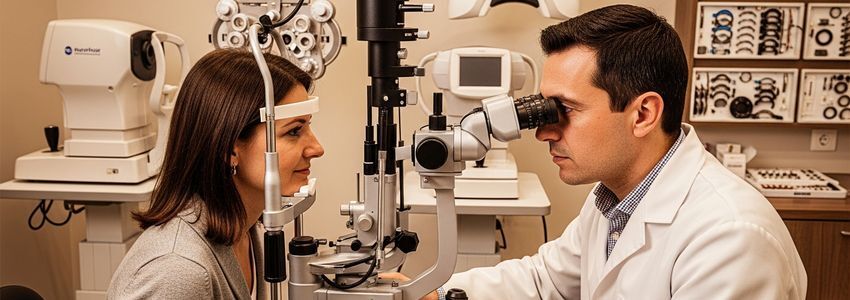
As an ophthalmologist, your focus is on preserving and restoring vision. To provide the highest standard of care, you need a practice equipped with advanced technology, a skilled team, and a modern facility. Ophthalmology practice loans are specialized financial tools designed to help you achieve these goals, from acquiring state-of-the-art diagnostic equipment to expanding your clinic's footprint.
In This Article
- What Are Ophthalmology Practice Loans?
- Key Benefits of Financing Your Ophthalmology Practice
- How Ophthalmology Practice Financing Works
- Types of Financing for Ophthalmology Practices
- Who Qualifies for Ophthalmology Practice Loans?
- How Crestmont Capital Helps Ophthalmologists
- Real-World Scenarios
- Frequently Asked Questions
- How to Get Started
- Conclusion
What Are Ophthalmology Practice Loans?
Ophthalmology practice loans are a specific category of business financing tailored to the unique financial needs of eye care specialists. Unlike generic small business loans, these financial products are structured with an understanding of the ophthalmology industry's high capital requirements, revenue cycles, and growth opportunities. They provide the necessary capital for ophthalmologists to start, manage, and expand their practices effectively.
This type of financing is not a one-size-fits-all solution. It encompasses a range of loan and leasing options that can be used for various purposes critical to running a successful ophthalmology clinic. Whether you are a recent graduate opening your first solo practice, an established practitioner looking to upgrade your surgical suite, or a partner in a group practice planning a major expansion, there is a financing solution designed for your specific situation.
The core purpose of these loans is to bridge the gap between your current financial resources and the capital needed to invest in your practice's future. These investments often have a clear and significant return, such as a new femtosecond laser that allows you to offer premium cataract surgery, or a renovated waiting room that improves patient experience and attracts new clients. The funding can be used for virtually any business-related expense, including:
- Purchasing Advanced Medical Equipment: Acquiring or upgrading diagnostic and surgical technology like OCT scanners, phacoemulsification systems, retinal cameras, and LASIK lasers.
- Practice Acquisition and Buy-ins: Financing the purchase of an existing practice from a retiring ophthalmologist or buying into a partnership.
- Clinic Expansion and Renovation: Funding the construction of a new facility, opening a satellite office, or remodeling your current space to accommodate more patients and services.
- Working Capital: Covering day-to-day operational expenses such as payroll, rent, inventory for an optical shop, marketing, and managing cash flow during slow reimbursement periods from insurance companies.
- Hiring and Training Staff: Investing in skilled personnel, including ophthalmic technicians, surgical coordinators, and administrative staff, to support practice growth.
- Debt Consolidation: Refinancing multiple existing high-interest debts into a single, more manageable loan with a lower monthly payment.
Lenders who specialize in medical financing, like Crestmont Capital, recognize the stability and high earning potential of ophthalmology practices. This often translates into more favorable terms, higher approval rates, and a more streamlined application process compared to what a traditional bank might offer. They understand the value of the specialized equipment you need and the predictable nature of your revenue streams, making them more comfortable extending significant capital to support your vision for your practice.
Ready to Grow Your Eye Care Practice?
Get the capital you need in as little as 24 hours. See your financing options today.
Apply Now →Key Benefits of Financing Your Ophthalmology Practice
Securing strategic financing can be a transformative step for an ophthalmology practice. It provides the fuel for growth, innovation, and enhanced patient care. By leveraging capital effectively, you can position your practice as a leader in your community and ensure its long-term financial health. Here are the key benefits of using ophthalmology practice loans.
1. Acquire and Maintain Cutting-Edge Technology
Ophthalmology is one of the most technology-driven fields in medicine. Patient outcomes and your practice's reputation depend on having the latest diagnostic and surgical equipment. However, this technology comes with a significant price tag. A femtosecond laser for cataract surgery can cost over $400,000, and an advanced OCT angiography machine can exceed $100,000. Financing allows you to acquire this essential equipment without depleting your cash reserves. This enables you to offer premium services, attract more patients, improve diagnostic accuracy, and achieve better surgical results, all of which directly contribute to increased revenue.
2. Expand and Modernize Your Facilities
As your patient base grows, your physical space may become a limiting factor. Financing can fund the expansion of your current clinic, the opening of a new satellite location, or a complete renovation to create a more modern and efficient environment. A larger, more welcoming facility can improve patient flow, reduce wait times, and enhance the overall patient experience. It also allows you to add more exam rooms, a larger optical dispensary, or a dedicated surgical suite, creating new revenue streams and increasing your practice's capacity.
3. Optimize Cash Flow and Working Capital
Even highly profitable practices can experience temporary cash flow challenges. The lag between providing a service and receiving payment from insurance companies can strain your operating budget. A working capital loan or a business line of credit provides a crucial financial cushion. This ensures you can consistently meet payroll, pay suppliers, cover rent, and invest in marketing initiatives without interruption. Healthy cash flow is the lifeblood of any business, and financing provides the stability needed to operate smoothly and seize opportunities as they arise.
4. Facilitate Practice Acquisitions and Transitions
Financing is essential for practice succession planning and growth through acquisition. Whether you are buying your first practice, acquiring a competitor's practice to expand your market share, or buying out a retiring partner, a practice acquisition loan provides the necessary capital. These loans are structured to cover the purchase price of the practice, as well as provide additional working capital to ensure a smooth transition. This is a common and effective strategy for rapidly growing a practice's patient base and revenue.
5. Attract and Retain Top Talent
Your staff is one of your most valuable assets. To provide exceptional care, you need to hire and retain skilled ophthalmic technicians, scribes, surgical coordinators, and administrative personnel. Financing can provide the funds to offer competitive salaries and benefits, invest in ongoing training and certification programs, and hire additional staff to support growth. A well-staffed and highly trained team improves efficiency, enhances patient satisfaction, and allows you to delegate tasks so you can focus on high-value clinical and surgical work.
6. Preserve Personal and Practice Capital
Using a loan to finance major purchases allows you to preserve your liquid cash for unforeseen emergencies and other investment opportunities. Instead of tying up a large sum of capital in a single piece of equipment or a renovation project, financing allows you to spread the cost over time with predictable monthly payments. This approach maintains your financial flexibility and ensures you have the resources available to handle unexpected expenses or capitalize on time-sensitive opportunities without hesitation.
How Ophthalmology Practice Financing Works
Navigating the world of business financing can seem complex, but specialized lenders have streamlined the process for medical professionals. The journey from identifying a need to receiving funds is typically straightforward and designed to be as efficient as possible, allowing you to stay focused on your patients. Here is a step-by-step overview of how ophthalmology practice financing works with a lender like Crestmont Capital.
Step 1: Initial Assessment and Application
The process begins with you identifying a specific need for your practice. This could be the need for a new phoropter, a desire to expand your clinic, or the opportunity to acquire a retiring doctor's patient list. Once you have a clear purpose and an estimated cost, the next step is the application. Modern lenders offer simple, one-page online applications that can be completed in minutes. You will typically provide basic information about yourself and your practice, including:
- Your name and contact information
- The legal name and address of your practice
- Your time in business and annual revenue
- The amount of funding you are requesting
- The intended use of the funds
Step 2: Documentation and Underwriting
After submitting the initial application, a funding specialist will contact you to discuss your needs in more detail and request any necessary documentation. For smaller loan amounts, this may be as simple as your last few months of business bank statements. For larger requests, such as a practice acquisition loan, you may be asked to provide:
- Business and personal tax returns
- Profit and loss statements and balance sheets
- A detailed business plan (especially for startups or major expansions)
- An equipment quote from a vendor (for equipment financing)
This information moves to the underwriting stage. Underwriters who specialize in healthcare financing will review your file. They assess the financial health of your practice, your personal credit history, and the viability of your request. They understand the economics of an ophthalmology practice, including typical revenue, expenses, and the value of specialized medical assets. This expertise allows for a much faster and more nuanced evaluation than a generalist lender could provide.
Step 3: Approval and Offer Review
Based on the underwriting assessment, the lender will approve your request and extend one or more financing offers. This is where a partnership with a top-rated lender pays dividends. You will receive clear, transparent terms outlining the loan amount, interest rate, repayment term, and any associated fees. Your dedicated funding specialist will walk you through the options, explaining the pros and cons of each, to help you select the one that best aligns with your practice's financial goals. There is no obligation to accept any offer, giving you complete control over the decision.
Step 4: Funding and Repayment
Once you select an offer and sign the financing agreements electronically, the process moves to funding. For many types of financing, especially equipment and working capital loans, the funds can be deposited directly into your business bank account in as little as 24 to 48 hours. For equipment financing, the lender may pay the vendor directly on your behalf. The speed of this process is a critical advantage, allowing you to acquire needed assets and act on opportunities without delay.
Repayment begins according to the agreed-upon schedule, typically with fixed monthly payments automatically debited from your account. This makes budgeting simple and predictable. Throughout the life of the loan, you will have access to customer support to answer any questions you may have.
The Ophthalmology Market at a Glance
~$18 Billion
U.S. Ophthalmology Market Size
$500,000+
Average Cost of a New LASIK Laser System
~18,000
Practicing Ophthalmologists in the U.S.
24-48 Hours
Average Funding Time with Crestmont Capital
Types of Financing for Ophthalmology Practices
Ophthalmologists have access to a variety of financing options, each designed for different business needs and financial situations. Understanding the distinctions between these products is key to selecting the most effective and cost-efficient solution for your practice. Here is a detailed look at the most common types of ophthalmology practice loans.
Equipment Financing and Leasing
This is one of the most popular financing types for ophthalmologists. It is used specifically to purchase new or used medical equipment. The equipment itself typically serves as the collateral for the loan, which can make it easier to qualify for. You can finance 100% of the equipment cost, including soft costs like taxes, shipping, and installation. This is ideal for acquiring high-value assets like surgical lasers, diagnostic imaging systems, and exam lane equipment without a large upfront cash outlay. To learn more, explore our complete guide to medical equipment financing.
Working Capital Loans
A working capital loan provides a lump sum of cash that can be used for any business purpose. This flexibility makes it an excellent tool for managing day-to-day operational expenses. Common uses include covering payroll during a slow month, launching a new marketing campaign to attract cataract surgery patients, purchasing inventory for your optical shop, or bridging cash flow gaps while waiting for insurance reimbursements. These are typically short-term loans with fast funding times.
Business Line of Credit
A business line of credit offers the most flexibility. It gives you access to a predetermined amount of capital that you can draw from as needed. You only pay interest on the funds you use, and as you repay the principal, your available credit is replenished. This makes it an ideal safety net for unexpected expenses or opportunities. For example, you could use it to pay for an emergency repair on your phacoemulsification machine or to take advantage of a bulk discount on intraocular lenses.
SBA Loans
Backed by the U.S. Small Business Administration, SBA loans often feature long repayment terms and low interest rates, making them a very attractive option for major investments. The most common types are the SBA 7(a) and 504 loans. They can be used for a wide range of purposes, including practice acquisition, commercial real estate purchase, major equipment buys, and working capital. While the application process can be more intensive and take longer than other loan types, the favorable terms are often worth the effort. For more official details, you can visit the SBA's official website.
Practice Acquisition Loans
This specialized term loan is structured specifically for the purpose of buying an existing ophthalmology practice. Lenders with experience in this area understand how to value a medical practice based on its assets, patient base, and cash flow. These loans can cover the full purchase price and often include additional funds for working capital to ensure a seamless transition of ownership.
Commercial Real Estate Loans
For ophthalmologists looking to buy, build, or refinance the property where their clinic is located, a commercial real estate loan is the appropriate vehicle. These are long-term loans, similar to a residential mortgage, that are secured by the property itself. Owning your building can be a wise long-term investment, providing stability and building equity for the practice.
| Financing Type | Best For | Typical Loan Amount | Typical Term |
|---|---|---|---|
| Equipment Financing | Purchasing specific medical technology (lasers, scanners, etc.) | $10,000 - $2,000,000+ | 2 - 7 years |
| Working Capital Loan | Day-to-day operations, marketing, payroll, inventory | $5,000 - $500,000 | 6 months - 3 years |
| Business Line of Credit | Managing cash flow, unexpected expenses, flexible needs | $10,000 - $250,000 | Revolving |
| SBA Loan | Practice acquisition, real estate, major expansion | Up to $5,000,000 | 7 - 25 years |
| Practice Acquisition Loan | Buying an existing practice or buying out a partner | $250,000 - $5,000,000+ | 7 - 15 years |

Who Qualifies for Ophthalmology Practice Loans?
Lenders evaluate several key factors to determine a borrower's eligibility and to structure the terms of a loan. While ophthalmology is considered a low-risk industry, meeting certain criteria will significantly improve your chances of securing the best possible financing. Here’s a breakdown of what lenders typically look for.
Personal and Business Credit Score
Your credit history is a primary indicator of your financial responsibility. Lenders will review both your personal credit score (FICO) and your business credit score. A strong personal credit score, generally 680 or higher, is often required for the most competitive rates and terms. While some financing options are available for those with lower scores, a higher score demonstrates a reliable borrowing history and reduces the lender's perceived risk.
Time in Business
The length of time your practice has been in operation is another crucial factor. Established practices with a proven track record of at least two years of stable or growing revenue are viewed as very low-risk. However, this does not exclude new practitioners. Many lenders offer specific startup loan programs for ophthalmologists opening their first practice, though these may require a more detailed business plan, financial projections, and sometimes a higher down payment or stronger personal credit.
Annual Revenue and Profitability
Lenders need to see that your practice generates sufficient revenue to comfortably cover its operating expenses and the new loan payments. They will typically ask for recent business bank statements, profit and loss statements, and tax returns to verify your cash flow and profitability. A consistent history of strong revenue and healthy profit margins will make you a highly attractive candidate for financing.
Key Stat: According to the U.S. Bureau of Labor Statistics, the median annual wage for physicians and surgeons, including ophthalmologists, was $239,200 in May 2023, highlighting the strong earning potential that lenders consider.
Collateral
Collateral is an asset that secures a loan. For ophthalmology practices, this can take several forms. In an equipment financing agreement, the equipment being purchased serves as its own collateral. For larger loans like a practice acquisition or real estate loan, the business assets or the property itself will secure the debt. Some working capital loans may be unsecured, meaning they don't require specific collateral, but they may come with slightly higher interest rates. Having valuable assets can strengthen your application, especially for larger funding requests.
A Strong Business Plan
For startups, major expansions, or practice acquisitions, a comprehensive business plan is essential. This document should articulate your vision, market analysis, marketing strategy, and detailed financial projections. It demonstrates to lenders that you have a clear plan for using the funds to generate a return and successfully repay the loan. It shows you are not just a skilled clinician but also a savvy business owner.
Get Your Custom Financing Offer
Our simple application takes minutes. See what your practice qualifies for without impacting your credit score.
See My Options →How Crestmont Capital Helps Ophthalmologists
Choosing the right financial partner is as critical as choosing the right surgical laser. At Crestmont Capital, we are more than just a lender; we are a dedicated partner invested in the success of your ophthalmology practice. As the #1 rated U.S. business lender, we have a deep understanding of the healthcare industry and have tailored our services to meet the specific needs of eye care professionals.
Our expertise in healthcare equipment financing means we understand the value and importance of the technology you rely on every day. Whether you need an OCT scanner, a visual field analyzer, or a complete LASIK suite, we provide fast and flexible financing solutions. We work directly with equipment vendors to streamline the purchasing process, allowing you to get your new technology up and running as quickly as possible.
We recognize that your time is best spent with patients, not filling out complicated paperwork. That's why we've developed a simple, one-page online application and a streamlined underwriting process. In most cases, we can provide a credit decision in hours and deliver funding in as little as 24-48 hours. This speed and efficiency ensure that you never miss an opportunity to grow your practice.
Crestmont Capital offers a comprehensive suite of small business financing products, allowing us to build a custom funding strategy for your unique goals. From a flexible business line of credit for managing cash flow to a structured term loan for a major expansion, we have the right solution. Our financing specialists take the time to understand your vision and recommend the product that offers the best terms and supports your long-term objectives. For those interested in a broader overview, our guide to medical practice loans offers valuable insights applicable across specialties.
Our commitment to transparency and exceptional customer service has earned us top ratings from our clients. We provide clear, easy-to-understand terms with no hidden fees. Your dedicated account executive will be your single point of contact throughout the entire process, ready to answer your questions and provide expert guidance. We are proud to help ophthalmologists across the country build thriving practices that deliver outstanding eye care to their communities. To start the conversation, we invite you to apply now and discover the Crestmont Capital difference.
Real-World Scenarios
To better illustrate how ophthalmology practice loans work in practice, let's explore a few common scenarios faced by eye care specialists and how different financing solutions can be applied.
Scenario 1: The Cutting-Edge Technology Upgrade
The Situation: Dr. Ramirez runs a successful, established ophthalmology practice. To stay competitive and offer the best possible outcomes for her cataract surgery patients, she wants to purchase a new femtosecond laser system, which costs $450,000. While her practice is profitable, a cash purchase of this size would significantly impact her liquid reserves.
The Solution: Dr. Ramirez applies for equipment financing with Crestmont Capital. Because the laser itself serves as collateral and her practice has a strong financial history, she is quickly approved. She chooses a 5-year term with a fixed monthly payment that fits comfortably within her operating budget. The lender pays the vendor directly, and the laser is delivered and installed within two weeks.
The Outcome: The new laser allows Dr. Ramirez to offer bladeless, laser-assisted cataract surgery, a premium service that attracts new patients and increases her average revenue per procedure. The additional income generated by the laser more than covers the monthly loan payment, resulting in a significant net profit for her practice and improved surgical outcomes for her patients.
Scenario 2: The Second Location Expansion
The Situation: Dr. Chen’s practice has grown so much that her current location is at full capacity. She identifies an opportunity to open a second office in a neighboring, underserved community. She needs capital for the down payment on a commercial space, clinic build-out, new exam lane equipment, and initial working capital for marketing and staff salaries before the new location becomes profitable.
The Solution: Dr. Chen works with a financing specialist to secure an SBA 7(a) loan. This type of loan is ideal for a large, multi-purpose project like this because of its long repayment term (up to 25 years for real estate) and competitive interest rate. The loan covers the real estate, construction costs, equipment purchase, and provides a crucial cushion of working capital.
The Outcome: With the SBA loan, Dr. Chen successfully opens her second location. The new clinic expands her market reach and doubles her practice's overall capacity. The long-term, low-rate financing keeps her monthly payments manageable, allowing her to grow her business sustainably.
Industry Insight: The U.S. eye care market is projected to grow significantly due to an aging population and an increased prevalence of eye conditions like cataracts and macular degeneration, as noted in market analyses by firms like Forbes Business Council. This growth trend makes ophthalmology practices a strong investment for lenders.
Scenario 3: Managing a Cash Flow Crunch
The Situation: A group practice, Visionary Eye Surgeons, experiences an unexpected delay in reimbursements from a major insurance carrier due to a change in the carrier's processing system. This creates a temporary but significant cash flow gap, making it difficult to cover their bi-weekly payroll of $50,000 and pay a large upcoming supply bill.
The Solution: The practice manager had proactively established a $150,000 business line of credit for just such an emergency. She immediately draws $75,000 from the line of credit to cover payroll and the supplier invoice. She only pays interest on the $75,000 she has used.
The Outcome: The practice operates without any disruption. Two months later, the insurance payments come through, and the practice repays the $75,000 draw in full. The line of credit is now fully available again for any future needs. This financial tool provided the essential liquidity to navigate a short-term challenge without impacting operations or staff morale.
Frequently Asked Questions
1. What is the minimum credit score needed for an ophthalmology practice loan?
While requirements vary by lender and loan type, a personal credit score of 680 or higher is generally preferred for the most competitive rates. However, some financing options are available for practice owners with scores in the low 600s, especially if the practice shows strong revenue and cash flow.
2. How quickly can I get funded?
With a streamlined lender like Crestmont Capital, the process is very fast. For working capital and equipment loans, you can often receive funding in as little as 24 to 48 hours after approval. Larger, more complex loans like SBA or real estate loans will have a longer timeline, typically 30 to 90 days.
3. Can I finance used or refurbished ophthalmic equipment?
Yes, absolutely. Most lenders who specialize in medical financing will gladly fund the purchase of used or refurbished equipment from a reputable dealer. This can be a very cost-effective way to acquire high-quality technology for your practice.
4. What documents are required for the application?
For smaller loan amounts (typically under $250,000), you may only need to provide a simple one-page application and your last 3-6 months of business bank statements. For larger requests, you will likely need to provide business and personal tax returns, profit and loss statements, and a balance sheet.
5. I am just starting my own practice. Can I still qualify for a loan?
Yes. Many lenders, including Crestmont Capital, offer startup loan programs specifically for medical professionals. For these loans, lenders will place more emphasis on your personal credit score, your professional experience, and a well-researched business plan with detailed financial projections.
6. Will applying for a loan affect my credit score?
Most modern lenders, including Crestmont Capital, use a "soft credit pull" for the initial application and pre-approval process. This does not impact your credit score. A "hard credit pull," which can have a minor, temporary impact on your score, is only performed once you decide to move forward with a specific loan offer.
7. What are typical interest rates for ophthalmology practice loans?
Interest rates vary widely based on the loan type, your creditworthiness, time in business, and overall market conditions. SBA loans typically offer the lowest rates. Equipment financing and working capital loans will have slightly higher rates, but they offer faster funding and more flexible terms.
8. Can I finance 100% of my equipment purchase?
Yes, 100% financing is very common for equipment loans. This often includes "soft costs" such as taxes, shipping, and installation fees, allowing you to acquire new technology with no money down.
9. What is the difference between a loan and a lease for equipment?
With a loan, you own the equipment at the end of the repayment term. With a lease, you are essentially renting the equipment for a set period. At the end of the lease, you may have the option to purchase the equipment (often for a predetermined price like $1), return it, or upgrade to a newer model. Leasing can offer lower monthly payments and is a good option for technology that becomes obsolete quickly.
10. Can I use a loan to consolidate existing business debt?
Yes. A term loan or an SBA loan can be an excellent tool for debt consolidation. You can combine multiple high-interest debts (like business credit cards or other loans) into a single new loan with a lower interest rate and a more manageable monthly payment, which can significantly improve your practice's cash flow.
11. Is collateral always required?
Not always. Many working capital loans and business lines of credit are unsecured, meaning they do not require you to pledge specific collateral. However, secured loans (like equipment or real estate loans) are backed by an asset and therefore typically offer better rates and higher loan amounts.
12. How much can my ophthalmology practice borrow?
The amount you can borrow depends on your practice's annual revenue, profitability, credit history, and the specific use of funds. Loan amounts can range from as little as $5,000 for a small working capital loan to over $5 million for an SBA loan for a practice acquisition or real estate purchase.
13. Are there any restrictions on how I can use the funds from a working capital loan?
Generally, no. A working capital loan is designed for flexibility. You can use the funds for any legitimate business purpose, including payroll, marketing, inventory, rent, taxes, or any other operational expense.
14. What is the advantage of using a specialized lender over my local bank?
A specialized lender like Crestmont Capital understands the nuances of the medical industry. This leads to a faster application process, higher approval rates, and loan structures tailored to your practice's unique needs. We understand the value of your equipment and the reliability of your revenue cycle in a way a generalist bank might not.
15. Can I pay off my loan early?
This depends on the specific loan product. Many loans, particularly shorter-term working capital loans, do have prepayment considerations. However, many longer-term loans and SBA loans have no prepayment penalties. It's important to clarify this with your lender when reviewing your loan offer.
Secure Your Practice's Future Today
Don't let a lack of capital hold you back. Get the funding you need to thrive.
Apply in 60 Seconds →How to Get Started
Securing financing for your ophthalmology practice is a clear and straightforward process with Crestmont Capital. Follow these simple steps to get the capital you need to achieve your business goals.
Assess Your Needs
Determine exactly why you need funding and how much you need. Whether it's for a new piece of equipment, a clinic renovation, or working capital, having a clear plan will streamline the entire process.
Gather Your Documents
For most applications, you will only need your last few business bank statements. Have them ready to ensure the fastest possible review of your file.
Complete Our Simple Application
Fill out our secure, one-page online application in just a few minutes. It's fast, easy, and won't affect your credit score.
Review Your Offers
A dedicated financing specialist will contact you to discuss your application and present you with clear, transparent financing offers tailored to your practice.
Receive Your Funds
Once you accept an offer, we work to get the capital to you as quickly as possible. Funds are often available in your business account within 24 hours.
Conclusion
For ophthalmologists dedicated to providing exceptional eye care, strategic financial management is the bedrock of a thriving practice. Investing in advanced technology, modern facilities, and a talented team is not just an expense-it's a direct investment in better patient outcomes and the long-term success of your business. The high costs associated with this specialized field make strategic financing an indispensable tool for growth and operational stability.
By understanding the various types of financing available and partnering with a lender that specializes in the medical field, you can access the capital you need with terms that support your financial health. Whether you are looking to purchase a state-of-the-art laser, expand your clinic, or simply optimize your cash flow, the right funding can turn your vision for your practice into a reality.
At Crestmont Capital, we are committed to providing ophthalmologists with fast, flexible, and transparent financing solutions. Our deep industry expertise allows us to approve and fund loans quickly, so you can focus on what you do best: caring for your patients. If you are ready to take the next step in growing your practice, we encourage you to explore your options for ophthalmology practice loans with us today.
Disclaimer: The information provided in this article is for general educational purposes only and is not financial, legal, or tax advice. Funding terms, qualifications, and product availability may vary and are subject to change without notice. Crestmont Capital does not guarantee approval, rates, or specific outcomes. For personalized information about your business funding options, contact our team directly.